Best Month to Catch Crappie in Indiana
There’s nothing quite like the thrill of finding a big school of crappie, especially when they’re biting aggressively. But if you’ve spent frustrating hours on Indiana lakes wondering where all the crappie have gone, you’re not alone. It can feel like these tasty panfish are here one day and completely vanished the next. This guide is all about cracking the code on crappie movements, zeroing in on the best month to catch them in Indiana, and equipping you with the knowledge to consistently fill your livewell.
The Spring Crappie Explosion: Why April and May Reign Supreme
When it comes to consistently catching crappie in Indiana, spring is undeniably the sweet spot. As the ice melts and water temperatures begin their slow climb, crappie transition from their deep winter haunts to shallower, more accessible areas. This movement culminates in a furious feeding and spawning period that offers some of the best angling opportunities all year. Many seasoned Indiana anglers will tell you that late April through early June is their absolute favorite time to target these speckled beauties, and for good reason.
Pre-Spawn Preparations and Early Spring Moves
As late March rolls into April, the first real shift in crappie behavior begins. The water is still chilly, often in the 40s to low 50s Fahrenheit, but sunlight penetrates deeper, warming up the shallower coves and dark-bottomed areas. Crappie, which have been somewhat lethargic in deeper water all winter, start to get an itch to move. They're still schooling up, but instead of being tucked away in the deepest channels, they'll begin staging in transition areas – think creek channels that lead to shallow flats, secondary points, or the edges of dense cover in slightly deeper water.
During this pre-spawn period, crappie are focused on fueling up. They haven't spawned yet, so they're looking for protein to build energy reserves. Your approach needs to be slow and methodical. Small jigs, particularly those with a slow fall rate, or tiny minnows fished under a bobber can be incredibly effective. Look for submerged brush piles, standing timber, or old weed lines in depths ranging from 8 to 20 feet, depending on the lake's specific structure and water clarity. Patience is key, as the bites can be subtle. Understanding How Water Temperature Affects Fish Activity is crucial here, as even a small rise can trigger significant movement.
The Peak Spawn: May's Golden Window for Crappie
Once water temperatures consistently hit the mid-50s to low 60s Fahrenheit, usually around late April and through May in most Indiana lakes, the crappie spawn kicks into high gear. This is the moment most anglers dream about. Crappie move from their staging areas directly into the super shallow water to build nests and lay eggs. This means they become incredibly concentrated and, often, very aggressive. Suddenly, those elusive schools are within easy reach from shore, docks, or a small boat.
You’ll find crappie in just a few feet of water, often tucked right against cover. Look for flooded timber, dense brush, lily pads, cattails, and especially around boat docks and piers. They’re protecting their nests, making them bold and willing to strike at anything that comes too close. This is the perfect time to use classic tactics like How to Jig for Crappie in Spring, often with brightly colored jigs or live minnows. When you find one crappie, you've likely found dozens, so be prepared for fast action. Getting a handle on Crappie Spawn Timing on Indiana Lakes will help you pinpoint this prime window in your local waters.
Post-Spawn Transition: Still Hungry, Just Deeper
As late May transitions into early June, the primary spawn winds down, but the crappie action doesn't necessarily stop. Post-spawn crappie are usually pretty hungry after all the energy expended during reproduction. They'll start to move out of the absolute shallowest water, but they don't retreat to their deepest haunts immediately. Instead, they'll often hold on the first available cover in slightly deeper water, often 5 to 10 feet, depending on the structure of the lake.
They might be found suspended off brush piles, under docks with deeper water access, or along the edges of weed beds. They're still feeding actively to recover their strength. While the frantic bite of the peak spawn might lessen slightly, a well-placed jig or minnow can still yield excellent results. Don't be afraid to experiment with slightly larger baits as they're now focused on recovering and putting on weight before the summer heat really sets in. Many anglers continue to find success by casting towards structure from their boats or by fishing from piers, particularly those that offer access to drop-offs. Learning How to Catch Crappie from a Dock can be particularly effective during this phase.
Understanding Crappie Behavior Through the Seasons
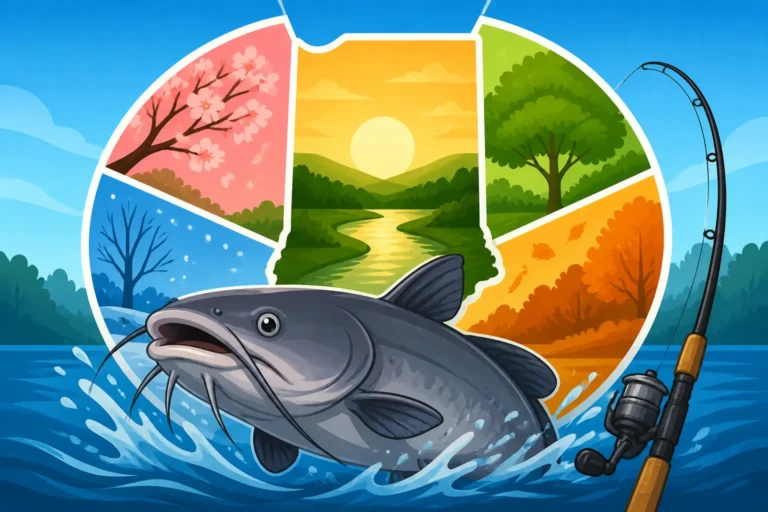
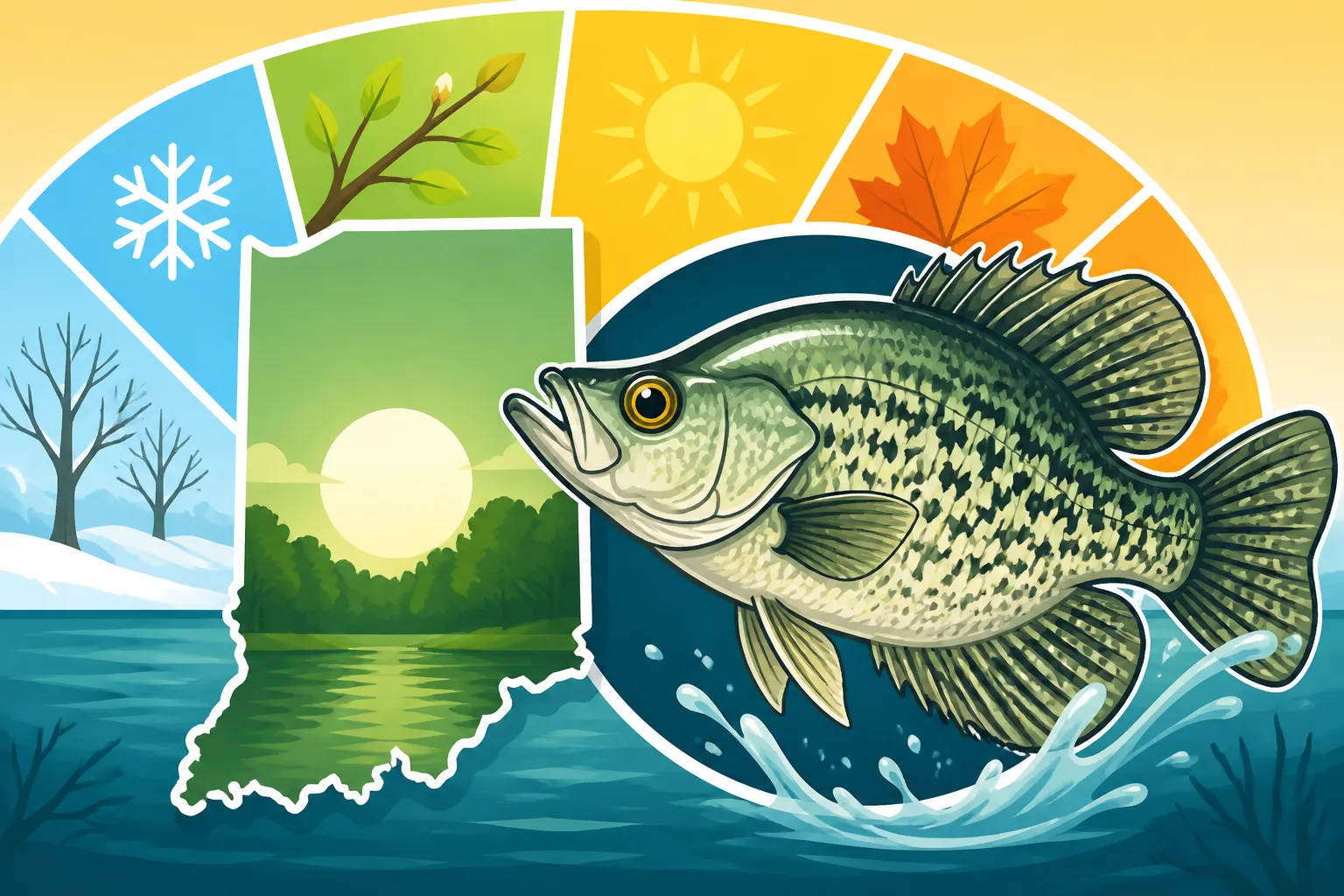
While spring is undeniably the best month to catch crappie in Indiana, these fish are present and catchable year-round. Knowing how their behavior changes with the seasons can help you adapt your tactics and find success even during less-than-ideal conditions. Crappie are masters of adaptation, and if you understand their seasonal movements, you can always find a bite.
Summer's Deep Retreat and Night Opportunities
When the scorching Indiana summer heat arrives, usually from late June through August, crappie typically retreat to deeper, cooler waters. They seek out the thermocline, a layer in the lake where water temperature changes rapidly, providing both cooler temperatures and better oxygen levels. This often means suspending over deep creek channels, submerged timber, or deep brush piles in depths of 15 to 30 feet, or even more on larger reservoirs like Patoka Lake or Monroe Lake. Finding these fish during the day can be challenging, as they can be scattered or very particular about biting.
However, summer also opens up incredible opportunities for night fishing. As the sun sets, crappie often move shallower, drawn by the congregation of baitfish under artificial lights. Using submersible lights around docks or anchored boats can create a feeding frenzy, attracting minnows, insects, and subsequently, hungry crappie. This is where patience and good electronics come in handy during the day, helping you locate those deep schools. Learning How to Find Crappie in Summer often involves using your fish finder to spot schools suspended in open water or near deep structure.
Fall Feed Frenzy: Bulking Up for Winter
As autumn approaches and water temperatures begin to drop in September and October, crappie once again become more active. This is their "fall feed" – a crucial time when they pack on calories in preparation for the long, lean winter months. Similar to spring, they'll start moving shallower, often following schools of baitfish that are also moving into warmer, shallower areas. You might find them relating to the same types of structure they used in spring, but perhaps a bit deeper than their spawning locations.
Look for crappie around weed lines that haven't died off completely, submerged timber on points, and deeper brush piles. The bites can be aggressive, and fish are often schooling tightly. Small crankbaits, spinnerbaits, or jigs fished vertically or cast and retrieved slowly can be very effective. This period offers fantastic fishing and often yields larger, fatter fish than even the spring spawn. Many of the Best Lures for Fall Fishing can be adapted for crappie as well, so don't be afraid to experiment.
Winter's Slow Bite and Ice Fishing
When the cold grip of winter settles over Indiana, typically from December through March, crappie become more lethargic. They move to the deepest parts of the lake or reservoir, often suspending in dense schools near the main river or creek channels, or over the deepest brush piles available. Their metabolism slows down considerably, and they don't feed as aggressively. The bites will be subtle, often just a slight "tick" on the line or a tiny bit of slack.
For open-water anglers, this means focusing on vertical jigging over known deep structure or using electronics to find suspended schools. Small jigs tipped with a wax worm, a tiny piece of plastic, or a crappie minnow are the go-to baits. For those who embrace the cold, ice fishing for crappie can be incredibly rewarding. Once you locate a school through the ice, you can often catch multiple fish from the same hole. Sensitivity in your rod and line is paramount. Knowing the Best Depth to Fish for Crappie in Winter will guide your efforts under the ice. You'll also want to equip yourself with the Best Tackle for Ice Fishing on Indiana Lakes to make the most of this chilly season.
Essential Gear and Tactics for Indiana Crappie
Having the right gear and understanding a few key tactics can make all the difference, no matter the season. Crappie fishing doesn't require a huge investment, but precision and sensitivity are your best friends.
Rods, Reels, and Line Choices for Finesse
Crappie are known for their light bites, so sensitive gear is non-negotiable. A light to ultralight spinning rod, typically 5 to 7 feet long, with a fast action tip, is ideal. This allows you to feel those subtle taps and ensures good hook sets without overpowering the fish. Pair this with a small spinning reel (500-1000 series) spooled with 4 to 6-pound test monofilament or fluorocarbon line. Monofilament offers some stretch, which can be forgiving, while fluorocarbon provides excellent sensitivity and less visibility underwater. Many anglers find great deals on lightweight spinning combos perfect for crappie on platforms like Amazon.
For specific scenarios like vertical jigging in deep water or tightlining under docks, a longer, even more sensitive rod might be preferred. For instance, a 9 to 10-foot "noodle rod" can give you superior control and feel when dropping baits directly down. Meanwhile, a shorter, stiffer rod might be useful if you're pulling crappie out of dense cover. Checking out guides on Best Panfish Rods for Indiana Ponds or Best Ultralight Rods for Bluegill Fishing can give you further insights into suitable tackle for these delicate fish.
Baits and Lures That Get Bites
Crappie are opportunists, but they definitely have preferences. Here's a rundown of what usually works:
- Live Minnows: Hands down, live minnows are arguably the most effective bait for crappie year-round. They provide natural scent and action that crappie simply can't resist. Hook them lightly through the lips or dorsal fin and fish them under a small bobber or vertically. Understanding How to Rig a Minnow for Crappie correctly will ensure you present it naturally.
- Small Jigs: Soft plastic jigs, typically 1/16 to 1/8 ounce, are incredibly versatile. They come in countless shapes (tubes, grubs, swimbaits, creature baits) and colors. Experiment with different colors based on water clarity and light conditions. Chartreuse, white, pink, and black/chartreuse combinations are perennial favorites. Hair jigs also have a loyal following, especially for their subtle action. You can find a huge variety of crappie jigs and kits on Amazon.
- Tiny Crankbaits: While less common than jigs or minnows, small crankbaits can be deadly during aggressive feeding periods, especially in fall or during the post-spawn. Look for models that dive to the depth where crappie are holding.
- Bobbers: For shallow water and presenting live bait, a slip bobber or fixed float is essential. It helps suspend your bait at the desired depth and gives you a visual indicator of a bite.
Matching the hatch, even for crappie, is important. Sometimes they want a slow, subtle presentation, while other times they'll attack an aggressively jigged bait. Learning about Best Crappie Jig Colors for Cloudy Water can help you make smart choices based on daily conditions.
Locating Crappie: Reading the Water and Using Technology
Finding crappie is half the battle, and it requires a combination of observation, knowledge of fish behavior, and modern technology.
- Structure is Key: Crappie are almost always associated with some kind of structure or cover. This includes fallen trees, brush piles (natural or man-made), docks, bridge pilings, submerged roadbeds, rock piles, and distinct weed lines. In spring, they'll be in the shallowest cover; in summer and winter, they'll be on deeper structure or suspended over it.
- Water Temperature and Depth: As discussed, water temperature dictates their seasonal movements. Use a thermometer to check surface temps, and your fish finder to identify thermoclines in deeper water. Crappie will gravitate towards their preferred temperature range.
- Fish Finders: A good fish finder is an invaluable tool for crappie anglers, especially on larger Indiana lakes. It allows you to quickly identify schools of fish, locate submerged structure, and even see your jig descending towards them. Even portable, affordable models available on Amazon can make a huge difference in your success rate. For a deeper dive into choosing the right electronics, check out our guide on Best Fish Finders for Indiana Lake Fishing.
- Observation: Pay attention to what other anglers are doing, where they are fishing, and what they are catching. Observe bird activity, which can indicate baitfish presence. Sometimes, simply watching the water for subtle signs of bait or feeding activity can lead you to a hotspot. Understanding the basics of Crappie Fishing in Indiana: Black Crappie Basics can set you up for success.
Remember, fishing is as much about patience and learning as it is about skill. Every day on the water is an opportunity to learn something new about these fascinating fish and the waters they inhabit.
Crappie Catching Calendar for Indiana Lakes
Let's break down the general crappie fishing outlook for each month in Indiana. This isn't an exact science, as weather can vary year to year, but it provides a good roadmap.
| Month | Water Temperature (F) | Typical Depth (Feet) | Primary Behavior | Key Tactics |
|---|---|---|---|---|
| March | 35-50 | 15-30+ | Deep, slow, staging | Vertical jigging, slow minnow presentations |
| April | 45-60 | 5-20 | Pre-spawn to early spawn | Jigs, minnows near transition areas, brush |
| May | 55-70 | 1-10 | Peak Spawn – BEST MONTH | Jigs, minnows in shallow cover, docks |
| June | 65-75 | 5-15 | Post-spawn, moving deeper | Jigs, minnows on secondary points, weed edges |
| July | 70-85 | 15-30+ (suspended) | Deep retreat, lethargic | Night fishing, deep vertical jigging |
| August | 70-85 | 15-30+ (suspended) | Deep retreat, lethargic | Night fishing, deep vertical jigging |
| September | 60-75 | 5-20 | Fall feed, active | Jigs, small crankbaits near baitfish |
| October | 50-65 | 5-15 | Strong fall feed, moving shallower | Jigs, minnows near remaining cover |
| November | 40-55 | 10-25 | Moving deeper for winter | Slow jigging, vertical minnows |
| December | 35-45 | 20-40+ | Deep wintering, tight schools | Ice fishing, very slow vertical jigging |
| January | 30-40 | 20-40+ | Deep wintering, tight schools | Ice fishing, very slow vertical jigging |
| February | 30-40 | 20-40+ | Deep wintering, tight schools | Ice fishing, very slow vertical jigging |
As you can clearly see, May stands out as the prime month for crappie fishing in Indiana due to the widespread and active spawning behavior. However, April and October also offer fantastic opportunities, with a more challenging but still rewarding bite in the colder and hotter months.
Disclaimer
Fishing regulations and conditions can change rapidly. Always consult the latest Indiana Department of Natural Resources (IDNR) rules and local advisories before heading out on the water. This information is for general guidance and educational purposes only.