Best Ultralight Rods for Bluegill Fishing
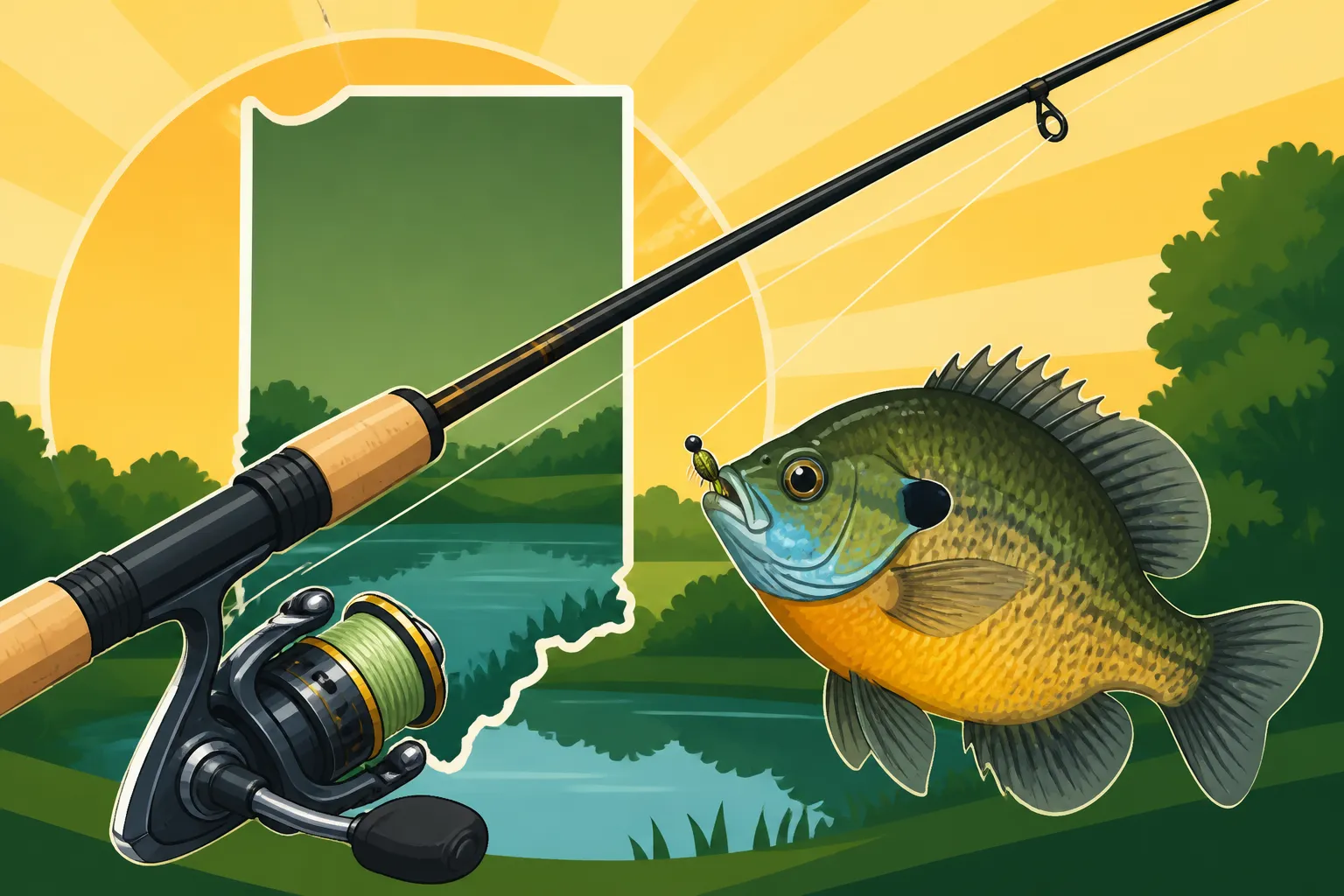
It’s a tale as old as time for many Indiana anglers: you feel that faint tap, tap, tap on your line, the unmistakable nibble of a bluegill, but when you go to set the hook, there’s nothing there. Or maybe you hook into one, but your heavy bass rod takes all the fun out of the fight, turning a feisty panfish into a lifeless drag. This guide is all about changing that experience, helping you discover the joy and effectiveness of ultralight rods specifically for bluegill fishing, so you can feel every head shake and make every bite count.
Why Ultralight is the Way to Go for Bluegill
When you're chasing after bluegill, those small, spirited panfish that populate nearly every pond and lake across Indiana, your gear choice makes a monumental difference. A common mistake many anglers make, especially beginners, is to use a rod that's simply too heavy for the quarry. Using a medium or even a medium-light rod designed for bass can turn a bluegill catch into a non-event, leaving you wondering if you even had a fish on. This is where the magic of an ultralight rod truly shines.
The primary reason to embrace ultralight tackle for bluegill is that it reintroduces the "sport" into sport fishing for these smaller species. Instead of overpowering them, an ultralight rod allows the bluegill to put up a spirited battle, making even a palm-sized fish feel like a trophy. It transforms the act of catching from a simple retrieve into an engaging, sensitive dance between angler and fish.
Moreover, bluegill often congregate in shallow areas, near weed beds, docks, or submerged structures, and they can be incredibly finicky eaters. An ultralight setup is perfectly suited for presenting small, delicate baits and lures with accuracy and subtlety, which can be crucial for enticing a bite from a wary school of panfish. It's about matching your presentation to the size and behavior of the fish, something heavier gear simply can't achieve effectively.
The Thrill of the Fight
Let's be honest, there's a certain satisfaction that comes from feeling every move a fish makes. With a heavy rod, a bluegill barely registers as a tug. But switch to an ultralight, and suddenly, that same bluegill feels like a heavyweight contender. The bend in the rod, the quick darting runs, the head shakes—every aspect of the fight is amplified, turning a routine catch into an exhilarating experience.
This amplified sensation is a huge part of what makes ultralight fishing so addictive. It's not just about catching fish; it's about experiencing the catch. You'll find yourself paying closer attention to the nuances of the battle, honing your angling skills as you learn to play the fish gently yet firmly. It truly is a different dimension of fishing enjoyment, especially when you're targeting fish like bluegill that are abundant and eager to bite.
Imagine sitting on a quiet pond bank in central Indiana, the sun warming your face, and then bam! – a powerful strike that sends a jolt up your arm. With an ultralight, you're connected directly to that energy, feeling the raw power of even a small fish. It’s an immersion into the angling experience that heavier gear simply cannot provide. For an even better experience with these feisty fish, check out our guide on Best Bluegill Fishing Techniques for Kids, as it really teaches you how to maximize the fun.
Enhanced Sensitivity and Bite Detection
One of the most frustrating things about bluegill fishing with inappropriate gear is missing bites. Their mouths are small, and their initial takes can be incredibly subtle—sometimes just a slight tick on the line. An ultralight rod is engineered for maximum sensitivity, allowing you to detect even the most delicate bites. This means fewer missed opportunities and more fish in your net.
The thinner, more flexible blank of an ultralight rod transmits vibrations much more efficiently than a stiff, heavy rod. You'll feel everything from a curious bump to a full-on take, giving you that split-second advantage needed to set the hook. This enhanced feedback loop makes you a more effective angler and significantly increases your catch rate, especially on days when the fish are being particularly finicky.
Think about fishing on a calm summer evening in one of Indiana's many farm ponds. With an ultralight, that almost imperceptible nudge that your heavier rod would ignore suddenly registers clearly. You'll quickly learn to distinguish between debris, current, and a fish mouthing your bait, refining your instinctual timing for the hookset. This level of sensitivity is a game-changer for bluegill fishing.
Casting Light Lures and Baits
Bluegill, particularly larger ones, can be quite wary. They often prefer natural, subtle presentations. This means tiny hooks, small bobbers, and extremely light baits or lures like small jigs, worms, or crickets. Trying to cast these minuscule offerings with a conventional rod is like trying to throw a feather with a baseball bat—it’s just not going to happen with any accuracy or distance.
Ultralight rods are specifically designed to load up and launch these lightweight presentations effortlessly. Their flexible tips bend easily under the minimal weight of a small jig or a piece of worm, storing and releasing energy to propel your bait exactly where you want it. This precision casting is invaluable when you're trying to place a tiny cricket next to a lily pad or under a dock where bluegill might be hiding.
Whether you're using a micro jig, a tiny spinner, or a simple piece of live bait, an ultralight rod ensures you can present it naturally and effectively. This opens up a whole new world of bait and lure choices for bluegill, allowing you to experiment and find what they're hitting on that particular day. For more ideas on what to tie on, take a look at our guide on Best Bait for Sunfish and Bluegill.
Choosing the Right Ultralight Rod: What to Look For
Selecting the perfect ultralight rod for bluegill isn't as simple as grabbing the first "ultralight" labeled rod you see. There are specific characteristics that will make one rod perform better than another for these particular fish. Understanding rod length, action, power, and construction materials will empower you to make an informed choice that truly enhances your bluegill fishing experience. It's about finding that sweet spot between durability and sensitivity.
When you're browsing the aisles at your local Bass Pro Shops or scrolling through options on Amazon, you'll encounter a dizzying array of specifications. Don't get overwhelmed! Focus on these core attributes, and you'll be well on your way to selecting a rod that feels like an extension of your arm, perfectly tuned for detecting and fighting those spirited bluegill. Remember, a good ultralight rod is an investment in your fishing enjoyment, making every trip more rewarding.
Consider how you typically fish. Are you primarily shore fishing a small pond, or do you have boat access on larger Indiana lakes? Your fishing environment will also influence ideal rod characteristics, especially length. Matching the rod to your preferred style and typical fishing spots is key to maximizing its performance and your comfort on the water.
Rod Length and Action
For bluegill, a rod length between 5 feet to 6 feet 6 inches is generally ideal. Shorter rods (5-foot range) are great for tight spots, like overgrown creek banks or dense brush, offering excellent control and accuracy for short, precise casts. Longer rods (up to 6 feet 6 inches) provide better casting distance, which can be a huge advantage on larger, more open water bodies or when you need to reach wary fish without spooking them.
Rod action refers to where the rod bends when pressure is applied. For bluegill, a fast or extra-fast action is often preferred. This means the rod bends primarily in the tip section, offering maximum sensitivity to detect those subtle bluegill bites and quick hook sets. A fast action also allows for more accurate casting of light lures because the tip loads and unloads quickly. A moderate or slow action rod, which bends more through the middle or even into the butt section, might be too "whippy" for quick hook sets on small-mouthed bluegill, though some anglers prefer the softer feel for playing fish.
| Rod Length | Best Use Cases | Pros | Cons |
|---|---|---|---|
| 5' – 5'6" | Tight cover, small creeks, precise short casts | Excellent accuracy, nimble in tight spots | Shorter casting distance, less leverage |
| 6' – 6'6" | Open water, longer casts, shore fishing | Better casting distance, more leverage | Less nimble in very tight spots |
Rod Power and Line Rating
Rod power refers to the rod's strength or its stiffness. For bluegill, you absolutely want an ultralight power rod. Some manufacturers might label them as "light" or "ultra-light," but always check the line and lure weight ratings. An ultralight rod is designed to handle very light fishing lines and small lures, making it perfect for panfish.
The line rating tells you the range of fishing line strengths (in pounds test) that the rod is designed to perform best with. For bluegill, look for rods rated for 2-6 pound test line. Using line heavier than the rod's rating can hinder casting performance and make the rod feel stiff, defeating the purpose of an ultralight setup. Similarly, the lure weight rating will typically be in the 1/32 to 1/8 ounce range, perfectly matching the small jigs and baits bluegill love.
Matching your line to the rod's power is crucial for optimal performance. A rod rated for 2-6lb line will cast a tiny jig much farther and more accurately with 2-4lb monofilament or fluorocarbon than it would with 8lb line. This harmonious pairing ensures the rod flexes correctly, providing the sensitivity and casting prowess you need for bluegill. For general advice on choosing the right gear, check out Best Panfish Rods for Indiana Ponds.
Handle and Reel Seat Comfort
While often overlooked, the comfort of the rod handle and the design of the reel seat significantly impact your fishing experience, especially during long days on the water. For ultralight fishing, where sensitivity is paramount, a comfortable and ergonomic handle can make a real difference in how well you feel those subtle bites. You'll want a handle that fits your hand well and provides good grip, even when wet.
Handles are typically made of cork or EVA foam. Cork is classic, lightweight, and offers good feel, conforming to your hand over time. EVA foam is durable, often more affordable, and provides excellent grip, even in less-than-ideal conditions. The choice often comes down to personal preference, but ensure it feels good in your hand. The length of the handle is also important; shorter handles are great for single-handed casting, while longer handles offer more leverage for two-handed casts and fighting larger fish, though they can get in the way for ultralight applications.
The reel seat should securely hold your ultralight spinning reel without any wobble. Many ultralight rods feature skeletonized or minimal reel seats to reduce weight and enhance sensitivity, allowing your fingers to maintain direct contact with the rod blank. When you're standing in line at Bass Pro Shops, or unwrapping a new rod from Amazon, pay close attention to how the reel seats and handles feel. A comfortable, well-designed handle and reel seat will prevent fatigue and keep you focused on the fishing.
Beyond the Rod: Completing Your Ultralight Bluegill Setup
An ultralight rod is just one piece of the puzzle. To truly maximize your bluegill fishing potential, you need to pair it with the right supporting cast: a perfectly matched reel, appropriate line, and a selection of effective baits and lures. Each component works in concert to deliver the sensitivity, casting ability, and fish-fighting fun that ultralight angling is known for.
Think of it as building a precision instrument. A great violin needs a great bow, and a skilled musician to bring them together. Similarly, your ultralight rod needs a reel that balances it perfectly, a line that complements its action, and baits that bluegill can't resist. Investing a little thought into each of these elements will elevate your entire fishing experience and lead to more successful outings on Indiana's diverse waterways.
This complete approach ensures that no single component becomes a weak link in your setup. It allows for seamless casting, optimal bite detection, and the confidence to handle those surprisingly strong bluegill without fear of breaking your gear.
Matching Your Reel to the Rod
For an ultralight rod, a small spinning reel in the 500 to 1000 size range is the perfect partner. These reels are designed to be lightweight, balance well with ultralight rods, and have small spools suitable for thin fishing lines. A common mistake is to put a reel that is too large or heavy on an ultralight rod, which throws off the balance and makes the setup feel cumbersome and less sensitive.
When selecting your reel, look for a smooth drag system. Even with small fish like bluegill, a smooth drag is crucial for preventing line breaks, especially when using very light line. Quality reels will have several bearings for smooth operation. You don't necessarily need the most expensive reel on the market, but prioritize smooth operation and a reliable drag. Brands like Shimano, Daiwa, and Penn offer excellent ultralight spinning reels across various price points.
The goal is to have a rod and reel combo that feels like a single, balanced unit in your hand. When you hold the rod with the reel attached, the balance point should be just in front of or directly on your hand. This balance minimizes fatigue and maximizes your ability to feel subtle bites. Many manufacturers, you'll find on Bass Pro Shops shelves or on Amazon, even offer pre-matched Best Rod and Reel Combos for Kids Fishing that make excellent ultralight bluegill setups for anglers of all ages.
Line Selection for Ultralight Fishing
Your choice of fishing line is perhaps even more critical in ultralight fishing than with heavier setups. The primary objective is to use the lightest line possible while still having enough strength to land your target fish. For bluegill, 2-pound to 4-pound test monofilament or fluorocarbon line is typically ideal. Some experienced anglers might even go down to 1-pound test for the ultimate challenge and sensitivity.
Monofilament line is a classic choice: it's affordable, has good knot strength, and offers a bit of stretch, which can be forgiving when fighting lively fish. Fluorocarbon line is virtually invisible underwater, offers less stretch than mono for increased sensitivity, and is more abrasion-resistant. However, it can be stiffer and more prone to memory. Braided line, while incredibly strong and sensitive, is generally too visible and too thick for ultralight bluegill applications, and can be overkill unless you are in extremely dense cover.
Regardless of the type, always use fresh line. Light lines can degrade over time, losing strength and increasing memory. Spooling up with new line at the beginning of each season, or even more frequently if you fish often, is a small investment that can prevent big disappointments. Remember, the lighter the line, the more subtle your presentation, and the more likely you are to entice wary bluegill.
Essential Lures and Baits
Bluegill aren't typically picky eaters, but an ultralight setup truly shines when presenting smaller, more refined offerings. Live bait is always a winner: small pieces of nightcrawler, red wigglers, crickets, or mealworms are irresistible to bluegill. Hook these on a small hook (size 8 or 10, Aberdeen style is popular) and present them under a tiny bobber or even tight-lined on the bottom.
For artificials, tiny jigs are king. Micro jigs in the 1/64 to 1/32 ounce range, tipped with a small plastic grub, tube, or even just a bare hook, can be deadly. Colors like black, white, chartreuse, and pink are perennial favorites. Small spinners (size 0 or 1), such as Rooster Tails or Mepps, can also be very effective, especially when bluegill are actively feeding. Fly-fishing nymphs and small dry flies also fall perfectly into the ultralight presentation category, opening up another exciting dimension for anglers.
The key with lures and baits for bluegill is often subtlety and size. You're not trying to attract them with massive commotion; you're trying to mimic their natural forage. Experiment with different colors and retrieve speeds until you find what the fish are keying in on that day. Having a small tackle box filled with a variety of these ultralight options will make you ready for any bluegill encounter in Indiana.
Mastering the Ultralight Experience: Tips and Techniques
Once you've assembled your perfect ultralight bluegill setup, the next step is to master the techniques that truly unlock its potential. Ultralight fishing is less about brute force and more about finesse, patience, and a keen sense of observation. It's a style of fishing that rewards attention to detail and a light touch, turning even the most common bluegill into a worthy opponent.
Understanding how to effectively cast light lures, detect the most subtle bites, and play a fish on thin line will elevate your success rate and your overall enjoyment. This isn't just about catching more fish; it's about connecting with the environment and the fish in a more intimate way. These tips will help you make the most of your ultralight gear.
Remember that bluegill are often found in predictable locations. Focus your efforts around submerged structures, weed lines, lily pads, docks, and any shaded areas. Knowing their habits will make your ultralight finesse techniques even more effective. For specific Indiana regulations, like the Panfish Daily Limit in Indiana: 25 per Species, always check the current rules before heading out.
Proper Technique for Bluegill with Ultralight Gear
Casting with an ultralight rod requires a slightly different approach than with heavier gear. Because the baits are so light, you'll need a smoother, more fluid casting motion. Avoid jerky, powerful casts; instead, let the flexible rod tip do the work, using a gentle flick of the wrist. This smooth motion prevents snags and ensures your tiny bait lands softly and accurately, without spooking nearby fish.
When fishing with a bobber, use the smallest bobber possible that will still suspend your bait without sinking. A large bobber creates too much resistance and makes it harder for bluegill to pull it under, often resulting in dropped bites. For tight-lining or bottom fishing, focus on feeling for those subtle taps and nudges. Keep a slight amount of slack out of your line, but not so much that you can't feel a bite.
Setting the hook with an ultralight setup should be a gentle but firm sweep, not a violent jerk. Bluegill have delicate mouths, and too much force can tear the hook out or break your light line. Once hooked, keep steady pressure on the fish, letting the rod's flex absorb the lunges, and rely on your smooth drag system to prevent breaks. Don't pump the rod too aggressively; instead, reel steadily and guide the fish in.
The Importance of Stealth and Presentation
Bluegill can be surprisingly wary, especially in clear water or pressured environments. A heavy approach with large, noisy gear can easily send them scattering. Ultralight fishing, by its very nature, promotes a stealthier approach. Use quiet movements, especially if you're fishing from the bank or a small boat. Minimize splashing or banging gear around.
Your presentation is key. If using a bobber, try to cast beyond your target area and gently retrieve the bobber into position to avoid a noisy splash right on top of the fish. When casting jigs or spinners, aim for a soft entry into the water, mimicking a natural falling insect or baitfish. A natural, quiet presentation is far more likely to entice a bite than a clumsy, loud one.
Wearing natural colors and staying low on the bank can also make a difference. The more invisible you are to the fish, the more comfortable they'll be to approach your bait. Remember, ultralight fishing is about deception and finesse, so every little detail that contributes to a natural presentation will increase your success.
When to Upgrade or Expand Your Ultralight Arsenal
As you become more proficient with your ultralight setup, you might find yourself exploring different techniques or targeting slightly larger panfish, like crappie or even small bass. This is when you might consider adding another ultralight rod to your arsenal, perhaps one with a slightly different action or power rating to handle specific situations.
For instance, you might want a rod with a softer, moderate action for targeting crappie that often hit moving baits, or a slightly longer rod for casting tiny crankbaits further. Don't be afraid to experiment. The beauty of ultralight fishing is its versatility within its niche. You can find excellent value in rods from manufacturers stocked at Bass Pro Shops, or by searching online retailers like Amazon for deals and a wider selection.
Ultimately, your ultralight rod should bring you joy and success. If you find yourself consistently missing bites, breaking lines, or simply not enjoying the experience, it might be time to re-evaluate your gear or techniques. But for the vast majority of Indiana's bluegill anglers, a well-chosen ultralight rod will open up a world of fun and make every tiny tug a memorable event.
Disclaimer
This article is for general informational purposes only and does not constitute professional advice. Laws, prices and regulations vary by location and change over time. Consult a qualified professional for guidance on your specific situation.