Crappie Spawn Timing on Indiana Lakes
Oh, the crappie spawn! It's one of those magical times of year when anglers across Indiana get that itch, hoping to hit the lakes just as those slabs move shallow. But let's be honest, figuring out the exact timing can feel like chasing a ghost, with fluctuating weather and water conditions constantly throwing us curveballs. This guide is all about helping you decode the crappie spawn on Indiana lakes, giving you the insights and strategies to be there when the bite is on fire.
Understanding the Crappie Spawn Cycle
The crappie spawn isn't a single day; it's a gradual process, heavily influenced by nature's cues, primarily water temperature. For many of us, it's the most anticipated fishing event of the spring, offering some of the year's best chances to fill a livewell. But if you miss the window, it can feel like you've waited all winter for nothing!
The Role of Water Temperature
If there's one single factor that dictates when crappie decide to get busy, it's water temperature. Crappie are cold-blooded creatures, meaning their metabolism and reproductive cycles are directly tied to the warmth of the water around them. You'll typically see crappie starting to get active and move towards spawning areas when water temperatures consistently reach the mid-50s Fahrenheit. However, the true "sweet spot" for active spawning is usually between 60 and 68 degrees Fahrenheit.
Now, here's where the frustration often creeps in. We've all been there: the water hits 60 degrees, you're pumped, you hit the lake, and then a cold front rolls through, dropping the temperature by 10 degrees overnight. What happens? The crappie hit the pause button, retreating to slightly deeper water, and the bite shuts down. It's not a hard switch; it's a gradual process that can be interrupted. Stable, rising temperatures are what really get them in the mood, and that can vary wildly from year to year and even from lake to lake, depending on depth, exposure to sunlight, and runoff.
Ideal Depths and Cover for Spawning Crappie
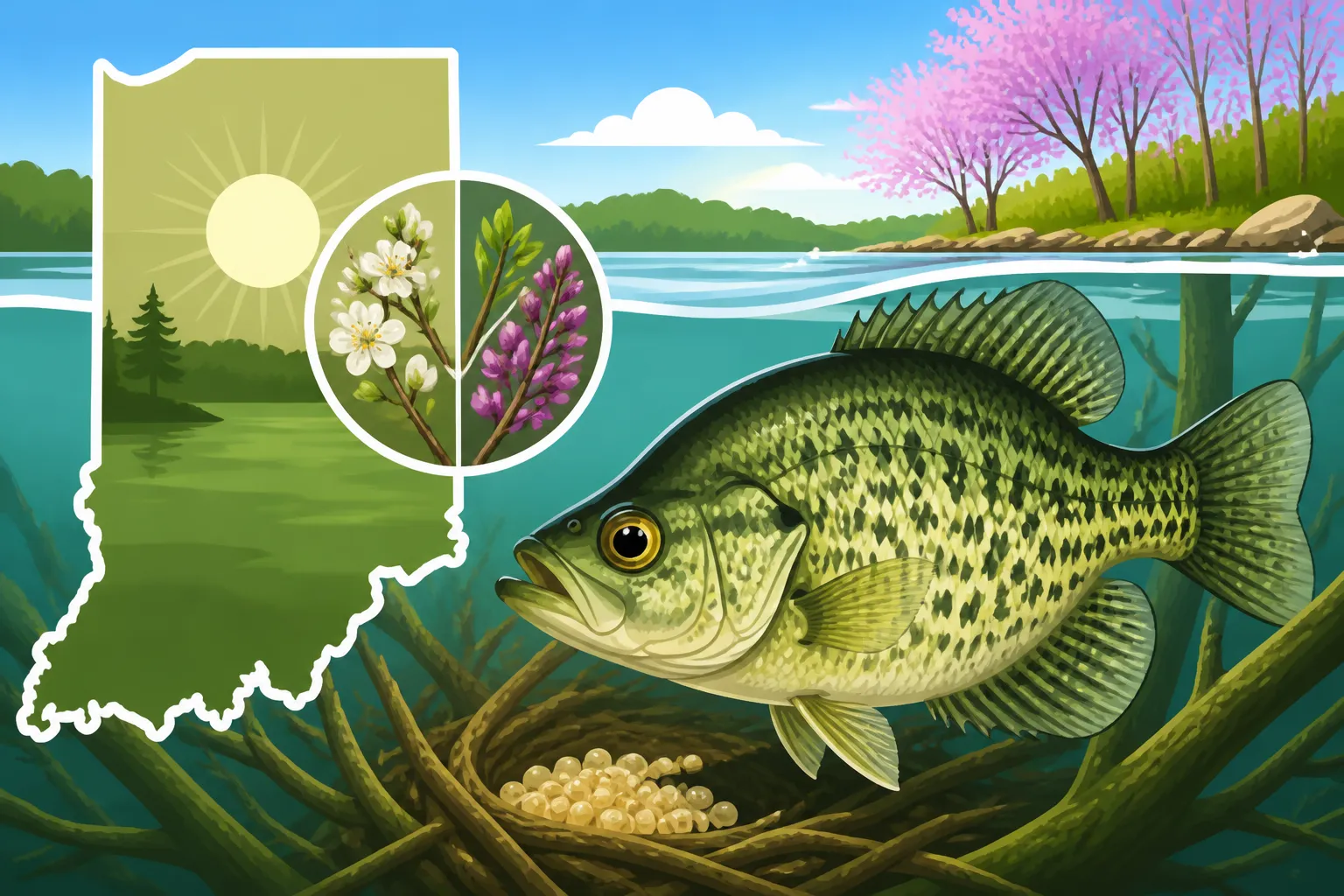
Once those water temperatures nudge into the optimal range, crappie, especially the males, start their migration to the shallows. They're looking for specific types of real estate to build their nests and guard their eggs. Think shallow, hard-bottomed areas that receive plenty of sunlight, which helps warm the water and incubate the eggs.
You'll often find them tucked into incredibly shallow water, sometimes just a foot or two deep. They gravitate towards various forms of cover, which offer protection for their nests and fry. This can include flooded timber, submerged brush piles, weed beds, lily pad stems, rip-rap along causeways, or even boat docks and bridge pilings. Any structure that provides cover and a firm substrate is fair game. For example, on a lake like Patoka Lake, with its many coves and standing timber, you'll find crappie fanning beds around those submerged trees. Similarly, the docks on Lake Wawasee can be prime crappie territory during the spawn. It's all about finding that perfect combination of warmth, cover, and security.
Key Indicators Beyond Temperature
While water temperature is king, it's not the only thing telling crappie it's time to spawn. Other natural cues play a role, and keeping an eye on them can give you an edge. The length of daylight, or photoperiod, is a consistent signal that spring is progressing. As days get longer, it reinforces the temperature cues.
Another significant factor is the lunar cycle. Many anglers swear by the full moon in spring as a major trigger for spawning activity. While the science isn't always definitive, anecdotal evidence from countless fishing trips suggests that crappie activity often intensifies around the full moon phases in April and May. Pay attention to emergent vegetation, too. When green growth starts to really take off in the shallows, it's a good sign that the ecosystem is waking up, and crappie won't be far behind. You might also notice subtle changes in the fish themselves – male crappie often develop a darker, more mottled coloration during the spawn as they guard their nests. Seeing these "black crappie" in their spawning dress is a dead giveaway that you're in the right place at the right time.
Peak Crappie Spawning Seasons Across Indiana Lakes
Indiana is a diverse state, from the deep glacial lakes in the north to the sprawling reservoirs in the south. This geographical spread means that the crappie spawn doesn't happen uniformly across the state. Understanding these regional differences is key to timing your trips effectively.
Early Spring Opportunities March-April
For those eager to kick off their crappie season as early as possible, the southern half of Indiana often provides the first opportunities. Lakes and reservoirs like Monroe Lake and Patoka Lake, with their generally warmer waters and more exposed shallow areas, tend to see crappie begin their spawning rituals in late March to early April. The key here is consistency. Once those first few weeks of consistent warmth hit, the shallow coves and protected bays will be the first to warm up, drawing the crappie in.
Anglers targeting these early spawners might find them staging just outside their eventual beds in 5-10 feet of water before moving even shallower. This early push means you might encounter them slightly deeper if a cold snap hits, but they're still intent on their mission. It's a great time to be on the water, as these fish are often aggressive as they prepare for the rigors of spawning. You might have some of your best fishing of the year if you catch this initial push.
Mid-Spring Peak April-May
As spring progresses into April and May, the crappie spawn hits its stride across much of central and northern Indiana's larger reservoirs and natural lakes. This is often considered the prime window for crappie fishing throughout the state. Lakes like Mississinewa Lake, Salamonie Lake, and even the natural lakes in the middle of the state will see water temperatures consistently reaching that crucial 60-68 degree range.
During this period, crappie are firmly committed to the shallows. You'll find them actively fanning beds and guarding eggs, making them particularly susceptible to well-presented baits. This is the time when even a novice angler can have an incredible day, as the fish are concentrated and focused. It's not uncommon to pull multiple crappie from a single brush pile or dock during this peak. This also coincides with many areas experiencing stable weather patterns, which further encourages prolonged spawning activity.
Late Spring and Northern Lake Considerations May-Early June
The latest crappie spawn typically occurs in the deepest, coldest glacial lakes of northern Indiana, particularly in counties like Kosciusko and Steuben. Lakes such as Lake Wawasee, Lake James, and other deep, clear bodies of water take longer to warm up after the long winter. Here, you might not see significant spawning activity until late May or even early June.
It can be frustrating watching anglers in the south post their catch photos while you're still waiting for the water to warm up on your home lake. But patience is a virtue! When the spawn finally kicks off in these northern lakes, it can be just as explosive. These fish have been holding back, and when the conditions are right, they go all in. So, if you're fishing up north, don't despair if April seems quiet; your time will come. Keeping an eye on water temperatures, perhaps with a simple fish finder buying guide for freshwater lakes, will be your most valuable tool.
Here's a quick reference for general crappie spawning timings in Indiana:
| Region of Indiana | Water Temperature Range | Typical Spawning Months | Key Indicators | Preferred Depths |
|---|---|---|---|---|
| Southern | 58-68°F | Late March – April | Early vegetation, stable warm days | 2-5 feet (sometimes deeper pre-spawn) |
| Central | 60-68°F | April – Mid-May | Consistent warmth, full moon phases | 1-4 feet, near structure |
| Northern | 62-70°F | Mid-May – Early June | Fully green vegetation, warmer nights | 1-3 feet, shallow cover |
Strategies for Locating Spawning Crappie
Knowing when the crappie spawn is happening is only half the battle; the other half is knowing where to find them. These fish are creatures of habit during this critical time, making them somewhat predictable if you understand what they're looking for.
Scouting Shallow Water and Structure
When you arrive at an Indiana lake during the spawn, the first thing to do is focus on shallow water. Don't be afraid to fish in depths you might normally ignore, sometimes less than two feet. Look for areas with obvious cover. This could be visible submerged logs, fallen trees along the bank, thick clumps of reeds, or even the shadows cast by boat docks and bridge pilings. Crappie are looking for places where they can hide their eggs from predators and where the fry will have immediate cover once they hatch.
Using your electronics, like a good fish finder, can help you identify subtle changes in bottom composition that might indicate a harder bottom, which crappie prefer for their nests. However, during the spawn, often your eyes are your best tools. Polarized sunglasses are absolutely essential. They cut the glare off the water, allowing you to peer into those shallow zones and sometimes even spot actual crappie fanning their nests or holding tight to cover. Paddle a kayak quietly or use a trolling motor to cruise slowly along shorelines, systematically checking every piece of structure you come across. Remember, these fish are often stacked up, so if you find one, there are likely more.
Essential Gear and Techniques for Spawn Fishing
Crappie fishing during the spawn doesn't require heavy-duty gear; in fact, finesse is often the name of the game. A light to ultralight spinning rod paired with a small reel spooled with 4-6 lb test monofilament or fluorocarbon line is usually perfect. The sensitivity of lighter tackle allows you to feel those subtle bites that crappie are famous for. If you're looking to upgrade your setup, you can find a great selection of best spinning reels for bass fishing on Amazon, many of which are perfectly suitable for crappie as well.
When it comes to baits, jigs are king, especially small jigs ranging from 1/32 oz to 1/16 oz. Plastic bodies like small tubes, grubs, or crappie minnows in various colors (chartreuse, white, black, and pink are perennial favorites) are incredibly effective. You can rig these under a small bobber, allowing them to suspend precisely at the depth the crappie are holding, or simply cast and retrieve slowly. Live minnows, fished under a bobber or on a small jig head, are also deadly, especially when the bite is tough. For a wide array of jig colors and sizes, Amazon is a fantastic resource to ensure you're always stocked for varying water conditions. Don't forget to have a selection of small hooks on hand, size 4 or 6, for presenting those live minnows. You might also want to explore some crappie jigging techniques for beginners to refine your presentation.
Patience and Persistence
One of the biggest frustrations during the spawn is when you know the fish should be there, but they're just not biting. This is where patience and persistence become your greatest assets. The spawn isn't a constant feeding frenzy; crappie can be finicky. Sometimes, they're aggressively feeding before or after spawning, but during the actual fanning and guarding of nests, they might be more territorial than hungry.
If one spot isn't producing, don't get stuck there. Move on. Cover water, check different types of cover, and vary your depths. Crappie might be holding just a few inches deeper than you're fishing, or they might prefer a different type of structure altogether. Wind direction and intensity, cloud cover, and even boat traffic can influence where crappie decide to set up shop. Sometimes, just changing the color of your jig or the speed of your retrieve can make all the difference. Remember, the crappie spawn is a window of opportunity, and you want to make the most of it. Don't be afraid to try new things and adapt to the conditions you face.
Maximizing Your Crappie Spawn Success
Catching crappie during the spawn isn't just about showing up; it's about understanding the nuances of the conditions and approaching your fishing ethically and strategically.
Reading the Weather and Water Conditions
The weather, as we've already touched upon, is a huge factor. A warm, stable forecast leading up to and during your fishing trip is ideal. Consistent sunshine helps warm the shallow water, keeping the crappie active and in their spawning zones. Conversely, a sharp cold front will often push crappie temporarily deeper, slowing down the bite. Fishing during a strong cold front after a period of warmth can be incredibly frustrating, as the fish become lethargic and less willing to bite.
Water clarity also plays a role. Crappie generally prefer clearer water for spawning, as it allows sunlight to penetrate and helps them see predators and potential mates. After heavy rains, lakes can become muddy and turbid, which might delay the spawn or push crappie to clearer pockets within the lake. Pay attention to river inflows or creek mouths; these can bring in cooler, muddier water that crappie will avoid. Sometimes, a sunny day after a muddy rain will see the crappie move into the absolute shallowest, clearest water they can find to soak up the sun's warmth.
Respecting the Resource and Regulations
It's easy to get caught up in the excitement of a hot crappie bite during the spawn, but it's crucial to remember our responsibility as anglers to protect the resource. Crappie are particularly vulnerable during this time because they're concentrated and aggressive. Always be mindful of Indiana's fishing regulations, especially the Indiana Panfish Daily Limits by Species and specifically, How Many Crappie Can You Keep in a Day?.
Taking only what you need and practicing catch-and-release for larger, breeding-size crappie ensures a healthy population for future generations. If you're keeping fish for a meal, try to harvest smaller to medium-sized crappie and release the really big "slab" females to continue their reproductive cycle. Be gentle when handling fish, especially if you plan to release them. Using circle hooks can also minimize gut hooking, increasing the survival rate of released fish. A quality landing net is always a good idea to protect the fish when bringing them aboard.
Post-Spawn Fishing and Transition
The crappie spawn, while glorious, doesn't last forever. Once the majority of crappie have completed their spawning duties, they begin to transition out of the extreme shallows. The females, particularly, will often move to slightly deeper, cooler water to recover from the stress of spawning. The males might hang around the shallow cover a bit longer, guarding the last of the nests.
This post-spawn period can be a tricky time for anglers. The fish are more dispersed and often less aggressive as they recuperate. You'll need to adjust your tactics, looking for crappie in transitional areas, such as the edges of weed lines, submerged humps, or suspended over deeper water near structure. This might mean moving from a shallow jig presentation to a slow troll or drifting over deeper brush piles. Understanding the post-spawn movement is vital if you want to continue catching crappie through late spring and into summer. For more insights on how to adapt, consider checking out guides on How to Find Crappie in Summer as they leave their spawning grounds.
The crappie spawn on Indiana lakes is truly one of the highlights of the fishing calendar. With a bit of patience, understanding of their natural cues, and a willingness to adapt, you can maximize your chances of enjoying some incredible crappie fishing this spring.
Disclaimer
Please note: Fishing regulations, conditions, and fish behavior can change. Always check the latest Indiana Department of Natural Resources (IDNR) regulations before heading out. This guide is for informational purposes only and should not replace official sources.