Best Bait and Lures for Fall Fishing
As the leaves start to turn and that crisp chill hints at the changing seasons, many anglers in Indiana start to feel a shift in their fishing strategy. You might be finding that the trusty summer baits just aren't cutting it anymore, or that the fish you were catching so easily a few weeks ago have suddenly become elusive. It's a common frustration, but fall fishing in the Hoosier State can actually be some of the most rewarding of the entire year, provided you adapt your approach and know exactly what bait and lures to throw. This comprehensive guide is here to help you navigate those exciting, yet sometimes challenging, autumn waters, ensuring your tackle box is packed with the best options for a successful fall season.
Understanding Fall Fish Behavior in Indiana
Fall in Indiana brings about a dramatic change in our waterways, and understanding these shifts is key to choosing the right bait and lures. Fish aren't just swimming aimlessly; they're responding to deep-seated instincts driven by temperature, food availability, and the impending winter.
Cooling Water and Fish Metabolism
As the days shorten and the nights grow cooler, water temperatures across Indiana's lakes and rivers begin to steadily drop. This cooling trend acts like a switch for many fish species. Initially, it kicks their metabolism into high gear, prompting a "fall feed" as they try to gorge themselves in preparation for the leaner winter months. Think of it as their last big grocery run before the store closes for a while! Bass, crappie, walleye, and even those powerful Lake Michigan salmon and steelhead become incredibly active, often schooling up and moving to different depths or structures in search of abundant forage.
However, as temperatures continue to plummet, their metabolism will eventually slow down. This means their feeding windows might become shorter, and they might prefer a slower, more energy-efficient meal. This transition from aggressive feeding to more lethargic behavior is crucial for anglers to recognize, as it directly impacts lure presentation and speed. You might start the fall casting fast-moving crankbaits, but by late autumn, a slow-crawled jig or live bait could be the only thing they'll touch. Understanding these nuances will dramatically improve your chances of success during the various stages of the fall season. For more insights into how these changes affect your fishing, check out our guide on Water Temperature and Fish Feeding Patterns.
Fall Turnover and Its Impact
One of the most significant, yet often misunderstood, events in many Indiana lakes during the fall is what anglers call "turnover." As surface waters cool, they become denser and sink, displacing the warmer, less oxygenated water from the bottom, which then rises to the top. This process essentially mixes the entire water column. While it's a natural and healthy ecological event, it can temporarily make fishing quite challenging.
During turnover, fish often scatter throughout the water column, trying to find stable temperatures and oxygen levels. The water itself can appear murky or "churned up," and fish might be less willing to bite. The good news is that turnover usually only lasts for a week or two, and once the lake has completely mixed, fishing can actually improve. After turnover, oxygen levels are more uniform, and baitfish might concentrate in specific areas, which in turn draws in predatory game fish. Learning to identify when your favorite lake is experiencing turnover, often by observing water clarity and checking temperature at different depths, can save you a lot of frustration and help you plan your fishing trips more effectively.
Shorter Days and Feeding Windows
The shorter days of fall mean less daylight, and this directly impacts when and how fish feed. Many species, particularly predators like bass and walleye, become much more active during dawn and dusk. These low-light periods offer them a predatory advantage, allowing them to ambush baitfish more easily. As a result, the "golden hours" of fishing – early morning and late evening – become even more critical during the fall.
You might find that fish that were active throughout the day in summer now only bite aggressively for an hour or two around sunrise and sunset. This means you need to be strategic with your time on the water. Even midday fishing can be productive, especially on overcast days or if fish are holding in deeper, shaded cover. However, focusing your efforts on those prime low-light windows, especially for species like walleye, can lead to some of your most memorable catches of the season. Anglers can find valuable information on this topic in our guide Why Dawn and Dusk Are the Best Times to Fish.
Top Baits for Fall Largemouth and Smallmouth Bass
Bass fishing in Indiana during the fall can be absolutely phenomenal. As their metabolism ramps up, both largemouth and smallmouth bass become aggressive feeders, stocking up before winter. However, their preferred baits and presentation change dramatically from summer, and you'll need to adapt to catch these cool-water fighters.
Jigs and Craw Imitations
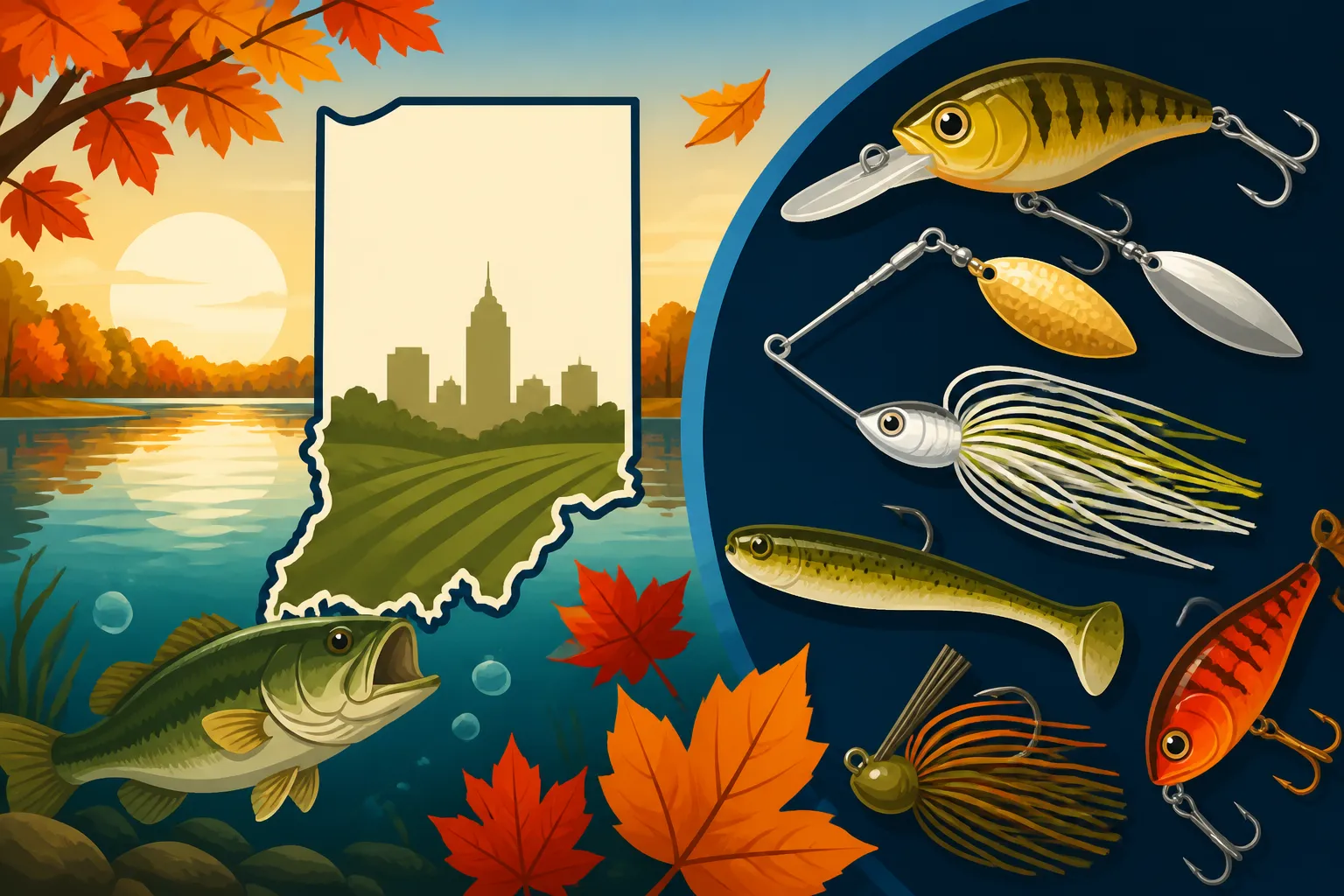
When the water starts to cool, but before it gets truly cold, jigs are an absolute powerhouse for bass. Whether you're targeting largemouth around brush piles or smallmouth on rocky points, a jig-and-trailer combo perfectly imitates crawfish, a primary food source for bass in the fall. Football jigs excel on hard bottoms and ledges, while flipping jigs are fantastic for probing heavy cover like fallen trees or docks. The beauty of a jig is its versatility; you can slow-crawl it, hop it, or even swim it.
For trailers, opt for soft plastic craws or chunks that add bulk and movement. Experiment with colors that mimic natural crawfish in your lake – browns, greens, and black/blue are always popular choices. The retrieve is often slower than in summer, allowing the jig to spend more time in the strike zone, mimicking a slow-moving or injured meal. Many anglers stock up on a variety of jigs and soft plastic trailers, and you can find a huge selection of options, like those from Strike King or Z-Man, readily available on Amazon to ensure you're prepared for any fall condition.
Spinnerbaits and Bladed Jigs
When bass are actively chasing baitfish in the fall, particularly during the initial cool-down phase, spinnerbaits and bladed jigs (like ChatterBaits) are hard to beat. These lures offer incredible vibration and flash, making them excellent search baits for covering a lot of water quickly. They're especially effective around dying weed lines, submerged timber, or along bluff walls where baitfish might be congregating.
For spinnerbaits, double willow blades are great for speed and flash, while a combination of Colorado and willow blades offers a good balance of thump and shine, especially in stained water. Bladed jigs, with their erratic action, often trigger reaction strikes from even finicky bass. Focus on retrieve speeds that keep the blades thumping and the bait moving just above or through the cover. Don't be afraid to experiment with brighter colors on sunny days and more natural tones on cloudy ones. These lures are fantastic for aggressive bass feeding, making them a must-have in your fall tackle box. Our guide on Best Bass Fishing Techniques for Post-Spawn also touches on aggressive feeding patterns that can extend into fall.
Crankbaits and Jerkbaits
As water temperatures continue their descent through the fall, crankbaits and jerkbaits become increasingly effective. Crankbaits are excellent for targeting bass holding to specific depths or structures, such as rock piles, points, or the edges of creek channels. Medium-diving crankbaits that reach 8-15 feet are often productive, mimicking shad or other baitfish trying to escape cooler surface waters. Look for colors like shad patterns, perch, or crawfish, depending on the predominant forage in your target lake.
Jerkbaits truly shine in colder fall waters. Their unique darting and suspending action perfectly imitates a dying or distressed baitfish, which is often irresistible to cool-water bass that are less willing to chase a fast-moving meal. A typical retrieve involves a series of jerks, pauses, and twitches, with the length of the pause increasing as the water gets colder. This "stop-and-go" presentation can be deadly, often drawing strikes during the pause. Brands like Rapala or Megabass make excellent jerkbaits that are incredibly effective for this time of year, and you'll often find deals on a variety of these on Amazon.
Effective Lures for Fall Walleye and Northern Pike
Indiana's glacial lakes and large reservoirs hold some fantastic walleye and northern pike fishing opportunities in the fall. These predatory fish respond very well to the cooling water, often becoming more active and concentrated as they chase schools of baitfish.
Trolling With Crankbaits and Stickbaits
Trolling is a highly effective method for covering vast expanses of water and locating active walleye and northern pike in the fall. As fish scatter or move to deeper, more subtle structures, trolling allows you to systematically present your lure to them. For walleye, medium to deep-diving crankbaits in shad, perch, or firetiger patterns are often the ticket. Look for models that dive to the depths where baitfish are schooling, typically 15-30 feet in larger lakes like Wawasee or Webster.
For northern pike, larger stickbaits and lipped crankbaits are ideal. They mimic the larger forage fish that pike prefer. Speed is crucial when trolling; experiment with different speeds, typically between 1.5 to 2.5 mph, until you find what triggers bites. Using planer boards can help you spread out your lines and cover even more water, increasing your chances of finding those aggressive fall feeders. Our guide on Walleye Trolling Techniques offers more in-depth strategies.
Jigging and Live Bait Rigs
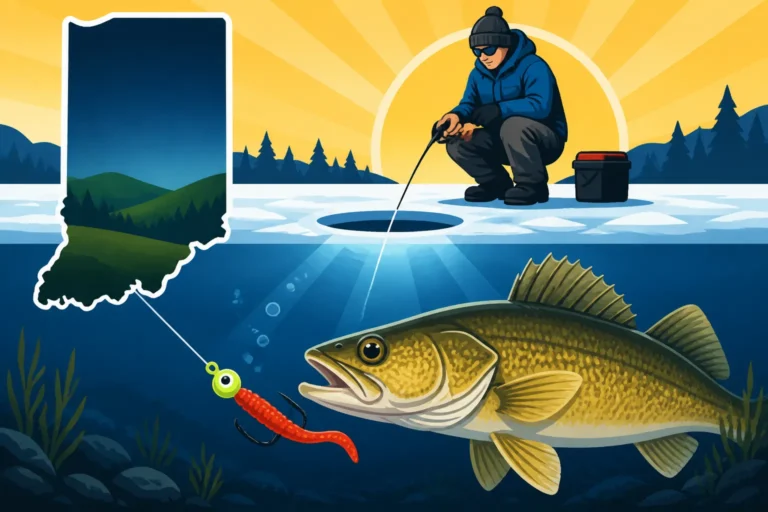
When walleye become less active or are holding tight to specific structures like humps, drop-offs, or submerged rock piles, jigging with live bait or soft plastics can be incredibly effective. A classic approach involves a lead head jig tipped with a live minnow, shiner, or even a nightcrawler. The key is to present it slowly and methodically, keeping it in the strike zone. Vertical jigging directly over marked fish on your fish finder (many portable options on Amazon can do this!) is a proven fall strategy.
For pike, larger jigs tipped with big soft plastic paddletails or even dead baitfish (where legal) can work wonders, especially near weed edges or around structure. The slower, more subtle presentation of live bait often entices bites from finicky fish that might ignore faster-moving artificials. Don't underestimate the power of a simple Lindy Rig or slip-sinker rig with a lively minnow, particularly on calmer days when fish are less willing to chase. This technique is often fruitful in destinations like Kosciusko County's glacial lakes, known for their abundant walleye. You can also explore our article on the Best Months for Walleye Fishing in Indiana's Glacial Lakes for seasonal timing.
Spoon Fishing for Aggressive Predators
Spoons are a highly versatile lure that can be incredibly effective for both walleye and northern pike during the fall, particularly when these fish are aggressive and chasing schools of bait. For walleye, casting or vertically jigging spoons can produce explosive strikes. Thin, metallic spoons that flutter on the fall effectively mimic dying baitfish. Silver, gold, or hammered brass spoons are classic choices, but experiment with bright colors like chartreuse or orange, especially in stained water.
Northern pike, with their ambush predator instincts, absolutely crush spoons. Larger, heavier spoons in flashy colors or natural baitfish patterns are excellent for casting to weed edges, submerged timber, or even trolling open water. The flash and erratic wobble of a spoon trigger their predatory aggression. Vary your retrieve, incorporating pauses and snaps, to mimic an injured baitfish. Spoons are a fantastic tool for covering water and targeting these toothy fall predators, especially in clear water conditions.
Crappie and Panfish: Fall Feast Strategies
Fall can be an amazing time to fill your cooler with crappie, bluegill, and other panfish in Indiana. As the water cools, these fish often begin to school up in predictable patterns, making them easier to locate and catch in numbers.
Small Jigs and Soft Plastics
When it comes to fall crappie, tiny jigs adorned with soft plastic bodies are the undisputed champions. As crappie begin to school up and move deeper, often suspending over structure or congregating around brush piles, a small (1/32 to 1/16 ounce) jig head paired with a small tube, grub, or "Mister Twister" style tail can be deadly. Colors like white, chartreuse, pink, and black/chartreuse are perennial favorites.
The key is to present these jigs slowly, often with a subtle lift-and-drop or a very slow retrieve. Crappie might be less aggressive than in summer, so a gentle presentation is often best. Many anglers also tip their jigs with a tiny piece of live bait, like a crappie minnow or a wax worm, to add scent and extra appeal. For smaller panfish like bluegill and redear sunfish, even smaller jigs (1/64 ounce) with tiny plastic tails or "Crappie Bites" on the hook can be incredibly effective when fished near schools or around submerged vegetation. This method allows for precise depth control, which is essential when panfish are holding at a specific level. You can certainly find a vast array of these small jigs and plastics on Amazon. For more detailed tips, check out Crappie Jigging Techniques for Beginners.
Live Minnows and Worms Under a Bobber
Sometimes, the simplest approach is the best, especially when panfish are a bit finicky in the cooler fall waters. A live minnow or a piece of nightcrawler fished under a slip bobber remains a highly effective strategy for fall crappie and bluegill. This setup allows you to suspend your bait at a precise depth, which is crucial as fish often move deeper and concentrate in specific thermoclines or around structure during the autumn.
For crappie, a small crappie minnow hooked through the lips or dorsal fin is incredibly enticing. For bluegill, a small piece of red worm or a wax worm on a tiny hook (size 8 or 10) can produce consistent bites. The bobber not only indicates a strike but also helps keep your bait in the productive zone without constantly retrieving. This technique is particularly good for targeting fish around docks, submerged brush, or deep weed edges, where schools of panfish often seek refuge and food as temperatures drop.
Spider Rigging and Trolling for Schools
For serious crappie anglers looking to maximize their catch when fish are schooled up in fall, spider rigging or slow trolling can be incredibly productive. Spider rigging involves deploying multiple long rods from the front of a boat, typically with small jigs or minnows suspended at various depths. This allows you to cover a wide area and pinpoint the depth at which the crappie are holding. Once you find the school, you can adjust all your baits to that exact depth.
Slow trolling, often with multiple rods pulling small crankbaits or jigs, is another excellent way to locate and catch large schools of crappie that might be suspended in open water or along contours. Speeds are typically very slow, just enough to give your lures action. This strategy is less about waiting for the fish to come to you and more about actively searching for them. It's an efficient way to turn a slow day into a banner day, especially on larger Indiana reservoirs where crappie can school in expansive areas.
Lake Michigan Salmon and Steelhead Fall Tackle
The Indiana shoreline of Lake Michigan comes alive in the fall with the highly anticipated salmon and steelhead runs. This is a bucket-list experience for many anglers, and having the right tackle is paramount to success.
Spoons and Plugs for Trolling
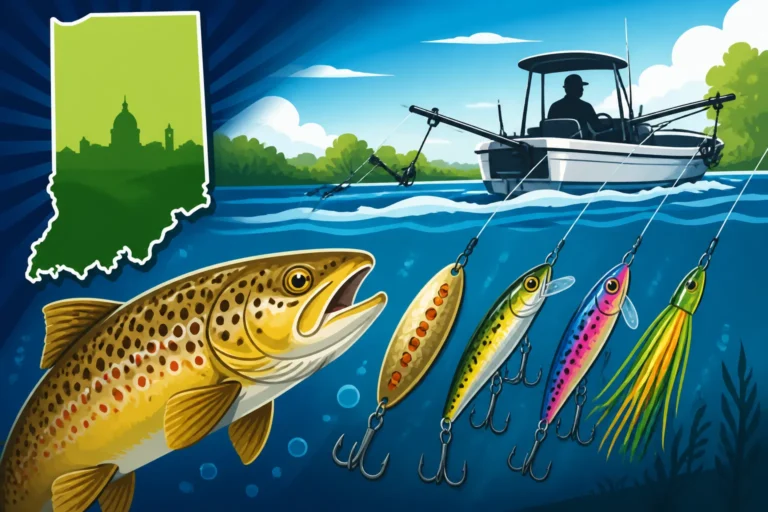
For those venturing out onto Lake Michigan in a boat, trolling with spoons and plugs is the go-to method for targeting migrating Chinook and Coho salmon, as well as cruising steelhead and brown trout. These fish are actively feeding and staging for their spawning runs, making them highly susceptible to well-presented artificials. Large, colorful spoons in patterns like "Michigan Stinger," "Dreamweaver," or "Northern King" are favorites. Colors like green/silver, blue/silver, orange, and firetiger are often productive.
Plugs, particularly J-Plugs or Mag Lips, also excel, mimicking larger baitfish. Running these lures at various depths using downriggers, Dipsy Divers, or lead core line is essential to find the active fish. Varying your trolling speed, typically between 2.0 to 3.0 mph, can also trigger strikes. This is an exciting time to be on the big lake, as a hookup with a powerful fall salmon or steelhead can be an unforgettable battle. Our guide to Trolling Techniques for Salmon and Steelhead provides even more detail on how to set up your spread. Also, consider specific lures recommended in Best Lures for Trolling Brown Trout.
Spawn Sacks and Drift Fishing for Steelhead
Once the salmon begin their upstream migration into Lake Michigan's tributaries like the St. Joseph River, the focus shifts to steelhead. These chrome beauties follow the salmon, eager to feed on their eggs. Therefore, natural baits, particularly spawn sacks, become incredibly effective. A spawn sack is a small mesh bag filled with salmon eggs, which steelhead find irresistible.
Drift fishing with spawn sacks, often under a float (bobber) or with a bottom-bouncing rig, is the most common technique in these tributary streams. The key is to present the bait naturally, allowing it to tumble and drift downstream with the current, just like real salmon eggs would. Small, sharp hooks (size 8 or 10) are important, and light line is often necessary in the clear fall waters of these rivers. This method requires a delicate touch and good stream knowledge but can be incredibly rewarding.
Casting Baits from Piers and Shore
Not everyone has a boat for Lake Michigan, and thankfully, you don't need one to get in on the fall action. Indiana's numerous piers and breakwaters, particularly those in places like Michigan City, Portage, and East Chicago, offer fantastic shore fishing opportunities for salmon and steelhead. Casting spoons (like Koho or Little Cleo), stickbaits, or even weighted jigs tipped with soft plastics can be very effective.
Often, you'll see schools of salmon congregating near the mouths of rivers or along the harbor walls as they prepare to move upstream. Early morning and late evening are prime times, but overcast days can extend the bite. The fall salmon run can be quite intense, with fish hitting anything that resembles their natural forage. Remember to bring a long-handled net, as these fish are strong fighters, and a proper landing net is essential for safely bringing them ashore. For more on this exciting fishery, check out Fall Salmon Run Timing on Lake Michigan in Indiana.
Essential Fall Fishing Tips and Gear
Beyond just the bait and lures, successful fall fishing in Indiana requires a few key considerations to ensure comfort, safety, and productive time on the water. The changing conditions demand adaptability, both in your approach and your equipment.
Reading Water Temperature and Clarity
More than any other time of year, water temperature and clarity become critical indicators in the fall. A good quality digital water thermometer is an indispensable tool. Knowing the exact temperature helps you understand fish metabolism and, therefore, where they might be holding and how aggressively they'll feed. For instance, bass in 60-degree water will behave differently than bass in 50-degree water.
Similarly, water clarity dictates lure color and type. In clear water, natural baitfish patterns and subtle presentations often work best. In murky or stained water (common during and after lake turnover or heavy rain), brighter colors like chartreuse, orange, or white, and lures that create strong vibrations, become more effective. Polarized sunglasses are also a non-negotiable item, as they help cut glare and allow you to spot submerged structure or even cruising fish in clearer conditions. Continuously monitoring these factors will give you a significant advantage in adapting your strategy on the fly. You might find our article on How to Fish After a Cold Front useful in understanding rapidly changing conditions.
Layering Clothing for Comfort
Fall weather in Indiana is notoriously unpredictable. One day it can feel like a warm summer, and the next can bring a biting wind and a significant temperature drop. The key to staying comfortable and focused on the water is layering your clothing. Start with a moisture-wicking base layer, add insulating layers like fleece or wool, and top it off with a waterproof and windproof outer shell.
This allows you to easily add or shed clothing as the day progresses and conditions change. Don't forget a warm hat and gloves, especially for early morning or late evening trips, as much of your body heat is lost through your head and extremities. Being cold and uncomfortable can quickly ruin a fishing trip, so investing in good quality, adaptable outerwear is well worth it. There are many excellent, breathable rain suits and insulated jackets available from reputable brands, often found with great reviews and competitive pricing on Amazon.
Locating Structure and Cover
As vegetation dies off and water cools, fish often gravitate towards more defined structure and cover that offers protection, ambush points, and proximity to remaining baitfish. This includes rock piles, main lake points, channel swings, submerged timber, and deep weed lines that might still be alive. For those fishing from a boat, a quality fish finder with GPS and mapping capabilities (many modern units, even mid-range ones, offer fantastic features that can be purchased on Amazon) is invaluable for identifying these hotspots.
Even shore anglers can benefit from studying topographical maps of their local lakes and rivers to identify potential structure. Look for areas where different depths meet, where currents create eddies, or where hard bottom transitions to soft. Fish will often stack up in these areas in the fall, making them prime targets for your well-chosen baits and lures. Spending time understanding the underwater topography of your favorite fishing spots will pay huge dividends when the fish start to concentrate for their fall feed.
| Species | Water Temperature | Preferred Bait/Lure (Fall) | Key Technique | Notes |
|---|---|---|---|---|
| Largemouth Bass | 55-70°F | Jigs (craw/chunk), Spinnerbaits, Bladed Jigs, Crankbaits | Slow-roll jigs, aggressive retrieve spinnerbaits, jerkbait pause | Focus on dying weed lines, rock piles, main lake points. |
| Smallmouth Bass | 50-65°F | Jigs (football/tube), Jerkbaits, Drop Shots, Small Crankbaits | Hop/drag jigs, long pauses on jerkbaits, vertical jigging | Target rocky points, humps, current breaks. |
| Walleye | 45-60°F | Deep-diving Crankbaits, Jigs (tipped w/minnow), Spoons, Live Minnows | Trolling, vertical jigging, slow drift with live bait | Often follow baitfish to main lake structures, deeper humps, or flats. |
| Northern Pike | 45-65°F | Large Spoons, Inline Spinners, Jerkbaits, Large Soft Plastics | Casting to cover, slow trolling | Ambush predators near remaining cover, weed edges, drop-offs. |
| Crappie | 50-65°F | Small Jigs (plastic/minnow), Live Minnows, Tiny Crankbaits | Vertical jigging, slow retrieve, spider rigging, bobber fishing | School up around brush piles, submerged timber, bridge pilings, deeper flats. |
| Bluegill/Sunfish | 55-70°F | Wax Worms, Red Worms, Small Jigs (1/64 oz), Small Poppers (early fall) | Bobber fishing, ultralight jigging | Concentrate around remaining shallow cover or deeper humps and points. |
| Salmon (Lake Michigan) | 50-60°F | Spoons, Plugs, J-Plugs, Flies (in tributaries) | Trolling (lake), drift fishing (tributary), casting (piers) | Migrating into tributaries or staging near river mouths, piers. |
| Steelhead (Lake Michigan) | 45-55°F | Spawn Sacks, Egg Patterns, Small Spoons, Drift Bobber Rigs | Drift fishing (tributary), casting (piers), trolling (lake) | Follow salmon into tributaries to feed on eggs, also cruising near shore. |
Disclaimer
Please remember that fishing regulations, including bag and size limits, can change. Always consult the latest Indiana Department of Natural Resources (IDNR) fishing guide before heading out on the water. This information is for educational purposes and should not be considered a substitute for official regulations.