Crappie Fishing in Indiana: Black Crappie Basics
There's nothing quite like the subtle tug of a crappie on the line, especially when you're targeting those beautiful black crappie that often put up such a spirited fight. Many anglers, myself included, find them a bit more elusive than their white crappie cousins, which can be a real head-scratcher when you're out on the water. This guide is all about demystifying black crappie fishing in the Hoosier State, covering everything from identifying these speckled beauties to the best gear and techniques to bring them to the net, and even where you can expect to find them throughout the year.
Understanding Black Crappie in Indiana
When you're out on an Indiana lake or river, you're primarily going to encounter two types of crappie: black crappie and white crappie. While both are fantastic fish to catch and eat, they have distinct preferences and characteristics that are good to know. Understanding these differences is the first step to becoming a more successful black crappie angler.
Identifying Black Crappie vs. White Crappie
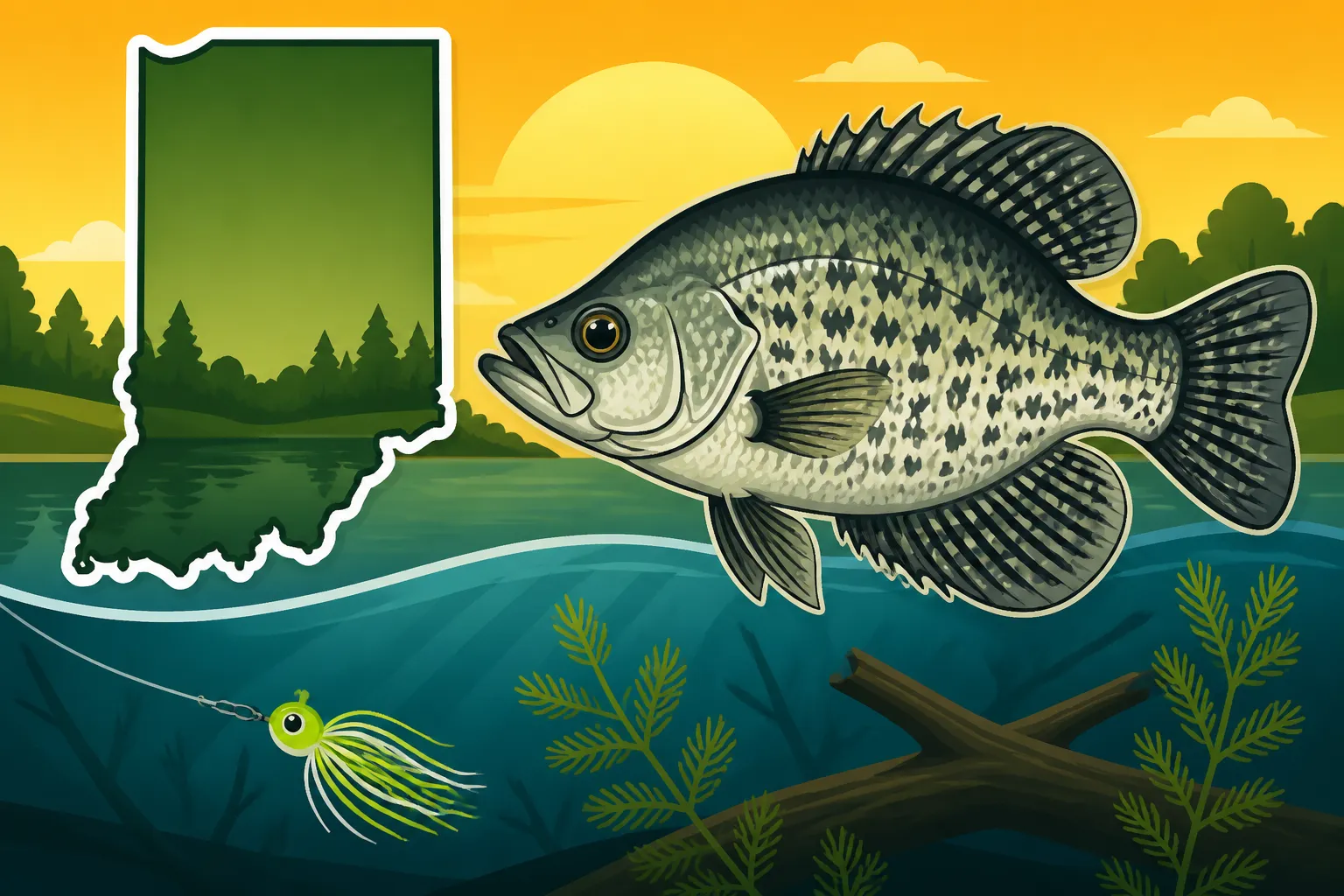
At first glance, black and white crappie might seem quite similar, but once you know what to look for, distinguishing between them becomes much easier. The most prominent difference is often their coloration and pattern. Black crappie, as their name suggests, tend to have a more mottled, "speckled" appearance with irregular black spots scattered across their silvery-gold sides. These spots often look like ink splotches, without forming any distinct vertical bars. Their overall body shape is also usually a bit more rounded or "disc-like" compared to the white crappie's somewhat more elongated profile.
Another key indicator lies in their dorsal fin. Black crappie typically have 7 or 8 spines in their dorsal fin, while white crappie usually have 5 or 6. Counting these spines can be a definitive way to tell them apart, especially if you're holding a fish in hand. This distinction isn't just for bragging rights; it can sometimes be important for local regulations, though statewide crappie limits in Indiana generally apply to both species combined. Knowing which crappie you're primarily catching can also help you fine-tune your approach, as their preferred habitats and feeding tendencies can differ.
Where Black Crappie Thrive in Indiana
Black crappie aren't just found anywhere; they have a distinct preference for clearer, cooler, and typically weedier waters. This means you'll often find them abundant in many of Indiana's natural lakes, especially those crystal-clear glacial lakes found in the northern part of the state. These lakes often boast lush submerged vegetation, ample timber, and well-defined deeper structures that black crappie absolutely adore. Think of places like Lake Wawasee: Indiana's Largest Natural Lake or some of the other deep, clear waters in Kosciusko or Steuben counties.
While the clear natural lakes are prime real estate, you can also find healthy populations in many of Indiana's larger reservoirs, particularly those with good water clarity and extensive submerged structure. For instance, while often lauded for bass, Monroe Lake: Indiana's Largest Lake for Bass Fishing has areas that hold crappie, and Patoka Lake Fishing Guide for Bass and Crappie highlights how crappie can be found there too. Look for areas with standing timber, brush piles, submerged roadbeds, or even boat docks and bridge pilings. These structures offer cover from predators, ambush points for feeding, and shade from bright sunlight, all of which are highly attractive to black crappie. If you find yourself in murky or heavily turbid waters, you might still catch crappie, but chances are they'll lean more towards the white crappie variety.
Black Crappie Behavior and Feeding Habits
Black crappie are notorious for their schooling behavior, particularly when they're not actively spawning. They love to hang out in tight groups around structure, often suspending themselves just above or within brush piles, submerged trees, or under boat docks. This schooling instinct means that once you find one black crappie, you're likely to find a whole bunch more, which can lead to some incredibly productive fishing sessions. They're also quite sensitive to light and often prefer dimmer conditions, which is why dawn, dusk, and cloudy days can be fantastic for crappie fishing. They'll also drop deeper in the water column during bright midday sun to find more comfortable, shaded areas.
Their diet primarily consists of small baitfish, like shad and minnows, along with various aquatic insects and small crustaceans. This is why small jigs mimicking these prey items, or live minnows, are such effective baits. They're ambush predators, meaning they'll often hold still near cover, waiting for an unsuspecting meal to swim by before darting out to strike. Understanding this behavior is crucial for proper presentation: you want your bait or lure to appear as natural and easy to catch as possible, often hovering enticingly near their hiding spots.
Essential Gear for Black Crappie Fishing
You don't need a boatload of specialized, expensive gear to catch black crappie, but having the right tools can certainly make a world of difference. The key is finesse and sensitivity, as crappie often have a very light bite, especially when they're not super aggressive. Let's break down the core components of a successful black crappie setup.
Rods, Reels, and Line Choices
When it comes to black crappie, finesse is the name of the game. That means opting for light to ultralight spinning gear. A rod in the 5 to 7-foot range with a fast or moderate-fast action will give you the sensitivity to feel those subtle bites and the backbone to handle a good-sized slab. The fast action helps with quick hook sets, while a moderate action can be more forgiving for beginners, absorbing shocks and preventing hooks from tearing out of a crappie's soft mouth. Many anglers prefer a shorter rod for techniques like dock shooting, where precision is paramount, but a slightly longer rod can aid in casting distance and line control from a boat or shore.
Pair your rod with a small, lightweight spinning reel, typically in the 1000 or 2000 series size. These reels are designed for lighter lines and lures, offering smooth drag and comfortable handling for hours of fishing. As for line, I usually recommend a 4 to 6-pound test monofilament or fluorocarbon. Monofilament is a budget-friendly choice with good knot strength and a bit of stretch, which can be advantageous with soft-mouthed crappie. Fluorocarbon offers more sensitivity and is nearly invisible underwater, but it has less stretch. Some experienced anglers even opt for a very light braided line (6-10 pound test) for ultimate sensitivity and casting distance, often adding a 2-4 foot fluorocarbon leader. You can find excellent starter combos and a wide range of specialty lines on Amazon that cater specifically to crappie fishing needs.
Top Baits and Lures for Black Crappie
Black crappie aren't overly picky, but they definitely have their favorites. For live bait, nothing beats a small minnow. They're a natural food source, and crappie simply can't resist them. Hook them lightly through the lip or just behind the dorsal fin to keep them lively. Small worms, particularly wax worms or red worms, can also be surprisingly effective, especially when tipped onto a small jig.
When it comes to artificials, jigs are king. Tube jigs, grub jigs, and hair jigs in sizes ranging from 1/32 to 1/8 ounce are incredibly productive. Experiment with colors – chartreuse, white, black, and pink are often go-to options, but water clarity and light conditions can dictate what works best. For instance, for Best Crappie Jig Colors for Cloudy Water, brighter or darker contrasting colors might perform better. The subtle quiver of a soft plastic tail on a jig, even when barely moving, can be irresistible. Tiny crankbaits and small spinnerbaits can also entice aggressive crappie, especially when they're scattered or feeding in open water. Remember, consistency in your retrieve and presentation is often more important than the exact lure, so practice makes perfect!
Essential Terminal Tackle and Accessories
Beyond your rod, reel, and main baits, a few key pieces of terminal tackle and accessories will make your crappie fishing experience much smoother. Bobbers are essential for presenting live bait or jigs at a consistent depth. Slip bobbers are fantastic because they allow you to fish at any depth, easily sliding up and down your line. Fixed bobbers, on the other hand, are great for shallower water, keeping your bait in a specific zone.
For hooks, Aberdeen hooks are a popular choice for crappie, often in sizes #4 to #8. Their thin wire construction helps minimize damage to the crappie's mouth, and they tend to straighten out if snagged, saving your rig. Small split shot or bullet weights are needed to get your bait down to the desired depth, positioned a foot or so above your hook to allow the bait natural movement. Don't forget a small pair of needle-nose pliers for unhooking fish, a landing net (especially for larger crappie), and a measuring tape to ensure your catch meets any length requirements. A small tackle box that can organize your various jigs, hooks, and weights will keep you efficient on the water.
Proven Techniques for Catching Black Crappie
Catching black crappie often boils down to presenting your bait or lure right in front of them, given their tendency to hold tight to cover. There are several highly effective techniques that anglers use across Indiana, each suited to different conditions and types of structure. Mastering a few of these will significantly boost your success rate.
Vertical Jigging and Dock Shooting
Vertical jigging is perhaps the most fundamental and effective technique for crappie, especially when they're schooled up tight around submerged structure. This involves positioning your boat directly over a brush pile, submerged tree, or rock pile, and dropping a small jig or live minnow straight down into the cover. The idea is to keep your bait hovering at the depth where the crappie are holding, often visible on your fish finder. A slight twitch of the rod tip or a slow lift-and-drop motion is usually all it takes to entice a strike. This method is incredibly precise, allowing you to pick fish out of dense cover without getting constantly snagged. You might be surprised how many fish are packed into one small area.
Dock shooting, on the other hand, is a specialized technique that allows you to present a jig far under boat docks and other overhangs where crappie love to hide. It's a bit like shooting a bow and arrow: you hold the jig head in one hand, pull the rod back, creating tension in the line, and then release both simultaneously. The rod springs forward, sending the jig skipping across the water's surface, propelling it deep into those dark, shaded pockets that are otherwise unreachable. This technique is especially productive on lakes with abundant private docks. It takes practice to master, but once you do, you'll unlock prime crappie real estate. Whether you're vertical jigging or dock shooting, understanding How to Jig for Crappie in Spring can give you an edge as they move into shallower spawning areas.
Trolling and Drifting for Open Water Crappie
While crappie love structure, they don't always stay glued to it. Sometimes, especially in larger reservoirs or during certain times of the year, they'll suspend in open water, often chasing schools of baitfish. This is where trolling or drifting becomes incredibly effective. Slow trolling involves moving your boat at a very slow speed (often less than 1 mph) while dragging multiple jigs or small crankbaits behind it. You can set up several rods, each at a different depth, using spider rigging setups or simple rod holders. This allows you to cover a lot of water and find the depth at which the crappie are feeding.
Drifting is similar but relies on wind or current to move your boat. You'll cast your baits out and let the boat carry them across prime areas. Both methods benefit immensely from a good fish finder. Learning how to read your electronics to spot baitfish schools, thermoclines, and suspending crappie is crucial for open-water success. A quality fish finder, as detailed in our Fish Finder Buying Guide for Freshwater Lakes, can turn a frustrating day into a fantastic one by showing you exactly where the fish are. Once you locate a school, you can then switch to vertical jigging or casting to maximize your catch.
Presenting Live Bait Effectively
Live bait, particularly minnows, is a perennial favorite for crappie, and presenting it effectively is key. The most common method is to rig a small minnow on an Aberdeen hook (size 4 or 6) under a slip bobber. The slip bobber allows you to adjust your depth precisely, which is critical since crappie often hold to a very specific depth. Hook the minnow lightly through both lips for a natural swimming action, or just behind the dorsal fin if you want it to look injured and struggle more.
Once rigged, cast your setup near the desired structure and let the minnow swim naturally. Pay close attention to your bobber; crappie bites can be incredibly subtle, sometimes just a slight dip or a sideways drift of the bobber. Give them a moment to fully take the bait before setting the hook with a gentle sweep of the rod. For more details on rigging, check out How to Rig a Minnow for Crappie. You can also present minnows without a bobber, tight-lining them directly to the bottom or suspending them at a specific depth with a small split shot, especially when vertical jigging in tight quarters or when crappie are very finicky.
Locating Black Crappie Throughout the Seasons
Crappie, like most fish, are highly influenced by water temperature and seasonal changes. Knowing where they're likely to be at different times of the year can dramatically increase your chances of success. It's all about understanding their migration patterns from shallow spawning grounds to deeper summer haunts and back again.
Spring Crappie: Spawning and Pre-Spawn Hotspots
Spring is often considered prime crappie time, and for good reason! As water temperatures climb into the 50s and low 60s Fahrenheit, black crappie begin their annual migration to shallower water for the spawn. This pre-spawn period sees them actively feeding, trying to pack on energy before the arduous spawning process. Look for them in bays, coves, and shallower flats that warm up quickly, especially those protected from cold winds. They'll gravitate towards structure like fallen trees, brush piles, old lily pad stems, and even cattails in just a few feet of water.
Once the water temperature consistently hits the mid-60s, the actual spawn begins. Female crappie will lay their eggs in shallow nests, often near woody cover or vegetation, and males will guard them. During this time, they can be quite aggressive and easy to catch. Focus on these visible shallow structures and use small jigs or minnows. While the exact timing can vary year to year and lake to lake, understanding Crappie Spawn Timing on Indiana Lakes will give you a good head start. Remember, this period is often short-lived, so make the most of it!
Summer Crappie: Deep Water and Thermocline Tactics
Once the spawn is over and water temperatures really heat up, black crappie will retreat from the shallows and seek refuge in deeper, cooler water. This is when they become more challenging to locate for many anglers. During the summer, crappie will typically suspend in the water column or relate to deep structure like submerged humps, creek channels, roadbeds, and bridge pilings. They often congregate around the thermocline – the layer of water where the temperature changes rapidly – as this is where oxygen levels and baitfish concentrations are usually optimal.
Using a good fish finder to locate these deep-water schools and structures is absolutely essential. Once you've found them, vertical jigging with a weighted jig or a live minnow at the exact depth where they're suspended is your best bet. Summer also presents excellent opportunities for night fishing for crappie, as they often move shallower under the cover of darkness to feed. Look for them under lighted docks or in areas where baitfish are drawn to light. Night Fishing Spots on Monroe Lake, Indiana can give you an idea of where to try this exciting technique. For more insights on this period, our guide on How to Find Crappie in Summer offers additional tips.
Fall and Winter Crappie: Transitional and Ice Fishing
As autumn arrives and water temperatures begin to drop, black crappie often go through a secondary period of increased activity. They'll start to move out of their deepest summer haunts and might be found shallower again, similar to spring pre-spawn patterns, as they feed aggressively to build up fat reserves for the coming winter. Look for them around deeper edges of weed lines, main lake points, and larger brush piles as the lake turns over and water clarity changes. Trolling or drifting can be very effective during this transitional period, allowing you to cover water and find active schools.
When winter truly sets in and Indiana lakes freeze over, it's time for ice fishing! Black crappie are a popular target through the ice. They'll typically hold in deeper water, often suspending over basins or relating to deep structures like humps, points, and channel edges. Small jigs, tiny spoons, or live minnows fished with an ultralight rod and a sensitive spring bobber are the go-to baits. Pay close attention to your electronics to locate schools and the precise depth they're feeding at. Understanding how Water Temperature and Fish Feeding Patterns changes with the seasons will help you adapt your approach throughout the year. For specific ice fishing tips, particularly about depth, you can find more information in our guide Best Depth to Fish for Crappie in Winter.
Regulations and Conservation for Indiana Crappie
As responsible anglers, it's not just about catching fish; it's about preserving the resource for future generations. Understanding and adhering to Indiana's fishing regulations for crappie, as well as practicing good conservation habits, ensures that the fantastic crappie fishing we enjoy today will continue for years to come.
Understanding Indiana's Crappie Bag Limits
Indiana has specific regulations in place to manage its crappie populations, primarily through daily bag limits and sometimes length limits, though crappie length limits are less common than for other species like bass or walleye. For crappie (which includes both black and white crappie combined), the statewide daily bag limit is generally quite generous, typically allowing anglers to keep a good number of fish for a tasty meal. However, these limits can vary, and certain lakes or bodies of water might have special regulations that differ from the statewide rule. It's always, always essential to check the most current Indiana Fishing Regulations Guide before you head out, as rules can occasionally change.
For a general overview, our article on Indiana Panfish Daily Limits by Species can give you a good starting point, and for specific crappie numbers, How Many Crappie Can You Keep in a Day? clarifies the current daily bag limit. The purpose of these limits is to prevent overharvesting and ensure that enough fish remain to reproduce and maintain a healthy population. Responsible anglers adhere to these limits, not only to avoid penalties but also to contribute to the long-term health of Indiana's fisheries.
Responsible Catch and Release Practices
While crappie are excellent table fare, there are times when practicing catch and release, or at least selective harvesting, is beneficial. If you're targeting crappie for sport and not for the dinner table, or if you encounter larger breeding-size fish, releasing them can help ensure a strong gene pool for the future. When practicing catch and release, handle the fish as gently and as little as possible. Wet your hands before touching them to protect their protective slime coat, and try to keep them in the water as much as you can.
Use tools like forceps or needle-nose pliers to quickly remove hooks, especially if they're deeply embedded. If a fish is bleeding heavily or appears severely stressed, it's often best to keep it if within legal limits, as its chances of survival upon release are low. Some anglers even choose to use barbless hooks when strictly practicing catch and release, as they are much easier to remove. Selective harvesting means keeping the smaller, more abundant crappie for eating and releasing the larger, older fish that are often the best breeders. This practice can actually lead to healthier, faster-growing populations by reducing competition for food among the smaller fish.
Protecting Crappie Habitats
Finally, as anglers, we have a vital role to play in protecting the habitats that crappie and all other fish species rely on. Crappie thrive in clean water with plenty of submerged cover and healthy aquatic vegetation. Any actions that degrade water quality or destroy these vital habitats can have a direct negative impact on crappie populations. This means always packing out everything you pack in – leaving no trash, fishing line, or discarded bait containers behind. Even seemingly small pieces of litter can contribute to pollution and harm aquatic life.
Be mindful of what you're introducing into the water, too. Avoid using harsh chemicals around shorelines and ensure your boat is clean and free of invasive species before launching into a new body of water. Supporting local conservation efforts, participating in clean-up days, and simply being an advocate for healthy waterways are all ways we can give back to the sport we love. The future of crappie fishing in Indiana truly depends on all of us being good stewards of our natural resources.
Disclaimer
This article is for general informational purposes only and does not constitute professional advice. Laws, prices and regulations vary by location and change over time. Consult a qualified professional for guidance on your specific situation.