How to Find Crappie in Summer
One of the most common frustrations for crappie anglers in Indiana is that as soon as the weather heats up, those easy-to-find schooling fish from spring seem to vanish into thin air. It’s like they pack up and move to a secret summer hideout, leaving you scratching your head. This comprehensive guide will help you decode crappie's summer behavior and equip you with the strategies to find them, even when the thermometer is soaring.
Understanding Crappie Behavior in Summer
When those long, sunny days of summer finally settle in across Indiana, everything changes for crappie. They’re not going to be shallow and easy to find like they were during the Crappie Spawn Timing on Indiana Lakes. Instead, they're heading for cooler, more comfortable digs, and understanding why they do this is your first step to finding them.
The Deep Dive: Why Crappie Go Deep
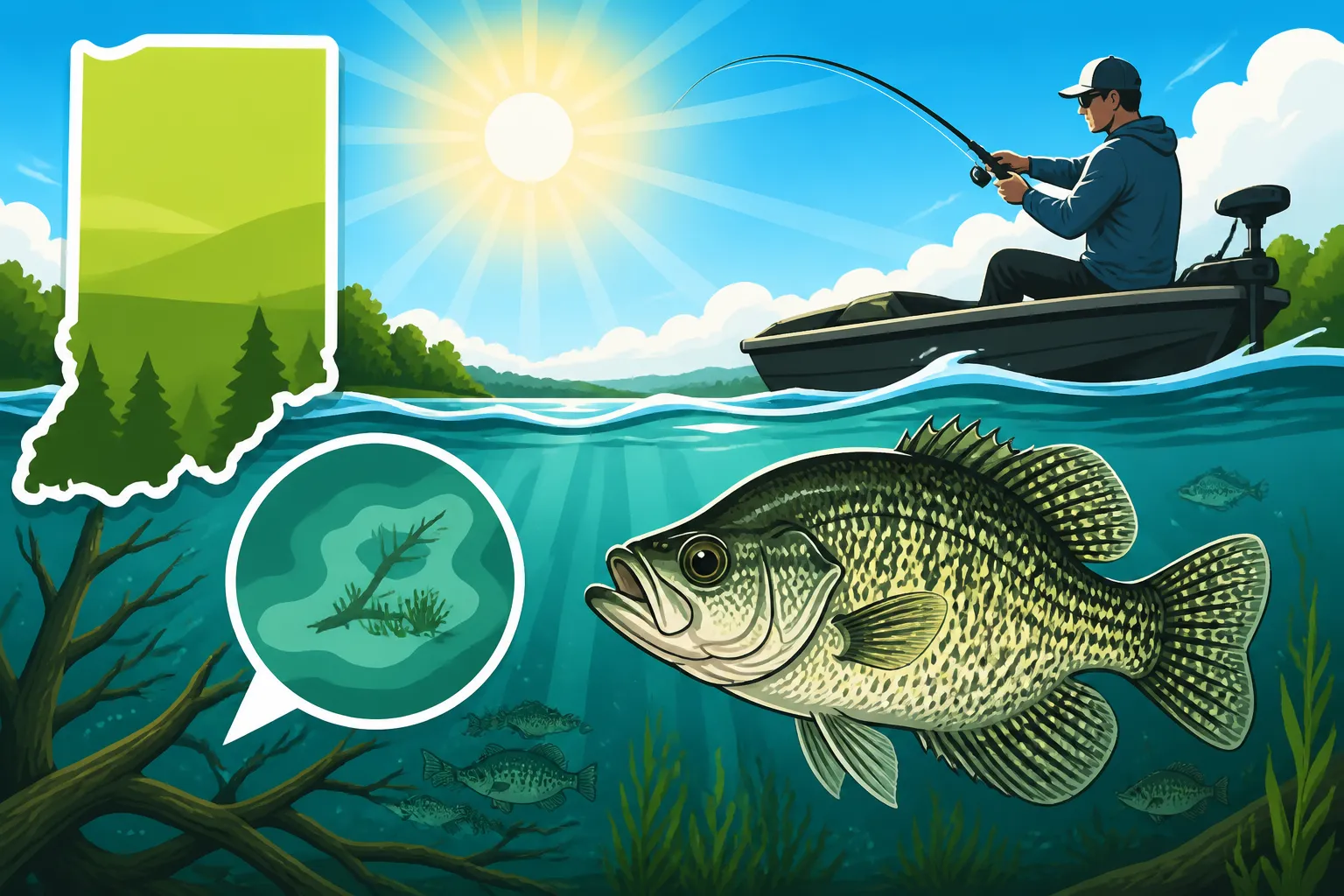
Think about it: when you're out in the Indiana summer heat, do you want to stay in the blazing sun, or do you seek out air conditioning or a cool, shady spot? Crappie are no different. As surface water temperatures climb into the 80s and even 90s in some of our shallower lakes, crappie are forced to seek refuge in deeper, cooler water. This isn't just about comfort; it's about survival. Their metabolic rate slows down in extreme heat, and they become less active.
The upper layers of water simply don't hold as much dissolved oxygen as the cooler, deeper layers do, especially as the water warms and stratifies. So, crappie migrate down to areas where the oxygen levels are more stable and the temperature is more suitable for their well-being. This can mean moving from 5-10 feet in spring to 15-30 feet or even deeper in summer, depending on the lake's depth and characteristics. They're following their physiological needs, and if you're not fishing at their depth, you're not going to find them.
Seeking Shade and Structure: Crappie's Summer Havens
Just like we seek shade from the sun, crappie look for cover and structure, even in deeper water. This isn't just for protection from predators, but also for thermal regulation and ambush points for feeding. You'll find them congregating around various types of underwater features that offer both cover and cooler temperatures.
These summer havens can include:
- Brush piles and submerged timber: These are perennial favorites. Natural downed trees or man-made brush piles offer excellent ambush points and protection. If you know a lake has had habitat enhancement projects by the Indiana DNR, those marked brush piles are prime targets.
- Rock piles and ledges: These areas can be overlooked, but rocks absorb and hold heat differently, and ledges provide distinct depth changes where crappie can suspend.
- Creek and river channels: In reservoirs, old creek or river channels provide deeper travel corridors and often have associated drop-offs, ledges, and debris that hold fish.
- Bridge pilings and docks: Large bridge pilings, especially those extending deep, offer vertical structure and shade. Permanent deep docks can also hold crappie beneath them.
- Man-made structures: Old roadbeds, foundations of former buildings, or even abandoned boat ramps can become underwater magnets for crappie, especially if they have some vertical relief.
The key here is that the structure needs to be in deeper water, typically below the thermocline. A shallow brush pile that was great in April will likely be barren in July.
The Thermocline Effect: Where Fish Are Most Active
Understanding the thermocline is absolutely crucial for summer crappie fishing in many Indiana lakes. A thermocline is a distinct layer within a body of water where the temperature changes rapidly with depth. Above it, the water is warmer and often oxygen-depleted in summer. Below it, the water is cooler, but sometimes it too can become oxygen-depleted in very deep lakes, creating a "dead zone."
Crappie, along with many other fish species, will often suspend right in or just above this thermocline layer because it offers the optimal balance of temperature and dissolved oxygen. It's essentially the "comfort zone" for them. If your fish finder shows a distinct band where fish are concentrated, chances are you've found the thermocline and, more importantly, the crappie. The depth of the thermocline can vary from lake to lake, but it's often in the 15-25 foot range in many of Indiana's larger reservoirs like Patoka Lake or Monroe Lake. Ignoring this vital layer means you're likely fishing either too high in warm, deoxygenated water or too low in cold, also deoxygenated water.
Essential Gear and Techniques for Summer Crappie
Once you understand where summer crappie want to be, the next step is getting your bait to them and enticing a bite. This often requires a slight shift in your gear and a significant change in your presentation compared to the spring.
Using Electronics to Locate Fish
In the summer, your fish finder is no longer a luxury; it's a necessity. Blindly casting or trolling without understanding the underwater topography and fish presence is incredibly inefficient. A good sonar unit will help you identify:
- Depth: Crucial for finding those deeper crappie haunts.
- Structure: Pinpoint brush piles, submerged trees, ledges, and creek channels. Many modern units offer detailed mapping with contour lines.
- Fish schools: Crappie often show up as dense "blobs" or distinct arches on your screen, especially when tightly schooled around cover.
- The thermocline: Many advanced units can even help you visualize this temperature layer, which is a game-changer for finding active fish.
Modern units with features like Side Imaging or Down Imaging (from brands like Humminbird or Lowrance) can give you a photographic-like view of the bottom and structure, helping you identify exactly where those crappie are tucked away. You don't need the most expensive model out there, but even an entry-level color fish finder can make a world of difference. You can find excellent options with great reviews for various budgets on Amazon. Look for units that offer decent screen resolution and transducer power to see into deeper water.
Adapting Your Lures and Baits for Deeper Water
The shift to deeper water means your bait and lure choices need to get down efficiently and effectively.
- Heavier Jigs: While 1/32 oz jigs were perfect for shallow spring crappie, summer often calls for 1/8 oz to 1/4 oz jigs, or even heavier depending on current and depth. These heavier jigs get to the crappie quicker and keep your line more vertical, which is essential for precise presentations over deep structure.
- Soft Plastics: Small tubes, grubs (like a Bobby Garland Baby Shad or Mister Twister Sassy Grub), and soft plastic minnow imitations are excellent choices. Experiment with colors – natural shad, white, chartreuse, and sometimes even darker colors like black and blue can be effective. A subtle tail action is often more appealing to deeper, less active crappie than an aggressive wobble.
- Live Bait: The classic crappie minnow is still incredibly effective. For deeper water, you can rig them on a jig head, a drop-shot rig, or under a small slip bobber set to the exact depth you're marking fish. Make sure your minnows are lively, as a listless bait won't draw much attention.
- Jigging Spoons: Small jigging spoons can be incredibly effective when crappie are schooled tightly on deep structure. A vertical retrieve with a lift-and-fall action can mimic a dying baitfish and trigger strikes from lethargic crappie.
- Line Choice: A lighter line, typically 4-6 lb monofilament or fluorocarbon, is usually preferred for sensitivity and less drag in deeper water. However, if you're fishing extremely heavy cover, you might consider bumping up to 8 lb test to help pull fish out of snags. For even more sensitivity, some anglers opt for thin braided line with a fluorocarbon leader, which gives you exceptional feel for those subtle deep bites.
Vertical Jigging and Trolling Strategies
Once you've located a deep school of crappie on your electronics, it's time to present your bait.
- Vertical Jigging: This is often the most effective method for targeting summer crappie. Position your boat directly over the marked fish or structure. Drop your jig or minnow straight down, paying close attention to your depth. The key is to keep your bait at the exact depth where you're seeing fish. Use subtle lifts and falls, barely moving the rod tip. Crappie in deep, cool water are often not aggressive, so a slow, deliberate presentation is usually best. Many anglers employ multiple rods from a "spider rigging" setup, allowing them to present baits at different depths and angles simultaneously. Rod holders are easily found on Amazon and are a great addition for this technique.
- Slow Trolling: If crappie are more scattered along a deep ledge or creek channel, slow trolling can be a great way to cover water and find active fish. Use light jigs (1/8 oz to 1/4 oz) or small crankbaits designed for crappie, like a Bandit 300 series. Troll slowly, typically between 0.5 and 1.5 mph, and use your electronics to stay on the desired depth contour or channel. Again, using multiple rods with different depth presentations can help you identify the precise depth crappie are holding. This technique works well in larger bodies of water like Patoka Lake or Brookville Lake where crappie might be spread out along extensive underwater features. To learn more about getting your bait to crappie, check out our guide on Crappie Jigging Techniques for Beginners or Tightlining Techniques for Crappie.
Top Indiana Spots and Times for Summer Crappie
While crappie fishing changes with the seasons, Indiana still offers fantastic opportunities to catch these panfish throughout the summer months if you know where to look and when to cast.
Specific Lakes Known for Summer Crappie Action
Many of Indiana's larger reservoirs and natural lakes can hold excellent populations of summer crappie. The key is to focus on lakes with significant depth and diverse underwater structure.
- Patoka Lake (Southern Indiana): Known for its vast expanse of standing timber, particularly in the upper arms of the lake. These submerged trees are absolutely loaded with crappie in the summer. Focus on the deeper edges of the timber lines, or use your electronics to find isolated tree clumps in the main lake basin. The creek channels winding through the timber are also prime targets. Read our full guide on Patoka Lake Fishing Guide for Bass and Crappie for more details.
- Monroe Lake (Central Indiana): As Indiana's largest inland lake, Monroe offers extensive creek channels, ledges, and deep structure. Crappie will often suspend over these channels or relate to the deeper brush piles that have been intentionally placed as habitat. Look for large flats that drop into a channel, as crappie will often stage along these breaks. You can find great information about this body of water in our article, Monroe Lake: Indiana's Largest Lake for Bass Fishing.
- Brookville Lake (Southeastern Indiana): This clear-water reservoir holds good numbers of crappie that will also seek deep structure like submerged timber, rock ledges, and bridge pilings. The clarity of the water here often means crappie go even deeper to avoid bright sunlight.
- Mississinewa Lake (North Central Indiana): Another excellent reservoir with significant structure including old creek beds, roadbeds, and submerged timber. Similar to Patoka, locating these deep features with your electronics is critical for success here.
Always check the Indiana DNR's fishing reports for the most up-to-date information on crappie movements and any specific habitat projects in your chosen lake. Many of these lakes are highlighted in our guide to the Best Crappie Lakes in Indiana.
Best Times of Day to Target Crappie in Warm Weather
While crappie are generally less active in the heat of summer, there are still prime windows for targeting them.
- Early Morning and Late Evening: The hours around dawn and dusk are typically the most productive. The surface water cools slightly, and the diminished light can encourage crappie to move a bit shallower, or at least become more active in their deep haunts. These low-light conditions often prompt baitfish to move more freely, and crappie will follow. Think of it as their "breakfast" and "dinner" rush before the heat of the day or the darkness of night fully sets in. Our article on Dawn and Dusk Fishing Techniques offers more insights into this prime fishing time.
- Night Fishing: Don't overlook night fishing for summer crappie in Indiana. Crappie are often highly active after dark, especially if you use underwater fishing lights. These lights attract plankton, which attracts baitfish, which in turn attracts crappie. Anchoring over a deep brush pile or a creek channel and deploying a good underwater light can lead to fantastic catches. Just make sure you have all your safety gear and navigation lights in order if you're out on the water after dark. Consider trying some of the locations mentioned in Night Fishing Spots on Indiana's Quiet Lakes.
- Midday: While challenging, midday can still be productive if you've done your homework and precisely located a deep, well-structured crappie school. The key here is to keep your bait right in their face, as they might not move far to strike. This is where precision vertical jigging really shines. However, be prepared for slower action and generally fewer bites than during low-light periods.
Avoiding Common Summer Crappie Mistakes
Even experienced anglers can sometimes fall into traps when chasing summer crappie. Being aware of these common pitfalls can significantly increase your success.
- Fishing Too Shallow: This is, hands down, the most common mistake. Many anglers will instinctively fish the same depths they did in spring, only to find nothing. Crappie will be deep, often much deeper than you anticipate. If you're not getting bites, move deeper until you start marking fish on your electronics.
- Ignoring Electronics: Trying to find deep, structure-oriented crappie without a fish finder is like trying to find a needle in a haystack blindfolded. Your sonar is your most valuable tool for pinpointing schools and structure. Without it, you're just guessing, and guessing rarely pays off with summer crappie.
- Using Too Light of Tackle in Heavy Cover: While light line is great for sensitivity, if you're fishing dense brush piles or submerged timber, using too light of a line can lead to constant break-offs and lost fish. Balance sensitivity with enough strength to muscle a crappie out of cover without snapping your line. Sometimes a slightly heavier jig and line are worth the trade-off for getting the fish to the boat. Check out our guide on Best Fishing Rods and Reels for Freshwater Fishing to help you find the right setup.
- Not Adapting Your Presentation: Aggressive jigging or fast retrieves might work for active crappie in cooler water, but deep summer crappie are often lethargic. Slow down, use subtle movements, and be patient. Remember that these fish are often suspended and don't want to expend a lot of energy chasing down a meal.
- Forgetting About Water Temperature: As discussed, water temperature is the primary driver of crappie behavior in summer. Understanding the Water Temperature and Fish Feeding Patterns and how it dictates crappie depth and activity is fundamental. If you're fishing above the thermocline in hot water, your chances are slim.
- Sticking to One Spot: If you're not getting bites after 15-20 minutes on a deep spot, don't be afraid to move on. Crappie can be nomadic even in summer, and another similar piece of structure nearby might hold a more active school. Use your GPS to mark unproductive spots and move to the next.
Here’s a quick comparison of general crappie fishing strategies between spring and summer:
| Feature | Spring Crappie Fishing | Summer Crappie Fishing |
|---|---|---|
| Depth | Shallow (2-10 feet), near spawning beds | Deep (15-30+ feet), following cooler water |
| Structure | Shallow brush, docks, emergent vegetation, sandy flats | Deep brush piles, submerged timber, creek channels, ledges |
| Bait/Lure Size | Smaller jigs (1/32 – 1/16 oz), small minnows | Heavier jigs (1/8 – 1/4 oz), larger minnows, jigging spoons |
| Technique | Casting, pitching, slip bobbers, sight fishing | Vertical jigging, slow trolling, spider rigging, drop-shot |
| Activity Level | Highly active, aggressive spawners | Less active, lethargic, subtle bites |
| Best Time | Midday often productive, all day activity | Early morning, late evening, night fishing |
| Key Factor | Water temperature for spawning | Thermocline, oxygen levels, shade |
By understanding these seasonal shifts and adapting your approach, you can turn those summer crappie frustrations into successful fishing trips. The Summer Fishing Patterns for Crappie are definitely different, but no less rewarding.
Disclaimer
Fishing regulations, license requirements, and local conditions can change. Always consult the official Indiana Department of Natural Resources (IDNR) website or regulations guide before heading out on the water. This article is for informational purposes only and does not constitute legal advice.