Best Depth to Fish for Crappie in Winter
You know that feeling when the crisp autumn air turns into a biting winter chill, and suddenly your favorite crappie holes seem to go silent? It’s a common frustration for many Indiana anglers, trying to figure out where those papermouths vanish to when the water turns cold. They don't disappear entirely, of course, but their habits change dramatically. This guide is all about cracking the code of winter crappie, specifically nailing down the best depths to find them thriving in Indiana's icy waters, and how to actually get them to bite when the mercury drops.
The Great Winter Migration: Why Crappie Go Deep
As temperatures plummet and Indiana's waters start to cool, crappie undergo a significant shift in their behavior, often moving from shallow feeding grounds to deeper, more stable environments. Understanding this "great migration" is crucial for any angler hoping to find success during the colder months. It's not just about comfort; it's about survival and energy conservation.
Metabolism Slows Down in Cold Water
When the water temperature drops below 50 degrees Fahrenheit, and especially once it gets into the low 40s, crappie become much less active. Their metabolism slows considerably, meaning they don't need to eat as often or expend as much energy. This is a fundamental biological response to cold. Instead of aggressively chasing bait in shallow waters, they conserve energy by hunkering down in deeper areas where the water temperature is more stable, usually just a few degrees warmer than the surface. These slight temperature differences can be huge for a cold-blooded fish.
Imagine yourself trying to run a marathon in freezing weather – you'd rather conserve your energy, bundle up, and stay put in a warm spot, right? Crappie are doing something similar. They're not looking for a high-energy chase; they're looking for an easy meal that requires minimal effort. This metabolic slowdown means their feeding windows are shorter and their bites are often much more subtle. You might not feel that aggressive thump you're used to in spring; instead, it could be a slight twitch or just added weight on your line.
Seeking Thermal Stability Below the Thermocline
In the summer, lakes often develop a distinct thermocline, a layer where water temperature changes rapidly with depth. In winter, this phenomenon changes. As the surface water cools, it becomes denser and sinks, mixing with the deeper water in a process called "turnover." Once the entire water column reaches a uniform, cold temperature (around 39 degrees Fahrenheit, where water is densest), the deeper areas can actually become slightly warmer and more stable, especially if there's a strong cold front on the surface.
Crappie, like many other fish, are drawn to these areas of thermal stability. They're not looking for "warm" water in the traditional sense, but rather water that isn't changing rapidly. This stability usually occurs in the deeper sections of lakes, reservoirs, or even slower-moving river stretches. In a lake like Monroe Lake, for instance, crappie will move out of the shallow coves they inhabited in summer and fall, relocating to the main lake basin, often suspending over deep water or hugging drop-offs where the temperature remains consistent.
Decoding the Depth: Factors Dictating Winter Crappie Locations
Finding the exact depth where winter crappie hang out isn't an exact science, but it’s far from random. Several key factors influence their positioning, and understanding these can help you narrow down your search considerably. Think of it as putting together a puzzle, with each piece giving you a clue to their underwater hideout.
Water Temperature is King
We've already touched on it, but it bears repeating: water temperature is the single most critical factor in determining crappie depth in winter. While the surface might be a frigid 33-35 degrees, deeper water, especially in larger lakes or reservoirs, can hold a stable 38-42 degrees. This small window is where crappie often find their comfort zone. They'll typically position themselves just above or within the warmest available water in the deepest parts of the lake.
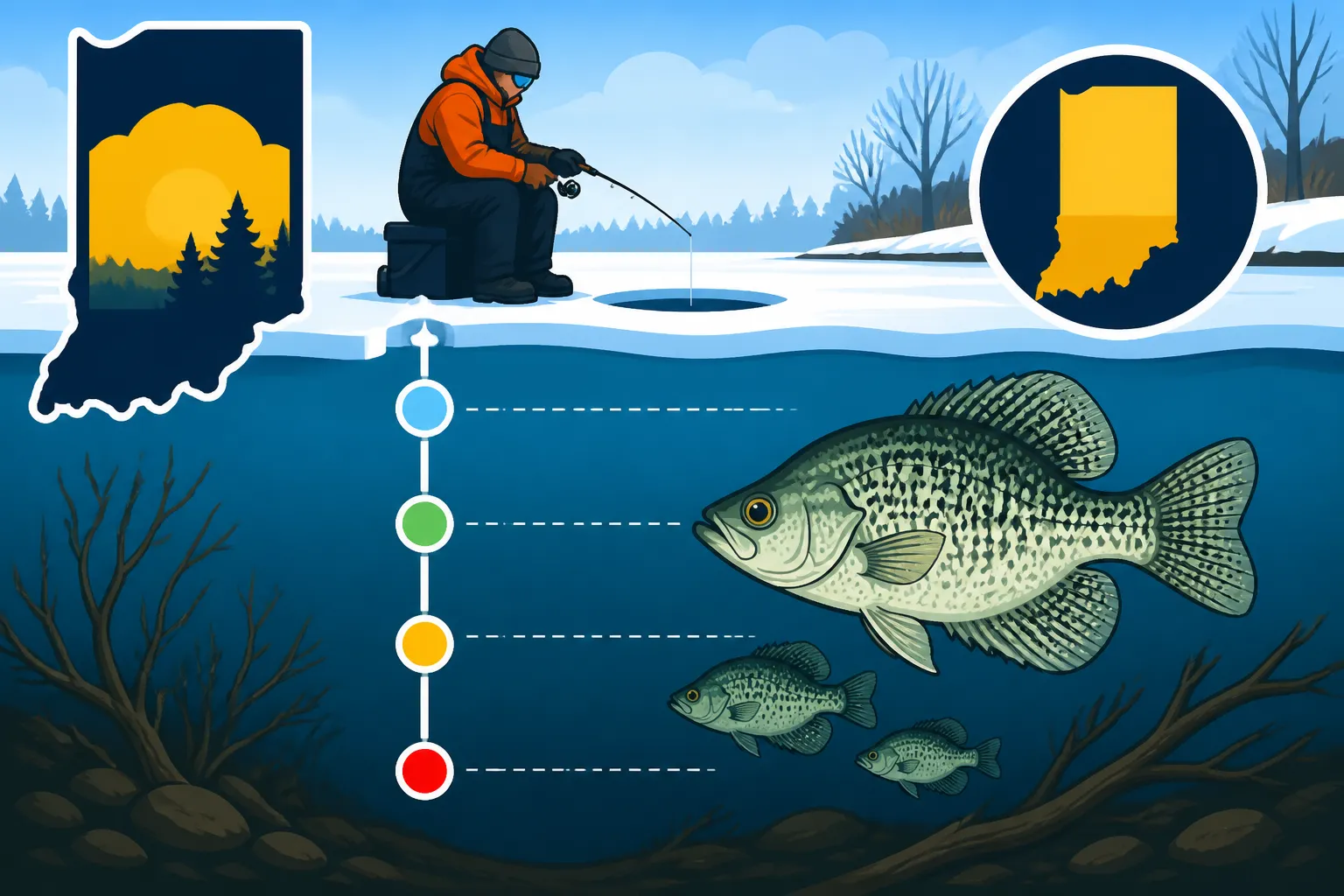
This means if you're fishing a relatively shallow pond (say, less than 10-15 feet), the crappie might still be near the bottom, but the entire water column will be uniformly cold. In deeper Indiana reservoirs like Patoka Lake or Brookville Lake, crappie will often suspend over deep water, sometimes 20-40 feet down, but only if that's where the most stable temperature is. It’s a constant balancing act for them – finding the warmest, most stable water that still allows access to food. A good fish finder with temperature readings can be your best friend here, helping you identify these thermal sweet spots.
Structure and Cover Provide Shelter and Ambush Points
Even in winter, crappie still relate to structure and cover, albeit deeper versions of it. They might be less active, but they still seek protection from predators and places to ambush what few baitfish are moving. Look for deep-water brush piles, submerged timber, rock piles, sudden drop-offs, and channel edges. These features offer security and slight current breaks.
For example, on Lake Wawasee, known for its natural features, crappie might gravitate to deeper weed lines (if any exist) or hard-bottom transition areas. On an impoundment, they’ll often stack up on old creek channels or roadbeds that are now submerged, especially where they intersect with deep water. These structures act like underwater highways and resting spots. If you're using a sonar unit, keep an eye out for these distinct underwater features. Sometimes, crappie will suspend right over the top of a brush pile in 30 feet of water, even if the top of the brush is at 15 feet. They're not necessarily in the brush, but above it, using it as a reference point.
Baitfish Location is a Constant Draw
Crappie follow their food. Even with a reduced metabolism, they still need to eat, and their primary forage is small baitfish like shad or minnows. If you can locate schools of baitfish in deeper water, there's a very good chance crappie will be nearby, either mixed in with them or lurking just below, waiting for an opportune moment.
Use your electronics to scan the water column for bait balls. Often, these baitfish will suspend at specific depths, influenced by water temperature, oxygen levels, or even light penetration. Crappie will then position themselves strategically. If the bait is at 25 feet, the crappie might be at 25 feet, 26 feet, or even 20 feet, looking up. In reservoirs with a good shad population, winter crappie will often gorge themselves on these abundant baitfish, even if it's a slow affair. Pay attention to how the baitfish are behaving – are they tightly schooled or spread out? This can tell you a lot about the activity level of the crappie as well. This interplay between predator and prey is a crucial element of the "Winter Fishing Patterns on Indiana Lakes" that every angler should understand.
Practical Strategies for Locating Winter Crappie
Now that we understand why crappie go deep and what influences their depth, let's talk about the how – how do you actually find them in the vastness of an Indiana lake or reservoir? This is where technology and a systematic approach really pay off.
Master Your Sonar and Down Imaging
Modern electronics are indispensable for winter crappie fishing. A good fish finder with down imaging and side imaging capabilities can drastically cut down your search time. Start by scanning large areas of deep water, particularly around known structure like old creek channels, humps, or main lake points that drop into deep water. Look for "arches" or distinct blobs on your traditional sonar that indicate fish, and then switch to down imaging to get a clearer picture of whether those are crappie suspended near structure.
Many anglers use a technique called "grid searching." They'll crisscross an area in a systematic pattern, watching their sonar closely. When you mark fish, drop a buoy or mark the waypoint on your GPS. Don't just stop at the first fish; keep scanning the immediate vicinity to see if you can locate a school. Often, crappie in winter will be tightly grouped, so finding one can mean finding many. Be patient and trust your electronics. It's truly a game of hide-and-seek, and your sonar is the best tool for seeking. If you're looking to upgrade, you can find excellent portable fish finders on Amazon that are perfect for smaller boats or even ice fishing.
The Art of Controlled Depth and Vertical Presentation
Once you've identified a likely depth range, the next step is to present your bait effectively. This typically means a very slow, vertical presentation. Crappie are usually lethargic in winter, so they're not going to chase a fast-moving bait. Instead, you need to put your lure right in front of their face, giving them ample time to decide if they want to bite. This is where a technique like vertical jigging really shines.
Experiment with different depths within the target zone. If you see fish at 25 feet, start by dropping your jig a foot or two above them, then slowly drop it down through the school. Sometimes they'll bite on the fall, sometimes on the pause, and sometimes when you slowly lift the jig. A common mistake is fishing too quickly or not varying your depth enough. Remember, crappie might be suspended at 25 feet one day, and 28 feet the next, even in the same spot. Fine-tuning your depth meter by meter, sometimes even foot by foot, is crucial. This is a subtle difference from "How to Jig for Crappie in Spring", where fish might be more aggressive.
Using Lure Color and Size to Entice Bites
Even when you're at the right depth, the wrong lure can mean no bites. Winter crappie are often very finicky. Start with smaller jigs, typically 1/32 or 1/16 ounce, paired with a small soft plastic body (1.5-2 inches) or a live minnow. In terms of color, natural colors like shad, grey, or clear with flake often work well in clear winter water. However, don't be afraid to try brighter colors like chartreuse or orange, especially if the water has some stain or on darker days.
The key is to present it with minimal movement. A slight quiver, a slow lift, or simply holding it perfectly still can often be enough. Many anglers tip their jigs with a tiny piece of live bait, like a crappie minnow, to add scent and natural movement. The slower their metabolism, the more important scent and subtle action become. You might find a good selection of specialized winter crappie jigs and soft plastics on Amazon, many designed specifically for these conditions. This meticulous approach to bait and lure selection is part of what makes "Best Bait and Lures for Fall Fishing" and winter fishing so different.
Gearing Up for the Deep Freeze: Essential Winter Crappie Tackle
Successfully fishing for winter crappie means having the right tools for the job. Your summer bass rod isn't going to cut it when you're trying to detect those incredibly subtle bites from lethargic fish in deep water. Choosing the right gear makes a huge difference in your ability to detect bites and effectively present your lures.
Rods and Reels for Ultra-Light Sensitivity
For winter crappie, you'll want an ultra-light or light-action spinning rod, typically 6 to 7 feet long, with a fast or extra-fast tip. This sensitive tip is paramount for detecting the faint "tick" or "mushy" feel of a winter crappie bite. The rod should have enough backbone to handle a decent crappie, but be flexible enough in the tip to telegraph even the slightest disturbance. A good quality graphite rod is ideal for this.
Pair this with a small, lightweight spinning reel (500 or 1000 size) spooled with 4-pound test monofilament or fluorocarbon line. Some anglers prefer a very thin braided line with a fluorocarbon leader for maximum sensitivity, especially when fishing 20+ feet deep. The lighter line allows your small jigs to fall naturally and provides less resistance in the water, which can be critical for feeling those light bites. This setup is specifically tailored for crappie, a stark contrast to the heavier gear needed for "Largemouth Bass Fishing in Indiana The Complete Guide".
Specific Baits and Rigs for Cold-Water Presentations
When it comes to baits, consistency is often key. Small jigs (1/32 to 1/16 ounce) are king for winter crappie. Tiny marabou jigs, hair jigs, or small soft plastic "tube" jigs, "grub" tails, or "spider" grubs are popular choices. Colors were discussed earlier, but remember to have a variety. Many anglers also rely heavily on live minnows, usually fished on a small jig head or a plain hook under a slip bobber. The natural movement and scent of a minnow can be irresistible to cold-water crappie.
For rigs, a simple jig head is often all you need. If fishing deeper, some anglers use a dropshot rig to suspend a soft plastic or minnow just above the crappie, allowing for excellent depth control. Another common setup is a tightline rig where you simply let your jig or minnow-tipped jig fall directly to the desired depth, keeping tension on the line to feel bites. This direct, no-fuss approach is often the most effective for detecting those subtle winter strikes.
Stay Warm and Safe on the Water
While not directly tackle, staying warm and safe is essential for any winter fishing trip in Indiana. Dress in layers, wear insulated boots, gloves, and a warm hat. Frostbite can set in quickly. If you're fishing from a boat, make sure you have all your required safety gear, including multiple functioning life jackets, especially during colder months when a fall overboard can be life-threatening. Always let someone know where you're going and when you expect to return.
Beyond personal safety, be mindful of boat ramp conditions, which can be icy and treacherous. Check weather forecasts carefully, as cold fronts can make crappie even more lethargic, and high winds can make boat control difficult and dangerous. Don't forget your "Indiana Fishing License Requirements Explained" before you head out! Planning ahead for safety and comfort will ensure you have an enjoyable, and hopefully successful, outing.
| Water Temperature Range | Typical Crappie Depth Range | Structure Preference | Bite Activity | Recommended Lure Weight |
|---|---|---|---|---|
| 32-35°F (Near freezing) | 25-40+ feet (Deepest areas) | Main lake points, creek channels, vertical breaks | Very Slow, Subtle | 1/32 – 1/16 oz |
| 36-40°F | 20-35 feet | Brush piles, submerged timber, humps, deep breaks | Slow, Finicky | 1/32 – 1/16 oz |
| 41-45°F | 15-30 feet | Edge of deeper flats, standing timber, rock piles | Moderate, Light | 1/16 – 1/8 oz |
| 46-50°F | 10-25 feet | Humps, channel swings, deeper docks/pockets | More Active | 1/16 – 1/8 oz |
Remember, these are general guidelines for "Best Time of Year to Fish in Indiana" and specific to winter crappie; local conditions, lake type, and baitfish availability can always cause variations.
Disclaimer
The information provided in this guide is for general informational purposes only and is not intended as legal, financial, or professional advice. Fishing regulations, license requirements, and safety guidelines can change. Always consult the latest official Indiana Department of Natural Resources (DNR) publications and local regulations before engaging in any fishing activities. Adhere to all safety precautions and exercise caution when on or near the water.