Night Fishing Techniques for Catfish
There’s nothing quite like the struggle and anticipation of fishing, but let’s be honest, sometimes the scorching sun, noisy boat traffic, and endless cast-and-retrieve cycles during the day can really test your patience, especially when the fish just aren't biting. If you've been feeling frustrated by sluggish daytime action, particularly with elusive catfish, then this guide is for you. We're diving deep into the magical world of night fishing for catfish, uncovering proven techniques, essential gear, and the best spots in Indiana to turn those frustrating outings into triumphant, peaceful hauls.
Why Night Fishing is a Game Changer for Catfish
When the sun dips below the horizon and the world quiets down, a different kind of magic happens on Indiana’s waterways. For catfish anglers, this isn't just a prettier backdrop; it's often the prime time for action. Understanding why catfish prefer the cloak of darkness is the first step to truly mastering this exciting form of angling.
Catfish Nocturnal Habits Explained
Catfish are undeniably creatures of the night. Unlike many sport fish that rely heavily on sight, catfish possess an incredible array of sensory adaptations that make them incredibly efficient hunters after dark. Their barbels, those whisker-like protrusions around their mouths, are packed with chemoreceptors, essentially giving them an exceptional sense of taste and smell that allows them to detect even the faintest scent of food in murky water or pitch-black conditions. Think of them as living bloodhounds of the aquatic world.
Furthermore, while they do have eyes, catfish eyes are designed for low-light conditions, giving them an advantage over their prey when sunlight is absent. This combination of heightened smell, taste, and specialized vision means that as daylight fades, catfish become more confident and aggressive. They move from their deeper, daytime resting spots to shallower feeding grounds, actively seeking out whatever tasty morsels they can find. If you’ve ever wondered Best Time of Day to Catch Catfish in Indiana, night often takes the cake, especially for larger specimens.
Beating the Heat and the Crowds
Let's be real, summer fishing in Indiana can be brutally hot. Sweltering temperatures can make a full day on the water uncomfortable, if not downright exhausting. Night fishing completely sidesteps this problem. As the air cools and a gentle breeze often picks up, the conditions become far more pleasant for anglers. You can enjoy a comfortable evening out without battling heatstroke or a relentless sunburn.
Beyond personal comfort, night fishing offers a serenity that’s hard to find during the day. The lakes and rivers, often bustling with pleasure boats, jet skis, and other anglers during daylight hours, become remarkably peaceful at night. This reduced boat traffic means less disturbance to the fish and a calmer, more reflective experience for you. Fewer anglers also translate to less competition for prime spots, giving you a better chance to set up exactly where you want to be without feeling crowded. The bigger, wiser catfish, often spooked by daytime activity, are more likely to let their guard down and move into accessible feeding areas when the waters are quiet.
Essential Gear for Successful Night Catfishing
Stepping into the darkness to fish requires a bit more preparation than a typical daytime outing. While the core principle of rod, reel, and bait remains, several specialized items and careful considerations can make your night catfishing trips safer, more comfortable, and far more successful.
Lighting Up Your Setup
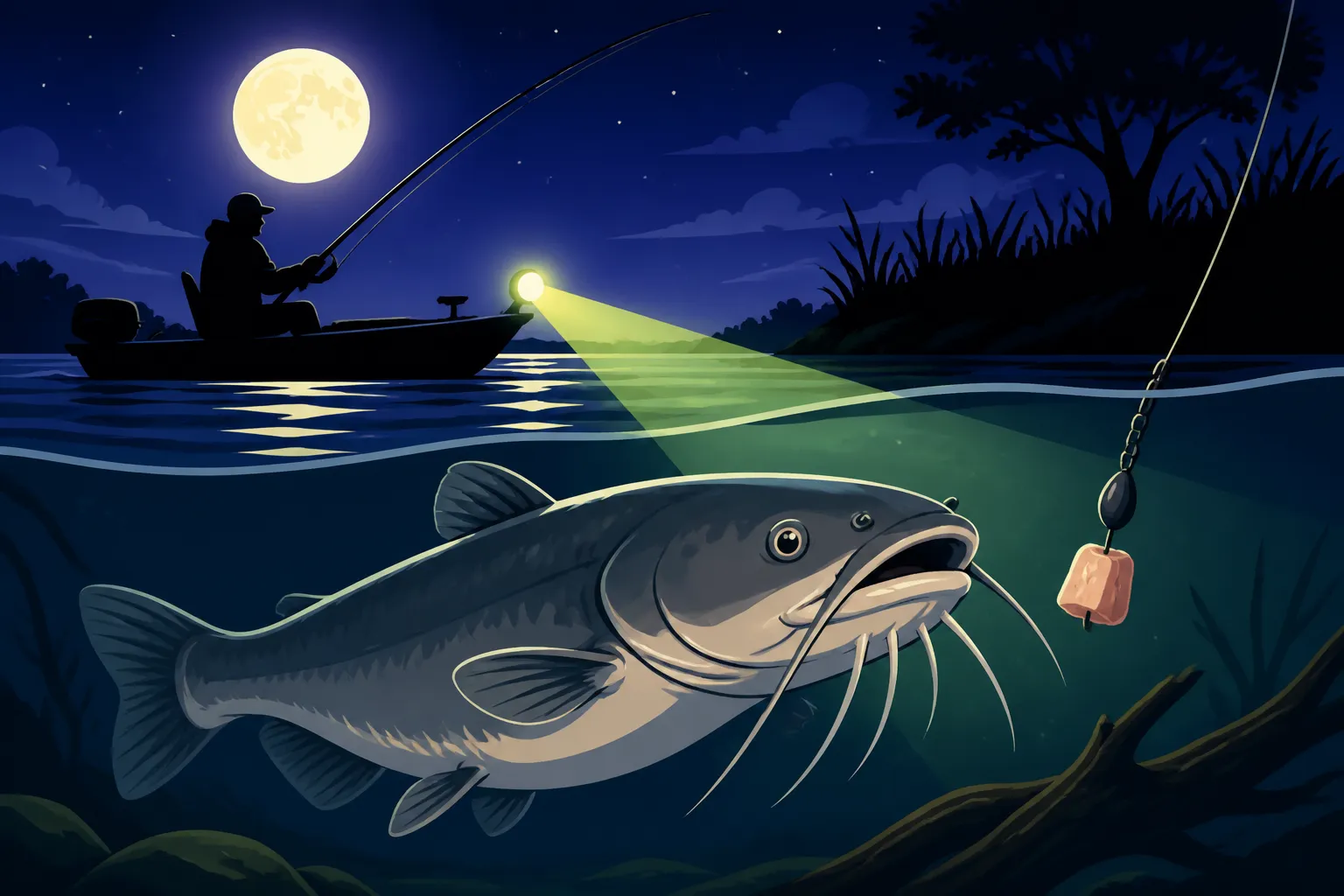
Navigating and fishing in the dark without proper lighting is a recipe for frustration and potential hazards. Your primary light source should be a good quality headlamp. The beauty of a headlamp is that it keeps your hands free for baiting hooks, tying knots, or landing a fish. Many modern headlamps offer multiple settings, including a red light option. Red light is crucial for night fishing because it has less impact on your night vision and is far less likely to spook fish than bright white light. Use white light sparingly, mainly for tying knots or baiting, and switch back to red for general illumination.
In addition to a headlamp, consider bringing a small lantern for your base camp or shore setup. A battery-powered LED lantern provides ambient light without being overly harsh, allowing you to see your tackle box, cooler, and other gear. For your rods, specialized rod tip lights are invaluable. These can be small chemical glow sticks that clip onto your rod tip or battery-operated clip-on lights. When a catfish strikes, that glowing tip dipping violently is an unmistakable and exhilarating signal. Amazon offers a wide range of reliable headlamps and rod tip lights perfect for night fishing. Remember, good lighting isn't just about seeing; it's about being seen, especially if you're on the water in a boat.
Rods, Reels, and Line for the Dark
Catfish, especially the bigger ones that are more active at night, can put up a serious fight. You'll want to be prepared with robust gear. For rods, think medium-heavy to heavy action, typically ranging from 7 to 9 feet. This length provides good casting distance and enough backbone to muscle in powerful fish from current or heavy cover. A sturdy rod can absorb the shock of a sudden strike and prevent break-offs when you're battling a big channel cat or flathead.
When it comes to reels, both baitcasting and spinning reels have their proponents. Baitcasting reels, often paired with heavier rods, are excellent for casting heavier weights and baits, and their powerful drag systems are ideal for handling large catfish. Spinning reels are generally easier for beginners and offer quicker casting for lighter setups. Whichever you choose, ensure it has a smooth, reliable drag system, as this is your ultimate shock absorber against a surging fish. Check out some of the Best Catfish Rods for Indiana Rivers for more detailed recommendations.
Line choice is critical for night fishing. While braided line offers superior strength and sensitivity, making it easier to feel subtle bites in the dark, many anglers prefer high-visibility monofilament for its stretch and ease of handling in low light. Some monofilament lines are even designed with fluorescent properties that glow under a blacklight, which can be a fun and practical addition. The key is to use a line with adequate breaking strength – 15-30 lb test is common, depending on the size of catfish you're targeting and the amount of snags in your fishing spot.
Terminal Tackle and Essential Accessories
Your terminal tackle needs to be as robust as your main setup. Circle hooks are a non-negotiable for responsible and effective catfishing. They are designed to hook fish in the corner of the mouth, minimizing gut-hooking and making releases much easier if you're practicing catch and release. Sizes typically range from 2/0 to 8/0, depending on your target species and bait size. For more on this, check out Best Catfish Fishing Techniques for Beginners.
You'll also need a variety of weights. Slip sinkers (egg sinkers or bullet weights) are popular for Carolina Rigs, allowing the line to run freely through them without the fish feeling the weight, which can lead to a more confident bite. Bank sinkers or pyramid weights are great for holding bottom in current. Keep a selection of swivels (barrel or snap swivels) to prevent line twist and connect leaders. Heavy-duty leaders, often made from monofilament or fluorocarbon, are essential for resisting the abrasive mouths of catfish and protecting your main line.
Don't forget the vital accessories: a sturdy pair of pliers for hook removal, line clippers, and a large, rubberized landing net. A rubberized net is gentler on the fish if you plan to release them and helps prevent hooks from getting tangled. A reliable cooler to keep your bait fresh and your catch cold is also a must. For those colder Indiana nights, a thermos with hot coffee or tea can make a huge difference in comfort.
Top Baits for Night Catfishing in Indiana
Catfish are opportunistic feeders, and their heightened senses at night mean that scent plays a massive role in attracting them. While they’ll hit a variety of offerings, some baits truly shine when the sun goes down.
Stink Baits and Prepared Baits
When it comes to attracting catfish after dark, scent is king, and nothing delivers a potent olfactory punch quite like stink baits and other prepared concoctions. These baits are specifically designed to disperse a strong, often pungent odor in the water, drawing catfish in from a distance. Commercial options abound, with popular choices like Catfish Charlie, Sonny's Super Sticky, and Berkley Gulp! Catfish Bait dominating the market. These typically come in dough, dip, or punch bait forms.
Dough baits are often kneaded onto a treble hook or a special bait holder spring hook. Dip baits are used with a bait worm or sponge that soaks up the gooey, smelly substance, slowly releasing it underwater. Punch baits, known for their sticky consistency, are "punched" onto a treble hook using a stick or tool, creating a secure, long-lasting bait. The key to success with these is their consistent scent trail, which is amplified in the quieter, darker waters of night. For a deeper dive into these options, read about the Best Cut Bait for Catfish Fishing, though many of the principles of scent attraction apply across bait types.
If you're a DIY angler, homemade stink baits can be incredibly effective and often quite economical. Recipes vary widely but commonly include ingredients like aged cheese, rotten meats, garlic, blood, and even things like cat food or anise oil. The science is simple: the stronger and more appealing the odor (to a catfish, anyway), the better your chances of a bite.
Live and Cut Baits That Shine After Dark
While stink baits are fantastic for their scent, live and fresh cut baits offer a combination of scent, texture, and natural appeal that catfish find irresistible, especially at night when they're actively hunting. Live bait, such as shad, minnows, nightcrawlers, or even small bluegill (where legal and size-appropriate), provides irresistible vibrations and natural scent. Rigged on a Carolina Rig or under a lighted slip bobber, a struggling live bait can be a catfish magnet. They represent an easy, natural meal that a hungry catfish will actively pursue in the dark.
Cut bait, however, might just be the undisputed champion of night catfishing. Freshly cut pieces of shad, skipjack herring, bluegill, or even carp release a powerful blood and oil slick into the water that catfish can detect from an incredible distance using their barbels. The fresher the cut bait, the better. A large chunk of cut bait, especially from an oily fish, is often the ticket to hooking a trophy-sized flathead or channel cat. The natural oils and enzymes released in the water create an olfactory beacon that catfish simply can't ignore. This is particularly effective in rivers where current can carry the scent downstream, luring fish from afar.
Lesser-Known but Effective Night Baits
Beyond the mainstream options, there are a few unconventional baits that experienced night catfish anglers swear by. Chicken livers, while messy and prone to falling off the hook, are incredibly bloody and release a powerful scent that often triggers aggressive strikes. Many anglers will "toughen" them by letting them sit in the sun for a bit or even rolling them in garlic powder or salt to help them stay on the hook longer.
Hot dogs, particularly those soaked in garlic or Kool-Aid, are another surprisingly effective and easy-to-use bait. They’re cheap, readily available, and their processed scent seems to appeal to channel cats in particular. Some anglers even experiment with soap, like Ivory, cut into small cubes. While it sounds wild, the strong scent of the soap is thought to attract catfish. These aren't always guaranteed winners, but they're worth having in your bait arsenal for those nights when the usual suspects aren't producing. Experimentation is often key to finding what works best on your local Indiana waters.
Strategic Locations for Night Catfish Success
Knowing where to cast your line is just as crucial as what bait you’re using, especially when the light fades. Catfish are creatures of structure and current, and understanding their nighttime movements can help you pinpoint the most productive spots.
River and Stream Hotspots
Indiana's rivers and streams, like the legendary Wabash River in Indiana or the meandering White River in Indiana, are prime territory for night catfishing. During the day, catfish often retreat to deeper, cooler holes to escape light and predators. At night, they become bold, moving into shallower feeding areas. Look for deep holes adjacent to shallow flats; these transition zones are where catfish will stage before moving up to feed.
Logjams, brush piles, and fallen trees are absolute magnets for catfish. These areas provide cover, ambush points for prey, and often harbor insect larvae and smaller fish that catfish feed on. Cast your bait as close to these structures as possible, being mindful of potential snags. Eddies – areas where the current slows or reverses – are also fantastic. They collect food, and catfish will sit in these calmer pockets, waiting for a meal to drift by. Confluence points, where two rivers or streams meet, concentrate current and food, making them natural hotspots. Bridge pilings and undercut banks also offer excellent cover and current breaks, providing perfect ambush points for actively feeding catfish. For tactics tailored to these spots, remember to explore How to Bottom Fish for Channel Catfish.
Lake and Reservoir Hideouts
Lakes and reservoirs present a different challenge but offer equally rewarding night catfishing opportunities. Here, catfish often relate to structural changes and baitfish concentrations. Focus on deep channels, humps, and ledges. Catfish use these contours as highways, moving up to shallower water to feed at night. Submerged timber, old roadbeds, and rock piles are excellent structures that provide cover and attract baitfish, which in turn attract catfish.
Points that extend into the main lake or reservoir are always worth exploring. As night falls, baitfish often congregate around these points, drawing catfish in. Inlets and outlets, where there's a discernible current flow, can also be productive. The current carries food and oxygen, making these areas attractive. On large bodies of water like Patoka Lake or Monroe Lake, utilize your fish finder during the day (or map research) to mark promising structures. While you might not be actively looking at the screen at night, knowing where those underwater features are will guide your casts. Remember, fish tend to be shallower at night in lakes, so don't be afraid to target water that might seem too shallow during daylight hours. Some of the Best Boats for Fishing Monroe Lake in Indiana would be well-suited for reaching these deeper lake structures.
Mastering Night Fishing Techniques
Night fishing isn't just daytime fishing after dark; it requires a subtle shift in technique, especially when it comes to setting up your rigs and detecting bites without the benefit of clear visuals.
Bottom Fishing Setups
When targeting catfish at night, getting your bait right on the bottom where they feed is usually the most effective strategy. The Carolina Rig, often called a slip sinker rig, is incredibly popular for this. It consists of a weight (usually an egg sinker) threaded onto your main line, followed by a bead (to protect your knot), then tied to a swivel. A leader (typically 12-24 inches) is tied to the other end of the swivel, and your hook is tied to the end of the leader. The beauty of this rig is that the line can "slip" through the weight, allowing a catfish to pick up the bait and swim off without feeling the resistance of the sinker, leading to more confident bites.
Another effective setup is the three-way swivel rig, especially useful in rivers with current or when you want to suspend your bait slightly off the bottom. With this rig, your main line ties to one eye of the three-way swivel. A dropper line, usually 6-12 inches, is tied to a second eye, with a sinker at its end. The third eye gets your leader and hook. This keeps your bait near the bottom but prevents it from getting buried in mud or caught in snags as easily. Setting up multiple rods, often 2-3 per angler if regulations allow, increases your chances, but ensure they are spaced out to avoid tangles and allow you to manage each one effectively. For more details on various setups, consult Best Catfish Rigs for Muddy Water.
Monitoring for Bites in the Dark
One of the biggest challenges of night fishing is detecting strikes. Visual cues, like a twitching rod tip, become almost impossible to see in the dark. This is where specialized bite indicators come into play. Old-school angler bells that clip onto your rod tip are still highly effective and produce an unmistakable jingle when a fish bites. They're simple, cheap, and reliable.
Electronic bite alarms, often used in carp fishing but gaining popularity for catfish, offer an even more sophisticated solution. These devices clip to your rod and register line movement, emitting an audible beep or even flashing a light when a fish pulls the line. Many of these, readily available on Amazon, are highly sensitive and can be a real game-changer. For shallower water or when fishing near obstructions, a lighted bobber can be fantastic. These bobbers contain small LED lights that glow brightly, making even the slightest bobber-down strike obvious. When using any of these, it's vital to keep a relatively tight line. This allows the fish to feel less resistance and gives your bite indicator a clearer signal to react to. Once you hear that bell or see that light move, don't set the hook immediately. Catfish often mouth the bait before fully committing. Wait for a steady pull or a consistent "reel run" before setting the hook firmly.
Safety First When Fishing After Hours
While night fishing can be incredibly rewarding, it comes with inherent risks that must be addressed for a safe and enjoyable outing. The darkness itself can hide potential hazards that are easily visible during the day. Always take the time to scout your chosen fishing spot during daylight hours to familiarize yourself with the terrain, identify any tripping hazards (roots, rocks, uneven ground), steep drop-offs, or submerged obstacles in the water.
Never fish alone at night. Bring a buddy or at least ensure someone knows exactly where you are going and when you expect to return. Share your specific location and estimated timeline. A fully charged cell phone is a lifeline, but remember that service can be spotty in remote areas. A portable charger is a smart addition to your pack. A well-stocked first aid kit is non-negotiable for treating minor cuts, scrapes, or hook accidents that can happen more easily in low light.
Staying hydrated and fed is also important, even if the temperatures are cooler. Pack plenty of water and some snacks. Dress in layers, as night temperatures can drop significantly, even after a warm day. If you're fishing from a boat, ensure all navigation lights are working and carry extra batteries for all your lighting devices. Be hyper-aware of your surroundings, both on shore and on the water, and always prioritize safety over catching that next big fish.
Common Mistakes to Avoid and Pro Tips
Even experienced anglers can sometimes fall into common traps when night fishing. Avoiding these pitfalls can dramatically improve your success rate and overall experience.
Don't Spook the Fish
Catfish have excellent senses, and while they rely heavily on smell and taste at night, they are still very sensitive to sudden disturbances. Excessive noise can easily spook them. Avoid loud talking, clanking tackle boxes, or stomping around on the bank. Move slowly and deliberately.
Perhaps even more critical is your use of light. While you need light to operate, resist the urge to constantly shine bright white lights into the water. This can send catfish scurrying for deeper cover. As mentioned, use a red-light setting on your headlamp whenever possible. If you must use white light for tying a knot or baiting, direct it away from the water or keep it focused on your immediate work area. Think of yourself as a stealthy predator, not a spotlight operator. Minimal disturbance equals more fish.
The Patience Game
Catfishing, especially for the larger, more cautious specimens, is often a game of patience. At night, this can be even more pronounced. Catfish might move into an area and take their time investigating a bait before committing to a bite. Don't be too quick to reel in and re-bait if you're in a promising spot and haven't had a bite in 20-30 minutes. Sometimes, the fish just need time to find the scent trail and home in on your offering.
A common mistake is constantly checking baits or moving rods. Every time you disturb your setup, you're potentially unsettling the fishing area. Trust your setup and your choice of location. Let the scent do its work. Wait for those definitive signals from your rod tip lights or bite alarms before acting. Sometimes, the most patient angler is the one who goes home with the heaviest stringer.
Weather and Water Conditions
Understanding how weather and water conditions affect catfish behavior at night can give you a significant advantage. Water temperature is always a factor; catfish are cold-blooded and their metabolism is directly tied to the water temp. In summer, cooler nights often mean more active fish as the water temperature becomes more comfortable for them. They'll venture into shallower waters to feed as the surface cools.
Rain can be a double-edged sword, but often for the better. A gentle, steady rain can stimulate catfish activity by washing terrestrial insects and worms into the water, creating a feeding frenzy. It also adds a layer of natural noise and murkiness that can make catfish feel even more secure. However, heavy downpours that cause flash flooding or significant current changes can disorient fish and make fishing difficult or unsafe. Always prioritize safety during stormy weather. For more insights on this, refer to How to Catch Catfish After Heavy Rain.
Finally, pay attention to barometric pressure. Fishing before a cold front moves in often produces excellent results, as fish feed aggressively in anticipation of the change. After a cold front, however, fishing can slow down considerably as fish become less active. Knowing these patterns will help you plan your night fishing trips for optimal success.
Here’s a quick comparison of some popular night catfishing baits:
| Bait Type | Pros | Cons | Ideal Use Case |
|---|---|---|---|
| Cut Bait | Strong natural scent, attracts large catfish, durable | Can be messy, requires fresh sourcing | Trophy flatheads and channels, current-rich rivers |
| Stink Bait (Dip/Punch) | Powerful, long-lasting scent trail, convenient | Can be very messy, less effective for trophy flatheads | Active channel cats, still or slow-moving water |
| Live Minnows/Shad | Natural action and scent, irresistible to predatory catfish | Requires bait aerator, can be delicate to rig | When catfish are actively hunting live prey |
| Chicken Livers | Very bloody, strong scent, affordable | Extremely messy, falls off hook easily, attracts smaller fish | Opportunistic channel cats, quick bites |
| Hot Dogs | Easy to use, cheap, readily available, less messy | Less effective for large flatheads, peculiar scent | Beginner-friendly, channel cats in ponds/lakes |
Disclaimer
Please remember that fishing regulations, including license requirements and bag limits, can change. Always consult the latest Indiana Department of Natural Resources (DNR) guidelines before heading out on the water to ensure you are compliant. This guide is for informational purposes only and does not supersede official regulations.