Steelhead vs Rainbow Trout: What Sets Them Apart
It’s easy to get confused when talking about Steelhead and Rainbow Trout in Indiana, as they look so similar and are, in fact, the same species. However, their different life cycles and habitats mean they present unique challenges and rewards for anglers. This guide will unravel the mysteries of these two incredible fish, helping you understand their distinctions, where to find them, and how best to pursue them across the Hoosier State.
Understanding the Family Tree: Trout Basics
Many anglers assume Steelhead and Rainbow Trout are entirely different species, but it's a common misconception. They are both Oncorhynchus mykiss, members of the salmonid family, and essentially the same fish. The key difference lies in their lifestyle: whether they choose to spend their entire lives in freshwater or make an epic journey to the Great Lakes. This difference in habit leads to significant variations in their appearance, size, and behavior, which is what makes distinguishing them so fascinating and, at times, tricky.
The Rainbow Trout: A Freshwater Resident
In Indiana, when we talk about a "Rainbow Trout," we're generally referring to the fish that hatch in our streams and rivers, and then spend their entire lives within that freshwater system. They might be found in coldwater streams, stocked ponds, or even some of our larger lakes where conditions are suitable. These fish are often stocked by the Indiana Department of Natural Resources (IDNR) to provide angling opportunities, especially in areas where native populations aren't sustainable. Their commitment to freshwater gives them a more settled, often less migratory existence than their Steelhead counterparts. You might find some great resources for identifying these fish in our Indiana Fish Identification: A Quick Reference Guide.
The Steelhead: An Anadromous Adventure
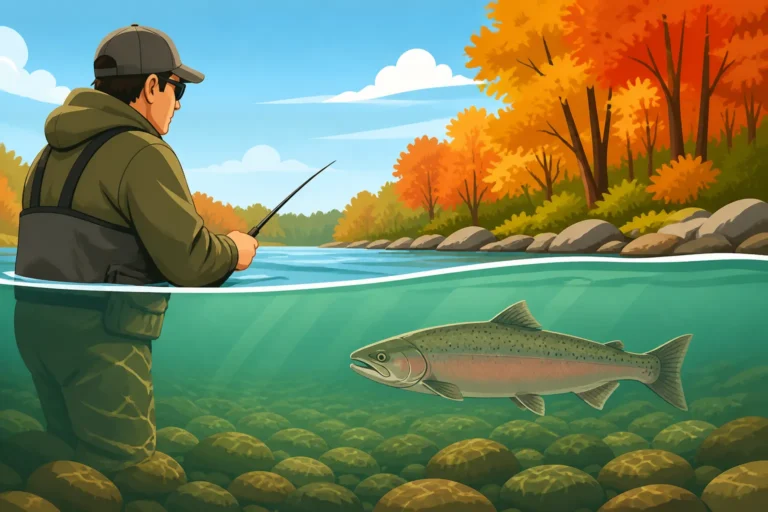
The term "Steelhead" specifically refers to Rainbow Trout that exhibit an anadromous life cycle. This means they are born in freshwater rivers and streams, migrate to a large body of saltwater (or, in Indiana's case, Lake Michigan), spend one to three years growing large in this expansive environment, and then return to their natal rivers to spawn. This incredible migratory journey is what makes them "steelhead" – a hardy, sea-run form of the Rainbow Trout. Their time spent in the open waters of Lake Michigan fuels their impressive growth and gives them a distinct, often more silver appearance, setting them apart from their stream-dwelling relatives.
Physical Differences: Spotting the Nuances
While genetically the same, the different environments Rainbow Trout and Steelhead inhabit profoundly influence their physical characteristics. If you put a resident rainbow next to a freshly returned steelhead, you’d notice these distinctions immediately. These differences are a direct result of their diet, activity levels, and the water conditions they experience throughout their lives. Knowing what to look for can help you identify your catch and appreciate the unique journey each fish has undertaken.
Coloration and Markings: More Than Just Rainbows
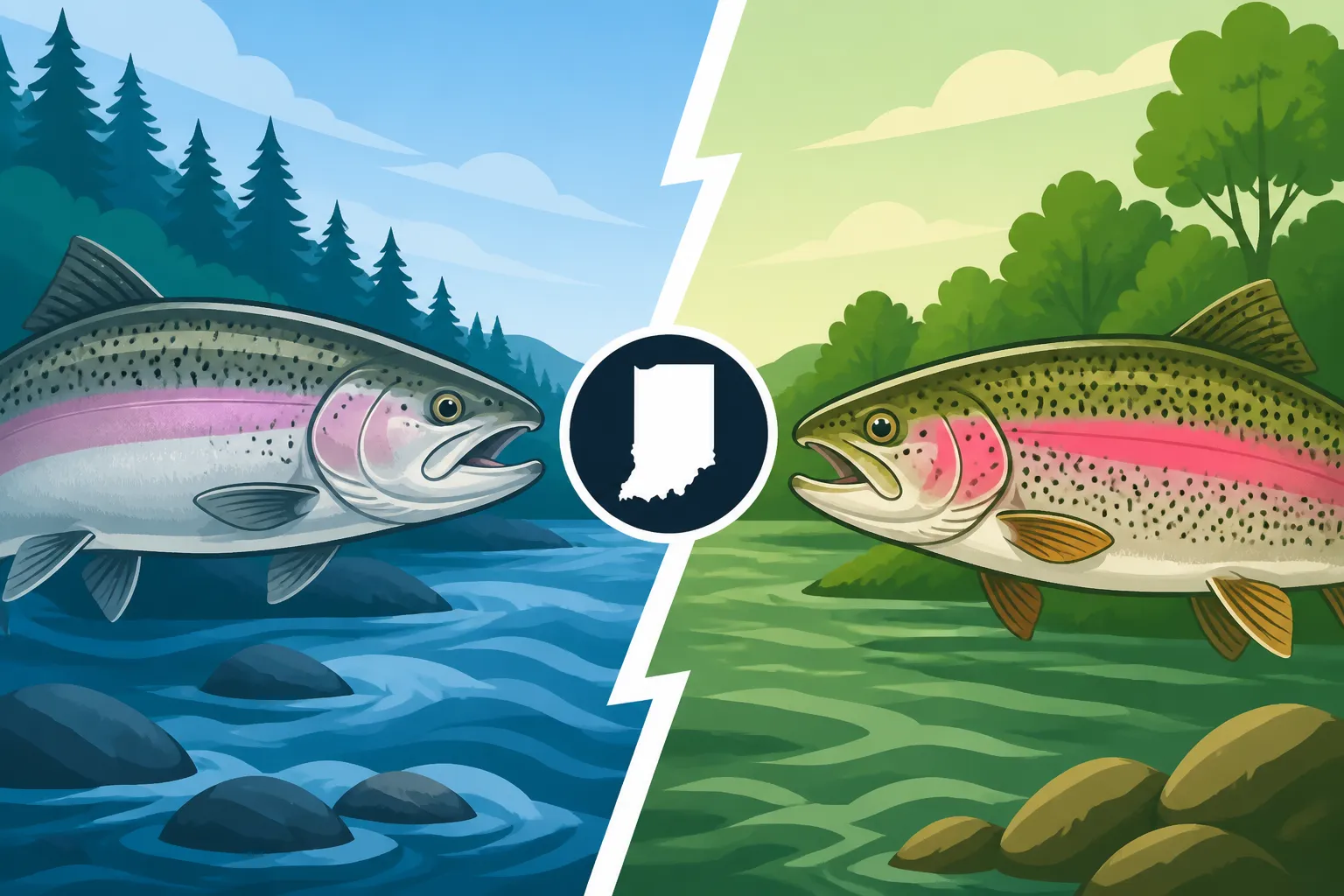
One of the most immediate differences you'll notice is in their coloring. A typical Rainbow Trout found in an Indiana stream or pond often displays vibrant colors, living up to its name. You’ll usually see a prominent, iridescent pink or red lateral stripe running down its side, often bordered by a darker, olive-green back that fades to a silvery-white belly. Their bodies are typically covered in small, dark spots, which can extend onto their dorsal, adipose, and caudal (tail) fins. The intensity of these colors can vary greatly depending on their habitat, diet, and even their mood, but that distinct stripe is almost always present.
Steelhead, on the other hand, particularly when they first return from Lake Michigan, tend to be much more silver or "steely" in appearance, hence their name. Their lateral stripe might be faint or even absent, and their bodies generally lack the vibrant hues of their freshwater cousins. They often have a darker back, ranging from a steely blue to olive-grey, which transitions abruptly to a bright silver belly. While they still possess spots, they are usually smaller, less numerous, and often less distinct than those on a resident rainbow. This silvering is a protective adaptation for life in open water, providing camouflage. As they spend more time in freshwater rivers preparing to spawn, their colors can deepen, and a faint pink stripe might begin to reappear, adding to the confusion for anglers.
Body Shape and Fin Structure: Built for Different Lives
Beyond coloration, the physical demands of their respective lives lead to variations in their body shape and fin structure. Resident Rainbow Trout in smaller streams often have a more stout, compact, and sometimes slightly heavier-set body. This shape is efficient for navigating currents, holding position, and making quick bursts in confined spaces. Their fins, while strong, are generally proportionate to their body size and are well-suited for maneuvering in rivers and smaller lakes. Their tail fins are usually square or slightly emarginated.
Steelhead, due to their migratory lifestyle and the need to cover vast distances in Lake Michigan, tend to have a more elongated, torpedo-shaped body. This streamlined form is incredibly hydrodynamic, allowing them to swim faster and more efficiently through open water. Their fins, particularly their caudal (tail) fin, are often larger and more powerful, built for endurance and strong bursts of speed. A Steelhead's tail fin is typically more squared off and robust, reflecting its role as a primary propulsion engine for long journeys. They are also, on average, significantly larger than resident rainbows, often weighing several pounds, with some trophy fish exceeding ten pounds after several years in the Great Lakes. For those looking to target these larger fish, understanding Steelhead vs Rainbow Trout: What Sets Them Apart is crucial.
| Feature | Resident Rainbow Trout (Indiana) | Steelhead (Indiana) |
|---|---|---|
| Life Cycle | Spends entire life in freshwater | Born in freshwater, migrates to Lake Michigan, returns to spawn |
| Coloration | Vibrant, pronounced pink/red stripe, olive back, distinct spots | Silvery/steely, faint or absent stripe, darker blue/grey back, smaller, less distinct spots |
| Body Shape | More stout, compact, sometimes heavier-set | Elongated, torpedo-shaped, streamlined for open water |
| Fin Size | Generally proportionate | Larger, more powerful fins, especially tail |
| Average Size | Smaller, often under 2-3 pounds | Larger, typically 3-10+ pounds after Lake Michigan growth |
| Habitat | Rivers, streams, stocked ponds, smaller lakes | Lake Michigan and its tributary rivers (e.g., St. Joseph River) |
| Diet | Insects, small fish, crustaceans in freshwater | Varied diet in Lake Michigan; krill, alewife, minnows |
Habitat and Behavior: Where and How They Live
The choice between a freshwater existence and an anadromous one dictates not only how these fish look but also where you'll find them and how they behave. Understanding these habitat preferences is key to successfully targeting either type of trout in Indiana. It’s a fascinating study in adaptation and survival within the same species.
Indiana's Freshwater Rainbows: Rivers, Streams, and Ponds
In Indiana, our resident Rainbow Trout populations are primarily found in specific coldwater streams that can sustain them year-round, or they are stocked into various public access sites. These streams, often found in the northern and central parts of the state, provide the consistent cold temperatures and oxygen-rich water that trout require. You’ll also find them in stocked lakes and ponds, particularly during the cooler months, where the IDNR releases them for seasonal angling pleasure. These fish typically hold in areas with good cover like fallen logs, undercut banks, and around boulders, waiting for insects or small baitfish to drift by. Their behavior is often more localized; they don't undertake long migrations, instead moving within their home waters based on food availability and water conditions. Anglers often discover some of these prime locations in guides like Best Fishing Spots in Indiana.
Steelhead's Great Lake Journey: Tributaries and Lake Michigan
Steelhead, by definition, require access to Lake Michigan for their growth phase, and then cold, clean tributary rivers for spawning. In Indiana, this means our Steelhead fishery is concentrated in the northwestern corner of the state, particularly in rivers that flow into Lake Michigan, such as the St. Joseph River, Trail Creek, and Salt Creek. They spend years in the vast, nutrient-rich waters of Lake Michigan, feeding and growing to impressive sizes. When the urge to spawn hits, usually from late fall through spring, they begin their incredible upstream migration into these tributary rivers. This migratory behavior makes Steelhead fishing highly seasonal, with peak runs occurring during certain times of the year, particularly the Fall Salmon Run Timing on Lake Michigan in Indiana and the spring. During these runs, you'll find them actively swimming upstream, often resting in deeper pools or behind obstacles before continuing their journey.
Spawning Habits: The Drive to Reproduce
Both resident Rainbow Trout and Steelhead are known for their strong drive to reproduce, laying their eggs in shallow gravel beds called "redds." However, the timing and location of this critical event differ due to their life cycles. Resident Rainbow Trout typically spawn in the spring when water temperatures are just right, seeking out suitable gravelly bottom areas in their home streams or rivers. The females will create a redd, deposit their eggs, and the males will fertilize them. After spawning, they will usually remain in the same general area.
Steelhead also spawn in the spring, but their journey is much more arduous. After migrating from Lake Michigan, they navigate challenging river systems to find optimal spawning grounds. They face obstacles, strong currents, and often warmer water conditions as spring progresses. Once they have spawned, unlike Pacific salmon which typically die after spawning, many Steelhead are iteroparous, meaning they can survive spawning and return to Lake Michigan, only to migrate back to spawn again in subsequent years. This makes them truly resilient fish and a testament to their incredible anadromous adaptations. Understanding these distinct spawning patterns is key to responsible angling, ensuring these magnificent fish can continue their life cycle. If you're planning a trip, be sure to check Indiana Fishing Regulations and Bag Limits Guide.
Fishing for Each: Techniques and Gear Considerations
Since resident Rainbow Trout and Steelhead inhabit different environments and exhibit distinct behaviors, the strategies and gear you employ to catch them will also vary significantly. While both are members of the same species, a one-size-fits-all approach simply won't yield consistent success. This is where understanding their unique characteristics really pays off for an angler.
Targeting Resident Rainbows: Light Tackle and Delicate Presentations
When you're chasing resident Rainbow Trout in Indiana's smaller streams, rivers, or stocked ponds, the name of the game is often finesse. These fish, while feisty, can be easily spooked by heavy lines or clunky presentations. You'll typically want to use lighter tackle: think ultralight or light-action spinning rods, paired with small reels spooled with 4-6 pound test monofilament or fluorocarbon line. The goal is to present your bait or lure as naturally as possible.
Common techniques include:
- Drifting natural bait: Worms, corn, or salmon eggs presented under a small float or simply drift-fished along the bottom are highly effective, especially for freshly stocked trout. You can often find a variety of these baits at local tackle shops or even purchase artificial salmon eggs on platforms like Amazon.
- Small spinners and spoons: Lures like Rooster Tails, Mepps Aglias, or small Kastmasters in sizes 0 to 2 are great for casting into riffles and pools. Their flash and vibration can trigger aggressive strikes.
- Flies: If you're a fly angler, small nymphs, dry flies (during hatches), and streamers are incredibly productive. A 3-5 weight fly rod is usually ideal for these waters.
- PowerBait or similar dough baits: These scented, moldable baits are particularly popular in stocked ponds and lakes, often fished off the bottom with a small treble hook.
The key is stealth and observation. Approach stream banks carefully, avoid heavy footsteps, and cast accurately to cover where trout might be holding. Delicate presentations that mimic natural food sources are far more likely to get a bite from these often wary fish. For more tips on gear, consider looking at Best Fishing Rods and Reels for Freshwater Fishing.
Battling Steelhead: Power, Patience, and Purpose-Built Gear
Switching gears to Steelhead means upgrading your equipment and adjusting your mindset. These powerful, migratory fish are known for their incredible strength, acrobatic jumps, and long runs once hooked. They demand more robust tackle to handle their size and fighting ability, especially in the swift currents of the rivers they ascend.
Here’s what you’ll typically need for Steelhead fishing in Indiana’s Lake Michigan tributaries:
- Medium-heavy spinning or casting rods: A rod in the 8 to 11-foot range is common, offering the leverage needed for long casts and controlling powerful fish. Many anglers opt for specialized "noodle rods" or longer float rods for drift fishing.
- Strong reels and line: Reels with smooth drags and plenty of line capacity are essential. 8-12 pound test monofilament or fluorocarbon main line, often with a heavier leader (10-15 lb test), is standard. Braided line can also be used as a main line for sensitivity, with a fluorocarbon leader. You can find high-quality lines and leaders on Amazon.
- Float fishing (centerpin or spinning): This is one of the most popular and effective methods. A float (bobber) is used to suspend a small bait (e.g., salmon eggs, roe bags, beads, worms) or jig just off the bottom, drifting naturally through current seams and holding pools. Centerpin reels are specialized for this, but spinning gear works well too.
- Drifting jigs and bait: Small jigs (1/8 to 1/4 ounce) tipped with wax worms, plastic grubs, or small pieces of shrimp can be drifted with or without a float.
- Casting spoons and crankbaits: When steelhead are aggressive, particularly in open water or larger river sections, spoons (like Little Cleos or Koho spoons) and diving crankbaits can entice strikes.
- Fly fishing: For fly anglers, a 7-9 weight fly rod is appropriate, using larger nymphs, egg patterns, and streamers.
Patience is a virtue when Steelhead fishing. These fish can be finicky, and presenting your offering naturally is paramount. Understanding river structure, current breaks, and migration paths is crucial. You're not just fishing for a trout; you're often intercepting a fish on an epic journey, and the fight reflects that incredible power. For more specific details, consult Steelhead Fishing in Indiana: A Fall Run Guide.
Culinary Appeal: What to Expect on the Plate
After a successful day of fishing, many anglers look forward to enjoying their catch. Both resident Rainbow Trout and Steelhead are excellent table fare, but their different diets and life experiences can result in subtle differences in their meat's texture, color, and flavor. Knowing these distinctions can help you appreciate your meal even more.
Rainbow Trout as Table Fare
Resident Rainbow Trout found in Indiana's streams and stocked ponds are generally smaller, making them perfect for individual servings. Their flesh is typically delicate, flaky, and has a mild, somewhat sweet flavor. The color of the meat can range from white to a pale pink, largely depending on their diet. If they've been feeding heavily on crustaceans or commercial feed with carotenoids, their flesh might lean more towards pink.
They are incredibly versatile in the kitchen. Smaller rainbows are fantastic when pan-fried whole, simply seasoned with salt, pepper, and a squeeze of lemon. They can also be baked, grilled, or smoked. The mild flavor makes them a great canvas for various herbs and spices without being overpowering. Many people consider them an accessible and delicious fish for any meal, whether it's a simple weeknight dinner or a special occasion. For those interested in sustainable sourcing, knowing Is Rainbow Trout Good to Eat? can be helpful.
Steelhead as a Culinary Delicacy
Steelhead, particularly those freshly returned from Lake Michigan, often boast a richer, firmer flesh with a vibrant orange-red or deep pink hue. This distinct color and more pronounced flavor are due to their diet in the Great Lakes, which is often rich in protein and carotenoids from forage fish like alewife. Their larger size also means more substantial fillets, making them ideal for larger gatherings or for preparing a variety of dishes.
Many compare Steelhead to salmon due to its richer flavor and firmer, more robust texture. It holds up exceptionally well to stronger cooking methods and seasonings. Grilling, baking, or broiling Steelhead fillets with marinades or rubs can really bring out their delicious qualities. They are also excellent smoked, producing a rich, flavorful smoked fish that can be enjoyed on its own or incorporated into other dishes. Because of their size and flavor profile, Steelhead are often considered a premium catch, offering a culinary experience that stands out from their smaller, resident cousins. The debate of Is Steelhead Good to Eat? often concludes with a resounding yes from those who have tried it fresh from the lake.
Disclaimer
This article is for general informational purposes only and does not constitute professional advice. Laws, prices and regulations vary by location and change over time. Consult a qualified professional for guidance on your specific situation.