Fish Finder Buying Guide for Freshwater Lakes
There's nothing quite like the feeling of being out on an Indiana lake, the sun rising, your line in the water, and the quiet peace of the morning. But let's be honest, sometimes that peace is interrupted by the gnawing question: where are the fish? You've tried all your usual spots, cast a hundred times, and still, nothing. It can be incredibly frustrating to spend hours on the water without even a nibble, wondering if you're just fishing a barren patch of water. This guide is here to help you cut through that frustration by understanding and choosing the right fish finder, transforming your fishing trips from a guessing game into a targeted, efficient pursuit on our beautiful freshwater lakes.
Demystifying the Fish Finder: Your Underwater Eyes on Indiana's Lakes
For many anglers, the idea of a "fish finder" can sound like something straight out of a sci-fi movie, or perhaps an unnecessary gadget. But in reality, it's a tool that has become indispensable for countless successful fishing trips, especially on Indiana's diverse freshwater lakes. Think of it as your personal submarine, sending out signals to map the underwater world and reveal its secrets. It takes the guesswork out of locating those elusive schools of crappie or those monster bass lurking around submerged structure.
What is a Fish Finder and How Does It Work?
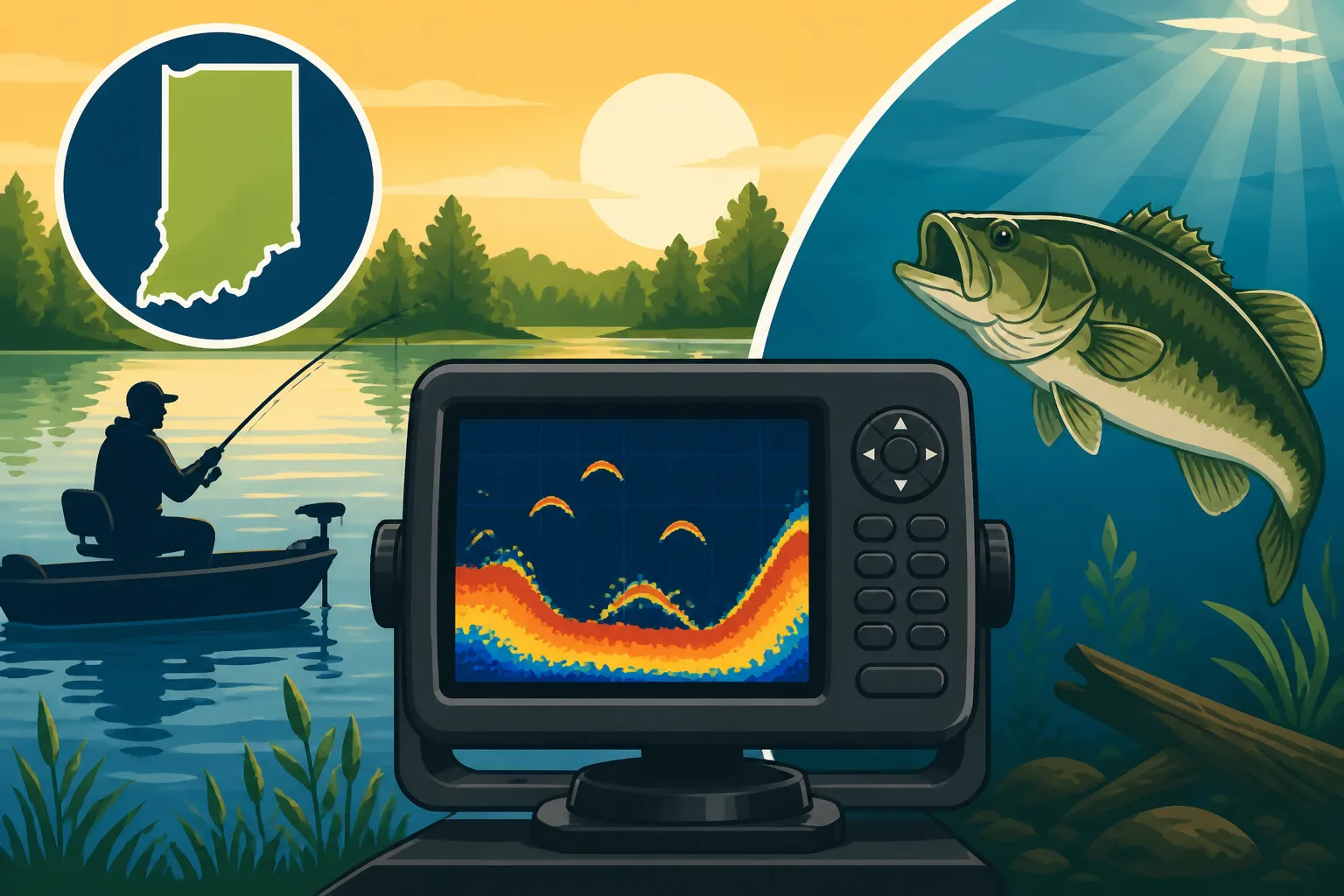
At its heart, a fish finder is essentially a sonar device. Sonar, which stands for Sound Navigation and Ranging, works by sending sound waves down through the water column from a component called a transducer. When these sound waves encounter an object – be it the lake bottom, a submerged tree, a rock pile, or yes, even a fish – they bounce back as echoes. The transducer then receives these echoes, and the fish finder's internal processor measures the time it took for the sound to travel down and back, as well as the strength of the returning echo.
It uses this information to create a visual representation on its screen, painting a picture of what's beneath your boat. Deeper objects take longer for the sound to return, while solid objects produce stronger echoes. So, when you see those iconic "arches" on your screen, you're actually seeing the path of a fish as it enters and exits the sonar beam. Structure will appear as distinct shapes, and the bottom contour will be clearly delineated. It's a marvel of technology that truly brings the unseen world into view, making your fishing decisions so much more informed.
Why a Fish Finder is a Game Changer for Freshwater Anglers
If you've ever spent a beautiful Saturday morning motoring across Monroe Lake or slowly drifting along Patoka Lake, casting endlessly with no luck, you know the feeling of doubt. "Am I even in the right spot?" A fish finder eliminates this doubt almost entirely. It transforms your approach from random casting to strategic targeting. Instead of guessing, you're seeing.
Imagine this: You're out on Lake Wawasee, known for its crappie and walleye, but you're not getting any bites. With a fish finder, you might scan a weed line and discover a school of baitfish, and right below them, the tell-tale arches of game fish. Or perhaps you're cruising a new section of Brookville Lake, and your screen suddenly reveals a dramatic drop-off or a submerged brush pile – prime real estate for bass and catfish. This ability to instantly identify structure, depth changes, and fish concentrations saves you precious time, reduces frustration, and drastically increases your chances of a successful outing. It's not just about finding fish; it's about understanding their habitat and patterns, giving you an invaluable edge.
Essential Features for Freshwater Lake Fishing in Indiana
Choosing a fish finder isn't just about picking the first one you see. Our Indiana freshwater lakes, whether it's the sprawling Monroe Lake: Indiana's Largest Lake for Bass Fishing or the more intimate glacial lakes of Kosciusko County, present unique fishing challenges and opportunities. The right features on your fish finder can make all the difference in navigating these waters and finding those honey holes.
Display Size and Resolution: Clarity is King
When you're out on the water, battling glare and trying to keep your eyes on the horizon for hazards, the last thing you want is a screen you have to squint at. This is where display size and resolution become critical. A larger screen, say 7 inches or more, provides much more real estate to interpret the sonar data, especially when you start splitting the screen to view different sonar technologies simultaneously, like traditional 2D sonar alongside Down Imaging.
Resolution, measured in pixels (e.g., 800×480 or 1024×600), determines how sharp and detailed the image will be. Higher resolution means clearer distinctions between fish and structure, and less pixelation. Imagine trying to identify a small crappie next to a submerged stump on a low-res screen versus a high-res one – the difference can be night and day. Brightness and anti-glare coatings are also vital, especially when fishing under the intense Hoosier sun. You want a screen that remains vibrant and readable from various angles, allowing you to quickly glance at it without constantly adjusting your position or shading it with your hand.
Transducer Power and Frequencies: Reaching the Depths
The transducer is the heart of your fish finder, sending and receiving those crucial sound waves. Its power, typically measured in watts RMS (Root Mean Square), dictates how deep and accurately it can transmit and receive signals. For most Indiana freshwater lakes, which rarely exceed 100 feet in depth (though some like Lake Wawasee have deeper pockets), a transducer with 500-1000 watts RMS is usually more than sufficient. You certainly don't need the extreme power required for ocean depths, but having enough power ensures clear returns even in slightly deeper sections or murky water.
Frequency is another key factor. Lower frequencies (like 50 kHz) penetrate deeper into the water but offer less detail, while higher frequencies (like 200 kHz or 455/800 kHz for imaging) provide superior detail in shallower water. Many modern transducers offer dual-beam or multi-frequency capabilities, allowing you to toggle between frequencies or use them simultaneously. A wider cone angle, typically associated with lower frequencies, covers more area, which is great for finding schools of fish. A narrower cone angle, found with higher frequencies, offers a more precise view directly beneath your boat, helping you pinpoint specific targets or structure. For versatile freshwater fishing, a unit that can handle a range of frequencies will serve you best.
GPS and Chartplotting: Navigating Unknown Waters
While fish finding is about what's under the water, knowing where you are and where you've been on the surface is equally important, especially on larger Indiana lakes. This is where integrated GPS and chartplotting come in. A good GPS system allows you to mark waypoints – those exact spots where you caught a fish, found a promising structure, or identified a significant drop-off. You can then navigate directly back to these spots on future trips, eliminating the need to constantly try and remember landmarks or guess your position.
Chartplotting capabilities take this a step further by displaying your boat's position on a detailed map or chart of the lake. Many units come with pre-loaded maps of popular lakes, offering contours, navigational aids, and other helpful information. This is incredibly useful for finding ledges, humps, and submerged islands that might not be visible on the surface. On a massive body of water like Lake Michigan (even its Indiana shoreline), or even navigating the sprawling network of coves and arms on Patoka Lake, a reliable GPS and chartplotter can be a lifesaver, helping you stay safe, find your way back to the ramp, and unlock hidden fishing spots with confidence. Best Boats for Fishing Patoka Lake in Indiana often have these integrated systems.
Exploring Different Types of Fish Finders for Indiana Anglers
Just like there are different types of fishing, there are different types of fish finders designed to meet specific needs and situations. The best choice for you depends heavily on your primary fishing method, the kind of boat you use (if any), and your overall budget. Whether you're a hardcore tournament angler or a casual weekend warrior, there's a fish finder out there that's perfect for your style of fishing on Indiana's diverse waters.
Portable and Ice Fishing Units: Versatility on the Go
For anglers who don't have a dedicated boat, or those who enjoy fishing from a variety of small craft, docks, or even through the ice, portable fish finders are an absolute godsend. These units are designed for easy transport and quick setup. Many come with a small, self-contained battery and a suction-cup transducer that can be attached to the hull of a canoe, kayak, or the side of a johnboat. Their compact size makes them perfect for tossing into a backpack for a hike to a remote pond or for use on a rental boat.
When winter blankets our northern Indiana lakes in ice, many of these portable units truly shine as "ice fishing flasher" models. They often feature specialized transducers designed to hang down through an ice hole, providing real-time sonar returns. This allows ice anglers to see their jig, bait, and approaching fish with incredible precision, dramatically increasing success rates. Look for models with good battery life, a sturdy carrying case, and perhaps a bright, clear screen that's easy to read in varying conditions. Best Fish Finders Under $300 for Indiana Anglers often include some excellent portable options.
Mounted Units for Boats: Dedicated Performance
For serious boat anglers, a permanently mounted fish finder is the way to go. These units offer the largest screens, most advanced sonar technologies, and typically integrate seamlessly with a boat's electrical system. They are designed for durability and performance, standing up to the rigors of frequent use on everything from small bass boats to larger deep-V vessels fishing on Lake Michigan Fishing Rules for Indiana Anglers.
A mounted unit usually consists of a head unit (the display) securely installed at the console or bow, and a transducer permanently affixed to the transom, hull, or trolling motor. This setup provides the most consistent and interference-free sonar readings. Many high-end mounted units also feature powerful processors that can run multiple sonar views simultaneously, such as 2D sonar, Down Imaging, Side Imaging, and a detailed GPS chartplotter, all on one screen. This comprehensive view gives you an unparalleled understanding of the underwater environment, allowing you to mark detailed waypoints and navigate complex lake contours with ease.
Kayak and Small Boat Options: Compact and Efficient
Kayak fishing has exploded in popularity across Indiana, and manufacturers have responded with fish finders specifically tailored for these smaller, more agile craft. These units strike a balance between the portability of handheld devices and the advanced features of mounted systems. They are typically compact, energy-efficient (to conserve limited battery power), and come with versatile mounting options that don't require drilling into your kayak's hull.
Common mounting solutions for kayak transducers include transom mounts scaled for kayaks, scupper hole mounts, or even internal "shoot-through-hull" mounts. The displays are often mid-sized, offering a good balance of screen real estate and manageable footprint. Many kayak anglers value units with strong GPS capabilities to mark productive areas, especially when drifting down rivers like the Tippecanoe or exploring the numerous coves on a lake. When looking for Kayak Fishing Gear for Indiana Waters, a dedicated kayak fish finder should definitely be on your list, as it can transform how you approach fishing from a paddle or pedal craft.
Unlocking Advanced Sonar Technologies for Deeper Insights
Gone are the days when a fish finder simply showed you a few arches and a bottom line. Modern technology has brought incredible advancements to sonar, offering anglers detailed, near-photographic views of the underwater world. Understanding these different technologies is key to choosing a fish finder that truly helps you unravel the mysteries beneath the surface of Indiana's lakes.
CHIRP Sonar: The Clearest Picture Beneath Your Boat
CHIRP stands for Compressed High-Intensity Radiated Pulse, and it's a revolutionary leap in sonar technology. Unlike traditional 2D sonar that sends out a single frequency burst, CHIRP sonar sends a continuous sweep of frequencies (from low to high) within each pulse. The receiver then processes these frequencies individually upon return. What does this mean for you, the angler?
It translates to significantly enhanced target separation and superior clarity. With CHIRP, you can often distinguish individual fish in a school, rather than just seeing a blob. You can differentiate between a fish hugging the bottom and the bottom itself, or tell the difference between a submerged log and a fish hiding near it. The clarity is so much greater that you can often identify baitfish, game fish, and even the type of submerged vegetation with remarkable accuracy. Whether you're trying to How to Find Walleye in Deep Water or locate subtle changes in structure on a vast reservoir, CHIRP sonar provides a level of detail that traditional sonar simply can't match, making it an incredibly powerful tool for serious anglers.
Down Imaging and Side Imaging: Seeing Beyond the Cone
While CHIRP sonar gives you an incredibly detailed view directly beneath your boat, Down Imaging and Side Imaging expand your field of vision dramatically, offering almost photographic-like clarity of structure. These technologies use super-high frequencies and very thin, wide sonar beams to "scan" slices of the water column.
- Down Imaging (sometimes called DownScan) points its beam directly downward, creating a picture of what's beneath you that looks much like a black-and-white photograph. It excels at revealing intricate details of submerged trees, rock piles, brush, and ledges. You can easily spot fish relating to these structures, often seeing their shadows or clear outlines. It's fantastic for dissecting specific cover you're idling over.
- Side Imaging (or SideScan) takes this concept and applies it to the sides of your boat. It sends out beams horizontally, allowing you to scan a huge area of water on either side of your vessel (often 100-200 feet or more per side). This is where the true power of discovery lies. Imagine cruising down the center of a creek channel on Mississinewa Lake and seeing a brush pile 50 feet to your left, complete with fish holding tight to it. Or spotting a hidden rock pile a significant distance from your boat. Side Imaging saves an immense amount of time by allowing you to scout vast areas quickly, pinpointing promising structure and fish concentrations without having to drive directly over them.
Understanding 2D Sonar: The Classic View
Even with all the advanced technologies, traditional 2D sonar (often just called "sonar" or "broadband sonar") remains a fundamental and highly effective tool. It's the technology that produces those classic "fish arches" that most anglers associate with a fish finder. This view provides a real-time, scrolling interpretation of what's directly beneath your boat, showing depth, bottom composition, and any targets (fish) in the water column.
While it may not offer the photographic detail of Down or Side Imaging, 2D sonar is excellent for quickly identifying changes in bottom contour, baitfish schools, and distinguishing larger fish. Its strength lies in its simplicity and its ability to show real-time movement. When you see a strong, distinct arch, you know you're looking at a fish. When you see a "Christmas tree" shape, you know you're looking at a school of bait. Many anglers still prefer 2D sonar for rapidly identifying fish and for judging depth and bottom hardness. Most modern fish finders will include 2D sonar alongside CHIRP and imaging capabilities, allowing you to use all these views in conjunction for the most comprehensive understanding of the underwater world.
| Sonar Technology | What It Shows You | Best For | Pros | Cons |
|---|---|---|---|---|
| 2D Sonar | Classic fish arches, bottom contour, depth | General fish detection, identifying bait schools, basic depth finding | Real-time, great for moving targets, easy to interpret fish arches | Less detail for structure, can't easily distinguish fish from structure |
| CHIRP Sonar | Highly detailed fish arches, excellent target separation | Identifying individual fish, distinguishing fish from structure, clarity | Superior target separation, clear returns, great for all depths | Requires compatible transducer, can be pricier |
| Down Imaging | Photographic-like view directly beneath the boat | Detailed view of submerged structure (trees, rocks), fish near bottom | Incredible detail of vertical structure, easy to identify objects | Only shows what's directly below, limited coverage area |
| Side Imaging | Scans wide areas to the left and right of the boat | Scouting large areas quickly, finding hidden structure far from boat | Huge coverage area, excellent for finding hidden spots, time-saving | Requires faster boat speeds for best results, can be complex for novices |
Investing Wisely: Budget, Brands, and Where to Buy
Deciding to invest in a fish finder is a big step, and navigating the vast array of options can feel overwhelming. It's important to consider your budget, the reputation of different brands, and where you'll make your purchase to ensure you get the best value and the right unit for your Indiana fishing adventures.
Price Ranges and Value: What to Expect
Fish finders vary wildly in price, from a couple of hundred dollars for basic portable models to several thousand for high-end, networked systems. It's helpful to break them down into general tiers:
- Entry-Level (Under $300-$400): These are typically portable units, smaller screen models, or those primarily offering 2D sonar with basic GPS. They're excellent for beginners, kayak anglers, or those on a tight budget. You'll get solid performance for basic fish and structure detection on smaller lakes or ponds.
- Mid-Range ($400-$1000): This is where you'll find the sweet spot for many serious freshwater anglers. Units in this range usually boast larger, color displays (5-9 inches), integrated GPS with chartplotting, and often include CHIRP 2D sonar along with Down Imaging or even basic Side Imaging. This tier offers a fantastic balance of features and value, suitable for bass boats, pontoons, and more frequent use on larger Indiana lakes.
- High-End ($1000+): These are the flagship models with the largest screens (9 inches and up), all available sonar technologies (full CHIRP, Down, Side, Live/Forward-Looking sonar), advanced networking capabilities, and highly detailed mapping. They cater to tournament anglers or those who demand the absolute best performance and integration with other boat electronics.
When considering value, think about how often you fish, what kind of fishing you do, and what features are truly essential for your success. Sometimes, spending a little more upfront for better resolution or an extra sonar technology can pay dividends in increased catch rates and reduced frustration over many seasons.
Top Brands in the Fish Finder Market
The fish finder market is dominated by a few key players who have consistently pushed the boundaries of technology. While I won't go into specific models or prices, understanding the major brands can help guide your research:
- Humminbird: Renowned for their Side Imaging technology, which was truly groundbreaking when it first came out. Their Helix and Solix series offer incredible detail and clarity, making them popular among anglers targeting bass and walleye around structure.
- Lowrance: A long-standing name in marine electronics, Lowrance is celebrated for its powerful 2D sonar, advanced mapping, and user-friendly interfaces. Their Hook Reveal and Elite FS series are strong contenders across various price points.
- Garmin: Known for their intuitive GPS capabilities and crisp displays, Garmin's Echomap and GPSMAP series offer excellent integration of sonar and navigation, a favorite for many recreational and professional anglers.
- Raymarine: While perhaps more prominent in saltwater, Raymarine also offers robust freshwater units with powerful sonar and networking capabilities, often appealing to boaters who want a comprehensive marine electronics suite.
Each brand has its loyal followers, often based on user experience, specific feature preferences, and integration with other accessories. It's a good idea to research customer reviews and compare features across these brands when making your decision.
Finding the Right Retailer
Once you've narrowed down your choices, the next step is deciding where to buy. You have a few main avenues, each with its own advantages:
- Online Retailers: Websites like Amazon offer a vast selection, competitive pricing, and the convenience of home delivery. You can often find detailed product descriptions, customer reviews, and comparative pricing all in one place. Just be sure to check the seller's reputation and return policy.
- Specialty Outdoor Stores: Big box retailers like Bass Pro Shops or local bait and tackle shops provide the invaluable opportunity to see units in person, touch the screens, and speak with knowledgeable sales associates. They can often provide hands-on demonstrations, answer specific questions about installation, and offer package deals that might include transducers or mapping cards. Plus, supporting your local shops helps keep the fishing community vibrant.
- Manufacturer Websites: Buying directly from the brand's website can sometimes offer exclusive bundles, direct warranty support, and the most up-to-date product information.
Consider all these options. For many, a combination works best – researching online, then visiting a store like Bass Pro Shops to get a feel for the units, and finally making the purchase wherever the best deal and support are found.
Installation, Setup, and Maintenance for Peak Performance
Even the most advanced fish finder is only as good as its installation and how well it's maintained. A poorly mounted transducer or neglected battery can lead to frustratingly inaccurate readings or premature equipment failure. Taking the time to properly install, set up, and care for your unit will ensure it performs at its best, helping you get the most out of every fishing trip on Indiana's waters.
Proper Transducer Mounting: The Foundation of Accuracy
The transducer is your fish finder's eyes and ears, and its placement is paramount. Incorrect mounting is one of the most common causes of poor performance. The goal is to get the transducer in clean, undisturbed water, free from air bubbles or turbulence created by the boat's hull or propeller.
- Transom Mount: This is the most common and easiest installation for most boats. The transducer is attached to the boat's transom, just below the waterline. Ensure it's level with the bottom of the boat and not angled up or down, which can distort readings at speed. Pay close attention to avoiding areas directly in line with the propeller or other underwater obstructions that could create "dirty" water.
- Trolling Motor Mount: For bass and walleye anglers who spend a lot of time on their trolling motor, mounting the transducer directly to the trolling motor's lower unit is an excellent option. This keeps the transducer constantly in clean water, even when maneuvering slowly in tight spots on lakes like Lake Freeman or Salamonie Lake.
- Thru-Hull/In-Hull Mount: These are more permanent and complex installations, often used on larger, fiberglass boats. Thru-hull transducers are drilled directly through the hull, offering the cleanest water possible. In-hull (or "shoot-through-hull") transducers are epoxied inside the hull, transmitting and receiving through the fiberglass. While easier to install than thru-hull, in-hull transducers can experience some signal loss but are ideal for those who don't want anything protruding from their hull.
Regardless of the mount type, always follow the manufacturer's specific instructions, paying close attention to sealant, cable routing, and proper leveling. A little extra time during installation can save you a lot of headaches later.
Powering Your Unit: Battery Life and Wiring
A fish finder needs a reliable power source to operate correctly. For boat-mounted units, this typically means connecting to your boat's 12-volt battery system. Ensure you use appropriate gauge wiring and an inline fuse to protect the unit from power surges. Connect directly to the battery if possible, or to a dedicated fuse block, to minimize electrical interference from other boat electronics.
For portable and kayak units, dedicated 12V rechargeable batteries are common. When considering Kayak Fishing Gear for Indiana Waters, you'll want to factor in the battery's amp-hour (Ah) rating to estimate how long your fish finder will run. Always carry a fully charged spare battery for longer trips. Proper battery care, including charging after each use and storing in a cool, dry place, will prolong its lifespan. For both boat and portable units, regularly check all connections for corrosion or loose wires, as these can disrupt power flow and lead to intermittent issues.
Software Updates and Care Tips: Keeping Your Finder Ready
Just like your smartphone, most modern fish finders benefit from periodic software (firmware) updates. These updates can introduce new features, improve existing sonar algorithms, enhance mapping details, and fix bugs. Check your manufacturer's website regularly for available updates and follow their instructions for installation, usually involving downloading the update to an SD card and inserting it into your unit.
Beyond software, good physical care is essential. Always use a soft, damp cloth to clean the screen and housing, avoiding harsh chemicals that could damage the display or seals. When not in use, cover the unit with a protective cover (if provided) or store it in a dry, safe place away from direct sunlight and extreme temperatures. Disconnect transducers and store them carefully, especially portable ones, to prevent damage to the cable or transducer face. If you fish in freezing conditions, ensure your unit and transducer are completely dry before storing to prevent ice damage. With proper installation and consistent care, your fish finder will be a reliable companion for countless successful fishing trips across Indiana.
Disclaimer
This article is for general informational purposes only and does not constitute professional advice. Laws, prices and regulations vary by location and change over time. Consult a qualified professional for guidance on your specific situation.