Crappie and Panfish Fishing Techniques for Beginners
Stepping into the world of fishing can feel a little intimidating, especially when you're faced with all the gear, techniques, and regulations out there. But trust me, there's nothing quite as satisfying, or as accessible, as catching panfish. Many new anglers get frustrated trying to target bigger, more elusive species, but this guide is here to demystify crappie and panfish fishing, giving you all the beginner-friendly tips and tricks you need to start filling your stringer in Indiana.
Understanding Crappie and Panfish: The Indiana Basics
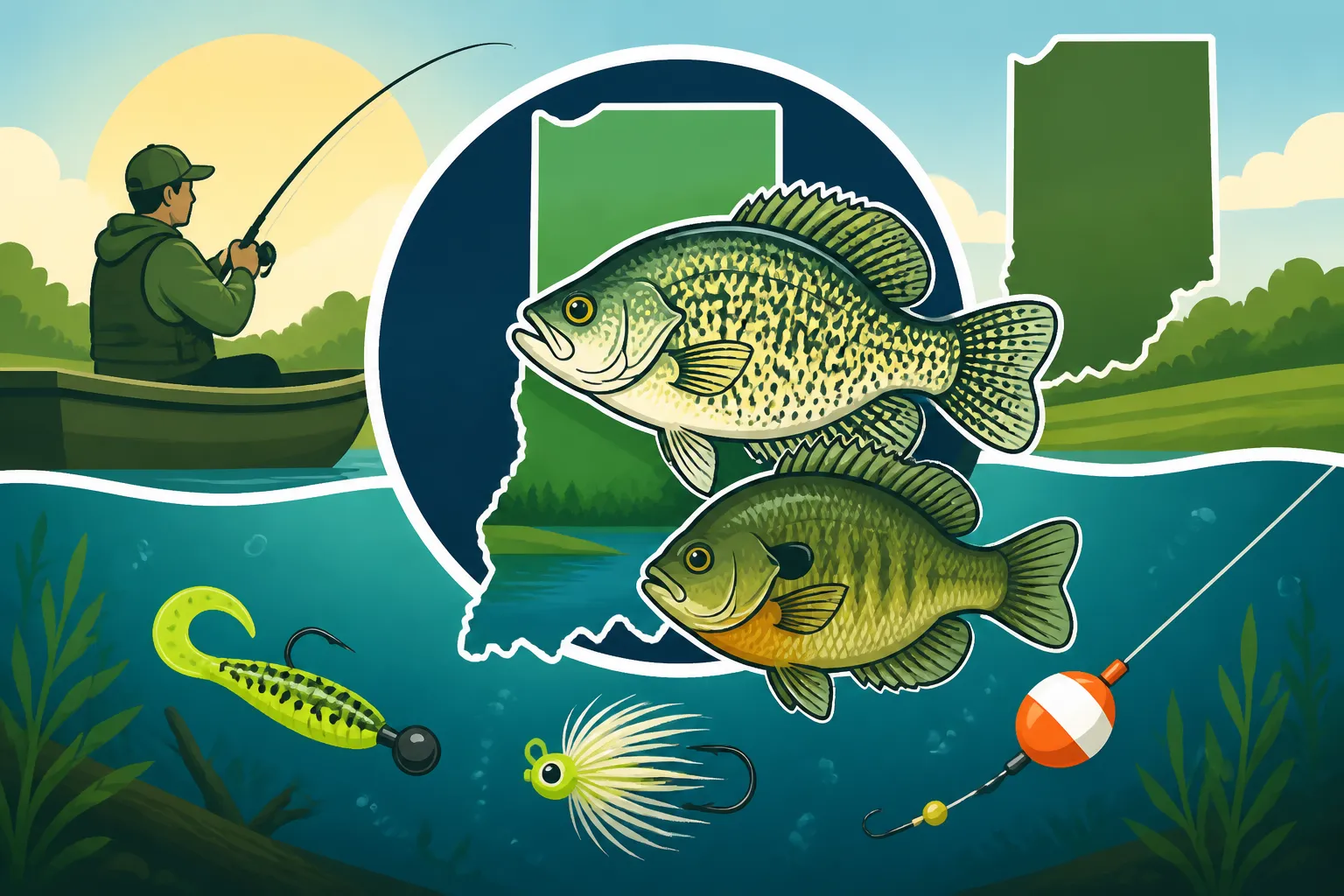
When we talk about "panfish" in Indiana, we're typically lumping together a few incredibly popular and often abundant species. These are the fish that are generally smaller, fit nicely in a frying pan (hence the name!), and offer consistent action, making them perfect targets for beginners and seasoned pros alike. They're also delicious, which is a huge bonus! Knowing a little about each species will help you tailor your approach and increase your chances of success.
Black Crappie vs. White Crappie: What's the Difference?
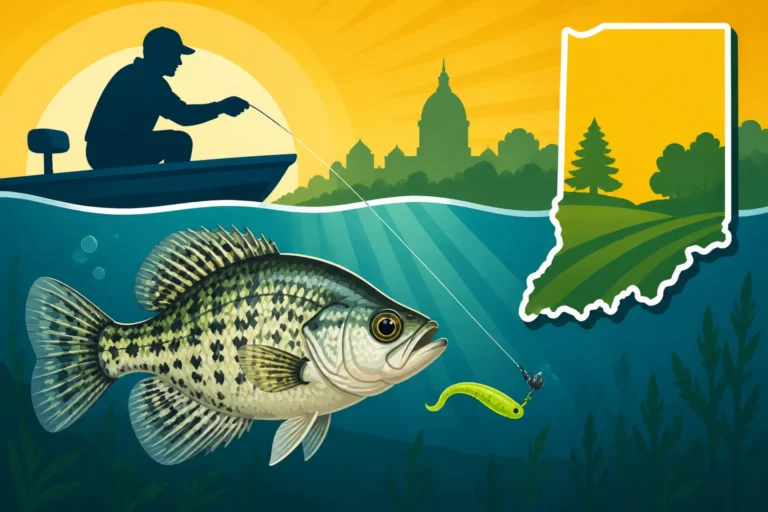
In Indiana, you'll primarily encounter two types of crappie: black crappie and white crappie. While they share many similarities and are often found in the same waters, there are some subtle differences that can help you identify them and even inform your fishing strategy.
Black crappie tend to have a darker, more mottled appearance, often described as having an irregular pattern of black spots scattered across their silvery-olive bodies. One key identifier is their dorsal fin: black crappie usually have 7 or 8 dorsal spines. They prefer clearer water with more vegetation and often hang around submerged cover like brush piles, weed beds, and fallen trees. You'll find them in many of Indiana's lakes and reservoirs. Imagine them as the "hidden gems" of the underwater world, lurking in the shadows.
White crappie, on the other hand, typically have a more uniform, silvery body with distinct vertical bars or stripes along their sides, although these can fade depending on their environment. Their dorsal fin usually has 5 or 6 spines. White crappie are often more tolerant of turbid or murky water and can be found in a wider variety of habitats, including rivers, larger reservoirs, and shallower, less vegetated areas. They're often schooling in open water near channel drops or flooded timber. Think of them as the more adaptable, free-ranging cousins. Both species grow to a similar size, offering excellent sport and table fare, and are a blast to catch once you dial them in. If you want to dive deeper into these fish, check out our guide on Crappie Fishing in Indiana: Black Crappie Basics.
Bluegill and Redear Sunfish: Indiana's Family Favorites
Beyond crappie, bluegill and redear sunfish are the quintessential Indiana panfish. These are the fish that likely got many of us hooked on fishing as kids, and for good reason—they're abundant, aggressive, and incredibly fun to catch.
Bluegill are easily recognizable by their deep, compressed bodies, dark spot on the gill cover (the "ear flap"), and often vibrant blue and orange coloring, especially on males during spawning season. They're typically found in clear, shallow waters with plenty of weeds, docks, and submerged structures. They're incredibly prolific and form large schools, making them a fantastic target for family fishing trips. They'll readily hit a wide variety of baits and lures, making them very forgiving for beginners. Many anglers consider bluegill to be one of the best tasting freshwater fish, perfect for a shore lunch.
Redear sunfish, sometimes called "shellcrackers," are similar to bluegill in shape but can be distinguished by the reddish-orange trim on their gill flap (hence "redear") and their tendency to have a somewhat larger mouth. Unlike bluegill, redears are bottom feeders, specializing in crushing snails, mussels, and other invertebrates, which gives them their "shellcracker" nickname. This means you'll often find them in slightly deeper, cleaner water where there are abundant aquatic organisms on the bottom. They can be a bit more finicky than bluegill, but once you find them, they put up a surprisingly strong fight for their size. If you're curious about telling them apart, we have a helpful guide on Redear Sunfish vs Bluegill: How to Tell Them Apart. Both species are fantastic for introducing kids to fishing, as highlighted in our post, Bluegill and Panfish: A Great Starter Fish for Kids in Indiana.
Yellow Perch and Other Panfish You Might Encounter
While crappie, bluegill, and redear sunfish are the stars of the panfish show in most of Indiana, you might also run into other species, especially in certain regions or specific bodies of water. One notable mention is the yellow perch.
Yellow perch are easily identified by their golden-yellow bodies with distinct dark vertical stripes. They have a more elongated body shape compared to the rounder bluegill. They are often found in cooler, deeper waters of natural lakes, like those in northern Indiana, and are particularly popular targets for ice fishing. Perch tend to school in large numbers and are renowned for their flaky, delicious white meat. Catching a mess of perch can be an absolute blast, especially during peak feeding times when you might pull them in one after another.
Other panfish you might sporadically encounter include rock bass, green sunfish, and warmouth. These fish are generally less common or widespread than bluegill and crappie but can provide fun surprises, especially in smaller streams or ponds. Each offers its own unique coloring and fighting style, adding to the diversity of Indiana's panfish scene. Don't be surprised if one of these less common species ends up on your hook—they're all part of the fun of panfishing in the Hoosier state!
Essential Gear for Beginner Panfish Anglers
One of the best things about panfishing is that you don't need a huge budget or a massive tackle box overflowing with specialized gear. Simple, light tackle is not only effective but also makes the fight of even a small crappie or bluegill feel exhilarating. Investing in the right basic setup will make your learning curve much smoother and more enjoyable.
Rods, Reels, and Line: The Perfect Light Setup
For panfish, the key word is "ultralight." A lightweight setup not only makes casting small baits easier but also enhances the thrill of the catch. You're not trying to wrestle a monster bass; you're feeling for subtle bites from smaller fish.
When it comes to rods, an ultralight spinning rod between 5 to 6 feet long is ideal. These rods have a very flexible tip, which is incredibly sensitive to the light bites of crappie and bluegill. The flex also helps prevent smaller hooks from tearing out of a fish's mouth when they bite down. You can often find excellent, affordable ultralight combos (rod and reel together) on Amazon, perfect for getting started without breaking the bank. For reels, a small spinning reel in the 500 to 1000 size range is perfect. These reels are designed to balance well with ultralight rods and handle light lines beautifully. Don't go for anything bigger; a heavier reel will throw off the balance and make casting those tiny jigs a chore.
As for fishing line, this is where many beginners make a crucial mistake by going too heavy. For panfish, you want light monofilament or fluorocarbon line, typically 2 to 4-pound test. Monofilament is a great choice for beginners because it's affordable, easy to tie knots with, and has a bit of stretch that acts as a shock absorber. Fluorocarbon is less visible underwater and more abrasion-resistant but can be a bit pricier. The light line is critical because panfish can be finicky, and a thick, highly visible line might deter them. It also allows your small baits to swim more naturally, which is paramount for getting bites.
Hooks, Sinkers, and Bobbers: The Terminal Tackle You Need
Once you have your rod, reel, and line, it's time to stock up on the smaller bits of tackle that connect you to the fish. These seemingly minor components can make all the difference in your panfish success.
Hooks are perhaps the most important piece of terminal tackle for panfish. You'll want small, sharp hooks. For crappie, Aberdeen hooks in sizes #4 to #8 are excellent because their fine wire is less damaging to a crappie's delicate mouth and they bend out easily if snagged. For bluegill and other sunfish, smaller hooks, typically #8 to #12, work best. Baitholder hooks are also popular, as they have small barbs on the shank to help keep live bait in place. Always ensure your hooks are super sharp—a dull hook will result in missed bites and lost fish.
Sinkers, or weights, are used to get your bait down to the desired depth. For panfish, you'll almost exclusively use small split-shot sinkers. These are tiny, round weights that you crimp onto your line a few inches above your hook. The goal is just enough weight to cast your bait and get it down, but not so much that it spooks the fish or causes your presentation to look unnatural. A small assortment of sizes, from BB to #7, will cover most situations.
And then there are bobbers! Ah, the classic bobber. For many, a bobber is synonymous with panfish fishing. These floats suspend your bait at a set depth and signal a bite by dipping, twitching, or disappearing entirely. For crappie, slip bobbers are fantastic. They allow you to easily fish at any depth by letting the line slide through the bobber until it hits a small stopper knot. For bluegill in shallower water, fixed clip-on bobbers are perfectly adequate and simpler to use. A small, sensitive bobber is always better than a large, clunky one, as it will reveal even the most subtle bites.
Live Bait and Artificial Lures: What Works Best
Now that you have your basic setup, what are you going to put on that hook? Both live bait and artificial lures can be incredibly effective for panfish, and often, the best approach involves using a combination of both.
For live bait, nothing beats the classics: minnows for crappie, and worms (especially red wigglers or pieces of nightcrawlers) for bluegill and sunfish. A small minnow hooked lightly through the lip or dorsal fin is irresistible to crappie, especially when they're actively feeding. You can buy minnows at most local bait shops. For bluegill, a small piece of worm threaded onto a tiny hook is a proven winner. These baits offer natural scent, action, and appearance that fish find hard to resist. You can also try wax worms, crickets, or mealworms, all of which are panfish magnets. Many anglers have success by simply dangling live bait under a bobber.
When it comes to artificial lures, jigs are king for panfish, especially crappie. Tiny marabou jigs, tube jigs, or plastic grubs in sizes 1/32 to 1/16 ounce are incredibly effective. Colors can vary based on water clarity and fish preference, but having an assortment of white, chartreuse, pink, and black is a good starting point. You can tip these jigs with a tiny piece of live bait (like a minnow head or a wax worm) for added scent and appeal. Small spinnerbaits and tiny spoons can also entice aggressive panfish. Amazon has a huge variety of crappie jigs available, so you can experiment with different colors and styles without buying an entire tackle shop. Remember, the presentation of your lure is often more important than the specific color—make it move naturally! For an in-depth look at this, our article on Best Panfish Tackle for Indiana Anglers can be very helpful.
Top Techniques for Crappie Fishing in Indiana
Crappie are schooling fish, which means if you find one, you're likely to find many more! The challenge often lies in finding that school and then presenting your bait or lure in a way that triggers their bite. There are a few core techniques that every beginner crappie angler in Indiana should master.
Jigging for Crappie: Vertical and Horizontal Approaches
Jigging is arguably the most popular and effective method for catching crappie, and it encompasses both vertical and horizontal presentations, depending on the situation.
Vertical jigging is typically done from a boat, kayak, or dock directly over submerged structure where crappie are holding. The idea is to drop a small jig (like a 1/32 or 1/16 oz tube jig or hair jig) straight down to the depth where you're seeing fish on your fish finder or where you suspect they are. Once your jig is at the desired depth, you impart subtle movements by gently lifting and dropping your rod tip. This makes the jig "dance" in the water, mimicking a dying baitfish or insect. The bites are often very light, feeling like a slight "tick" on the line or just added weight. You might need to vary the speed and intensity of your jigging until you find what the fish prefer on a given day. This technique is also fantastic for ice fishing for crappie in winter.
Horizontal jigging, or casting and retrieving, is more common when crappie are scattered or holding shallower along weed lines, brush piles, or docks. You cast your small jig out and retrieve it with a slow, steady retrieve, often adding subtle twitches of the rod tip to give the jig action. Pay close attention to how the jig is swimming and look for any sudden changes in the feel of your line. Crappie often hit jigs as they're falling, so sometimes letting it sink on a semi-slack line can be very effective. This technique allows you to cover more water and search for active schools. Learning Crappie Jigging Techniques for Beginners will undoubtedly boost your confidence.
Tightlining for Crappie: Sensitivity is Key
Tightlining is another classic crappie fishing technique, especially effective when fish are concentrated in dense cover or you're fishing in murky water where a bobber might be hard to see. It's a very direct method that relies on feeling the bite rather than seeing it.
In tightlining, you're typically using a small jig or a hook baited with a minnow, with minimal or no weight, allowing it to fall slowly and naturally. You hold your rod tip high, keeping a slight tension on the line ("tight line") as your bait descends. This tension allows you to feel the most subtle taps and bumps from crappie investigating or biting your offering. The key is to be hyper-focused on your rod tip and the feel in your hand. Crappie bites can be incredibly light—sometimes it feels like your line just went "slack" for a second, or like a faint vibration. It takes practice to distinguish a bite from snagging a weed, but once you get the hang of it, tightlining can be incredibly productive.
This method is particularly useful when fishing directly into brush piles or standing timber, where a bobber might get hung up. It allows for a more controlled descent of your bait right into the heart of the cover where crappie love to hide. Many anglers prefer a slightly longer rod for tightlining, as it gives them more reach and better line control. Check out our detailed article on Tightlining Techniques for Crappie for more expert advice.
Slip Bobber Rigs: Mastering Depth Control
If you're looking for a technique that combines visual bite detection with precise depth control, the slip bobber rig is your best friend for crappie fishing. This setup is particularly effective when crappie are suspended at a specific depth in the water column, often around structure or baitfish schools.
A slip bobber rig consists of a small stopper knot (usually made of string or dental floss) tied onto your main line, followed by a bead, the slip bobber itself, another bead, and then your weight and hook/jig. The magic of the slip bobber is that the stopper knot can be slid up and down your line, allowing you to easily adjust the depth at which your bait hangs below the bobber. When you cast, the weight pulls the line through the bobber until it hits the stopper knot, presenting your bait at the exact depth you've chosen. This means you can cast much further than with a fixed bobber, and fish much deeper water without an awkward, long leader.
This technique is fantastic for covering open water where crappie might be suspended or for precisely targeting fish hovering just above the bottom or above a brush pile. You can use it with live minnows, small jigs, or even tiny plastics. The visible dip of the bobber makes detecting bites easy, which is great for beginners. Experiment with different depths until you start getting bites, then replicate that depth to maximize your catch. It's an incredibly versatile and forgiving technique that every crappie angler should have in their arsenal.
Tried-and-True Bluegill and Sunfish Techniques
Bluegill and other sunfish are the backbone of Indiana panfishing. They're usually a bit less finicky than crappie and are often found in more accessible, shallower waters, making them perfect targets for casual outings and teaching kids. While simple, there are still techniques that will make you more successful.
Simple Bobber Fishing: The Classic Approach
For many, bobber fishing for bluegill is where it all began. It's simple, effective, and incredibly relaxing, allowing you to watch the bobber and enjoy the surroundings while waiting for that tell-tale dip.
The setup for classic bobber fishing is straightforward: tie a small hook to your line, crimp a split-shot sinker a few inches above the hook, and then attach a small, clip-on bobber about 1 to 3 feet above the weight. The depth you set your bobber depends on where the bluegill are feeding. In shallow, weedy areas, they might be just a foot or two down. Near docks or submerged logs, they might be a bit deeper. Your goal is to suspend your bait right in their strike zone.
Live bait like a piece of red wiggler, a wax worm, or a small cricket is typically threaded onto the hook. Cast your setup near docks, lily pads, fallen trees, or any other cover you see in shallow water. Then, simply watch your bobber. A slight twitch, a rapid bobbing, or a complete disappearance of the bobber usually signals a bite. When you see a definitive pull, set the hook with a gentle upward sweep of your rod. It’s a truly iconic way to fish, and an activity that easily brings a smile to anyone's face, especially for kids. For more tips on this classic approach, check out Bluegill Fishing Techniques for Beginners.
Fly Fishing for Panfish: A Rewarding Challenge
While fly fishing is often associated with trout or larger game fish, it's an incredibly effective and highly rewarding method for targeting bluegill and other sunfish, offering a unique challenge and a delicate presentation.
For panfish on the fly, you'll want a lightweight fly rod, typically a 2-weight to 4-weight, paired with a matching reel and floating fly line. The flies themselves are small, often imitating insects, larvae, or tiny baitfish. Popular patterns include poppers (small, floating flies that "pop" on the surface), dry flies (imitating adult insects on the surface), wet flies (imitating drowned insects), and small nymphs (imitating aquatic larvae). The beauty of fly fishing is the subtle, natural presentation of these light flies.
The technique involves casting your fly line (not the fly itself, as it has no weight) to deliver the small fly to where the fish are. For surface patterns like poppers or dry flies, cast near cover and let the fly sit, occasionally twitching it slightly to simulate a struggling insect. For subsurface flies, cast and allow the fly to sink, retrieving it with slow, short strips of the fly line. The strikes can be explosive on surface flies or subtle "tugs" on subsurface patterns. It's a fantastic way to experience the fight of even a small bluegill on light tackle and to connect with the natural world around you. This method particularly shines in clear, shallow waters where bluegill are actively feeding on insects.
Casting Small Lures: Active Presentations
Sometimes, bluegill and sunfish are more aggressive and will readily chase down small artificial lures, offering a more active and engaging fishing experience than simply waiting for a bobber to dip.
For casting small lures, you'll use your ultralight spinning setup. The key is to use lures that are appropriately sized for panfish—think tiny. Small inline spinners (like Mepps or Rooster Tail in sizes #0 or #1), micro crankbaits, or even small jigs tipped with a tiny piece of plastic or soft bait can be incredibly effective. Colors like chartreuse, white, black, or natural silver and gold often work well.
The technique involves casting your lure towards cover—docks, fallen trees, weed edges, or lily pads—and retrieving it slowly and steadily. Experiment with your retrieve speed and add occasional pauses or twitches to make the lure appear more erratic and appealing. Bluegill often hit lures with surprising force, especially during their spawning season when they are highly territorial. This active style of fishing allows you to cover more water and actively hunt for feeding fish, rather than waiting for them to come to you. It's a great way to engage with the fish and develop a feel for different lure presentations.
Locating Panfish: Reading the Water and Seasons
Finding panfish is often the biggest hurdle for beginners. They don't just hang out randomly; they relate to specific types of cover, structure, and water conditions. Understanding their preferred habitats and how they move throughout the year is crucial for consistent success.
Structure and Cover: Where Panfish Hide
Panfish, like most fish, are creatures of comfort and safety. They seek out areas that provide them with food, protection from predators, and favorable environmental conditions. These areas are generally categorized as either "structure" or "cover."
Structure refers to changes in the bottom contour of a lake or river. This could be a drop-off where shallow water quickly transitions to deep water, a hump or ridge rising from the bottom, or even an old creek channel winding through a reservoir. Crappie often relate very closely to these changes, especially channel drops or submerged humps in deeper parts of the lake. They'll use these features as highways for movement or as ambush points for feeding. Learning to identify these on a contour map or with a basic fish finder will dramatically improve your catch rate.
Cover, on the other hand, refers to physical objects in the water that provide shelter or ambush points. This is where bluegill particularly shine. Think about submerged logs, fallen trees, brush piles, docks, boat lifts, lily pads, cattails, or dense aquatic vegetation. Bluegill love to school up around these areas, finding protection from larger predators and feasting on the insects and small organisms that live there. Crappie also utilize cover, especially brush piles in deeper water or standing timber in flooded reservoirs. When you're scouting a new fishing spot, look for these obvious signs of cover, as they are almost always holding fish. Even something as simple as a shaded bank can hold a good number of panfish.
Seasonal Movements: Where to Find Them Year-Round
Panfish behavior changes significantly with the seasons, largely driven by water temperature and their spawning cycles. Knowing these general patterns will help you predict where to find them throughout the year in Indiana.
In spring, as water temperatures rise into the 50s and 60s, both crappie and bluegill begin to move from their deeper winter haunts into shallower waters for their spawning rituals. Crappie will start to congregate in brushy areas, often on flats near deeper water, before moving onto gravelly or sandy bottoms to spawn. Bluegill will move into very shallow, often visible beds, creating distinct circular depressions on the bottom. This is often the easiest time for beginners to catch large numbers of fish, as they are concentrated and aggressive. Many local anglers look forward to the Crappie Spawn Timing on Indiana Lakes.
During summer, after the spawn, panfish generally spread out a bit. Crappie will often move to deeper, cooler water, suspending over channels or congregating around submerged brush piles and standing timber. Bluegill will still be found in shallow cover but might move deeper during the hottest parts of the day, seeking shade under docks or in dense weed beds. Early mornings and late evenings are often the most productive times in summer.
As fall approaches and water temperatures cool, panfish will often become more active again, feeding heavily to prepare for winter. Crappie might move back shallower, relating to structure and cover on points and flats. Bluegill will often school up again, feeding aggressively in preparation for the colder months.
In winter, especially during ice fishing season, panfish will generally move to deeper, stable areas, often relating to the main lake basin, deep humps, or distinct drop-offs. They become less active, so a slow, subtle presentation is usually required. Ice fishing for panfish can be incredibly rewarding, offering a unique angling experience. Our general guide on Best Time of Year to Fish in Indiana offers broader insights.
Water Temperature and Fish Feeding Patterns
Water temperature is perhaps the single most important factor influencing panfish behavior and feeding patterns. Understanding how temperature affects them will empower you to find them and present your bait effectively.
Panfish are cold-blooded, meaning their body temperature matches the water around them. Their metabolism speeds up in warmer water and slows down in colder water. This directly impacts their activity levels and how aggressively they feed.
- Cold Water (Below 50°F): In very cold water, panfish are sluggish. Their digestion slows, and they don't need to eat as frequently. You'll find them in deeper, more stable temperatures. Your presentations need to be extremely slow and subtle. A tiny jig barely moving is often more effective than an aggressive retrieve.
- Cool Water (50-65°F): This is often a prime feeding window, especially in spring and fall. As the water warms, their metabolism increases, and they become more active. This is when they start moving shallower and feeding more aggressively. The spawn for both crappie and bluegill typically occurs in this temperature range.
- Warm Water (65-80°F): During the peak of summer, panfish are very active, but they also seek out oxygen-rich, cooler water. They might move deeper or hide in dense shade during the day. They'll feed heavily during low-light hours (dawn and dusk) or during cooler periods. You can often use slightly faster retrieves and more active lures in this range, but always be mindful of where the cooler water might be.
- Hot Water (Above 80°F): In extremely hot water, panfish can become stressed. They'll seek the deepest, coolest water they can find, or suspend in shade. Feeding will often slow down considerably. Fishing during these periods can be tough, requiring patience and finesse.
Knowing the ideal Best Water Temperature for Crappie Fishing will give you a significant advantage, helping you decide not just where to fish, but also how to fish most effectively. A simple portable water thermometer can be a valuable tool in your tackle box.
Common Mistakes and How to Avoid Them
Even with the right gear and knowledge, beginners can sometimes make common mistakes that hinder their success. Recognizing these pitfalls and learning how to circumvent them will fast-track your journey to becoming a proficient panfish angler.
Using Overly Heavy Tackle
This is hands down one of the most frequent mistakes new anglers make when targeting panfish, and it’s a habit often carried over from fishing for larger species. It's easy to think a stronger rod, heavier line, and bigger hook will make things easier, but with panfish, it’s actually counterproductive.
A heavy rod and reel combo lacks the sensitivity needed to detect the subtle bites of a crappie or bluegill. These fish don't typically hammer a bait like a largemouth bass might; instead, their bites can be a delicate "tick" or a slight pressure on the line. With a stiff rod, you'll simply miss these light takes. Moreover, trying to cast a tiny 1/32 oz jig on a medium-heavy bass rod is like trying to swat a fly with a baseball bat – it’s incredibly inefficient and difficult to get any distance or accuracy. The heavy line (say, 8-10 lb test) is much more visible underwater, which can spook wary panfish. It also impedes the natural movement of your small baits, making them look unnatural.
To avoid this, commit to an ultralight setup. Use a rod with a sensitive tip, a small reel, and light line (2-4 lb test mono or fluorocarbon). This combination will not only allow you to feel those faint bites but will also make casting those tiny baits much easier and more precise. The fight of a panfish on ultralight gear is also far more enjoyable and sporting, turning every catch into a mini-battle. Think finesse, not force, when it comes to panfish.
Fishing in the Wrong Depths or Locations
You can have the perfect bait and the most sensitive rod, but if you're not putting it where the fish are, you won't catch anything. This might sound obvious, but consistently finding the right depth and location is a challenge for many new anglers.
One common mistake is fishing too shallow or too deep. Panfish, especially crappie, are often suspended in the water column at a very specific depth. If they're holding at 10 feet over 20 feet of water, and you're fishing at 5 feet, you'll simply cast over their heads. Similarly, bluegill might be hugging the bottom in deeper water, and if your bobber is set to only a foot or two, your bait will never reach them. Another issue is ignoring crucial structure and cover. Fishing in open water with no features is often a waste of time unless you see active schooling baitfish.
To rectify this, start by observing. Look for visible cover like docks, fallen trees, lily pads, or weed lines. If you have a fish finder, use it to locate schools of fish or submerged brush piles and structure. If not, start by fishing different depths. If you're using a slip bobber, make a few casts at 2 feet, then 4 feet, then 6 feet, and so on, until you start getting bites. Once you find the productive depth, stick with it. Remember that panfish are often found in specific areas, not just anywhere. Our guides on Best Crappie Lakes in Indiana and Best Fishing Lakes in Indiana by Region can help pinpoint prime locations.
Ignoring Subtle Bites
Panfish, particularly crappie, are often notorious for their incredibly light bites. What might feel like a snag on a weed, or just the current pulling on your line, could actually be a fish mouthing your bait. Ignoring these subtle indications is a surefire way to miss out on catches.
Many beginners expect a dramatic yank on the line, similar to what a hungry catfish might deliver. However, crappie often just "inhale" a bait or jig, causing a barely perceptible twitch or a momentary sensation of slack in the line. Sometimes the bobber might not even fully go under; it might just tip slightly, move sideways, or slowly sink without a dramatic plunge. Redear sunfish can also be notoriously subtle, often just "thumping" the bait rather than running with it.
To overcome this, pay constant, intense attention to your line and bobber. If you're tightlining, feel for any change in pressure, any vibration, or any momentary slack. If you're bobber fishing, treat any unnatural movement of the bobber as a potential bite. It's always better to set the hook on a suspected bite and come up empty than to ignore it and realize later you missed a fish. Practicing with ultralight gear (as mentioned earlier) will greatly enhance your ability to detect these faint takes. Over time, you'll develop a "feel" for panfish bites that becomes almost instinctive.
Advanced Tips for Consistent Panfish Success
Once you've mastered the basics, you might find yourself wanting to take your panfish game to the next level. Consistent success often comes down to understanding nuances in fish behavior and being adaptable with your techniques. These tips can help you put more fish in the boat or on the bank.
Varying Your Presentation: Speed and Action
One of the most important lessons in fishing, regardless of species, is that fish preferences can change throughout the day, or even hour by hour. What worked fifteen minutes ago might suddenly stop producing, and that's when varying your presentation becomes crucial.
Crappie, for instance, might want a jig to fall slowly and naturally one moment, and then prefer a more erratic, twitching retrieve the next. Bluegill might ignore a stationary worm under a bobber but aggressively strike a small spinnerbait being reeled in. The "correct" speed and action are never static; they're dictated by the fish's mood, the water temperature, and the available forage.
The key is to experiment. If you're not getting bites with a slow, steady retrieve, try speeding it up, or adding pauses and jerks. If a jig is falling too fast, try a lighter weight or a larger, more buoyant plastic. If you're using live bait, try moving it slightly or letting it sit completely still. Don't be afraid to change colors, lure types, or even switch from artificial to live bait if one isn't working. The angler who is willing to adapt and experiment with different speeds, depths, and actions is almost always the one who catches more fish. Often, a slight change in your jigging motion—a higher lift, a longer pause—is all it takes to trigger a bite.
Understanding the Crappie Spawn and Bluegill Beds
Timing your fishing trips around the spawning periods of crappie and bluegill can lead to some of the most productive and exciting angling experiences of the year. Both species become highly concentrated and aggressive during this time.
The crappie spawn typically occurs in Indiana when water temperatures reach the mid-50s to low-60s Fahrenheit, usually in late April through May. During this time, crappie move from deeper staging areas into shallower, protected waters like coves, bays, and creeks with submerged brush, weed beds, or standing timber. They'll often build nests on firm bottom (gravel, sand) in 2 to 10 feet of water. They become very protective of their nests and will aggressively strike anything that invades their space. This is an ideal time for vertical jigging into brush piles or casting small jigs or minnows near visible cover.
Bluegill beds are equally exciting. Bluegill spawn when water temperatures consistently stay in the mid-60s to low-70s, often from late May through July, and can even have multiple spawns throughout the summer. They create distinctive, circular depressions on the bottom in very shallow water, sometimes just a foot or two deep, often in large clusters. You can often see these beds from shore, especially in clear water. Like crappie, bluegill become very aggressive when guarding their nests. A small worm or cricket under a bobber, cast gently into a bed, is almost guaranteed to get hit. Being able to locate and understand these spawning patterns is a huge advantage for any panfish angler.
Night Fishing for Panfish
While many anglers pack up their gear as the sun goes down, night fishing can be an incredibly productive and peaceful way to catch panfish, especially crappie, in Indiana's warmer months.
Crappie are known to be active nocturnal feeders, particularly during summer when daylight hours can be too bright or water too warm. At night, they often move shallower or suspend just under the surface, attracted to light sources. One of the most effective night fishing techniques involves using a submersible fishing light (often green LED lights available on Amazon). These lights are lowered into the water and attract plankton, which in turn attract baitfish, and ultimately, crappie. You then fish around the edges of this light cone using small jigs or minnows.
Bluegill can also be caught at night, especially around docks or piers that have lights. The light attracts insects and small baitfish, creating a feeding opportunity. It's a completely different experience than daylight fishing—the sounds of the night, the calm water, and the surprise of a bite in the dark can be truly magical. Just be sure to bring a headlamp, insect repellent, and be aware of your surroundings. Night fishing offers a unique solitude and often a better chance at larger, more wary fish that might shy away from daylight pressure.
Crappie and Bluegill: Technique Comparison
To help you visualize the differences and similarities in targeting these popular Indiana panfish, here's a quick comparison of preferred techniques and gear.
| Feature / Species | Crappie (Black & White) | Bluegill & Sunfish |
|---|---|---|
| Preferred Habitat | Deeper brush piles, standing timber, submerged structure, channel edges. | Shallow weed beds, docks, lily pads, fallen trees, brush near shore. |
| Primary Technique | Jigging (vertical/horizontal), slip bobber rigs, tightlining. | Fixed bobber fishing, small lures, fly fishing (surface/subsurface). |
| Best Live Bait | Small minnows (hooked through lip or dorsal fin). | Pieces of red wiggler worms, wax worms, crickets. |
| Best Artificial Lures | 1/32 – 1/16 oz tube jigs, plastic grubs, marabou jigs. | Small inline spinners, micro crankbaits, small nymphs/poppers (fly). |
| Hook Size (Aberdeen/Baitholder) | #4 to #8 | #8 to #12 |
| Line Test | 2-4 lb monofilament or fluorocarbon. | 2-4 lb monofilament. |
| Rod/Reel | 5-6 ft Ultralight spinning combo. | 5-6 ft Ultralight spinning combo or light fly rod. |
| Bite Detection | Subtle "tick," slack line, slight bobber twitch. | More aggressive pull, bobber dips or disappears. |
| Best Season (General) | Spring spawn, Fall feeding frenzies, Winter ice fishing. | Spring/Summer spawn, consistent through Fall. |
Disclaimer
Fishing regulations, license requirements, and local rules can change. Always consult the latest Indiana Department of Natural Resources (IDNR) guidelines and local signage before heading out to fish. This guide is for informational purposes only and does not supersede official regulations.