Bluegill and Panfish: A Great Starter Fish for Kids in Indiana
There's nothing quite like introducing a child to the joy of fishing, watching their eyes light up with that first tug on the line, the sheer excitement as they reel in their very first fish. However, many parents find themselves wondering where to begin, intimidated by complex gear, elusive species, or crowded fishing spots. This guide is here to tell you that getting started with kids doesn't have to be complicated, and in Indiana, the humble bluegill and other panfish are your secret weapon for creating those unforgettable angling memories.
Why Panfish are Perfect for Young Anglers in Indiana
Let's face it, kids have short attention spans. If they're not getting bites, they're probably going to be more interested in skipping rocks or asking when snack time is. That's where panfish shine! They are abundant, aggressive, and generally easy to catch, making them the ideal target for novice anglers. We want to foster a love for the outdoors and fishing, not frustration, and panfish deliver consistent action that keeps spirits high.
The Accessible Nature of Bluegill and Other Panfish
One of the biggest advantages of bluegill, crappie, and other sunfish (collectively known as "panfish" because they fit perfectly in a frying pan!) is how widespread and accessible they are. You don't need a fancy boat or expensive electronics to find them. They thrive in virtually every body of water across Indiana, from small farm ponds and neighborhood lakes to larger reservoirs and slow-moving rivers. This means there's almost always a good panfish spot just a short drive from home, making impromptu fishing trips a breeze.
Imagine a Saturday morning: the sun is shining, the birds are singing, and your kids are clamoring for something to do. Instead of a long journey to a remote fishing destination, you can grab a couple of rods and some bait and be at your local park pond in minutes. These fish aren't picky about highly refined fishing techniques, either. A simple hook, bobber, and a piece of worm are often all it takes to entice a bite, stripping away much of the complexity that can overwhelm a new angler, especially a child. This ease of access and simplicity in tackle means less stress for parents and more fun for everyone involved.
The Thrill of Frequent Bites
Nothing hooks a kid on fishing faster than consistent action. Bluegill and crappie are known for their voracious appetites and their tendency to congregate in schools, meaning that once you find one, you're likely to find many more. This "hotspot" phenomenon can lead to a steady stream of bites, which is incredibly encouraging for children who are still learning the ropes. A slow day with no bites can quickly deflate a young angler's enthusiasm, but with panfish, those moments are few and far between.
Think about it: a child casts their line, the bobber bobs, and then plunk! it dips under the water. The excitement is palpable as they carefully reel in their catch, seeing a colorful bluegill wriggling on the end of the line. This immediate gratification is crucial for building confidence and making the fishing experience genuinely enjoyable. Even if the fish aren't massive, the sheer number of bites and catches provides a continuous loop of positive reinforcement, cementing fishing as a fun and rewarding activity. It teaches them the basic mechanics of casting, setting the hook, and reeling in, all while keeping them engaged and entertained.
Teaching Patience and Rewarding Effort
While panfish offer frequent action, fishing still inherently teaches valuable lessons in patience and perseverance. Kids learn that sometimes they need to wait a little longer, adjust their bait, or try a different spot. But because panfish are so cooperative, these moments of patience are almost always rewarded, which reinforces the idea that effort pays off. It's a gentle introduction to the ebb and flow of nature, without the long, often frustrating lulls that can come with targeting more elusive species.
Furthermore, fishing for bluegill and other panfish provides an excellent opportunity to connect with nature, observe the environment, and simply enjoy being outdoors. It's not just about the catch; it's about the entire experience. Waiting for a bite offers a quiet moment for conversation, for spotting birds, or for watching dragonflies dance on the water. These are invaluable life lessons wrapped in an enjoyable activity, teaching children to slow down, observe, and appreciate the natural world around them. And when that bobber finally dips, the payoff feels even sweeter because they've waited for it.
Identifying Indiana's Popular Panfish Species
Indiana is home to a fantastic variety of panfish, each with its own unique characteristics. Knowing how to identify them can add an extra layer of enjoyment and educational value to your fishing trips. It's a great way to engage kids beyond just the act of catching, turning each fish into a small lesson in aquatic biology.
Bluegill: The Classic Indiana Panfish
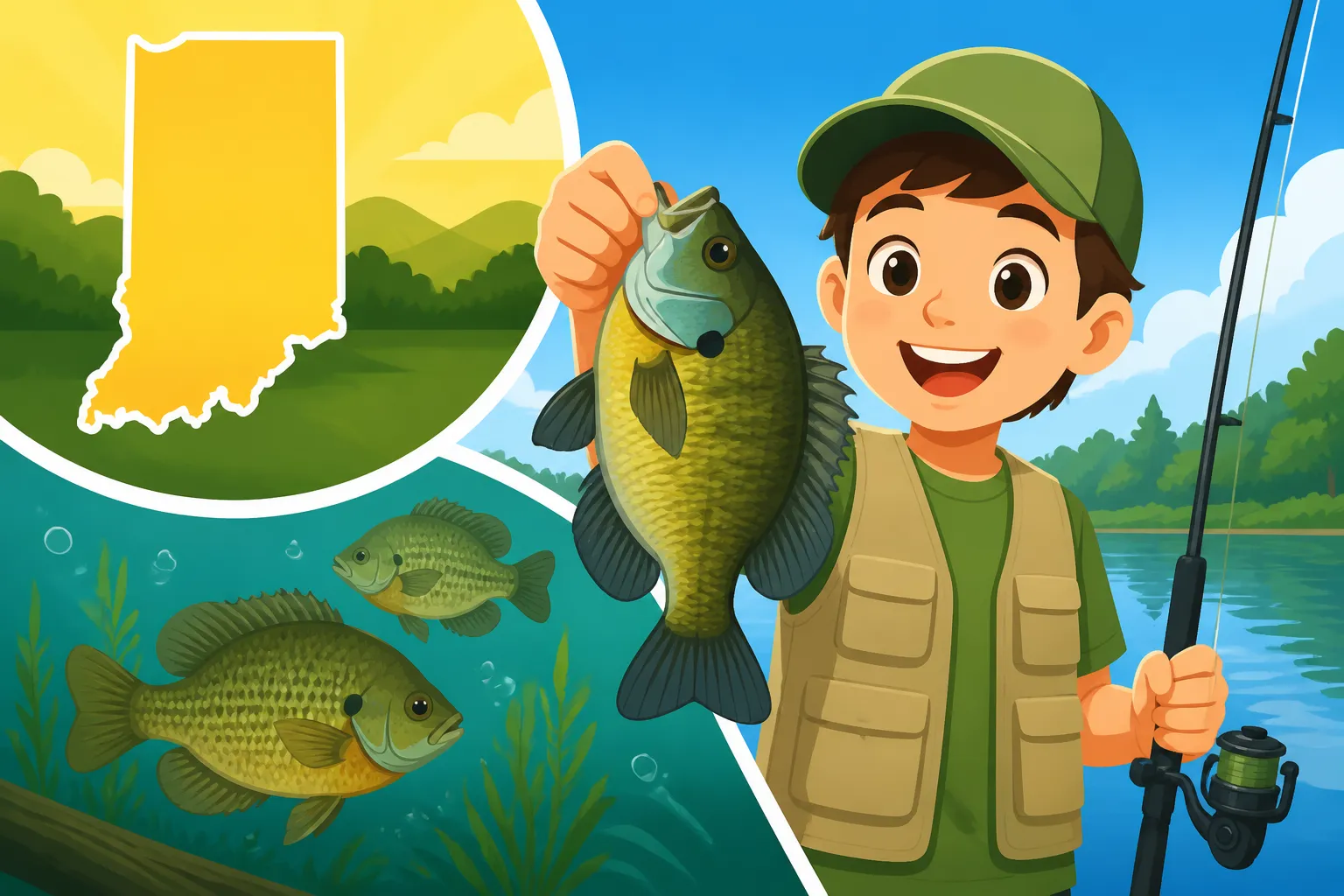
The bluegill (often just called "gill" by seasoned anglers) is probably the most iconic panfish in Indiana, and for good reason. They are incredibly abundant and found in almost every lake, pond, and slow-moving river. Visually, they're quite distinct. Look for their deep, disc-shaped body, which is typically olive-green to bluish on the back, fading to a yellowish belly. Their most defining feature is often the prominent black spot at the rear of their dorsal fin and a black "ear flap" on their gill cover. Many also have faint vertical bars along their sides.
Bluegill are often the first fish a child catches, and they put up a surprisingly spirited fight for their size, which usually ranges from 4 to 8 inches, though some can grow larger. They are opportunistic feeders, eating everything from insects and small crustaceans to tiny fish. This diverse diet makes them eager to bite a wide variety of baits and lures. They're also excellent table fare, making them a popular choice for families looking to enjoy a fresh fish dinner. Teaching kids how to Bluegill Identification: A Beginner's Guide can be a fun activity while waiting for a bite.
Redear Sunfish: The Shellcracker
Often found alongside bluegill, the redear sunfish gets its "shellcracker" nickname from its diet: they love to eat snails and other mollusks. This means they have specialized throat teeth designed to crush shells! Identifying a redear can be a bit trickier for beginners, as they share the disc-shaped body of the bluegill. However, the key is to look for a distinct red or orange margin on the opercular (gill) flap, especially in males, where it's typically brighter. They usually lack the dark vertical bars of a bluegill and often have a more mottled, olive-brown appearance.
Redear tend to grow a bit larger than bluegill on average, sometimes reaching 10-12 inches, and they put up an even stronger fight. They prefer clearer water with abundant aquatic vegetation, where snails are plentiful. Catching a redear can be a real treat, and explaining their unique diet adds an interesting educational twist to the fishing trip. You can learn more about how to differentiate them with our guide on Redear Sunfish vs Bluegill: How to Tell Them Apart.
Crappie: Black and White Varieties
Indiana boasts two main types of crappie: black crappie and white crappie. Both are highly prized by anglers for their delicious taste and sporting qualities. They have a more elongated, compressed body shape compared to the rounder sunfish, and their coloration can vary quite a bit depending on water clarity and habitat. The easiest way to tell the two apart is by counting the spines on their dorsal fin.
- Black Crappie: These usually have 7 or 8 dorsal spines. Their bodies are typically silver with irregular black spots and speckles, giving them a "peppered" appearance. They prefer clearer water with more vegetation and tend to feed more on insects and smaller fish.
- White Crappie: These have 5 or 6 dorsal spines. Their bodies are often more silver with distinct vertical bars or rows of spots that create a striped pattern. They are more tolerant of turbid water and are frequently found in larger reservoirs and rivers, feeding heavily on baitfish.
Crappie are known for schooling, especially around submerged structures like brush piles, fallen trees, or dock pilings. They can grow quite large, often reaching 10-15 inches, and offer a fantastic fight on light tackle. Fishing for crappie often involves slightly different techniques than bluegill, but they're still very accessible for kids, especially when they're schooling. Checking out our guide on Black Crappie Identification: Spots and Body Shape can help you and your kids spot the differences.
Essential Gear for Kids' Panfish Adventures
One of the beautiful things about panfishing with kids is that you don't need to break the bank on high-tech gear. Simplicity and durability are key when it comes to outfitting young anglers. The goal is to make it easy for them to handle and enjoy, not to overburden them with complicated equipment.
Simple Rods and Reels for Small Hands
For kids, the best fishing rod is one they can comfortably hold and operate. This usually means a shorter rod (around 4 to 5 feet) with a light action, which makes casting easier and enhances the feel of even a small fish fighting on the line. As for reels, spin-cast reels (often called "push-button" reels) are the absolute best choice for beginners. They are incredibly user-friendly: simply push a button, cast, and crank the handle to retrieve. There's no complex bail to flip or lines to untangle, which dramatically reduces frustration.
You can find excellent, inexpensive rod and reel combos specifically designed for children on platforms like Amazon. Look for kits that include a small tackle box and some basic lures to get started. Brands like Ugly Stik, Zebco, or Shakespeare often offer durable and affordable options that can withstand the inevitable bumps and drops from enthusiastic young anglers. The key is to choose something lightweight enough that they don't get tired holding it, but sturdy enough to last through many fishing trips. These simple setups make learning the basics of casting and reeling in a breeze, letting them focus on the fun rather than fighting their gear. Our article on Best Rod and Reel Combos for Kids Fishing has some great recommendations.
Basic Tackle Box Essentials
You don't need a huge, overflowing tackle box for panfish. In fact, a small, organized box with just a few essentials is far better for kids. It helps them learn what each item is for without being overwhelmed. Here's what I'd recommend for a starter panfish kit:
- Bobbers: Small, round bobbers or slip bobbers are perfect. They're easy to see, and they instantly signal a bite.
- Hooks: Small, sharp hooks in sizes 6, 8, or 10. These are appropriate for panfish mouths and can handle most small live baits.
- Split Shot Weights: A small assortment of pinch-on split shot weights to get your bait down to where the fish are.
- Swivels: Small barrel swivels can help prevent line twist, especially if using live bait that spins.
- Forceps or Pliers: Essential for safely removing hooks from fish, especially if they've swallowed the hook deep.
- Line Clippers: Small nail clippers work perfectly for trimming fishing line.
You can often find these items in convenient multi-packs or starter kits on Amazon, making it easy to assemble a functional and kid-friendly tackle box without much fuss. Teaching kids how to set up a simple Panfish Tackle for Indiana Anglers is a valuable lesson in itself.
Live Bait and Lures That Work
When it comes to bait for panfish, simplicity and effectiveness go hand in hand. For pure catching power, live bait is almost always the winner, especially for kids. It's inexpensive, widely available, and fish find it irresistible.
- Worms: Red wigglers, nightcrawlers (cut into smaller pieces for panfish), or wax worms are universally loved by bluegill, crappie, and sunfish. They're easy for kids to put on the hook and stay on well.
- Minnows: Small minnows, hooked lightly through the lip or back, are deadly for crappie, especially if you're targeting larger ones.
- Cracker Crumbs/Corn: Believe it or not, little bits of corn or bread can attract panfish in certain ponds, though they might not stay on the hook as well as worms.
If you want to introduce lures, small jigs are incredibly effective. A 1/32 or 1/16 ounce jig head tipped with a tiny plastic grub, tube bait, or even a small piece of live bait can be deadly. Colors like chartreuse, white, and black are often very productive. The action of a jig can be a fun thing for kids to experiment with, teaching them how to mimic natural prey. Just remember, for the absolute beginner, live bait minimizes frustration and maximizes bites. You can often find a great selection of Best Bait for Bluegill Fishing in Farm Ponds at your local bait shop or even order some specialized baits online.
Best Places to Find Panfish in Indiana
Indiana is truly a panfish paradise, with countless opportunities for young anglers to cast a line. The key is knowing where to look for accessible, fish-filled waters that minimize travel and maximize fishing time.
Local Ponds and Small Lakes
These are often the unsung heroes of family fishing trips. Many towns and cities in Indiana have small community ponds, park lakes, or even neighborhood retention ponds that are stocked with bluegill and other panfish. These spots are usually easy to get to, have decent shoreline access, and often see less pressure than larger, more popular fishing destinations. The fish in these smaller waters can also be less wary, making them easier for kids to catch.
Before heading out, a quick search online or a chat with a local bait shop owner can often reveal the best local spots. Don't overlook the obvious, either; many city parks specifically manage their ponds for youth fishing. These small, calm bodies of water are perfect for practicing casting without fear of losing expensive lures, and the relatively contained environment means you can keep a closer eye on your young anglers. Look for areas with some submerged vegetation, fallen trees, or even shallow weed beds, as these are prime panfish hiding spots. Our article Indiana's Best Ponds for Kids to Catch Panfish can point you to some fantastic local options.
State Park Waters and Public Access Points
Indiana's state parks and reservoirs offer a wealth of fantastic fishing opportunities, many of which are perfect for panfish. Places like Monroe Lake: Indiana's Largest Lake for Bass Fishing and Patoka Lake Fishing Guide for Bass and Crappie might be known for their bass or crappie, but their coves and shallow areas are teeming with bluegill and other panfish. These larger bodies of water often have designated fishing piers, easily accessible shorelines, and even boat rentals, providing diverse options for family outings.
Many state-managed lakes and reservoirs have well-maintained public access points, making it easy to get to the water's edge. Some even have specific youth fishing programs or events throughout the year. Always check the Indiana Department of Natural Resources (IDNR) website for specific park regulations, fishing reports, and any special events. Fishing in a state park can also be a wonderful opportunity to combine fishing with other outdoor activities like hiking, picnicking, or wildlife viewing, making for a full day of family fun. You can find many great options in our comprehensive guide Indiana State Parks for Fishing.
Docks, Piers, and Shoreline Access
For kids, fishing from a dock or pier can be incredibly convenient and safe. It eliminates the need for a boat and often provides immediate access to deeper water or structure where panfish like to hide. Many public lakes and ponds in Indiana have piers that extend out over the water, offering a perfect platform for young anglers to cast without worrying about uneven footing or tangled lines in shoreline brush. These structures also attract baitfish and insects, which in turn attract panfish.
When scouting for a good spot, look for docks or piers that have some submerged cover nearby, such as brush piles, old tires, or even just some deeper holes. Panfish will often congregate around these structures for shelter and food. Shoreline access can also be excellent, especially in areas with gradual slopes and some weed growth. Pockets in the weeds or areas where a downed tree has created a "fish magnet" are always worth investigating. The convenience of simply walking up to the water's edge and casting a line is hard to beat when you have impatient children eager to get a bite. Consider looking for Best Shore Fishing Spots in Indiana for more ideas.
Techniques for Guiding Kids to Panfish Success
Getting a child to successfully catch a fish involves a bit of guidance, but it's important to keep it simple and fun. Overcomplicating things can quickly lead to frustration for both the child and the parent. Focus on the basics, celebrate every little success, and remember that the goal is the experience, not just the biggest fish.
The Bobber Rig: Simple and Effective
For panfish and kids, the bobber rig is king. It's incredibly straightforward to set up and provides a clear visual indicator of a bite. Here's how to rig it:
- Tie on a Hook: Secure a small hook (size 8 or 10 is usually good) to the end of your fishing line using a simple knot like the improved clinch knot.
- Add a Split Shot Weight: About 6-12 inches above the hook, pinch on one or two small split shot weights. These will help your bait sink and keep it from drifting too quickly.
- Attach a Bobber: Place a small bobber about 1 to 3 feet above the weights. The exact depth will depend on how deep you think the fish are. If you're fishing in shallow water (2-3 feet), set the bobber so the bait is suspended close to the bottom.
Once the bait is on the hook (a small piece of worm works wonders!), kids just need to cast it out and watch the bobber. When a fish bites, the bobber will usually dip, dance, or disappear under the water. That's the signal to gently lift the rod tip to "set the hook" and then start reeling. This visual cue is fantastic for kids, as it gives them something concrete to focus on and react to. It teaches them the crucial step of detecting a bite and responding appropriately.
Gentle Casting and Retrieval
Casting can be the trickiest part for young beginners, but with a spin-cast reel, it's much easier. Start by practicing in an open area like a backyard lawn, using a practice weight or a tennis ball instead of a hook.
- Overhand Cast: Teach them to hold the rod with the reel facing up, pointing the rod tip towards their target. With the push-button held down, they should bring the rod back to their ear, then smoothly swing it forward, releasing the button as the rod comes over their head. The key is a smooth, continuous motion, not a jerky one.
- Underhand Cast: For very young children, an underhand cast can be simpler. With the reel facing up, they hold the push-button, swing the rod forward underhand, and release the button. This is great for short distances and tight spaces.
Emphasize that they don't need to cast for distance; often, the fish are closer to the bank than they think. Once the bait is in the water, remind them to watch the bobber. When a fish bites and they've set the hook, teach them to reel steadily, keeping the rod tip up to maintain tension on the line. This prevents the fish from shaking off the hook. Practice makes perfect, and with panfish, they'll get plenty of opportunities to refine their technique. Our guide on Best Bluegill Fishing Techniques for Kids offers more insights into making this fun.
Handling and Releasing Fish Safely
Teaching kids how to properly handle and release a fish is a crucial part of responsible angling. This not only ensures the well-being of the fish but also helps kids develop respect for wildlife.
- Wet Hands: Always remind kids to wet their hands before touching a fish. Dry hands can remove the fish's protective slime coat, making it vulnerable to disease.
- Gentle Grip: Instruct them to hold the fish gently, just behind the head and supporting the belly. Avoid squeezing the fish, especially its gills.
- Hook Removal: If the hook is easy to remove, you can guide them. Otherwise, use a pair of small pliers or forceps to carefully back the hook out. If a fish has swallowed the hook deeply and you plan to release it, it's often best to simply cut the line as close to the hook as possible. The hook will often rust out or pass naturally.
- Quick Release: If releasing, get the fish back into the water as quickly as possible. Hold it gently in the water, allowing water to flow over its gills until it swims away on its own.
Make it clear that some fish are for keeping (within legal limits, of course!) and some are for releasing. This is also a great opportunity to teach about catch and release ethics and conservation. This practice instills good habits early on, ensuring they become ethical anglers as they grow.
Beyond the Catch: Learning and Connection
Fishing with kids is about much more than just putting fish in the cooler. It's about building memories, fostering a connection with nature, and teaching valuable life skills. These additional elements can truly enrich the experience for everyone involved.
Understanding Indiana Panfish Regulations
Even with panfish, it's important to introduce kids to the concept of fishing regulations. While panfish generally have very generous bag limits, it's still a good habit to understand the rules. For most panfish species in Indiana, like bluegill, crappie, and sunfish, there's a daily bag limit of 25 fish per species. This is often more than enough for a family dinner! However, always double-check the current Indiana fishing regulations, as specific lakes or reservoirs might have special rules or exceptions.
Teaching kids that fishing isn't a free-for-all, but rather a privilege governed by rules designed to protect fish populations, is an important lesson in conservation. It shows them that these resources are precious and need to be managed responsibly. This conversation can happen naturally as you decide how many fish to keep for dinner versus how many to release. Knowing the Indiana Panfish Daily Limits by Species and other specific rules, such as Indiana Crappie and Bluegill Daily Limits, instills a sense of respect for the ecosystem. Remember, children under 18 often don't need a license in Indiana, but it's good for adults to set an example by always having theirs.
Cleaning and Cooking Your Catch
One of the most rewarding parts of a successful panfish outing is enjoying your catch at the dinner table. This is where the "panfish" nickname truly comes to life! Cleaning fish can seem daunting at first, but panfish are relatively easy to clean, making it a great learning experience for kids.
- Filleting: For larger crappie or bluegill, filleting them is a popular option. Use a sharp fillet knife (adult supervision is crucial here!) to remove the meat from the bones.
- Scale and Gut: For smaller bluegill, you can simply scale them, remove the guts, and fry them whole. The bones are easily picked out after cooking.
Involving kids in the cleaning process, even if it's just watching, can be fascinating for them. It connects the dots from the water to the plate, teaching them where their food comes from and the effort involved. Then, the real reward: cooking them up! A simple breading and pan-fry method is classic and delicious. Imagine fresh-caught bluegill, lightly breaded and fried golden brown, served with some fries and coleslaw. It's a meal that tastes even better because they helped catch it, creating a truly memorable family experience. Our post Is Bluegill Good to Eat? has some more insights into enjoying your catch.
Fostering a Lifelong Love for Fishing
Ultimately, the goal of introducing kids to panfishing is to spark a lifelong passion for the sport and the outdoors. It's not about how many fish they catch or how big they are; it's about the time spent together, the lessons learned, and the appreciation for nature that is cultivated. Encourage questions, celebrate every cast (even the tangled ones!), and make sure every outing ends on a positive note.
Pack plenty of snacks and drinks, bring comfortable chairs, and don't forget sun protection. Sometimes the best moments happen during the lulls, when conversations flow, and quiet observations are made. Let them explore, skip rocks, and observe the bugs if the fishing slows down. These seemingly unrelated activities are still part of connecting with nature. Consider picking up a children's book about fish or fishing from Amazon to read together, further cementing their interest. By making fishing a positive, accessible, and fun family activity, you're not just teaching them how to fish; you're creating cherished memories and nurturing a connection to the natural world that will last a lifetime.
Panfish Comparison Table for Young Anglers
To help differentiate between some of Indiana's popular panfish, here's a quick comparison. This can be a fun way to engage kids and teach them to identify their catch!
| Feature | Bluegill | Redear Sunfish | Black Crappie | White Crappie |
|---|---|---|---|---|
| Body Shape | Deep, rounded disc | Deep, rounded disc | More elongated, compressed | More elongated, compressed |
| Primary Color | Olive-green to bluish, yellowish belly | Olive-brown, mottled | Silver with irregular black spots | Silver with distinct vertical bars |
| Ear Flap (Operculum) | Black spot, often solid | Red/orange margin (especially males) | Generally solid, dark | Generally solid, dark |
| Dorsal Spines | 10-12 (one continuous fin) | 10-12 (one continuous fin) | 7-8 | 5-6 |
| Size (Typical) | 4-8 inches | 6-10 inches | 8-12 inches | 8-12 inches |
| Preferred Habitat | Ponds, lakes, slow rivers, abundant vegetation | Clearer water, abundant aquatic vegetation | Clearer water, submerged structures | Turbid water, larger reservoirs, structures |
| Diet Focus | Insects, small crustaceans, small fish | Snails, mollusks, insects | Small fish, insects | Small fish, insects |
Disclaimer
This article is for general informational purposes only and does not constitute professional advice. Laws, prices and regulations vary by location and change over time. Consult a qualified professional for guidance on your specific situation.