Redear Sunfish vs Bluegill: How to Tell Them Apart
It's incredibly frustrating when you're out on the water, reeling in what you think is a bluegill, only to have someone tell you it's a redear sunfish – or vice versa! Many anglers, even experienced ones, find themselves scratching their heads when trying to differentiate between these two popular panfish, leading to confusion not just about identification, but about the best ways to catch them and even bag limits. This comprehensive guide is here to clear up that confusion, offering clear, practical ways to tell a redear sunfish from a bluegill, and why knowing the difference can make you a more successful angler in Indiana waters.
Why Does Identification Matter So Much?
You might be thinking, "A sunfish is a sunfish, right? They all bite, and they all taste good!" And while there's a kernel of truth to that, overlooking the subtle differences between species like the redear sunfish and the bluegill can actually hinder your fishing success. It's not just about bragging rights or knowing your fish; it’s about understanding their behavior, preferred habitats, and what baits they’re most likely to strike. Each species has its own unique quirks that, once you understand them, can drastically improve your catch rate.
When you're able to quickly and accurately identify what you've hooked, you gain valuable insight. For instance, if you're consistently catching one species, it tells you that your current location and technique might be perfectly suited for that particular fish, but perhaps not for another. Or, if you're trying to target a specific panfish for a meal, knowing exactly what you’ve got in the livewell helps you stay within the Panfish Daily Limit in Indiana: 25 per Species. Plus, different species often have different growth rates and sizes, so what might be a trophy-sized bluegill could be just an average redear. Getting familiar with these distinctions empowers you to make smarter decisions on the water, from selecting your bait to choosing your fishing spot.
The Obvious Visual Cues: Spotting Them in Hand
When you finally get one of these feisty panfish to the boat or the bank, there are a few key things you can look for right away to tell if it's a redear sunfish or a bluegill. It’s like learning to spot different bird species; once you know the tell-tale signs, you can’t unsee them. Let's break down the most prominent features.
The Operculum Flap: The Most Reliable Indicator
The very first place I always look is the operculum, which is that hard, bony gill cover flap at the back of the fish's head. This is usually the quickest and most reliable way to differentiate between the two.
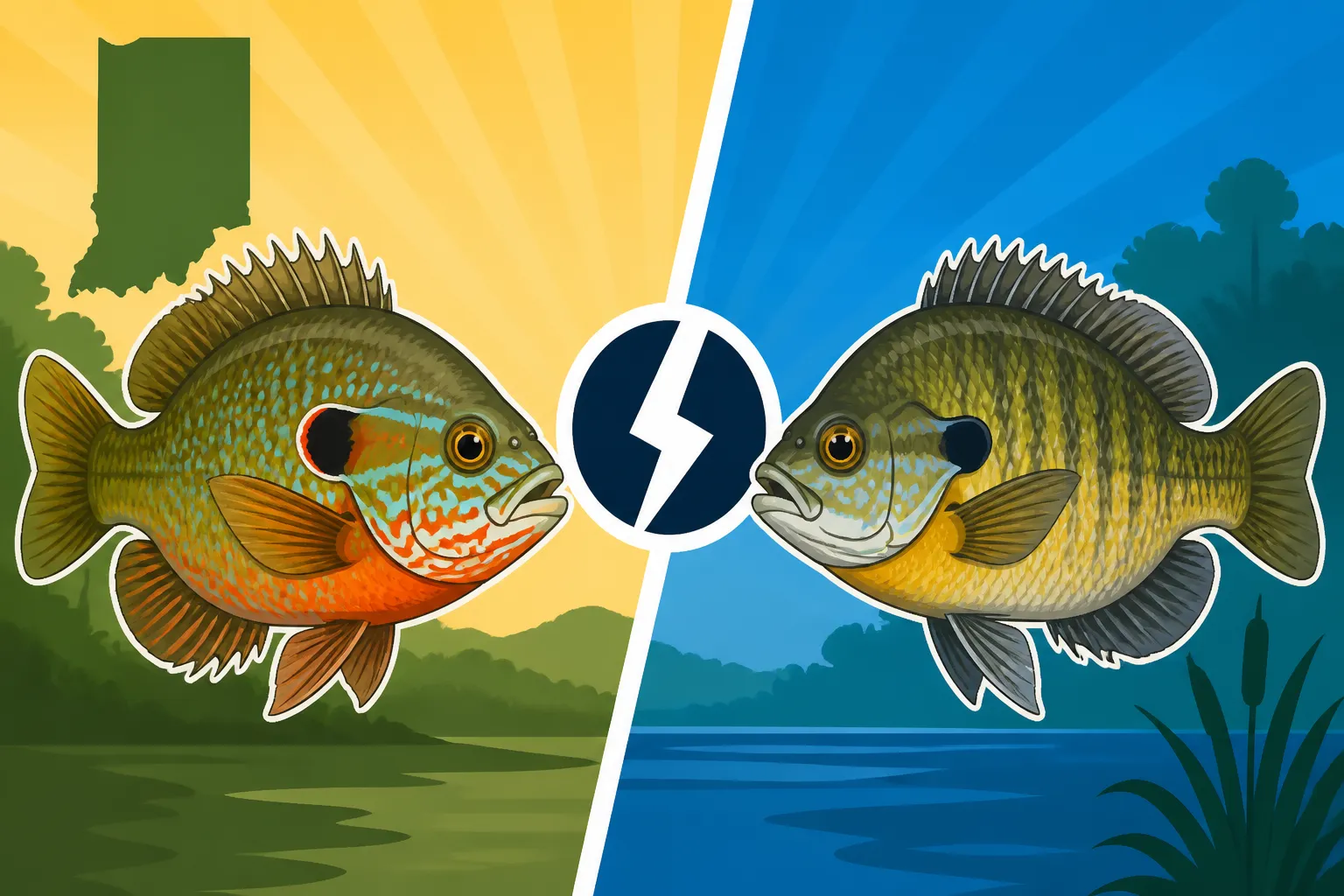
- Redear Sunfish: Look for a distinct, often bright red or orange-red spot or margin on the edge of the operculum flap. It literally looks like they've got a little "ear" colored red! This is where they get their nickname, "shellcrackers," because this red spot is so iconic. The rest of the flap typically blends with their body color, but that vibrant pop of red is unmistakable. Sometimes in very young fish or those from murky water, this red spot might be fainter, but it's almost always present in some form.
- Bluegill: In contrast, bluegill have a solid, dark, often deep blue-black operculum flap. There's no red or orange margin whatsoever. It’s uniformly dark from the top to the bottom edge. This dark flap is what gives them the "blue" part of their name, although their bodies are often more greenish or yellowish. If you see a solid dark flap without any colorful trim, you're almost certainly holding a bluegill. This dark spot is very consistent across their range and sizes.
Body Coloration and Patterns
While operculum color is the most definitive, overall body coloration and patterns also offer clues, though they can vary based on water clarity, diet, and even the fish's mood.
- Redear Sunfish: Redears tend to have a more silvery or brassy overall body color, often with faint, irregular vertical bars or spots. Their sides might shimmer with a greenish-gold or bronze hue. The redear’s body usually appears flatter and slightly more elongated than a bluegill, giving them a sleek profile. Their bellies are typically lighter, often white or yellowish. You might also notice a scattering of small, dark spots across their sides, which are more subtle than distinct bars.
- Bluegill: Bluegill, on the other hand, typically have more pronounced vertical bars or bands, often 5-9 of them, running down their sides. These bars can be quite dark, especially in males during spawning season. Their base color often ranges from olive green to yellowish-brown, with a distinct bluish sheen, particularly on their cheeks and gill plates. They usually have a dark spot at the base of their dorsal fin, which is another consistent bluegill identifier. Their bellies are often yellow or orange, especially spawning males who can develop a very vibrant orange chest. The body tends to be rounder and deeper-bodied than a redear.
Fin Color and Mouth Shape
Don't forget to check the fins and the mouth! These can also provide helpful distinctions.
- Redear Sunfish: The fins of a redear are generally translucent or slightly dusky, lacking any vibrant color. Their pectoral fins (the ones behind the gills) are typically longer and more pointed than a bluegill's. Pay close attention to their mouth; redears have a noticeably smaller, more downward-pointing mouth. This is adapted for their bottom-feeding diet, primarily focused on crushing snails and other invertebrates. You'll rarely see a redear with a gaping maw like some other predatory fish.
- Bluegill: Bluegill usually have fins that match their body coloration, often with some yellowish or greenish tints. Their pectoral fins are generally shorter and more rounded. A key difference in their mouth is that bluegill have a larger, more terminal mouth (meaning it's positioned at the very front of the head, allowing them to feed directly forward or upwards). This larger mouth is well-suited for eating a wider variety of prey, including insects off the surface. You can often fit your pinky finger easily into a mature bluegill's mouth, which you'd struggle to do with a similarly sized redear.
Habitat and Behavior: Where You'll Find Them
Knowing where these fish prefer to hang out can be just as important as knowing what they look like. Even if you can't identify them at first glance, understanding their preferred stomping grounds helps you target them more effectively. These preferences stem from their feeding habits and their need for protection.
Redear Sunfish: The Bottom Dwellers
Redear sunfish are often referred to as "shellcrackers" for a very good reason: their diet heavily consists of snails and other shelled invertebrates, which they crush with specialized pharyngeal teeth in their throats. This dietary preference dictates where you're most likely to find them.
You’ll typically find redear sunfish in areas with clear, warm water and a firm, sandy, or mucky bottom. They absolutely love to cruise along the bottom, sifting through debris and vegetation in search of snails, mussels, and insect larvae. Look for them in areas with moderate vegetation, such as lily pads, submerged weed beds, or cattails, but not necessarily in the densest cover. They appreciate a bit of open water adjacent to these cover areas where they can feed. Deeper holes, channels, and humps with plenty of available mollusk habitat are prime locations. In Indiana, you might find them in many of our natural lakes, especially those with good water clarity and abundant aquatic vegetation. What Does a Redear Sunfish Eat? delves into their diet more.
Their behavior is often a bit more subtle than bluegill. They're not as prone to schooling in massive numbers right under docks, preferring to spread out a bit more as they forage. They can be a bit more challenging to locate sometimes because they stick closer to the bottom. If you're catching fish off the bottom in deeper water with clear substrate, there's a good chance you're on a redear bed.
Bluegill: The Structure-Loving Generalists
Bluegill are much more adaptable and, frankly, everywhere in Indiana. They are truly the "people's fish" – easy to catch and found in almost any body of water, from tiny farm ponds to large reservoirs like Monroe Lake. Their willingness to inhabit various environments makes them a fantastic target for beginners and seasoned anglers alike.
You'll encounter bluegill in a much wider array of habitats. They thrive in both clear and slightly murky waters and are highly attracted to any form of structure. Think fallen trees, boat docks, bridge pilings, submerged brush piles, weed lines, and even riprap along shorelines. They love cover that provides both ambush points for insects and protection from larger predators like bass and pike. They’re often found in shallower water, especially during warmer months, but will retreat to deeper areas during cold fronts or the heat of summer. For a great family fishing experience, many Indiana's Best Ponds for Kids to Catch Panfish are teeming with bluegill.
Bluegill are also notorious schoolers, especially smaller fish. You can often find a whole school gathered around a single piece of structure. Their feeding behavior is less specialized than redears; they'll readily take insects off the surface, mid-water, or forage along the bottom. They are active and often aggressive feeders, making them a blast to catch.
Diet and Feeding Habits: What They're Eating
Understanding what these fish eat is crucial because it directly informs your bait and lure choices. You wouldn't use a cow pasture for hunting deer, just as you wouldn't use certain baits for a fish that doesn't consume it. Matching the hatch, or at least matching the general food source, is key to consistent success.
Redear Sunfish: The Snail Specialists
As mentioned, the redear sunfish has evolved specialized teeth for crushing hard-shelled prey. This makes them particularly fond of certain menu items.
- Primary Diet: Snails and mussels are at the top of their list. They systematically forage along the bottom, picking up these shelled delicacies and crushing them with those pharyngeal teeth. This is why you'll often hear them called "shellcrackers." They're not just eating the occasional snail; it's a significant portion of their diet.
- Secondary Diet: Beyond mollusks, redears will also consume a variety of aquatic insect larvae, small crustaceans, and other bottom-dwelling invertebrates. They are very much benthic feeders, meaning they focus on food found on or in the lakebed. They aren't typically looking up for flying insects or chasing down minnows. This specialized diet is what makes them unique among panfish and a bit more challenging to catch if you don't know what they're after. If you're struggling to find redear, try to find areas rich in freshwater snails.
Bluegill: The Opportunistic Eaters
Bluegill are true omnivores and opportunistic feeders. This makes them much less picky than redears and a great target for a wide range of baits.
- Primary Diet: Bluegill have a diverse diet that includes aquatic insects (larvae and adults), terrestrial insects that fall into the water (ants, grasshoppers, beetles), small crustaceans, and even some plant matter. They're constantly on the lookout for a meal, whether it's floating on the surface, suspended in the water column, or crawling along the bottom. This adaptability is one reason they are so widespread and abundant.
- Secondary Diet: While they don't have the specialized crushing teeth of a redear, larger bluegill will occasionally eat very small minnows or fry of other fish species, though this is less common. They are not built for chasing down fast-moving prey. Essentially, if it fits in their mouth and is edible, a bluegill will likely try to eat it. This makes them incredibly fun for new anglers who might be experimenting with different baits. Best Bait for Bluegill Fishing in Farm Ponds often includes many of these natural offerings.
Fishing Techniques and Tackle: Tailoring Your Approach
Once you can tell these two apart and understand their habits, you can really dial in your fishing approach. Using the right techniques and tackle for each species will significantly increase your chances of success. It’s all about playing to their strengths and weaknesses.
Targeting Redear Sunfish
Because redears are bottom-oriented and snail-loving, your techniques should reflect this.
- Baits: Live bait is often king for redears. Worms, especially red wigglers or pieces of nightcrawlers, are excellent choices as they mimic their natural food sources. Small crickets or grubs can also be effective. Artificial baits specifically designed to imitate snails, though less common, can also work. Since they feed on the bottom, a small split shot weight or a slip sinker rig to get your bait down is crucial.
- Techniques: Bottom fishing is the name of the game. A simple rig with a small hook (size 8 or 10 is usually good) and a sinker is often all you need. Cast to areas you suspect hold snails and redear, let it sink to the bottom, and be patient. Slight twitches of the rod tip can sometimes entice a bite. They're not usually as aggressive as bluegill, so a subtle presentation is best. Sometimes, a slow retrieve with a very small jig tipped with a piece of worm can also work as it drags along the bottom.
- Tackle: Ultralight spinning gear is perfect. A light action rod (5-6 feet) paired with a small spinning reel spooled with 4-6 pound test monofilament or fluorocarbon line gives you enough sensitivity to detect their often subtle bites.
Targeting Bluegill
Bluegill are less particular, making them a fantastic target for a wider array of methods.
- Baits: Bluegill will hit almost anything. Live baits like worms, crickets, grasshoppers, and even small pieces of corn are highly effective. For artificials, tiny jigs (1/32 to 1/16 oz) in various colors (chartreuse, pink, white) tipped with a small plastic grub or Gulp! bait are irresistible. Small spinners, flies, and even micro-crankbaits can work well. The sheer variety of options is part of the fun of bluegill fishing.
- Techniques: You can catch bluegill using many methods. Bobber fishing with live bait is classic and great for kids. Cast near structure and let your bait sit a foot or two off the bottom. If they're hitting topwater, a small popper or fly can be exhilarating. Jigging small plastics under a bobber or simply casting and retrieving a tiny spinner are also very productive. For deeper bluegill, a tightline presentation with a small weight can get your bait down quickly.
- Tackle: Again, ultralight gear is ideal. A light to ultralight rod (4.5-6.5 feet) with a small spinning reel spooled with 2-4 pound test line will make even small bluegill feel like a heavyweight. You can find a huge selection of small, panfish-specific jigs and hooks suitable for bluegill fishing on Amazon, making it easy to stock up. For fly anglers, a 2-3 weight fly rod with small poppers, nymphs, or wet flies can provide endless entertainment.
Comprehensive Comparison Table
To help you keep these distinctions straight, here's a handy table summarizing the key differences between redear sunfish and bluegill. This is a great reference to quickly jog your memory out on the water.
| Feature | Redear Sunfish | Bluegill |
|---|---|---|
| Operculum Flap (Ear) | Distinctive red or orange-red spot/margin | Solid, dark blue/black spot, no color |
| Body Shape | Slightly more elongated, flatter profile | Rounder, deeper-bodied profile |
| Overall Coloration | Silvery, brassy, greenish-gold; faint bars/spots | Olive green to yellowish-brown; distinct dark bars |
| Dorsal Fin Spot | Generally absent | Often a distinct dark spot at the base |
| Mouth Size/Position | Smaller, more downward-pointing | Larger, more terminal (forward-pointing) |
| Pectoral Fins | Longer, more pointed | Shorter, more rounded |
| Preferred Habitat | Clear, warm water; firm bottom; moderate vegetation; snails | Wide variety; clear/murky; heavy structure (docks, brush, weeds) |
| Primary Diet | Snails, mussels, aquatic insect larvae | Aquatic/terrestrial insects, small crustaceans |
| Typical Behavior | Bottom-oriented, subtle feeders, less schooling | Opportunistic, active feeders, strong schoolers |
| Common Baits | Worms, grubs, crickets | Worms, crickets, small jigs, spinners, flies |
This table provides a quick visual aid, but remember that fish can exhibit variations based on their specific environment. Always combine multiple indicators for the most accurate identification.
Why Knowing Your Panfish Makes You a Better Angler
Beyond just identifying your catch, understanding the subtle differences between species like the redear sunfish and bluegill gives you a significant advantage. It's not just about a biology lesson; it's about practical applications that lead to more fish in your net.
Imagine you're fishing a new lake in Indiana. You start off catching a few bluegill in shallow water near a fallen tree using a worm under a bobber. Great! That tells you a lot about the fish in that specific spot. But then, you move to a deeper section with a hard, sandy bottom and sparse vegetation. If you're still using the same bobber rig, you might struggle to catch anything. However, if you recognize that this deeper habitat is prime redear territory, you might switch to a weighted worm rig, drop it to the bottom, and target those shellcrackers who are rooting around for snails. This adaptive approach, fueled by accurate identification and knowledge of species behavior, is what truly separates successful anglers from those who just "go fishing."
Moreover, knowing what you've caught also helps you understand the health of the fishery. If you're consistently pulling out healthy, vibrant fish of a particular species, it suggests that the habitat and food sources are robust for them. This knowledge also helps you adhere to Indiana Fishing Regulations and Bag Limits Guide more effectively, ensuring you're not mistakenly keeping too many of one species. Getting familiar with the various panfish is a fantastic way to become a more informed, ethical, and successful angler overall. You can even find specialized panfish tackle kits on Amazon that bundle together different baits and hooks for these diverse feeders.
When Do They Spawn? An Important Consideration
Spawning behavior can also offer clues and dictate where you find these fish. Both are spring/early summer spawners in Indiana, but their exact timing and preferred nesting sites can differ slightly.
Redear Sunfish Spawning
Redear sunfish typically spawn when water temperatures reach the upper 60s to low 70s Fahrenheit, often a little later than bluegill. They prefer to create their nests in firm, sandy, or gravelly bottoms, usually in shallower water (2-5 feet deep) near protective cover like submerged vegetation or stumps.
During the spawn, male redears will fan out saucer-shaped depressions on the bottom. They are often less colonial than bluegill, meaning their nests might be more spread out, though you can still find several nests in a general area. Anglers can often spot these beds as lighter-colored circles on the bottom in clear water. Fishing these beds can be highly productive, as the males are aggressively protecting their eggs and fry.
Bluegill Spawning
Bluegill are usually one of the first panfish to spawn in the spring, once water temperatures consistently reach the low to mid-70s Fahrenheit. They are notorious for forming large, dense colonies of nests. You can often spot dozens, if not hundreds, of bluegill nests clustered together in shallow, protected coves, along shorelines, or around docks.
Like redear, male bluegill fan out circular nests, but they tend to be much closer together, creating a "honeycomb" appearance on the lakebed. They prefer softer bottoms than redears, often tolerating muddier or silty conditions, but will also use sand and gravel. During the bluegill spawn, fishing can be absolutely phenomenal. The males are fiercely protective and will attack almost any lure or bait that enters their territory. Learning about Crappie Spawn Timing on Indiana Lakes will also help you understand seasonal panfish patterns.
Understanding these spawning differences can guide your seasonal approach. If you’re looking for aggressive, shallow-water action in early summer, bluegill beds are your best bet. If you’re willing to seek out those firmer, snail-rich bottoms, a redear spawn can offer equally rewarding, though perhaps more subtle, action.
Disclaimer
This article is for general informational purposes only and does not constitute professional advice. Laws, prices and regulations vary by location and change over time. Consult a qualified professional for guidance on your specific situation.