Tightlining Techniques for Crappie
It can be incredibly frustrating when you're out on the water, you know the crappie are there, but they're just not biting your usual setup. Sometimes, those feisty panfish are tucked deep into cover, or they're so finicky that a conventional bobber rig just doesn't offer the sensitivity you need to detect those super-light taps. This guide is all about mastering tightlining, a precision technique that cuts through those challenges, giving you a direct line to the bite and unlocking more crappie catches across Indiana's diverse waters.
Understanding Tightlining for Crappie
Tightlining for crappie is one of those techniques that, once you "get it," feels like you've unlocked a secret level in fishing. It’s all about connection, feel, and subtle presentations, often making the difference between a slow day and a cooler full of slabs.
What is Tightlining, Really?
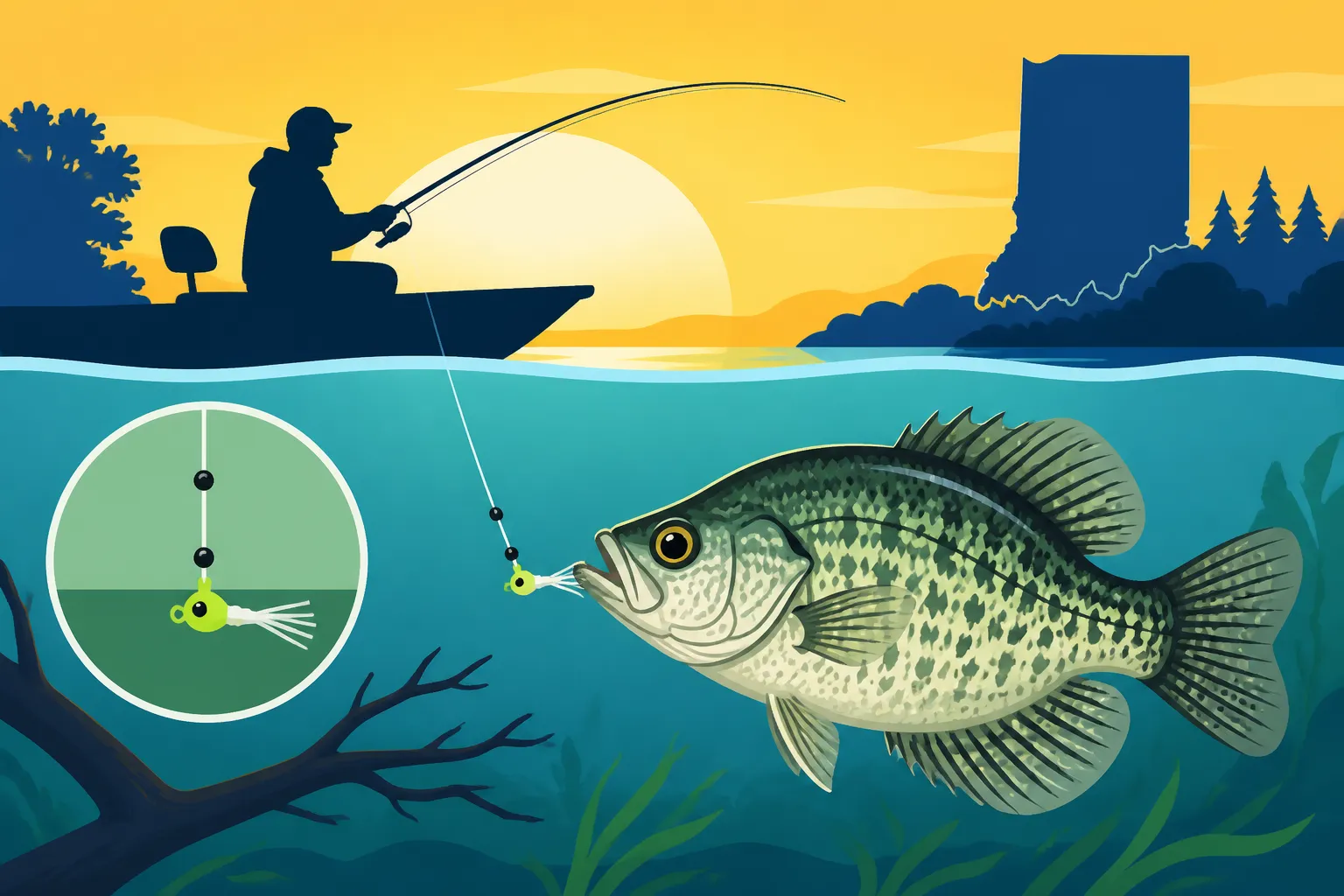
At its core, tightlining is fishing without a float or bobber. Instead of watching an indicator on the surface, you're relying entirely on the direct feel of your line and rod tip to detect bites. Imagine holding a string tied directly to your bait – that's the kind of connection you're aiming for. This isn't just about vertical jigging, though that's often a component. It's about maintaining constant, controlled tension on your line, allowing the slightest brush or inhale from a crappie to register as a "feel" rather than a visible bobber dip.
The biggest advantage this offers for crappie anglers is sensitivity. Crappie, especially in colder water or under heavy pressure, can be incredibly delicate eaters. They might just "breathe" on your bait, creating a tiny, almost imperceptible weight change on your line. With a bobber, that subtle take might never even make it to the surface, but with a tight line, you're often able to detect it. It also allows for extremely precise depth control and the ability to work your bait right in the middle of dense cover like submerged brush piles or deep weed edges without getting constantly snagged by a drifting bobber.
When and Where Tightlining Shines in Indiana
Tightlining is incredibly versatile and can be effective year-round, but it truly shines in specific scenarios across Indiana's lakes and rivers.
During the colder months, especially when ice fishing or targeting crappie in deeper open water, their metabolism slows down, and their bites become notoriously light. This is where tightlining really comes into its own. You can present a small jig or minnow vertically in the water column and feel those faint "ticks" that a bobber would entirely miss. Early spring, when crappie are staging for the spawn around brush piles and emerging weed lines, they can still be a bit sluggish. A tightlined jig worked slowly through their hideouts is often irresistible. Even in the heat of summer, when crappie seek refuge in deep structure or under docks, tightlining allows you to drop your bait precisely into their comfort zone, even if it's 20 feet down.
Think about places like the vast timbered arms of Monroe Lake or the abundant brush piles in Patoka Lake. Crappie love to hide in these intricate covers. A tightline approach lets you thread your jig through the branches, feeling every bump and knowing whether it's wood or a hungry crappie. Bridge pilings, deep ledges, and even standing timber found in many Indiana reservoirs are prime tightlining spots. This method is also fantastic in windy conditions. Ever tried to watch a bobber in a chop? It's nearly impossible. With tightlining, the wind might affect your boat, but your direct line connection means you're still in tune with your bait, regardless of surface disturbance.
Essential Gear for Successful Crappie Tightlining
You don't need a boatload of expensive equipment to tightline effectively, but having the right tools for the job will dramatically improve your success. It's all about maximizing your feel and connection to the bait.
Rods and Reels for Optimal Sensitivity
When it comes to tightlining, your rod is an extension of your senses. You're looking for something that transmits every vibration directly to your hand. Longer rods, typically in the 6 to 7.5-foot range, are excellent because they help manage line, absorb shock, and provide better leverage for casting lighter jigs and fighting fish. The action should be light to ultralight, meaning the rod bends easily, especially in the tip. A fast tip is crucial – this is the part of the rod that will show the most subtle movements and give you quick hook-setting power. Graphite rods are generally preferred over fiberglass for their superior sensitivity, allowing you to feel even the faintest tap. Many quality graphite rods designed for panfish can be found easily online, including on platforms like Amazon.
For reels, think small and light. A 500 to 1000 series spinning reel is perfect. These reels are designed for light line and light lures, balancing well with ultralight rods. The key features to look for are a smooth drag system, which is vital when fighting a decent-sized crappie on light line, and a smooth retrieve. A lightweight reel helps to reduce overall fatigue and keeps the entire setup sensitive in your hands, allowing you to focus on feeling those subtle bites.
Line Selection and Its Impact on Feel
Your choice of fishing line is perhaps the most critical component in tightlining, directly affecting how much you "feel." Each type has its own characteristics that make it suitable for different situations.
- Monofilament: Often called "mono," this line offers good stretch and shock absorption, which can be forgiving when a crappie makes a sudden run. However, that stretch also reduces sensitivity, making it harder to detect light bites, especially in deeper water. It's generally more visible in the water, which can be an issue in clear conditions.
- Fluorocarbon: This line has much less stretch than mono, providing a significant boost in sensitivity. It's also nearly invisible underwater, making it an excellent choice for finicky crappie in clear water. Many anglers will use fluorocarbon as a leader, even with other mainlines.
- Braided Line: This is the ultimate for sensitivity, with virtually no stretch. You'll feel everything, from your jig touching a leaf to the lightest crappie inhale. However, braid is highly visible and can be a bit more challenging to work with in terms of knots for beginners. It also has a tendency to dig into itself on the spool if not spooled correctly or if using too light a braid on a large reel. For this reason, many experienced tightliners use braid as their mainline and tie a fluorocarbon leader for invisibility and a bit more abrasion resistance around cover.
For crappie tightlining, a 2 to 6-pound test line is typical, with 4-pound test often being the sweet spot for balancing strength and sensitivity. If using a braided mainline, consider a 6-10 pound braid with a 4-pound fluorocarbon leader. When tying your lines, reliable knots like the Palomar knot for jigs and the Uni-to-Uni knot for connecting braid to fluorocarbon leaders are essential. You can find detailed instructions and even knot-tying tools to simplify this process on Amazon.
Jigs, Weights, and Hooks
The business end of your tightline setup requires careful consideration. Crappie have relatively delicate mouths, so sharp, appropriately sized hooks are paramount.
- Jigs: Small jigs are king for crappie. Think 1/32 to 1/16 ounce, though you might go lighter or heavier depending on depth and current. Color can be critical. Classic crappie colors include chartreuse, white, black, pink, and various combinations. The jig head design is also important; many anglers prefer a jig with a sharp, fine-wire hook that penetrates easily. You can explore a wide variety of jig sizes and colors specifically designed for crappie fishing. Consider checking out this guide on Best Crappie Jig Colors for Cloudy Water.
- Soft Plastics: These are often paired with jig heads. Tiny grub tails, tube jigs, and small minnow imitations are incredibly effective. Scented soft plastics can sometimes give you an edge, especially on tough days. Brands like Bobby Garland, Strike King, and Z-Man offer excellent options for crappie.
- Live Bait: Don't underestimate the power of live bait, even with tightlining. A small minnow (often hooked through the lips or dorsal fin) or a piece of worm on a small, light-wire hook (size 4 to 8) can be irresistible. When using live bait, ensure your hook is sharp enough to penetrate with minimal force and that your bait can still move naturally to attract attention.
- Split Shots/Sinkers: While the jig head itself provides weight, sometimes you need to add a small split shot or two a few inches above your hook/jig to get your bait down faster or to help maintain contact in current. Keep these as light as possible to retain sensitivity.
Mastering the Tightlining Techniques
Tightlining isn't just about the gear; it's about the execution. Learning the subtle nuances of presentation and bite detection will elevate your crappie game significantly.
The Vertical Drop and Lift
This is the bread and butter of tightlining for crappie, especially when they're congregated in vertical structure. The technique itself seems simple, but mastering the subtle movements and interpretations is key.
Start by positioning your boat or kayak directly over the structure where you believe crappie are holding. Lower your jig or bait slowly, keeping a close eye on your line. As it descends, feel for any interruptions – a sudden stop, a slight slackening, or a subtle vibration. These can all be bites before your bait even reaches the desired depth. Once your bait hits the bottom, or the top of a brush pile, give it a moment to settle. Then, slowly and deliberately, lift your rod tip a few inches, pause, and then slowly lower it back. This creates a gentle "lift and fall" action, mimicking a struggling baitfish or insect. Sometimes a series of tiny shakes or twitches will trigger a strike. The trick is to vary your cadence until you find what the crappie want on that particular day. Remember, crappie often bite on the fall, so always be attentive as your jig descends.
Detecting bites with this method takes practice. It's rarely a violent strike that rips the rod out of your hand. More often, it's a subtle change in the tension of your line. It might feel like your jig just got a little heavier or a little lighter, a soft "mushy" feel, or a tiny twitch of the line where it enters the water. Sometimes, you'll feel nothing, but as you lift, there's just weight there – a crappie has simply picked up your bait and is moving with it. Watching the slack in your line can be crucial. If you see your line jump or move unnaturally sideways, set the hook!
Structure Fishing and Cover Penetration
Crappie are notorious for relating to structure and cover. They use it for ambush points, shade, and protection. Tightlining allows you to fish these areas more effectively than almost any other technique.
When you're targeting a brush pile, for example, your goal is to present your bait as naturally as possible right in the crappie's face without getting hung up. Slowly ease your jig into the brush, feeling your way down. You'll feel the jig "tap" against branches. Learn to differentiate between the feel of wood and the feel of a bite. Wood usually feels solid and unmoving, whereas a bite might feel spongy, elastic, or like a slight twitch. Keep your rod tip high and maintain just enough tension to feel your bait, but not so much that you're constantly snagging. If you do feel a snag, a gentle, steady pull, sometimes combined with strumming the line, can often free your jig. If that doesn't work, give the line a bit of slack; sometimes the jig will float free.
Bridge pilings, deep docks, and standing timber are also fantastic places to tightline. Position your boat or kayak a short distance away and vertically present your jig or minnow directly alongside the structure. Crappie often suspend in schools at various depths around these features. Your fish finder will be your best friend here, showing you exactly where the fish are holding, allowing you to drop your bait right to their level. To learn more about fishing in these kinds of locations, you might find "Patoka Lake Fishing Guide for Bass and Crappie" insightful, as it features similar structures.
Recognizing and Reacting to Bites
This is arguably the hardest part of tightlining for many anglers, but it’s also the most rewarding when you get it right. It requires focus and a good understanding of what a crappie bite feels like.
- Visual Cues: Even without a bobber, your line can give you clues. Watch the point where your line enters the water. A slight twitch, a subtle jump, or even a sudden slackening of the line can indicate a bite. If you're using a brightly colored braided mainline, these visual cues become even more apparent. On windy days, this can be challenging, but in calmer conditions, it’s a powerful tool.
- Feel Cues: This is where the sensitivity of your rod and line truly matters. A crappie bite might manifest as:
- Sudden lightness: The jig suddenly feels "lighter" or like it's no longer there. This often means a crappie has picked it up and is swimming upwards.
- Spongy/Mushy feel: A subtle, soft resistance, like tapping a sponge.
- Light tick/tap: A faint, almost electrical pulse up the line.
- Weight: Just a dull, solid resistance when you try to lift, indicating the jig has been taken.
Once you detect any of these cues, it's time to set the hook. Crappie have soft mouths, so a hard, sweeping hook set isn't usually necessary or even advisable. Instead, a quick, gentle wrist flick, combined with a slight reel of the slack, is often all it takes. The goal is to drive that sharp, fine-wire hook into the top of their mouth, where it's less likely to tear out. Being decisive but not overly aggressive is the key to consistent hookups.
Advanced Tips for Indiana Crappie Tightlining
Once you've got the basics down, you can start refining your tightlining approach to become even more effective, particularly when dealing with finicky crappie or challenging conditions.
Experimenting with Depth and Presentation
Crappie are masters of suspending at specific depths, and sometimes they'll only bite if your bait is presented just so. Don't assume they're always on the bottom or near the surface.
If you're not getting bites at a particular depth, start varying it. If you're fishing vertically, make precise drops and lifts through different layers of the water column. You can count how many feet of line you've let out or rely on your fish finder to pinpoint schools. For instance, if your fish finder shows a school at 15 feet, drop your jig to 17 feet, then slowly work it up to 13 feet, paying attention to any signs of interest. Crappie often suspend just above structure, so finding that "magic depth" can turn a slow day into a productive one. You can find more information about how different conditions influence fish behavior in "Water Temperature and Fish Feeding Patterns".
The speed and cadence of your presentation are also crucial. On some days, a slow, almost imperceptible lift and fall is what they want, especially in cold water. Other days, a more aggressive jigging motion with slightly faster lifts and drops, or even short, erratic twitches, will trigger bites. When crappie are exceptionally lethargic, a technique called "dead sticking" can be effective. This involves dropping your bait to the desired depth and holding it completely still for extended periods. Sometimes, the complete lack of movement is what finally convinces a hesitant crappie to take the bait.
Incorporating Electronics for Precision
Modern fish finders and GPS units are invaluable tools for tightlining crappie, allowing you to fish with surgical precision.
- Side Imaging and Down Imaging: These technologies provide incredibly detailed views of what's beneath and to the sides of your boat. Instead of just seeing blobs, you can often discern individual tree limbs in a brush pile, large rock formations, and even schools of fish holding tight to cover. This allows you to position your boat perfectly to drop your tightlined jig right into the strike zone. If you're looking to upgrade your electronics, you can find many comprehensive reviews and options on "Best Fish Finders for Indiana Lake Fishing".
- GPS Waypoints: When you find a productive brush pile, a submerged hump, or a specific timber cluster that's holding fish, mark it with a GPS waypoint. This allows you to return to that exact spot later, or on future trips, increasing your efficiency. Many anglers have entire "libraries" of crappie hot spots marked on their units.
- Mapping: Detailed lake maps (often built into modern fish finders) show contour lines, depth changes, old creek channels, and humps. Studying these maps can help you identify potential crappie holding areas even before you drop a line. By understanding the underwater topography of lakes like Lake Wawasee or Monroe Lake, you can predict where crappie might be staging during different seasons.
Dealing with Snags and Other Challenges
One of the frustrations of tightlining, especially when fishing heavy cover, is getting snagged. It happens to everyone, but there are ways to minimize it and deal with it effectively.
To minimize snags, always fish with a keen sense of what your bait is doing. If you feel it tapping against wood, try to lift it over the obstacle rather than pulling it through. Using lighter line (especially a lighter leader) can be a double-edged sword: it's more sensitive but also more prone to breaking on snags. However, sometimes a lighter leader will break, saving your mainline and the rest of your rig. Some jig head designs are also less prone to snagging, with hooks that ride slightly upward. Knowing when to move on from a heavily snagged area is also part of the game. Sometimes, trying to force a jig through impenetrable cover is just not worth the frustration and lost tackle.
Wind and current are also significant challenges for tightlining. Wind can make boat control difficult, causing you to drift off your desired spot. Using a trolling motor with spot-lock functionality (if you have one) is a huge advantage. If not, a drift sock or even deploying two anchors can help keep you positioned. Current, particularly in river systems or below dams, makes it harder to keep your bait vertical and feel subtle bites. In current, you might need to use slightly heavier jigs to maintain contact with the bottom or desired depth. Cast slightly upstream and let your jig drift naturally with the current, maintaining a tight line as it moves.
When you're looking for new crappie spots, remember to check out resources like "Best Crappie Lakes in Indiana" to discover new opportunities for tightlining success.
| Line Type | Sensitivity | Stretch | Visibility in Water | Abrasion Resistance | Pros | Cons |
|---|---|---|---|---|---|---|
| Monofilament | Medium | High | Medium | Medium | Forgiving, good shock absorption, easy to cast. | Less sensitive for light bites, stretches a lot, more visible. |
| Fluorocarbon | High | Low | Very Low | High | Very sensitive, nearly invisible, good abrasion resistance. | Can be stiff, more expensive, some stretch still present. |
| Braided Line | Very High | None | High | Medium | Maximum sensitivity, very strong for its diameter, casts far. | Highly visible, can fray, requires leader for invisibility, can dig into spool, can cut rod guides. |
Disclaimer
Please note that fishing regulations, license requirements, and local rules can change. Always consult the latest official Indiana Department of Natural Resources (IDNR) publications or website before heading out to ensure you are in compliance. This guide is for informational purposes only and does not constitute legal advice.