How to Troll for Muskie in Deep Water
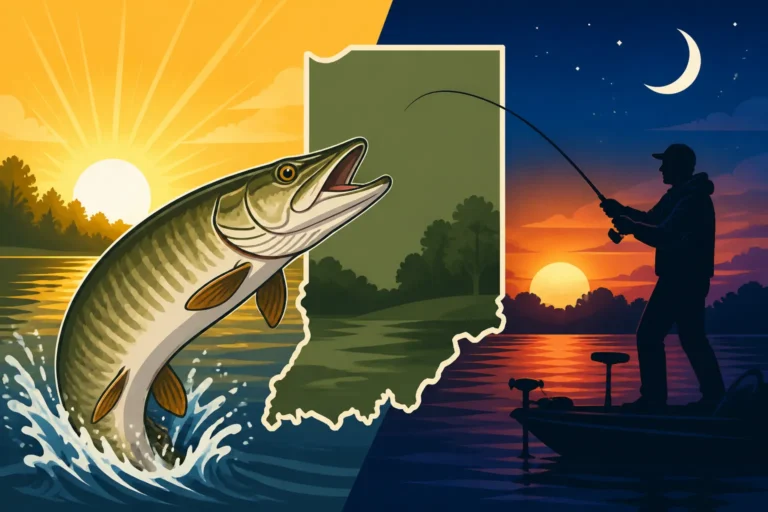
There’s nothing quite like the thrill of chasing a muskie, but when those toothy critters decide to retreat to the cool, dark depths of Indiana’s larger lakes, it can feel like they've just vanished. Many anglers get frustrated trying to target muskie in shallow weed beds or along visible structure, only to come up empty when the fish are actually suspended in open water or hugging deep contours. This guide is all about equipping you with the knowledge and tactics you need to successfully troll for muskie in deep water, ensuring your efforts lead to more exhilarating encounters with these elusive predators.
Understanding Deep Water Muskie Behavior
Muskie are notorious for being elusive, and their behavior shifts dramatically with water temperature and baitfish movements. When the heat of summer sets in or the cold fronts of late fall push through, these fish often seek refuge in deeper, more stable environments. Knowing why and when they head to the depths is the first step in targeting them effectively.
Why Muskie Go Deep
It might seem counterintuitive for a top-tier predator to hang out in the middle of nowhere, but there are some very good reasons why muskie descend into deeper water. Think about your own comfort on a scorching August day; you probably seek out shade or air conditioning. Muskie are no different. They're looking for thermal refuge. As surface water temperatures rise during the summer, the cooler, more oxygenated water below the thermocline becomes their sanctuary. The thermocline is that invisible boundary where warm surface water meets colder deep water, and it often holds a wealth of baitfish that also prefer those stable conditions.
In Indiana's deep, clear glacial lakes, like the ones you find in the famous Kosciusko County region such as Lake Wawasee: Indiana's Largest Natural Lake and Its Fish, or the legendary James Lake and Indiana's State Muskie Record waters, this thermocline can be quite pronounced. Muskie don't just go deep for comfort; they follow their food. If schools of perch, ciscoes, or suckers are holding tight to deep-water humps or suspended over vast open basins, you can bet the muskie will be right there with them, albeit often lurking just below or to the side of the baitfish. It’s all about efficiency: why expend energy chasing small meals when a buffet is available in the comfort of cooler waters?
Seasonal Considerations for Deep Trolling
While muskie can be found deep year-round in some capacity, there are peak times when deep trolling truly shines. The primary window for this technique is typically late spring through early fall, with summer being a prime contender. As the water warms in late spring, muskie will still relate to shallower spawning areas for a bit, but once the heat really kicks in, they start seeking those deeper haunts.
During the dog days of summer, when surface temps might be in the 80s, the muskie in lakes like Wawasee, James Lake, or even Webster Lake in "Indiana's Glacial Lake District: Home to Muskie, Pike, and Walleye" are almost certainly holding in 20 to 40 feet of water, sometimes even deeper. This is when deep trolling becomes indispensable. Similarly, in the transition to early fall, as baitfish begin to school up more tightly and predatory instincts kick into high gear, muskie will aggressively feed in these deeper zones before they eventually move shallower again with the full onset of winter. It's similar to how "Why Walleye Bite Windows Shrink Once the Glacial Lakes Warm" – fish become less active in extreme conditions, but in the stable deep, they can be quite eager.
Essential Gear for Deep Water Muskie Trolling
Chasing muskie in deep water isn't a job for your everyday bass setup. You need specialized gear that can handle the heavy lures, the immense pressure of getting them down deep, and the powerful fight of a truly enormous fish. Skimping on tackle here will lead to heartbreak.
Rods, Reels, and Line
Let's talk about the backbone of your deep-water trolling setup. You're going to need heavy-action rods, often in the 8 to 10-foot range, specifically designed for trolling. Look for models with a sturdy butt section to absorb the shock of a strike and enough tip flexibility to register subtle lure actions without pulling the lure out of the water. For an in-depth look, check out our guide on the "Best Rods for Muskie Fishing". These rods need to be able to handle large baits and heavy resistance from the water column.
Your reels should be robust, high-capacity baitcasting models. Line counter reels are almost a necessity for deep trolling, as they allow you to precisely replicate depths and lure presentations once you find a productive pattern. You want a reel that can hold a lot of line, whether you're using heavy monofilament, braided line, or lead core. Speaking of line, braided line, like a 65 to 100-pound test, is generally preferred for its zero stretch, which gives you excellent feel for your lure and solid hooksets. However, you'll absolutely need a leader. A heavy fluorocarbon or wire leader (at least 80-130 pound test) is crucial to prevent those razor-sharp muskie teeth from severing your main line. Wire leaders, specifically designed for muskie, are available on platforms like Amazon and are non-negotiable for their durability. Remember, "Wire Leaders for Muskie Fishing in Indiana's Glacial Lakes" are vital for success and safety.
Lures and Baits for Deep Trolling
This is where the fun begins! Deep-diving crankbaits are your bread and butter for muskie trolling. Think big, bulky lures with long lips designed to dive anywhere from 15 to 30+ feet on their own. Brands like Bagley, Rapala, and others offer excellent options. Experiment with sizes (8-12 inches is common) and rattle profiles. Color choice can be critical, and you can get more insights from our article "What's the Best Lure Color for Muskie Fishing?". Natural baitfish patterns (perch, sucker, cisco) are always a good starting point, but don't shy away from brighter, more aggressive patterns, especially on cloudy days or in stained water.
Beyond crankbaits, large spoons can also be effective, particularly when fish are feeding on suspended baitfish. Heavy jigging spoons, like those you might use for lake trout, can be trolled with the right setup to reach extreme depths. Some anglers also experiment with large swimbaits or even bucktails trolled behind planer boards or downriggers, though crankbaits remain the most popular choice for deep trolling due to their inherent diving capabilities.
Specialized Trolling Equipment
To consistently put your lures in front of deep-holding muskie, you'll need more than just a rod and reel. This is where specialized equipment comes into play:
- Downriggers: These devices allow you to precisely control the depth of your lure by attaching your fishing line to a heavy cannonball via a release clip. The cannonball pulls your line down, and when a fish strikes, the line releases from the clip, allowing you to fight the fish directly. You can find robust downriggers on Amazon, and understanding "Downrigger Basics for Indiana Lake Michigan Anglers" can be very helpful, even if you're adapting it for inland muskie.
- Lead Core Line: This type of line has a lead core inside a braided nylon sheath, causing it to sink. The general rule of thumb is that one color (usually 10 yards) of lead core will get your lure down about 5 feet at a typical trolling speed. You can run multiple colors to reach significant depths without needing a downrigger, though it does require a dedicated reel with a large spool capacity.
- Snap Weights & Trolling Weights: These are simpler alternatives to downriggers or lead core. Snap weights attach directly to your main line and can be slid up and down to adjust depth. Inline trolling weights simply tie into your line ahead of your leader. While effective, they offer less precise depth control than downriggers.
- Planer Boards: These are less about deep trolling and more about spreading out your lines horizontally, allowing you to cover a wider swath of water, especially useful if you're targeting muskie that might be off to the sides of your boat. They also keep your lines clear of the boat's prop wash.
- Fish Finders & GPS: A high-quality fish finder with side imaging, down imaging, and GPS capabilities is absolutely critical. You need to be able to read the bottom contours, identify humps, ledges, and channels, and most importantly, locate schools of baitfish and individual muskie. GPS allows you to mark waypoints, track your trolling passes, and return to productive areas. Consider checking out "Best Fish Finders for Indiana Lake Fishing" for recommendations.
Trolling Techniques for Deep Water Muskie
Having the right gear is only half the battle. Knowing how to use it effectively to present your lure convincingly to a deep-water muskie is where true success lies.
Locating Deep Water Structures and Baitfish
Muskie, even in deep water, are rarely just aimlessly swimming around. They're almost always relating to some form of structure or following schools of baitfish. This means your fish finder is your best friend. Start by systematically idling over potential deep-water haunts. Look for:
- Humps and Submerged Points: These are classic muskie hangouts. A hump rising from 50 feet to 30 feet can be a prime ambush spot.
- Deep Ledges and Drop-Offs: The edges where shallow flats plunge into deeper water are transition zones that muskie use to move between feeding areas and deeper refuge.
- Main Lake Basins: In very large lakes, muskie can suspend in the middle of deep basins, especially if there are large schools of pelagic baitfish (like ciscoes) present.
- Thermocline: Identify the depth of the thermocline. Muskie and their prey often stack up just above, within, or just below this layer.
Once you mark a significant contour change, a baitfish school, or even a large individual fish arch on your screen, use your GPS to mark that spot. This becomes your starting point for a trolling pass. Repeated passes over these productive areas, varying your angle and distance, can be key to triggering a strike.
Setting Up Your Spread and Depth Control
When trolling deep for muskie, setting up your lines correctly is vital to avoid tangles and present your lures at different depths. A common strategy is to use multiple rods, each rigged to target a different depth.
Here’s a common approach:
- Deepest Lures: These are typically run on downriggers. You can set them to precise depths, perhaps 30-40 feet, to hug a deep channel or target muskie marked on your sonar.
- Mid-Depth Lures: Lead core line or heavy diving crankbaits run straight off the rod can cover the 20-30 foot range. Use your line counter reel to ensure you're letting out the same amount of line on each pass.
- Shallower Lures (if applicable): If you suspect muskie might move up a bit, or you want to cover the top of a deep hump, you might run shallower diving crankbaits off a planer board to keep them away from the boat and at a different depth.
The goal is a "spread" where each lure is fishing a slightly different depth and distance from the boat. This maximizes your chances of hitting the "strike zone" and helps you pinpoint exactly where the fish are holding. Remember, even a slightly different lure action or depth can make all the difference. While designed for salmon, a "Trolling Gear Setup for Indiana's Lake Michigan Salmon" provides a good framework for thinking about multi-line spreads and depth control.
Speed, Direction, and Presentation
Trolling speed is a critical factor and often requires experimentation. For most deep-diving muskie crankbaits, a speed between 2.5 and 4.0 mph is a good starting point. However, always pay attention to your lure's action at different speeds. You want it to be running true, with a natural wobble. Sometimes, a slightly faster retrieve can trigger a reaction strike, while other times, a slower, more methodical pace is what they're looking for.
Don't just troll in straight lines. Muskie are ambush predators, and a lure that changes its speed or direction can often be the catalyst for a strike. Make subtle S-turns or gentle arcs with your boat. As you turn, the lures on the inside of the turn will slow down and drop, while the lures on the outside will speed up and rise. This erratic action often entices a following muskie to commit.
Finally, lure presentation also extends to the moment you bring your lure close to the boat. Muskie are notorious for "following" a lure all the way to the transom without striking. This is why the "How to Figure-Eight a Muskie at the Boat" technique is so important. As your lure approaches the boat, sweep your rod tip in a large "figure-eight" pattern next to the boat. This keeps the lure in the water and makes it look like a panicked baitfish, often triggering a last-second strike from a hesitant muskie.
Safety and Best Practices
Trolling for muskie, especially deep, involves heavy gear and potentially dangerous fish. Prioritizing safety for yourself, your fellow anglers, and the fish is paramount.
Handling Muskie Safely
Muskie are incredibly powerful fish with mouths full of sharp teeth and gill plates that can easily cut an unwary hand. Catch and release is a common practice for these trophy fish, and doing it properly ensures they can fight another day.
- Large Landing Net: You need a net with a wide hoop and deep, rubberized mesh. The rubber coating protects the fish's slime coat and scales, and the large size allows you to fully engulf the fish, minimizing struggle. Our guide on "Best Nets for Landing Muskie in Indiana" can help you choose the right one.
- Long-Nosed Pliers/Hook Cutters: Essential for safely removing hooks. If a hook is deeply embedded or difficult to remove, don't hesitate to use bolt cutters to snip the hook. This saves the fish much more stress and time out of water than struggling to remove it.
- Jaw Spreaders (Optional): Some anglers use jaw spreaders to safely access hooks, but use them with extreme caution as they can damage the fish's jaw if not handled correctly.
- Minimize Time Out of Water: The less time a muskie spends out of the water, the better its chances of survival. Have your camera ready, take quick photos, and get the fish back in the water as fast as possible. Support the fish horizontally and allow it to recover before release.
Boater Safety and Regulations
Beyond fish handling, general boater safety and adherence to regulations are crucial, especially when you're focusing on trolling.
- Life Jackets: Ensure everyone on board has a properly fitting, readily accessible life jacket. Check out our comprehensive "Indiana Boater Safety Gear Checklist" for more details on what else you need.
- Navigation Lights: If you're out at dawn or dusk, or even at night (some anglers love night fishing for muskie), make sure your navigation lights are functioning and on.
- Awareness of Other Boaters: Trolling requires a predictable course, but you still need to be aware of other boats, especially those moving at higher speeds or engaged in other activities. Maintain situational awareness at all times.
- Know Your Limits: Indiana has regulations regarding the number of lines you can fish. Be sure you know "How Many Rods Can You Fish With in Indiana?" to avoid any legal issues.
- Weather Monitoring: Keep an eye on weather forecasts. Big lakes can get rough quickly, and you don't want to be caught in a sudden storm, especially when your focus is on fishing.
By combining the right gear with smart techniques and a strong commitment to safety, you'll be well on your way to mastering the art of deep water muskie trolling in Indiana's fantastic fisheries.
Disclaimer
This article is for general informational purposes only and does not constitute professional advice. Laws, prices and regulations vary by location and change over time. Consult a qualified professional for guidance on your specific situation.