Shore Fishing Gear vs Boat Fishing Gear
Have you ever stood on the bank of an Indiana lake, watching boats glide by, and wondered if you're missing out on prime fishing opportunities just because you don't have a vessel? Or maybe you're a seasoned boat angler considering a bank-fishing adventure and aren't sure if your gear will cut it. It's a common dilemma, and one that often leads to confusion about what kind of tackle, rods, and accessories you really need. This guide is here to break down the fundamental differences between shore fishing gear and boat fishing gear, helping you make informed choices for your next Hoosier angling escapade.
Understanding the Core Differences: Shore vs. Boat Fishing
It might seem obvious, but the biggest difference between fishing from the shore and fishing from a boat boils down to access and mobility. When you're on the bank, your range is limited to how far you can cast and how much ground you're willing to cover on foot. This impacts everything from the type of fish you target to the techniques you employ and, crucially, the gear you bring along. A boat, whether it's a small Jon boat, a kayak, or a full-blown bass rig, opens up an entirely new world of possibilities, but it also introduces its own set of logistical and equipment considerations.
Think about standing on the edge of Lake Monroe. From shore, you're looking for drop-offs near the bank, submerged timber close enough to cast to, or perhaps the mouth of a small creek. Your approach is often about patience and making the most of a fixed position. Now imagine being in a boat on that same lake. You can explore vast stretches of water, target offshore humps, cruise over deep channels, or chase schooling fish across open water. This freedom is exhilarating, but it also demands a different toolkit to effectively capitalize on those opportunities.
Reaching the Fish: Casting Distance and Accuracy
One of the primary challenges for shore anglers is simply getting their bait or lure to where the fish are holding. Fish, especially larger ones, often prefer deeper water or structure that's out of reach from the bank, particularly in pressured areas. This means shore anglers often lean into gear that maximizes casting distance. You're trying to cover as much water as possible from a stationary point, which influences rod length, line type, and lure weight.
On the flip side, boat anglers, while still needing to cast, often prioritize accuracy and the ability to drop baits vertically. When you're directly over a brush pile or a submerged rock formation, you don't need to cast 50 yards; you need to precisely drop your offering into a tight zone. This shift in requirement directly affects the characteristics of the rods and reels that are most effective. It's not about heaving a heavy lure as far as you can; it's about delicate presentations and fighting fish in close quarters, often around obstructions.
Navigating Obstacles and Tight Spaces
Shore fishing often means dealing with brush, trees, high banks, and uneven terrain. Your cast might need to be threaded through branches, or your retrieve might involve pulling your line over rocks. These environmental factors can be frustrating, leading to snags, lost lures, and tangled lines. Gear for shore fishing sometimes needs to be robust enough to handle these challenges, or conversely, light enough to allow for finesse presentations in tight, overgrown spots.
Boat fishing certainly offers more open space for casting and retrieving, but it has its own set of navigational hazards. Think about maneuvering around standing timber in Patoka Lake or working tight to a weed line in Lake Wawasee. Shorter rods can be a blessing here, preventing accidental snags on boat rails, trolling motors, or even your fellow anglers. Fighting a big bass around the boat can also be easier with a more compact setup, allowing you to control the fish without too much leverage working against you. This interplay between your fishing environment and your equipment is truly crucial.
Rods and Reels: Tailoring Your Setup to Your Location
The rod and reel are the heart of your fishing setup, and their optimal characteristics change significantly depending on whether you're casting from a sandy beach or dropping a jig from a boat deck. It's not just about preference; it's about maximizing your efficiency and enjoyment on the water.
Longer Rods for Shore Casting Distance
When you're bound to the bank, every extra foot of casting distance can make a huge difference, especially if you're targeting species like bass or walleye that might be holding further offshore. This is where longer rods, typically ranging from 7 to 9 feet or even longer for surf or pier fishing, come into their own. The increased length provides more leverage, allowing you to whip your lure further with less effort. This is particularly useful when you need to cast past shallow weeds, reach a distant drop-off, or target a specific structure that's just out of reach with a shorter rod.
Consider casting for Largemouth Bass Fishing in Indiana: The Complete Guide from the shore of a reservoir like Brookville Lake. A longer spinning rod paired with a medium-heavy action and a fast tip will give you the power to cast a Texas rig or a crankbait a good distance, while still allowing you to feel subtle bites. It also helps manage your line over bankside vegetation, keeping it out of snags during the retrieve. For heavier baits or rougher conditions, a robust medium-heavy casting rod in a longer length can also be a fantastic choice. For Best Bank Fishing Gear for Rivers and Streams, a longer rod offers better line control over currents.
Shorter Rods for Boat Maneuverability
Conversely, when you're on a boat, space can be at a premium, and long rods can quickly become a nuisance. Imagine trying to make a precise cast into a tight pocket of lily pads from a bass boat, or jigging vertically over a school of crappie in a crowded cove. A 7-foot plus rod can easily get tangled with other rods, hit the trolling motor, or even whack a fellow angler. Shorter rods, typically between 6 and 7 feet, offer much better control in these confined spaces. They allow for more accurate short-to-medium casts and make it easier to handle fish right alongside the boat.
When Best Boats for Fishing Monroe Lake in Indiana, you'll appreciate a shorter rod. Vertical jigging for walleye on Lake Wawasee, for instance, is far more efficient with a sensitive, shorter rod that allows you to feel the bite immediately and set the hook with minimal slack. For precise pitching and flipping techniques when targeting bass around heavy cover, a shorter, powerful casting rod gives you the control to place your lure exactly where you want it without overshooting or getting hung up on boat features. If you're Kayak Fishing Gear for Indiana Waters, shorter rods are almost a necessity to prevent tangles and allow for easy paddling.
Reel Choices for Each Scenario
The reel you pair with your rod is equally important. For shore fishing, especially with longer rods and when aiming for distance, a spinning reel with a larger spool capacity is often preferred. This allows for more line, which is crucial for those long casts, and the spinning mechanism reduces line twist with monofilament or fluorocarbon. A good quality reel with a smooth drag system is essential when you're fighting a strong fish from the bank without the option to chase it down. You can find excellent options for both spinning and baitcasting reels at places like Bass Pro Shops.
For boat fishing, the choice becomes a bit more varied, often leaning heavily into baitcasting reels for specific techniques. Baitcasters offer superior control for casting accuracy, flipping, pitching, and working heavier baits. They also provide more cranking power for pulling fish out of heavy cover. However, spinning reels still have their place on a boat, especially for finesse techniques, lighter lures, or for beginners. The key is matching the reel to the fishing style and the target species, whether it's Best Tackle for Indiana Walleye Fishing or for targeting Channel Catfish Fishing in Indiana: The Complete Guide in deep holes.
Tackle and Baits: What Works Where
Once you've got your rod and reel sorted, it's time to fill your tackle box. The types of lures, baits, and terminal tackle you choose will also vary depending on whether you're anchored in a boat or staked out on the bank.
Shore Fishing Lure Strategies
Shore anglers often rely on versatile lures that can cover a lot of water and appeal to a variety of species. Spoons, spinnerbaits, and crankbaits are excellent choices because they can be cast long distances and retrieved at various depths. You'll want lures that are weighty enough to cast far but still have good action to entice strikes. Soft plastics, like Texas-rigged worms or Senkos, are also fantastic for shore fishing as they are weedless and can be worked slowly through cover near the bank.
When fishing from the shore, you often don't have the luxury of moving to find the fish, so you need to bring the fish to you or present lures that maximize your chances from a fixed position. Consider the scenario of fishing for Indiana Walleye Fishing: A Complete Guide from a pier on Lake Michigan. You'd likely be throwing heavier spoons, swimbaits, or even vertical jigs if the water is deep enough. Live bait under a bobber can also be incredibly effective, especially for panfish or catfish, allowing your bait to sit in the strike zone while you wait for a bite.
Boat Fishing Lure Advantages
Boat fishing opens up a whole new arsenal of lures and techniques. Because you can position your boat directly over structure, or precisely along contour lines, you can employ more specialized presentations. Jigs, dropshot rigs, and Carolina rigs become incredibly effective for targeting fish hugging the bottom or suspended in the water column. Trolling with crankbaits or spoons is also an option, allowing you to cover vast amounts of water and search for fish actively.
For instance, when Trolling Techniques for Salmon and Steelhead on Lake Michigan, you'll use specialized trolling spoons or plugs, often deployed with downriggers or planer boards to get them to specific depths and spread your lines. If you're on a bass boat on a lake known for Best Bass Fishing Lakes in Indiana like Monroe Lake or Patoka Lake, you might be flipping heavy jigs into thick cover, casting topwater frogs over matted vegetation, or working deep diving crankbaits along offshore humps – all techniques that are challenging, if not impossible, to do effectively from shore. Best Lures for Summer Fishing can vary greatly between these two scenarios.
Live Bait Considerations
Live bait is a classic for a reason, and it can be highly effective in both scenarios, but there are practical differences. For shore fishing, simplicity is key. A bucket of minnows, worms, or crickets is easy to manage. You're typically using bobber rigs or simple bottom rigs, keeping your presentation straightforward. It's perfect for a relaxing day catching Crappie and Panfish Fishing Techniques for Beginners or Bluegill Fishing Techniques for Beginners at a local pond.
On a boat, you have more options for keeping bait fresh and lively, often with built-in livewells. This allows you to carry a larger quantity and variety of live bait, from large shiners for muskie to an assortment of panfish for catfish. You can also deploy multiple live bait rigs at once, such as using multiple rod holders for still fishing, or slowly drifting live bait over structure. Best Live Bait Choices for Beginners can apply to both, but the scale and complexity can increase on a boat.
Essential Accessories for Both Worlds
Beyond the rod, reel, and tackle, there are numerous accessories that enhance your fishing experience. Some are universally beneficial, while others are specifically tailored to either shore or boat fishing.
Basic Safety Gear for All Anglers
Regardless of whether you're on land or water, some safety items are non-negotiable. A basic first-aid kit is always a good idea for any cuts, scrapes, or hook accidents. Pliers or a hook remover are crucial for safely extracting hooks, especially from toothy fish. Sunscreen, a hat, and polarized sunglasses are essential for protecting yourself from the elements and spotting fish. A small cooler for your drinks and snacks, and to keep your catch fresh, is also a must.
For those venturing onto private property or state parks, carrying your Indiana Fishing License Requirements Explained is paramount. A small knife for cutting line or other tasks is handy. And let's not forget bug spray – Indiana mosquitos can be legendary! These items form the core of a responsible angler's kit, ensuring you're prepared for common situations and discomforts.
Specialized Gear for Shore Anglers
Shore fishing demands gear that prioritizes portability and efficient use of limited space. A comfortable backpack is often the shore angler's best friend, allowing you to carry your tackle, water, and extra layers without juggling multiple bags. A small, foldable stool can be a godsend during long waits for a bite. A long-handled net can be incredibly helpful for landing fish from a high bank, preventing you from having to scramble down a steep incline.
You might also consider specialized rod holders that stick into the ground, freeing up your hands for baiting or simply relaxing. Waders or waterproof boots are invaluable for getting into shallow water to cast further or retrieve snags without getting soaked. When you're walking along a river like the Wabash, covering a good stretch of bank, having lightweight, compact gear, easily accessible from a Best Bank Fishing Gear for Rivers and Streams backpack, makes all the difference.
Specialized Gear for Boat Anglers
For boat anglers, the accessories list expands considerably, often focusing on navigation, fish finding, and safety specific to being on the water. Best Life Jackets for Indiana Boaters are legally required and paramount for safety. A good depth finder or fish finder is almost indispensable for locating structure and schools of fish, especially on large bodies of water like Lake Michigan or Patoka Lake. GPS navigation is also incredibly useful for marking waypoints, returning to productive spots, and avoiding hazards.
Other essential boat gear includes an anchor (and rope!) to hold your position, a boat net for landing larger fish (often with a longer handle than a shore net), and a marine radio or fully charged cell phone for communication in emergencies. Depending on the type of boat, you might also need a trolling motor, extra batteries, and chargers. Indiana Boat Registration Rules Explained and ensuring you have all required safety items onboard are crucial before you even launch. For a deeper dive into organizing your gear, check out Best Tackle Box Organizers for Anglers to keep everything shipshape in your boat.
Mobility and Comfort: The Often-Overlooked Factors
Beyond just the tackle, how you move and how comfortable you are significantly impacts your fishing success and enjoyment. This is where the choice between shore and boat really influences your overall experience.
Shore Fishing Accessibility and Limitations
Shore fishing is fantastic for its accessibility. You can often walk or drive right up to a local pond, riverbank, or pier without needing special equipment or a lot of planning. This makes it a great option for spontaneous trips, fishing with kids, or for those on a budget. However, this accessibility comes with limitations. Your fishing spots are dictated by public access points, and often, the most productive areas are out of reach.
Imagine trying to fish the far side of a large reservoir like Mississinewa Lake from the bank. You might be limited to a few hundred yards of shoreline at a public access point, while the best structures, like submerged islands or deep channels, are miles across the water. This can lead to frustration, especially if fish are schooling offshore. Additionally, comfort can be an issue. Standing for long periods on uneven ground, especially under the beating sun or in light rain, can wear you down. Having to carry all your gear on your back limits what you can realistically bring, forcing you to make tough choices about your tackle.
Boat Fishing Freedom and Logistics
A boat provides unparalleled freedom. You can reach virtually any part of a lake or large river, allowing you to explore new areas, follow fish migrations, and escape crowded public access points. This freedom translates to a much wider range of fishing opportunities and the ability to adapt to changing conditions. If the fish aren't biting in one spot, you can simply fire up the motor and move to another.
However, boat fishing introduces its own set of logistical challenges. Owning and maintaining a boat is a significant investment in time and money, from registration and insurance to fuel and repairs. Trailering a boat to the launch, dealing with crowded boat ramps, and navigating unfamiliar waters all add layers of complexity. While a boat offers comfort with dedicated seating, shade, and storage, you also need to ensure you have all your Indiana Boater Safety Gear Checklist in order before you even leave the dock. The convenience of a boat is undeniable, but it's important to be realistic about the commitment required.
Budgeting Your Indiana Fishing Gear
Let's be real, fishing can be as expensive or as affordable as you want to make it. When considering shore versus boat fishing, the budget often becomes a significant deciding factor. It's not just about the initial purchase, but the ongoing costs, too.
Initial Costs: Rods, Reels, and Basic Tackle
For shore fishing, you can get started with a very modest investment. A decent spinning combo (rod and reel) can be purchased for a reasonable price, and a basic tackle box with a few versatile lures, hooks, weights, and bobbers won't break the bank. You can pick up a quality beginner setup for Best Rod and Reel Combos for Kids Fishing or Best Budget Rod and Reel Combos for Beginners at most sporting goods stores or through Amazon. The beauty of shore fishing is that you only need what you can comfortably carry.
Boat fishing, even for a simple setup, typically starts at a higher price point. While your individual rods and reels might be similar in cost, you'll likely need more of them to cover different techniques and have backups. Add to that the cost of specialized boat-specific tackle like downriggers, multiple rod holders, and advanced electronics, and the tackle bill can quickly climb. You might be looking at a larger initial outlay if you're outfitting a boat for specific species like Lake Michigan Trolling Gear Guide for Indiana Anglers.
Ongoing Expenses: Fuel, Maintenance, and Upgrades
This is where the financial difference truly widens. Shore fishing has minimal ongoing expenses beyond replenishing lost tackle, buying fresh bait, and renewing your annual Indiana Resident Annual Fishing License Cost or Indiana Nonresident Annual Fishing License Cost. The costs are generally predictable and low.
Boat fishing, however, is a different beast entirely. Fuel for your motor and tow vehicle can add up quickly, especially with today's prices. Routine maintenance for your boat, motor, and trailer is essential to keep everything running smoothly and safely. Then there are storage fees if you don't have space at home, insurance, and the inevitable desire to upgrade electronics, trolling motors, or even the boat itself. A simple day out on the water can easily cost more in fuel alone than a whole season of shore fishing. It's important to factor in all these hidden costs when considering the leap into boat ownership.
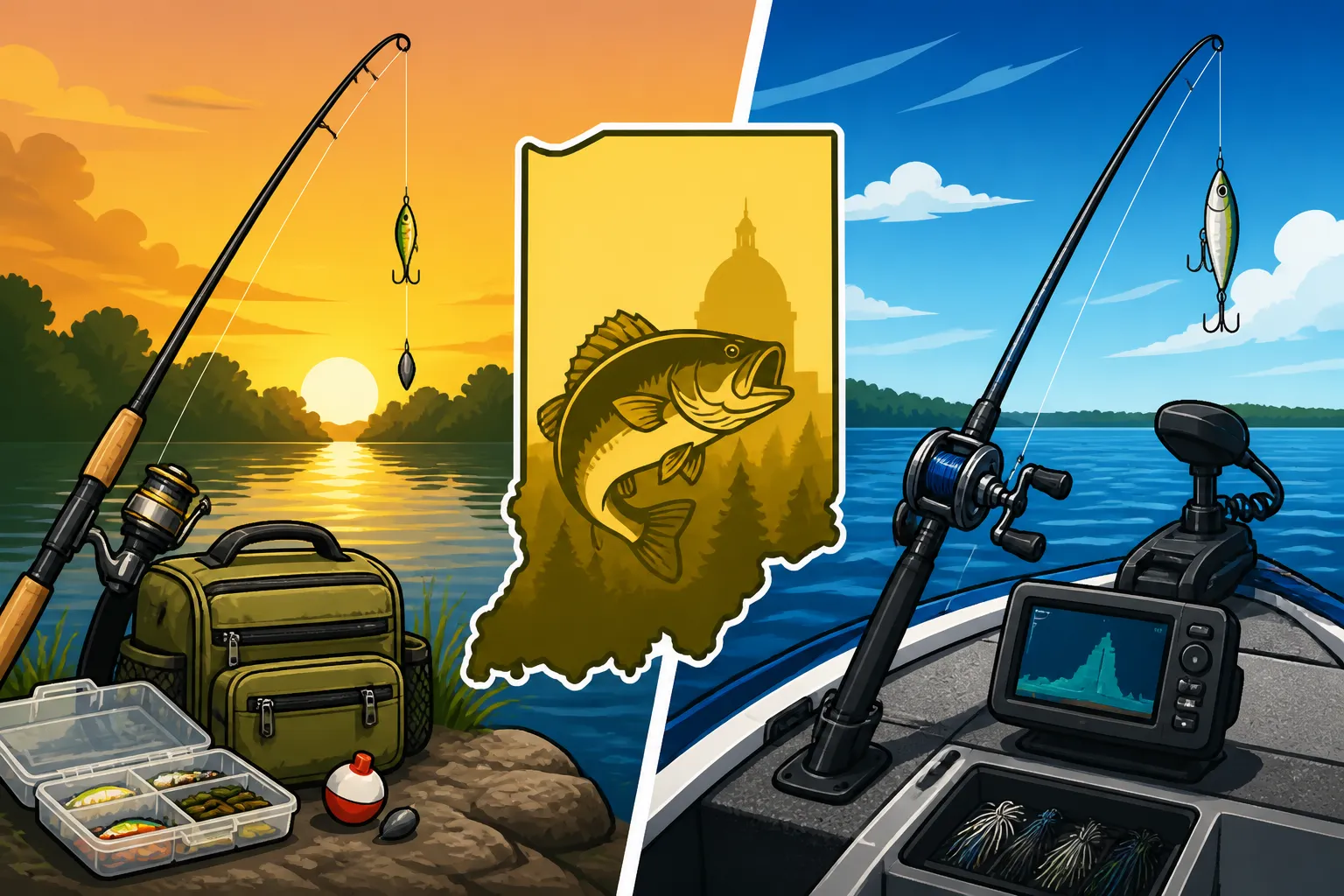
Here's a quick comparison of typical gear considerations:
| Feature | Shore Fishing Gear | Boat Fishing Gear |
|---|---|---|
| Rod Length | Longer (7-9+ ft) for casting distance & line control | Shorter (6-7 ft) for maneuverability & accuracy |
| Reel Type | Spinning reels (larger spool) for distance | Baitcasters for control, spinning for finesse |
| Lure Types | Versatile cast-and-retrieve (spoons, crankbaits, soft plastics) | Specialized (jigs, dropshots, trolling lures, topwater) |
| Portability | High (backpacks, light tackle) | Lower (more gear, specialized storage) |
| Accessories | Rod holders, long nets, waders, comfortable seating | Fish finders, GPS, anchor, marine radio, life jackets |
| Mobility | Limited to accessible banks/piers | High, access to all water |
| Cost | Generally lower initial and ongoing | Significantly higher initial and ongoing (boat, fuel, maintenance) |
Ultimately, the best choice depends on your personal circumstances, budget, and fishing goals. Both offer incredible opportunities to enjoy Indiana fishing.
Disclaimer
This article is for general informational purposes only and does not constitute professional advice. Laws, prices and regulations vary by location and change over time. Consult a qualified professional for guidance on your specific situation.