Best Rod and Reel Combos for Kids Fishing
It's a wonderful thing, introducing a child to the magic of fishing. However, many parents find themselves overwhelmed by the sheer number of rod and reel combos out there, often leading to frustration when a young angler struggles with ill-fitting or complicated gear. This guide is all about helping you navigate those choices, ensuring your child's first experiences on Indiana's lakes and rivers are filled with excitement, not tears, by finding the perfect, kid-friendly rod and reel combo.
Why Getting the Right Combo Matters for Young Anglers
Taking a child fishing isn't just about catching fish; it's about making memories, teaching patience, and fostering a love for the outdoors. But let's be honest, nothing sours a potentially perfect fishing trip faster than a child struggling with a reel that's too heavy, a rod that's too long, or a line that's constantly tangling. It's a common scenario, and it's why choosing the right gear is absolutely paramount for our budding Hoosier anglers.
The Frustration of Ill-Fitting Gear
Imagine trying to cast a heavy, adult-sized rod when your arms are still short and your grip isn't fully developed. It's awkward, exhausting, and quickly leads to discouragement. A child might struggle to hold the rod properly, making casting difficult, and a reel that's too complex can result in constant tangles, backlashes, and ultimately, a child wanting to do anything but fish. I've seen it happen countless times at local ponds—parents trying their best, but the kid's attention span dwindling as they fight with equipment not designed for them. It's a real barrier to entry for many young ones, and it can turn a potentially lifelong hobby into a one-time trial.
Building Early Confidence and Enthusiasm
Conversely, when a child has a rod and reel combo that fits them perfectly, their confidence soars. They can cast further, reel in more smoothly, and manage their line with greater ease. That feeling of control, coupled with the excitement of reeling in their first bluegill or crappie, is an unbeatable combination. It builds enthusiasm that lasts, making them eager for the next trip. A successful outing, even if it's just catching a few small panfish, reinforces the idea that fishing is fun and rewarding. It makes them feel like a capable angler, and that positive reinforcement is priceless. You're not just giving them a fishing rod; you're giving them a tool for success and enjoyment. Remember, for most species found in our state, like bluegill, the excitement of the bite is often enough, regardless of size. Bluegill and Panfish: A Great Starter Fish for Kids in Indiana
Safety First: A Rod and Reel Sized for Small Hands
It's not just about comfort and effectiveness; safety is a huge factor. An oversized rod can be difficult to control, increasing the risk of accidental hooks, especially during casting or when maneuvering around other people. A reel that's too heavy can cause fatigue, making a child more prone to dropping the rod or losing their balance. When gear is appropriately sized, children have better control, reducing these risks significantly. Plus, it allows them to learn proper casting and reeling techniques from the start, setting them up for safer and more enjoyable fishing experiences down the road. You want them focused on the bobber, not wrestling with cumbersome equipment.
Key Considerations When Choosing a Kids' Fishing Combo
Picking out that first fishing combo for a child can feel like a big decision, especially if you're not an avid angler yourself. But don't fret! It's all about understanding a few core principles that will guide you to the perfect setup for your budding fisherman or woman. Think about it less like buying a high-performance sports car and more like finding the right pair of shoes – comfort, fit, and suitability for the activity are key.
Age and Size of the Child
This is probably the most crucial factor. A two-year-old trying to manage a five-foot rod is just as impractical as a ten-year-old trying to use a two-foot toy rod.
- Toddlers (Ages 2-5): For the littlest anglers, you're looking for something very short, lightweight, and almost indestructible. Think rods around 2 to 3 feet long. These are often brightly colored and feature oversized handles for tiny hands. The goal here is just to get them holding a rod, feeling the tug of a fish, and understanding the basic motion of reeling. Durability is a huge plus, as these rods will undoubtedly be dropped, dragged, and generally put through their paces.
- Elementary Schoolers (Ages 6-10): As children grow, they can handle slightly longer rods, typically 4 to 5 feet. Their coordination is improving, and they're ready for a bit more independence in casting and retrieving. The handle size should still be comfortable for smaller hands, but they can often manage a bit more weight. This age group might also be ready to try a combo that allows for slightly more technical fishing, moving beyond just bobber fishing.
- Pre-Teens (Ages 11-14): At this stage, many kids are developing a serious interest in fishing and can often handle more advanced gear. Rods in the 5 to 6-foot range are suitable. They might even be ready for a light-action spinning combo, which offers more versatility and better casting distance than a spincast. The focus here shifts from just "easy to use" to "effective and versatile," allowing them to target a wider variety of fish and develop more refined techniques. Keep in mind that Kids Fish Free Until Age 18 in Indiana, so there's no need to worry about a license for this age group yet!
Types of Fish They'll Be Catching in Indiana
Indiana offers a fantastic variety of freshwater fishing, from farm ponds teeming with panfish to larger lakes with bass and even the mighty Lake Michigan with its salmon and trout. The type of fish your child will most likely encounter should influence your combo choice.
- Panfish (Bluegill, Crappie, Sunfish): For most beginners and younger children, panfish are the ideal target. They are abundant in nearly every Indiana body of water, bite readily, and provide plenty of action. For these species, an ultralight or light-action rod, usually 4 to 5 feet long, paired with a small spincast or spinning reel, is perfect. The light action allows them to feel even the smallest nibbles. Best Bait for Bluegill Fishing in Farm Ponds often includes worms or small crickets, which work great with these combos.
- Bass (Largemouth, Smallmouth): As children get a bit older and gain experience, they might want to target bass. For this, a medium-light or medium-action rod, typically 5 to 6 feet, with a slightly more robust spinning reel, would be appropriate. This provides the backbone needed to handle a feisty bass, while still being manageable for a child.
- Other Species (Catfish, Walleye): While less common for true beginners, if your child shows a quick aptitude, they might eventually move on to heavier species. For these, you'd be looking at medium-action rods with stronger reels, but that's likely a few years down the line. Start simple and build up!
Durability and Ease of Use
Kids are, well, kids. Their gear needs to withstand enthusiastic handling, accidental drops, and general wear and tear.
- Durability: Look for combos made with sturdy materials. Fiberglass rods are often a good choice for kids because they are very forgiving and less likely to snap than graphite. Reels should be simple in design with minimal exposed parts that can break or get gunked up. Many popular brands like Bass Pro Shops offer durable "kid-proof" options specifically designed for this.
- Ease of Use: This is where spincast reels really shine for beginners. They have a push-button release that makes casting incredibly intuitive, and they are much less prone to tangles than open-face spinning reels. For slightly older kids, a small spinning reel can be introduced, but ensure it's a good quality one that spools line evenly to prevent frustration. A combo that comes pre-spooled with line is also a huge time-saver and ensures the line is appropriate for the rod.
Top Features to Look For in a Kids' Combo
Once you've got a general idea of the child's age and what fish they'll be chasing, it's time to dive into the specific features that make a kids' fishing combo truly great. This isn't just about bells and whistles; these are the design elements that genuinely contribute to a positive and successful fishing experience for your young angler.
Closed-Face (Spincast) Reels: The Beginner's Best Friend
For most children just starting out, the closed-face, or spincast, reel is an absolute game-changer. It's often affectionately called a "push-button" reel for a very good reason, and it solves so many of the common frustrations new anglers face.
- Simplicity in Casting: The magic of a spincast reel lies in its push-button design. To cast, the child simply presses and holds a button, then sweeps the rod forward, releasing the button at the peak of the forward motion. There's no complicated bail to open, no finger to hold the line, and no complex retrieve. This intuitive action significantly reduces the learning curve and prevents the dreaded backlash that often plagues beginners attempting a spinning reel.
- Reduced Tangles: The line is enclosed within a cone, which protects it and helps manage its release. This design drastically cuts down on tangles and snags, allowing the child to spend more time fishing and less time untangling knots. When you're trying to keep a youngster engaged, preventing frustration from tangles is key.
- Durability and Protection: Because the internal components and line are largely enclosed, spincast reels are generally more robust and resistant to dirt, sand, and accidental drops – all common occurrences when fishing with kids! Many of these reels, especially those designed for children, are built with tough plastic housings that can take a beating.
While spincast reels might not offer the same casting distance or line capacity as spinning reels, for a child learning the ropes, their ease of use far outweighs these minor limitations. They are truly the best starting point for fostering that initial love for fishing.
Rod Length and Action
The rod is the other half of the equation, and its characteristics are just as important as the reel's. The length and "action" (how much the rod bends) greatly impact a child's ability to cast effectively and feel a fish bite.
-
Rod Length:
- Shorter Rods (2-4 feet): These are ideal for the youngest anglers (toddlers to early elementary). They are easier to manage in tight spaces, lighter to hold, and require less sweeping motion for casting, which suits developing motor skills. A shorter rod helps a child control their cast and reduces the likelihood of hitting themselves or others. They're perfect for shore fishing in Indiana's small ponds or from a dock at a local park.
- Medium Rods (4-5 feet): For elementary school-aged children, a 4 to 5-foot rod offers a good balance of castability and control. They can get a bit more distance than with a super short rod, but it's still manageable. This length is versatile for catching panfish or smaller bass.
- Longer Rods (5-6 feet): Pre-teens or older kids who have some experience can graduate to a 5 to 6-foot rod. These offer better casting distance, which can be an advantage when fishing larger bodies of water or trying to reach further structures. They also provide better leverage when fighting a larger fish.
-
Rod Action:
- Light or Ultralight Action: This means the rod bends a lot, even with minimal pressure. For kids, this is a huge advantage, especially when targeting panfish. A light-action rod makes even a small bluegill feel like a trophy fish, providing more excitement and positive feedback. It also helps them feel the subtle bites of smaller fish, which can be crucial for maintaining engagement.
- Medium-Light Action: As kids gain confidence and perhaps want to target small bass or larger panfish, a medium-light action offers a bit more backbone while still being sensitive enough to detect bites.
When you're browsing options, whether online at Amazon or in a store like Bass Pro Shops, pay close attention to these specifications. They aren't just technical jargon; they dictate how comfortable and successful your child will be.
Pre-Spooled Line and Kid-Friendly Lures
These small details can make a world of difference in getting your child out on the water quickly and effectively.
- Pre-Spooled Line: Many kids' combos come with fishing line already spooled onto the reel. This is a huge convenience! Not only does it save you the hassle of spooling line yourself (which can be tricky, even for experienced anglers), but it also ensures that the line is the correct weight and type for that particular rod and reel. It means the combo is ready to go almost right out of the box – just tie on a hook, bobber, and sinker, and you're set.
- Kid-Friendly Lures/Tackle: Often, these combos also include a small starter kit with basic tackle. This might consist of a few colorful bobbers, some hooks, sinkers, and maybe a simple plastic lure or two. These kits are fantastic for beginners because they provide everything needed to start catching fish, typically panfish, without requiring a separate trip to the tackle shop. Keep it simple for kids; a worm under a bobber is often all you need for a fantastic day of fishing. Best Beginner Fishing Kits for Kids often include these essentials, making the initial setup a breeze.
Having these components ready to go minimizes delays and potential frustrations, letting you get straight to the fun part: teaching your child how to cast and reel in their very first catch.
Recommended Rod and Reel Combos for Different Ages and Skill Levels
Choosing the perfect rod and reel combo is about matching the gear to the angler's stage of development. Just like you wouldn't give a toddler a complicated puzzle meant for a pre-teen, you shouldn't hand a 3-year-old a sophisticated spinning reel. We want to set them up for success, not frustration! Let's break down some ideal setups for different age groups, keeping in mind the fantastic fishing opportunities Indiana offers.
Combos for Toddlers and Preschoolers (Ages 2-5)
For the very youngest anglers, the goal is simple: make it fun, easy, and safe. These are typically the "toy-like" combos, but don't let that fool you – a good one can be surprisingly effective for teaching the absolute basics.
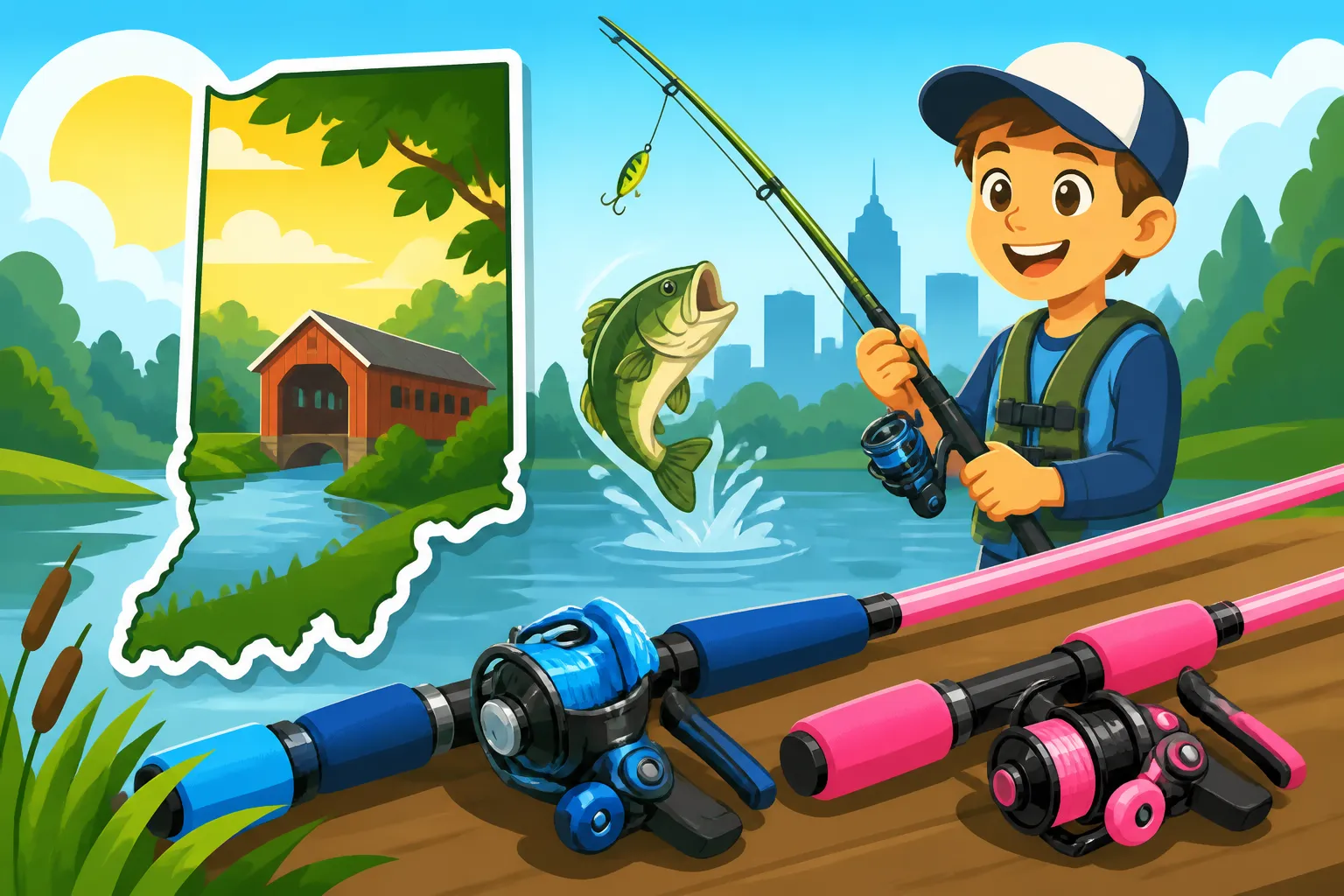
- Characteristics: Look for very short rods (2 to 3 feet), often made of flexible fiberglass that can withstand bending without breaking. The reels will almost exclusively be closed-face (spincast) with oversized push-buttons, designed for tiny fingers. Handles are usually thick and ergonomic. Many of these come in bright colors or feature popular cartoon characters, which adds to the appeal for this age group. They are usually pre-spooled with a durable, heavier monofilament line that resists tangles.
- Why they're great: They are incredibly easy to cast with a simple push-button action, minimize tangles, and are built to be durable enough for enthusiastic (and sometimes clumsy) handling. The short length makes them manageable, even from a seated position on a dock or the bank of a farm pond. This age is all about the experience of holding a rod, feeling a tug, and the sheer joy of reeling something in, no matter how small.
- Example Scenario: Imagine taking your three-year-old to a local pond in Indianapolis. With a bright, character-themed combo, they can easily push the button and give a little flick of the wrist to cast a bobber and a piece of hotdog just a few feet from shore. When a hungry bluegill tugs, the rod bends dramatically, and they can giggle with delight as they reel it in themselves. These experiences lay the groundwork for a lifelong love of fishing. You can often find great options from brands like Bass Pro Shops or on Amazon that cater specifically to this demographic, often marketed as "kids' fishing kits."
Combos for Elementary School Anglers (Ages 6-10)
This age group is ready for a bit more independence and can handle slightly more capable gear, but ease of use and durability are still top priorities. Their motor skills are improving, and they're often eager to learn proper techniques.
- Characteristics: Rods typically range from 4 to 5 feet, offering a balance of manageability and decent casting distance. While spincast reels are still a fantastic choice for many at this age, some children might be ready for an entry-level spinning reel, especially if they've shown aptitude. The action will likely be light or medium-light, making it sensitive enough to feel panfish bites but with enough backbone for smaller bass. Ergonomics remain important for comfortable holding and casting.
- Why they're great: These combos offer improved performance without sacrificing user-friendliness. They allow for longer casts, which can be beneficial when fishing from shore at places like Monroe Lake or Patoka Lake, or from a boat. Children at this age can start to learn more about fish behavior and presentation, and a slightly more sensitive rod helps them detect subtle bites.
- Example Scenario: Your eight-year-old wants to spend a summer afternoon fishing for crappie at a local reservoir. A 4.5-foot combo with a sensitive tip allows them to cast a small jig effectively. They can learn to work the lure slowly, feeling the tap-tap-tap of a crappie bite, and then reel it in themselves. These combos are versatile enough for Best Panfish Rods for Indiana Ponds but also capable of handling small bass. Many reputable fishing gear manufacturers produce excellent combos for this age group, readily available from retailers.
| Age Group | Recommended Rod Length | Reel Type | Key Features to Look For | Typical Target Species |
|---|---|---|---|---|
| Toddler (2-5) | 2-3 feet | Closed-face/Spincast | Ultra-short, lightweight, oversized handle, cartoon themes, durable | Bluegill, sunfish, small panfish |
| Elementary (6-10) | 4-5 feet | Spincast / Small Spinning | Easy-to-cast, light/medium-light action, comfortable grip, durability | Bluegill, crappie, small bass, perch |
| Pre-Teen (11-14) | 5-6 feet | Spinning | Medium-light/medium action, sensitive, good casting distance, versatility | Bass, larger crappie, walleye (smaller), catfish |
Combos for Pre-Teens and Aspiring Anglers (Ages 11-14)
By this age, many kids are developing a serious passion for fishing and are ready for gear that closely mimics adult setups, but still with a focus on ease of use and appropriate sizing. This is where they start refining their techniques and exploring different species.
- Characteristics: Rods typically fall into the 5 to 6-foot range, often with a medium-light or medium action. Spinning reels become more common and are highly recommended for their versatility and casting ability. These combos are generally more responsive, allowing for better lure presentation and increased sensitivity to bites. The handle will be more standard-sized, reflecting their growing hands.
- Why they're great: These combos bridge the gap between "kid gear" and "adult gear." They allow pre-teens to experiment with a wider variety of lures and techniques, such as How to Catch Bluegill for Beginners with various baits or even trying for smallmouth bass in rivers. The longer rod lengths provide excellent casting distance, which is invaluable when fishing larger lakes or trying to reach submerged cover. They also offer more power for fighting larger fish, increasing the thrill of the catch. For this age group, it's also a great time to start teaching them about Indiana Fishing Regulations and Bag Limits Guide for different species they might encounter.
- Example Scenario: Your twelve-year-old wants to try bass fishing at Salamonie Lake or Mississinewa Lake. A 5.5-foot medium-light spinning combo allows them to cast a small crankbait or a Texas-rigged worm effectively. They can feel the lure working through the water, detect subtle strikes, and gain the confidence to handle a feisty largemouth. This type of combo offers the versatility to target many popular Indiana species, making it a great all-around choice for the dedicated young angler. They will appreciate the improved feel and control that a slightly more advanced combo provides, helping them transition into serious angling.
Remember, the best combo is the one that sparks joy and success for your child. By considering their age, the fish they'll target, and the critical features of ease of use and durability, you'll be well on your way to creating countless unforgettable fishing memories in Indiana.
Disclaimer
This article is for general informational purposes only and does not constitute professional advice. Laws, prices and regulations vary by location and change over time. Consult a qualified professional for guidance on your specific situation.