Best Tackle for Indiana Walleye Fishing
Finding the right tackle for walleye fishing in Indiana can feel like a maze, especially when you're faced with endless options at the local bait shop or scrolling through what seems like a million products online. Many anglers get frustrated trying to match their gear to these elusive, marble-eyed predators, often ending up with tackle that's either too heavy, too light, or just plain wrong for the conditions. This comprehensive guide is here to cut through the confusion, helping you understand precisely what rods, reels, lines, lures, and terminal tackle will give you the best chance to land those prized Indiana walleye.
Understanding Indiana Walleye Behavior and Habitats
Before we even talk about specific gear, it’s crucial to understand the fish we’re targeting. Walleye are unique predators, known for their light-sensitive eyes, schooling habits, and preference for cooler, deeper waters or areas with structure. Their behavior changes with the seasons, water temperature, and time of day, all of which directly impact the type of tackle that will be most effective.
Walleye's Preferred Environments
In Indiana, walleye can be found in a variety of environments, from the deep, clear glacial lakes of the north to the sprawling reservoirs and even some larger rivers. Lakes like Wawasee, Webster, and Maxinkuckee, or reservoirs such as Monroe, Patoka, and Brookville, all hold significant walleye populations. Each of these bodies of water presents different challenges and opportunities. For instance, northern lakes often have clearer water and distinct depth changes, while reservoirs might feature more standing timber or rocky points. Understanding these differences helps us narrow down our tackle choices. Knowing where walleye tend to congregate, whether it's submerged humps, weed lines, rock piles, or current breaks in rivers, is the first step in effective angling.
Walleye are often found near the bottom during the day, especially in clear water, due to their light-sensitive vision. As dusk approaches or on overcast days, they might move shallower to feed. This migratory pattern between depths means your tackle needs to be versatile enough to present baits effectively at various levels of the water column. Being able to adapt your approach, and therefore your tackle, to these changing conditions is a hallmark of a successful walleye angler.
Seasonal Walleye Movements
Walleye behavior is highly seasonal, and your tackle strategy needs to reflect this. In early spring, post-spawn walleye can be lethargic and often hold to specific structures, requiring subtle presentations. As the water warms into summer, they become more active, moving to deeper, cooler water, often suspending over structure or following baitfish schools. This is when trolling or deep jigging can be incredibly effective. Best Months for Walleye Fishing in Indiana's Glacial Lakes is a great resource to time your trips.
Come fall, as water temperatures drop, walleye feed aggressively to pack on weight for winter. This can be a fantastic time for jigging or casting crankbaits. Even in winter, ice fishing for walleye is popular in the northern parts of the state, demanding specialized ice fishing tackle. The key takeaway here is that there isn't a single "best" tackle setup for walleye; rather, it’s a dynamic combination that shifts with the calendar and the specific body of water you're fishing.
Essential Rods and Reels for Walleye
The foundation of any good walleye fishing setup is a well-matched rod and reel. These aren't just tools; they're an extension of your senses, allowing you to feel the most subtle bites and control the fight of a strong walleye. The right combination provides the sensitivity needed for light bites and the power to set the hook firmly.
Spinning Rods: Versatility for Many Techniques
For most Indiana walleye anglers, a spinning rod is the go-to choice. They are incredibly versatile, excelling at everything from casting jigs and crankbaits to slip-bobber fishing or even light trolling. Look for a rod in the 6'6" to 7'6" range with a medium-light to medium power and a fast action. The fast action means the rod bends mostly in the tip, providing excellent sensitivity to detect those often-subtle walleye bites, while the medium power gives you enough backbone to handle a decent-sized fish.
Many anglers prefer a slightly longer rod, especially for casting lighter baits or when fishing from shore, as it aids in casting distance and line control. Graphite rods are usually preferred for their sensitivity and light weight, allowing you to fish for hours without fatigue. You can find excellent options for spinning rods at retailers like Bass Pro Shops, where they offer a wide range of models suitable for various budgets and preferences.
Baitcasting Rods: Power and Precision for Specific Tactics
While spinning gear is more common, baitcasting setups definitely have their place in walleye fishing, particularly when you need more power and precision for specific techniques. If you're planning on throwing heavier crankbaits, using larger jigging spoons, or pulling deeper diving crankbaits while trolling, a baitcasting rod and reel can offer superior control and leverage. A medium to medium-heavy power baitcasting rod, again with a fast to moderate-fast action, is ideal.
Baitcasting reels provide more cranking power and better line management for heavier lines, which can be advantageous when fishing in areas with dense cover or stronger currents. They also offer more precise casting control, which can be critical when trying to hit specific structures or pockets where walleye are holding. If you're serious about trolling or fishing larger rivers, investing in a dedicated baitcasting setup for walleye can make a significant difference in your success.
Recommended Reel Sizes and Gear Ratios
Pairing your rod with the right reel is just as important. For spinning rods, a 2000 to 3000 series reel is typically perfect for walleye. These sizes offer a good balance of line capacity, retrieve speed, and drag smoothness without being overly bulky or heavy. A smooth drag system is critical for fighting walleye, which can make powerful runs, especially when hooked in deeper water.
When it comes to baitcasting reels, a low-profile model with a moderate gear ratio (around 6.4:1 or 7.1:1) is generally a good choice. This provides enough speed for retrieving lures and enough torque for fighting fish. A higher gear ratio might be favored for quicker lure retrieval after a missed strike or to keep up with fast-moving fish. Always prioritize a reel with durable components and a reliable drag system, as these will stand up to the rigors of consistent fishing. You'll find many suitable baitcasting reels on Amazon, often with detailed customer reviews to help guide your decision.
The Lure of Walleye: Baits and Artificials
Once you have your rod and reel sorted, it's time to consider what you'll tie to the end of your line. Walleye are opportunistic feeders, but they can also be incredibly finicky. Having a diverse selection of baits and artificial lures is essential for adapting to different conditions and feeding moods.
Live Bait Rigs: The Tried and True Choice
Live bait is arguably the most consistent producer for walleye, especially when they are lethargic or pressured. Minnows, nightcrawlers, and leeches are the holy trinity of walleye live bait. Using a simple live bait rig, often called a "crawler harness" for nightcrawlers or a "spinner rig" for minnows, can be incredibly effective. These rigs typically consist of a weight (bottom bouncer or slip sinker), a swivel, a leader, and one or two hooks.
For minnows, a plain jig head tipped with a lively shiner or fathead can be deadly, especially when jigged near structure. Leeches are fantastic for slip-bobber fishing over weed beds or rock piles, presenting a natural, undulating bait right in the walleye's strike zone. Nightcrawlers, often pulled on a spinner rig, are excellent for covering water, especially in reservoirs. The flash and vibration of the spinner blade, combined with the natural scent and movement of the worm, are often irresistible to hungry walleye.
Jigs: Versatility in Depth and Presentation
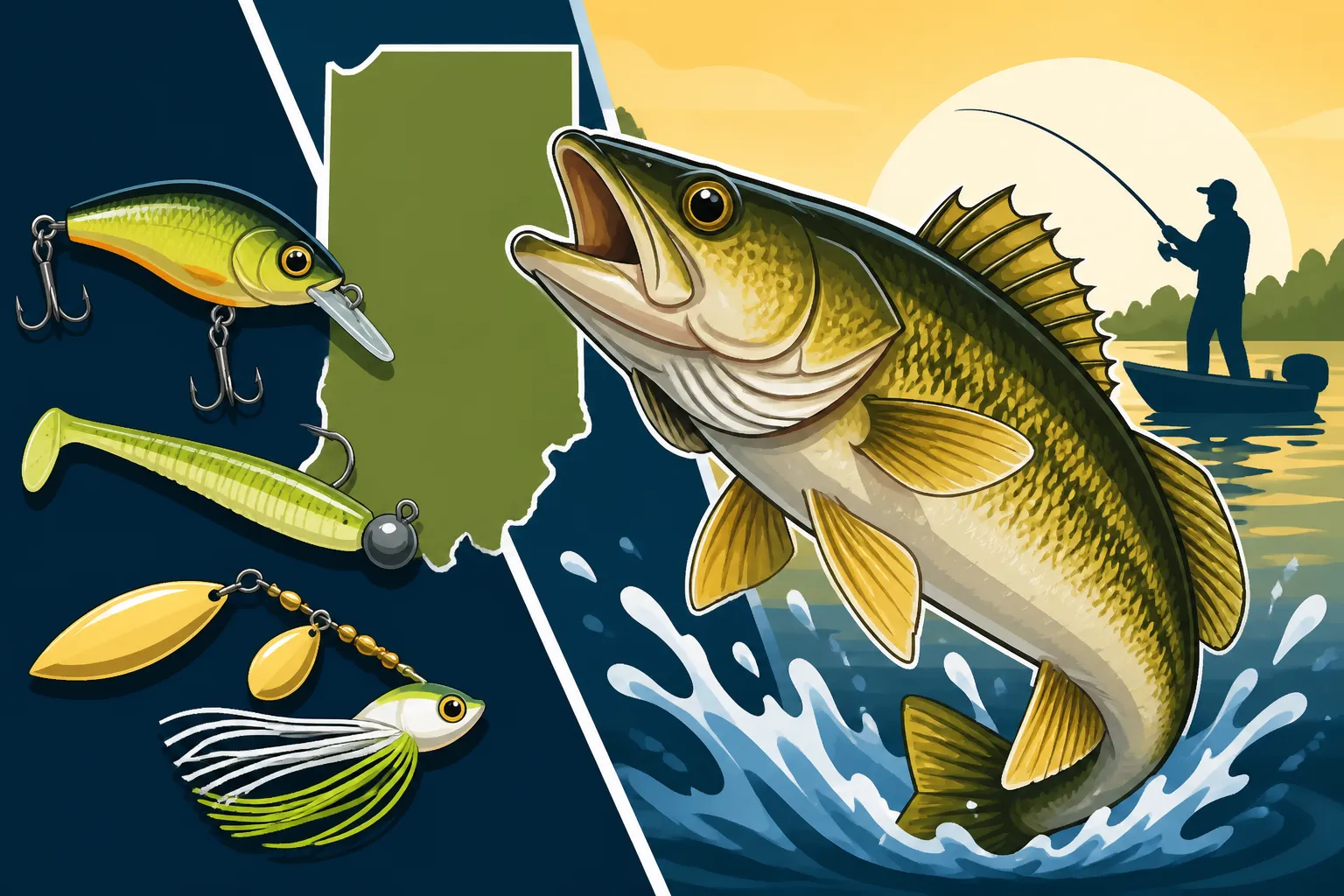
Jigs are a walleye angler's best friend, offering incredible versatility in how you present them. From subtle vertical jigging to casting and retrieving, jigs can imitate various forage and be fished at almost any depth. Standard lead-head jigs, ranging from 1/8 to 1/2 ounce, are staples. Pair them with soft plastics like paddle tails, grub tails, or minnow imitators. The color of your jig and plastic can be crucial; popular choices include chartreuse, pearl, motor oil, and various greens.
Snap-jigging, pitching, and dragging jigs are all effective techniques. In colder water, a more subtle, slow presentation is often best, while in warmer water, a more aggressive jigging motion can provoke strikes. Don't forget about hair jigs or marabou jigs, which offer a natural breathing action in the water that can tempt even the most finicky walleye. When the bite is tough, a small jig tipped with a piece of live bait, like a minnow head or a piece of nightcrawler, can often turn the tide.
Crankbaits: Covering Water and Triggering Reaction Bites
Crankbaits are fantastic for covering a lot of water quickly, especially when trolling or casting along breaks and flats. They come in various shapes, sizes, and diving depths, imitating baitfish and triggering aggressive reaction strikes. Shallow-diving crankbaits work well in shallower areas or over weed tops, while deep-diving models can reach walleye holding in 15-30 feet of water or more.
When choosing crankbaits, consider the water clarity and light conditions. Brighter, more aggressive colors (like firetiger or hot pink) might work well in murky water or on overcast days, while more natural patterns (like perch or shad) are often better in clear water. Trolling speed is also critical; experiment to find the speed that makes your crankbait run true and triggers bites. Brands like Rapala, Berkley, and Bandit offer a wide array of effective walleye crankbaits that you can find at any well-stocked tackle shop or online.
Spoons: Flash and Vibration for Aggressive Fish
Spoons, both casting and jigging varieties, are another excellent tool for walleye, especially when they are actively feeding or you're trying to provoke a reaction strike. Casting spoons, retrieved with a stop-and-go motion, can imitate a wounded baitfish, while vertical jigging spoons are devastating when walleye are schooled up in deeper water. The flash and vibration of a spoon can call fish in from a distance, particularly in stained or murky water.
Look for spoons in silver, gold, or brass finishes, often with colored accents like orange or chartreuse. Common sizes range from 1/4 ounce to 3/4 ounce, depending on the depth and current you're fishing. They can be incredibly effective for ice fishing as well, where their erratic fall and shimmer are irresistible to walleye.
Here's a quick look at some popular walleye baits and lures:
| Bait/Lure Type | Best Use Cases | Key Benefits | Optimal Conditions |
|---|---|---|---|
| Minnows | Jigging, slip-bobber, spinner rigs | Natural movement & scent, highly effective | All conditions, especially slow bites |
| Nightcrawlers | Crawler harnesses, slip-bobber, bottom bouncing | Strong scent trail, versatile presentation | Covering water, warm water, active fish |
| Leeches | Slip-bobber, plain hooks | Long-lasting, subtle movement, natural | Clear water, subtle presentations, finicky fish |
| Jig + Soft Plastic | Vertical jigging, casting, dragging | Versatile, imitates various forage, many colors | All depths, changing presentations, reaction bites |
| Crankbaits | Trolling, casting along structure | Covers water, triggers aggressive strikes, deep diving | Active fish, searching for schools, varying depths |
| Jigging Spoons | Vertical jigging, ice fishing | Flash & vibration, provokes reaction, deep water | Deep water, schooled fish, cold water |
Terminal Tackle: The Small Details That Matter
Often overlooked, terminal tackle—the bits and pieces at the end of your line—can make or break your walleye fishing success. Hooks, weights, swivels, and line all play critical roles in presenting your bait naturally and securely.
Fishing Line: The Unseen Connection
Choosing the right fishing line is paramount. Monofilament, fluorocarbon, and braided lines each have distinct advantages for walleye fishing.
- Monofilament: Affordable, good stretch (forgiving on rod load), and easy to tie knots. It's a solid all-around choice, especially for casting crankbaits or slip-bobber fishing where some stretch can be beneficial. Typical strength for walleye is 6-10 lb test.
- Fluorocarbon: Nearly invisible underwater, excellent abrasion resistance, and very low stretch, providing great sensitivity. It sinks faster than mono, which can be an advantage when trying to get lures down quickly. Many anglers use a fluorocarbon leader with braided mainline.
- Braided Line: Incredibly strong for its diameter, zero stretch for maximum sensitivity and powerful hooksets, and excellent for cutting through weeds. The main downside is its visibility, which is why most anglers pair it with a fluorocarbon leader (4-8 lb test) in clear water. Braided line in 10-20 lb test is common as a main line.
For general jigging, a braided mainline with a fluorocarbon leader is a fantastic combination, offering sensitivity and stealth. For trolling, a good quality monofilament or fluorocarbon main line in 10-14 lb test often works well due to its forgiving stretch, especially if you're using planer boards.
Hooks, Sinkers, and Swivels: The Supporting Cast
The size and style of your hooks are crucial. For live bait, you'll want sharp, fine-wire hooks that don't inhibit the bait's natural movement. Aberdeen hooks (size 4-8) are popular for minnows and leeches, while snelled hooks (often pre-tied on crawler harnesses) are perfect for nightcrawlers. For jigs, ensure the hook gap is sufficient for a good hookset, especially when using bulkier plastics.
Weights (sinkers) need to be chosen based on depth, current, and presentation. Bottom bouncers are excellent for covering ground and keeping live bait near the bottom without snagging excessively. Bullet weights, split shots, and egg sinkers are used in various live bait rigs and for adjusting the depth of bobber presentations. Always use the lightest weight possible to maintain contact with the bottom or achieve your desired depth, as heavy weights can make your bait presentation unnatural.
Swivels, particularly ball-bearing swivels, are essential when using baits that spin, like spinner rigs or some crankbaits. They prevent line twist, which can weaken your line and cause tangles. Using a small, high-quality swivel between your main line and leader also allows for quick leader changes and protects your mainline from abrasive structures.
Planning for the Unpredictable: Tools and Accessories
Beyond the basics, a few essential accessories can make your walleye fishing trips much more enjoyable and successful. A good pair of pliers or a hook remover is vital for safely unhooking walleye, which often swallow baits deep or have sharp teeth. A fish gripper can help handle slippery fish without harming them or getting spiked by their dorsal fins.
Having a selection of leader materials (fluorocarbon in various strengths) and a small tackle box stocked with extra hooks, swivels, and sinkers is always a good idea. Consider a net with a rubberized mesh to protect the fish's slime coat if you plan on catch and release, or if you simply want to make landing a big walleye easier. These small additions, readily available at places like Bass Pro Shops or on Amazon, can prevent frustrating moments on the water.
Walleye Tackle for Different Seasons and Locations
As we touched upon earlier, walleye tackle isn't a one-size-fits-all solution. The best approach changes depending on the season and the specific type of water you're fishing in Indiana. Tailoring your tackle to these conditions significantly increases your chances of success.
Spring: Post-Spawn and Shallows
Spring is a time of transition. Post-spawn walleye can be found in shallower waters, especially near spawning areas, as they recover and start to feed more actively. This is an excellent time for casting jigs tipped with minnows or soft plastics into shallow flats, rocky points, or around emerging weed beds. A sensitive medium-light spinning rod is perfect for feeling these subtle bites.
Slip-bobber fishing with leeches or minnows is also incredibly effective in spring, allowing you to present bait precisely over weed edges or submerged timber where walleye might be ambushing prey. Crankbaits that run shallow to medium depths can also produce, especially on warmer days when fish are more aggressive. Focus on areas with good cover or structure, as walleye will often seek shelter and ambush points here.
Summer: Deep Water and Trolling Tactics
As Indiana's waters warm up in summer, walleye generally move to deeper, cooler sections of lakes and reservoirs. This is prime time for open-water trolling with deep-diving crankbaits or crawler harnesses behind bottom bouncers. Using a baitcasting setup for trolling allows for better control over line counter reels, which are crucial for replicating successful depth and distance. Walleye Trolling Techniques can offer more insights into this method.
Vertical jigging with heavier jigs or jigging spoons over deep humps, structural breaks, or around offshore rock piles can also be very productive. Look for schools of baitfish on your fish finder, as walleye will often be nearby. Early mornings, evenings, and overcast days are typically the most productive times, as walleye might venture shallower or remain higher in the water column when light conditions are lower.
Fall: Aggressive Feeding and Reaction Bites
Fall is often considered one of the best times for walleye fishing, as they gorge themselves in preparation for winter. This aggression means they are more likely to strike a variety of lures. Casting and retrieving crankbaits or larger jigs with soft plastics along drop-offs, points, and humps can be highly effective. The walleye will be actively chasing baitfish, so lures that mimic this behavior are key.
Vertical jigging remains strong, particularly as water temperatures continue to drop. On some of the larger glacial lakes, muskie and walleye can often be found in similar areas during the fall, so don't be surprised if you hook into a different toothy critter! Pay attention to the water temperature; as it cools, walleye can become more concentrated in specific areas, making them easier to target.
Winter: Ice Fishing and Slow Presentations
For those brave enough to face Indiana's winter, ice fishing for walleye is a rewarding experience, particularly in the northern lakes that reliably freeze. Small jigs tipped with minnow heads or wax worms, or vertical jigging spoons, are the go-to baits. A sensitive ice fishing rod with a light action is crucial for detecting the often very subtle bites of cold-water walleye.
Electronic fish finders, often called flasher units, are invaluable for ice fishing, showing you fish activity beneath the ice in real-time. Walleye in winter often hug the bottom, so maintaining a presentation within a foot or two of the lakebed is usually most effective. Patience is key, as bites can be few and far between, but the reward of a fresh walleye on a cold day is worth the effort.
Ultimately, having a well-rounded tackle box that accommodates the diverse walleye fishing opportunities in Indiana will serve you best. Don't be afraid to experiment, and always keep an eye on local fishing reports and conditions. Indiana Walleye Fishing: A Complete Guide will offer a broader overview of walleye angling in the state.
Disclaimer
This article is for general informational purposes only and does not constitute professional advice. Laws, prices and regulations vary by location and change over time. Consult a qualified professional for guidance on your specific situation.