Walleye Identification: Olive-Gold Color and White-Tipped Tail
Have you ever reeled in a fish, heart pounding, only to stare at it and wonder, "What is this thing?" It's a common frustration, especially when you're trying to identify a species like the elusive walleye in Indiana. With so many similar-looking fish swimming in our waters, it can be tough to distinguish them. This guide is here to help you confidently identify walleye by focusing on their distinctive olive-gold color and that unmistakable white tip on their tail.
The Distinctive Appearance of an Indiana Walleye
When you're out on the water, whether it's a tranquil morning on a quiet lake or battling the currents of a major river, knowing your target species is half the battle. Walleye are highly prized sport fish in Indiana, known for their delicious fillets and challenging fight. But before you even think about putting one in the cooler, you need to be absolutely certain you've got a walleye on your line. Their unique coloration and a specific tail marking are your best friends in the identification process.
The Signature Olive-Gold Body Color
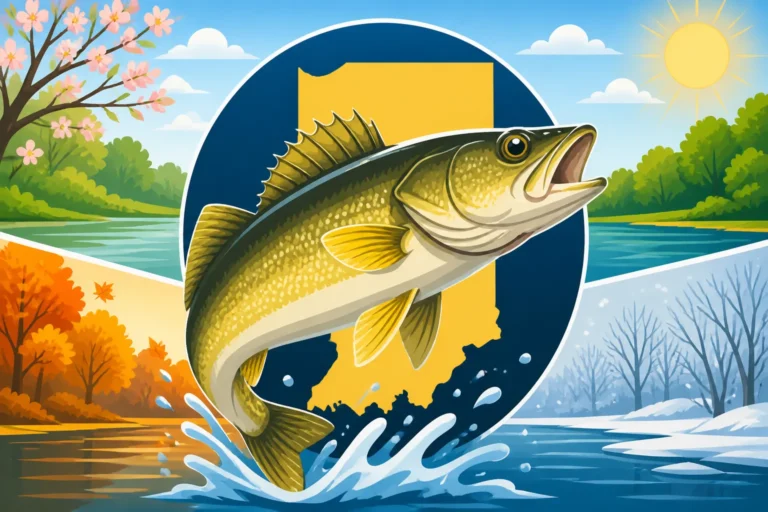
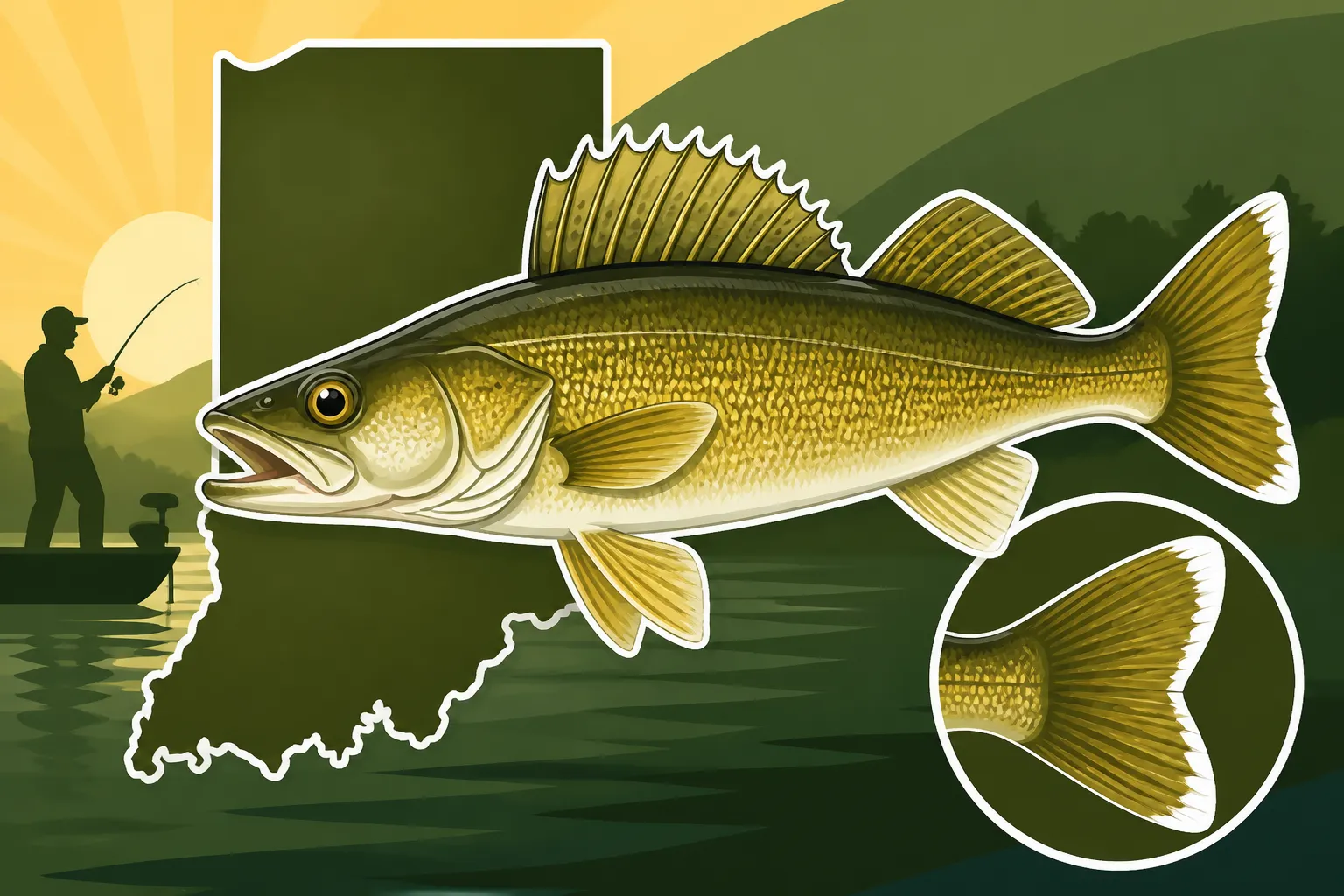
One of the first things that will strike you about an Indiana walleye is its overall body color. They typically boast a beautiful, mottled olive-gold hue on their sides, which fades to a creamier, almost white, belly. This isn't a solid, uniform color; rather, it often has darker, blotchy patterns or faint vertical bars that help them blend seamlessly into their surroundings, especially in rocky or vegetated areas. It's a fantastic camouflage, making them masters of ambush in low-light conditions.
The intensity of this olive-gold can vary quite a bit depending on the water clarity, depth, and even the specific lake or river they call home. Walleye from murkier, tannin-stained waters might appear darker, with a richer brown or bronze tint, while those from clearer lakes could have a more pronounced golden sheen. However, that underlying olive-gold characteristic is almost always present, giving them a distinct appearance compared to many other freshwater species. It's a hue that truly makes them stand out, even when they're trying to disappear.
Think of it like this: if you see a fish that looks like it's been painted with earthy, metallic tones, you're probably on the right track. This color scheme is an evolutionary advantage, allowing them to lurk in the shadows and ambush prey effectively. It's truly a sight to behold when you pull one of these beauties from the depths, glistening in the sun with its signature gold.
The White Tip on the Lower Tail Fin
Now, let's talk about the ultimate "tell" for an Indiana walleye: that brilliant, stark white tip on the lower lobe of its tail fin. This single feature is arguably the most consistent and reliable identifier for a true walleye, distinguishing it from many similar species. It's not a faded patch or a slightly lighter shade; it's a prominent, almost painted-on, white patch that contrasts sharply with the darker, often mottled, coloration of the rest of the caudal fin.
Once you know to look for it, this white tip becomes incredibly obvious. It's a feature that rarely varies, regardless of the fish's age, sex, or habitat. Even in low light, or if the fish is covered in a bit of mud from the bottom, that white tip often shines through, giving you an immediate clue. This is why many experienced anglers will tell you to always check the tail first when you're unsure if you've caught a walleye. It's like a secret handshake among fish.
Imagine you're fishing on Lake Monroe, and you reel in a fish you suspect might be a walleye. Before you even get it fully out of the water, a quick glance at its tail is all you need. If you see that crisp white lower tip, you can breathe a sigh of relief – you've likely got yourself a walleye. This feature is so crucial that if a fish lacks it, even if it has some walleye-like characteristics, it's probably something else entirely. It's a simple, unmistakable mark that makes identification a snap, especially for those who are still learning the ropes of Indiana Walleye Fishing: A Complete Guide.
Beyond Color and Tail: Other Key Walleye Features
While the olive-gold body and white-tipped tail are incredibly helpful, there are a few other anatomical features that, when observed together, cement the identification of a walleye. These characteristics help paint a fuller picture of the fish and further reduce any confusion with look-alike species in Indiana's diverse waters. Knowing these additional details can give you an even greater advantage in the field.
Dorsal Fins: Spiny vs. Soft
Walleye possess two distinct dorsal fins on their back, and how they are structured is a crucial identification point. The first, located towards the head, is a prominent spiny dorsal fin. As its name suggests, it's supported by several sharp, rigid spines. If you run your finger lightly over it (carefully, as those spines can be quite pokey!), you'll feel the individual spines standing erect. This spiny fin is typically larger and more triangular in shape.
Just behind this spiny fin, separated by a small gap, is the second dorsal fin, which is soft-rayed. This fin is composed of flexible, branched rays rather than stiff spines. It typically appears softer, more rounded, and sometimes a bit smaller than the spiny dorsal fin. The combination of a distinct spiny dorsal followed by a separate, soft-rayed dorsal is a hallmark of the walleye family. Many other fish might have only one dorsal fin, or their dorsal fins might be connected, but the walleye's separation and distinct textures are key.
This dual-dorsal characteristic is a strong indicator. For instance, some panfish like bluegill might have a spiny and soft-rayed section, but they are usually connected as one continuous fin. The clear separation in walleye is what sets them apart. This isn't just about identification; it's also a good reminder to handle walleye carefully, especially around that spiny dorsal fin, to avoid getting poked!
Mouth, Teeth, and Eye Placement
Take a look at a walleye's head, and you'll notice several telling features. First, their mouth is notably large and extends back to at least the middle of their eye, often further. Inside, they sport an impressive array of sharp, needle-like teeth. These aren't just for show; they're perfectly adapted for grasping slippery prey like minnows and other small fish. When you feel a walleye strike, that powerful bite is often the work of these formidable choppers.
Perhaps the most iconic feature of a walleye's head, and the origin of its name, are its eyes. They are relatively large and have a distinct, milky or cloudy appearance, often described as "glassy." This unique look is due to a reflective layer called the tapetum lucidum, which helps them see incredibly well in low-light conditions. This adaptation makes them highly effective nocturnal predators, perfectly suited for hunting in dim light or turbid waters. It's why many anglers find success fishing for walleye at dawn, dusk, or even after dark. Do Walleye Bite at Night in Indiana Reservoirs? is a question many ask, and their eyes provide a clear answer.
The placement of their eyes is also noteworthy – they are positioned on the sides of their head, offering a wide field of vision to spot prey. Contrast this with some bottom feeders that might have eyes more dorsally (on top of the head). The large, reflective eyes are not just an identifying feature; they are a key to understanding the walleye's predatory behavior and preferred habitats. When you combine this with the olive-gold body, it all starts to click into place.
Differentiating Walleye from Look-Alikes in Indiana
Indiana's waters are home to a diverse array of fish, and some can bear a striking resemblance to the walleye, leading to confusion, especially for novice anglers. It's crucial to be able to tell them apart, not just for proper identification but also because different species often have different regulations regarding length and bag limits. Misidentification could inadvertently lead to issues with conservation officers, so let's clear up some common混淆.
Walleye vs. Saugeye: A Common Confusion
One of the most common identification challenges for Indiana anglers is distinguishing a walleye from a saugeye. Saugeye are a hybrid cross between a female walleye and a male sauger, and they are intentionally stocked in some Indiana reservoirs because they tolerate warmer, murkier water better than pure walleye. They share many physical traits with walleye, including a similar body shape and often some degree of that olive-gold coloration.
The key differences often lie in their markings, especially on the dorsal fin and lateral line. Saugeye typically have distinct dark spots or blotches on their spiny dorsal fin, which are usually absent or very faint on a walleye's dorsal fin. Additionally, saugeye often display more distinct dark blotches or saddle-like markings along their sides, especially above the lateral line, compared to the more subtle mottling of a walleye. While walleye have that crisp white tip on their lower tail fin, saugeye often have a less defined white margin, or sometimes none at all, and their tail might be more mottled or spotted throughout. Walleye vs Saugeye: How to Tell Them Apart dives deeper into this tricky comparison.
If you're fishing in a lake known for saugeye stocking, such as some of the central Indiana reservoirs, always pay extra close attention to these subtle differences. It's easy to mistake one for the other, especially when excited. Getting a good look at the dorsal fin and the presence (or absence) of a distinct white tail tip will usually give you the definitive answer. Remember, knowing the difference is important for following Walleye Minimum Length North of State Road 26 or Walleye Minimum Length South of State Road 26 in Indiana rules, as these can apply differently to saugeye in some cases.
Walleye vs. Yellow Perch: Size and Body Shape Clues
Another fish that can sometimes be mistaken for a juvenile walleye, particularly by less experienced anglers, is the yellow perch. Both are members of the perch family, share some yellow-gold tones, and have two dorsal fins. However, upon closer inspection, their differences become quite clear. Yellow perch are much smaller in general, with a more compressed, 'panfish' like body shape, while walleye are elongated and torpedo-shaped.
The most obvious visual distinction is usually the prominent vertical bars on a yellow perch's sides – typically 6 to 8 dark bars that extend from their back down to their belly. Walleye, as discussed, usually have much fainter, blotchier, or absent vertical markings. Yellow perch also typically have more vibrant, bright yellow to golden-yellow sides, often with reddish-orange lower fins, which is a stronger color than the olive-gold of a walleye. Their spiny dorsal fin is also often darker or even black-tipped, lacking the clear appearance of a walleye's.
And of course, that tell-tale white tip on the lower tail fin? You won't find that on a yellow perch. If you're comparing a small fish with vertical stripes to a picture of a walleye, you'll quickly see the disparity. Checking out guides like Walleye vs Yellow Perch: How to Tell Them Apart can provide excellent side-by-side visuals. While both are fantastic fish to catch and eat, they are distinct species that require separate identification for proper adherence to regulations.
Practical Tips for Identifying Walleye on the Water
Even with all the knowledge in the world, identifying a fish quickly while it's flopping on the bank or still in the net can be a challenge. Adrenaline is pumping, and sometimes the light isn't perfect. However, with a few practical tips and a keen eye, you can become a pro at identifying walleye in no time. The more you practice, the easier it becomes, and soon you'll be able to spot that tell-tale white tip almost instinctively.
Taking a Closer Look: What to Observe
When you land a fish you suspect might be a walleye, resist the urge to immediately remove the hook. Instead, take a moment to observe. The very first thing to look for, without a doubt, is the white tip on the lower caudal (tail) fin. This is your primary indicator. If it's there, strong and clear, you're 90% of the way to confirming it's a walleye. Next, take note of the overall body color – that signature olive-gold with faint mottling, rather than distinct bars or spots like a perch or saugeye.
Then, gently feel the dorsal fins. The front one should be spiny and rigid, distinctly separated from the softer, rayed fin behind it. Finally, if you're still unsure, observe the eyes. Are they large and milky-looking, indicative of a nocturnal predator? Also, check the mouth size and the presence of sharp teeth. Don't worry if you don't get every single detail on your first few catches. The more fish you encounter, the faster you'll be able to process these visual cues. Using a quick reference guide, perhaps one you've printed off or have on your phone, can be a great help. You might even find some excellent, laminated fish identification charts available on Amazon, perfect for a tackle box.
It's also a good idea to pay attention to where you caught the fish. Were you targeting specific areas known for walleye, perhaps deep structure or rocky points, as described in guides like Best Walleye Fishing in Indiana? Sometimes, location can offer a strong clue. But always, always double-check the physical characteristics, especially that white tail tip. It's the most reliable feature to ensure you're compliant with any specific Indiana Walleye Length Limits by Lake or Walleye Minimum Length Rule regulations for your area.
Photography for Confirmation and Bragging Rights!
In today's world, your smartphone is more than just a communication device; it's an invaluable tool for anglers. If you're ever in doubt about a fish's identity, or even if you're just proud of a catch, snap a clear photo! Make sure the fish is positioned well, with its dorsal fins clearly visible and, most importantly, that tail fin in full view. A good photo showing the white tip on the lower lobe of the tail is proof positive you landed a walleye.
These photos aren't just for your personal records or for settling debates with fishing buddies; they can also be incredibly useful for learning. You can review them later, compare them to online identification guides, or even share them with experienced anglers in local fishing groups for confirmation. Many state DNR websites also have excellent identification resources that you can cross-reference with your catch. Plus, let's be honest, a clear, well-taken photo of a beautiful olive-gold walleye with its distinctive white-tipped tail makes for fantastic bragging rights!
So, next time you're out there, remember to pause, observe, and snap a pic. It's a great way to hone your identification skills and celebrate your angling success. You can even find waterproof phone cases on Amazon to protect your device while you're taking those crucial fish selfies. Capturing these moments and learning from each catch is all part of the joy of fishing in Indiana.
Here's a quick comparison of Walleye, Saugeye, and Yellow Perch to help you keep them straight:
| Feature | Walleye | Saugeye | Yellow Perch |
|---|---|---|---|
| Body Color | Olive-gold, faint mottling/bars | Olive-gold to brown, more distinct blotches/saddles | Bright yellow-gold, pronounced dark vertical bars |
| Tail Fin | Prominent white tip on lower lobe | Less defined white tip, often mottled | No white tip, typically solid or slightly dusky |
| Dorsal Fins | Two separate, first spiny, second soft-rayed | Two separate, first spiny (often spotted), second soft-rayed | Two separate, first spiny (often dark-tipped), second soft-rayed |
| Spiny Dorsal | Usually clear, no distinct spots | Distinct dark spots/blotches | Often dusky or black-tipped |
| Eyes | Large, milky/glassy, reflective | Large, can be slightly cloudy | Normal, clear |
| Body Shape | Elongated, torpedo-like | Elongated, but slightly stockier than walleye | Compressed, 'panfish' like, deeper bodied |
| Mouth/Teeth | Large mouth, sharp teeth | Large mouth, sharp teeth | Smaller mouth, smaller teeth |
Indiana Fishing License Requirements Explained
Indiana Fishing Regulations and Bag Limits Guide
Best Fishing Spots in Indiana
Best Months for Walleye Fishing in Indiana's Glacial Lakes
Walleye Minimum Length Rule
Lake Wawasee: Indiana's Largest Natural Lake
Best Lures for Indiana Walleye Fishing
Walleye Records: How Big Can They Get?
Kosciusko and Steuben Counties: Indiana's Best Pike and Walleye Water
Walleye Trolling Techniques
Disclaimer
This article is for general informational purposes only and does not constitute professional advice. Laws, prices and regulations vary by location and change over time. Consult a qualified professional for guidance on your specific situation.