Best Months for Walleye Fishing in Indiana’s Glacial Lakes
For many anglers in Indiana, the elusive walleye holds a special place. The frustration often comes from knowing these hard-fighting, delicious fish are out there, especially in our beautiful northern glacial lakes, but figuring out when and how to consistently hook into them can feel like cracking a secret code. This comprehensive guide will peel back the mystery, helping you pinpoint the best months and strategies for successful walleye fishing in Indiana's glacial lake district.
Understanding Indiana's Glacial Lakes and Walleye Habits
Indiana's northern tier boasts a unique collection of glacial lakes, carved out by ancient ice sheets. These aren't your typical reservoirs; they're often deeper, clearer, and offer different dynamics for walleye than the murky rivers or flatter impoundments found elsewhere in the state. Understanding these characteristics and how walleye behave within them is your first step to consistent success.
Characteristics of Glacial Lakes for Walleye
When we talk about "glacial lakes" in Indiana, we're primarily referring to bodies of water in counties like Kosciusko, Steuben, Noble, and LaGrange. Think of lakes such as Lake Wawasee, Lake Maxinkuckee, James Lake, and others that dot the landscape. These lakes typically feature deeper basins, prominent structural elements like points, humps, and steep drop-offs, and often clearer water compared to some of our southern reservoirs. This clarity impacts how walleye feed and where they prefer to hold, as they are light-sensitive fish. They'll often seek out deeper water or low-light conditions to feed, making dawn, dusk, and even night fishing particularly productive. The abundance of natural forage, from baitfish like ciscoes and shiners to various invertebrates, also dictates their movements and feeding patterns throughout the year.
The geology of these lakes means fewer snags than a river, but also that fish can spread out more. Unlike a flooded timber reservoir, glacial lakes often present classic "basin" fishing scenarios, where fish suspend over deep water or relate to subtle changes in contour. This is why knowing the depth contours and bottom composition, often revealed by a good fish finder, becomes absolutely critical for locating walleye in these systems. The clear water also means longer leaders and lighter lines can be advantageous, especially during daylight hours when walleye can be particularly wary.
Walleye Behavior Throughout the Year
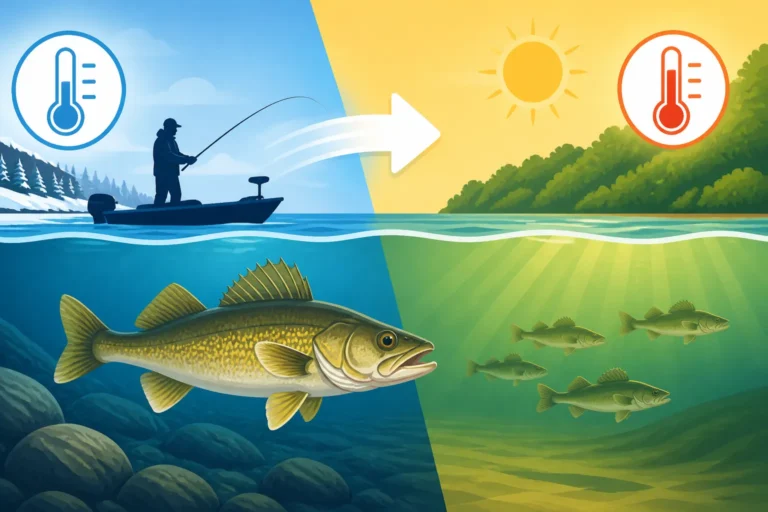
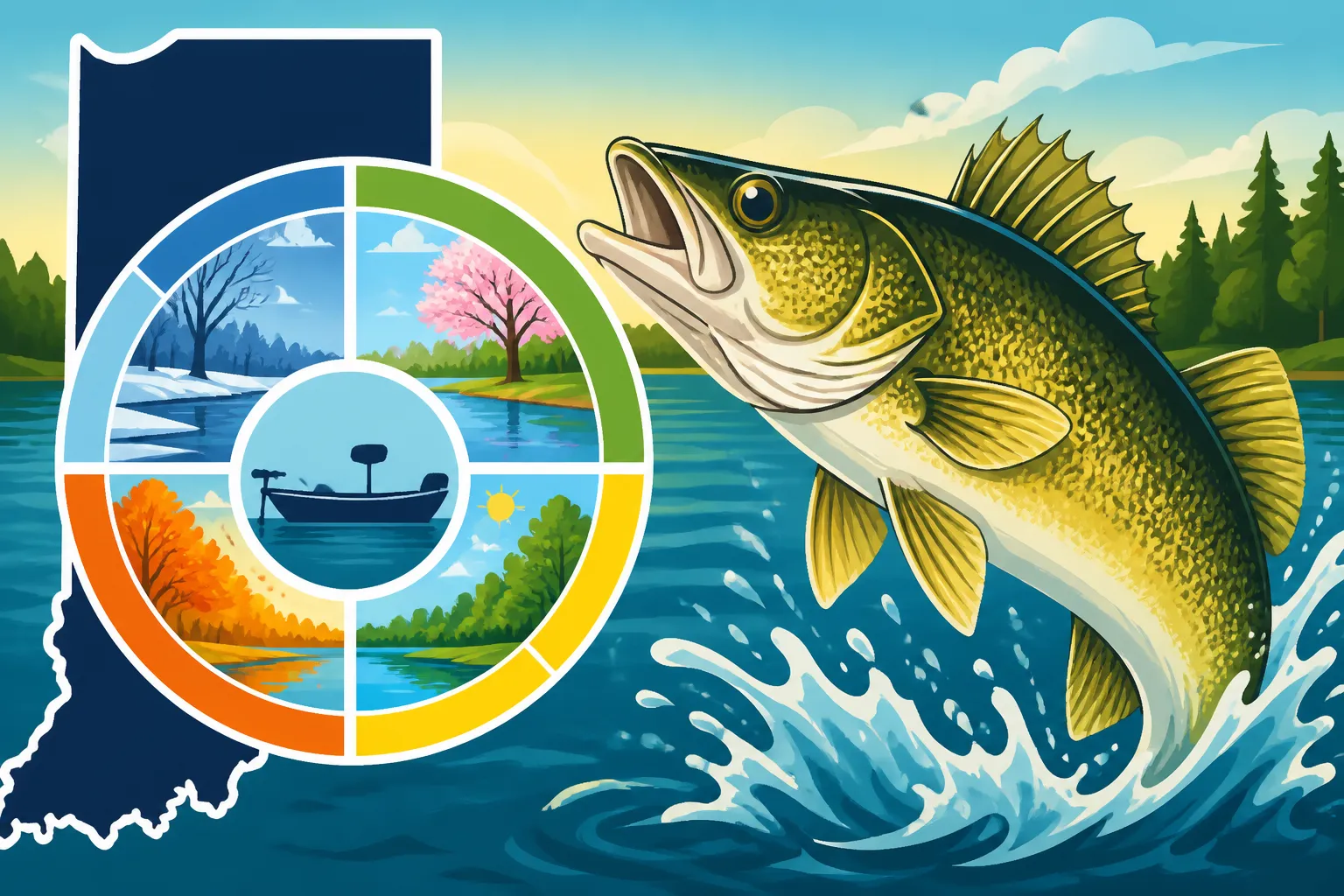
Walleye are cold-water fish, and their activity levels are directly tied to water temperature. As the seasons change, so do their preferred depths, feeding habits, and locations. They are migratory within these lakes, moving from shallow spawning grounds in early spring to deeper summer haunts, and then back towards shallower feeding areas in the fall. Understanding these predictable seasonal shifts is key to anticipating their movements.
In the dead of winter, walleye become lethargic, conserving energy in the cold water under the ice. As spring approaches, rising water temperatures trigger their spawning instincts, sending them towards rocky shorelines, reefs, and river inlets. Post-spawn, they disperse to recover and feed aggressively. Summer sees them retreat to cooler, deeper water during the day, often becoming most active during low-light periods. The fall cool-down rejuvenates them, leading to a "second summer" of feeding before winter sets in. Recognizing these patterns is more important than blindly casting; it allows you to literally follow the fish through the year.
Prime Walleye Fishing Seasons in Indiana
While walleye can be caught year-round in Indiana's glacial lakes, certain periods offer significantly better opportunities dueating to their natural lifecycle and feeding frenzies. Knowing these windows will maximize your chances of success and help you plan your trips effectively.
Spring: Pre-Spawn and Spawn Frenzy (March-April)
Spring is arguably the most anticipated time for walleye anglers in Indiana's glacial lakes, as the fish become highly active and concentrated for their annual spawn. As ice recedes and water temperatures climb into the low 40s Fahrenheit, walleye begin their pre-spawn migrations. They'll stage in areas adjacent to their spawning grounds, often deeper points or breaks leading into shallow, rocky areas. This is a fantastic time for anglers, as the fish are hungry and aggressive, bulking up for the energy-intensive spawning process.
Once water temperatures hit the mid-40s to low 50s, typically in late March through April, the walleye spawn in earnest. They'll move onto shallow reefs, rocky points, and tributary mouths. This is when you can find large numbers of fish in relatively shallow water, often just a few feet deep. However, while they are concentrated, they can be finicky during the actual spawn. After spawning, the females, especially, will be exhausted and often drop back to deeper water to recover, while males might linger longer. Targeting these recovering fish with slow presentations can be highly effective. Remember to check Indiana's Walleye Minimum Length North of State Road 26 rules, as these vary by location and time of year.
Late Spring to Early Summer: Post-Spawn Recovery and Feeding (May-June)
As the spawn winds down and water temperatures reach the mid-50s to low 60s, walleye enter a crucial post-spawn recovery phase. They've expended a tremendous amount of energy, and their primary focus shifts to recuperating and feeding heavily. This period, generally late April through June, offers some of the best walleye fishing of the entire year. Fish begin to spread out from their spawning areas but remain relatively shallow, often relating to the first significant break lines, weed edges, and submerged humps.
During this time, walleye are often found in 10-25 feet of water, actively chasing baitfish. Trolling crankbaits or presenting live bait rigs (like Lindy rigs with leeches or nightcrawlers) along contours and weed lines can be incredibly effective. The fish are less wary than in clearer summer conditions and are eager to replenish their energy stores. As the water continues to warm into June, you'll see a gradual migration towards deeper, cooler water, but they'll still make forays into shallower feeding flats during low light. For those wondering about the best approach, mastering some specific walleye trolling techniques or walleye jigging techniques will prove invaluable in these conditions.
Summer Walleye Strategies in Warmer Waters
Summer in Indiana can bring challenges for walleye anglers, as rising water temperatures push these cold-water fish to seek refuge in deeper, cooler oxygenated zones. However, with the right approach and a willingness to adapt, summer can still yield some fantastic catches, especially if you embrace the low-light hours.
Adapting to Deep Water and Night Bites (July-August)
Once the water temperatures in Indiana's glacial lakes consistently climb into the 70s Fahrenheit, typically from July through August, walleye will move to their deepest summer haunts. You'll find them concentrating around main lake points, deep humps, structural elements like submerged islands, and steep breaks that provide access to cooler water and abundant forage. During daylight hours, these fish can be challenging to tempt, often holding tight to the bottom or suspending in deeper thermoclines.
This is where the "night bite" truly shines. Walleye are highly light-sensitive, and the cover of darkness allows them to move shallower to feed more aggressively. Many seasoned anglers find that some of their best summer catches come after the sun dips below the horizon. Do Walleye Bite at Night in Indiana Reservoirs? Absolutely, and the same principle applies to our glacial lakes. Trolling shallow-running crankbaits over flats adjacent to deep water, casting stickbaits towards shorelines, or drifting live bait can be incredibly effective during these nocturnal outings. Just make sure you have the right gear – headlamps, boat lights, and maybe even some glow-in-the-dark lures can be found on Amazon.
Early Fall Transition: Schools and Structure (September)
As September rolls around, a subtle but significant change begins to happen in the glacial lakes. The days shorten, and nighttime temperatures drop, slowly cooling the surface waters. This signals the start of the "fall turnover" – a crucial event that re-oxygenates the deeper parts of the lake and often kickstarts a renewed feeding frenzy for walleye. As the water cools, walleye begin to move away from their deepest summer refuges and become more widely distributed throughout the water column.
This early fall period sees walleye forming larger schools and actively chasing baitfish in preparation for the upcoming winter. They'll often relate to classic lake structures like prominent points, main lake humps, and the edges of expansive weed beds that are still green. Trolling with crankbaits or spinner rigs at various depths to locate these roaming schools is a highly effective strategy. Pay close attention to your fish finder; once you locate a school, working that area thoroughly can result in multiple hookups. The fish are often more aggressive and less hesitant to strike than during the dog days of summer.
Fall and Winter Walleye: Cooler Water Opportunities
Don't hang up your fishing gear just because summer is over. Fall offers some of the most exciting walleye action, and for the truly dedicated, winter hard water fishing can be incredibly rewarding. These cooler seasons present unique challenges and opportunities that can lead to some trophy catches.
Late Fall Feeding Frenzy (October-November)
If you love walleye fishing, you absolutely cannot miss late fall in Indiana's glacial lakes. As water temperatures continue to plummet through October and November, falling into the 50s and then 40s, walleye go on a serious feeding binge. This is their last major opportunity to gorge themselves before the long, lean winter months. They are incredibly aggressive, actively hunting down schools of baitfish in preparation for winter.
During this time, walleye will often move back to shallower areas, particularly flats adjacent to deep water, rock piles, and submerged humps where baitfish are congregating. They are less sensitive to light now, making daytime fishing much more productive than in summer. Trolling large crankbaits, jigging spoons, or even casting swimbaits are all excellent tactics. This is often when you catch the biggest fish of the year, as they are at their heaviest. Many anglers consider this period to be some of the Best Walleye Fishing in Indiana, offering both numbers and size.
Ice Fishing for Walleye: Patience and Precision (December-February)
For those who don't mind bundling up, ice fishing for walleye in Indiana's glacial lakes from December through February can be a truly rewarding experience. Once safe ice forms, walleye settle into predictable winter patterns. They become less active but can still be tempted with the right presentation and a lot of patience. They typically hold in deeper basin areas, often near humps, points, or sudden depth changes, where they can ambush passing prey.
The key to ice fishing for walleye is stealth and a subtle presentation. Small jigs tipped with minnows or plastics, spoon jigs, and tip-ups rigged with live bait (shiners or fathead minnows) are popular choices. Focus your efforts during low-light hours – dawn and dusk – as this is when walleye are most likely to feed under the ice. Drifting a live minnow just off the bottom or gently jigging a spoon can often entice a strike. Make sure to stay mobile if necessary, drilling multiple holes to locate active fish. Always prioritize safety on the ice, checking thickness before venturing out.
Essential Gear and Techniques for Glacial Lake Walleye
Having the right equipment and knowing how to use it effectively makes all the difference when targeting walleye in Indiana's glacial lakes. These fish can be finicky, and a refined approach is often necessary for consistent success.
Recommended Rods, Reels, and Lines
When it comes to walleye, having a sensitive setup is paramount. Walleye bites can be incredibly subtle, often feeling like a light tap or just added weight on your line. For jigging and casting, a medium-light to medium power spinning rod, around 6'6" to 7' in length, with a fast action tip is ideal. This combination allows for long casts, good hook-setting power, and the sensitivity needed to detect those faint bites. Match it with a quality spinning reel in the 2000-3000 size range, like those often found on Amazon, which offers a smooth drag and good line capacity.
For line, 6-10 lb test monofilament or fluorocarbon is a solid choice for sensitivity and invisibility in clearer glacial waters. However, many anglers prefer a low-stretch braided line (10-15 lb test) for its superior sensitivity and strength, often adding a 6-10 foot fluorocarbon leader (6-10 lb test) for stealth. For trolling, a medium-action casting or spinning rod, around 7-9 feet long, paired with a line counter reel is often preferred to accurately present lures at specific depths. Consider checking out the Best Reels for Walleye Fishing on Indiana Lakes for more detailed recommendations.
Top Baits and Lures by Season
The baits and lures that work best for walleye often change with the seasons and water temperatures.
- Spring (Pre-spawn & Spawn):
- Live Bait: Large shiner minnows, fathead minnows, or leeches presented on a jig head or a slip bobber rig are incredibly effective.
- Lures: Shallow-running crankbaits, lipless crankbaits, and blade baits worked slowly over rocky areas. Small jigs tipped with soft plastics or live minnows.
- Late Spring/Early Summer (Post-spawn):
- Live Bait: Leeches and nightcrawlers on Lindy rigs or bottom bouncers, trolled or drifted slowly.
- Lures: Medium-diving crankbaits (like Rapala Shad Raps or Berkley Flicker Shads) trolled along weed lines and drop-offs. Spinner rigs with nightcrawlers behind bottom bouncers are also excellent.
- Summer (Deep Water/Night):
- Live Bait: Nightcrawlers or large minnows on bottom bouncers or vertical jigged in deep water.
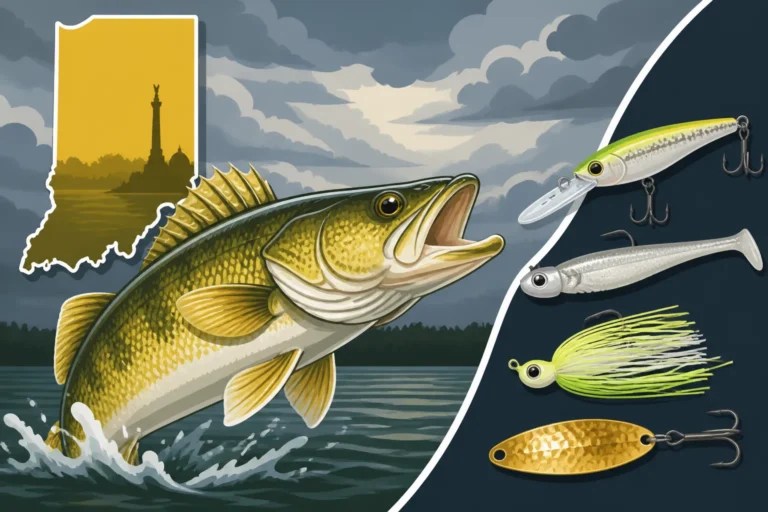
- Lures: Deep-diving crankbaits for trolling, especially at night. Vertical jigging spoons or heavy jigs with soft plastics (like a Berkley Gulp! Minnow) for suspended fish. Shallow-running stickbaits cast towards shore at night.
- Fall (Feeding Frenzy):
- Live Bait: Large shiner minnows or suckers on a quick-strike rig or under a bobber.
- Lures: Larger crankbaits (deep and shallow runners), jerkbaits, large jigs with soft plastics, and jigging spoons. The fish are aggressive, so don't be afraid to use bigger presentations.
- Winter (Ice Fishing):
- Live Bait: Small shiner minnows or fathead minnows on tip-ups or jigging spoons.
- Lures: Small jigging spoons (like a Northland Forage Minnow Spoon) tipped with a minnow head or waxworm. Small vertical jigs with plastics.
Always have a variety on hand, and don't be afraid to experiment to see what the walleye are keying in on. The Best Lures for Indiana Walleye Fishing often vary season by season, so adaptability is key.
Navigating Walleye Length Limits
Understanding Indiana's fishing regulations is absolutely critical, especially concerning walleye length limits. These regulations are designed to protect the fishery and ensure healthy populations for future generations. For most of Indiana's waters north of State Road 26, the statewide walleye minimum length is 16 inches. However, there are significant exceptions that you must be aware of, especially when fishing our glacial lakes.
Lakes like Bass Lake, Wolf Lake, and Lake George, for example, have different Walleye Length Exceptions at Bass Lake, Wolf Lake, and Lake George. Always consult the current Indiana Fishing Guide published by the DNR before heading out, or check their website. Ignoring these rules can lead to hefty fines and confiscation of your catch. When you're fishing, a reliable measuring board or tape is an essential piece of gear, easily found on Amazon or at local tackle shops. Know your Indiana Walleye Size Limits: What You Need to Know before your first cast to avoid any penalties.
Local Hotspots and Considerations
Knowing the general seasonal patterns is a huge step, but applying that knowledge to specific bodies of water will truly elevate your walleye game. Indiana's glacial lakes offer diverse environments, and understanding which ones are known for walleye, along with environmental factors, will increase your success rate.
Key Glacial Lakes for Walleye Fishing
When it comes to chasing walleye in Indiana's glacial lake district, certain lakes stand out as consistent producers. These lakes often have healthy populations of both walleye and their preferred forage species, along with the deep, clear water and structural elements that walleye favor.
- Lake Wawasee (Kosciusko County): As Indiana's largest natural lake, Lake Wawasee is a prime walleye destination. It features extensive weed lines, numerous points, and significant deep water. Walleye here can be found relating to the deep main lake basin, particularly near the main lake humps and channels. Early spring and late fall are particularly good.
- James Lake (Kosciusko County): Known for its excellent muskie fishing, James Lake also holds a respectable walleye population. Its irregular shoreline, deep pockets, and abundant forage make it a great spot.
- Lake Maxinkuckee (Marshall County): This is another large, deep glacial lake with a solid reputation for walleye. Maxinkuckee offers classic walleye structure like deep points, rock bars, and sharp drop-offs.
- Clear Lake (Steuben County): True to its name, Clear Lake is one of the clearest lakes in Indiana and supports a good walleye fishery. Anglers often target its deep main basin and structural features.
- Crooked Lake (Steuben County): Part of a chain of lakes, Crooked Lake offers diverse habitat and is a consistent producer for walleye, especially during the colder months.
Many of these lakes, along with others in the region, are highlighted in guides like Kosciusko and Steuben Counties: Indiana's Best Pike and Walleye Water. These areas are truly the heart of Indiana's Glacial Lake District: Home to Muskie, Pike, and Walleye. Researching specific lake maps and contour charts for these bodies of water will give you an even greater edge.
Environmental Factors and Best Practices
Beyond the seasonal patterns and specific lakes, a few environmental factors consistently influence walleye activity, and applying some best practices can significantly boost your success.
- Water Temperature: As we've discussed, water temperature is perhaps the single most important factor. Walleye are most active in water temperatures between 50-70°F. Colder or warmer, and you'll need to adjust your depth and retrieve speed. Keep an eye on the Best Water Temperature for Walleye Fishing for detailed insights.
- Light Conditions: Walleye have excellent low-light vision, which is why dawn, dusk, and cloudy days are often prime times. On bright, sunny days, they'll retreat to deeper water or dense cover. Polarized sunglasses, like those you can find on Amazon, are crucial for spotting subtle changes in water color and depth, even in lower light conditions.
- Wind and Waves: A moderate chop on the water can actually be a good thing for walleye fishing. The chop breaks up light penetration, makes it harder for baitfish to see predators, and disorients them. This often brings walleye shallower to feed. A heavy wind, however, can make boat control and lure presentation difficult.
- Barometric Pressure: A stable or slowly falling barometric pressure often corresponds with active feeding. A rapidly rising or falling pressure can put fish off the bite.
- Slow Down: Walleye aren't generally known for chasing lures at high speeds. A slower, more deliberate presentation is usually more effective. Whether trolling, jigging, or drifting, think subtle and patient.
- Conservation: Practice catch-and-release for larger walleye, especially in areas with specific trophy regulations. These larger fish are vital for a healthy breeding population. Keep smaller, legal-sized fish for the table. Always handle fish gently, especially when releasing them.
By paying attention to these factors and combining them with your seasonal knowledge, you'll be well on your way to consistent walleye success in Indiana's fantastic glacial lakes.
Here's a quick look at prime times and techniques:
| Season | Months | Water Temperature Range | Typical Depth (feet) | Preferred Habitat | Key Techniques |
|---|---|---|---|---|---|
| Early Spring | March – Early April | 40-50°F | 5-20 | Spawning areas, rocky points, tributary mouths | Jigging minnows, slow crankbait trolling |
| Late Spring | Late April – May | 50-60°F | 10-25 | Weed edges, break lines, main lake humps | Trolling crankbaits, Lindy rigs, bottom bouncers |
| Early Summer | June | 60-70°F | 15-30 | Deeper weed lines, main lake structure | Trolling, jigging, live bait drifting |
| Mid-Summer | July – August | 70°F+ | 25-40+ (day), 5-20 (night) | Deep structure, thermocline, open basin, shallow flats (night) | Deep trolling, vertical jigging, night casting |
| Early Fall | September | 60-70°F | 15-30 | Main lake points, humps, recovering weed beds | Trolling crankbaits, jigging spoons |
| Late Fall | October – November | 40-50°F | 10-25 | Flats adjacent to deep water, rock piles | Casting large crankbaits, jigging spoons |
| Winter | December – February | 32-40°F (under ice) | 20-40 | Deep basin, humps, structure | Ice jigging, tip-ups with minnows |
Disclaimer
Fishing regulations, license requirements, and local conditions can change. Always consult the latest Indiana Department of Natural Resources (DNR) fishing guide or website before planning your trip to ensure you are aware of all current rules and regulations. This guide is for informational purposes only and does not supersede official DNR publications.