Walleye Minimum Length North of State Road 26
It can be incredibly frustrating to head out for a peaceful day of walleye fishing in northern Indiana, only to find yourself scratching your head over exactly what the legal length limits are once you've landed a good one. With different rules applying depending on where you cast your line, it’s easy to feel confused and worry about accidentally breaking a regulation. This comprehensive guide is here to untangle the complexities of walleye minimum length requirements specifically for waters north of State Road 26, empowering you to fish confidently and legally on your next Hoosier angling adventure.
Understanding Indiana's Walleye Regulations
Getting ready for a walleye trip means more than just packing your favorite lures and a trusty rod. For us dedicated anglers in Indiana, it also means making sure we're squared away on the latest regulations. It's not just about avoiding a fine; it's about being responsible stewards of our natural resources, ensuring these fantastic fish populations thrive for generations to come.
The Importance of Knowing Your Limits
There’s nothing quite like the excitement of a walleye hitting your line, feeling that distinctive fight, and finally bringing a beautiful specimen to the boat or shore. But that moment of triumph can quickly turn to anxiety if you're not absolutely sure whether your catch meets the legal length requirements. Many of us have been there, holding a fish up, eyeing it, and second-guessing ourselves, wondering if it's long enough to keep. That uncertainty can really take the shine off a successful day. Knowing the specific rules for your chosen fishing spot before you even leave the house is paramount, saving you from that on-the-water stress and preventing potential legal issues.
Beyond personal peace of mind, understanding and adhering to length limits plays a critical role in the conservation of walleye populations. These regulations are designed by the Indiana Department of Natural Resources (DNR) to protect younger fish, allowing them to reach maturity and spawn at least once, contributing to the next generation of walleye. Without these rules, overfishing of juvenile fish could quickly deplete stocks, leading to fewer and smaller fish for everyone in the future. So, when you're measuring that walleye, you're not just following a rule; you're actively participating in the health and sustainability of Indiana's fisheries.
A quick check of the regulations can genuinely save you a lot of headaches later. Imagine spending all day on the water, having a blast, only to find out at the end that the fish you kept was just shy of the minimum length. You'd have to release it, or worse, face a citation. Taking a few minutes to review the rules for Indiana Fishing Regulations and Bag Limits Guide before you head out, or even having a digital copy on your phone, ensures that every fish you legally keep is a source of pride, not worry. It's a small investment of time for a much more enjoyable and ethical fishing experience.
General Statewide Walleye Rules and the North-South Divide
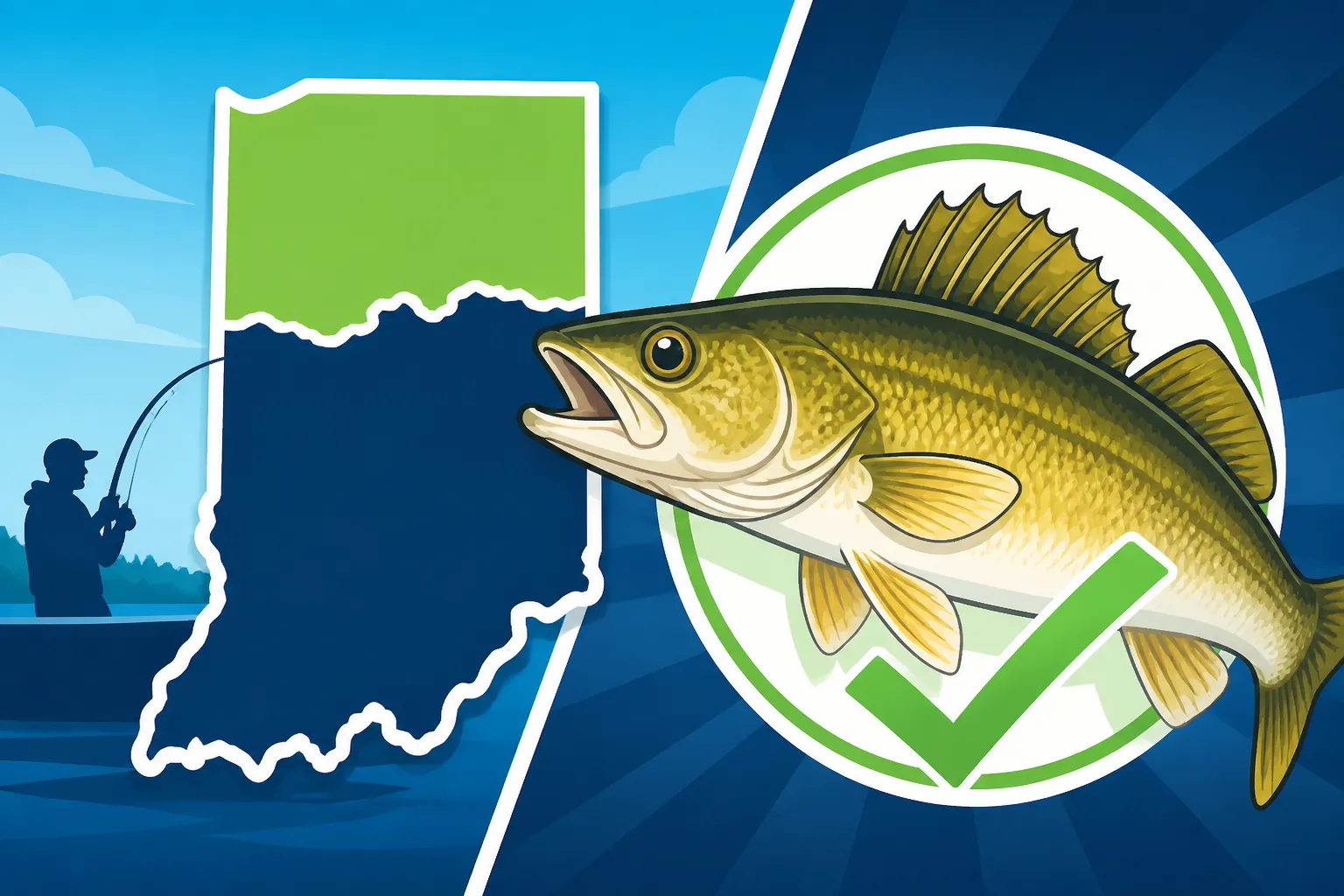
Indiana's walleye regulations, much like our diverse fishing opportunities, aren't always one-size-fits-all across the entire state. While there are some general guidelines, the DNR has implemented specific rules for different regions to better manage local fish populations. This is particularly true when it comes to length limits, where a significant distinction is made based on whether you're fishing north or south of a particular geographical marker: State Road 26. This highway, running roughly east to west through the middle of the state, essentially acts as a dividing line for walleye management.
For anglers, understanding this north-south divide is absolutely crucial. If you're accustomed to fishing in the southern part of the state, where different rules may apply (you can learn more about those specifics in our guide on Walleye Minimum Length South of State Road 26 in Indiana), you can't just assume the same regulations hold true up north. The DNR's approach is tailored to the unique characteristics of each region's waters and fish stocks, meaning what's legal south of State Road 26 might not be north of it, and vice-versa. It’s a subtle but vital difference that can make or break your day.
Therefore, before you plan your next walleye expedition, especially if you're venturing into new territory, always confirm which side of State Road 26 your target lake or river falls on. This simple step is fundamental to applying the correct set of rules and avoiding any confusion once you're on the water. Whether you're chasing the famed walleye in the northern glacial lakes or exploring river systems, knowing your geographical context is your first line of defense against inadvertent violations.
Navigating the Indiana DNR Website for Walleye Rules
The Indiana Department of Natural Resources (DNR) website is, without a doubt, the official and most authoritative source for all fishing regulations in the state. However, let's be honest, navigating government websites can sometimes feel like trying to find a needle in a haystack, especially when you're looking for a very specific detail like the walleye minimum length for a particular lake. It can be overwhelming, with sections on licenses, seasons, specific species, and water bodies, leading many anglers to feel frustrated trying to pinpoint the exact information they need. But don't despair; with a few tips, you can become a pro at finding what you need.
When you hit the DNR site, start by looking for their current "Fishing Guide" or "Regulations" section. Often, they'll have a digital publication that combines all the rules into one searchable document. Instead of just scrolling endlessly, use the search function (usually Ctrl+F on a computer or "Find on Page" on a mobile browser) and type in keywords like "walleye," "length limit," and the name of the specific lake you plan to fish, like "Wawasee" or "Tippecanoe River." This can significantly cut down on your search time and get you directly to the relevant paragraphs. You'll often find a dedicated section for "Special Regulations by Waterbody" which is where many of the exceptions live.
It's also incredibly important to remember that regulations can change from year to year. While major overhauls aren't common, minor adjustments based on population surveys, angler feedback, or environmental factors do occur. That's why relying on an old printout or a regulation you remember from three seasons ago isn't a good idea. Always aim to check the most current year's guide, typically released around the time fishing licenses go on sale each spring. This ensures you have the most up-to-date and accurate information at your fingertips, keeping you compliant and informed about Indiana Fishing Regulations and Bag Limits Guide.
Why Walleye Length Rules Vary North of State Road 26
It might seem a bit arbitrary to have different fishing rules based on an arbitrary line like State Road 26, but trust me, there's sound reasoning behind it. The Indiana DNR isn't just throwing darts at a map; these regulations are carefully crafted based on scientific data and an understanding of the diverse ecosystems present across our state.
Geographic and Ecological Factors
The landscape and ecosystems of northern Indiana are quite different from those found further south. North of State Road 26, you'll encounter many of Indiana's famous glacial lakes – deep, clear bodies of water carved out by glaciers thousands of years ago. These lakes often have different depths, water temperatures, and forage bases compared to the typically shallower, more turbid reservoirs and rivers in the state's central and southern regions. These environmental differences directly impact how walleye grow, reproduce, and thrive. For example, colder northern waters might lead to slower growth rates for certain fish species, while others might find an abundance of specific forage that allows them to reach larger sizes quickly.
Consider a deep, clear lake like Lake Wawasee compared to a shallower, riverine system. The habitat structure, the type of baitfish available, and even the amount of dissolved oxygen can vary dramatically. Walleye in these different environments will exhibit different life histories. In one lake, a walleye might take longer to reach a certain size but live longer, while in another, they might grow faster but face higher predation pressure. The DNR takes all these complex interactions into account when setting specific length limits, aiming to find the sweet spot that allows a healthy population structure in each unique body of water.
By setting specific, sometimes varying, length limits, the DNR can apply a more nuanced management strategy that recognizes the unique characteristics of each body of water. This approach is far more effective than a blanket statewide rule, as it allows biologists to protect vulnerable year classes in one lake while allowing more harvest in another where the population is robust and growing quickly. It's about optimizing the fishery for both sustainability and angler opportunity, recognizing that nature doesn't always follow a neat, uniform pattern.
Impact of Stocking and Management Programs
The Indiana DNR isn't just reacting to existing fish populations; they're actively shaping them through extensive stocking programs. Walleye, in particular, are a popular sport fish that benefit greatly from these efforts, with millions of walleye fingerlings stocked in various lakes and reservoirs across the state each year. The success of these stocking programs – how many stocked fish survive, how quickly they grow, and how well they integrate into the existing ecosystem – directly influences the regulations. For instance, if a northern lake receives a significant stocking of walleye and those fish are showing excellent growth rates, the DNR might adjust length limits to allow anglers to enjoy the fruits of those efforts while still protecting the spawning stock.
Sometimes, the DNR might intentionally stock different strains or sizes of walleye to achieve specific management goals in a particular lake. For example, some stockings might aim to establish a trophy fishery, while others might focus on creating a robust put-and-take fishery. The resulting population dynamics from these varied strategies can then necessitate different length limits. A lake managed for a trophy fishery might have a higher minimum length to protect larger, older fish, whereas a lake with a high abundance of healthy, fast-growing walleye might have a slightly lower minimum to encourage harvest and prevent overpopulation of smaller fish. It's a delicate balance, but one that's constantly being evaluated.
These localized stocking and management programs are a testament to the DNR's commitment to providing excellent fishing opportunities while ensuring long-term sustainability. They conduct regular surveys, monitor fish health, and gather angler feedback to refine their strategies. Understanding that the rules reflect these ongoing, active management efforts helps us appreciate why a lake just a few miles away might have a slightly different minimum length, even if it's still north of State Road 26. These rules are living documents, adapting to the dynamic environment of our beloved Indiana waters.
Historical Context of Regulation Changes
Fishing regulations aren't set in stone; they are dynamic tools that evolve over time, reflecting changes in fish populations, habitat, angler pressure, and scientific understanding. The current walleye length limits, including those north of State Road 26, are the result of decades of observation, research, and adaptation. Early regulations might have been more simplistic, but as fisheries science advanced and the impact of human activity became clearer, the need for more nuanced, site-specific rules emerged. For example, a particular lake might have historically faced overharvest of undersized walleye, leading the DNR to implement a more restrictive length limit to allow those fish a chance to reproduce and rebuild the population.
Angler feedback and observations also play a crucial role in these historical adjustments. Fish and wildlife agencies often conduct angler surveys, hold public meetings, and solicit comments on proposed regulation changes. If anglers consistently report a lack of quality-sized walleye in a specific northern lake, or conversely, an abundance of smaller fish that aren't reaching preferred sizes, this information can trigger a re-evaluation of the current rules. It's a collaborative process where the experiences on the water inform the decisions made by the biologists. These changes aren't arbitrary but rather data-driven responses to what's happening beneath the surface.
Understanding this historical context helps us see that today's regulations are not just random hurdles but well-considered strategies for the long-term health of our fisheries. Each change, whether it's increasing a minimum length or creating an exception for a specific lake, is typically aimed at achieving a better balance – more fish, healthier fish, and better fishing experiences for everyone. So, when you see a regulation for Indiana Walleye Length Limits by Lake, know that it comes from a history of dedicated conservation efforts and a commitment to preserving our fishing heritage.
The Specific 16-Inch Minimum and Northern Exceptions
Alright, let's get down to brass tacks and talk about the actual numbers you need to know for walleye fishing north of State Road 26. While many waters will adhere to a standard, it's those critical exceptions that can trip up even experienced anglers.
The Standard 16-Inch Walleye Minimum Length Rule
For the vast majority of lakes and rivers situated north of State Road 26 in Indiana, the standard minimum length limit for walleye is 16 inches. This means that any walleye you catch in these waters must measure at least 16 inches from the tip of its snout to the tip of its tail (often called "total length") to be legally kept. If it's shorter than that, no matter how plump or healthy it looks, it needs to go back into the water to grow bigger and contribute to the future fishery. This rule is designed to ensure that walleye have the opportunity to spawn at least once, helping to maintain a strong and self-sustaining population. This specific rule is known as 16 Inches: Indiana's Walleye Length Standard Up North.
When measuring your walleye, it's crucial to be precise. Lay the fish flat on a measuring board or against a tape measure, making sure its mouth is completely closed and the tail is pinched together to get the maximum length. Trying to measure a squirming fish while it's in your hands, or estimating by eye, is a recipe for error. You want to be confident that your fish clearly exceeds the 16-inch mark before even thinking about putting it in your cooler. Remember, an inch short is still a violation.
Practically speaking, this 16-inch rule covers many of the popular walleye destinations in northern Indiana, including well-known glacial lakes like Lake Wawasee, Webster Lake, and Sylvan Lake, as well as segments of rivers such as the Tippecanoe River. It's the default expectation, so unless you know for sure that a specific exception applies to your chosen fishing spot, assume the 16-inch minimum is in effect. Always verify with the most current DNR regulations, but this is your starting point for nearly all northern Indiana walleye excursions.
Notable Northern Indiana Lakes with Different Walleye Rules
While the 16-inch minimum is the standard, Indiana's walleye management recognizes that some lakes have unique characteristics that necessitate different rules. Ignoring these exceptions is where many anglers can inadvertently run into trouble. These special regulations are put in place for specific reasons, often tied to the unique dynamics of the fish populations in those particular bodies of water.
One of the most notable exceptions you'll find north of State Road 26 is Bass Lake in Starke County. For walleye caught here, the minimum length limit is actually 14 inches. This is a significant difference from the standard 16-inch rule and highlights how specialized fisheries management can be. The reason for this deviation at Bass Lake often relates to specific stocking strategies, observed growth rates, and the overall population structure unique to that lake. The DNR has determined that a 14-inch minimum is more appropriate for Bass Lake to optimize its walleye fishery. You can dive deeper into this specific rule in our dedicated post, Bass Lake Walleye Length Limit Is Different From the Rest of the State.
In addition to Bass Lake, two other important northern Indiana lakes also carry a 14-inch minimum length limit for walleye: Wolf Lake in Lake County and Lake George in Steuben County. Just like with Bass Lake, these exceptions are carefully considered. Wolf Lake, being partially within an urban area and sharing waters with Illinois, has its own set of management considerations. Lake George, nestled in the northeast's glacial lakes region, also has specific population dynamics that differ from its neighboring waters. It's absolutely critical to remember these specific rules. If you're heading to any of these three lakes, make a mental note – or better yet, a physical note on your tackle box – about the 14-inch minimum. Always double-check Walleye Length Exceptions at Bass Lake, Wolf Lake, and Lake George before you drop a line.
It's this nuanced approach that makes Indiana fishing regulations so effective for conservation, but also why anglers need to be vigilant. Never assume; always confirm the specific rules for your chosen body of water. A quick check can prevent a lot of disappointment or, worse, a citation.
Here's a handy table to help summarize the walleye length limits for northern Indiana:
| Body of Water (North of State Road 26) | Minimum Length Limit | Daily Bag Limit | Notes |
|---|---|---|---|
| Most Lakes & Rivers (e.g., Lake Wawasee, Tippecanoe River, Webster Lake) | 16 inches | 6 fish | This is the standard rule for the majority of northern Indiana waters. |
| Bass Lake (Starke County) | 14 inches | 6 fish | A specific exception due to unique population management. |
| Wolf Lake (Lake County) | 14 inches | 6 fish | A specific exception; shared with Illinois, has unique dynamics. |
| Lake George (Steuben County) | 14 inches | 6 fish | A specific exception in the glacial lakes region. |
Walleye Daily Bag Limits in Northern Indiana
While focusing on length limits is paramount, it's just one piece of the regulatory puzzle for walleye fishing in northern Indiana. Anglers must also adhere to daily bag limits, which dictate the maximum number of fish of a particular species that can be legally kept in a single day. You might have the longest walleye in the world, but if you have too many of them, you're still in violation.
For walleye across virtually all Indiana waters, including those north of State Road 26, the standard daily bag limit is 6 fish. This means that regardless of their length (as long as they meet the minimum length requirement for that specific body of water), you cannot keep more than six walleye in a 24-hour period. This limit is in place to prevent overharvest, ensuring that enough adult fish remain in the population to reproduce and sustain the fishery into the future. It’s an essential conservation measure that complements the length limits.
It’s crucial to remember that this bag limit is a combined effort with the length limits. You can't, for example, keep ten walleye that are all 16 inches or longer. You also can't keep six walleye if three of them are under the minimum length. Both regulations must be satisfied concurrently. So, if you're fishing a northern lake with a 16-inch minimum and a 6-fish bag limit, you must ensure each of your kept fish is at least 16 inches long, and your total count does not exceed six. Always keep these two rules in mind simultaneously for Indiana Walleye Length Limits by Lake.
Best Practices for Anglers and Staying Compliant
Being a responsible angler means more than just following the rules; it's about adopting best practices that help protect the fish and ensure great fishing for years to come. Staying compliant doesn't have to be a chore; it can be an integrated part of your fishing routine.
Accurate Measurement Techniques for Walleye
When you've just landed a walleye and need to determine if it meets the minimum length, accuracy is everything. Trying to eyeball it or use a bent tape measure can easily lead to mistakes. The most reliable method is to use a sturdy, flat measuring board, often made of plastic or aluminum, designed specifically for fish. Lay the walleye gently on the board, ensuring its mouth is closed against the bump stop at the zero mark. Then, gently pinch its tail to get the longest possible measurement to the tip of the tail. This "nose-to-tail-tip" method is standard for determining total length.
Handling the fish with care during this process is just as important as getting an accurate measurement. If you're going to release the fish because it's undersized, you want to minimize stress and injury. Wet your hands before touching the fish to protect its slime coat, which is vital for its health and disease resistance. Get your measurement quickly and efficiently, and then gently return the fish to the water. Some anglers even prefer to do this measurement while the fish is still in the net, partially submerged, to reduce handling time out of water.
Having a good, reliable measuring device is an essential piece of your fishing gear. You can find excellent, durable fish measuring boards and tapes on platforms like Amazon, offering a variety of sizes and materials. Investing in one means you'll always have a trustworthy way to confirm your catch's length, eliminating any guesswork and ensuring you're always within legal limits.
Essential Gear for Regulation Compliance
Beyond your rod, reel, and tackle, a few often-overlooked items can make all the difference in ensuring you stay compliant with Indiana's fishing regulations. First and foremost, always have access to the current year's fishing regulations. While a physical copy is great, having a digital version saved on your phone is incredibly convenient. You can quickly pull up the DNR's official guide or check their website if you're unsure about a specific rule or an exception for a particular lake. It's far better to confirm on the spot than to guess.
Next, as we discussed, a reliable fish measuring device is non-negotiable. Whether it's a dedicated bump board, a flexible measuring tape attached to your boat, or even a sticker on your cooler, ensure it's accurate and easily accessible. Many anglers keep a small, inexpensive measuring tape (you can find plenty of options on Amazon) right in their tackle box, just for this purpose. This small piece of gear removes all doubt when you're making that crucial decision about keeping or releasing a walleye.
Finally, and perhaps most obviously, ensure you always have your valid Indiana Fishing License Requirements Explained and any necessary stamps (like a Trout/Salmon Stamp if you're targeting those species) with you. This can be a physical license or a digital copy on your phone through the Access Indiana DNR portal. Without a proper license, all other compliance efforts are moot. Game wardens regularly patrol popular fishing spots, and demonstrating that you're prepared and respectful of the rules goes a long way.
Consequences of Violating Walleye Regulations
Nobody wants to have their fantastic day on the water turn sour, but ignoring or being ignorant of fishing regulations can quickly lead to unpleasant consequences. If you're caught violating walleye length or bag limits, the penalties are very real and can put a serious damper on your angling enthusiasm and your wallet. It's just not worth the risk.
Penalties for fishing violations in Indiana typically involve fines, which can range from minor to substantial depending on the severity of the offense and whether it's a repeat violation. These fines can quickly add up, easily costing you hundreds of dollars. Beyond monetary penalties, conservation officers have the authority to confiscate illegally caught fish, and in more serious or repeated cases, they can even seize your fishing gear. Imagine losing your favorite rod and reel or, worse, your boat. It’s a harsh reminder that these regulations are taken seriously.
Perhaps the most impactful consequence, especially for passionate anglers, is the potential loss of fishing privileges. Violations can lead to the suspension or revocation of your fishing license, meaning you might be prohibited from fishing in Indiana waters for a specified period. For many of us, fishing is more than a hobby; it’s a way of life, and having that taken away can be truly devastating. This is why understanding and following rules, like those detailed in What Happens If You Fish Without a License in Indiana?, is so vital. Always err on the side of caution; a fish you release today might be the trophy you catch next year, but a violation today could mean no fishing for a long time.
Disclaimer
The information provided in this guide is for general informational purposes only and is based on current Indiana fishing regulations. While we strive for accuracy, regulations can change. Always consult the official Indiana Department of Natural Resources (DNR) website or their most current fishing guide for the definitive and most up-to-date regulations before you head out to fish.