Fall Muskie Fishing Patterns in Indiana
There's a special kind of thrill that comes with chasing Indiana's muskellunge, often called the "fish of a thousand casts." For many anglers, the frustration of empty retrieves can be real, but the promise of connecting with one of these apex predators is an obsession. If you've been yearning to land that elusive toothy critter, this guide will unlock the secrets to successful fall muskie fishing patterns in Indiana, helping you maximize your chances when the water cools and the big fish start to feed aggressively.
Why Fall is Prime Time for Indiana Muskie
As the vibrant greens of summer give way to the spectacular reds, oranges, and yellows of autumn, a transformation happens beneath the surface of Indiana's lakes and rivers. This seasonal shift ushers in what many seasoned anglers consider the absolute best window for targeting muskies. It’s a time of heightened activity, bigger bites, and often, less fishing pressure, making it a prime opportunity for those willing to brave the chill.
Cooling Waters and Fish Metabolism
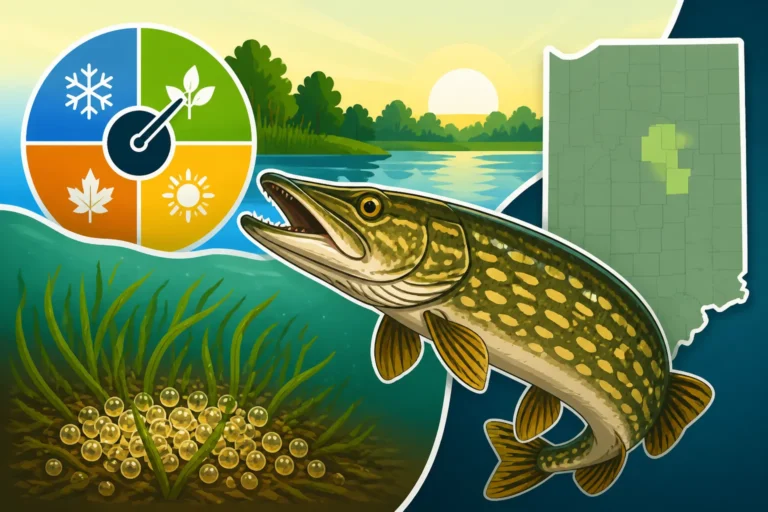
When the dog days of summer fade and the air takes on that crisp, cool bite, the water temperature in our Indiana lakes begins to drop. This isn't just a minor change; it's a fundamental trigger for muskie behavior. During the heat of summer, muskies can become somewhat lethargic, conserving energy in warmer, less oxygenated water. But as autumn progresses, that metabolic slowdown reverses. The cooler water holds more dissolved oxygen, and the muskie's metabolism actually increases, fueling a need to feed voraciously. They sense the impending winter, a period of reduced feeding opportunities, and instinctively begin to gorge themselves, packing on weight. This is often referred to as "the fall feed bag," and it's precisely what we, as muskie hunters, are hoping to capitalize on. This period can last for weeks, offering consistent opportunities if you know where to look and what to throw.
Preparing for the Hunt: Understanding Muskie Behavior
Muskies are ambush predators, pure and simple. They're intelligent, opportunistic, and incredibly powerful. In the fall, their territorial instincts can also ramp up as they stake out prime feeding grounds. You're not just looking for a fish; you're looking for a dominant predator actively seeking its next meal. This means they'll often be found near structures that allow them to conceal themselves and ambush unsuspecting baitfish. Think about the dynamics of the food chain: as smaller baitfish, like ciscoes, shad, and suckers, begin to school up and move to deeper, more stable water, the muskie will follow. Understanding this shift in their prey's behavior is crucial. They're looking for the easiest meal possible, and if you can present a large, enticing bait in the right location, you're a step closer to earning that explosive strike. It's a game of chess, anticipating their moves before they make them.
Locating Fall Muskie in Indiana's Lakes
Finding muskie isn't just about showing up at a popular lake; it's about understanding the specific patterns they follow as autumn deepens. These fish are masters of their environment, and their whereabouts are heavily dictated by water temperature, forage availability, and cover. Your success hinges on being able to read the water and identify these key areas.
Deep Water Structure and Transition Zones
As surface temperatures continue their downward trend, muskie will often begin to abandon the shallow, dense weed beds they occupied in summer. Instead, they migrate towards deeper water structures and transition zones. Think about features like steep drop-offs, underwater humps, submerged points, and rock piles. These areas provide excellent ambush points, but more importantly, they offer a consistent thermal refuge as the surface water cools rapidly. In glacial lakes like Lake Wawasee or James Lake in northern Indiana, these deep-water havens become crucial. Look for areas where a deep basin quickly rises to a shelf or a distinct weed line. These edges are muskie highways. They'll cruise these zones, moving from deeper, stable water into slightly shallower areas to feed, especially during periods of low light or warmer spells within the fall season. Understanding the lake's contour maps is absolutely essential here; it’s like having a treasure map to the muskie’s fall hunting grounds.
Forage Concentration Areas
Muskie are where the food is. It’s that simple. In the fall, baitfish such as ciscoes, shad, and suckers will often school up in massive numbers, seeking refuge from predators and moving towards deeper, more stable water. If you can locate these large schools of baitfish, you’re likely to find muskie nearby. Keep an eye on your fish finder for dense clouds of bait. These schools often congregate around those same deep-water structures we just discussed – humps, points, and sudden depth changes. In some of Indiana’s systems, particular baitfish species are the primary forage, so understanding what the muskie in your target lake are eating is a huge advantage. For instance, in lakes known for large cisco populations, muskie will key in on those. Anglers often find that muskie will hold just outside these bait balls, waiting for the opportune moment to dart in and grab a meal. It's not uncommon to see birds diving or baitfish flickering at the surface in these areas, indicating a feeding frenzy that a muskie would surely be part of. You can learn a lot about these types of areas by reading up on Indiana's Glacial Lake District: Home to Muskie, Pike, and Walleye and other regional fishing guides.
Essential Gear for Fall Muskie Anglers
Chasing muskies in the fall is not a light tackle affair. These fish are powerful, unpredictable, and demand respect, both in their fight and their size. Having the right gear isn't just about maximizing your chances; it's about ensuring a safe, efficient, and ethical catch and release. Skimping on tackle will only lead to heartbreak and lost fish.
Heavy-Duty Rods, Reels, and Line
To effectively battle a muskie, you need a robust setup capable of handling the force of these powerful fish and the often-heavy lures you’ll be throwing. For rods, think long and stiff – typically 8 to 9.5 feet in length with a heavy or extra-heavy power rating. This length provides leverage for long casts with large baits and the backbone needed to drive hooks into a muskie’s boney mouth. Brands like St. Croix, G. Loomis, or Shimano offer excellent muskie-specific rods that can withstand the abuse. Paired with this, you'll need a baitcasting reel with a high retrieve ratio (around 6.0:1 or higher) for quickly taking up slack and a strong drag system. Ambassadeur Revo Toro Beast and Daiwa Lexa are popular choices among muskie anglers for their durability and power.
As for line, braided line is the only way to go. Its zero stretch allows for immediate hooksets and direct control over the lure. Opt for 65 to 100 lb test braid, especially when casting large baits or fishing around heavy cover. This heavy line also provides peace of mind if you happen to get snagged. Always tie your braid to a heavy-duty fluorocarbon or wire leader – at least 80-130 lb test – to prevent bite-offs from those razor-sharp teeth. Never, ever fish for muskie without a quality leader; it’s an open invitation for disappointment. For a deeper dive into choosing the right setup, check out guides on Best Rods for Muskie Fishing and Wire Leaders for Muskie Fishing in Indiana's Glacial Lakes.
Top Fall Muskie Lures and Baits
The fall muskie feed bag means they're looking for substantial meals, so don't be shy about throwing large baits. This is not the time for finesse fishing. Your tackle box should be stocked with a variety of large lures designed to mimic the abundant baitfish muskies are targeting.
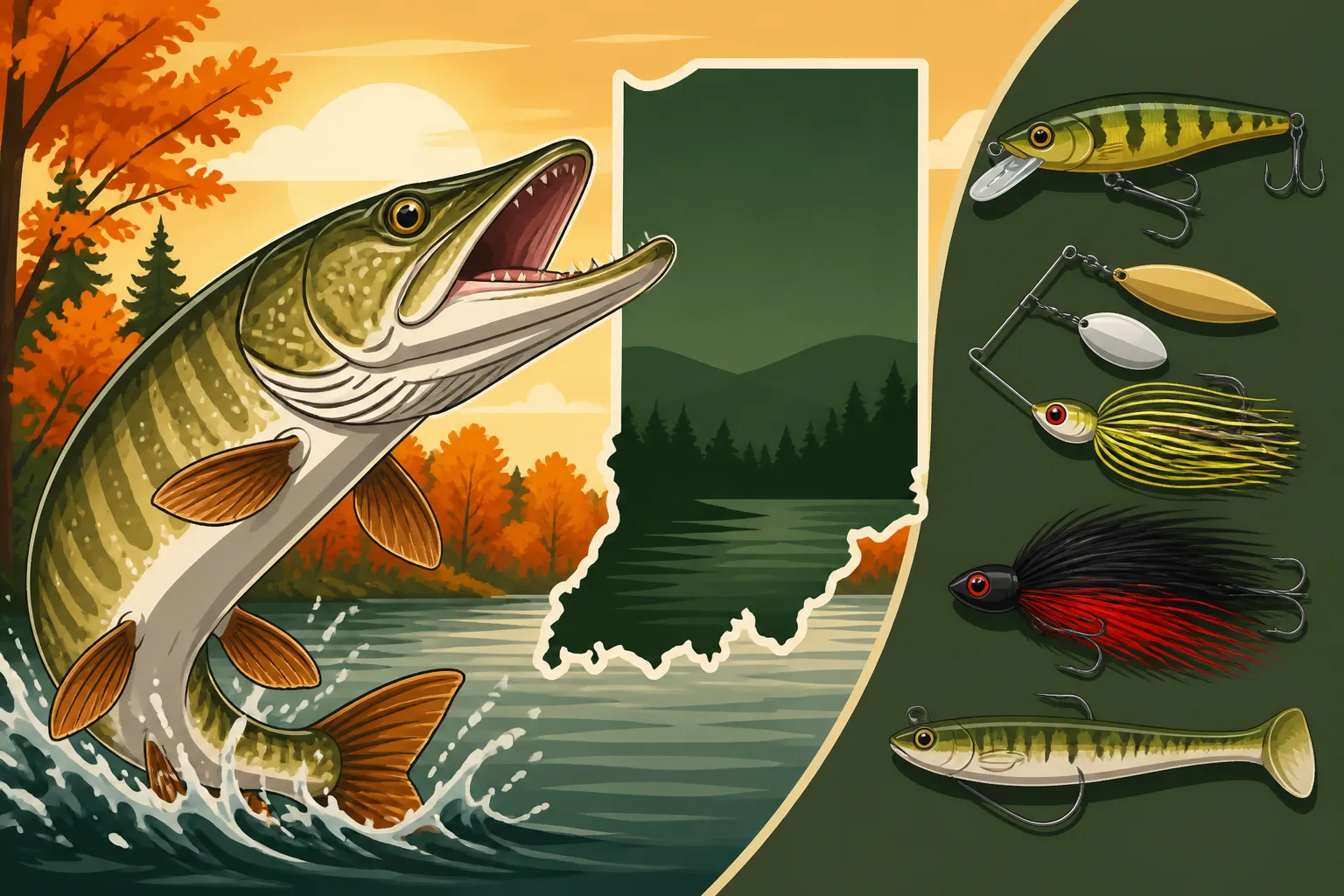
- Large Crankbaits: Deep-diving crankbaits that reach depths of 10-20+ feet are excellent for covering water and targeting muskie on deep structures. Look for baits in the 8-12 inch range, in natural baitfish colors like silver, perch, or cisco patterns. Musky Mania's Jake or Grandma lures are classic examples.
- Jerkbaits & Glide Baits: These lures allow for an erratic retrieve, mimicking a wounded baitfish – an irresistible meal for an opportunistic muskie. Suick Thrillers and Salmo Gliders are iconic choices. Work them with a series of jerks and pauses, letting them suspend briefly in the water column.
- Bucktails: While often associated with summer, large, double-bladed bucktails (like Musky Frenzy or Mepps Musky Killer) can still be incredibly effective in fall, especially on warmer days or when muskies are actively chasing bait near weed edges. The flash and vibration can trigger aggressive strikes.
- Soft Plastics & Swimbaits: Giant soft plastic baits, often 10-14 inches long, rigged on heavy jig heads or weighted hooks, can be fished slowly along the bottom or jigged vertically over deep structure. Brands like Bondy Bait Company or Medussa offer excellent options.
- Topwater (early fall): Don't completely rule out topwater in early fall, especially during warmer spells or low light conditions. Large walk-the-dog baits like the Livingston Lures Walking Boss or prop baits can draw explosive strikes from aggressive fish still willing to come up for a meal.
When it comes to colors, match the hatch if you know what the muskie are feeding on. Otherwise, natural patterns (perch, cisco, shad) are always a safe bet. Don't be afraid to experiment with brighter colors like firetiger or chartreuse on overcast days or in stained water. You can find a fantastic selection of all these muskie lures and more on Amazon, often at competitive prices with quick shipping to get you on the water faster. For even more detailed options, check out resources like Best Muskie Lures for Fall Fishing.
| Lure Type | Best Conditions / Retrieve | Common Sizes | Notes |
|---|---|---|---|
| Large Crankbaits | Trolling or casting deep structure, steady retrieve | 8-12 inches | Mimics large baitfish, gets to depth quickly |
| Jerkbaits | Erratic retrieve with pauses, colder water, active fish | 6-10 inches | Imitates wounded prey, triggers reaction strikes |
| Glide Baits | Side-to-side swimming action, slow to moderate retrieve | 6-10 inches | Highly versatile, can be worked erratically or smoothly |
| Double-Bladed Bucktails | Moderate to fast retrieve, warmer fall days, flash/vibration | #8-#10 blades | Attracts attention, good for covering water |
| Large Soft Plastics | Slow roll or jigging, deep water, colder temperatures | 10-14+ inches | Mimics bottom-dwelling prey or larger baitfish, very natural action |
Fall Muskie Fishing Techniques That Work
Muskie fishing is rarely a passive sport. It requires active engagement, persistence, and a willingness to adapt your approach. In the fall, the muskie’s aggressive feeding patterns mean you can be more direct with your presentation, but understanding how to present your bait is key.
Trolling and Casting Strategies
Both trolling and casting have their place in fall muskie fishing, and knowing when to employ each can make a significant difference.
Casting: This is often the most engaging way to fish for muskie. In the fall, focus your casting efforts on those deep-water structures and transition zones identified earlier – weed edges, drop-offs, points, and humps. Make long casts to cover as much water as possible. For jerkbaits and glide baits, use a retrieve that incorporates pauses and sharp jerks to make the lure appear wounded or erratic. With bucktails, a steady, medium-fast retrieve is usually effective, allowing the blades to create maximum flash and vibration.
The "figure-eight" technique is absolutely vital when casting for muskie, especially in the fall. As your lure approaches the boat or shore, don't just reel it in. Instead, plunge your rod tip into the water and draw a wide figure-eight pattern with your lure next to the boat. Muskies are notorious for following a lure right to the boat, and this maneuver often triggers a strike from a hesitant fish that was simply tracking your bait. Many of your strikes will come on the figure-eight, so never skip it! Mastering this move is crucial to landing that fish that follows your lure all the way to the boat, as detailed in guides like How to Figure-Eight a Muskie at the Boat.
Trolling: Trolling is an incredibly effective strategy for covering large expanses of water and consistently presenting baits at precise depths, especially in large Indiana lakes where muskie might be suspended or spread out. It's particularly useful when you're trying to locate fish or when they're holding in deeper water. Use large, deep-diving crankbaits that can reach the depths where muskie are holding. Adjust your speed to get the optimal action from your lures – typically between 2.5 and 4.5 mph. Pay close attention to your electronics to identify bait schools and muskie marks. Use planer boards to spread out your lines and cover a wider swath of water, especially in expansive areas. Trolling allows you to present multiple baits at once, increasing your odds, and can be particularly effective on those colder, blustery days when casting might be less appealing.
Adapting to Weather and Water Conditions
Fall weather in Indiana can be notoriously fickle, and successful muskie anglers learn to adapt.
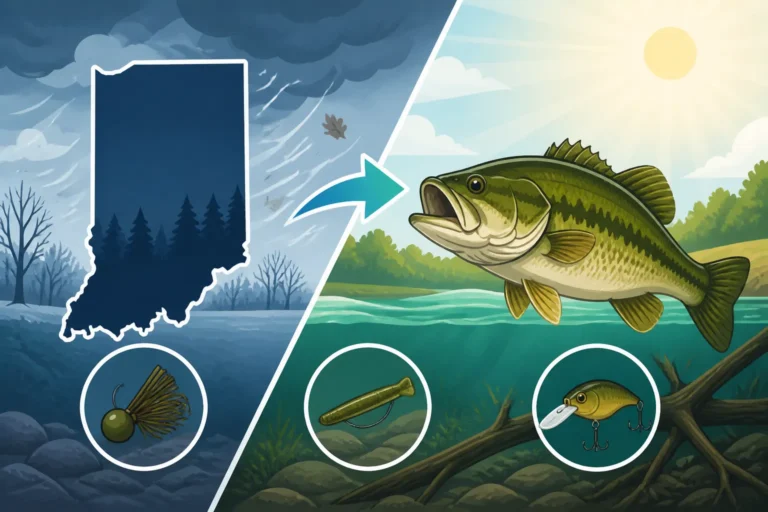
- Cold Fronts: A sudden cold front can put muskie into a funk, making them less active. Instead of chasing fast-moving baits, they might prefer a slower, more deliberate presentation. Try slowing down your retrieve, using larger soft plastics fished slowly, or jigging baits vertically over structure. Fish tend to hug the bottom and deeper cover after a cold front. For more tips on this, see Fishing Techniques After a Cold Front.
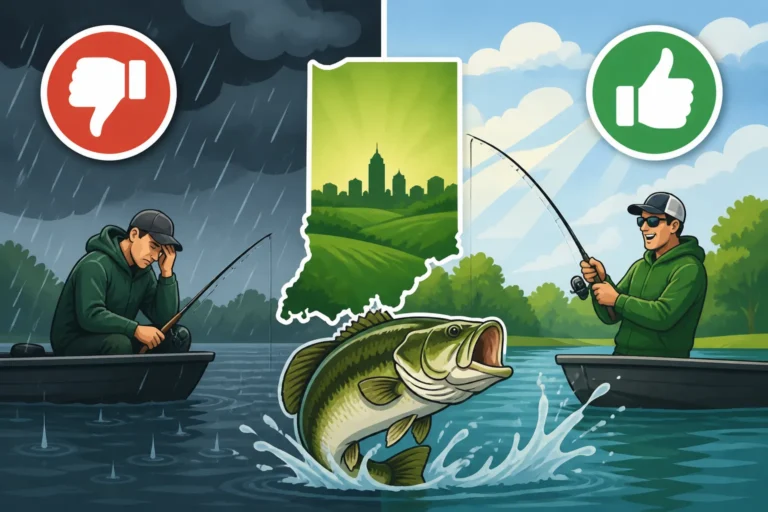
- Wind and Cloud Cover: Overcast days with a good chop on the water can be fantastic for muskie fishing. The reduced light penetrates deeper, and the disturbed surface makes it harder for muskie to distinguish between your lure and real baitfish. The wind also helps stack baitfish and pushes muskie into predictable locations. On these days, aggressive casting with bucktails or jerkbaits can be very productive.
- Water Clarity: In general, clearer water calls for more natural lure colors and patterns. In stained or turbid water, brighter, high-contrast colors like chartreuse, orange, or firetiger can be more effective as they stand out better. Always consider the conditions when selecting your bait.
Conservation and Safety for Muskie Fishing
Muskie fishing isn't just about catching; it's also deeply rooted in conservation. These are long-lived, relatively slow-growing fish, and their populations rely heavily on responsible angling practices. Additionally, fall fishing brings its own unique set of safety considerations that every angler should heed.
Catch and Release Best Practices
The mantra for muskie fishing should always be "catch, photograph, and release." Most muskie anglers view these magnificent fish as too valuable to catch only once. To ensure a healthy release, proper tools and techniques are paramount.
- Landing Net: Invest in a large, rubberized landing net specifically designed for muskie. Rubberized nets are much gentler on the fish's slime coat and reduce tangles. Get the fish in the net as quickly and efficiently as possible.
- Hook Removers and Pliers: Long-nosed pliers and a good set of jaw spreaders or hook removers are essential. Muskie have extremely sharp teeth, and reaching in with your bare hands is a recipe for injury. Remove hooks while the fish is still in the net and in the water if possible. Minimize air exposure.
- Measuring and Photography: If you must take a photo, do so quickly. Keep the fish horizontal, supporting its body fully, especially under the belly. Avoid holding it vertically by the head or gills, as this can damage its internal organs. Get your picture and release the fish promptly, allowing it time to recover in the net if necessary before swimming off strongly. The goal is to get the fish back in the water within a minute or two.
- Revival: If a muskie seems stressed, hold it gently in the water, facing into the current, until it regains its strength and can swim away on its own.
Remember, every released muskie is a future trophy. Your responsible actions contribute directly to the health of Indiana's muskie fishery.
Navigating Cold Water and Shorter Days
Fall fishing can be incredibly rewarding, but it also presents environmental challenges. Cooler air temperatures, rapidly dropping water temperatures, and shorter daylight hours demand extra caution.
- Layered Clothing: Dress in layers. The mornings can be frigid, but midday might warm up. Multiple layers allow you to adjust to changing conditions. Waterproof outer layers are a must, as rain and spray can quickly lead to hypothermia.
- Boater Safety: Always wear a life jacket, especially when water temperatures are cold. Falling into cold water can quickly lead to incapacitation. Ensure your boat is equipped with all necessary safety gear, including a whistle, throwable flotation device, and working navigation lights, as daylight fades rapidly. Check out Best Life Jackets for Indiana Boaters and Indiana Boater Safety Gear Checklist for more on what you need.
- Weather Monitoring: Keep a close eye on the weather forecast. Fall storms can blow in quickly, bringing high winds, rain, or even snow. Don't take unnecessary risks on the water.
- Plan for Less Daylight: Factor in shorter daylight hours. Give yourself ample time to get to your fishing spot and, more importantly, to get back to the ramp before dark. Fishing in the dark on unfamiliar waters, especially in cold weather, can be dangerous.
Indiana's Premier Fall Muskie Destinations
Indiana might not be the first state that comes to mind for muskie fishing, but we have some truly phenomenal waters, particularly in the northern part of the state. The fall bite in these lakes can be exceptional, offering anglers a real shot at a trophy.
Glacial Lakes in Northern Indiana
Our state’s northern tier, sculpted by ancient glaciers, boasts several fantastic muskie fisheries. These lakes often feature the deep, clear water and abundant forage that muskie thrive on.
- Lake Wawasee: As Indiana's largest natural lake, Lake Wawasee is a true gem for muskie anglers. It has a healthy population of muskie, some of which reach impressive sizes. In the fall, focus on its many deep points, submerged humps, and the expansive weed lines that transition into deeper water. Wawasee's cisco population provides a rich food source for its muskie, so imitating these baitfish with your lures is often a winning strategy. You can find more specific spots in our guide on Where to Catch Muskellunge on Lake Wawasee.
- Webster Lake: Located in Kosciusko County, Webster Lake is another highly regarded muskie lake. It’s known for producing good numbers of fish and is home to some true giants. The lake features varied depths, excellent structural elements, and a strong forage base. Look for muskie around the numerous deep weed beds, along channel edges, and near the deeper points, especially as the water cools down.
- Tippecanoe Chain of Lakes: This interconnected chain, including Tippecanoe, Webster, and James Lakes, offers an extensive network of muskie habitat. James Lake, in particular, has a reputation for holding very large muskie and has even produced the state record. These lakes provide ample opportunity for exploring different patterns and finding active fish as they move from shallower to deeper water in the fall. Anglers targeting the monsters of this region will find specific tips in our guide to Where to Catch Muskie on James Lake and general information on Best Muskie Lakes in Indiana's Glacial Lake District.
- Lake Webster: This lake, also in Kosciusko County, is a prime muskie spot within the Tippecanoe River chain. It's relatively deep and clear, with excellent structure including humps, points, and varied weed growth. In fall, muskie often stage along these deep breaks and target large baitfish. Anglers consistently report good action here, especially when using larger baits designed to imitate the lake's forage.
Other Notable Muskie Waters
While the glacial lakes are the crown jewels, other bodies of water in Indiana also offer muskie fishing opportunities.
- Skinner Lake: Also in Noble County, Skinner Lake is another productive muskie lake in the northeast. It's a smaller lake, which can make it a bit easier to pattern the fish once you locate them. Look for muskie around the deeper sections and along any significant structural changes.
- Lake Freeman and Lake Shafer (Tippecanoe River Reservoirs): While more known for other species, these reservoirs on the Tippecanoe River also hold muskie. Fishing can be more challenging here due to the flow and turbidity, but persistent anglers can be rewarded with good fish. Focus on the main river channel bends, deeper points, and areas with submerged timber or rock piles that provide cover and ambush points for these predators.
- Brookville Lake: Located in southeastern Indiana, Brookville Lake is primarily known for its walleye and striped bass, but it also has a muskie population. These fish tend to be fewer in number compared to the northern glacial lakes, but they can grow quite large. Targeting them often means focusing on the lake's deeper, clearer sections, particularly around the standing timber and main lake points. Patience and persistence are key when pursuing muskie in these more diverse fisheries.
Remember, the thrill of muskie fishing is as much about the hunt as it is the catch. These fish challenge you, and that's precisely why we love them. The fall, with its cooler temperatures and aggressive feeding patterns, offers one of the best windows of opportunity to meet that challenge head-on.
Disclaimer
Fishing conditions and regulations in Indiana can change. Always consult the latest Indiana Department of Natural Resources (DNR) fishing guide before heading out on the water to ensure you are aware of all current rules, bag limits, and licensing requirements. This information is provided for general guidance and informational purposes only.