Best Water Temperature for Walleye Fishing
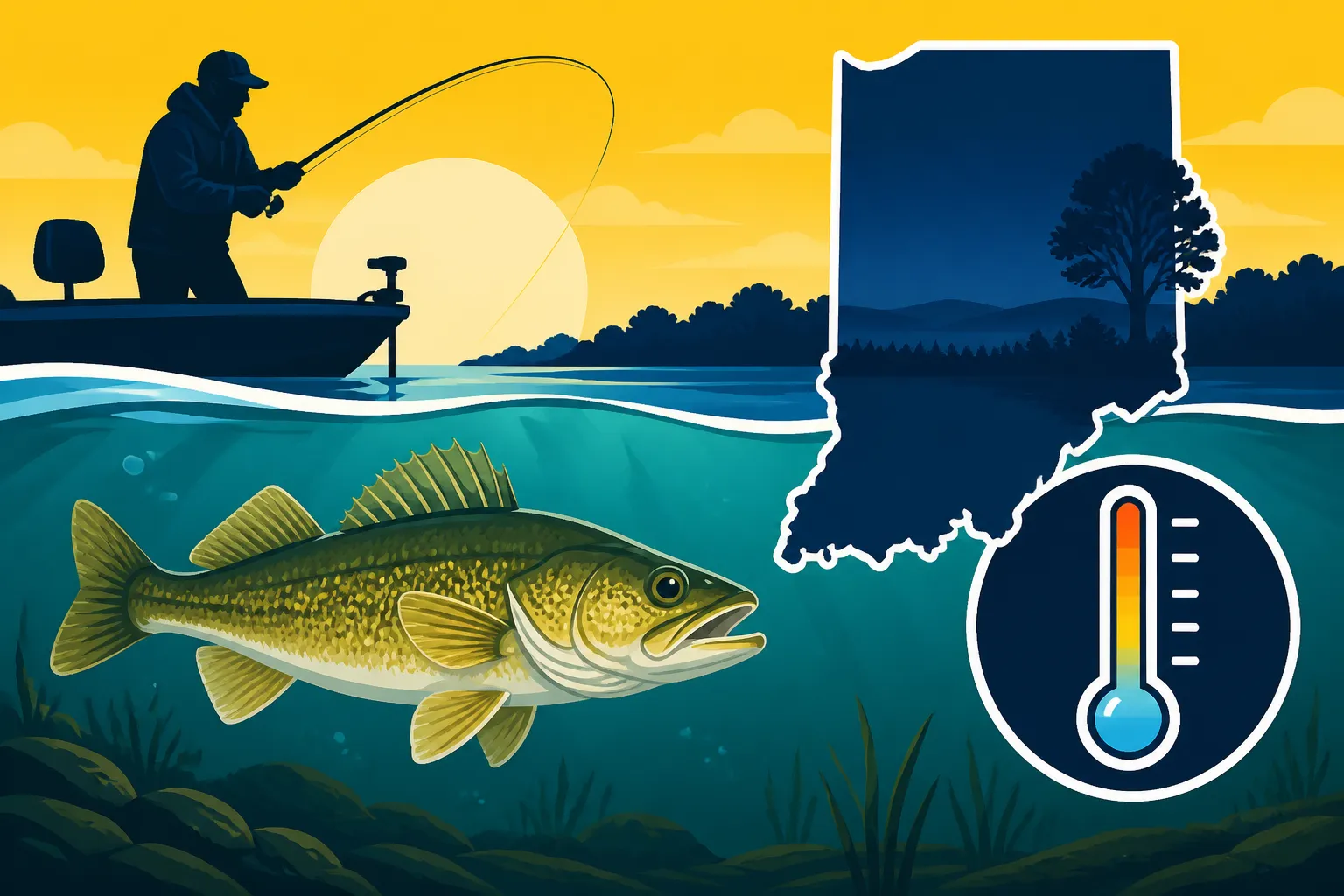
One of the biggest frustrations in walleye fishing, especially here in Indiana, is heading out to a favorite spot only to find the fish have seemingly vanished. It often leaves you scratching your head, wondering what you did wrong. More often than not, the answer isn't in your lure choice or casting technique, but in something far more fundamental: the water temperature. Understanding how water temperature dictates where walleye are, when they bite, and what they're willing to eat is absolutely crucial for consistent success on our Indiana lakes and rivers. This guide is all about demystifying that relationship and giving you the knowledge to predict walleye movements based on the thermometer.
The Critical Role of Water Temperature for Indiana Walleye
If you've spent any time on the water, you've probably heard anglers talk about "the bite turning on" or "the fish moving deeper." These conversations are almost always, whether consciously or not, directly linked to water temperature. Walleye are cold-blooded creatures, which means their body temperature is the same as their surroundings. This single biological fact has a massive impact on their metabolism, their activity levels, and ultimately, where they choose to spend their time.
When the water is too cold, their metabolism slows way down. They become sluggish, requiring less food, and are generally less willing to chase down a meal. Think of it like trying to get moving on a freezing winter morning; you just want to stay under the covers! Conversely, if the water gets too warm, walleye can become stressed, seeking out cooler, deeper water, or areas with more oxygen. Finding that "goldilocks" zone, where they are most comfortable and active, is the secret sauce to putting more walleye in your net. It's not just about comfort; it's about their entire life cycle – from spawning to feeding to seeking refuge from predators. This is especially true in Indiana, where we experience significant seasonal temperature swings across our diverse waterways, from the glacial lakes up north to the large reservoirs down south.
Key Water Temperature Ranges and Walleye Behavior
Different water temperatures trigger distinct behavioral patterns in walleye. Knowing these ranges helps you anticipate their movements throughout the year and adjust your fishing strategies accordingly. It's like having a secret calendar that tells you where the walleye will be, even before you launch your boat. You can learn more about their general habits in our comprehensive Indiana Walleye Fishing: A Complete Guide.
Early Spring Pre-Spawn Warm-Up
As winter ice recedes and spring sun starts to warm the shallow waters, walleye begin to shake off their winter lethargy. You'll typically find them staging in areas adjacent to their spawning grounds, often in depths of 10-25 feet, waiting for those magical spawning temperatures.
- Temperature Range: Around 40-48 degrees Fahrenheit.
- Behavior: At the lower end of this range, they're still a bit sluggish but starting to feed more actively than in winter. As temperatures creep higher, their metabolism increases, and they become more aggressive. They're looking to pack on calories before the energy-intensive spawn.
- Fishing Strategy: Focus on slow presentations. Jigs tipped with minnows or soft plastics fished vertically or with a slow retrieve can be highly effective. Trolling crankbaits at very slow speeds along transition areas (where shallow water drops off into deeper water) can also pick up these pre-spawn fish. Target wind-blown points, main lake humps, and the mouths of creeks that feed into the main body of water, as these areas warm up faster and attract baitfish.
The Spring Spawning Window
This is arguably the most critical temperature range for walleye, as it dictates their reproductive cycle. Once the water hits this sweet spot, male walleye move into spawning areas, followed by the females.
- Temperature Range: Typically 45-55 degrees Fahrenheit. The ideal sweet spot is often cited as 48-52 degrees.
- Behavior: Walleye will move onto hard-bottomed areas like rocky shorelines, gravel shoals, or current-swept main lake points to lay their eggs. During the actual spawn, they might not be actively feeding, but both before and immediately after, they can be extremely aggressive as they recover from the energetic demands.
- Fishing Strategy: The timing of the spawn can be tricky, and regulations often have specific opening dates around this period, so always check the latest Indiana Fishing Regulations and Bag Limits Guide. Immediately before and after the peak spawn, targeting these hard-bottomed areas with shallow-running crankbaits or jigs can be very productive. Remember, they're exhausted but hungry, so a slow, easy meal is often preferred.
Post-Spawn and Summer Patterns
Once the spawn is complete, walleye disperse from their spawning grounds. As water temperatures continue to climb into summer, they'll seek out cooler, deeper water or areas with plenty of shade and oxygen. This is when they transition to their summer feeding patterns.
- Temperature Range: 60-75 degrees Fahrenheit. As water approaches the upper end, you'll find them in deeper, cooler refuges.
- Behavior: During the post-spawn period, walleye are recovering and feeding to regain energy. They'll often school up again and move to deeper main lake structures, especially if the shallow water gets too warm. In summer, they will relate to main lake points, humps, ledges, and channels. They often become more active during low-light conditions (dawn, dusk, and night) when the shallow water cools slightly. This is where you'll hear about Why Walleye Bite Windows Shrink Once the Glacial Lakes Warm.
- Fishing Strategy: Trolling with crankbaits or spinner rigs at depths where the thermocline (a distinct temperature layer) is present can be very effective. Vertical jigging or slip-bobber fishing with live bait (like leeches or nightcrawlers) over deep structure can also produce. Don't shy away from night fishing in summer; walleye often move shallower to feed under the cover of darkness when the water cools a few degrees.
Fall Turnover and Cooling Trends
As autumn approaches, air temperatures drop, cooling the surface waters. Eventually, the entire water column reaches a uniform temperature, and the lake "turns over," mixing oxygen and nutrients throughout. This can temporarily disorient fish, but once it settles, fall can offer some of the best walleye fishing of the year.
- Temperature Range: 50-60 degrees Fahrenheit.
- Behavior: After turnover, walleye often go on a feeding frenzy, trying to fatten up before winter. They can be found in a variety of depths, from shallow flats to deeper breaks, chasing baitfish that are also schooling up.
- Fishing Strategy: This is a great time for aggressive tactics. Trolling large crankbaits, casting swimbaits, or jigging spoons can be very effective. Look for schools of baitfish on your electronics; the walleye won't be far behind. They might be shallower than you expect, especially during overcast days or in the early morning.
Winter and Ice Fishing
When the lakes freeze over, the water beneath the ice settles into a stable, cold temperature. Walleye activity slows, but they still feed.
- Temperature Range: 32-40 degrees Fahrenheit (under the ice).
- Behavior: Walleye remain active enough to feed throughout the winter, often congregating in predictable patterns around deep structure, humps, and sometimes even shallower weed lines that retain oxygen. They tend to school more tightly. You can find more specific advice in Best Winter Months for Walleye Fishing in Indiana.
- Fishing Strategy: Ice fishing for walleye typically involves jigging with spoons, lipless crankbaits, or small jigs tipped with live bait (like minnows). Presentations should be slow and subtle. Drilling multiple holes and moving until you find an active school is key. Always prioritize safety on the ice!
Practical Tips for Measuring and Using Water Temperature
Knowing the ideal temperature ranges is one thing; actually measuring and using that information on the water is another. Modern technology makes this easier than ever, and it's a game-changer for serious walleye anglers.
Essential Tools for Temperature Tracking
You really can't guess water temperature accurately. You need reliable tools.
- Surface Thermometer: A simple, handheld thermometer is crucial for getting a quick surface reading. Many fish finders also have this feature. While surface temp isn't always indicative of the fish's depth, it's a great starting point and helps track overall warming or cooling trends.
- Probe Thermometer/Fish Finder with Temp Probe: For a more accurate picture, especially if you suspect a thermocline or deeper temperature breaks, a probe thermometer that you can drop to different depths is invaluable. Most quality fish finders, even those available on platforms like Amazon, come with a transducer that includes a temperature sensor, giving you real-time readings at the depth of your transducer. Some advanced units can even map temperature contours.
- Mapping & Charting: Many lake maps, especially for larger reservoirs and glacial lakes in Indiana, will show depth contours, but they won't explicitly show temperature. However, understanding the depth and structure from your map helps you anticipate where temperature breaks might form. For instance, a long, sloping point might have a more gradual temperature change, while a sharp drop-off could indicate a rapid change.
Finding Temperature Breaks and Thermoclines
Walleye, like many fish, are drawn to "breaks" – changes in their environment. This includes temperature breaks.
- Thermoclines: In deeper lakes during summer, a thermocline is a distinct layer where water temperature changes rapidly with depth. This layer often concentrates baitfish and, consequently, predator fish like walleye. Your fish finder is your best friend for locating this. Look for a dense, often continuous line on your sonar screen that might not be structure but rather a density change in the water column due to temperature. Walleye will often suspend just above, in, or just below this layer, where oxygen levels and food sources are optimal.
- Inflow Areas: Rivers and creeks flowing into a lake or reservoir often carry water of a different temperature than the main body. In spring, warmer inflows can attract walleye and baitfish. In fall, cooler inflows might be key. These are great spots to focus your efforts.
- Wind-Blown Shorelines: Wind pushes surface water, and if that water is warmer (in spring) or cooler (in fall), it can create localized temperature differences that attract walleye. These areas also tend to concentrate baitfish and nutrients, making them feeding hot spots.
Integrating Temperature with Other Fishing Factors
While water temperature is a prime determinant of walleye behavior, it's never the only factor. Think of it as a significant piece of a larger puzzle. Combining temperature data with other environmental clues will make you an even more effective angler. It's about building a complete picture, not just one isolated detail.
Structure and Cover
Walleye are often structure-oriented fish. They love to relate to features on the bottom or in the water column.
- Deep Ledges and Humps: When water temperatures rise, walleye often retreat to deeper ledges, humps, and points where they can find cooler water and still ambush baitfish. If you find a promising piece of structure, use your thermometer to check the temperature at various depths around it. Are the walleye holding at 25 feet where it's 65 degrees, or have they moved deeper to 35 feet where it's 60 degrees?
- Weed Lines: In some Indiana lakes, walleye will use dense weed beds, especially deep weed lines, as ambush points. These weeds can also provide shade and slightly cooler water, particularly in summer. Understanding the preferred temperature range helps you determine which weed lines might be most productive.
- Rock Piles and Rubble: Especially during pre-spawn and spawn, rocky areas are key. These areas absorb and radiate heat differently than soft bottoms, often warming up faster in spring. They also provide excellent cover for baitfish and for walleye waiting to ambush. You might also find walleye relating to similar structures in places like Lake Michigan Fishing Rules for Indiana Anglers, though species and specific conditions there can vary.
Light Conditions and Time of Day
Walleye are known for their light-sensitive eyes, which is why they often prefer low-light conditions.
- Overcast Days: On cloudy days, walleye might roam shallower, even if the water temperature is a bit higher than their typical comfort zone, simply because the reduced light allows them to hunt more effectively.
- Dawn and Dusk: These periods are prime walleye feeding times, regardless of the season. As the sun rises or sets, light penetration decreases, giving walleye an advantage over their prey. The slight temperature fluctuations during these times can also trigger increased activity.
- Night Fishing: In summer, when surface temperatures are high, night fishing can be incredibly productive. Walleye will move into shallower waters to feed as the water cools down, and the darkness offers them maximum cover. This is a great time to try Walleye Jigging Techniques or slow-trolling crankbaits.
Forage and Baitfish Location
Ultimately, walleye go where the food is. Temperature influences both the walleye and their prey.
- Baitfish Movement: Shad, minnows, and other forage fish also have preferred temperature ranges. If warmer or cooler water pushes the baitfish to a certain depth or area, the walleye will follow. Your fish finder can help you spot these schools of baitfish, and then you can cross-reference their depth with your temperature readings.
- Matching the Hatch: Once you've located walleye and understand their temperature preferences, consider the size and type of baitfish they're likely feeding on. This helps you select the right lures. If they're in deeper, colder water, a slower, more deliberate presentation might be needed, mimicking a less active baitfish. For specific lure recommendations, check out Best Lures for Indiana Walleye Fishing.
By constantly monitoring water temperature and observing how it correlates with walleye activity in your favorite Indiana fishing spots, you'll start to develop a strong intuition. This isn't just about catching more fish; it's about understanding the intricate ecosystem beneath the surface and becoming a more informed, successful angler.
| Water Temperature Range (Fahrenheit) | Walleye Behavior | Suggested Fishing Depth | Key Techniques | Prime Season (Indiana) |
|---|---|---|---|---|
| 32-40 (Under Ice) | Slow metabolism, tight schooling | Deep humps, structure, weed lines | Ice jigging with spoons/minnows | Winter |
| 40-48 (Pre-Spawn Staging) | Actively feeding, staging near spawning grounds | 10-25 feet, break lines | Slow jigging, slow-trolling crankbaits | Early Spring |
| 45-55 (Spawning Peak) | Spawning activity, can be aggressive post-spawn | Shallow rocky areas (2-10 ft) | Jigs, shallow crankbaits (pre/post spawn) | Mid-Spring |
| 55-65 (Post-Spawn Recovery) | Recovering, dispersing, starting to school | 15-30 feet, main lake structure | Trolling, jigging over structure, slip-bobbers | Late Spring / Early Summer |
| 65-75 (Summer Feeding) | Active, seek cooler water/low light, relate to thermocline | Deep structure, thermocline, night shallow | Trolling deep cranks, vertical jigging, night fishing | Summer |
| 50-60 (Fall Turnover) | Dispersing, then aggressive feeding post-turnover | Varied, following bait | Aggressive trolling, casting swimbaits, jigging | Fall |
Disclaimer
This article is for general informational purposes only and does not constitute professional advice. Laws, prices and regulations vary by location and change over time. Consult a qualified professional for guidance on your specific situation.