Catfish Bottom Fishing Techniques
There's nothing quite like the thrill of feeling that solid tug on your line, knowing you've hooked into a powerful catfish that's been lurking deep down. But let's be real, often it feels like those whiskerfish are playing hide-and-seek, leaving you wondering if your bait even reached them. If you've ever found yourself casting into the void, hoping for a bite that never comes, you're not alone. This guide is dedicated to pulling back the curtain on effective catfish bottom fishing techniques in Indiana, equipping you with the knowledge to consistently put those elusive bottom-dwellers in your cooler.
Understanding Catfish Behavior and Habitat
To truly master bottom fishing for catfish, you first need to think like a catfish. These fascinating fish aren't just random swimmers; they have preferences, habits, and specific places they like to hang out. Knowing these tendencies is half the battle, giving you a huge advantage before you even cast your line.
Why Catfish Prefer the Bottom
Catfish, particularly the most common species we target here in Indiana like channel cats, flatheads, and blue cats, are primarily bottom feeders and scavengers. Their barbels, those whisker-like protrusions around their mouths, are packed with chemoreceptors – essentially, highly sensitive taste and smell organs. They use these to detect food on or near the bottom, even in murky water or complete darkness. This isn't just a preference; it's how they're built to find their meals. They're often looking for dead or decaying organic matter, insects, smaller fish, and even vegetation that settles on the substrate. The bottom offers protection, a constant food source, and often more stable water conditions away from strong currents and direct sunlight, which they tend to avoid during bright daylight hours.
Think about a river or a large reservoir. The bottom offers structure, places to hide from predators or ambush prey, and a consistent flow of nutrients and food items. A channel catfish cruising the riverbed isn't just taking a leisurely stroll; it's actively scenting out its next meal, using those sensitive barbels to sift through silt, gravel, and debris. Understanding this primary mode of feeding is why bottom fishing isn't just a technique for catfish, it's often the technique.
Prime Catfish Habitats in Indiana Waters
Indiana offers an incredible variety of waters, from sprawling reservoirs to winding rivers and countless smaller lakes and ponds, all holding catfish. Each body of water will have its unique hotspots, but common themes emerge when looking for prime catfish habitat. For instance, in our larger rivers like the Fishing the Wabash River in Indiana or the White River, catfish will often congregate in deeper holes, especially those with current breaks like behind log jams, large rocks, or bridge pilings. They love areas where the current slows enough for food to settle, but where there’s still enough flow to bring new scent trails their way.
In reservoirs such as Monroe Lake, Patoka Lake, or Brookville Lake, look for old creek channels, submerged timber, roadbeds, and ledges. These underwater structures provide both cover and natural travel corridors for catfish. Don't overlook the shallow flats adjacent to these deeper areas, especially during low-light conditions or when temperatures are milder, as catfish will move up to feed. Even smaller farm ponds and community lakes can hold surprising numbers of channel catfish. In these calmer waters, they'll often relate to deeper areas, brush piles, or even just the subtle depressions on the bottom. Knowledge of these typical haunts will greatly increase your chances of connecting with a hungry cat.
Essential Gear for Bottom Fishing
Alright, now that we understand where they live and why they're on the bottom, let's talk about the tools of the trade. Having the right gear isn't about spending a fortune; it's about having reliable equipment that can handle a hard-fighting catfish and stand up to the rigors of bottom fishing.
Rods, Reels, and Line Choices
When it comes to Best Catfish Rods for Indiana Rivers and general bottom fishing, you'll want something with a bit of backbone. Forget your ultralight panfish setup; we're talking about rods that can cast heavy weights and wrestle big fish out of snags. A medium-heavy to heavy power rod, typically between 7 to 9 feet long, is ideal. The extra length helps with longer casts, especially from the bank, and provides better leverage when fighting a strong current or a stubborn fish. Look for rods with a moderate-fast action – this means the tip is sensitive enough to detect subtle bites but the rest of the rod bends into a powerful curve to handle the load. Brands like Ugly Stik or Berkley offer durable, affordable options that many Indiana anglers swear by.
For reels, a sturdy spinning reel in the 4000-6000 size range, or a baitcasting reel with a good drag system, will serve you well. Spinning reels are generally easier for beginners and excel at casting lighter baits, while baitcasters offer more power and control for heavier rigs and larger fish. Whichever you choose, ensure it has a smooth, reliable drag system, as a big catfish will test it.
Line choice is critical. Monofilament line in 15-30 lb test is a popular and forgiving choice due to its stretch, which acts as a shock absorber. However, many experienced anglers, myself included, are moving towards braided line. Braided line, typically 30-60 lb test, offers superior strength for its diameter, virtually no stretch for incredible sensitivity, and excellent abrasion resistance. The lack of stretch means you'll feel every bump and subtle bite, which is invaluable when bottom fishing. If you're using braid, consider tying on a 2-3 foot monofilament or fluorocarbon leader to provide a bit of shock absorption and make your presentation a little less visible to wary fish. You can find excellent selections of all these on platforms like Amazon, ensuring you get quality gear for your specific needs.
Sinkers and Rigs: The Heart of Bottom Fishing
The right sinker and rig are absolutely crucial for effective bottom fishing. Your sinker's job is to get your bait down to the bottom and keep it there, resisting current and waves. The weight needed will vary greatly depending on the water you're fishing. In a calm pond, half an ounce might be plenty. In a swift river like the Tippecanoe, you might need 3-5 ounces, or even more. Common sinker types include egg sinkers, disc sinkers, pyramid sinkers, and no-roll sinkers. Pyramid and no-roll sinkers are excellent in current as they dig into the bottom and resist rolling. Egg sinkers are versatile and work well in various conditions, especially with a slip-sinker rig.
Now for the "rigs," which is simply how you tie your hook and sinker together. There are two primary rigs that dominate catfish bottom fishing in Indiana:
-
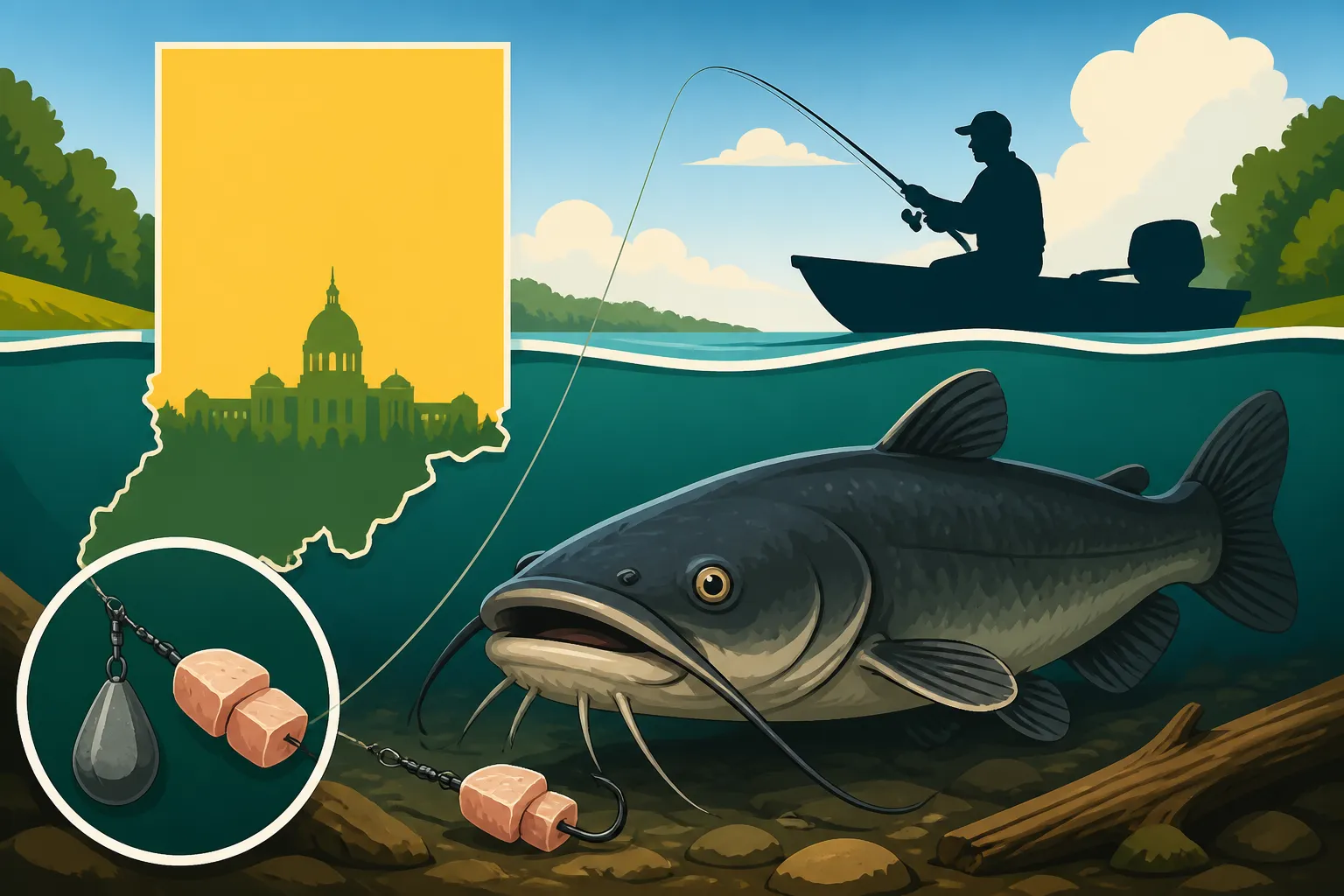
The Slip Sinker Rig (often called a Carolina Rig for freshwater): This is perhaps the most popular and versatile rig. The main line goes through an egg sinker, then a bead, and then ties to a swivel. A leader (12-24 inches) is tied from the other end of the swivel to your hook. The beauty of this rig is that the line slips freely through the sinker, allowing a biting fish to pick up the bait and move off without feeling the weight of the sinker. This provides a more natural presentation and reduces the chance of a fish dropping the bait because it felt resistance. The bead protects your knot from the sinker's repeated impact.
-
The Three-Way Swivel Rig (sometimes called a Santee Cooper Rig with a float): This rig is great for presenting bait slightly off the bottom or in heavy current. One eye of a three-way swivel is tied to your main line. A short leader (6-12 inches) with a sinker is tied to the second eye, and a longer leader (12-36 inches) with your hook is tied to the third eye. This allows your bait to drift a bit in the current, or if you add a small float to your hook leader (the "Santee Cooper" modification), it keeps your bait suspended just above snags and weeds, which is super helpful in snaggy areas.
Here's a quick comparison of these popular rigs:
| Rig Type | Sinker Placement | Hook Presentation | Best For | Advantages | Disadvantages |
|---|---|---|---|---|---|
| Slip Sinker | Slides on main line | On bottom with a short leader | Still water, light to moderate current | Natural bait presentation, fish don't feel sinker, good bite detection | Prone to snagging in heavy cover, bait can get buried |
| Three-Way Swivel | Short leader off swivel | Suspended or on bottom | Moderate to heavy current, snaggy bottoms | Keeps bait slightly off bottom, good for drifting, can use heavier sinkers | Less natural presentation, fish may feel sinker resistance |
When rigging, ensure all your knots are strong and secure. A good Palomar knot or improved Clinch knot will serve you well.
Hook Selection for Catfish
Hook selection is often overlooked but it's vital. Catfish have tough, bony mouths, and you need a hook that can penetrate deeply and hold fast. For bottom fishing, the two main types you'll encounter are J-hooks and circle hooks.
- J-Hooks: These are the traditional curved hooks. While effective, they often require a solid hookset from the angler. The biggest drawback is that fish can swallow J-hooks deeply, leading to gut-hooking, which makes catch-and-release difficult and often fatal for the fish. If you plan to keep your fish, a J-hook might be acceptable, but if you're practicing catch and release, be very careful and consider switching.
- Circle Hooks: These hooks are a game-changer for catfish. Their design is such that the point is angled inward towards the shank. When a fish takes the bait and swims away, the hook slides to the corner of its mouth and automatically sets itself with a gentle pull from the rod. No aggressive hookset is needed! This almost entirely eliminates gut-hooking, making them incredibly effective and much safer for the fish. For responsible anglers, especially those who appreciate Indiana's fantastic fisheries, I highly recommend using circle hooks. Sizes typically range from 2/0 to 8/0, depending on your target fish size and bait. For general channel cat fishing, 4/0 to 6/0 is a good starting point. You can find packs of these on Amazon to keep your tackle box stocked.
Mastering Bait Selection
Even the perfect rig and gear are useless without the right bait. Catfish are not picky eaters, but they definitely have preferences, and those preferences can vary by species, season, and even the specific body of water. The key to successful bottom fishing is knowing what bait will attract them to your hook.
Natural Baits That Catfish Can't Resist
When it comes to tempting a catfish, natural baits are often king. These are items that catfish would naturally encounter and consume in their environment, making them incredibly effective.
- Cut Bait: This is arguably the most consistent catfish bait, especially for flatheads and large channel cats. Take smaller fish like shad, bluegill, skipjack herring, or even carp, and cut them into chunks or strips. The blood and oils released by the cut bait create a powerful scent trail that catfish follow. Fresh cut bait is almost always superior to frozen. If you're targeting flatheads, they often prefer live bait, but fresh cut bait is a close second. For best results, use species that are naturally found in the water you're fishing. Remember to check Indiana Fishing Regulations and Bag Limits Guide for rules on using live or cut baitfish, as some species are prohibited.
- Worms: Good old nightcrawlers and red wigglers are perennial favorites, especially for smaller channel catfish and panfish. Thread a few on a hook to create a wriggling, enticing target. The scent and movement are highly attractive. They might not catch the biggest flatheads, but for numbers of channel cats, worms are hard to beat.
- Minnows and Shad: Live minnows, shiners, or shad, fished on a slip-sinker rig, can be deadly for active catfish, especially when they're feeding on baitfish. Hook them through the back or lips, ensuring they stay lively. Again, verify local regulations regarding live bait use.
- Chicken Liver: This is a classic catfish bait. It's incredibly smelly and creates a fantastic scent trail. The main challenge with chicken liver is keeping it on the hook due to its soft texture. Using a bait holder hook, wrapping it with a small piece of mesh (like from an onion bag), or even curing it can help. The messiness is worth it when those catfish start biting.
- Shrimp: Believe it or not, plain old raw shrimp from the grocery store can be a fantastic catfish bait, especially in lakes and reservoirs. It has a strong, natural scent that catfish find irresistible. It's also relatively firm and stays on the hook well. Just let it thaw a bit if frozen and cut it into bite-sized pieces.
Experiment with different natural baits based on what's available and what the catfish in your specific fishing spot are accustomed to eating.
Prepared Baits and Stink Baits
Beyond natural offerings, there's a whole world of prepared and "stink" baits designed specifically to attract catfish with powerful, often pungent, aromas. These can be incredibly effective, particularly for channel catfish.
- Dough Baits and Punch Baits: These are often made from a mixture of grains, cheese, and other scent-rich ingredients. Dough baits are typically molded around a treble hook or a spring-loaded worm hook. Punch baits are thicker and require you to "punch" a treble hook into them, which then gets coated with the sticky, smelly mixture. These baits are designed to slowly release scent into the water. Popular brands include Sonny's Super Sticky Baits or Secret 7.
- Dip Baits: As the name suggests, dip baits are thick, extremely smelly liquids or pastes that you "dip" a special bait holder (often a plastic worm with ribs or a small sponge) into. The bait holder soaks up the stink bait and gradually releases the powerful aroma. These baits are legendary for attracting channel catfish from a distance, even in murky water. Like punch baits, they are usually applied to specialized bait holders, rather than directly to a hook.
- Sausage and Hot Dogs: While not strictly "prepared" in a fishing sense, these grocery store items can be incredibly effective and convenient. Cut up hot dogs, especially those with a strong garlic flavor, can catch a surprising number of catfish. Bologna, pepperoni, and even small pieces of cooked sausage can also work. These are great last-minute options if you're heading out and don't have time for more elaborate bait prep.
When using prepared baits, remember that the scent is the primary attractor. You're trying to create a "scent slick" that catfish can follow. Always keep your bait fresh and store it properly. For a deeper dive into what to throw out, check out Best Bait for Channel Catfish in Indiana Rivers.
Effective Bottom Fishing Techniques
Now that you've got your gear and your bait, it's time to put it all together and learn the techniques for getting that bait right where those catfish are feeding. It's more than just casting and waiting; subtle adjustments can make a world of difference.
The Slip Sinker Rig Carolina Rig Variant
The slip sinker rig, or as many freshwater anglers call it, the Carolina Rig, is a cornerstone of catfish bottom fishing for a reason: it's incredibly effective and gives the fish a natural presentation. Here’s a breakdown of how to use it:
- Tie your main line: Start by threading your main line through an egg sinker. The weight of the sinker will depend on current and depth – typically 1/2 oz to 2 oz for most Indiana waters.
- Add a bead: After the sinker, slide on a small plastic or glass bead. This bead acts as a buffer, protecting your knot from the constant pounding of the sinker during casting and retrieves.
- Attach a swivel: Tie a barrel swivel (a small, strong swivel is fine) to the end of your main line using a strong knot like a Palomar or improved Clinch.
- Add your leader: To the other end of the swivel, tie a leader line. This leader should be 12-24 inches long and can be the same pound test as your main line, or slightly lighter.
- Tie on your hook: Finally, tie your chosen hook (a 4/0 to 6/0 circle hook is often ideal) to the end of your leader.
- Bait up: Thread your cut bait, chunk of liver, or a big glob of worms onto the hook, making sure the hook point is exposed.
When you cast this rig, the sinker will carry your bait to the bottom. Because the line can slip through the sinker, when a catfish picks up the bait, it can move a short distance without immediately feeling the resistance of the heavy sinker. This often results in a more confident bite. When you feel a bite, resist the urge to immediately set the hook if you're using circle hooks. Instead, slowly pick up the slack, and when you feel steady weight, just lean into the fish. The circle hook will do the work. If using J-hooks, a firm, sweeping hookset is necessary. This rig is fantastic for still water and moderate currents, allowing your bait to settle naturally in prime catfish feeding zones.
The Three-Way Swivel Rig Santee Cooper Rig Variant
The three-way swivel rig is another excellent option, especially when you need to present your bait slightly off the bottom, avoid snags, or fish in stronger currents. The "Santee Cooper" variant adds a foam or cork float to the leader, which is a neat trick.
- Main line to swivel: Tie your main line to one eye of a three-way swivel.
- Sinker leader: To a second eye, tie a short leader (6-12 inches) of slightly lighter line than your main line. Tie your sinker (pyramid, no-roll, or bell sinker works well here) to the end of this short leader. Using a lighter line for the sinker leader means if your sinker gets snagged, you might only lose the sinker, not your entire rig and fish.
- Hook leader: To the third eye, tie a longer leader (12-36 inches) for your hook. This is where the Santee Cooper modification comes in: slide a small foam or cork float (the size of a marshmallow or smaller) onto this leader before tying on your hook. The float will lift your bait just off the bottom.
- Tie on your hook: Attach your hook (again, a good circle hook is recommended) to the end of this longer leader.
- Bait up: Load your bait onto the hook.
This rig works wonders in areas with submerged brush, rocky bottoms, or heavy weed growth. The float keeps your bait tantalizingly suspended above the snags, making it more visible and accessible to cruising catfish. In current, the longer hook leader with the float allows your bait to dance and waft enticingly. When fishing this rig, bites can sometimes be more aggressive as fish see the bait suspended. If using a circle hook, just let the fish take it and apply steady pressure. This rig can also be effective when drifting for catfish from a boat, allowing your bait to cover more ground while staying off the bottom.
Fishing with Circle Hooks for Better Hooksets
Let's talk a little more about circle hooks because they truly are revolutionary for catfish anglers. The beauty of the circle hook lies in its design, which virtually eliminates the need for a traditional, aggressive hookset. We've all seen anglers rear back on their rod, trying to bury the hook. With a circle hook, that's the opposite of what you want to do.
When a catfish picks up bait rigged on a circle hook, it's designed to slide into the corner of the fish's mouth as the fish moves away or as you apply steady, slow pressure. The inward-pointing tip then catches in the corner of the jaw, ensuring a solid, lip-hooked fish almost every time. This means less damage to the fish, significantly increasing survival rates for released fish – which is fantastic for conservation.
To use circle hooks effectively:
- Don't set the hook: This is the golden rule. When you feel a bite, resist the urge to jerk the rod.
- Wait for the pull: Let the fish take the bait and swim away. You'll often feel a series of taps, then a steady pull as the fish moves off.
- Slowly apply pressure: Once you feel that consistent pressure or your rod tip loads up, simply lift the rod slowly and steadily, or start reeling. The hook will set itself.
This technique takes a little getting used to, especially if you're accustomed to traditional J-hooks. But once you trust the circle hook, you'll be amazed at how many fish you solidly hook in the lip, making for easier unhooking and healthier releases. This makes them an ethical choice, especially when fishing for species that might be regulated, like certain sized catfish you want to release.
Locating and Approaching Catfish Hotspots
Knowing where to find catfish is just as important as knowing how to rig for them. Catfish aren't evenly distributed throughout a lake or river; they're concentrated in specific areas that offer food, cover, and comfortable conditions.
Reading Rivers and Reservoirs for Catfish
Indiana's diverse waterways mean you'll encounter various types of structure and current. For river fishing, pay close attention to current breaks. Anything that disrupts the flow – log jams, downed trees, submerged rocks, bridge pilings, or sharp bends in the river – will create slack water where catfish can rest and ambush prey. The deeper holes downstream from these current breaks are prime spots. Also, look for tributary mouths where smaller creeks flow into the main river, bringing in fresh food and cooler water. Catfish will often stage at these intersections. Even subtle depth changes, known as "breaks" or "ledges," can hold fish. If you have a fish finder on your boat, use it to scan these areas. If fishing from the bank, observe the current and look for visible signs of structure.
In reservoirs, the fishing can feel a bit like a treasure hunt. Catfish will relate heavily to submerged features. Old creek channels winding through the lake basin are highways for catfish. Look for areas where these channels intersect with humps or points. Submerged timber, brush piles (both natural and man-made), and rock piles are also excellent choices, providing cover and food. Contour maps of large reservoirs like Lake Monroe or Patoka Lake are invaluable for identifying these underwater structures. During warmer months, catfish will often move into deeper, cooler water during the day, coming shallower to feed at night or during low-light conditions. Focus on creek mouths, ledges, and areas where shallow flats drop off into deeper water. You can find excellent information on spots in Best Catfish Fishing Spots in Indiana.
Shoreline vs. Boat Fishing Strategies
Whether you're casting from the bank or cruising in a boat, your approach to bottom fishing for catfish will differ slightly.
Shoreline Fishing:
For many Indiana anglers, shoreline fishing is the most accessible way to target catfish. The key here is mobility and observation. Don't just pick one spot and stay there all day if you're not getting bites. Move around! Look for natural features like fallen trees, rock outcrops, or points that extend into the water. These are natural congregation areas. If fishing a river, focus on areas with slower current or eddies. In lakes and ponds, look for deeper pockets near the bank. Casting distance is important, but accuracy is more so. Try to cast your bait near any visible or suspected structure. A longer rod can definitely help with achieving those extra yards from shore. When bank fishing, it's especially important to carry all your gear efficiently, perhaps in a backpack or a wheeled cooler that doubles as a seat. A good headlamp is indispensable for those How to Catch Catfish at Night sessions.
Boat Fishing:
A boat opens up a whole new world of catfish opportunities. You can access areas unreachable from shore, cover more ground, and use electronics to pinpoint fish.
- Drifting: One highly effective boat technique is drifting. Use your trolling motor or the natural current (in a river) to slowly pull your bottom rigs across prime catfish habitat. This allows you to cover large areas and present your bait to numerous fish. Pay attention to your fish finder during the drift; if you mark fish or get a bite, note the depth and structure.
- Anchoring: Once you've identified a promising spot (a deep hole, a brush pile, a submerged roadbed), anchor upstream from it and cast your baits into the target zone. Use multiple rods spread out at different depths or distances to cover more water. This is a great strategy for known honey holes.
- Electronics: A good fish finder is your best friend when boat fishing. It allows you to see depth changes, structure, and even schools of baitfish or individual catfish. Look for "arches" or "blobs" on the bottom near structure or in deeper channels. Modern fish finders from brands like Garmin or Humminbird, readily available on Amazon, offer incredible detail, showing you exactly where the fish are lurking.
Regardless of your platform, quietness is often key, especially in shallower waters. Catfish might not be as skittish as bass, but loud noises or heavy footsteps on the bank can certainly spook them.
Timing Your Catfish Excursions
Just like other fish species, catfish activity is influenced by the time of day, the season, and even the weather. Understanding these patterns will help you choose the Best Time of Year to Fish in Indiana for whiskers.
Best Time of Day and Season for Bottom Fishing
Catfish are famously nocturnal feeders, and this holds true for many of our Indiana waters. The hours around dawn and dusk, and well into the night, are often the most productive for bottom fishing. During these low-light periods, catfish feel more secure moving into shallower areas to forage, and the water temperatures are typically cooler, which they appreciate during hot Indiana summers. If you're serious about targeting bigger flatheads or a good number of channel cats, planning a night fishing trip is highly recommended. For the channel catfish specifically, check out Best Season for Catfish Fishing in Indiana for seasonal tips.
However, that doesn't mean you can't catch catfish during the day. In cooler months (spring and fall), or on overcast days, catfish will readily bite throughout the day. During the peak of summer, focus on deeper, cooler water during the daytime hours. They'll often be hunkered down, but a well-presented bait can still tempt them.
Seasonally, spring and fall are prime times for catfish bottom fishing in Indiana. In spring, as water temperatures rise into the 60s Fahrenheit, catfish become very active, feeding heavily as they prepare for the spawn. Post-spawn, they'll continue to feed aggressively to recover. Fall also offers fantastic fishing as catfish feed up before winter. While winter can be slower, determined anglers can still find success by targeting deep holes in rivers and lakes, as catfish will congregate there.
Impact of Weather and Water Conditions
Weather and water conditions play a significant role in catfish activity.
- Temperature: Catfish are cold-blooded, so their metabolism and activity levels are directly tied to water temperature. They are generally most active when water temperatures are between 65-80°F (18-27°C). Outside of this range, they might be slower, but still catchable.
- Rain and Runoff: Don't let a little rain deter you! Light rain can often improve catfish bites. The rain darkens the water, washes terrestrial insects and worms into the water, and often stimulates feeding activity. Heavy rains, however, can cause rapid rises in water levels and strong currents, making fishing difficult and sometimes dangerous. In these conditions, catfish might move out of the main current and into slack water areas.
- Barometric Pressure: While not as widely discussed as for other species, stable or rising barometric pressure often corresponds with better fishing conditions. A rapidly falling barometer, indicative of an approaching storm, can sometimes trigger a pre-front feeding frenzy, but often leads to slower fishing once the storm hits.
- Water Clarity: Catfish, especially channel cats, are well-adapted to murky water. Their keen sense of smell and taste allows them to find food even when visibility is low. In fact, slightly stained or murky water can often be better for catfish fishing than crystal clear water, as they feel more comfortable and are less wary. This is where those strong-smelling baits really shine.
Always check the forecast and current water conditions before you head out. Being prepared for the weather and understanding how it affects catfish behavior will give you a significant edge.
Conclusion
Bottom fishing for catfish in Indiana is more than just a technique; it's a rewarding pursuit that connects you deeply with the waterways and the natural instincts of these powerful fish. By understanding their behavior, selecting the right gear, mastering various rigs like the slip sinker and three-way swivel, choosing irresistible baits, and knowing where and when to cast your line, you're not just fishing – you're strategically hunting.
So, the next time you head out to one of Indiana's incredible fishing spots, whether it's a winding river or a serene lake, approach it with confidence. Remember these techniques, trust your tackle, and most importantly, enjoy the process. That powerful pull on your line is a testament to your preparation, and there's nothing quite like the satisfaction of reeling in a hard-fighting Indiana catfish.
Disclaimer
Fishing can be an unpredictable activity. The information provided in this guide is for general informational purposes only and does not guarantee fishing success. Always exercise caution, adhere to all local and state fishing regulations, and prioritize your safety on the water. Fishing conditions can change rapidly, and responsible angling practices are encouraged.