Best Catfish Fishing Spots in Indiana
If you've ever found yourself staring at a map of Indiana, wondering where the heck to even start looking for a decent catfish, you're not alone. It can feel overwhelming to pinpoint the best spots in a state crisscrossed with rivers and dotted with countless lakes and reservoirs. This guide is going to cut through the confusion and help you discover the prime catfish fishing spots in Indiana, from the mighty rivers to the quietest lakes, so you can spend less time guessing and more time reeling in those whiskered beauties.
Understanding Indiana Catfish and Their Habitat
Before we dive into the specific honey holes, it's really helpful to understand a bit about the catfish that call Indiana home. Knowing what makes them tick, where they prefer to hang out, and what they like to eat can dramatically increase your chances of success, no matter where you cast your line.
Species of Catfish in Indiana
Indiana is blessed with a trio of fantastic catfish species, each offering a unique challenge and reward to anglers. You'll primarily encounter Channel, Flathead, and Blue Catfish, and knowing the difference can guide your techniques and expectations.
Channel Catfish are probably the most common and widespread catfish in Indiana. They're recognized by their olive-brown to slate-gray bodies, often with small, dark spots (especially when young), and a deeply forked tail. These guys are prolific and can be found in almost any type of water, from large rivers to small farm ponds. They’re opportunistic feeders, which makes them a blast to catch for anglers of all skill levels. They put up a respectable fight and are absolutely delicious on the dinner plate. You can find out more about targeting them specifically in our Channel Catfish Fishing in Indiana: The Complete Guide.
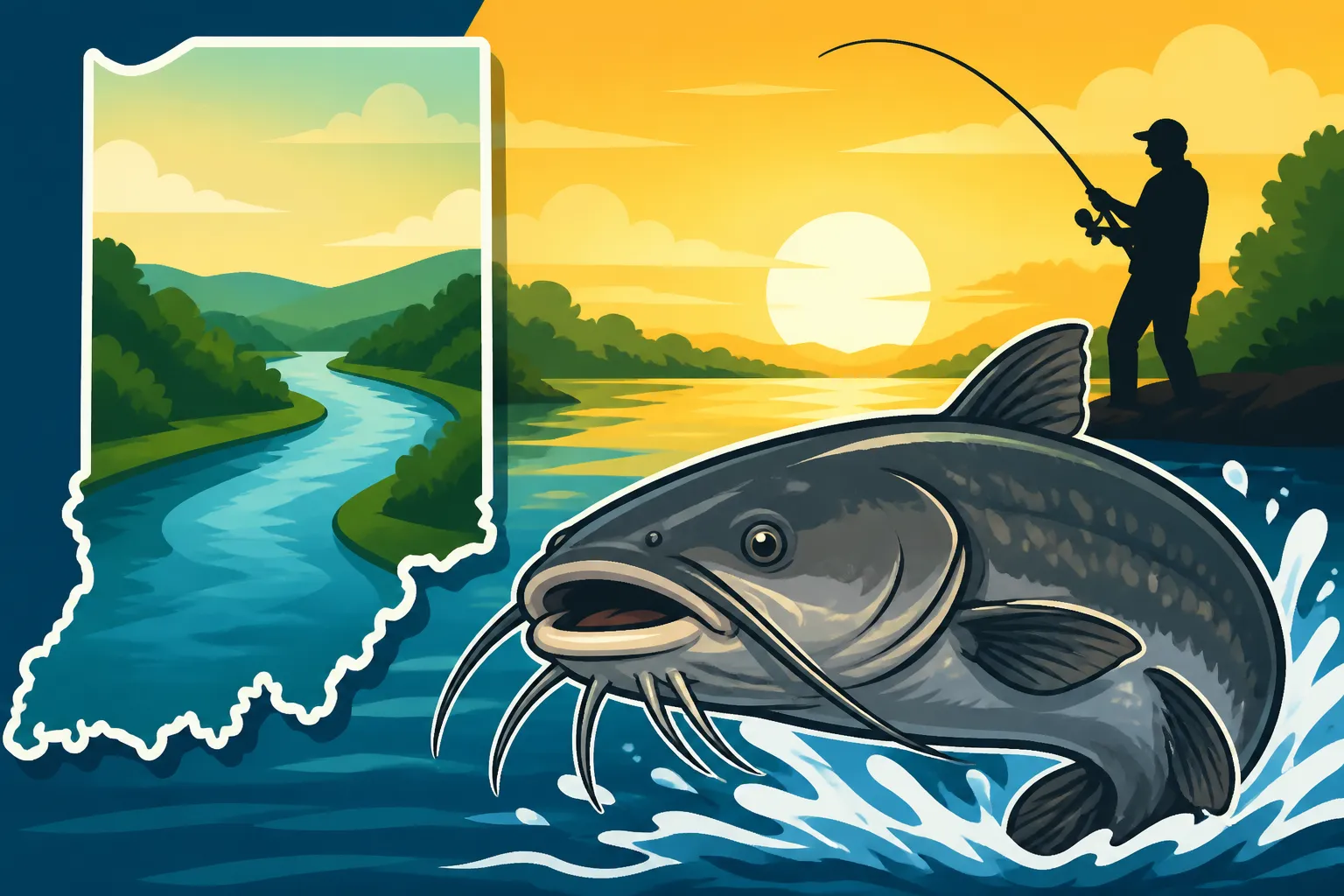
Flathead Catfish are the true river monsters of Indiana. They have a distinctively wide, flattened head (hence the name), a mottled brown and yellow coloration, and a square or slightly notched tail. Unlike the omnivorous channel cats, flatheads are ambush predators, preferring live bait. They love to hide in deep, snaggy areas like log jams, undercut banks, and rock piles in large rivers. Catching a trophy flathead is a serious challenge that requires heavy gear and a lot of patience, but the reward of battling one of these giants is unforgettable. They are also highly prized for their firm, flaky white meat.
Blue Catfish are the largest catfish species in North America, and while not as prevalent as channel cats in all Indiana waters, they are certainly present and growing to impressive sizes, particularly in the Ohio River and some of the larger reservoirs. They are typically steely blue to slate gray, lack spots, and have a noticeably humped back and a deeply forked tail. Like flatheads, they prefer large river systems and reservoirs with strong currents and deep holes. Blue cats are primarily piscivorous (fish-eating) but will also scavenge. Targeting big blues requires robust gear and can lead to truly epic battles.
Preferred Habitats for Catfish
Understanding where each species thrives is key to finding them. While there's overlap, certain environments tend to favor one type over another. This insight can save you a lot of time and effort on the water.
Rivers and Streams are the undisputed kingdoms for Flathead and Blue Catfish, and also hold abundant Channel Catfish. These fish gravitate towards deeper holes, slow-moving eddies behind obstructions, undercut banks, and areas with submerged timber and rock structures. The current brings food to them, and these structures provide cover and ambush points. When fishing rivers, look for tributary mouths, bends with deeper scour holes, and any significant changes in bottom contour. The bigger the river, generally the bigger the catfish.
Lakes and Reservoirs are prime territories for Channel Catfish and often hold respectable populations of Blue Catfish. Flatheads are less common in still waters unless there are significant riverine characteristics or large, deep timbered areas. In lakes, catfish will seek out deeper channels, old creek beds, submerged timber, humps, and points. They often patrol transition areas where shallow flats drop off into deeper water, especially at dawn and dusk. During warmer months, they might move into shallower bays and coves to feed, particularly at night. Look for areas with a soft, muddy bottom, as this is where they'll often root around for food.
Ponds, especially larger farm ponds or public access ponds, are almost exclusively home to Channel Catfish. These smaller bodies of water often provide excellent opportunities for beginners or families looking for consistent action. Catfish in ponds will typically relate to deeper sections, weed lines, and any submerged structure like fallen trees or brush piles. They're less picky in ponds, making them a great target for a relaxing day of fishing.
Top River Systems for Catfish Action
Indiana's rivers are legendary for their catfish populations. From the massive border rivers to the winding interior waterways, there's no shortage of fantastic spots to hook into a whisker-faced fighter. These are the places where many Hoosier anglers cut their teeth on catfishing.
The Mighty Wabash River
The Wabash River, Indiana's longest river, is a true catfish powerhouse. Stretching across the state, it offers incredible opportunities for all three major species: Channel, Flathead, and increasingly, Blue Catfish. Its size, depth, and abundance of submerged structure make it a prime habitat for these fish.
Along its expansive length, the Wabash offers diverse fishing environments. From Terre Haute up past Lafayette and even further north, you'll find countless bends, deep scour holes, log jams, and tributary confluences that concentrate catfish. Many anglers have incredible success fishing from the bank near public access points and bridges, while others prefer to drift or anchor from a boat. Popular spots include areas around Logansport, Lafayette, and Covington. The river around Vincennes, where it widens and deepens, is particularly known for producing monster flatheads and burgeoning populations of blue cats. This is where those truly epic battles with giant fish often happen. For a more detailed look at navigating this expansive waterway, check out our guide on Fishing the Wabash River in Indiana.
When targeting Wabash River cats, especially the bigger flatheads and blues, heavy-duty tackle is a must. Think sturdy rods, reels with plenty of line capacity, and strong braided line. Cut bait (shad, carp, skipjack herring) works wonders for channel and blue cats, while live bait (sunfish, bluegill, creek chubs) is generally irresistible to flatheads. For those looking to maximize their chances or explore less accessible areas, hiring a local guide via services like FishingBooker can provide invaluable local knowledge and get you right on the fish.
The White River System
The White River, with its West Fork and East Fork, is another essential catfish destination in Indiana. While perhaps not as famed for trophy flatheads as the lower Wabash or Ohio, it consistently produces excellent numbers of Channel Catfish and respectable Flatheads, particularly in its deeper sections.
The West Fork of the White River runs through Indianapolis, offering surprising urban fishing opportunities. Further south, past the city, it widens and deepens, creating more prime catfish habitat. Look for deeper bends, bridge pilings, and any significant woody debris. Access points in cities like Noblesville, Anderson, and Muncie, as well as several state parks and public lands downstream, provide ample bank fishing and boat launching options. For more specific advice on this river, our Fishing the White River in Indiana article has you covered.
The East Fork of the White River, originating in the eastern part of the state, flows through towns like Columbus and Seymour before converging with the West Fork. This fork also offers excellent channel catfishing, with flatheads found in its deeper pools and snags. The stretches below dams and around major creek mouths are often hotspots, as these areas concentrate baitfish and provide oxygenated water, attracting hungry catfish. Both forks benefit from using standard bottom-fishing rigs with stink baits, cut bait, or worms.
Other Notable Rivers
Beyond the giants, Indiana has several other fantastic rivers that shouldn't be overlooked for their catfish potential, offering more localized, and sometimes less crowded, fishing experiences.
The Ohio River, forming Indiana's southern border, is a true mega-river and a renowned trophy catfish destination. It holds immense populations of Channel, Flathead, and especially Blue Catfish, some of which reach truly astounding sizes. The sheer scale of the river can be intimidating, but its diverse structure – deep channels, major feeder creek mouths, wing dams, and submerged timber – provides endless opportunities. Cities like Evansville, Madison, and New Albany offer boat ramps and river access. The Ohio River fishery is highly productive, and for those serious about landing a giant, chartering a trip with an experienced guide, easily found through platforms like FishingBooker, can be a game-changer.
The Tippecanoe River, especially its middle and lower sections, offers excellent Channel and Flathead Catfish fishing. Known for its cleaner water and diverse fishery, it's a beautiful river to fish. Look for the deeper pools, especially below the dams near Oakdale and Norway, and around log jams. Smallmouth bass anglers often hook into large flatheads here by surprise. The Fishing the Tippecanoe River in Indiana guide offers more insights into this scenic waterway. The St. Joseph River in northern Indiana, particularly the section below the Twin Branch Dam near Mishawaka and South Bend, also offers good channel catfishing, especially during the warmer months. While more known for its salmon and steelhead runs, opportunistic channel cats are always on the prowl. Our Fishing the St. Joseph River in Indiana post provides more information.
Prime Lake and Reservoir Hotspots for Catfish
While rivers get a lot of attention, Indiana's numerous lakes and sprawling reservoirs also provide phenomenal catfishing opportunities, especially for Channel and sometimes Blue Catfish. These spots can be easier to navigate for boaters and often offer more comfortable bank fishing options.
Indiana's Largest Reservoirs
The state's large reservoirs are consistently excellent for catfishing, offering vast expanses of water and diverse underwater structures that support healthy populations of fish. They are often overlooked by bass and crappie anglers, but offer fantastic catfishing.
Monroe Lake, Indiana's largest inland lake near Bloomington, is a fantastic spot for Channel Catfish and is known to hold some decent Flatheads as well. Its numerous coves, submerged timber, and old creek channels provide perfect catfish habitat. Look for them along the main lake points, especially where they drop into deeper water, and in the backs of coves after dark. The Fairfax and Paynetown recreation areas offer excellent boat ramps and camping, making it a great weekend destination. For more details on this expansive lake, check out Monroe Lake: Indiana's Largest Lake for Bass Fishing, which also details structures attractive to catfish.
Patoka Lake in southern Indiana is another premier catfish destination. It's renowned for its crappie and bass, but the catfish action, especially for Channel Cats, is often outstanding. Patoka's extensive timber stands, deep creek channels, and numerous coves create ideal conditions. Anglers frequently find success fishing the flooded timber, especially in the upper arms of the lake, or along the old river channel. Night fishing here can be particularly productive. Our Patoka Lake Fishing Guide for Bass and Crappie also touches on the rich environment that catfish thrive in.
Brookville Lake in eastern Indiana, near the Ohio border, is a popular spot for many species, including a very healthy population of Channel Catfish. This deep, clear lake requires a bit different approach, but the catfish are there. Focus on the deeper sections, creek channels, and around the submerged humps and points. The Fairfield causeway area is a popular bank fishing spot.
Mississinewa Lake and Salamonie Lake, both in north-central Indiana, are also excellent choices for Channel Catfish. These flood control reservoirs feature plenty of submerged timber, mud flats, and creek channels that attract hungry cats. Both lakes offer extensive public access, boat ramps, and camping facilities. Fishing the main river channels that feed these lakes, or the deep bends and standing timber, can be very fruitful.
Smaller Lakes and Ponds
Don't underestimate the power of smaller, more intimate bodies of water for some truly enjoyable catfish action. These spots are often less crowded and can provide consistent catches, especially for Channel Catfish.
Many Indiana State Parks and local public access sites feature ponds and smaller lakes that are regularly stocked with Channel Catfish by the Indiana Department of Natural Resources (IDNR). These are perfect spots for family outings or for beginners. Lakes like Summit Lake State Park, Shakamak State Park, and Chain O' Lakes State Park often have great bank access and consistent catfishing. Always check the IDNR website for specific stocking information and any local regulations. These smaller lakes are fantastic for a quick trip, offering a relaxed environment where you can try a variety of baits without needing a boat.
Local farm ponds, with permission from the landowner, can also be absolute goldmines for channel cats. These ponds are often less pressured and can hold surprisingly large fish. Look for any structure – a fallen tree, a lily pad bed, or even just a deeper hole – as catfish will relate to these features for cover and feeding. A simple bobber rig with a worm or chicken liver can be incredibly effective in these settings.
| Catfish Species | Identification Key Features | Preferred Habitat | Common Baits | Notes |
|---|---|---|---|---|
| Channel Catfish | Forked tail, dark spots (when young), olive-brown/gray body | Rivers, reservoirs, ponds; diverse, opportunistic | Cut bait, stink bait, worms, chicken liver, corn | Most widespread, excellent table fare |
| Flathead Catfish | Flattened head, mottled brown/yellow, square/notched tail | Large rivers; deep, snaggy areas, log jams, undercut banks | Live bait (bluegill, sunfish, creek chubs) | Ambush predator, prized for firm, white meat |
| Blue Catfish | Deeply forked tail, steely blue/slate gray, humped back, no spots | Large rivers, deep reservoirs; strong currents, deep holes | Cut bait (shad, skipjack), live bait | Largest species, growing presence, powerful fighter |
Gear, Bait, and Techniques for Catfish Success
Having the right equipment and knowing how to use it is just as important as finding the fish. Catfishing doesn't have to be overly complicated, but a few key considerations can make all the difference.
Essential Catfish Gear
Investing in appropriate gear will prevent frustration and help you land more fish, especially when dealing with the powerful runs of a large flathead or blue cat. You don't need to break the bank, but a reliable setup is crucial.
For rods and reels, think durability and backbone. Medium-heavy to heavy action rods, around 7 to 9 feet in length, are ideal for casting heavier baits and handling strong fish. Pair these with baitcasting reels that have a good drag system and plenty of line capacity, especially for river fishing. If you prefer spinning gear, choose larger, robust models capable of holding at least 150-200 yards of line. You might want to look into Best Catfish Rods for Indiana Rivers for specific recommendations. For line, 15-30 lb monofilament or fluorocarbon is a good starting point for channel cats, but if you're targeting big flatheads or blues in heavy cover, consider 40-80 lb braided line for its strength and abrasion resistance. Braided line cuts through current better too, which is a huge plus in rivers.
Hooks should be strong and sharp. Circle hooks, particularly in sizes 5/0 to 8/0, are highly recommended because they are designed to hook fish in the corner of the mouth, leading to fewer gut hooks and easier releases. This is especially good for conservation. Sinkers will vary depending on the current and depth; egg sinkers, flat pyramid sinkers, or bank sinkers from 1/2 oz to several ounces are commonly used. Swivels are also essential to prevent line twist, especially with baits that spin in the current.
Best Baits for Indiana Catfish
Catfish are known for their strong sense of smell, so pungent baits often reign supreme. The "best" bait can depend on the species you're targeting and the water you're fishing.
Cut bait is a consistent winner for Channel and Blue Catfish. Shad, carp, bluegill, or skipjack herring cut into strips or chunks release oils and scent that catfish can detect from a distance. The fresher the cut bait, the better, as the scent is stronger. You can learn more about this in Best Bait for Channel Catfish in Indiana Rivers. Stink baits, whether homemade concoctions or commercially prepared varieties like those from Triple S Bait or Catfish Charlie, are incredibly effective for Channel Catfish, especially in slower-moving waters or ponds. They come in various forms, from dips and pastes to pre-made nuggets, and their strong odor is a powerful attractant.
Live bait is the go-to for Flathead Catfish. Sunfish, bluegill, small carp, or creek chubs are excellent choices. Flatheads are predators and prefer to ambush live, struggling prey. Hook your live bait through the back or lips to keep it active and present it near known flathead haunts like log jams or deep holes. Worms (nightcrawlers, redworms) are universal catfish bait, particularly effective for smaller Channel Catfish and often a good fallback when other baits aren't producing. They're easy to find, inexpensive, and always worth having on hand.
Effective Fishing Techniques
Catfishing isn't just about throwing out a line; employing specific techniques can drastically improve your catch rate. Different scenarios call for different approaches.
Bottom fishing is the most common and often most effective technique for all catfish species. This involves using a sinker to keep your bait on the bottom, where catfish typically feed. A Carolina Rig or a three-way swivel rig are popular choices. The Carolina Rig allows the fish to pick up the bait and run a short distance before feeling the weight of the sinker, providing a more natural presentation. In river currents, a heavy bank sinker or pyramid sinker on a three-way swivel rig can help keep your bait in place. For those fishing the Wabash, check out Best Rigs for Catfish Fishing in the Wabash River.
Trotline and jug fishing are passive techniques often used to cover more water and catch multiple fish, particularly for Channel and Blue Catfish in larger bodies of water. Trotlines consist of a main line stretched across a body of water or along a riverbank, with multiple baited hooks attached at intervals. Jug fishing involves attaching a baited hook to a short line connected to a floating jug or bottle, which drifts freely. Both require specific regulations and licenses in Indiana, so always check the IDNR guide before deploying. You can dive deeper into these methods with our Trotline Fishing Techniques for Catfish and Jug Fishing Techniques for Catfish articles.
Drifting and trolling are also effective, especially for covering large areas of reservoirs or wide river sections. Drifting involves letting your boat move with the current or wind, slowly pulling your bait along the bottom. Trolling, using a motor to slowly pull baits, can be effective with cut bait or live bait, particularly for locating active fish over larger flats or along creek channels in reservoirs.
Timing Your Catfish Adventure for Optimal Results
Just like any other species, catfish behavior is heavily influenced by the season and time of day. Knowing when to hit the water can be just as crucial as knowing where.
Best Seasons for Catfish Fishing
Catfish are available year-round in Indiana, but certain seasons offer more consistent action and better chances at bigger fish. The warmer months are generally prime time for these whiskered fighters.
Spring (April-May) is a fantastic time for catfishing as water temperatures rise, waking up the fish after their winter lethargy. They move into shallower areas to feed heavily before the spawn. Targeting creek mouths, shallow flats adjacent to deeper channels, and areas with new green growth can be very productive. The pre-spawn feeding frenzy can lead to some of the heaviest fish of the year. Our Best Season for Catfish Fishing in Indiana goes into more depth.
Summer (June-August) is arguably the peak catfishing season in Indiana. With warm water and high metabolic rates, catfish are actively feeding throughout the day and night. Night fishing becomes especially productive as catfish move into shallower waters to hunt under the cover of darkness. Daytime fishing is still good, but focus on deeper holes, shaded areas, and current breaks. Remember to be mindful of the heat for both yourself and any fish you plan to release.
Fall (September-October) offers another excellent window as water temperatures begin to drop. Catfish, especially Flatheads and Blues, will feed aggressively to bulk up for winter. They often move back into shallower areas during the day but will retreat to deeper water as temperatures fall. This is a great time for targeting trophy fish in rivers.
Winter (November-March) can be challenging but still productive, particularly for Channel Catfish in deeper lakes or for large Flatheads and Blues in the deepest river holes. The bite is slower, and fish are less active, but if you can locate deep wintering holes, a patient angler can still be rewarded.
Day vs. Night Fishing for Catfish
The age-old debate in catfishing often revolves around when to fish. The truth is, both have their merits, but catfish are definitely known as nocturnal feeders.
Night fishing for catfish is legendary for a reason: it's often when the biggest fish are most active. As the sun sets, catfish, especially Channel and Flathead Catfish, become more confident and will move into shallower water to hunt. The reduced light gives them an advantage over their prey and provides a sense of security. This is particularly true in clear water lakes and rivers. Setting up camp for a night of fishing can be an incredibly rewarding experience, especially when the peaceful darkness is punctuated by the scream of your reel. Our Night Fishing Techniques for Catfish article can get you started. Remember to bring a reliable headlamp, extra batteries, and mosquito repellent!
Daytime fishing for catfish can still be very productive, especially during the spring and fall, or on overcast days in the summer. During the day, catfish will often retreat to deeper, cooler water or seek out heavy cover like log jams, undercut banks, or bridge pilings. They'll still bite, but you often need to present your bait directly to their hideouts. Using heavier weights to get your bait down quickly and precisely can be key. In rivers, current breaks and deep holes are prime targets even during bright daylight hours.
Navigating Regulations and Access
Before you hit any of these fantastic catfish spots, it's crucial to be aware of Indiana's fishing regulations and understand how to find legal and safe access points. Nobody wants an unexpected fine to spoil a great day on the water.
Indiana Catfish Regulations and Bag Limits
Like all fish species in Indiana, catfish are subject to specific rules designed to manage fish populations and ensure sustainable fishing for everyone. These regulations can vary slightly by body of water, so it’s always best to check the latest Indiana Fishing Guide published by the IDNR.
Generally, for Channel Catfish, Flathead Catfish, and Blue Catfish, the statewide daily bag limit is 25 combined. However, there are exceptions. For instance, on the Ohio River, different bag limits may apply, sometimes reflecting reciprocal agreements with Kentucky. It’s important to familiarize yourself with these nuances, especially if you're fishing border waters. There are typically no length limits for these species in most Indiana waters, allowing you to keep whatever size you catch within the bag limit. However, always double-check, as special regulations can be enacted for specific lakes or rivers to promote trophy fisheries.
Of course, the most fundamental regulation is having a valid Indiana fishing license. Indiana residents aged 18 to 64 need a license, and non-residents over 18 also require one. Kids fish free until age 18. There are various license options, including annual, 1-day, and 7-day licenses, to suit your needs. You can find detailed information on How to Get an Indiana Fishing License and learn about Indiana Fishing License Requirements Explained to ensure you're fully compliant. Violations can result in penalties and fines for fishing without a license, which can quickly turn a fun day into a costly one.
Public Access Points and Boat Ramps
Finding a place to legally and safely launch your boat or fish from the bank is paramount. Indiana offers a vast network of public access points, from state parks and wildlife areas to local city parks.
For boaters, most of Indiana's larger lakes and reservoirs, as well as significant river access points, are managed by the IDNR, the Army Corps of Engineers, or local authorities. These sites typically feature paved boat ramps, ample parking, and sometimes restrooms or fish cleaning stations. Popular areas like Monroe Lake, Patoka Lake, Brookville Lake, and the major rivers all have well-maintained boat ramps. It's always a good idea to scout out a ramp online or via satellite imagery before you go, especially if you're unfamiliar with the area, to ensure it suits your boat size and trailer. Information on specific ramps can often be found on platforms like FishingBooker if you're looking for local insights.
Bank anglers have an abundance of choices as well. Many state parks, nature preserves, and county parks offer designated fishing areas, piers, or miles of shoreline access. River towns often have public access points below dams, near bridges, or in downtown parks that are perfect for bank fishing. Just be mindful of private property and always secure permission before accessing land that isn't publicly designated for fishing. Remember, good fishing spots are often shared by word of mouth, but respect for private property is crucial to maintaining good relations between anglers and landowners.
Happy catfishing, Hoosier anglers! May your lines be tight and your coolers full.
Disclaimer
Fishing regulations, license requirements, and local access information can change. Always consult the latest Indiana Department of Natural Resources (IDNR) fishing guide or website before heading out on your trip. The information provided here is for general guidance and informational purposes only.