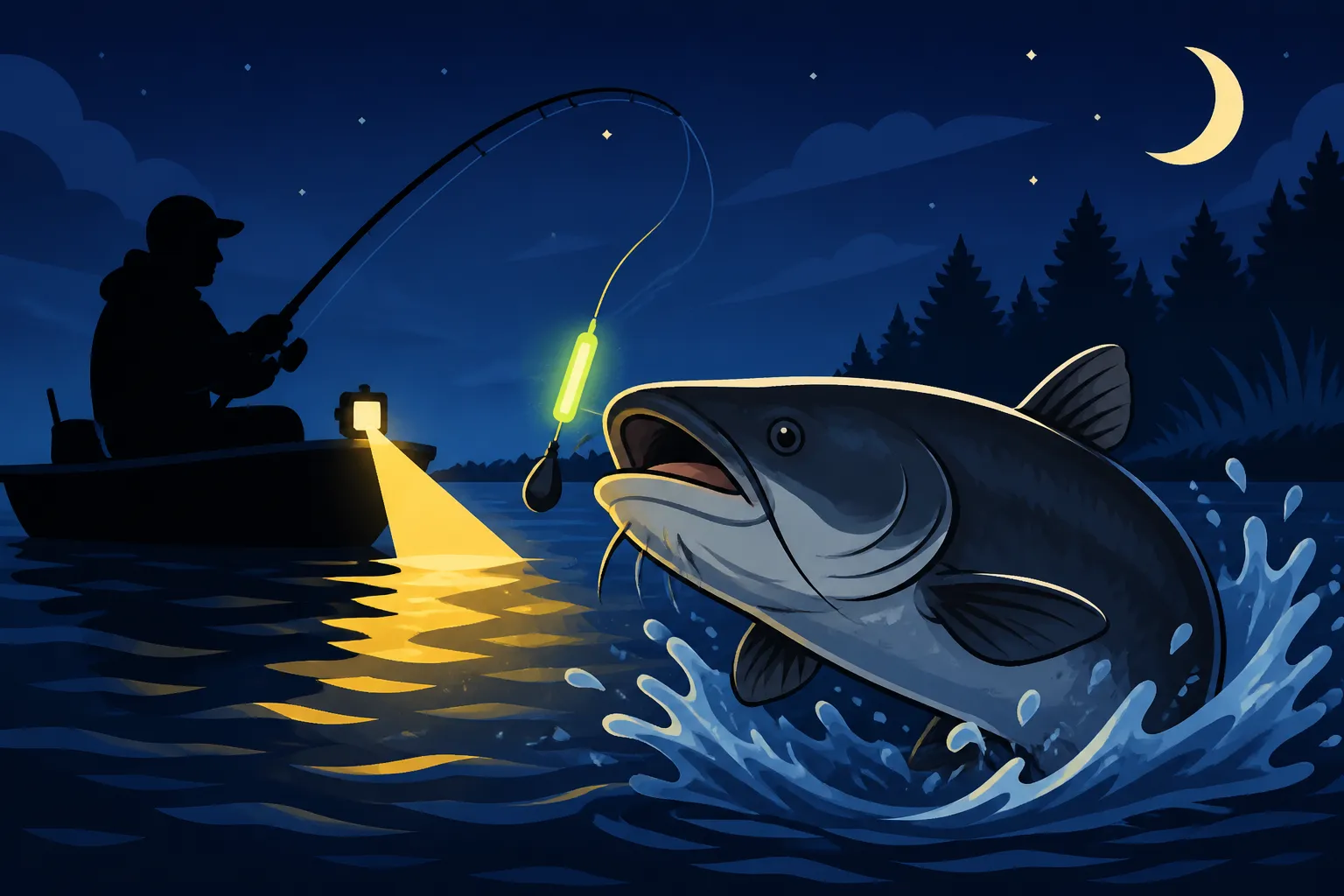
How to Catch Catfish at Night
Oh, the thrill of night fishing for catfish! There's nothing quite like the peace and quiet of the Indiana waters after sunset, but it can also be incredibly frustrating if you're not equipped for the unique challenges. Many anglers pack up once the sun dips below the horizon, missing out on some of the best catfishing action of the day. This comprehensive guide will walk you through everything you need to know to successfully target and land those whiskered warriors under the cover of darkness, turning your nighttime frustrations into triumphant catches.
Why Night Fishing for Catfish is a Game-Changer
When the sun sets, a whole new world awakens beneath the surface of Indiana's lakes and rivers. For many fish species, including catfish, darkness isn't a signal to rest but a call to feast. Understanding this shift in behavior is the first step to becoming a successful night angler. The tranquil atmosphere, combined with the heightened senses of nocturnal fish, creates an angling experience unlike any other.
Understanding Catfish Behavior After Dark
Catfish, particularly Channel Catfish and Flathead Catfish, are primarily nocturnal predators. This means they are most active and feed most aggressively during the hours of darkness. Think about it: their eyes are adapted for low-light conditions, and their barbels – those long whiskers – are packed with chemoreceptors that allow them to "taste" and "smell" their way to food even in murky water or pitch-black conditions. This gives them a significant advantage over their prey, and subsequently, over you if you're trying to catch them during the day when they might be less inclined to move from their cover.
As the sun disappears, water temperatures often drop, even if only by a few degrees. This cooling effect can invigorate catfish, prompting them to leave their daytime hiding spots in deeper water or dense cover and move into shallower areas to forage. They'll cruise flats, patrol submerged structure, and explore creek channels, actively seeking out meals. Their reliance on scent and vibration means that strongly scented baits become incredibly effective, as they can track them down easily without needing to see them. This behavior makes night fishing not just productive, but often more productive than daytime angling for catfish.
The Tranquility and Challenge of Night Fishing
There's a certain magic to being on the water after dark. The hustle and bustle of daytime boat traffic dies down, the sounds of nature amplify, and the stars put on a show. It's a serene experience that many anglers cherish, offering a peaceful escape from the daily grind. However, this tranquility comes with its own set of challenges. Reduced visibility means you need to be extra cautious with your movements, casting, and navigation, especially if you're on a boat.
Every task, from tying a knot to baiting a hook or landing a fish, becomes more difficult when you can't see clearly. You'll rely more on your other senses, feeling the subtle bites, hearing the splash of a surfacing fish, and even smelling the distinctive odor of some catfish baits. The challenge of overcoming these sensory limitations is part of what makes night fishing so rewarding. When you hear that reel scream and successfully battle a big catfish to the bank or boat in the dark, the sense of accomplishment is truly exhilarating. It's a test of patience, skill, and preparation, but one that often yields fantastic results.
Essential Gear for Your Nocturnal Catfish Hunt
Venturing out for a night of catfishing requires more than just your standard daytime setup. You need to think about how to illuminate your workspace, handle potentially larger fish, and present baits effectively in the dark. Having the right gear isn't just about comfort; it's about safety and maximizing your chances of success.
Lighting Up Your Setup
This is perhaps the most critical difference between day and night fishing. You absolutely need reliable light sources, but you also need to be mindful of how you use them so as not to spook fish or disturb other anglers.
- Headlamps: A good quality headlamp is your best friend at night. It keeps your hands free for baiting, tying, and handling fish. Look for models with red light options, as red light is less likely to spook fish or diminish your natural night vision. A durable LED headlamp with adjustable brightness, like many popular options you can find on Amazon, will be a game-changer.
- Lanterns: For ambient light around your fishing spot, a battery-powered lantern can be invaluable. It helps you see your tackle box, bait cooler, and generally makes the area more comfortable. Again, consider models with adjustable brightness and perhaps a warm light setting. Propane lanterns are powerful but can be noisy and give off heat, which might be overkill unless you're stationary for hours.
- Glow Sticks/LEDs for Bobbers: If you're using bobbers, especially for shallow water fishing or with kids, attach small glow sticks or specialized LED bobber lights. These allow you to easily track your line and detect bites without having to constantly shine your headlamp on the water, which can be disruptive.
- Boat Lights: If you're fishing from a boat, proper navigation lights are not just recommended, they're legally required in Indiana. Make sure your boat's stern and bow lights are fully functional before you head out, and consider an additional spotlight for navigating or landing fish. You can find robust marine lighting systems and accessories on Amazon.
Rods, Reels, and Line for the Night
Catfish are strong fighters, and when you're battling them in the dark, you want gear you can trust. Sensitivity is key for detecting subtle bites, while raw power is crucial for turning big fish away from snags.
- Rods: Opt for medium-heavy to heavy-action rods, typically 7 to 9 feet long. A longer rod provides better leverage for casting heavier baits and rigs, and for fighting larger fish. It also helps keep your line out of the water and clear of bankside obstructions. Look for rods with good backbone but a sensitive tip, which can help you feel those light taps even in the dark.
- Reels: Durable baitcasting reels are often preferred for larger catfish, offering excellent cranking power and line capacity. For lighter catfish or specific techniques, a robust spinning reel can also work well. Ensure your reel has a smooth drag system, as sudden runs from a big cat can quickly snap your line if the drag isn't set correctly. Many anglers prefer reels with a bait clicker feature, which makes a distinctive sound when a fish starts pulling line, alerting you without needing to constantly watch your rod tip.
- Line: Monofilament or braided line can both be effective. Monofilament offers good stretch, which can act as a shock absorber against powerful runs, and is generally easier to tie. For heavier applications or fishing in snaggy areas, braided line provides superior strength, minimal stretch for better bite detection, and excellent abrasion resistance. Use line in the 20-50 pound test range, depending on the size of catfish you expect to encounter and the type of water you're fishing. Heavier line often means you're less likely to lose a fish to snags or break-offs in the dark.
Baits That Shine in the Dark
When sight is limited, catfish rely on their incredible sense of smell and taste. This means strongly scented baits are king for night fishing. Forget about subtle presentations; you want to create an odor plume that catfish can follow from a distance.
- Cut Bait: Fresh cut bait is one of the most effective catfish baits, especially for larger Channel and Flathead Catfish. Use local baitfish like shad, skipjack, or even panfish like bluegill or crappie (check local regulations on using game fish as bait). Cut them into strips or chunks; the blood and oils will seep into the water, creating an irresistible scent trail.
- Stink Baits: These are commercially prepared baits designed to emit powerful, fish-attracting odors. They come in various forms, including dough balls, dip baits, and punch baits. Brands like Catfish Charlie or Sonny's Super Sticky often perform well. Dip baits are typically applied to a specially designed "bait holder" rig that allows the bait to slowly dissolve and release scent.
- Chicken Liver: A classic for a reason! Chicken liver is inexpensive, readily available, and incredibly smelly. Its soft texture makes it challenging to keep on a hook, but many anglers swear by its effectiveness. Using a bait holder hook or wrapping it with a bit of thread can help.
- Live Bait: For Flathead Catfish, live bait is often the preference. Small bluegill, shad, or even large shiners can be rigged to entice these ambush predators. Ensure your live bait is healthy and active to maximize its appeal. You can learn more about the Best Bait for Channel Catfish in Indiana Rivers.
Table: Popular Night Catfish Baits & Their Best Uses
| Bait Type | Target Species | Key Advantage | Best Presentation Method | Considerations |
|---|---|---|---|---|
| Cut Bait | Channel, Flathead | Strong, natural scent trail | Bottom rig with large hook | Requires fresh bait; can be messy. |
| Stink Bait | Channel, Blue/Flathead | Intense, long-lasting aroma | Dip worm/tube on bait holder rig | Can be messy; some fish prefer natural bait. |
| Chicken Liver | Channel, Small Flathead | Affordable, potent smell | Treble hook, bait holder, or wrapped with thread | Soft texture, prone to falling off. |
| Live Bait | Flathead | Mimics natural prey, irresistible | Free-lined or under a float, with circle hook | Check local regulations for size/species limits. |
| Worms (Nightcrawlers) | Smaller Channel Catfish, Bullheads | Easily accessible, universal appeal | Bottom rig or under a bobber | May attract smaller fish. |
Prime Locations and Techniques for Nighttime Catfish
Knowing where to cast your line and how to present your bait are crucial for success, especially in the dark. Catfish have preferred nighttime hangouts, and understanding their movements can significantly increase your catch rate.
Targeting River Channels and Deep Holes
Rivers like the Wabash River, White River, or Tippecanoe River are fantastic for night catfishing in Indiana. During the day, big catfish often hide in deep holes, under log jams, or along steep cut banks, avoiding the light and current. But at night, they become much more active, venturing out to feed.
- Current Breaks: Look for areas where the current slows down, such as behind large rocks, fallen trees, or bends in the river. These are prime ambush points where catfish wait for unsuspecting prey to drift by. Positioning your bait just upstream from a current break can be highly effective.
- Deep Holes: Catfish will often retreat to the deepest parts of the river during periods of low activity, but at night, they might move to the edges of these holes to feed. Focus on the transition zones where the deep water meets shallower flats or ledges.
- Confluence Points: Where two rivers or a river and a large creek meet, the mixing currents often create excellent feeding opportunities. These areas typically hold an abundance of baitfish, attracting hungry catfish. You can find excellent advice on Fishing the Wabash River in Indiana and Fishing the White River in Indiana for specific tactics.
Fishing Reservoirs and Lakes After Sunset
Indiana boasts numerous large reservoirs and natural lakes that offer incredible night catfishing opportunities. Lakes like Monroe Lake, Patoka Lake, or Lake Wawasee hold healthy populations of channel catfish, and some even have flatheads.
- Shallow Flats: Unlike their daytime behavior, catfish will often move onto shallower flats adjacent to deeper water after dark. These flats are teeming with baitfish and other small organisms, making them prime feeding grounds. Cast your bait onto these flats, especially if they have some submerged vegetation or scattered rocks.
- Humps and Ledges: Submerged humps and sharp drop-offs are highways for catfish. They will patrol these structural elements, moving from deep water to shallower feeding areas. Anchor your boat near the top or base of a hump, or along a ledge, and cast your baits to different depths.
- Inflows and Outflows: Any area where water enters or leaves a lake, such as a creek mouth or spillway, can be a magnet for catfish. These areas often concentrate baitfish and provide a steady supply of food.
Popular Night Fishing Rigs and Strategies
When fishing at night, simple, effective rigs are usually best. You don't want to be fumbling with complicated setups in the dark.
- Bottom Rigs (Carolina Rig/Slip Sinker Rig): This is perhaps the most versatile and popular rig for catfishing. It consists of a weight (usually an egg sinker or no-roll sinker) that slides freely on your main line, followed by a swivel, and then a leader (12-24 inches) tied to your hook. The sliding weight allows a fish to pick up the bait and move off without immediately feeling the resistance of the sinker, leading to more solid hookups. This setup is excellent for presenting cut bait or chicken liver on the bottom. You can learn more about Catfish Bottom Fishing Techniques in detail.
- Three-Way Swivel Rig: This rig is great for presenting bait slightly off the bottom or in areas with current. One eye of the three-way swivel is tied to your main line, another to a short leader (6-12 inches) with a weight, and the third to a longer leader (18-36 inches) with your hook and bait. This allows the bait to drift naturally above the bottom, keeping it visible (to the catfish's smell, at least) and out of snags.
- Float Rigs (Bobber Rigs): For shallower water or when fishing over submerged vegetation, a glow-in-the-dark bobber rig is highly effective. Use a sturdy bobber that can support your bait and a small weight. The bobber keeps your bait suspended at a desired depth, and the glow stick allows you to easily spot bites.
- Jug Fishing and Trotlines: While highly effective for catching multiple catfish, these methods are more advanced and have strict regulations in Indiana. Jug fishing involves multiple lines attached to floating jugs, while trotlines are long lines set across a body of water with many baited hooks. Always check the current Indiana Fishing Regulations and Bag Limits Guide for specific rules regarding these techniques, as limits on the number of hooks, tag requirements, and allowed locations vary. These are considered more advanced Night Fishing Techniques for Catfish.
Safety First: Important Considerations for Night Anglers
Fishing at night carries inherent risks that daytime fishing doesn't. Your safety, and the safety of anyone fishing with you, should always be your top priority. Preparation and awareness are key to a successful and incident-free night on the water.
Navigating in the Dark
Whether you're fishing from the bank or a boat, navigating in low light requires extra caution.
- Shore Anglers: If you're fishing from the bank, scout your location during the day. Identify any trip hazards, steep drop-offs, or obstacles. Bring a reliable headlamp and a backup flashlight. Wear sturdy, non-slip footwear. Tell someone where you're going and when you expect to return. Consider bringing a collapsible landing net to safely handle fish without having to scramble down a bank.
- Boat Anglers: This is where safety becomes paramount. Ensure all your boat's navigation lights (bow and stern) are fully operational and properly displayed. Keep a spotlight or powerful handheld light on board for navigating unfamiliar waters or locating hazards. Go slower than you would during the day. File a float plan with a friend or family member, letting them know your intended fishing area and expected return time. Always wear a life jacket, even if you're an experienced boater, and have extra throwable flotation devices accessible. Remember, even on seemingly calm water, unexpected obstacles can appear out of nowhere in the dark.
Bug Protection and Comfort
Nothing can ruin a peaceful night of fishing faster than a swarm of mosquitoes or other biting insects. Being comfortable means you can focus on fishing, not swatting.
- Insect Repellent: This is non-negotiable. Bring plenty of insect repellent with DEET or Picaridin. Apply it generously and reapply as needed. Consider wearing long sleeves and pants, even on warm nights, to minimize exposed skin.
- Appropriate Clothing: Dress in layers. Even if it's warm when you start, temperatures can drop significantly after dark, especially near water. A waterproof jacket is also a good idea, as dew or unexpected showers can make things damp.
- Comfortable Seating: If you're shore fishing, a comfortable folding chair can make hours of waiting much more enjoyable. For boat anglers, ensure you have comfortable seating and a clear deck free of tripping hazards.
Legalities and Regulations for Night Fishing
Even though it's dark, all the normal fishing regulations still apply, and some specific rules might be in place for night activities or certain bodies of water.
- Indiana Fishing License Requirements: Always make sure your Indiana Fishing License Requirements Explained are up to date. You can easily buy or renew your license online.
- Bag and Size Limits: Don't forget to adhere to the daily bag limits and size restrictions for catfish and any other species you might catch. These limits don't magically disappear after sunset. For example, Indiana's Statewide Bass Daily Bag Limit might not apply to catfish, but checking is always smart.
- Boat Regulations: As mentioned, proper boat lighting is mandatory. In addition, ensure you have all required safety gear on board, such as life jackets, a whistle or horn, and a fire extinguisher. You can review all the Indiana Fishing Regulations and Bag Limits Guide for current details.
- Quiet Hours/Park Rules: If you're fishing within a state park or a municipal park, be aware of any quiet hours or specific rules regarding night access. Some areas might close after dark, or require special permits for overnight fishing. Always respect private property and leave no trace behind.
By being well-prepared, safe, and respectful of the environment and regulations, your nights spent chasing catfish in Indiana will be incredibly rewarding and memorable.
Disclaimer
The information provided in this guide is for general informational purposes only. Fishing regulations and conditions can change rapidly. Always consult the most current Indiana Department of Natural Resources (IDNR) fishing guide and local regulations before heading out on the water. Fishing, especially at night, carries inherent risks, and anglers should always prioritize safety and responsible practices.