Is Grass Carp Legal to Keep in Indiana?
It's incredibly confusing, isn't it? You're out fishing, you hook into something big, and suddenly you're wondering if you just caught a treasure or a potential legal headache. The waters around grass carp in Indiana are certainly murky for many anglers, especially with their reputation as plant-eaters and the strict rules surrounding them. This guide will clarify everything you need to know about grass carp, their legality in Indiana, and what to do if one ends up on your line.
Understanding Grass Carp in Indiana Waters
Grass carp, or white amur as they're sometimes called, are a fascinating but often misunderstood fish. They certainly don't look like your typical bass or bluegill, and their presence in many Indiana waters is a direct result of human intervention, not natural migration.
What Exactly is a Grass Carp?
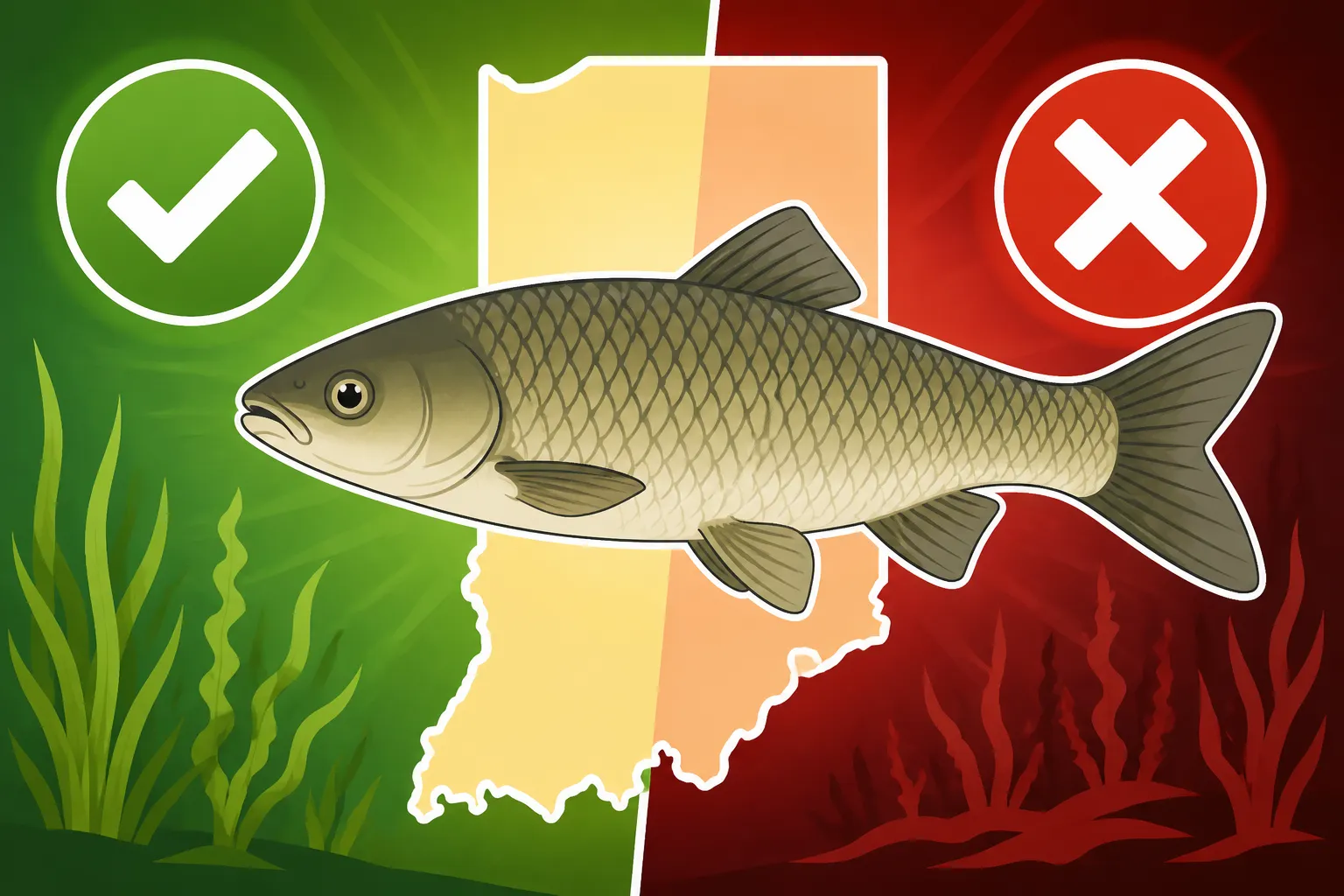
Let's start with the basics. A grass carp (scientific name: Ctenopharyngodon idella) is a large, herbivorous freshwater fish native to eastern Asia. They have a torpedo-shaped body, large scales, and an overall appearance that can sometimes be mistaken for a very large chub or even a slender common carp, though they lack the distinctive barbels that common carp possess around their mouths. These fish can grow quite large, sometimes exceeding 50 pounds, making for a surprisingly powerful fight on the end of a line!
Their claim to fame, and the reason they were brought to the United States, is their insatiable appetite for aquatic vegetation. Back in the day, folks thought, "Hey, here's a fish that eats weeds! Problem solved!" And for controlling nuisance aquatic plants in ponds and lakes, they can indeed be very effective. However, this very trait is also why they've become a point of contention and careful regulation. They're like a living, swimming lawnmower, and while that sounds great for an overgrown pond, it can wreak havoc on a delicate ecosystem if not managed properly. Grass Carp in Indiana: What Anglers Should Know
The Role of Triploid Grass Carp
Now, this is where a lot of the confusion comes in, and it's a critical distinction for understanding the legality of these fish. There are two main types of grass carp we talk about: diploid and triploid.
Diploid grass carp are the "original" fertile fish. They can reproduce naturally, and when introduced into a new environment, they can establish breeding populations. This is precisely what concerned environmental scientists and fisheries managers. An unchecked population of fertile grass carp could decimate native aquatic plant beds, which are vital habitats and food sources for countless other fish, insects, and waterfowl. Imagine a lake where all the submerged vegetation suddenly disappears – it would be an ecological disaster, impacting everything from bluegill spawning to the local duck population.
To get around this reproductive risk while still harnessing their weed-eating prowess, scientists developed triploid grass carp. These fish are genetically modified to have three sets of chromosomes instead of the usual two, rendering them sterile. Essentially, they can eat all the weeds you want, but they can't create more grass carp. This was seen as the perfect compromise: weed control without the risk of an invasive species running rampant through public waters. Private pond owners, for instance, often obtain permits to stock triploid grass carp to manage vegetation without worrying about an out-of-control population.
The Legality of Keeping Grass Carp in Indiana
This brings us to the core question, and it's pretty straightforward for the average angler in Indiana: no, you generally cannot legally keep a grass carp you catch. There's a very specific reason for this, and it centers entirely on that diploid vs. triploid distinction we just discussed.
Diploid vs. Triploid: The Crucial Distinction
Indiana's regulations are designed to prevent the establishment and spread of fertile (diploid) grass carp in public waters. Since it's nearly impossible for an angler to tell the difference between a diploid and a triploid grass carp just by looking at it on the bank, the law errs on the side of caution. If it looks like a grass carp, it's treated as a potential diploid, and therefore, a potential invasive species.
The Indiana Department of Natural Resources (IDNR) wants to avoid any situation where fertile grass carp could reproduce and create self-sustaining populations in public lakes and rivers. These fish are not considered native, and their uncontrolled spread poses a significant threat to the aquatic plant communities that are essential to Indiana's natural fisheries. It’s all about protecting our native species and their habitats from disruption.
"Catch and Release" for Diploid Grass Carp
The rule in Indiana is clear: if you catch a grass carp in public waters, you must release it immediately, alive and unharmed. This isn't just a suggestion; it's a legal requirement. The idea is that if it happens to be a fertile diploid, releasing it is better than keeping it, as keeping it could contribute to its spread or be seen as an intentional act against regulations. Anglers found in possession of a grass carp in Indiana's public waters could face significant penalties, including fines. It's simply not worth the risk.
Think of it this way: when you're fishing a public lake or river, you're interacting with a shared natural resource. The state has a vested interest in keeping that ecosystem healthy and balanced. Allowing anglers to remove grass carp from these waters, especially without knowing if they are fertile or sterile, could complicate their management strategies and potentially harm the ecosystem further down the line.
Stocking Triploid Grass Carp: A Permitted Solution
Now, here's the nuance: while the general public angler cannot keep a grass carp, there are specific circumstances where triploid grass carp are legally present and managed. Private pond owners can obtain a permit from the Indiana Department of Natural Resources to stock triploid grass carp into their private waters for vegetation control. This is a controlled process; the fish must come from approved suppliers, and the stocking is monitored.
If you are a private pond owner who has gone through the proper channels and obtained a permit to stock triploid grass carp, then yes, those particular fish are yours to manage on your private property. This means you could technically keep them if you wished, as they are part of your permitted weed management strategy. However, this exception does not extend to someone fishing on public property, or even fishing on private property without the explicit permission and understanding of the permit holder. For an angler on public waters, or even a guest on private waters without explicit instruction, the safest and legally correct action is always to release any grass carp caught. Indiana Fishing Regulations and Bag Limits Guide
Identifying Grass Carp on the Bank
Since you can't keep them, it's crucial to be able to identify a grass carp quickly and accurately so you can release it. They don't look exactly like every other fish out there, but they can certainly be confused with some common Indiana species.
Key Features to Look For
When you pull a fish out of the water and suspect it might be a grass carp, here's what to observe:
- Body Shape: They have a long, slender, torpedo-shaped body, built for speed in open water. It's a very streamlined appearance, not as deep-bodied as a common carp or a big bluegill.
- Scales: Grass carp have large, prominent scales that are typically dark greenish-brown on the back, fading to silvery-white on the belly.
- Head and Mouth: Their head is relatively small compared to their body, with a wide, blunt snout. Crucially, their mouth is terminal (at the very front of the head) and lacks any barbels (those whisker-like protrusions) around it. This is a key distinguishing feature from a common carp.
- Eyes: Their eyes are relatively low on their head, usually below the level of the mouth.
- Fins: All their fins are rayed, and they have a single dorsal fin.
How to Distinguish from Other Species
The most common mix-up is with the common carp. Here’s a quick comparison:
| Feature | Grass Carp | Common Carp |
|---|---|---|
| Mouth | Terminal (front of head), no barbels | Subterminal (under snout), two pairs of barbels |
| Body Shape | Slender, torpedo-like | Deep-bodied, sometimes "humped" back |
| Scales | Large, uniform, often dark green/brown | Large, often brassy/golden, can be irregular |
| Color | Dark greenish-brown to silvery-white | Golden-brown to olive, sometimes mottled |
| Spine on Dorsal | Absent (soft rays) | Present (serrated, bony spine) |
You might also confuse them with some very large chubs or suckers, but their overall size and mouth structure should help differentiate them. If you see barbels, it's a common carp, which has different regulations. Common Fish Species You'll Find in Farm Ponds
Why the Strict Regulations?
It might seem like a lot of fuss over one type of fish, but the strict regulations around grass carp in Indiana are rooted in sound ecological principles and a deep understanding of the potential damage invasive species can cause.
Environmental Impact of Invasive Species
The history of invasive species around the world is littered with cautionary tales. When a non-native species like the fertile (diploid) grass carp is introduced into an ecosystem where it has no natural predators or controls, it can quickly outcompete native species for resources and disrupt the entire food web.
For grass carp, the primary concern is their diet. They are voracious herbivores, capable of consuming vast quantities of aquatic plants. While this sounds good for clearing out a private pond that's choked with weeds, in a large, diverse public lake or river system, these plants are more than just "weeds." They are:
- Habitat: Submerged vegetation provides critical cover for juvenile fish, invertebrates, and amphibians, protecting them from predators.
- Food Source: Many native fish, waterfowl, and other wildlife rely directly or indirectly on these plants for food.
- Water Quality: Plants help filter water, prevent erosion, and absorb excess nutrients, contributing to overall water clarity and health.
An uncontrolled population of grass carp could strip a body of water bare of its vegetation, turning vibrant, biodiverse areas into barren underwater landscapes. This directly impacts everything from bluegill spawning success to the migratory patterns of ducks and geese.
Protecting Indiana's Ecosystems
The Indiana Department of Natural Resources (IDNR) works tirelessly to protect and enhance the state's natural resources. Part of that mission involves preventing the introduction and spread of harmful invasive species. The regulations on grass carp are a proactive measure to safeguard Indiana's native fish populations, aquatic plants, and the overall health of its aquatic ecosystems.
It’s a balancing act. On one hand, triploid grass carp offer a tool for pond owners struggling with excessive vegetation. On the other, the risk of diploid grass carp establishing themselves in public waters is too great. These regulations reflect a careful consideration of both the benefits and the potential harms. As anglers, we all play a role in this protection, and understanding these rules is a vital part of responsible fishing. When you release a grass carp, you're not just following a rule; you're helping to protect the future of Indiana fishing. Indiana Fishing License Requirements Explained
What to Do if You Catch a Grass Carp
So, you've identified it: you've got a grass carp on your line. What now? The actions you take are crucial, both for the fish and for staying on the right side of the law.
Catching a Diploid Grass Carp
The golden rule for any grass carp you catch in Indiana, especially if you're in public waters, is immediate release, alive and unharmed. Since you, as an angler, cannot easily determine if the fish is a fertile diploid or a sterile triploid, the safest and legally compliant action is to treat every grass carp as if it's a diploid that must be returned to the water.
Here's how to handle the situation:
- Minimize Stress: Try to land the fish as quickly and gently as possible. Avoid dragging it onto the bank or leaving it flopping around.
- Unhook Carefully: Use pliers or a hook-remover to quickly and carefully remove the hook. If the fish is deeply hooked, consider cutting the line close to the hook rather than trying to rip it out, which could cause fatal damage.
- Support the Fish: When handling a large fish, always support its body horizontally. Avoid holding it vertically by the jaw or gills, as this can cause internal damage. Wet your hands before touching the fish to protect its slime coat.
- Release Promptly: Get the fish back into the water as soon as the hook is removed. Gently hold it in the water until it regains its equilibrium and swims away strongly. Don't just toss it back; ensure it's ready to go.
Remember, the goal is to ensure the fish's survival so it can continue its role in the ecosystem, whether it's eating weeds in a private pond or simply existing in public waters until a fisheries manager decides otherwise. Penalties for keeping a grass carp in Indiana can be significant, so it's always best to be cautious. What Happens If You Fish Without a License in Indiana?
Catching a Stocked Triploid Grass Carp
This is where things can get a little tricky, but the same general rule applies for most anglers. As we discussed, only private pond owners with a valid permit are authorized to stock and manage triploid grass carp.
If you are fishing in a private pond, and the owner has explicitly informed you that they have legally stocked triploid grass carp for vegetation control, and furthermore, they have given you specific instructions about what to do if you catch one (e.g., "you can keep them if they're too big," or "please release them all"), then you should follow the pond owner's instructions.
However, for the vast majority of anglers fishing in public waters, or even in private waters where you don't have explicit, permitted information from the owner:
- Assume it's a regulated fish: Always default to the "catch and immediate release" rule for any fish that appears to be a grass carp.
- Don't attempt to verify: It's not your job, nor is it practical, to try and determine if a fish is diploid or triploid on the bank. Specialized scientific testing is required to make that distinction.
- Safety first: Prioritize the fish's well-being and your legal compliance by releasing it immediately.
Essentially, for general fishing purposes in Indiana, grass carp are not legal to keep. The only real exception is if you are the specific permit holder who legally stocked triploid grass carp in your own private pond. When in doubt, let it go. It's the best policy for you and for Indiana's aquatic environments. Indiana's Fishing License Year Runs April to March
Disclaimer
This article is for general informational purposes only and does not constitute professional advice. Laws, prices and regulations vary by location and change over time. Consult a qualified professional for guidance on your specific situation.