Indiana Crappie and Bluegill Daily Limits
It's incredibly frustrating when you're out on the water, having a fantastic day catching crappie or bluegill, but a little voice in the back of your head starts to wonder, "Am I allowed to keep this many?" The rules around daily limits can feel like a moving target, leaving many of us hesitant or confused. This guide is here to clear up all that muddiness, diving deep into Indiana's daily limits for crappie and bluegill so you can fish with confidence and peace of mind.
Understanding Indiana's Panfish Regulations
Fishing in Indiana is a cherished pastime, and our state's diverse waters offer fantastic opportunities for catching a variety of species. Among the most popular are panfish – especially crappie and bluegill – known for their feisty fight and delicious table fare. But with that popularity comes the need for responsible management, which is where daily limits come into play. These regulations aren't just arbitrary numbers; they're carefully set to ensure our fish populations remain healthy and abundant for generations to come.
The Statewide Daily Limit for Crappie and Bluegill
Let's cut right to the chase for the most common scenario: for most of Indiana's public waters, the daily bag limit for panfish, which includes crappie and bluegill, is a generous 25 fish per species. This means you can keep up to 25 crappie and, separately, up to 25 bluegill in a single day. It’s important to remember that this limit applies to each angler, so if you're fishing with a friend or family member, each licensed angler can harvest their own limit. This clarity is crucial, as often people mistakenly believe the 25-fish limit is a combined total for all panfish.
Think about it: that's a pretty good haul for a day of fishing! This statewide rule is designed to provide ample opportunity for anglers while still protecting the overall health of the ecosystem. You’ll find this regulation laid out in the official Indiana Department of Natural Resources (DNR) fishing guide, which is always a good read before heading out. Sometimes, specific lakes might have exceptions, but generally, this 25-per-species rule is your go-to for most of the state.
Why Limits are Important for Fish Populations
Now, you might be thinking, why have limits at all? If the fish are biting, shouldn't we be able to keep as many as we want? The truth is, daily limits are a cornerstone of fisheries management, vital for maintaining healthy and sustainable fish populations. Without them, it would be all too easy for a few exceptionally good fishing days to put a significant dent in the crappie or bluegill numbers of a smaller lake or pond. These limits act as a safeguard, preventing overharvesting that could deplete the population and negatively impact future fishing opportunities.
Consider a small, easily accessible pond near a town. If every angler could take home 50 or 100 bluegill on a good day, that pond would quickly become "fished out." The fish wouldn't have enough time to reproduce and grow, leading to smaller, less numerous fish over time. By setting a reasonable limit, the DNR ensures that enough fish remain in the water to continue breeding, providing a natural balance that supports both the fish and the anglers who enjoy catching them. It’s all about finding that sweet spot between recreational harvest and ecological sustainability. These guidelines are carefully researched and adjusted over time to reflect the health of different fish populations, ensuring we all get to enjoy great fishing for years to come. For a broader look at all the rules, check out our guide on Indiana Fishing Regulations and Bag Limits Guide.
Specifics of Crappie Daily Limits in Indiana
Crappie are a fantastic fish to target, whether you're chasing them in early spring as they move shallow or finding them suspended over deeper brush piles in summer. Their daily limit, like bluegill, is generally 25 fish per angler. But sometimes, people wonder if there are nuances between the different types of crappie or how to properly count their catch. Let's explore these details so you can fish for crappie with complete confidence.
Black and White Crappie: Are the Limits the Same?
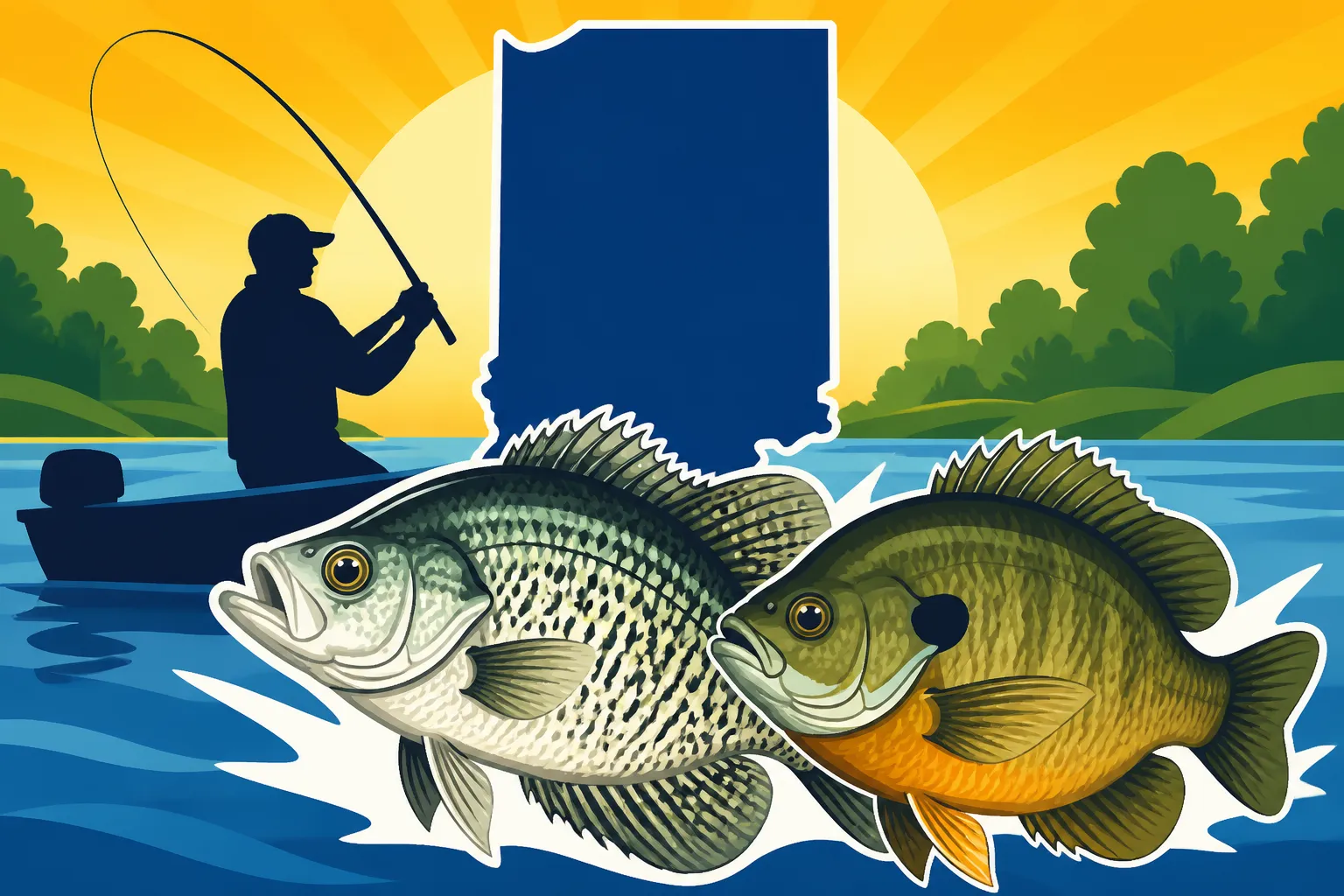
Indiana waters are home to both black crappie and white crappie, two very similar but distinct species. Black crappie typically have more distinct black spots scattered across their silvery bodies and seven or eight dorsal spines, while white crappie tend to have more organized vertical bars or stripes and usually six dorsal spines. But here’s the good news: when it comes to daily limits, Indiana DNR doesn't differentiate between the two. The 25-fish daily limit applies to both black crappie and white crappie, individually or combined.
This means you don't have to worry about correctly identifying each crappie to make sure you're within the legal limit for a specific sub-species. As long as the fish you're keeping is a crappie, it counts towards your 25-fish crappie limit for the day. This simplifies things immensely for anglers, allowing you to focus on the fishing rather than constantly stressing over identification. Just count your crappie, regardless of their specific type, and you'll be well within the regulations. You can find more details on How Many Crappie Can You Keep in a Day? in our dedicated article.
How to Accurately Count Your Crappie Catch
Keeping an accurate count of your crappie catch is more important than you might think, especially when the bite is on! It's easy to lose track when you're landing fish left and right. The best practice is to have a dedicated stringer, livewell, or cooler where you immediately place your keepers. Some anglers prefer to use a simple clicker counter, which can be picked up cheaply from many tackle shops or online retailers like Amazon, to keep a running tally as they catch fish. This way, you always know exactly where you stand.
Imagine a scenario: you're fishing a hot spot on Patoka Lake, and the crappie are practically jumping into the boat. Without a system, it’s easy to catch 15, then 10 more, then another 5, and suddenly you’re at 30 or 35 without even realizing it. That’s how accidental violations happen. A simple method, like counting each fish out loud as it goes into the livewell, or using a visual system like transferring fish from a small holding net to your main cooler once you've made a mental note, can prevent these situations. The key is consistency and being mindful of every fish you decide to keep. You can learn more about Crappie Fishing in Indiana: Black Crappie Basics for more tips.
Bluegill and Other Sunfish Daily Limits
Bluegill are arguably the most iconic panfish in Indiana, a staple for beginners and seasoned anglers alike. They’re abundant, fun to catch, and delicious. Like crappie, they fall under the general panfish regulations for daily limits. But what about their cousins, the redear sunfish, or other less common sunfish species you might encounter? Indiana's regulations often group these sunfish together, simplifying the rules for anglers.
Bluegill and Redear Sunfish: A Combined Approach to Limits
When you're reeling in those vibrant bluegill, you might also hook into a feisty redear sunfish, easily identified by the red or orange "ear flap" on its gill cover. Both are popular panfish and are included in Indiana’s general panfish daily limit of 25 fish per angler. The good news is that this 25-fish limit applies to each species separately. So, if you catch 25 bluegill and 25 redear sunfish, you're still well within the legal limits. This is a common point of confusion, as some states combine all panfish into one overarching limit. In Indiana, it's 25 bluegill and 25 redear, not 25 total.
This distinct approach acknowledges the robust populations of both species in many Indiana lakes and ponds. It means if you hit a fantastic bed of bluegill, you can fill your limit, and if you then move to a different spot known for larger redear, you can pursue those without having to choose between your panfish options. It's a system designed to maximize recreational fishing while still upholding conservation efforts. Keep in mind that while the limits are separate, responsible harvesting means only taking what you will use. Our guide on How Many Bluegill Can You Keep in Indiana? offers further insights.
What About Other Panfish Like Green Sunfish or Pumpkinseed?
Beyond bluegill and redear, Indiana waters are home to several other sunfish species, such as green sunfish, pumpkinseed, warmouth, and various hybrid sunfish. These often go by the umbrella term "panfish" and are generally smaller but equally fun to catch, especially for younger anglers. The important thing to remember is that Indiana’s regulation for "panfish" covers these species as well, and like crappie, bluegill, and redear, the daily limit is 25 fish per species.
This means if you happen to catch 25 green sunfish, 25 pumpkinseed, and 25 warmouth, you could legally keep them all, in addition to your crappie, bluegill, and redear limits! However, it's pretty rare for an angler to specifically target and fill a limit on these lesser-known species. Usually, they're caught incidentally while fishing for bluegill or crappie. The key takeaway is that the 25-per-species rule provides a clear framework, allowing you to enjoy the diversity of panfish our state has to offer without worrying about accidentally exceeding a combined limit. This approach ensures that even less common species are managed individually, contributing to the overall health of our aquatic ecosystems. For a comprehensive look at various panfish species, consider reading our Indiana Panfish Guide: Crappie, Bluegill, and Sunfish.
Exceptions and Special Circumstances for Panfish
While the 25-fish per species limit is generally standard across Indiana for crappie and bluegill, there are always nuances to fishing regulations. Sometimes, specific bodies of water might have different rules, or certain activities like tournaments have their own set of considerations. It's vital for any responsible angler to be aware of these potential deviations from the norm to avoid unintentional violations.
Daily Limits in State-Managed Waters or Special Lakes
Occasionally, certain lakes, reservoirs, or state-managed waters might have specific, localized regulations that differ from the statewide panfish limits. These exceptions are typically put in place by the Indiana DNR for very good reasons: perhaps a particular body of water has a unique ecological balance, a recovering fish population, or is part of a special management program. For example, a lake might have an experimental program to grow larger crappie, leading to a reduced daily limit or even a minimum length requirement just for that specific body of water.
These special rules are usually well-publicized by the DNR, often posted at public access points, on their website, or highlighted in the annual fishing guide. It's always a smart move, before heading out to a new spot, to quickly check the specific regulations for that particular lake or river. A quick search on the Indiana DNR website or a call to a local conservation officer can save you a lot of hassle. While specific examples for crappie and bluegill are less common than for, say, walleye or bass (where you find specific length limits in certain lakes like Bass Lake Walleye Length Limit Is Different From the Rest of the State), it's still worth a quick check to ensure you're compliant. Ignorance of the law is never an excuse, and confirming the local rules is part of being a good steward of our natural resources.
Tournament Fishing and Catch-and-Release Considerations
Tournament fishing introduces another layer of complexity to daily limits, even for panfish. While most panfish tournaments are less common than bass or walleye events, if you participate in one, it's crucial to understand the specific rules set by the tournament organizers. Often, tournaments operate under a strict catch-and-release policy, especially if they are designed to promote conservation or simply measure fish for size rather than for harvest. In such cases, the state’s daily limit might be technically irrelevant if all fish are immediately released after being weighed or measured.
However, if a tournament does allow for keeping fish, then state daily limits absolutely apply to each individual angler participating. It’s important not to confuse tournament rules with state regulations. Even if a tournament has a special permit, individual anglers must still abide by the statewide or specific lake limits when it comes to taking fish home. For anglers practicing catch-and-release outside of a tournament, the daily limit still technically applies to the fish you possess in your livewell, even if you intend to release them all at the end of the day. Many anglers choose to only keep what they intend to eat, making catch-and-release a personal choice for conservation. When considering tournament angling, be sure to review our specific guide on Tournament Angler License Rules and Requirements.
Common Misconceptions and Avoiding Violations
Navigating fishing regulations can sometimes feel like walking through a maze. There are common pitfalls and misunderstandings that can lead to unintentional violations, turning a great day on the water into a stressful one. Understanding these common misconceptions is key to ensuring you stay compliant and enjoy your time fishing for crappie and bluegill in Indiana.
The Importance of Knowing Your Local Lake Rules
While we’ve emphasized the statewide 25-fish per species limit for crappie and bluegill, a critical piece of advice for every angler is to always check for specific regulations pertaining to the body of water you intend to fish. It's a common misconception that all rules are uniform across the state. While they mostly are for panfish, an exception can pop up unexpectedly. These localized rules might include different size limits, reduced daily limits, or even special gear restrictions.
Imagine you're planning a trip to a lesser-known lake you've heard good things about. You pack your gear, drive out, and start catching some beautiful crappie. You're happily counting them towards your 25-fish limit, unaware that this particular lake, due to a special management program, has a 10-fish limit and a 10-inch minimum size for crappie. This is a hypothetical, but it illustrates how easily an angler can fall afoul of the law simply by not doing a quick check. The Indiana DNR publishes an annual fishing guide that lists these exceptions, and their website is another excellent resource. Taking five minutes to review these details before you cast your line can save you from potential fines and the headache of a conservation officer interaction.
Penalties for Exceeding Daily Limits
Fishing without a license or exceeding daily limits isn't just a minor infraction; these are serious matters with real consequences. If you're caught with more crappie or bluegill than the legal limit, you could face penalties that range from significant fines to the confiscation of your catch and even your fishing gear. The exact penalty can vary depending on the severity of the violation, whether it's a first offense, and the discretion of the enforcing officer. However, it's safe to say it will be a costly lesson.
Consider the cost: beyond the immediate fine, which can easily be hundreds of dollars, there's the potential court appearance, legal fees, and the possibility of losing your fishing privileges for a period. This far outweighs the pleasure of keeping a few extra fish. The goal of these penalties isn't to punish anglers unnecessarily, but to deter behavior that harms our natural resources and ensures fairness for all who abide by the rules. It's a stark reminder that responsible angling includes respecting the regulations designed to protect the very fish we love to catch. You can delve deeper into this topic by reading about the Penalties and Fines for Fishing Without a License.
Gear and Best Practices for Ethical Panfishing
Ethical panfishing goes beyond just adhering to daily limits; it encompasses everything from choosing the right gear to ensuring the fish you release have the best chance of survival. Being an ethical angler means you're not just taking from the resource, but actively contributing to its health and sustainability. Let's look at how your gear choices and fishing practices play a role.
Choosing the Right Tackle for Panfish
Fishing for crappie and bluegill often calls for lighter tackle, which makes the fight more exciting and also helps in minimizing harm to fish you intend to release. An ultralight or light action spinning rod, typically in the 5 to 6.5-foot range, paired with a small spinning reel spooled with 2-6 pound test line, is often ideal. This setup allows for delicate presentations of small jigs, bobbers, or live bait (like wax worms or small minnows) that panfish prefer. Many anglers find their preferred ultralight rods and reels, along with a variety of panfish-specific baits and tackle, on platforms like Amazon.
Using tackle that's too heavy for panfish can result in less sensitive bites, meaning you miss more fish, or it can cause unnecessary stress to smaller fish if you're muscling them in. Conversely, going too light can lead to break-offs, leaving hooks in fish. The sweet spot is a balanced setup that allows for enjoyable fishing and maximizes your ability to land fish efficiently, whether you're keeping them or letting them go. For a deeper dive into what gear works best, check out our guide on Best Panfish Tackle for Indiana Anglers.
Handling and Releasing Fish Responsibly
Even if you're fishing within your daily limit, proper fish handling is crucial, especially for fish you plan to release. Panfish, while hardy, can still be injured by improper handling. If you intend to release a fish, try to minimize the time it spends out of the water. Handle it gently with wet hands to protect its slime coat, which is vital for its immune system. Avoid squeezing its body or putting your fingers in its gills.
When removing the hook, a pair of needle-nose pliers or a de-hooking tool can be invaluable, allowing you to quickly and carefully remove the hook without tearing delicate mouth tissue. If a fish is deeply hooked, it's often better to cut the line as close to the hook as possible rather than attempting to rip the hook out, which can cause fatal injuries. For a successful release, place the fish back into the water gently, headfirst, and if it seems sluggish, hold it upright and move it back and forth slightly to push water over its gills until it swims away on its own. These practices ensure that the fish you release have the best chance of survival and contribute to the ongoing health of Indiana's panfish populations.
| Species | Statewide Daily Limit (per angler) | Size Limits | Notes |
|---|---|---|---|
| Crappie | 25 fish | None | Applies to both Black and White Crappie |
| Bluegill | 25 fish | None | Separate from other panfish limits |
| Redear Sunfish | 25 fish | None | Separate from other panfish limits |
| Other Sunfish | 25 fish (per species) | None | Includes Green Sunfish, Pumpkinseed, Warmouth |
Disclaimer
The information provided in this guide is for general informational purposes only and is subject to change. While we strive to provide accurate and up-to-date information, fishing regulations can be complex and are regularly reviewed and updated by the Indiana Department of Natural Resources (DNR). It is always the angler's responsibility to consult the most current Indiana Fishing Regulations Guide and any specific local regulations for the body of water they intend to fish before heading out.