Best Time of Year for Striped Bass Fishing in Indiana
Oh, the elusive, hard-fighting striped bass in Indiana! If you've spent any time on our larger reservoirs, you've probably heard tales of these powerful fish, or perhaps even tangled with one yourself. But figuring out the "best" time to consistently hook into these aggressive hybrids can feel like trying to solve a complicated puzzle, especially when the weather and water conditions are constantly changing. This guide is here to untangle that mystery, giving you a clear roadmap to maximize your chances, season by season, for targeting those thrilling striped bass, or more accurately, their equally exciting cousins, the hybrid striped bass (also known as wipers) that populate our Hoosier waters.
Understanding Indiana's "Striped Bass" Fishery: The Hybrid Story
Before we dive into the calendar, let's clear up a common point of confusion that many anglers encounter. When people talk about "striped bass" in Indiana, they're almost exclusively referring to the hybrid striped bass, or "wiper." These aren't the ocean-run pure-strain striped bass you hear about on the coasts; instead, they are a crossbreed between a true striped bass and a white bass, specially stocked in our reservoirs for their incredible growth rate and fierce fighting spirit. They offer all the thrill of their larger cousins in a freshwater package, often reaching impressive sizes. Understanding this distinction is key because their behavior, while similar in many ways, is adapted to our freshwater environments. If you're looking to identify one, you'll notice their stripes are often broken or discontinuous compared to the more solid lines of a purebred striped bass. For a deeper dive, check out Hybrid Striped Bass Identification: Spotting a Wiper.
These wipers are pelagic, meaning they love open water, often suspending over deep areas, and they're highly predatory. They chase down schools of baitfish, often herding them to the surface, creating those exciting "boils" or "jumps" that can drive an angler wild. Their movements are largely dictated by water temperature, bait availability, and oxygen levels, which ebb and flow throughout the year, making seasonal adjustments crucial for success. You might find yourself scouring online retailers like Amazon for specific lures once you pinpoint the seasonal patterns.
Spring: The Energetic Pre-Spawn and Post-Spawn Bite
Spring is a time of renewed hope and vigorous activity for most fish species, and Indiana's wipers are certainly no exception. As the ice melts and water temperatures begin to climb, these fish become incredibly active, shaking off the sluggishness of winter and embarking on a serious feeding spree. This period, from roughly April through early June, offers some of the most consistent and exciting action for hybrid striped bass.
Warming Waters and Active Feeding
Once the water hits the 50-degree Fahrenheit mark and keeps climbing into the low 60s, wipers become very aggressive. They're looking to bulk up after the lean winter months and before the stress of their pseudo-spawn (hybrids don't truly reproduce, but they do go through spawning motions). You'll often find them cruising shallower flats or along main lake points where baitfish, like shad, are starting to congregate. This is a fantastic time for casting lures, as the fish are willing to chase.
The key here is patience and observation. Watch for subtle signs of baitfish near the surface, or even better, keep an eye out for those tell-tale surface boils where wipers are actively attacking schools of shad. Early mornings and late evenings are often prime times during the spring, especially on sunny days that warm the surface water.
Productive Techniques and Lures
During this spring surge, reaction baits really shine. Lipless crankbaits, like a chrome or silver shad-pattern, are incredibly effective when cast out and retrieved rapidly. These mimic fleeing baitfish perfectly. Jerkbaits are another excellent choice, especially on slightly cooler days or when fish seem a bit less aggressive. A good jerkbait with a stop-and-go retrieve can draw strikes from hesitant wipers. Many anglers stock up on these versatile lures from online suppliers such as Amazon, ensuring they have a variety of colors and sizes.
Another highly effective technique is throwing swimbaits or larger curly-tail grubs on a heavy jig head. These can be fished in various depths, allowing you to cover more water until you locate the feeding fish. Vertical jigging spoons or blade baits can also be deadly when you find a school of wipers suspended at a specific depth, often near deeper ledges or humps. Don't be afraid to experiment with retrieve speeds and pauses; wipers often respond well to erratic movements that simulate a distressed baitfish. For more ideas, consider exploring Best Bait Choices for Spring Fishing.
Summer: Navigating the Heat for Deep-Water and Nighttime Action
As Indiana's summer progresses and temperatures soar, the striped bass (wiper) bite can shift dramatically, presenting new challenges and opportunities. While the wide-open surface bites of spring might become less frequent, dedicated anglers who adapt their tactics can still find plenty of action. Summer fishing for wipers often means going deeper or going darker.
Oxygen, Depth, and Thermoclines
Warm summer waters, particularly in our shallower reservoirs, can lead to lower oxygen levels in the upper water column. Wipers, like many other game fish, will seek out cooler, more oxygen-rich water. This typically means they'll move to deeper parts of the lake, often concentrating around the thermocline – the layer of water where the temperature changes rapidly. This thermocline acts like a comfortable "floor" or "ceiling" for these fish, and they'll often suspend just above or within it.
Finding this thermocline, usually with a good fish finder, becomes crucial. Wipers might be anywhere from 15 to 40 feet deep, depending on the lake and current conditions. They'll still follow schools of baitfish, but these bait schools will also be seeking optimal conditions, so understanding the bait's location is paramount. Reservoirs like Monroe Lake or Patoka Lake, with their deeper basins, offer prime summer wiper habitat. Look for large schools of baitfish on your electronics, and you're likely to find wipers nearby.
Night Fishing and Trolling Strategies
When the sun beats down relentlessly, the surface bite largely shuts off during the day. This is where night fishing becomes an absolute game-changer for wipers in the summer. Under the cover of darkness, wipers will often move shallower to feed, chasing baitfish that have also risen in the water column. Casting large topwater lures, big swimbaits, or even noisy crankbaits around main lake points, ledges, or underwater humps can be incredibly effective. The quiet of the night, combined with cooler surface temperatures, makes them bold and aggressive. Bring a headlamp (you can find great deals on reliable models on Amazon) and be prepared for some explosive strikes!
Trolling is another highly effective summer tactic for wipers. Using crankbaits, umbrella rigs, or even live bait like shad or large shiners, you can cover vast amounts of water and present your lures at precise depths. Downriggers can be invaluable here, allowing you to consistently put your bait in the strike zone, especially when wipers are suspended deep. Vary your trolling speed until you find what triggers a bite. This methodical approach often pays dividends when other methods fall flat under the summer sun. For additional ideas on lures, refer to Best Lure Choices for Summer Fishing.
Fall and Winter: From Feeding Frenzy to Challenging Rewards
Just as the leaves begin to turn vibrant shades of red and gold, Indiana's striped bass (wipers) enter another fantastic phase of feeding, preparing for the lean months of winter. This can be a truly spectacular time to be on the water, offering some of the year's most consistent and exciting action, which then transitions into a more challenging but still rewarding winter pursuit.
Fall: The Pre-Winter Feast
As water temperatures begin their gradual decline from the summer highs, but before they get too cold (think 60s down to the low 50s Fahrenheit), wipers go on a major feeding binge. This is their opportunity to pack on calories before metabolism slows down for winter. Baitfish schools are often dense and active, and the wipers will follow them relentlessly. This means you can often find some of the most intense "boils" or surface feeding frenzies of the entire year during the fall.
Watching for birds diving, or simply scanning the surface for splashing water, can lead you directly to a school of actively feeding wipers. When you find them, cast topwater lures, spoons, or fast-retrieved crankbaits right into the melee. The action can be fast and furious! Even when they're not actively busting the surface, fall wipers will be very aggressive. Look for them around main lake points, submerged humps, and channel bends. Large swimbaits, jerkbaits, and even live bait (if permitted) can be incredibly productive during this period. For specific bait and lure recommendations, check out Best Bait and Lures for Fall Fishing.
Winter: Slowed Metabolism, Deep Concentrations
Once water temperatures drop consistently into the 40s and approach freezing, the wiper bite undoubtedly slows down. They become less active, their metabolism drops, and their feeding windows shrink. However, this doesn't mean they're impossible to catch; it simply means you need to adjust your approach significantly. Winter wiper fishing often requires more patience and a precise presentation.
Wipers will typically congregate in the deepest parts of the lake during winter, often suspending in large schools near the bottom or in the deepest available oxygenated water. They're still feeding, but it's a more subtle bite. Vertical jigging is often the most effective technique. Using heavy jigging spoons, blade baits, or even slow-rolled jigs with soft plastics can entice a strike. Your fish finder becomes your best friend in winter, as locating these deep, concentrated schools is essential. Once you find them, you can often pick off several fish from the same spot.
The window for bites might be smaller, often during the warmest part of the day, or perhaps after a prolonged stable weather pattern. While it's certainly more challenging than the spring or fall free-for-alls, catching a powerful wiper in the cold stillness of winter is a truly rewarding experience. Just remember to bundle up and be prepared for the elements! If you're looking for gear to stay warm, browsing Amazon for quality cold-weather fishing apparel is a smart move.
Seasonal Summary for Indiana Wipers
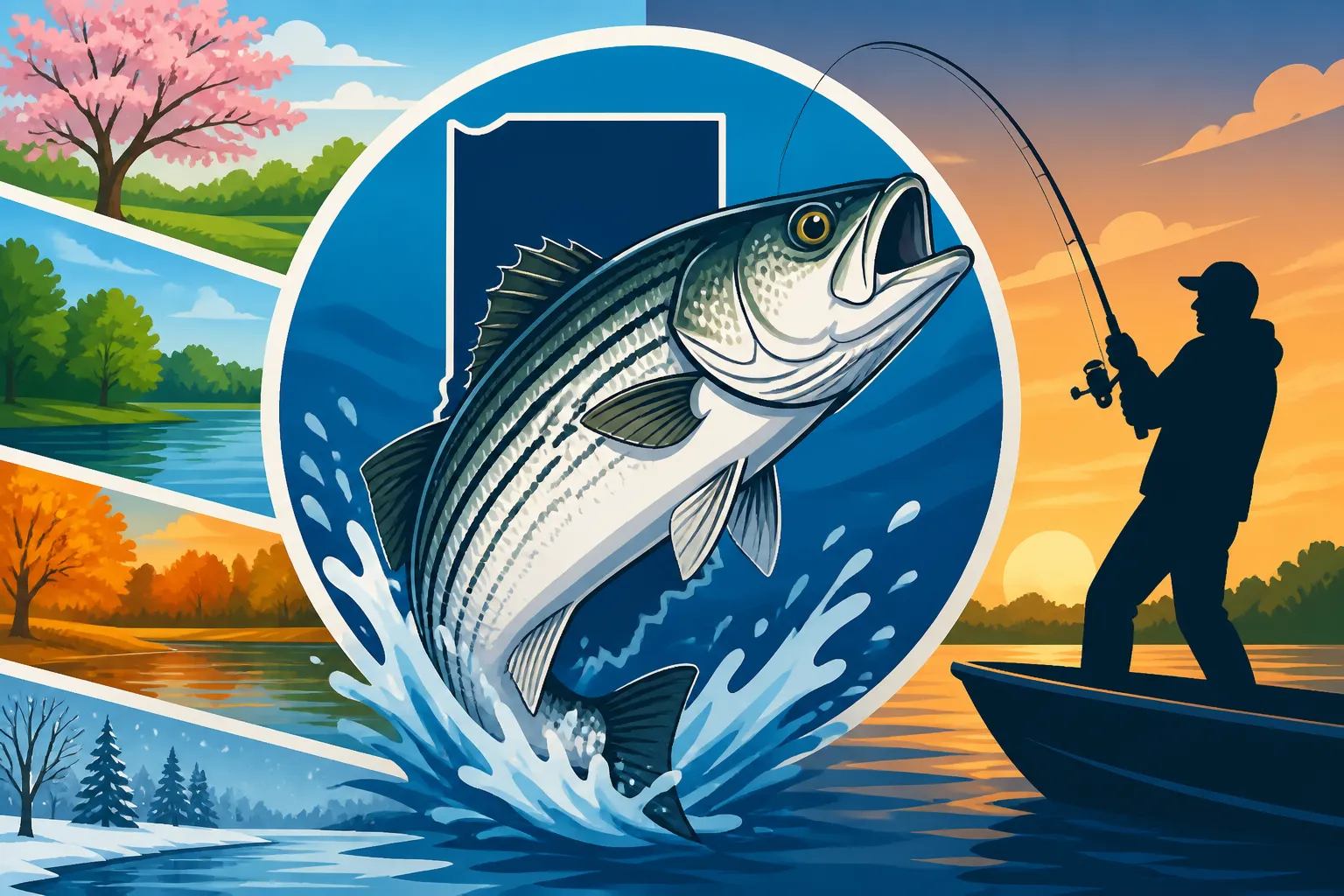
To help you visualize the yearly cycle of wiper fishing in Indiana, here's a quick overview of what to expect and how to adapt your strategy:
| Season | Typical Water Temp. (F) | Key Locations/Depths | Primary Techniques | Recommended Lures/Bait | Notes |
|---|---|---|---|---|---|
| Spring | 50s – low 60s | Shallower flats, main lake points, coves | Casting (fast retrieve), vertical jigging | Lipless crankbaits, jerkbaits, swimbaits, jigs, spoons | High activity, wipers chasing bait. Look for surface boils. Excellent time for numbers and aggressive strikes. |
| Summer | Mid-60s – 80s | Deep water, thermocline, main lake basins | Night casting, trolling, deep jigging | Large topwater (night), deep diving crankbaits, umbrella rigs, live bait (shad) | Wipers seek cooler, oxygenated water. Night fishing is often best. Use electronics to find suspended fish. Consider Striped Bass Fishing in Indiana Reservoirs for location tips. |
| Fall | 60s – low 50s | Main lake points, humps, channel bends | Casting (fast/erratic retrieve), trolling, watch for boils | Topwater, spoons, large swimbaits, jerkbaits, deep diving crankbaits | Major feeding frenzy before winter. Excellent opportunity for aggressive surface and subsurface action. Look for birds and splashing. This period offers some of the best potential for a trophy How Big Do Striped Bass Get in Indiana Waters?. |
| Winter | 40s – low 30s | Deepest parts of the lake, suspended schools | Vertical jigging, slow presentations | Heavy jigging spoons, blade baits, slow-rolled jigs with soft plastics | Challenging but rewarding. Wipers are lethargic and concentrated. Requires precise bait presentation and good electronics to locate schools. |
Essential Tips for Year-Round Wiper Success
Regardless of the season, there are a few foundational principles that will always put you in a better position to catch Indiana's powerful hybrid striped bass.
Locating Baitfish is Key
This cannot be stressed enough: find the bait, find the wipers. Hybrid striped bass are incredibly predatory and will almost always be shadowing schools of shad or other forage fish. Invest in a good quality fish finder (many excellent options are available from retailers like Amazon) and learn how to interpret what you're seeing. Look for large, dense schools of baitfish, often resembling clouds or balls on your screen. Wipers will frequently be lurking just below, within, or on the edges of these schools. Their movements are intrinsically tied to their food source, so if the bait is shallow, the wipers will likely be shallow. If the bait is deep, so will the wipers. Understanding Water Temperature and Fish Feeding Patterns will further enhance your ability to predict baitfish movements.
Gear Up for the Fight
These fish are notorious for their powerful runs and relentless fighting spirit. You'll want a medium-heavy to heavy action spinning or baitcasting rod, paired with a reel spooled with strong monofilament, fluorocarbon, or braided line (12-20 lb test is a good starting point, heavier for larger fish or snaggy areas). Wipers will test your drag system, so make sure it's smooth and properly adjusted.
Don't skimp on terminal tackle either. Use strong, sharp hooks, and consider heavier split rings on your lures if you're replacing them. A quality landing net with a wide hoop is also incredibly helpful for bringing these energetic fish aboard. Losing a trophy wiper boatside because of inadequate gear is a tough lesson to learn! If you're wondering what they eat, understanding What Does a Striped Bass Eat in Freshwater Reservoirs? can help you choose the right imitations.
Persistence and Adaptability
Fishing for wipers can sometimes feel like a treasure hunt. There will be days when they are busting on the surface everywhere, and other days when they seem to have vanished completely. The key is persistence and a willingness to adapt your techniques, locations, and depths. If one method isn't working, don't be afraid to change it up. Try a different lure color, vary your retrieve speed, or move to a completely different part of the lake. The anglers who consistently catch wipers are those who are willing to experiment and learn from every outing. They also understand that every day on the water, even a slow one, teaches you something new about these magnificent fish.
By paying attention to the seasonal patterns, understanding the role of water temperature and baitfish, and being prepared to adjust your tactics, you'll significantly increase your chances of experiencing the thrill of Indiana's hybrid striped bass fishing year-round.
Disclaimer
This article is for general informational purposes only and does not constitute professional advice. Laws, prices and regulations vary by location and change over time. Consult a qualified professional for guidance on your specific situation.