Hybrid Sunfish in Indiana: What Makes Them Different
Have you ever been fishing in an Indiana pond or small lake, reeled in what you thought was a bluegill, only to realize it looked… a little off? Maybe it had a bigger mouth than a typical bluegill, or an ear flap that wasn't quite right, leaving you scratching your head. You're not alone! Many Hoosier anglers encounter these fascinating fish and wonder, "What exactly is that?" This guide is here to shed some light on Indiana's hybrid sunfish, explaining what makes them so unique, where to find them, and how to successfully target these feisty fish.
What Exactly Are Hybrid Sunfish?
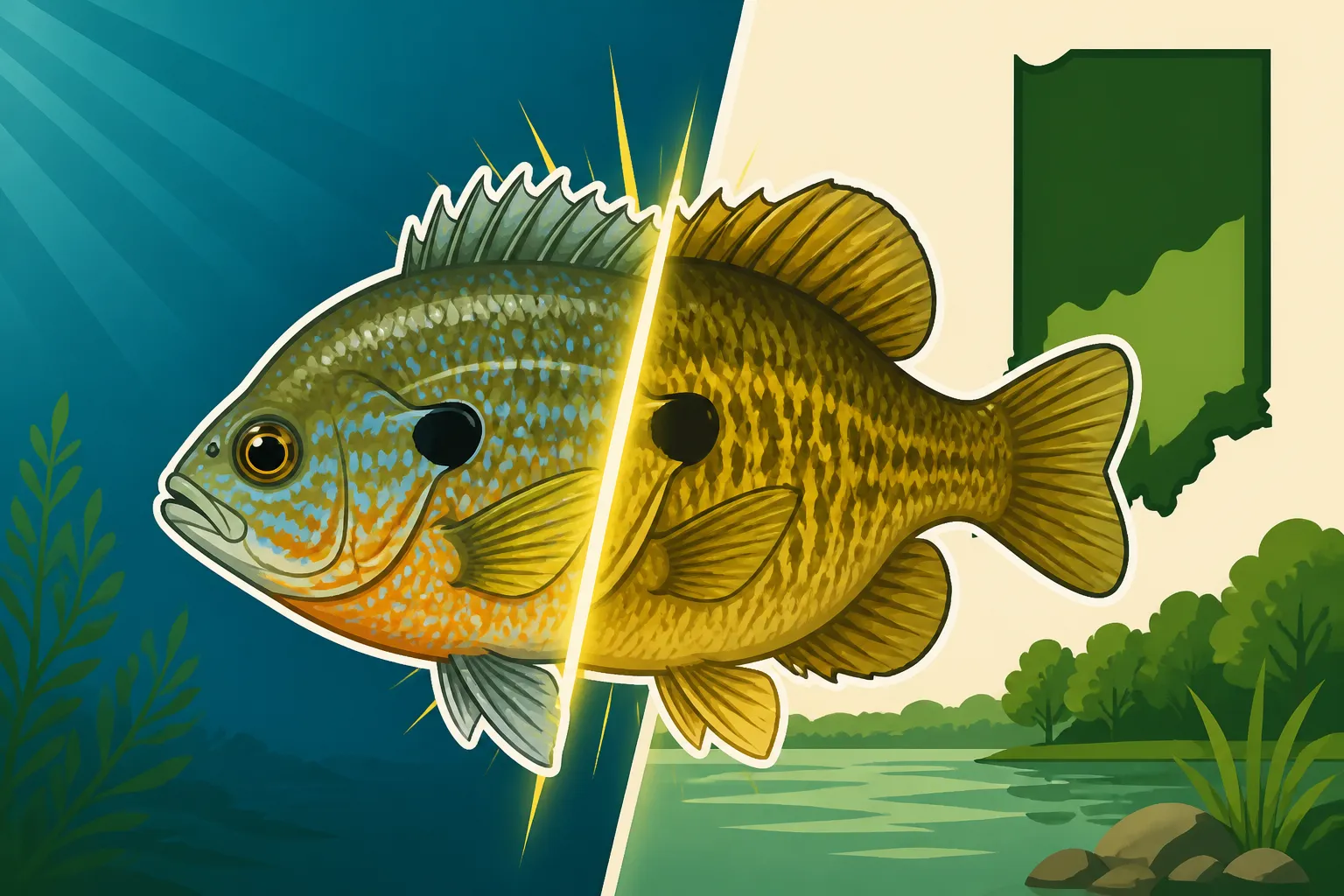
Hybrid sunfish are truly intriguing creatures of the aquatic world, often captivating anglers with their unique blend of characteristics. They're not a distinct species in the traditional sense, but rather a fascinating cross-breed between two different, yet closely related, types of sunfish. Think of them as the energetic, often faster-growing offspring of two distinct parent species.
The Genetics Behind the Mix
At their core, hybrid sunfish are a product of interspecies breeding. In Indiana, the most common hybrid sunfish you'll encounter is a cross between a bluegill and a green sunfish, often referred to simply as a "hybrid bluegill" or "green sunfish hybrid." These two species, while distinct, are genetically compatible enough to reproduce, leading to hybrid offspring. Sometimes this happens purely by chance in nature, especially in environments where both parent species thrive and their spawning grounds overlap. However, it's far more common to find hybrid sunfish in waters where they've been intentionally stocked. Fisheries managers and pond owners often introduce these hybrids because they offer a range of desirable traits that make them excellent sport fish and a valuable addition to recreational fisheries. The magic of genetics ensures that these hybrids often display a blend of features from both parents, making their identification a fun challenge for any angler.
Why Hybridize Them in the First Place?
The reasons for intentionally producing and stocking hybrid sunfish are quite compelling, particularly for pond owners and public fishing programs. One of the biggest draws is their exceptionally fast growth rate. These fish tend to grow much quicker and often reach larger sizes than either of their parent species in the same amount of time. This means more substantial catches for anglers in a shorter period. Another significant advantage is their aggressive biting behavior. Hybrid sunfish are known for being incredibly eager to strike a bait or lure, making them a fantastic target for beginners, kids, and anyone looking for consistent action. They're often less wary than purebred sunfish, providing a more reliable bite.
Furthermore, a key characteristic of many hybrid sunfish, especially the common bluegill x green sunfish cross, is that they are predominantly male and often sterile. This sterility is a huge benefit for pond management. Purebred bluegill, while great fish, can overpopulate a pond very quickly, leading to stunted growth across the entire population as they compete for limited food resources. Because hybrid sunfish don't reproduce effectively, they help prevent this overcrowding. This allows the fish that are present to grow bigger and healthier. They also tend to be more resistant to predators due to their larger initial size and aggressive nature, further contributing to their appeal in managed fisheries. When you stock a pond with hybrids, you’re often investing in a lively, manageable fishery that delivers satisfying catches.
Identifying Indiana's Hybrid Sunfish
Spotting a hybrid sunfish can sometimes feel like a puzzle, but once you know what to look for, it becomes much easier. They truly are a fascinating blend, borrowing traits from both sides of the family tree. It's like seeing a child with their mother's eyes and their father's nose – you recognize both parents in the mix!
Key Visual Differences from Purebreds
When you pull a sunfish out of the water, and it just doesn't quite fit the mold of a perfect bluegill or a textbook green sunfish, chances are you've got a hybrid. Here are some key visual cues to help you differentiate them:
- Mouth Size: This is often the most telling feature. A bluegill has a relatively small, delicate mouth. A green sunfish, on the other hand, has a noticeably larger, bass-like mouth that extends back to or even past the front of the eye. A hybrid bluegill often lands somewhere in between, with a mouth larger than a pure bluegill but perhaps not quite as exaggerated as a pure green sunfish.
- Body Shape: Bluegill tend to be very round and compressed laterally, almost like a dinner plate. Green sunfish are a bit more elongated and robust, with a thicker body. Hybrids usually lean towards the green sunfish's more football-like shape, appearing stockier than a bluegill.
- Ear Flap (Opercular Flap): The black "ear flap" on a bluegill typically has a soft, uniform black color and is flexible. A green sunfish's ear flap is usually stiffer, with a distinct light-colored (often orange or yellow) margin around the black spot. A hybrid will often have an ear flap with a prominent, but sometimes irregular, pale margin, resembling the green sunfish but perhaps not as cleanly defined.
- Pectoral Fin: Bluegill have long, pointed pectoral fins. Green sunfish have shorter, rounded pectoral fins. Hybrids can show a mix, but often their pectoral fins are more rounded than a bluegill's.
- Coloration: While highly variable depending on water clarity and diet, hybrids often have a mottled or speckled appearance, combining the iridescent blues and greens of a bluegill with the darker, more olive tones of a green sunfish. You might see some faint vertical barring like a bluegill, but often it's less pronounced.
It’s definitely a case of "know your parents" to identify the kids! If you're looking for more general fish identification, check out Indiana Fish Identification: A Quick Reference Guide.
Common Hybrid Pairings in Indiana
In the Hoosier State, the vast majority of hybrid sunfish you'll encounter are a cross between a bluegill ( Lepomis macrochirus ) and a green sunfish ( Lepomis cyanellus ). This pairing is so common because both species are widely distributed across Indiana and are often found in the same aquatic environments. The resulting offspring, often stocked as "hybrid bluegill," are what most anglers refer to when they talk about hybrid sunfish.
These bluegill x green sunfish hybrids are highly valued for their vigor and growth. They combine the bluegill's desirable panfish qualities with the green sunfish's aggressive nature and robust build. While other Lepomis species can hybridize (like a pumpkinseed with a green sunfish), these combinations are far less common in Indiana's recreational fisheries, especially in intentionally stocked ponds. The bluegill x green sunfish hybrid simply provides the best package of traits for anglers and pond managers alike – fast growth, aggressive feeding, and limited reproduction. Understanding this primary pairing helps you know what to expect when you land one of these unique fish. For a detailed look at one of the parent species, you might be interested in Bluegill and Panfish: A Great Starter Fish for Kids in Indiana.
Where to Find Hybrid Sunfish in Indiana Waters
Knowing what a hybrid sunfish is and how to identify it is one thing, but knowing where to actually cast your line for them is the real trick! While they can pop up unexpectedly, there are definitely places in Indiana where they're more likely to be found, largely thanks to thoughtful management by fisheries biologists and private pond owners.
Stocked Ponds and Small Lakes
If you're looking to consistently catch hybrid sunfish, your best bet is often stocked ponds and smaller public lakes. This is where they truly shine and are most intentionally managed. Many private pond owners, looking for an excellent recreational fishery, stock hybrid bluegill because of their rapid growth and aggressive nature. These ponds, often found on private land, in housing developments, or even at local parks, are prime locations. You might find them in:
- Community Fishing Ponds: Many towns and cities in Indiana maintain small ponds specifically for public fishing, and hybrids are a popular choice for these "put-and-take" fisheries. They provide quick action for families and beginner anglers.
- State Park Lakes and Managed Ponds: While larger state park lakes might have natural populations, smaller, more intensely managed ponds within state park systems or dedicated urban fishing sites often receive hybrid stockings to boost recreational opportunities.
- Farm Ponds and Private Lakes: This is perhaps the most common place. Farmers and landowners wanting a lively fishing spot on their property often choose hybrid sunfish because they grow big quickly and don't overpopulate the way pure bluegill can.
These environments are often fertile, allowing the hybrids to grow to impressive sizes for panfish. Their aggressive feeding behavior means they're usually easy to locate and entice into biting. If you're targeting panfish in these settings, you're almost guaranteed to encounter hybrids. Indiana's Best Ponds for Kids to Catch Panfish often contain hybrid sunfish due to these stocking efforts.
Natural Occurrences in Larger Systems
While stocking programs are the primary source, hybrid sunfish can and do occur naturally in larger lakes and river systems throughout Indiana. These are not always intentional introductions but rather instances where bluegill and green sunfish naturally co-exist and interbreed.
- Larger Public Lakes and Reservoirs: In bigger bodies of water like Monroe Lake or Patoka Lake, where both parent species are abundant, natural hybridization can happen. However, because these systems are so vast and have more complex ecosystems, the hybrid populations are usually less concentrated than in smaller, stocked ponds. You might catch one as a pleasant surprise, but you won't typically find specific "hybrid hotspots" in the same way you would for purebred species.
- Rivers and Streams: Smaller rivers and larger creeks that have suitable habitat for both bluegill and green sunfish can also be home to natural hybrids. Green sunfish often prefer more turbid, slower-moving water and rocky cover, while bluegill prefer clearer, vegetated areas. Where these habitats meet, or in areas of generalist habitat, the two can spawn together.
In these natural environments, the hybrids face more competition and predation, and their growth rates might not be as explosive as in a well-managed pond. They're more integrated into the broader panfish population, making them less of a target species and more of a bonus catch. However, it's a testament to the adaptability of these fish that they can thrive in such diverse settings across Indiana.
Fishing for Hybrid Sunfish: Tips and Techniques
Fishing for hybrid sunfish is an absolute blast, whether you're a seasoned angler or introducing a youngster to the sport. Their aggressive nature and willingness to bite make them incredibly rewarding targets. You don't need highly specialized gear, which is part of their appeal.
Gear and Bait Preferences
When it comes to tackle, think light and sensitive. Hybrid sunfish, especially the bigger ones, can put up a surprisingly strong fight for their size, but they're still panfish.
- Rods and Reels: An ultralight or light-action spinning rod (4-6 feet long) paired with a small spinning reel spooled with 2-4 pound test monofilament or fluorocarbon line is perfect. This setup allows for delicate presentations, feels every nibble, and makes even a modest hybrid feel like a trophy. You can find excellent, affordable ultralight combos on platforms like Amazon.
- Hooks: Small hooks are key. Size 8 to 12 Aberdeen or snelled hooks are ideal. These are thin-wired, which helps them penetrate easily and also allows them to bend out if snagged, saving your line.
- Floats/Bobbers: A small slip bobber or a classic clip-on bobber is invaluable for suspending your bait at the desired depth.
- Weights: Split shot weights, tiny and just enough to get your bait down, are usually all you need.
As for bait, hybrid sunfish aren't particularly picky, which is great news!
- Live Bait: This is almost always the most effective.
- Worms: Redworms and pieces of nightcrawlers are irresistible.
- Crickets/Grasshoppers: Fantastic surface baits, especially during warmer months.
- Small Minnows: If you're targeting larger hybrids, a tiny minnow can be very effective.
- Best Live Bait Choices for Beginners covers many of these excellent options.
- Artificial Lures: Don't overlook artificials!
- Micro Jigs: Small, 1/32 to 1/16 ounce jigs tipped with tiny plastic grubs, tubes, or even just a feather can be deadly. Chartreuse, white, and black are often go-to colors.
- Flies: If you're a fly angler, small poppers, nymphs, and wet flies will absolutely get their attention.
- Tiny Spinners: Lures like a tiny Rooster Tail or Mepps Aglia in 1/8 oz or less can trigger aggressive strikes.
Best Times and Methods
One of the great things about hybrid sunfish is their almost constant willingness to bite. Unlike some other species that have very specific feeding windows, hybrids are generally active throughout the day, though certain times can definitely be better.
- Time of Day: While they'll bite anytime, early mornings and late evenings often provide the most consistent action, especially in clear, shallow waters. During the brightest parts of the day, they might move to slightly deeper water or seek shade under docks, lily pads, or overhanging trees. Overcast days can also provide excellent fishing throughout the day. For more on timing, check out Best Time of Day to Catch Bluegill.
- Seasons: Spring and early summer are prime times as water temperatures warm up and hybrids become very active after the colder months. They'll continue to feed aggressively through summer and into the fall until water temperatures drop significantly.
- Methods:
- Bobber Fishing: This is classic panfish angling and incredibly effective for hybrids. Cast your bait (live bait is best here) under a bobber and let it drift near cover. Watch for any movement of the bobber, and be ready to set the hook! Adjust your depth until you find where the fish are holding.
- Sight Fishing: In clear ponds, you can often see schools of hybrids cruising. Cast a small jig or bait just past them and retrieve slowly, or drop it directly into the school. This is especially fun with kids who love seeing the fish chase their bait.
- Light Jigging: Use those micro jigs with tiny plastic trailers. Cast them out and retrieve with a slow, steady reel, adding subtle twitches of the rod tip. You can also vertical jig them under a boat or from a dock.
- Trolling/Drifting: If you're in a boat on a larger pond, slow trolling or drifting small jigs or even tiny crankbaits can be effective for covering water and finding active fish.
Hybrid sunfish are often found around structure: docks, submerged brush, weed lines, lily pad fields, and transition areas between shallow and deeper water. They love to ambush prey from cover, so casting close to these features will increase your success. With their strong fight and eagerness, you'll find hybrid sunfish to be incredibly fun to catch!
Management and Ecological Role
While hybrid sunfish are a joy for anglers, their presence in Indiana's waters isn't just about recreational fun. They play a specific, often managed, role in aquatic ecosystems, bringing both benefits and a few considerations for fisheries biologists and pond managers.
Benefits and Drawbacks of Hybrid Stocking
The primary reason for stocking hybrid sunfish, especially the bluegill x green sunfish cross, revolves around enhancing recreational fishing opportunities.
Benefits:
- Angler Satisfaction: As mentioned, their aggressive biting and faster growth rates mean more frequent and larger catches. This is a huge win for public fishing programs, ensuring that new and experienced anglers alike have a positive experience. They are truly fantastic fish for family outings.
- Pond Management: The most significant ecological benefit is their sterility or significantly reduced reproductive capacity. Purebred bluegill, for instance, are prolific breeders. In unmanaged ponds, they can quickly overpopulate, leading to intense competition for food and stunted growth, where most of the fish remain very small. By stocking mostly sterile hybrid sunfish, pond managers can maintain a healthy population of larger fish without the worry of overpopulation. This allows other species, like bass, to thrive as well, as they aren't competing with hordes of tiny bluegill for food.
- Disease Resistance: Some studies suggest that hybrids can exhibit hybrid vigor, potentially making them more resistant to certain diseases or environmental stresses than their parent species.
Drawbacks (though generally minimal for common hybrids):
- Potential for Undesirable Natural Crosses: While stocked hybrids are often sterile, there's always a slight chance of some fertile individuals, or that natural hybridization could lead to less desirable crosses that don't offer the same benefits. However, this is closely monitored and generally not a major concern with common hybrid bluegill.
- Competition with Purebreds: In waters where purebred populations are desired, stocking large numbers of hybrids could theoretically introduce some competition for resources. But again, their sterility usually mitigates this by preventing exponential population growth.
- Limited Genetic Diversity (in stocked populations): For species conservation, relying heavily on hybrids isn't ideal as they don't contribute to the genetic pool of purebred species. However, most hybrid stocking is for recreational purposes, not conservation.
Overall, the benefits of hybrid sunfish in managed fisheries significantly outweigh any potential drawbacks, making them a valuable tool for maintaining healthy, productive ponds and lakes.
Hybrid Sunfish as Table Fare
For many anglers, the question of whether a fish is good to eat is just as important as how fun it is to catch! And when it comes to hybrid sunfish, the answer is a resounding yes! They are excellent table fare, rivaling the taste and texture of their purebred bluegill and green sunfish parents.
-
Flavor Profile: Hybrid sunfish have a mild, flaky white meat that is sweet and delicate. There's no strong "fishy" taste, making them appealing even to those who aren't usually big fans of seafood. Their flavor is very similar to bluegill, which is often considered one of the finest-eating freshwater panfish.
-
Preparation: They can be prepared in countless ways:
- Fried: A classic approach. Dredge them in seasoned cornmeal or flour and pan-fry until golden brown and crispy.
- Baked/Broiled: For a lighter option, season with herbs and lemon.
- Grilled: Fillets or even whole, smaller fish can be grilled.
- Fish Tacos: The flaky meat works wonderfully in tacos.
-
Cleaning: Like most panfish, hybrid sunfish have scales and often numerous small bones if cooked whole. Many anglers prefer to fillet them, especially the larger ones, to avoid the bones. The larger size hybrids often attain makes them more worthwhile to fillet than smaller bluegill. A good, sharp fillet knife (you can find a wide selection on Amazon) makes quick work of it.
If you enjoy eating bluegill or crappie, you'll definitely enjoy hybrid sunfish. They provide a delicious and sustainable source of protein from Indiana's waters. Is Bluegill Good to Eat? further emphasizes the culinary value of these panfish. For a broader perspective on panfish as food, check out Indiana Panfish Guide: Crappie, Bluegill, and Sunfish.
Distinguishing Hybrids from Other Panfish
So, you've got a fish in your hand, and it looks almost like a bluegill, but not quite. Or maybe it resembles a green sunfish, but something's still off. The key to successful identification often lies in comparing a hybrid directly to its parent species. This table provides a quick visual comparison to help you sort out what's what in your livewell.
| Feature | Purebred Bluegill | Purebred Green Sunfish | Hybrid Sunfish (Bluegill x Green Sunfish) |
|---|---|---|---|
| Body Shape | Very round, deeply compressed (plate-like) | More elongated, robust (football-like) | Intermediate; often thicker/stockier than bluegill |
| Mouth Size | Small, extends only to front of eye | Large, extends to or past center of eye | Intermediate; larger than bluegill, smaller than green sunfish |
| Ear Flap (Operculum) | Soft, entirely black, no distinct margin | Stiff, black with distinct white/yellow/orange margin | Black with a pale, often irregular or faded, margin |
| Pectoral Fin | Long, pointed | Short, rounded | Intermediate; often more rounded than bluegill's |
| Coloration | Olive green to dark blue, often with vertical bars; sometimes iridescent blue on jaw/chin | Olive green, often with iridescent blue/green spots on cheeks; dark spot at base of dorsal fin | Mottled, can show faint bars; blend of parents' colors, often more vibrant |
| Behavior | Often school, can be cautious | Aggressive, territorial, less wary | Very aggressive, eager to bite |
| Growth Rate | Moderate, prone to stunting | Moderate | Fast, often reaches larger sizes than parents |
Hybrid Sunfish vs Bluegill
The bluegill is one of Indiana's most beloved and common panfish, and hybrids often share many of its characteristics. However, several key differences can help you tell them apart.
When you're comparing a potential hybrid to a purebred bluegill, pay close attention to the mouth. A bluegill's mouth is remarkably small, almost dainty, rarely extending beyond the front edge of its eye. Its body is also distinctively round and thin, almost perfectly disc-shaped. The bluegill's ear flap is typically uniformly black, without any noticeable colored trim around the edge. Its pectoral fins are long and pointed, a hallmark trait.
A hybrid sunfish, stemming from a cross with a green sunfish, will usually exhibit a larger mouth than a bluegill, often extending to about the middle of its eye. Its body will be thicker and more elongated, less like a perfect circle and more like an oval or football shape. The ear flap on a hybrid frequently has a pale, often yellowish or whitish, margin around the black spot, though it might not be as vivid or consistent as on a pure green sunfish. While a bluegill has distinct vertical barring, a hybrid might have fainter or more broken barring, or its coloration might be a more mottled blend of blues, greens, and olives. If you're struggling to identify, remember the saying, "If it looks like a bluegill but has a bigger mouth, it's probably a hybrid!" For a deeper dive into one parent, see Hybrid Sunfish vs Bluegill: What's the Difference?.
Hybrid Sunfish vs Green Sunfish
The other primary parent in the most common Indiana hybrid is the green sunfish. This fish is a robust, aggressive species, and its traits definitely show up in its hybrid offspring.
A pure green sunfish is characterized by its large, bass-like mouth that extends back to or even beyond the center of its eye. Its body is more cylindrical and robust compared to the bluegill's flat profile, often appearing chunkier. The green sunfish's ear flap is a very strong identifier: it's stiff and black, almost always surrounded by a bright, distinct light-colored margin, usually yellow or orange. Their pectoral fins are also shorter and more rounded than a bluegill's. Color-wise, green sunfish are typically olive green with iridescent blue or green spots and streaks on their cheeks, and they usually have a prominent dark spot at the base of their dorsal fin.
When comparing a hybrid to a pure green sunfish, the hybrid's mouth might be slightly smaller, or at least less exaggerated, than the green sunfish's. The hybrid might also show more of the bluegill's coloration, such as hints of vertical barring or brighter blue on the lower jaw, which you wouldn't typically see on a pure green sunfish. The ear flap might have a lighter margin, but it could be less pronounced or consistent than on a pure green sunfish. Essentially, a hybrid will look less "extreme" than a pure green sunfish in its mouth size and coloration, pulling back towards the bluegill side of its lineage. Once you get an eye for these subtle differences, identifying Indiana's hybrid sunfish becomes a rewarding part of your fishing experience!
Disclaimer
This article is for general informational purposes only and does not constitute professional advice. Laws, prices and regulations vary by location and change over time. Consult a qualified professional for guidance on your specific situation.