Indiana Fish Identification: A Quick Reference Guide
Have you ever found yourself out on one of Indiana's beautiful lakes or rivers, rod in hand, when you reel in a fish and think, "What in the world is that?" It's a common moment of confusion for many anglers, whether you're a seasoned pro or just starting out. Understanding exactly what you've caught isn't just about satisfying curiosity; it's absolutely crucial for following regulations, improving your fishing success, and truly appreciating the diverse aquatic life of our Hoosier state. This guide is designed to be your quick reference, helping you confidently identify the most common fish species you'll encounter across Indiana's waters.
Why Accurate Fish Identification Matters for Indiana Anglers
Fishing in Indiana is a fantastic pastime, but it comes with a responsibility to understand the aquatic environment and adhere to local rules. Misidentifying a fish can have real consequences, from legal issues to missed opportunities for a great catch or even unknowingly harming a protected species. It's more than just a name; it's about being an informed and ethical angler.
Understanding Bag Limits and Regulations
One of the most critical reasons for accurate fish identification is to stay within the law. Indiana has specific Indiana Fishing Regulations and Bag Limits Guide for different species, and these often include minimum length requirements and daily catch limits. Imagine reeling in a beautiful walleye, only to realize later it was actually a saugeye, which might have a different length limit or be part of a different catch quota in that particular body of water. Suddenly, your proud catch could turn into a citation. This is especially true when distinguishing between species that look similar, like largemouth, smallmouth, and spotted bass, or differentiating between various panfish. The rules are there to protect fish populations and ensure healthy angling for everyone, so knowing your catch is the first step in compliance.
Knowing Your Target Species for Better Success
Beyond regulations, identifying your fish correctly helps you become a more effective angler. Different species prefer different habitats, baits, and presentation techniques. If you're consistently catching one type of fish when you're targeting another, a quick identification check can tell you if you're using the wrong lure, fishing in the wrong depth, or even in the wrong part of the lake. For instance, if you're after Largemouth Bass Fishing in Indiana: The Complete Guide but keep pulling in bluegill, it might be time to switch from small worms to a crankbait or spinnerbait and focus on submerged cover. Knowing the fish you're holding helps you refine your strategy, choose the right gear, and ultimately, have a more successful and enjoyable day on the water.
Common Characteristics Used for Fish Identification
When you've got a fish in your hand, don't panic! Take a moment to observe. There are several key physical characteristics that biologists and experienced anglers use to tell one fish from another. You don't need a degree in ichthyology; just a keen eye and a basic understanding of what to look for can make all the difference.
Body Shape, Size, and Coloration
These are often the first things you notice and can provide immediate clues. Is the fish long and slender, like a northern pike, or deep-bodied and compressed, like a crappie? Is it torpedo-shaped, like a trout, or more oval, like a sunfish? The average size for a species is also a good indicator, though individual fish can vary. While color can be influenced by water clarity, diet, and even spawning conditions, many species have distinctive markings or a general hue. For example, a bluegill often has a dark blotch on its gill cover and vertical bars, while a channel catfish is usually spotted. Pay attention to any distinct patterns, spots, or stripes—these are often reliable identifiers.
Fin Placement, Count, and Spines
Fins are like a fish's fingerprints, offering some of the most reliable identification markers. Look closely at the dorsal fin (the one on the back), the anal fin (on the underside, near the tail), and the caudal fin (the tail itself).
- Dorsal Fin: Does it have one continuous dorsal fin, or is it clearly separated into two distinct parts (like many bass species)? Is the front part spiny and rigid, and the back part soft-rayed? The number of spines and rays can be crucial.
- Adipose Fin: Some fish, like trout and salmon, have a small, fleshy, rayless fin between the dorsal and caudal fins. This is a dead giveaway for those species.
- Caudal Fin: Is the tail deeply forked (like a channel catfish), slightly notched, or relatively straight (like some panfish)?
- Pectoral and Pelvic Fins: Note their size and position.
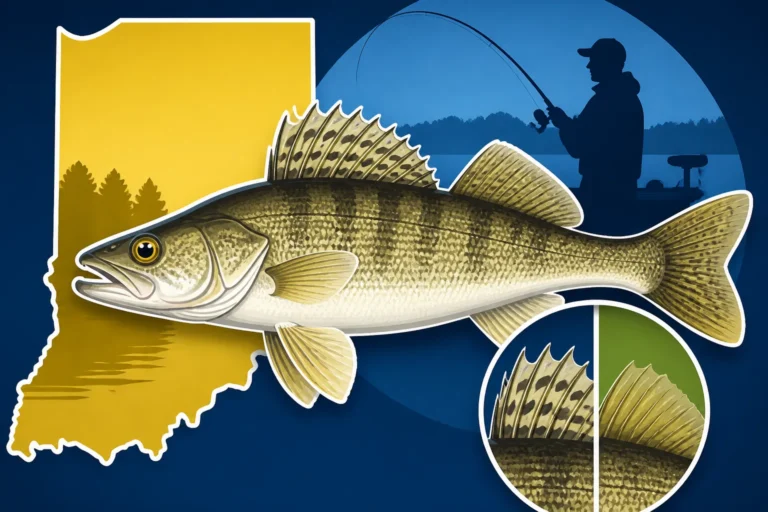
For instance, Walleye Identification: Olive-Gold Color and White-Tipped Tail often features a distinct dark blotch on its spiny dorsal fin and a white tip on the lower lobe of its caudal fin. Knowing these fin details can quickly narrow down your options.
Mouth and Jaw Structure
The mouth of a fish tells a lot about its diet and how it feeds, making it a valuable identification tool.
- Mouth Position: Is the mouth upturned (indicating a surface feeder), terminal (straight on, for mid-water feeding), or downturned (for bottom feeding)?
- Jaw Extension: Does the upper jaw extend beyond the eye when the mouth is closed? Or does the lower jaw protrude beyond the upper jaw (an "underbite")?
- Teeth: While you need to be careful with toothy critters like pike and muskie, the presence or absence of teeth, and their type, can be helpful.
When comparing a Largemouth Bass vs Smallmouth Bass: Key Differences, one of the easiest ways to tell them apart is by the jawline: a largemouth's upper jaw typically extends past the eye, while a smallmouth's upper jaw usually ends before or directly under the eye. These subtle differences become obvious once you know what to look for.
A Quick Reference Guide to Key Indiana Fish Species
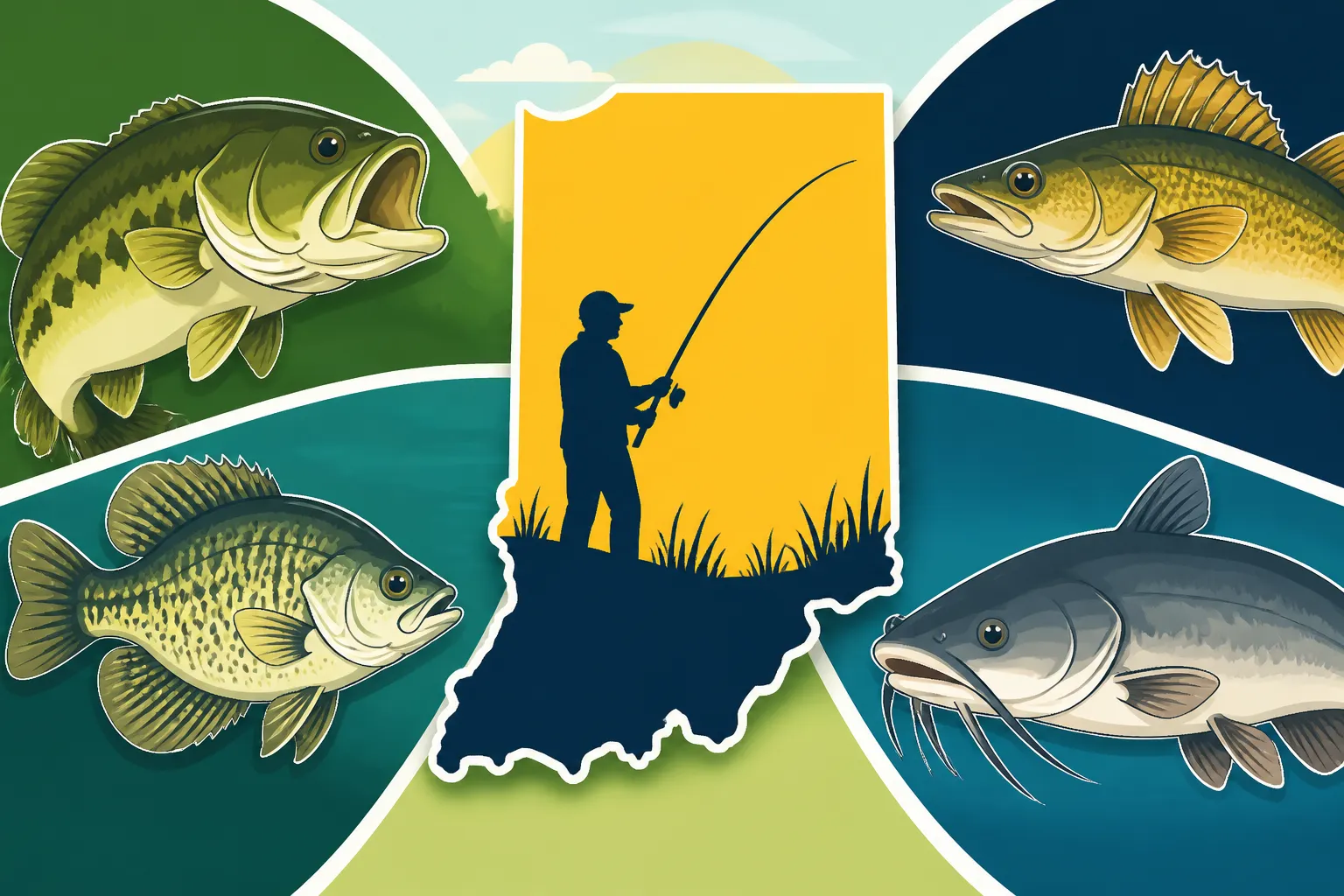
Let's dive into some of the most common and often-confused fish species you'll find in Indiana. This isn't an exhaustive list of all 190 types of fish in Indiana, but it covers the ones anglers most frequently encounter and need to identify accurately.
| Species Group | Key ID Feature 1 | Key ID Feature 2 | Habitat/Notes |
|---|---|---|---|
| Largemouth Bass | Upper jaw extends past the eye | Dark lateral stripe often broken | Weedy lakes, slow rivers, ponds |
| Smallmouth Bass | Upper jaw ends before or under the eye | Vertical bars/blotches; reddish eye | Clear, rocky rivers; cooler lakes |
| Spotted Bass | Upper jaw extends to middle of eye | Row of dark spots below lateral line | Rivers, reservoirs (less common than LMB/SMB) |
| Walleye | Cloudy eye, black spot on dorsal fin | White tip on lower caudal fin lobe | Larger lakes & rivers, often deeper water |
| Saugeye | Blotches/spots on dorsal fin (not distinct black spot) | Dark, wavy bars on body | Reservoirs (hybrid of walleye & sauger) |
| Northern Pike | Light spots on dark body, fully scaled cheek | Duck-bill snout, 5+ sensory pores on lower jaw | Weedy lakes, slow rivers. Northern Pike Fishing in Indiana: A Complete Guide |
| Muskellunge | Dark bars/spots on light body, upper half of cheek scaled | Duck-bill snout, fewer than 5 sensory pores on lower jaw | Glacial lakes. Muskellunge Fishing in Indiana: What Anglers Need to Know |
| Bluegill | Small mouth, dark opercular flap ("ear") | Often faint vertical bars, small spots | Ponds, lakes, slow rivers; very common. Bluegill Identification: A Beginner's Guide |
| Black Crappie | 7-8 dorsal fin spines, irregular spots | Deeper body than white crappie | Lakes, backwaters, around structure |
| White Crappie | 5-6 dorsal fin spines, vertical bars | More slender body than black crappie | Lakes, backwaters, around structure |
| Redear Sunfish | Small mouth, red/orange spot on opercular flap | Often mottled appearance, no bars | Clear, weedy lakes, ponds (snail eaters) |
| Channel Catfish | Forked tail, dark spots on body (young) | Barbels around mouth, smooth skin | Rivers, lakes, ponds; warm water. |
Bass Species: Largemouth, Smallmouth, and Spotted
Indiana is a fantastic state for bass fishing, and you'll primarily encounter largemouth and smallmouth. Spotted bass are less common but present.
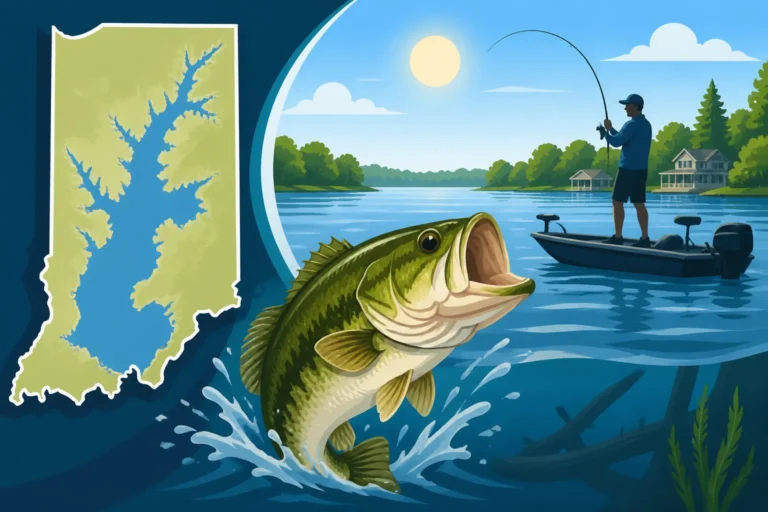
- Largemouth Bass: These are our most iconic bass, found in almost every pond, lake, and slow-moving river. The easiest way to identify a largemouth is by its mouth: when closed, the corner of its jaw extends past the back of its eye. They usually have a prominent dark, horizontal stripe along their sides, which can sometimes be broken or appear as a series of blotches. Their first and second dorsal fins are almost completely separated by a deep notch.
- Smallmouth Bass: Often called "bronze-backs," smallmouth prefer cooler, clearer, rocky waters, typically in rivers and some northern Indiana lakes. Their jaw, when closed, typically does not extend past the center of their eye. They often have vertical bars or splotches on their sides rather than a distinct horizontal stripe, and their eyes can have a reddish tint. The two dorsal fins are still separated, but the notch is not as deep as on a largemouth.
- Spotted Bass: While not as widespread in Indiana, spotted bass are present in some southern Indiana reservoirs and rivers. They are often confused with smallmouth bass. Look for a jaw that extends roughly to the middle of the eye, similar to a smallmouth, but with distinct rows of small, dark spots along their lower sides below the lateral line, almost like a grid. Also, when you put its tongue down, a spotted bass usually has a small patch of teeth on its tongue, which is absent in largemouth and smallmouth.
Walleye, Sauger, and Saugeye: The Elusive Pike-Perch Family
These three can be real head-scratchers, and misidentification can definitely lead to issues with regulations.
- Walleye: A highly prized game fish, walleye are known for their distinct "glassy" eyes (due to a reflective layer). Look for a distinct black blotch at the base of the spiny dorsal fin and a prominent white tip on the lower lobe of the tail fin. Their bodies are typically olive-gold with darker mottling. They generally prefer larger, deeper lakes and rivers. If you're wondering how to differentiate, check out Walleye vs Saugeye: How to Tell Them Apart.
- Sauger: Sauger are smaller cousins of the walleye and are generally found in larger rivers. They have distinct dark spots or bars on their dorsal fin that form rows, without the prominent black blotch of the walleye. Their bodies are typically bronze or brownish with distinct dark blotches or saddle-like markings. They lack the white tip on the lower tail fin.
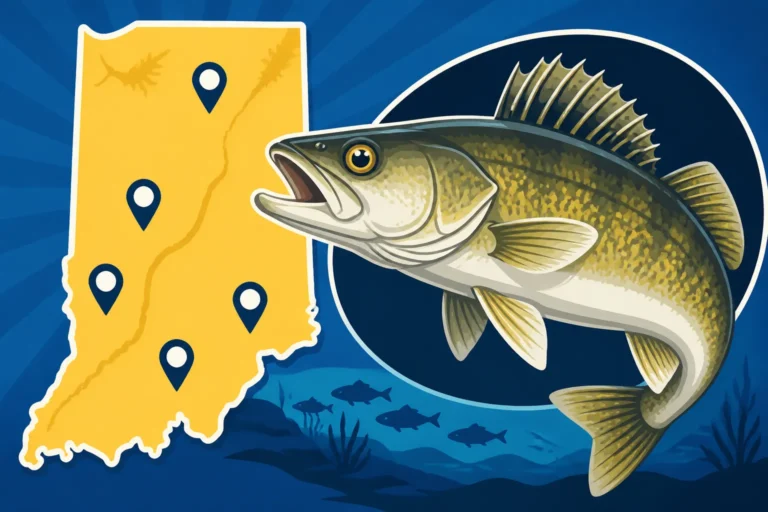
- Saugeye: This is a hybrid cross between a walleye and a sauger, primarily stocked in Indiana reservoirs. They possess characteristics of both parents, making them tricky to identify. Look for dark, distinct blotches or spots on the dorsal fin (similar to a sauger) combined with a faint white tip on the lower caudal fin (similar to a walleye). Their body markings tend to be more mottled or blotchy than a pure walleye.
Panfish Favorites: Bluegill, Crappie, and Redear Sunfish
Panfish are abundant and a blast to catch, especially for beginners. However, telling the different sunfish apart can be a fun challenge. Indiana Panfish Guide: Crappie, Bluegill, and Sunfish covers many of these in detail.
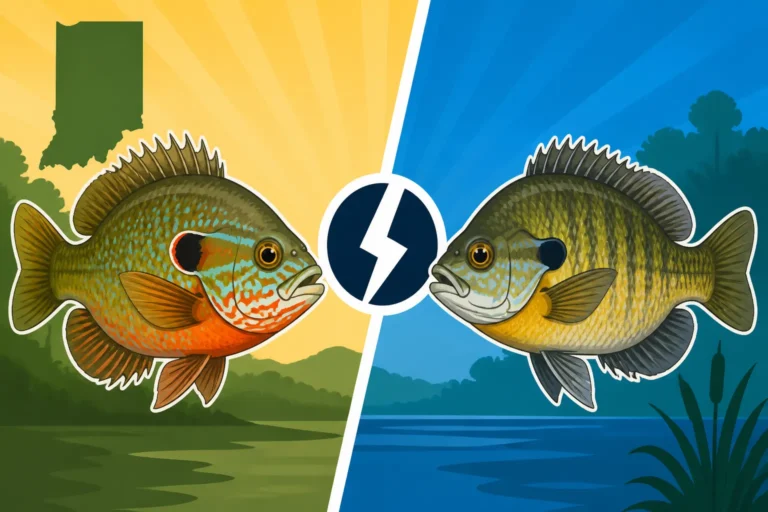
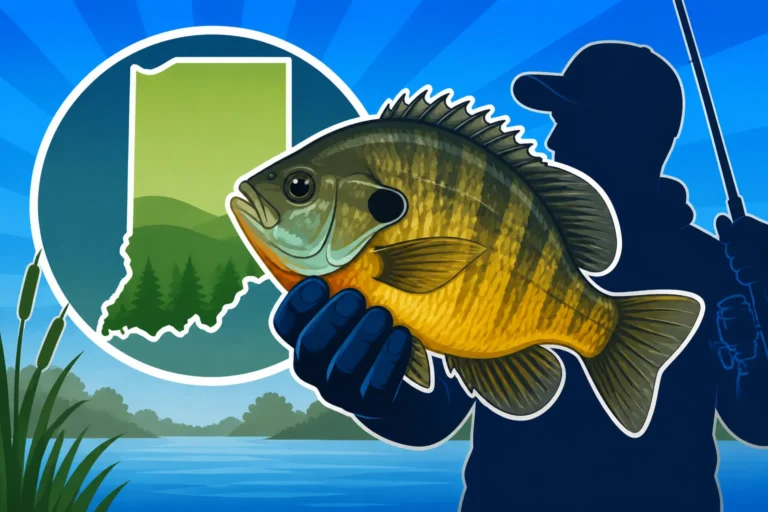
- Bluegill: These are the quintessential panfish, found almost everywhere. They have a small mouth, a deep, compressed body, and a distinctive black "ear flap" on the gill cover. They often have dark vertical bars on their sides, though these can fade or intensify. Their pectoral fins are pointed.
- Crappie (Black and White): Crappie are identified by their very thin, deep, plate-like bodies.
- Black Crappie: Generally have irregular black spots all over their body. The most reliable identifier is the number of dorsal fin spines: they usually have 7 or 8.
- White Crappie: Tend to have more distinct vertical bars on their sides. They typically have 5 or 6 dorsal fin spines. Both species are excellent table fare and are often found around submerged timber and brush piles.
- Redear Sunfish: Sometimes called "shellcrackers" for their diet of snails, redear sunfish are found in clear, weedy waters. They resemble bluegill but have a distinct red or orange margin on their black ear flap (though this can be fainter in females or smaller fish). They lack the vertical bars of the bluegill and often have a more mottled or speckled appearance.
Northern Pike and Muskellunge: The Apex Predators
These toothy critters are some of Indiana's most exciting sport fish, but they also require careful handling due to their sharp teeth. Distinguishing between them is crucial, especially if there are specific length limits for muskie. Northern Pike vs Muskie: Jaw and Fin Differences is a great resource here.
- Northern Pike: Pike typically have light, bean-shaped spots on a darker body background. The key to identification lies in their cheek and gill cover scale patterns. A northern pike has scales covering its entire cheek, but only the upper half of its gill cover is scaled, with the lower half being bare. They have five or more sensory pores on each side of their lower jaw.
- Muskellunge (Muskie): Often referred to as "the fish of 10,000 casts," muskie are rarer and grow larger than pike. They typically have dark bars or spots on a lighter body background. The most reliable identifier is their cheek and gill cover: a muskie has scales on only the upper half of both its cheek and its gill cover. They also have fewer (typically 3-5) sensory pores on each side of their lower jaw. Many of our biggest muskie come from Indiana's glacial lakes like Lake Wawasee and James Lake.
Tips for Better Field Identification and Learning
Becoming proficient at fish identification takes practice, but there are simple steps you can take to speed up the learning process and ensure you're always making accurate calls on the water.
Carrying a Field Guide or Using Apps
In today's world, you have excellent resources at your fingertips. A small, waterproof field guide specifically for freshwater fish of the Midwest or North America is an invaluable tool to keep in your tackle box or boat. These guides often highlight the key differentiating features with clear illustrations. Alternatively, many excellent fishing apps are available for smartphones that allow you to upload a photo and get a quick ID, or simply browse through species lists with detailed descriptions. You can find a wide variety of these helpful field guides and apps easily on platforms like Amazon, perfect for a quick reference on the water. Don't underestimate the power of having a quick resource when you're unsure!
Practice, Observation, and Catch-and-Release
The best way to learn is by doing. Every time you catch a fish, take a moment to really observe it before releasing it. Look at its fins, its mouth, its patterns. If you're fishing with a friend, discuss what you're seeing and compare notes. Snap a quick photo (being mindful of fish handling and minimal stress) if you want to look it up later. Practicing responsible catch-and-release also allows you to handle and examine many fish, reinforcing your identification skills without impacting fish populations. The more you consciously examine your catches, the faster you'll develop an instinct for identification.
When in Doubt, Research or Ask
If you're ever truly unsure about a fish's identity, especially if it's near a length or bag limit, it's always best to err on the side of caution. Release the fish if you're not 100% confident. Back at home, use online resources, state DNR websites, or reputable fishing forums to research. You can also visit your local bait and tackle shop; the folks there are often incredibly knowledgeable and happy to help a fellow angler learn. Getting an ID wrong can lead to consequences, so never be afraid to say, "I'm not sure," and seek clarification. Knowing What Happens If You Fish Without a License in Indiana? is important, but so is understanding the specific rules for each species you catch.
Disclaimer
This article is for general informational purposes only and does not constitute professional advice. Laws, prices and regulations vary by location and change over time. Consult a qualified professional for guidance on your specific situation.