Hybrid Sunfish vs Bluegill: What’s the Difference?
It's incredibly common for anglers, new and seasoned alike, to find themselves staring at a panfish in their hand and wondering, "Is this a bluegill, or something else?" The truth is, the world of sunfish can be a bit perplexing, especially when hybrid sunfish enter the picture. This guide is here to clear up that confusion, diving deep into the characteristics that define a true bluegill versus its hybrid cousins, helping you confidently identify your next catch.
Understanding the True Bluegill: The Backyard Favorite
Ah, the bluegill. For many of us, this is where our love affair with fishing truly began. These feisty little fish, often caught with a simple worm and bobber, are the quintessential panfish. But what makes a true bluegill a bluegill, and why are they so beloved in Indiana's waters?
Classic Bluegill Identification Marks
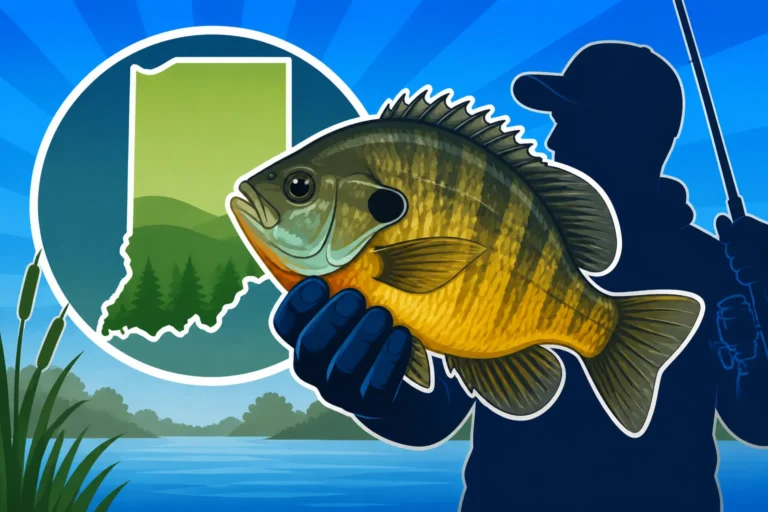
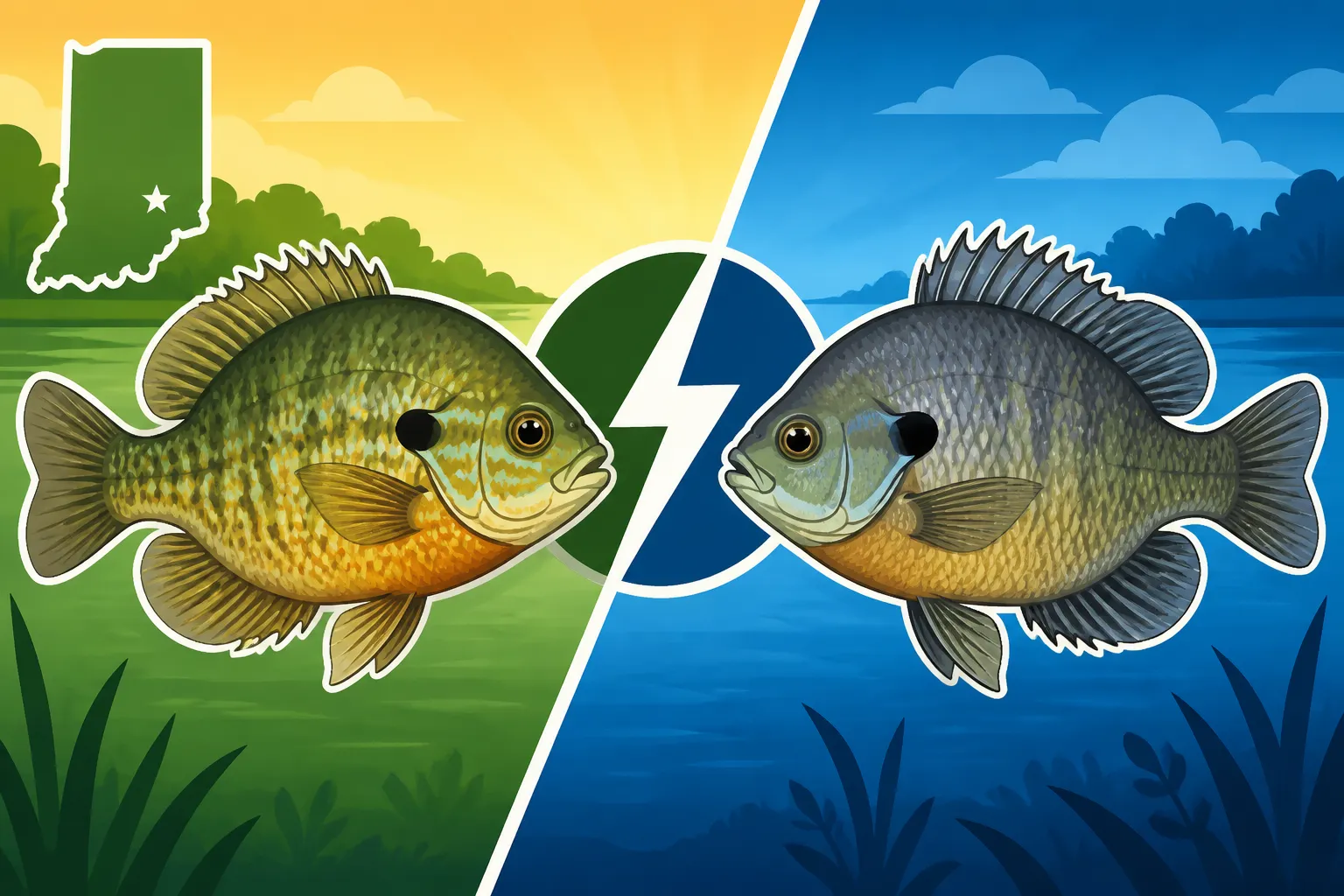
When you pull in a bluegill, take a moment to really look at it. They have this distinct, almost round, disc-shaped body that’s compressed from side to side. Their coloration can vary quite a bit depending on the water clarity and food sources in their specific lake or pond. Typically, you'll see olive green or brownish backs fading to lighter, yellowish-orange bellies. One of the most reliable tell-tale signs is that dark, almost black, spot on the posterior (back) margin of their gill cover, often with a little orange or reddish edge. Their pectoral fins, the ones just behind the gills, are usually long and pointed, and they have those unmistakable vertical bars on their sides, though these might be more pronounced on some fish than others. Their mouth is relatively small, perfect for nibbling on tiny insects, larvae, and other aquatic invertebrates. If you're wondering Bluegill Identification: A Beginner's Guide, keep these features in mind.
You'll often find bluegill schooling around submerged structures like weed beds, fallen trees, or dock pilings. They're not loners by any means, especially the smaller ones. They're also quite prolific, meaning they reproduce often, which is why so many ponds and lakes are brimming with them. Their diet is mostly insects, small crustaceans, and even tiny fish fry, making them a key part of the aquatic food web. They tend to be a bit shyer than some of their hybrid relatives, sometimes requiring a more delicate presentation to entice a bite, especially the larger, older ones.
Native Range and Habitat
True bluegill (scientific name: Lepomis macrochirus) are widely distributed across Indiana. They're native to much of the eastern and central United States, and our state falls right in their natural stomping grounds. You'll find them in nearly every type of freshwater habitat imaginable here: farm ponds, small creeks, large rivers like the Wabash and White, and our expansive reservoirs such as Monroe Lake and Patoka Lake. They're incredibly adaptable, thriving in both clear and murky waters, as long as there's adequate food and cover.
In these natural settings, bluegill play a crucial role. They're a primary forage fish for larger predatory species like bass and even some birds. Their abundance means a healthy food supply for the entire ecosystem. They're also often seen as a barometer of pond health; a pond teeming with healthy bluegill is usually a good sign overall. Many private pond owners, recognizing their importance, often stock bluegill to create a balanced fishery, sometimes alongside their hybrid cousins. For more on where to find them, check out Where to Catch Crappie in Indiana in Spring which often overlap with bluegill habitats.
Unpacking the Hybrid Sunfish Phenomenon
Now, let's talk about the hybrid. These are the fish that often throw a wrench in our identification efforts. They look like bluegill, they act like bluegill, but there are subtle (and sometimes not-so-subtle) differences that make them unique.
What Exactly Is a Hybrid Sunfish?
The term "hybrid sunfish" usually refers to a cross between two different species of sunfish. In Indiana, and across much of the country, the most common hybrid sunfish you'll encounter is a cross between a male bluegill and a female green sunfish. Sometimes you'll find other combinations, but the bluegill x green sunfish is the most popular for stocking purposes. Why create a hybrid? Well, fish culturists and pond owners discovered that these crosses often exhibit what's called "hybrid vigor." This means they tend to grow faster, reach larger sizes, and are often more aggressive feeders than either parent species. They also tend to be predominantly male, which can be a huge advantage in pond management.
Because they are mostly male, hybrid sunfish often don't reproduce as prolifically as true bluegill. This "population control" aspect is highly desirable for pond owners who want to avoid overpopulation and stunted fish, a common problem with pure bluegill. If you’ve ever fished a pond where every bluegill you catch is tiny, you know what I mean. Hybrids offer a way to stock a pond with a fast-growing, catchable fish without it becoming overrun. This makes them a fantastic choice for private ponds and smaller public waters where the goal is often recreational angling rather than a self-sustaining wild population. It's truly fascinating how Hybrid Sunfish: A Cross Between Bluegill and Green Sunfish come about and what they offer.
Identifying a Hybrid: Key Distinguishing Features
While they share many traits with bluegill, there are several key indicators that can help you identify a hybrid sunfish. First, look at the mouth. Hybrids, particularly those with green sunfish genetics, often have a noticeably larger mouth than a true bluegill. A good rule of thumb: if the corner of the mouth extends past the front of the eye, it’s likely a hybrid or a green sunfish. Bluegill mouths typically don't reach the eye.
Second, consider the gill flap. While bluegill have that distinct dark spot, hybrids might have a less defined spot, or it might be edged with a different color. Sometimes the "ear flap" on a hybrid will be larger and stiffer, like a green sunfish. Third, look at the body shape and color. Hybrids tend to be a bit chunkier or more elongated than the typical disc-shaped bluegill. Their coloration can be a mash-up of both parents – sometimes a bolder, brassier look, with iridescent blue or green markings on the cheeks and gill covers that are more characteristic of a green sunfish, rather than the more subdued bluegill coloring. You might even see faint vertical bars like a bluegill, but often overlaid with speckles or blotches. Also, pay attention to the dorsal fin; some hybrids might have a more noticeable separation between the spiny and soft-rayed parts of the dorsal fin, leaning towards the green sunfish side. As for size, hybrids often reach pan-sized proportions quicker. How Fast Do Hybrid Sunfish Grow? is a topic many anglers find interesting, and it directly relates to this hybrid vigor.
Why the Confusion? Similarities and Overlap
It’s easy to see why anglers often mix up these two. They live in the same places, eat similar foods, and can even look quite alike, especially when they're young. The overlap is significant and contributes to the charm and challenge of panfish identification.
Overlapping Appearance and Habitat
When hybrid sunfish are young, they can look remarkably similar to bluegill, making identification challenging even for experienced eyes. Both species exhibit that general "sunfish" profile: flat, roundish bodies with spiny dorsal fins. They both have that tendency towards olive-green backs and lighter bellies. It's only as they grow larger that the subtle differences in mouth size, gill flap appearance, and body shape become more pronounced. Imagine catching a handful of small panfish from a local pond; unless you're meticulously inspecting each one, it's easy to lump them all into the "bluegill" category.
Moreover, they often share the exact same watery real estate. In many public and private ponds across Indiana, you'll find both true bluegill and various hybrid sunfish swimming side-by-side. They both prefer shallow, vegetated areas where they can find food and cover from predators. A fallen tree, a patch of lily pads, or a shaded dock is prime real estate for both. This cohabitation means that whatever you're casting, there's a good chance you could hook either one, further blurring the lines in the angler's mind.
Fishing Similarities and Angler Perceptions
From a pure angling perspective, catching a hybrid sunfish often feels very similar to catching a bluegill, sometimes even better! Hybrids are known for being aggressive biters. If you've ever had a day where the bobber barely hits the water before it's pulled under, chances are you were hitting a school of hungry hybrids. They don't seem to have the same level of caution that larger, older bluegill can sometimes develop. This eagerness to bite is one of their most appealing traits for recreational anglers, especially those fishing with kids or beginners.
When you're out with a simple setup – a lightweight rod, some 4-6 lb test line, a small hook, and a bobber – both fish respond enthusiastically to classic panfish baits. Worms, crickets, grasshoppers, and even small bits of hot dog or corn will attract both. For lures, tiny jigs, spinners, and even fly-fishing presentations will work for both species. So, while an expert might be able to tell the difference just by how the fish fights, for most of us, the thrill of a bending rod and a panfish at the end of the line is the main event, regardless of its exact genetic makeup. This is why these fish are often considered Indiana's Best Fish for Beginners to Catch.
Practical Implications for Anglers
Knowing the difference between a hybrid sunfish and a bluegill isn't just for bragging rights; it can sometimes influence your fishing strategy and certainly impacts how we understand fish populations.
Fishing Techniques: Do They Differ?
For the casual angler, fishing techniques for bluegill and hybrid sunfish are largely identical. Both respond well to classic panfish presentations. Think small hooks (size 8-12), light line, and natural baits like red worms, crickets, or mealworms suspended under a bobber. For artificials, tiny 1/32 or 1/64 ounce jigs, often tipped with a piece of bait or a small plastic grub, are deadly for both. You can find a huge variety of these tiny jigs and grubs on platforms like Amazon, making it easy to stock up for your next panfish outing.
However, there's a subtle difference if you want to target larger specimens. Hybrids, being more aggressive and often growing faster, might be more susceptible to slightly larger baits or lures, such as a small crankbait or a bigger minnow, earlier in their lives. Bluegill, especially older, larger ones, can sometimes be more discerning. They might prefer a more subtle presentation or a smaller, more natural-looking bait. When the bite is tough, focusing on presentation and stealth might yield more bluegill, while hybrids might still hit anything that moves. For bluegill, trying different depths and finding structure is key, while hybrids often patrol open water more boldly.
Management and Stocking Considerations
The primary reason hybrid sunfish exist in so many of our public and private waters is due to deliberate stocking. Pond managers often introduce hybrids because they offer a fantastic fishing experience without the risk of overpopulation and stunting that can occur with bluegill. Since hybrids are mostly male and often sterile or have very low reproductive rates, they don't produce vast numbers of offspring. This means the fish that are in the pond have less competition for food, allowing them to grow larger and faster. It’s a carefully balanced ecosystem, and hybrids help keep it that way.
True bluegill, on the other hand, are the backbone of many natural aquatic ecosystems. Their prolific breeding ensures a constant food supply for bass, pike, and other predators. In a perfectly balanced natural lake, bluegill populations can self-regulate, but in smaller, isolated ponds, they can quickly overpopulate if not managed properly, leading to a pond full of tiny, stunted fish that aren't much fun to catch. Understanding this ecological role helps us appreciate why both species, despite their similarities, serve different purposes in our fishing waters. If you're managing a pond, researching Common Fish Species You'll Find in Farm Ponds and their stocking rates is crucial.
A Comparison Table for Quick Reference
To help cement the differences we've discussed, here's a handy table summarizing the key distinguishing features between a typical bluegill and a hybrid sunfish. Keep in mind there can be variations, but these are generally reliable indicators.
| Feature | True Bluegill (Lepomis macrochirus) | Hybrid Sunfish (e.g., Bluegill x Green Sunfish) |
|---|---|---|
| Scientific Name | Lepomis macrochirus | Lepomis cyanellus x Lepomis macrochirus (or other crosses) |
| Body Shape | Classic disc-shaped, very compressed | Often slightly more elongated or chunky than pure bluegill |
| Mouth Size | Small; corner typically does not extend past the front of the eye | Larger; corner often extends to or past the middle of the eye (like green sunfish) |
| Gill Flap (Opercle) | Dark spot, usually solid black with a thin, flexible margin, sometimes orange-edged | Dark spot often less defined, sometimes larger/stiffer margin, more varied edging |
| Coloration | Olive-green to brownish back, yellowish-orange belly, distinct vertical bars, iridescent blue on gill plates | More varied, often brassier, sometimes iridescent blue/green on cheeks, less distinct bars |
| Pectoral Fin | Long, pointed | Shorter, more rounded (like green sunfish) |
| Growth Rate | Moderate; can stunt if overpopulated | Fast; often reaches larger sizes quickly due to hybrid vigor |
| Reproduction | Prolific; self-sustaining populations common | Often sterile or low reproductive rates; stocking necessary for continued numbers |
| Behavior | Can be shy; prefer structure, insects | More aggressive, less wary; often bite readily, wider diet |
| Typical Habitat | Rivers, lakes, ponds, natural ecosystems | Stocked ponds, smaller lakes, often managed fisheries |
Final Thoughts for Your Next Panfish Adventure
Whether you're casting a line into a quiet farm pond or exploring one of Indiana's larger reservoirs, chances are you'll encounter both bluegill and their feisty hybrid cousins. The subtle differences between them make panfish fishing not just a relaxing pastime, but also a fun exercise in observation and identification. Don't be too hard on yourself if you can't tell the difference every single time; even experienced anglers sometimes pause to examine a catch.
The next time you pull in a sunny, take a moment to look at its mouth, its gill flap, and its overall shape. You might be surprised to find that not all panfish are created equal, and understanding these distinctions adds another layer of appreciation to our incredible Indiana Fishing opportunities. And remember, no matter if it's a true bluegill or a pumped-up hybrid, they're all a blast to catch and often make for some excellent table fare! You might even find yourself looking for Indiana's Top Panfish Species for Table Fare after a successful day.
Disclaimer
This article is for general informational purposes only and does not constitute professional advice. Laws, prices and regulations vary by location and change over time. Consult a qualified professional for guidance on your specific situation.