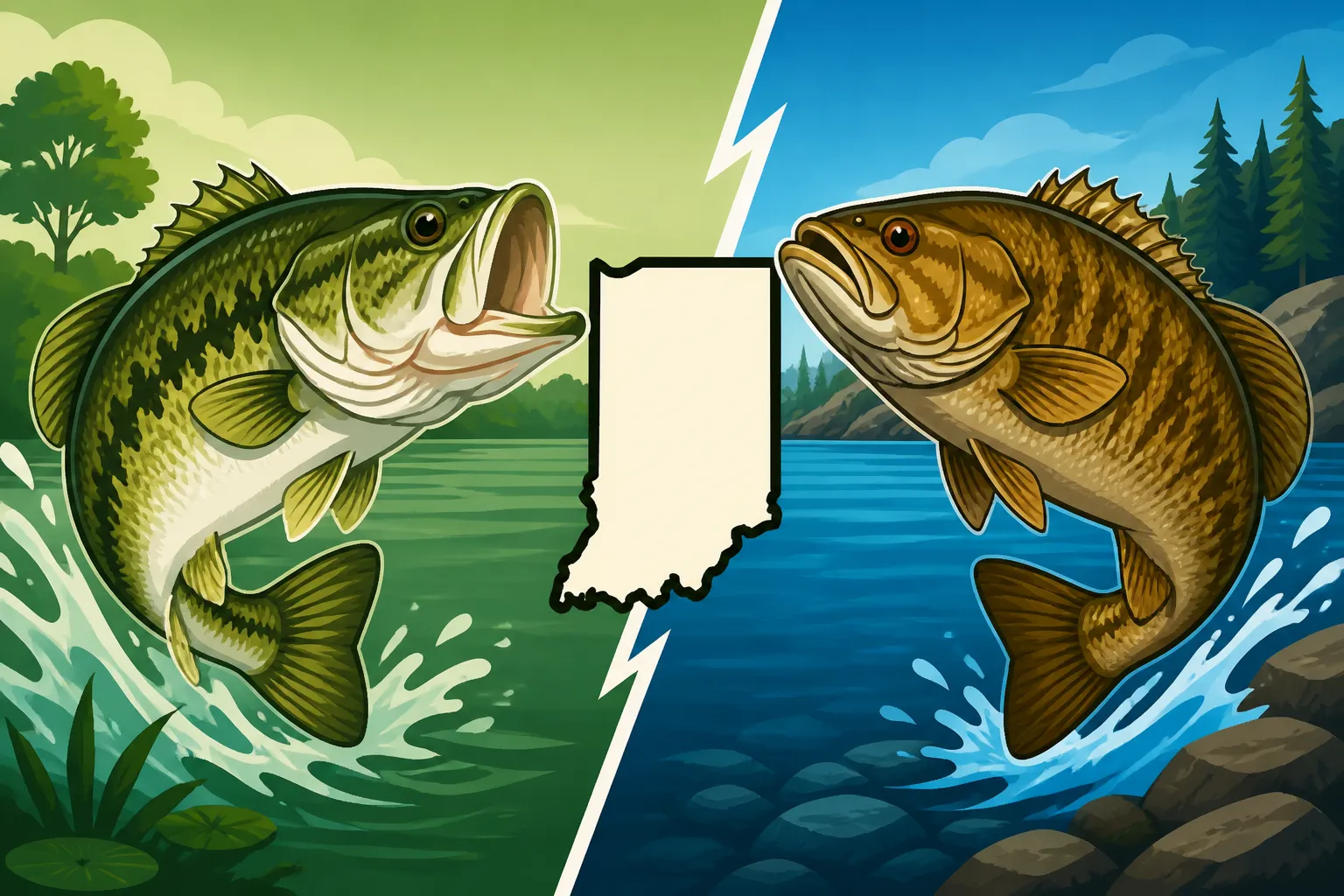
Largemouth Bass vs Smallmouth Bass: Key Differences
It's easy to look at two fish and think they're the same, especially when they share so many characteristics. But for us Indiana anglers, knowing the difference between a largemouth bass and a smallmouth bass isn't just about identifying your catch; it’s crucial for understanding where to find them, what gear to use, and even what regulations apply. This guide will dive deep into the distinct features, habitats, and behaviors of these two incredible sport fish, helping you become a more effective and knowledgeable angler on Indiana's diverse waters.
Telling Them Apart: The Visual Cues
One of the first things you learn as an angler is how to quickly identify your catch. While largemouth and smallmouth bass might both be part of the "black bass" family, they have some very clear visual differences that, once you know them, make telling them apart a breeze. It’s not just about their size; it’s in the details.
Jawline and Lateral Line: The Dead Giveaways
The most reliable way to differentiate between a largemouth and a smallmouth bass often comes down to two key features: the jawline and the lateral line. Pay close attention to these, and you'll rarely be wrong.
When you look at a largemouth bass, imagine a line drawn vertically from the back of its eye down towards its gill plate. The jaw of a largemouth extends significantly past that line. It’s often described as having a mouth that looks like it could swallow a baseball whole, and indeed, it's quite large. This oversized maw is a clear indicator. On the other hand, the smallmouth bass has a more proportionate, shorter jaw. If you draw that same imaginary line from the back of its eye, the smallmouth's jaw typically does not extend past it. It might reach it, but rarely goes beyond. This difference in jaw length is the absolute quickest way to tell them apart, even for a beginner. You can often see this clearly even when the fish is in the water near the boat, or definitely once you've gently brought it aboard.
Another critical identifier is the lateral line—that distinctive dark stripe running horizontally along the side of the fish. For the largemouth bass, this line is usually very prominent and solid, almost like a dark racing stripe down its side. It might be broken up into blotches on younger fish, but generally, it's a strong, continuous mark. Smallmouth bass, however, rarely have this solid lateral line. Instead, their sides are often marked with a series of dark, vertical bars or blotches that might connect in places to form a faint, broken lateral line. Think of it more as tiger stripes rather than a single continuous stripe. These vertical bars can sometimes be quite distinct, especially on bronze-colored smallmouths, adding to their rugged appeal. Paying attention to these two details—the jaw extending past the eye and the prominent lateral line—will make you an expert at quick identification.
Coloration and Body Shape: Subtle But Important
While the jaw and lateral line are the primary identifiers, coloration and overall body shape offer additional clues that, combined with the others, paint a complete picture. These features can vary slightly based on water clarity and diet, but general patterns hold true.
Largemouth bass typically exhibit a range of greens, from olive to dark forest green, often with a white or off-white belly. The aforementioned dark lateral line stands out against this green backdrop. Their body shape is generally more elongated and deeper-bodied, giving them a somewhat "paunchy" or chunky appearance, especially in well-fed specimens. Think of a classic football shape, but a bit wider in the middle. Their scales can sometimes have a golden sheen, especially in clearer waters, but green is the dominant hue. If you're looking for What Does a Largemouth Bass Look Like?, these are the traits to consider.
Smallmouth bass, on the other hand, live up to their "bronze back" nickname. Their coloration is usually a beautiful range of browns and bronzes, sometimes with a yellowish or greenish tint, especially in stained water. The vertical bars on their sides are often a darker brown or black, contrasting with their bronze background. Their body shape is generally more streamlined and compact, often described as more torpedo-shaped, and they tend to have a slightly smaller head in proportion to their body. This sleeker profile is adapted to the swifter currents they often inhabit. The eye of a smallmouth also tends to be reddish, adding another subtle visual cue. These differences, while perhaps less dramatic than the jawline, contribute to the overall distinct appearance of each species.
Where They Live: Habitat Preferences
Knowing the visual differences is one thing, but truly understanding bass means knowing where they like to hang out. Largemouth and smallmouth bass have distinct preferences for their homes, and recognizing these can greatly improve your chances of finding them in Indiana’s diverse waterways.
Largemouth: The Lover of Cover
Largemouth bass are the masters of ambush, and their preferred habitats reflect this hunting style. They absolutely love dense cover and structure, using it to hide and surprise unsuspecting prey. Think of them as the kings of the jungle, lurking in the thickest vegetation.
You'll typically find largemouth bass in warmer, shallower waters with abundant aquatic vegetation, submerged timber, lily pads, reeds, and brush piles. They thrive in murky or stained waters where their green coloration provides excellent camouflage. Lakes, ponds, slow-moving rivers, and reservoirs are their playgrounds. On a hot summer day, they’ll often be tucked deep into a shaded spot under a fallen tree or right on the edge of a thick weed bed, waiting for a meal to swim by. When you're exploring Best Fishing Spots in Indiana or specifically Where to Catch Largemouth Bass in Indiana Ponds, these are the types of features you should be looking for. They prefer soft bottoms, too, whether it's mud, silt, or sand, as long as there's plenty of plant life to go with it. Understanding this preference for dense cover is key to targeting them effectively, as your lures need to be able to navigate these snag-filled environments.
Smallmouth: The River and Rock Enthusiast
Smallmouth bass, with their more streamlined bodies and powerful fight, prefer entirely different surroundings. They are built for current and rocky environments, making them a challenge and a joy to catch.
Unlike their largemouth cousins, smallmouth bass prefer cooler, clearer, and typically deeper waters. They are strongly associated with rocky habitats: gravel beds, boulders, submerged rock piles, rocky shoals, and areas with strong currents in rivers and large, deep lakes. You won't find them buried in lily pads; instead, they'll be darting around current breaks, eddies, and points where they can ambush baitfish or crawfish. The Best Rivers for Fishing in Indiana often boast excellent smallmouth populations, as do the rocky sections of larger reservoirs. They love areas where the bottom is composed of rock, gravel, or sand, rather than dense vegetation. This preference makes them a staple in many of Indiana's clearer rivers and some of the deeper, rockier lakes. If you're fishing a river with good flow and plenty of rocks, chances are you're in smallmouth territory, and adjusting your approach to target these specific features will be crucial for success.
How They Fight and What They Eat: Angler's Perspective
Beyond where they live, how these two bass species behave when hooked and what they prefer to eat also significantly differs. These distinctions are what truly set them apart in the eyes of an angler, influencing everything from lure choice to rod action.
Fishing Techniques and Lure Choices
Given their differing habitats and temperaments, it makes sense that the most effective fishing techniques and lure choices for largemouth and smallmouth bass diverge quite a bit. What works for one might not even get a sniff from the other.
When you're chasing largemouth, think about getting into that heavy cover. Lures that can penetrate weeds, bounce off wood, or mimic distressed prey are key. Spinnerbaits, chatterbaits, plastic worms (Texas-rigged or Carolina-rigged to be weedless), jigs with skirts, and topwater frogs or poppers are all fantastic choices. Crankbaits that dive into brush or along weed lines can also be highly effective. The retrieve often involves working the lure slowly and deliberately through cover, trying to provoke a reaction strike. For example, a heavy jig dropped into a brush pile on Monroe Lake: Indiana's Largest Lake for Bass Fishing can be deadly. You want to make a commotion and get their attention, often with a presentation that doesn't get snagged easily. Best Bait for Largemouth Bass in Indiana Lakes often includes soft plastics that can be worked through dense cover. Many of these effective lures can be found easily on platforms like Amazon, making it simple to stock your tackle box.
Smallmouth bass, on the other hand, respond well to lures that mimic crawfish, baitfish, or insects in clearer, rocky water. Small crankbaits, jerkbaits, tube jigs, grub tails, Ned rigs, and subtle swimbaits are often very successful. Drop shots and shaky heads are excellent for presenting soft plastics near rocky bottom structures. Since they prefer current, sometimes a faster retrieve is necessary to keep the lure moving naturally with the flow. Fly fishing with streamers can also be incredibly productive for smallmouth in rivers. Techniques like skipping jigs under docks or pitching tubes into current seams are perfect for Best Techniques for Smallmouth Bass in Rivers. Because smallmouth are often sight feeders in clearer water, natural colors or subtle flash can be more important than the loud, weed-proof presentations used for largemouth. They’re less likely to be hiding in dense vegetation and more likely to be cruising rocky ledges or ambushing from behind boulders.
Fight Style: Brawn vs. Acrobatics
The way a largemouth and smallmouth bass fight on the end of your line is arguably one of their most celebrated distinctions, making each species a unique angling experience. Both are powerful, but they express that power differently.
A largemouth bass is known for its initial, powerful surge. When hooked, they often try to immediately burrow back into the cover from which they came. They'll pull hard, thrash their head, and try to wrap your line around submerged logs or thick weeds. It's a heavy, deep fight, characterized by strong runs and bulldogging tactics. You feel every head shake transmitted through your rod. Once you get them out of the initial cover, they might make a few more strong runs, but their acrobatics are typically limited. It's often described as a "heavy" or "dirty" fight, especially if they are trying to drag you into structure. This intense, direct power requires a stout rod and strong line to prevent them from breaking off in the heavy cover they prefer.
The smallmouth bass, true to its more agile body, is renowned for its acrobatic displays. When hooked, smallmouth frequently leap clear out of the water, shaking their heads violently in an attempt to throw the hook. They make strong, darting runs, often changing direction quickly, and will fight all the way to the boat. This aerial show is part of what makes catching smallmouth so exciting and why many anglers specifically target them for their spirited fight. Their initial burst is explosive, but instead of diving deep into cover, they often go airborne or make long, fast runs across open water. This makes for a thrilling battle that tests your reflexes and rod handling. It's a "cleaner" fight in open water but no less challenging, requiring a responsive rod to handle their sudden jumps and quick changes of direction.
Size, Growth, and Regulations
Beyond the thrill of the catch, understanding the typical size, growth patterns, and specific fishing regulations for largemouth and smallmouth bass in Indiana is crucial for responsible and successful angling. Each species has its own story when it comes to trophy potential and legal limits.
Typical Sizes and Trophy Potential
While both bass species can grow to impressive sizes, their average sizes and what constitutes a "trophy" can differ significantly, particularly in Indiana waters. It's all about managing expectations and celebrating the fish you catch.
In Indiana, a healthy largemouth bass will typically range from 1 to 4 pounds, with fish over 5 pounds considered excellent catches. True trophy largemouth, those pushing 7-8 pounds or more, are certainly out there, often found in well-managed lakes and reservoirs with abundant forage. Their growth rate is influenced by water temperature, food availability, and genetics, but they generally grow a bit faster and can reach heavier weights than smallmouth in similar conditions. Targeting Indiana's Best Lakes for Trophy Largemouth Bass means focusing on waters known for their rich ecosystems. While a 10-pound largemouth is the dream for many, even a 5-pounder provides a fantastic fight and a memorable experience.
Smallmouth bass, conversely, tend to be a bit smaller on average in Indiana, usually falling in the 1 to 3-pound range. However, what they lack in overall weight, they more than make up for in fight! A smallmouth over 3 pounds is a truly respectable fish, and anything over 4 pounds is considered a trophy. While they don't typically reach the double-digit weights of their largemouth cousins, a 6 or 7-pound smallmouth is an absolute giant and a rare catch in Indiana. These larger smallmouth are often found in the deeper, colder, and clearer waters of big rivers or glacial lakes. Their growth is often slower, but their lean, muscular build means a 3-pound smallmouth can feel like a 5-pound largemouth on the line. Understanding these typical sizes helps manage expectations and appreciate each catch for its unique characteristics.
Indiana Regulations and Bag Limits
Fishing responsibly means knowing and adhering to Indiana's specific regulations for both largemouth and smallmouth bass. These rules are put in place to protect fish populations and ensure healthy fisheries for future generations.
In Indiana, largemouth and smallmouth bass often fall under similar general regulations, but it's vital to check the current Indiana Fishing Guide for any specific lake or river rules, as these can vary. Generally, the statewide daily bag limit for black bass (which includes largemouth, smallmouth, and spotted bass) is 5 fish combined. However, there are often minimum size limits in place to allow fish to reach spawning maturity. For instance, many lakes will have a 14-inch minimum length limit for bass. This means any largemouth or smallmouth you catch must be 14 inches or longer to be legally kept, though there are specific exceptions in some bodies of water. Always measure your fish carefully!
Some bodies of water, particularly those managed for trophy bass or experiencing specific ecological conditions, might have different or "slot" limits. A slot limit might allow you to keep fish under a certain size (e.g., under 12 inches) and over a larger size (e.g., over 18 inches), but require you to release fish within the "slot" (e.g., 12-18 inches). These specific regulations are designed to help specific fisheries thrive. For example, Largemouth Bass Daily Limit in Lakes and Smallmouth Bass Daily Limit in Indiana Rivers are usually 5 fish combined, but the specific length requirements might differ by location. It is always a good practice to consult the official Indiana Department of Natural Resources (DNR) fishing guide or website before heading out to your chosen fishing spot. Being a responsible angler means not only knowing how to catch them but also how to protect them for everyone to enjoy.
Key Differences at a Glance: Largemouth vs. Smallmouth Bass
To help you quickly recap, here's a table summarizing the main differences between these two beloved Indiana sport fish. Keep this in mind the next time you're on the water!
| Feature | Largemouth Bass | Smallmouth Bass |
|---|---|---|
| Jawline | Extends past the back of the eye | Does not extend past the back of the eye |
| Lateral Line | Prominent, dark, continuous horizontal stripe | Faint or absent; replaced by vertical bars/blotches |
| Coloration | Olive to dark green with a lighter belly | Bronze, brown, or golden with vertical bars |
| Body Shape | More elongated, deep-bodied, often "chunky" | Streamlined, compact, torpedo-shaped |
| Preferred Habitat | Warmer, shallower water, dense vegetation, submerged wood, murky water | Cooler, clearer water, rocky bottoms, gravel, current, deep lakes |
| Fight Style | Powerful, strong runs, head-shaking, bulldogging into cover | Acrobatic jumps, fast darting runs, fights all the way to the boat |
| Average Size | 1-4 lbs, trophies 5+ lbs | 1-3 lbs, trophies 4+ lbs |
| Common Lures | Spinnerbaits, jigs, plastic worms, topwater, crankbaits | Tube jigs, small crankbaits, jerkbaits, Ned rigs, grubs |
Whether you're battling a hard-fighting largemouth in a weed line or witnessing the aerial acrobatics of a smallmouth in a rocky river, both species offer incredible angling opportunities here in Indiana. Now that you know the key differences, you're better equipped to find them, hook them, and appreciate them responsibly. Happy fishing!
Disclaimer
This article is for general informational purposes only and does not constitute professional advice. Laws, prices and regulations vary by location and change over time. Consult a qualified professional for guidance on your specific situation.