Best Season for Walleye Fishing
If you've ever felt like you're chasing ghosts when it comes to walleye fishing in Indiana, you're not alone. These finicky fish can be incredibly elusive, making it tough to know when and where to drop your line for the best chance at success. It’s frustrating to put in the time and effort only to come up empty-handed. But what if there was a way to significantly boost your odds by understanding their seasonal movements? This guide is here to shed light on the best seasons for walleye fishing in Indiana, helping you crack the code to consistent catches.
Understanding Walleye Movements Throughout the Year
Walleye are cold-water predators, and their behavior is heavily dictated by water temperature and their spawning cycle. Unlike some other fish that might be active year-round in the same general areas, walleye are constantly on the move, seeking out comfortable temperatures and readily available food sources. Knowing when and why they move is the first step to becoming a more successful walleye angler.
The Spring Walleye Explosion: Post-Spawn Feasting
For many Indiana walleye enthusiasts, spring is the absolute prime time to target these toothy critters. As the ice melts away and water temperatures begin to climb, walleye shake off their winter lethargy and become incredibly active. This season really breaks down into a few distinct phases, each offering unique opportunities.
Pre-Spawn Build-Up
Right after ice-out, when water temperatures are still in the low 40s Fahrenheit, walleye start to stage for their spawn. They'll move towards shallower areas, especially rocky points, riprap, and current-washed sections of rivers and lake channels, looking for suitable spawning grounds. During this time, they're not necessarily feeding aggressively, but they are concentrated, making them a bit easier to locate. This pre-spawn period is short but sweet, often occurring in March and early April in northern Indiana's glacial lakes and rivers. A slow presentation is key here, mimicking sluggish baitfish that haven't fully woken up from winter.
The Spawning Run
Walleye typically spawn when water temperatures hit the mid-40s to low 50s Fahrenheit, which in Indiana usually means late March through April. They prefer hard bottoms – gravel, rock, or rubble – in shallower water, often in areas with some current. This could be river stretches, wave-washed shorelines on large lakes, or even gravel bars. During the actual spawn, walleye are focused on reproduction, not eating, so fishing can be tough. However, the females typically drop their eggs and move off relatively quickly, while the males might hang around the spawning grounds for a bit longer. Knowing the precise timing in your local waters is crucial. If you're on a lake known for walleye, like Lake Wawasee or some of the Steuben County lakes, paying attention to local reports around this time can be invaluable.
Post-Spawn Recovery and Feeding Frenzy
This is arguably the best time for many anglers. Once the spawn is over, usually by late April into May, walleye are exhausted and incredibly hungry. They need to replenish their energy stores, and that means one thing: eating. They'll start to spread out from the spawning areas but will remain relatively shallow, often in 10-20 feet of water, chasing schools of baitfish. This is when aggressive presentations can really pay off. Crankbaits, jigs, and even spinnerbaits can be highly effective. The post-spawn bite can last well into early June, offering some of the most consistent action of the year. It's a fantastic time to get out on the water and really enjoy the sport. Best Water Temperature for Walleye Fishing can give you more insights into how temperature drives this crucial feeding window.
Summer's Deep Dive: Adapting to the Heat
As Indiana summers heat up, walleye fishing transforms dramatically. The shallow, hungry fish of spring become deeper, often more scattered, and certainly more challenging to catch consistently during daylight hours. This is where patience, technology, and a willingness to fish unconventional times come into play.
Seeking Cooler, Deeper Waters
When lake temperatures climb into the 70s and 80s Fahrenheit, walleye will seek out the cooler, more oxygen-rich water in deeper sections of lakes and reservoirs. This often means finding them along the thermocline – the layer where warm surface water meets colder deep water – or near underwater structures like humps, points, and old creek channels. They might be holding tight to the bottom in 25-40 feet of water, or suspended over deeper basins, following baitfish schools. Trolling becomes a highly effective strategy during this time, allowing you to cover vast amounts of water and present lures at precise depths. You'll need reliable electronics to find these deeper structures and schools of fish.
The Night Bite Advantage
Summer walleye fishing often turns into a nocturnal affair. As the sun sets and the surface water cools, walleye will frequently move shallower under the cover of darkness to feed. This is when they can be found in 10-20 feet of water, or even shallower on certain structures. Night fishing for walleye can be incredibly rewarding, but it requires different tactics. Jigs tipped with live bait (like a large minnow or nightcrawler), slow-trolled crankbaits that have a good glow pattern, or even slip bobbers with bait can be highly effective. A good headlamp, easily found on Amazon, is absolutely essential for rigging lines and safely navigating in the dark. Remember, walleye have excellent low-light vision, giving them a distinct advantage over their prey at night. Walleye Jigging Techniques can provide valuable tips for presentations in deeper or low-light conditions.
Early Morning and Late Evening Windows
Even during the summer, there are brief windows of opportunity during the low-light periods of dawn and dusk. Just as the sun rises or sets, walleye might venture into slightly shallower water to feed before retreating to the depths. These short bursts of activity can be productive, especially if you're targeting areas adjacent to their deeper daytime haunts. Focus on points, reefs, and sharp drop-offs where they can quickly move up and down the water column.
Fall's Second Wind: Aggressive Feeding Before Winter
As summer transitions to fall, and water temperatures begin to drop again, walleye get a "second wind." This period, typically from September through November, is another fantastic time to target them, often rivaling the spring bite in intensity.
The Fall Turnover and Shallow Movement
Many Indiana lakes experience what's called "turnover" in the fall. As the surface water cools and becomes denser, it sinks, mixing with the deeper, warmer water. This process can temporarily make fishing tough as fish disperse. However, once turnover is complete and the lake stabilizes, walleye often become incredibly active. They'll move back into shallower areas, sometimes as shallow as 10-15 feet, gorging themselves on baitfish to build up fat reserves for winter. This is a time when they are less picky and more aggressive. You might find them in the same kinds of spots they were in during the spring post-spawn. Why Walleye Bite Windows Shrink Once the Glacial Lakes Warm covers how cooling temperatures can reverse this trend, sparking new activity.
Targeting Baitfish Concentrations
Fall walleye are heavily concentrated wherever baitfish are abundant. Look for schools of shad or shiners on your fish finder, and you'll likely find walleye nearby. Vertical jigging spoons, lipless crankbaits, and medium-diving crankbaits can be highly effective as walleye actively chase down their prey. Trolling once again becomes a powerful tool, especially on larger bodies of water like Brookville Lake or Lake Monroe, allowing you to intercept active schools. For specific lake regulations, always check Indiana Walleye Length Limits by Lake.
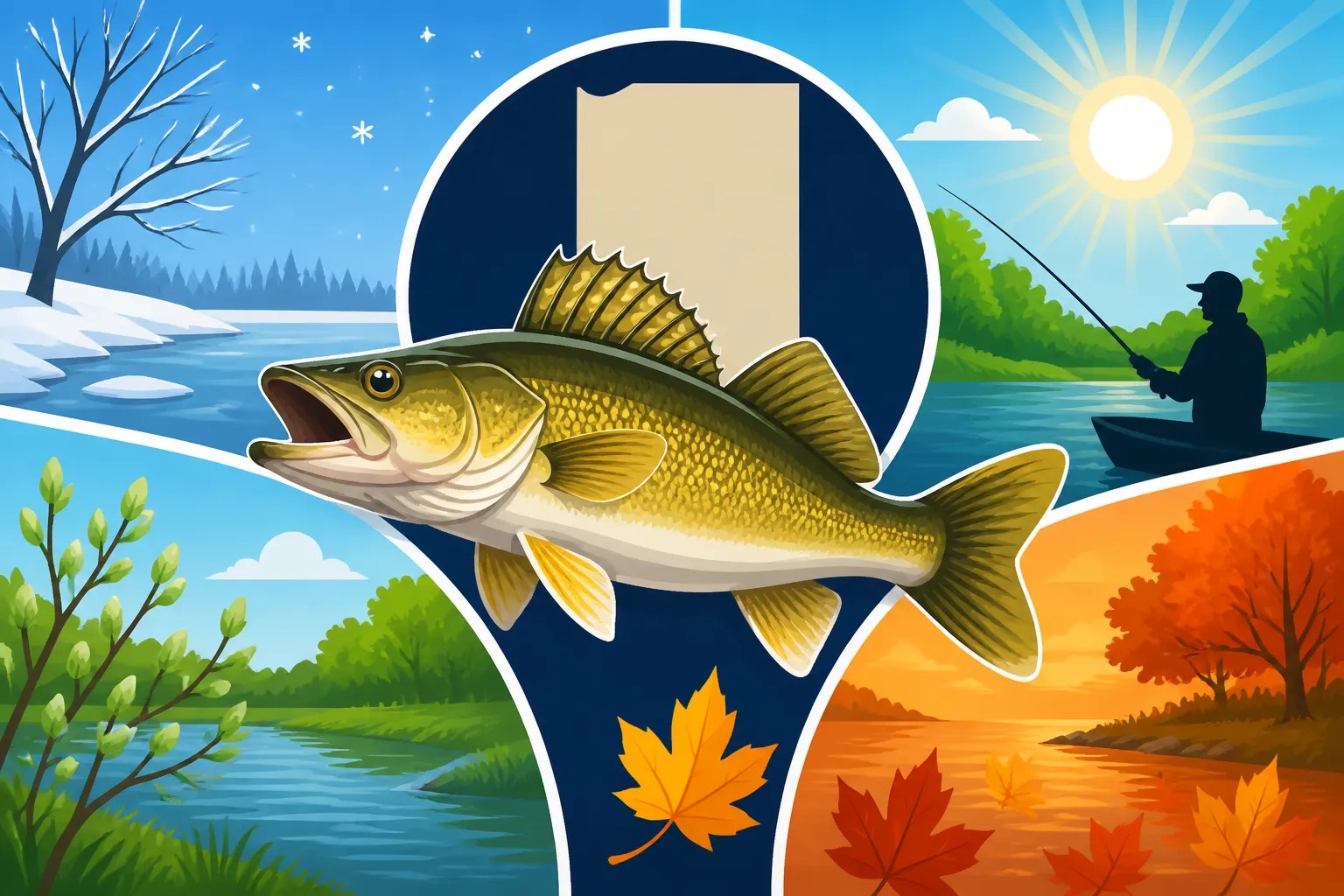
| Season | Prime Months (Approx.) | Key Behaviors | Typical Depth (Feet) | Recommended Techniques | Notes |
|---|---|---|---|---|---|
| Spring | March – May | Pre-spawn staging, spawning, post-spawn recovery/feeding | 5-20 | Jigging, slow trolling, crankbaits | Arguably the best season; post-spawn bite is usually phenomenal. |
| Summer | June – August | Seeking deep, cool water; nocturnal feeding | 20-40+ (day), 10-20 (night) | Deep trolling, night jigging, live bait | Challenging during day, excellent night bite; requires electronics. |
| Fall | September – November | Pre-winter gorging, following baitfish | 10-25 | Trolling, jigging spoons, crankbaits | Second best season, aggressive feeders, great for larger fish. |
| Winter | December – February | Ice fishing, concentrated on structure | 15-35+ | Ice jigs, tip-ups, deadsticking | Requires safety precautions for ice; productive for those willing to brave the cold. |
Winter's Chill: Ice Fishing for Walleye
For the dedicated angler, winter offers a unique and often highly rewarding opportunity to catch walleye through the ice. While not as universally popular as open-water fishing, ice fishing for walleye can be incredibly effective, especially during "first ice" and "last ice."
First and Last Ice Opportunities
The periods of "first ice" (when safe ice first forms) and "last ice" (just before thaw) are often the most productive. During these times, walleye tend to be more active and might venture into shallower areas than they would during the dead of winter. As the ice thickens and winter fully sets in, walleye typically move to deeper main lake basins or along humps and points, where they can be found relatively inactive, conserving energy. Best Winter Months for Walleye Fishing in Indiana will confirm that while challenging, it is absolutely possible.
Ice Fishing Tactics
Ice fishing for walleye usually involves a combination of jigging and using tip-ups. Small, flashy jigging spoons, lipless crankbaits, or soft plastics tipped with a minnow head can entice bites when jigged actively. Tip-ups, set with a lively minnow, are excellent for covering more area and attracting less active fish. Success often hinges on finding key structures like deep weed lines, rock piles, or transition areas, and being willing to move holes frequently until you locate a school. Remember to always prioritize safety when on the ice and check ice conditions regularly.
Influential Factors Beyond the Calendar
While the seasons provide a broad framework, several other factors significantly influence walleye behavior and, consequently, your fishing success. Ignoring these nuances can mean the difference between a full livewell and a silent ride home.
Water Temperature: The Master Controller
We've touched on it already, but water temperature cannot be overstated. It's the primary driver of walleye metabolism, activity levels, and location.
- Cold Water (Below 45°F): Walleye are sluggish. Slow presentations are key. They're often deep or staging for the spawn.
- Cool Water (45-65°F): This is the sweet spot. Walleye are active and feeding, especially post-spawn and in the fall.
- Warm Water (Above 65°F): Walleye seek deeper, cooler water. They become less active during the day and often feed more at night.
Monitoring water temperature with a thermometer is a simple but incredibly effective way to understand what the walleye are doing and where they might be hiding. Many modern fish finders, even portable ones available on Amazon, include a water temperature reading, which can be a game-changer.
Time of Day: Dawn, Dusk, and Darkness
Walleye are famously crepuscular, meaning they are most active during low-light conditions – dawn and dusk. Their large eyes, with a reflective layer called a tapetum lucidum, give them superior vision in dim light, allowing them to ambush prey when other fish struggle to see. This advantage makes these periods prime feeding times. On cloudy days or when the water is stained, this "low light" advantage can extend throughout the day. And, as discussed for summer, the night bite can be incredibly productive, especially on clear lakes where walleye avoid bright sunlight. Always consider the light conditions when planning your attack.
Weather Conditions: From Fronts to Favorable Skies
Weather plays a huge role in all fishing, and walleye are particularly sensitive.
- Stable Weather: Several days of consistent weather, whether sunny or cloudy, can lead to predictable walleye patterns.
- Cold Fronts: A sudden drop in temperature, especially after a warm spell, can shut down the bite fast. Walleye often become lethargic and move deep or hug tight to cover. Fishing immediately before a cold front can be fantastic, as they feed aggressively in anticipation of the change.
- Overcast Skies: Cloudy days can extend the low-light bite, making walleye more active throughout the day, even in shallower water.
- Wind: A consistent wind can create a "walleye chop" – a ripple on the water's surface that breaks up light penetration. This can make walleye more comfortable feeding in shallower areas, and the wind also concentrates baitfish, bringing walleye with them.
- Rain: Light rain can sometimes improve fishing by reducing light and adding oxygen to the water. Heavy rains can muddy the water, making it harder for walleye to see, but also disorienting baitfish, which can sometimes lead to an opportunistic bite.
Tailoring Your Approach to Indiana's Diverse Waters
Indiana boasts a remarkable variety of fishing habitats, from its deep, clear glacial lakes in the north to the vast, sprawling reservoirs in the central and southern regions, and numerous productive rivers in between. Each of these environments presents slightly different challenges and opportunities for walleye anglers.
Glacial Lakes: Northern Indiana's Walleye Strongholds
Lakes like Lake Wawasee, Webster Lake, and the numerous bodies of water in Kosciusko and Steuben Counties are classic walleye fisheries. These lakes are typically deeper, clearer, and offer distinct structural features like rock piles, deep weed lines, and sharp breaks.
- Spring: Focus on rocky points, shallow humps, and incoming river channels for spawning fish. Walleye Minimum Length North of State Road 26 applies here, so always check local regulations.
- Summer: Walleye will retreat to the thermocline, often suspended over deep basins or holding tight to deep structure. Trolling with downriggers or planer boards is often effective here. Walleye Length Exceptions at Bass Lake, Wolf Lake, and Lake George are particularly important if you're fishing those specific northern lakes.
- Fall: Look for walleye moving back to shallower breaks and flats, chasing schools of perch and shiners. Jigging spoons and crankbaits can be deadly.
- Winter: These lakes are prime for ice fishing, with walleye often holding near drop-offs or deep humps.
Reservoirs: Central and Southern Indiana's Walleye Factories
Indiana's large flood control reservoirs, such as Monroe Lake, Patoka Lake, Brookville Lake, and Salamonie Lake, offer different walleye opportunities. These are generally shallower, often with vast expanses of timber, submerged creek channels, and expansive flats.
- Spring: River arms and tributary inflows can be key spawning areas. Post-spawn walleye will relate to main lake points, submerged roadbeds, and creek channel bends.
- Summer: Walleye will seek out the deepest water they can find, often suspending over old river channels or congregating around offshore humps and brush piles. Night fishing is particularly effective here, especially with bottom-bouncing rigs or slow-trolled crankbaits.
- Fall: As water cools, walleye will move onto main lake points, flats, and humps, feeding heavily on schooling baitfish. Look for them shallower than in summer, but still relating to structure.
- Winter: Ice fishing opportunities exist on shallower reservoirs, but safety is paramount. Walleye might be found on offshore humps or along creek channels.
Rivers: Dynamic Environments for Running Walleye
Indiana's larger rivers, like the Wabash, White, and St. Joseph, hold populations of walleye, particularly during spring spawning runs.
- Spring: Focus on deeper holes, current seams, and areas downstream of dams or rapids where walleye gather for the spawn. Jigs tipped with minnows or soft plastics are often irresistible. Indiana's Best Rivers for Walleye Fishing highlights these prime locations.
- Summer: Walleye in rivers will seek out cooler, oxygenated water, often in deeper scour holes, undercut banks, or around submerged timber. They can be very challenging to catch consistently.
- Fall: Look for walleye to become more active in river sections, concentrating on current breaks, log jams, and deeper pools as they feed up.
- Winter: Open-water river fishing is possible where current prevents icing, with walleye holding in deep, slow-moving pools.
Essential Gear and Techniques by Season
Having the right gear and knowing how to use it for each season is paramount. You can't just use a heavy bass rod for delicate walleye bites, especially in different conditions.
Spring: Light Tackle and Precise Presentations
In spring, particularly during pre- and post-spawn, walleye can be finicky.
- Rods & Reels: Medium-light to medium-action spinning rods (6'6" to 7') are ideal, paired with a sensitive spinning reel spooled with 6-10 lb fluorocarbon or braided line with a fluorocarbon leader. A good quality rod that transmits subtle bites is crucial.
- Lures:
- Jigs: 1/8 to 3/8 oz jigs tipped with minnows, shiners, or soft plastics are incredibly versatile. Fan-cast and work them slowly along the bottom.
- Crankbaits: Shallow to medium-diving crankbaits in natural baitfish patterns are excellent for trolling or casting along rocky points.
- Blade Baits: For vertical jigging in deeper staging areas.
- Technique: Slow retrieves, bottom-bouncing, and controlled drifts are key. Be patient and feel for those light "thunks."
Summer: Deep Water Tools and Nighttime Necessities
Summer demands specialized gear to reach deeper fish or exploit the night bite.
- Rods & Reels: For trolling, consider longer, more moderate action trolling rods. For night jigging, your spring spinning setup will work well.
- Lures:
- Deep-Diving Crankbaits: For trolling, use lures that can reach significant depths, often in bright or natural colors. Brands like Rapala and Berkley offer excellent deep-diving options you can readily find on Amazon.
- Live Bait Rigs: Crawler harnesses or simple slip-sinker rigs with nightcrawlers or large minnows are fantastic for bottom fishing or slow trolling.
- Jigs for Night: Dark-colored jigs or jigs with glow-in-the-dark paint, tipped with minnows.
- Technique: Trolling at specific speeds and depths is critical. For night fishing, vertical jigging directly under the boat or slow-rolling baits can be highly effective. A reliable fish finder, especially one with side-imaging or down-imaging, becomes indispensable for locating deep structure and baitfish schools.
Fall: Aggressive Options for Hungry Fish
Fall walleye are often aggressive, making this a great time to experiment with more active presentations.
- Rods & Reels: Your medium-action spinning gear is still great, but a medium-heavy baitcasting setup might be preferred for heavier crankbaits or jigging spoons.
- Lures:
- Crankbaits & Jerkbaits: Aggressive lipped crankbaits and long, slender jerkbaits are excellent for imitating fleeing baitfish.
- Jigging Spoons: Heavy spoons fished vertically over structure can trigger strong reaction bites.
- Swimbaits: Soft plastic swimbaits rigged on jig heads can be incredibly effective when walleye are chasing schools of bait.
- Technique: Trolling, aggressive casting and retrieving, and vertical jigging are all productive. Focus on areas where baitfish are abundant.
Winter: Specialized Ice Fishing Tackle
If you're heading out on the hard water, you'll need specific gear.
- Rods & Reels: Short (24-36 inch) ice fishing rods with sensitive tips are essential for detecting subtle bites. Pair them with small spinning reels.
- Lures:
- Ice Jigs: Small, balanced jigs designed for ice fishing, often tipped with a minnow head or wax worm.
- Jigging Spoons: Small, flashy spoons that flutter on the drop.
- Tip-Ups: Essential for covering multiple holes and presenting live bait.
- Technique: Jigging actively with pauses, or setting tip-ups with minnows. A portable fish finder (flasher or LCD) is incredibly useful for seeing fish and your lure in real-time beneath the ice. Don't forget proper winter attire; you can find excellent thermal layers and insulated gloves on Amazon to keep you warm and comfortable on the ice.
By understanding these seasonal patterns and adapting your approach, you can significantly increase your chances of finding and catching walleye in Indiana's diverse waters. It's about more than just luck; it's about knowledge and preparation.
Disclaimer
This article is for general informational purposes only and does not constitute professional advice. Laws, prices and regulations vary by location and change over time. Consult a qualified professional for guidance on your specific situation.