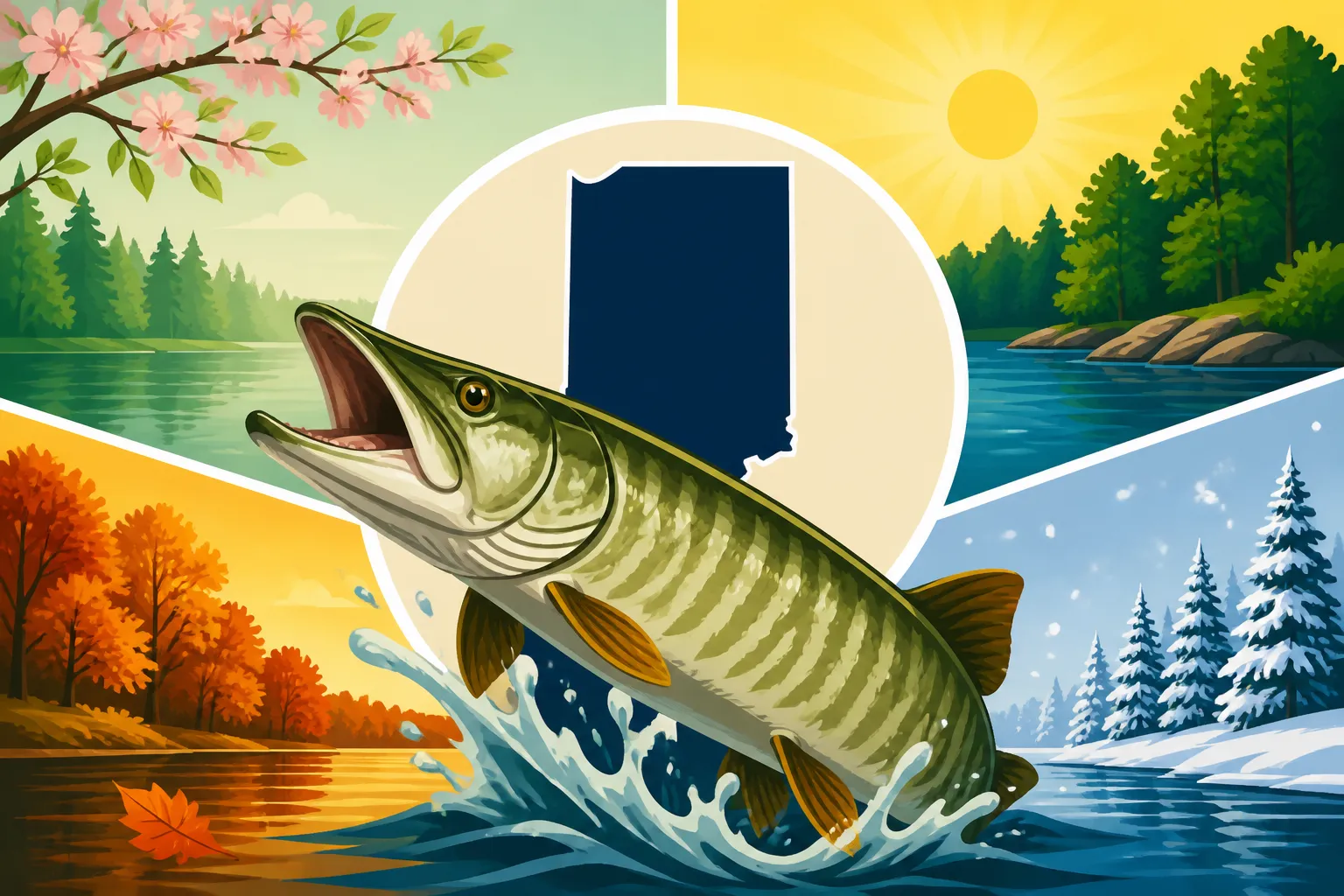
Best Season for Muskie Fishing
If you've ever dreamt of battling one of Indiana's elusive muskellunge, you know the frustration of chasing such a formidable fish. It's often called the "fish of 10,000 casts" for a reason! Knowing when to cast those thousands of casts can make all the difference between a fleeting glimpse and a trophy photo. This guide is dedicated to helping you pinpoint the absolute best season for muskie fishing in Indiana, diving deep into why certain times of the year offer unparalleled opportunities.
Understanding Muskie Behavior Through the Seasons
Muskies, or "muskies" as they're affectionately known, are apex predators in Indiana's freshwater systems. Their behavior is intrinsically linked to water temperature, baitfish movements, and their own biological needs, which shift dramatically throughout the year. Understanding these seasonal changes is fundamental to increasing your odds of a successful outing, saving you countless hours of fruitless casting.
Spring: Post-Spawn Recovery and Early Activity
When the ice finally melts and the days lengthen, ushering in spring, Indiana's muskie begin to stir. However, this isn't immediately prime time. Muskie typically spawn in shallow, vegetated areas as water temperatures climb into the 40s and low 50s Fahrenheit. After the arduous process of spawning, these large fish enter a post-spawn recovery period. They can be lethargic and less interested in aggressive feeding for a week or two.
Once they've recouped their energy, usually as water temperatures settle into the mid-50s to low-60s, muskies become more active. They'll often be found cruising shallower flats, weed edges, and newly emerging vegetation where they can ambush smaller baitfish that are also becoming active. This early spring window can be good, but the bite can be finicky. The weather is often unstable, with cold fronts capable of shutting down the bite completely. You might encounter an aggressive fish one day and struggle to get a follow the next. The key is finding stable weather patterns and looking for areas that warm up faster, like dark-bottomed bays.
Summer: Deep Water and Nocturnal Habits
As Indiana's summer heat sets in and water temperatures climb into the 70s and beyond, muskie activity can become a real challenge for anglers. Many of the shallow areas they frequented in spring become too warm, causing them to retreat to deeper, cooler water. Lakes will often stratify, meaning distinct layers of water with different temperatures form, and muskie will generally seek out the thermocline – that comfortable zone between warm surface water and cold, oxygen-poor deep water.
During the daytime in summer, muskie often become more sluggish and less inclined to chase fast-moving lures. They might suspend over deep water or hold tight to deep structure like submerged humps, rock piles, or dense weed beds at the edge of cooler water. Success during this period often requires specialized techniques like vertical jigging, trolling deep-diving crankbaits, or fishing during low-light periods like dawn, dusk, or even at night when they might move shallower to feed under the cover of darkness. While you can certainly catch muskie in the summer, it typically demands more patience and a more nuanced approach than other seasons.
Winter: Ice Fishing Opportunities (or Lack Thereof)
Indiana winters can be harsh, and many of our lakes freeze over. While ice fishing is a popular pursuit for many species, muskie ice fishing is generally not a common or highly successful endeavor in Indiana. Their metabolism slows dramatically in cold water, making them far less active and less likely to strike a bait.
Muskies can be caught through the ice, but it's typically a game of extreme patience, often involving dead bait or very slow-moving presentations on tip-ups. Given the sheer size of these fish and the challenging conditions, most dedicated muskie anglers in Indiana hang up their heavy gear for the coldest months and eagerly await spring. The window of opportunity for ice fishing muskie is often short, limited by safe ice conditions and the incredibly slow bite, which means most muskie success comes from open water.
Why Fall Reigns Supreme for Indiana Muskie
Hands down, if you ask a seasoned Indiana muskie angler, they'll tell you that autumn is the undisputed champion for chasing these toothy titans. It's the season of big fish, aggressive bites, and truly memorable encounters. The conditions align almost perfectly to make muskies more active, more predictable, and more willing to strike.
The "Feed Bag" Phenomenon
As summer transitions into fall, a powerful biological imperative kicks in for muskie: the need to feed. Just like bears preparing for hibernation, muskie recognize the approaching winter and the scarcity of food it brings. This triggers what anglers affectionately call the "fall feed bag" – a period where muskies become incredibly aggressive, actively hunting and gorging themselves on baitfish to build up fat reserves. This isn't just a casual snack; they are looking for substantial meals.
The falling water temperatures signal this change. Once the lake's surface temperature drops from the oppressive summer highs into the comfortable 60s, and then down into the 50s, muskie feel revitalized. They shed their summer sluggishness and begin actively patrolling their territories, often moving into shallower, bait-rich areas during prime feeding windows. This is when your big baits truly shine, as muskies are looking to expend energy efficiently by targeting larger prey. You might find that even after a full day of fishing without a bite, an hour of intense feeding activity can erupt, giving you that one chance. Anglers who consistently brave the chillier autumn air are often rewarded with the largest muskie of the year. For more on this, check out Best Fall Months for Muskie Fishing in Kosciusko County Indiana.
Prime Water Temperatures and Oxygen Levels
Beyond the "feed bag" instinct, the physical conditions in Indiana's lakes and rivers during fall are simply ideal for muskie. Cooler water temperatures, typically ranging from the mid-60s down into the low 40s, are where muskie thrive. Unlike the warmer summer months where they might be stressed and seeking thermal refuge, fall temperatures allow muskie to operate at peak efficiency. Their metabolism is high, they are strong, and they can chase down prey without overheating.
Furthermore, the "fall turnover" phenomenon, where the surface water cools, becomes denser, and sinks, mixing with the deeper water, replenishes oxygen levels throughout the entire water column. This means muskies aren't limited to a narrow band of oxygenated water but can roam freely from the shallows to the depths, utilizing all available habitat. This increased range makes them more accessible and less concentrated in specific, hard-to-find areas. This widespread comfort allows them to follow baitfish wherever they go, making them more predictable targets if you can find the schools of prey.
Baitfish Migration and Concentration
One of the biggest factors contributing to fall muskie success is the behavior of their primary food source: baitfish. As water temperatures drop, many baitfish species, like shad, ciscoes, and perch, begin to school up more tightly and migrate. They often move from widespread summer patterns into more concentrated areas, seeking out warmer pockets of water, specific types of structure, or preparing for their own fall spawns.
Muskies are highly intelligent predators, and they quickly key into these baitfish concentrations. Instead of having to hunt down scattered individual fish, they can patrol the edges of these dense schools, waiting for the perfect opportunity to strike. This makes finding muskie somewhat simpler in the fall – find the bait, and you're likely to find the muskie. Look for large schools on your electronics, or watch for nervous baitfish skipping on the surface. Points, humps, deep weed lines, and transitions from shallow to deep water often become muskie highways during this time, as they intersect with baitfish movements. Understanding Fall Muskie Fishing Patterns in Indiana can give you a significant edge.
Essential Gear and Tactics for Fall Muskie in Indiana
Successfully landing an Indiana muskie, especially a big fall fish, requires more than just luck. It demands specialized gear and a methodical approach. These aren't your average bass or crappie, and your tackle needs to reflect their power, size, and sharp teeth.
Heavy-Duty Rods, Reels, and Line
Forget your medium-action bass setups; muskie fishing calls for serious firepower. You'll want a heavy to extra-heavy power casting rod, typically between 8 to 9.5 feet long. This length helps you cast large, heavy lures, control strong fish, and execute effective figure-eights at the boat. The backbone of these rods is crucial for driving large hooks into a muskie's bony mouth.
Pair your rod with a robust baitcasting reel designed for muskie. Look for reels with a strong drag system, a large line capacity, and a fast retrieve ratio to quickly take up slack or burn a bait back to the boat. Line choice is equally important: 80 to 100-pound test braided line is the standard. Braid offers exceptional strength, minimal stretch for solid hooksets, and good sensitivity. However, braid alone isn't enough; a heavy-duty fluorocarbon or wire leader (at least 100-pound test) is absolutely non-negotiable to prevent toothy bite-offs. Without it, you're just feeding the fish expensive lures. Finding specialized muskie gear can sometimes be a challenge at local shops, so you might turn to online retailers like Amazon to find that specific model or brand that's highly recommended for muskie. For general guidance on what rods to look for, see Best Rods for Muskie Fishing.
Fall Muskie Lures and Presentations
Fall muskie are focused on big meals, so your lure selection should reflect that. This is the time to throw those impressive, often expensive, baits that mimic large baitfish. Here's a rundown of common fall favorites:
- Large Bucktails: These are classic muskie killers. Think blades from size 8 up to 10 or even bigger. They move a lot of water and create intense vibration, attracting attention from a distance. Experiment with single or double blades, and various color combinations.
- Crankbaits and Swimbaits: Deep-diving crankbaits that can reach muskie holding in deeper water, or large, realistic swimbaits, are incredibly effective. Look for baits that imitate local baitfish species. Slow-rolling these over structure can trigger bites from wary fish.
- Jerkbaits and Glide Baits: These baits require more angler input, allowing you to impart specific actions. Long, sweeping retrieves with pauses can entice a follow, and the unpredictable side-to-side glide of these baits can be irresistible to an active muskie.
- Soft Plastics: Large soft plastic lures, like those resembling enormous paddle tails or worms, can be jigged or slowly retrieved, offering a more subtle presentation when fish are a bit less aggressive.
- Topwater (early fall): In the warmer parts of early fall, particularly during low-light conditions, large topwater lures can still draw explosive strikes. Nothing beats the thrill of a muskie blowing up on a surface bait.
The key to presentation in the fall is often about covering water, but also varying your retrieve. Don't be afraid to experiment with speed, depth, and erratic movements. Sometimes, a slow, methodical retrieve is best, while other times a fast, aggressive burn is what triggers the bite. Always be ready for that "follow" to the boat, and execute a good figure-eight! Knowing the Best Muskie Lures for Fall Fishing will certainly help fill your tackle box.
Locating Fall Muskie Hotspots
Finding fall muskie isn't just about throwing big lures; it's about throwing them where the fish are. During autumn, muskies often gravitate towards specific types of structure and depth contours.
- Deep Weed Lines: Even as some weeds die back, the deeper, healthier sections of weed beds remain prime ambush points. Muskie will patrol these edges, darting out to grab unsuspecting baitfish.
- Points and Humps: Any underwater point or hump that extends into deeper water acts like a natural funnel for baitfish and a perfect ambush spot for muskie. Focus on the transitions where the depth changes abruptly.
- Breaklines: A sharp drop-off or change in depth is often a highway for baitfish and a hunting ground for muskie. Work your lures along these contours.
- Areas with Abundant Baitfish: This is paramount. Use your electronics to locate large schools of baitfish. If you find the food, you'll likely find the predators. Look for signs of baitfish on the surface, or even bird activity.
- Inflows and Outflows: Any moving water, such as river mouths or channels, can concentrate baitfish and oxygen, attracting muskie.
Remember, muskie are often solitary predators, so you might need to cover a lot of water to find an active fish. However, once you find one in a particular type of spot, chances are good that other muskie will use similar structures on that lake. Focusing on Best Muskie Fishing Lakes in Indiana will put you in the right general areas, then it's about breaking down the lake.
Maximizing Your Chances: Tips for Seasonal Success
Landing an Indiana muskie is often a culmination of preparation, persistence, and a bit of luck. While fall is the "best" season, there are still plenty of nuances that can significantly boost your success rate.
Persistence and Patience are Key
The moniker "fish of 10,000 casts" isn't an exaggeration. Muskie fishing, especially for the truly big ones, is a mental game as much as a physical one. You can spend hours, sometimes even days, without a single bite or even a follow. It’s easy to get discouraged, but the anglers who consistently catch muskie are those who stick with it, making cast after cast, remaining focused and optimistic.
Don't let a slow morning or even a slow full day deter you. The bite can turn on in an instant, often during a specific "window" that might only last an hour or two. Keep changing your lures, varying your retrieve, and moving to different spots. Every cast is a new opportunity, and every bit of water you cover increases your chances. The reward for this persistence—the explosive strike of a giant muskie—is truly unparalleled and makes all those thousands of casts worth it.
Understanding Local Lake Nuances
While general muskie patterns hold true across Indiana, every lake, river, or reservoir has its own unique characteristics. The muskie in Lake Wawasee might behave slightly differently than those in James Lake, even during the same season. Factors like dominant baitfish species, water clarity, bottom composition, and fishing pressure all play a role.
To truly excel, you need to become a student of the specific waters you fish. Spend time studying lake maps, looking for subtle changes in depth, weed growth, or hard bottom. Talk to local bait shop owners, who are often a wealth of current information. Consider hiring a local muskie guide for a day; their insights into specific lake patterns can cut years off your learning curve. Many anglers swear by specialized muskie fishing books or instructional videos that can be found easily on platforms like Amazon which often include regional details. Learning What Makes James Lake's Muskie Different From Wawasee's can be crucial if you fish both.
Safety and Release Practices
Muskies are incredibly powerful, large fish, and their conservation is paramount. If you're fortunate enough to hook one, proper handling and release practices are critical for their survival.
- Tools: Always have the right tools readily accessible. This includes a large, rubber-coated landing net (at least 36 inches deep and wide), extra-long needle-nose pliers, hook cutters (to snip hooks quickly if deeply embedded), and a jaw spreader. These tools are non-negotiable and should be within arm's reach at all times. You can find high-quality versions of these on Amazon by searching for "muskie release tools."
- Keep it in the Water: Try to keep the muskie in the water as much as possible, especially during warmer periods. Minimize its time out of the water for photos.
- Support the Fish: When lifting a muskie for a photo, support its body horizontally with one hand under the gill plate (never by the gills themselves!) and the other under its belly near the tail. Avoid holding it vertically by the head or jaw, as this can damage its internal organs.
- Quick Release: Get your photos, remove hooks, and release the fish quickly and gently. If the fish seems sluggish, hold it in the water by the tail, moving it back and forth to force water over its gills until it's strong enough to swim away on its own.
By practicing responsible catch-and-release, you help ensure that Indiana's muskie populations remain healthy for future generations of anglers.
Indiana Muskie Fishing by Season Overview
To give you a quick summary of what to expect throughout the year when targeting muskie in Indiana, here's a helpful table. Remember, these are general guidelines, and local conditions can always vary.
| Season | Typical Water Temperature Range | Muskie Activity Level | Primary Location | Best Lure Types | Challenges/Notes |
|---|---|---|---|---|---|
| Spring | 50s to low 60s | Moderate to Good | Shallow flats, new weed growth, spawning areas | Smaller bucktails, jerkbaits, glide baits | Post-spawn lethargy, unstable weather, finicky bite |
| Summer | Mid 60s to 70s+ | Low to Moderate | Deeper water, thermocline, deep structure | Deep-diving crankbaits, jigs, large soft plastics, topwater (low light) | Warm water stress, less aggressive, nocturnal habits |
| Fall | Low 60s to low 40s | Excellent | Weed edges, points, humps, baitfish schools | Large bucktails, crankbaits, jerkbaits, glide baits | Cold weather for anglers, finding concentrated baitfish |
| Winter | <40s | Very Low | Deep breaks, sluggish near bottom | Dead bait on tip-ups (minimal activity) | Safe ice limited, very slow metabolism, extremely patient |
Disclaimer
This article is for general informational purposes only and does not constitute professional advice. Laws, prices and regulations vary by location and change over time. Consult a qualified professional for guidance on your specific situation.