Best Lures for Saugeye Fishing
Finding the right lures for saugeye can sometimes feel like a puzzle, especially with these feisty hybrids that often outwit anglers who stick to traditional walleye or sauger tactics. Many Hoosier anglers struggle to consistently hook into saugeye, often because they're using gear that's just a little bit off for these unique fish. This guide is all about cutting through that confusion, helping you understand the best lures and techniques to maximize your chances of success on Indiana's saugeye-rich waters.
Understanding Saugeye Habits and Habitat in Indiana
Before we even talk about specific lures, let's chat about saugeye themselves. These aren't just any fish; they're a hybrid of walleye and sauger, and they often inherit the best (and sometimes trickiest) traits from both parents. Knowing where they live, what they eat, and how they behave is like getting a secret blueprint to their underwater world. It makes choosing the right lure a whole lot easier when you understand why it works.
Where Saugeye Roam in Indiana
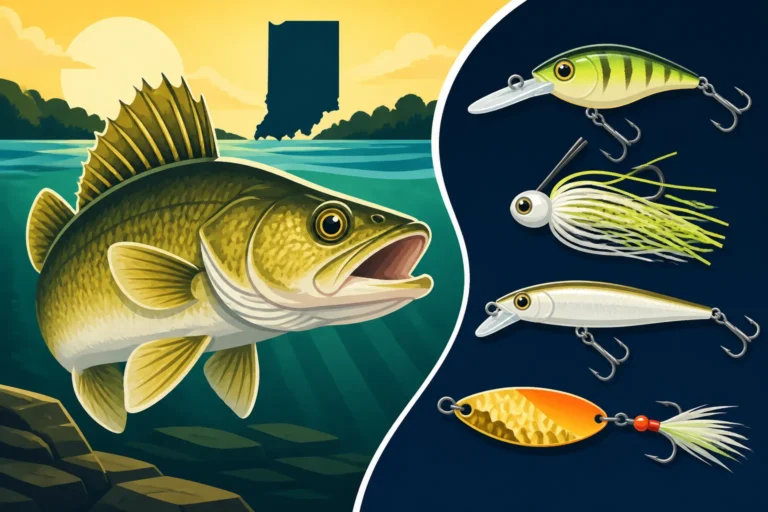
Saugeye are typically stocked in reservoirs across Indiana, making them a fantastic sportfish for many areas. Unlike natural walleye populations which might be spread out, saugeye tend to concentrate in specific waters where they are introduced. Think large, open reservoirs with plenty of submerged structure, deep points, and creek channels. They love areas where they can ambush prey, so look for drop-offs, humps, and submerged timber. Water clarity can also play a role; saugeye often tolerate slightly murkier water than pure walleye, a trait they get from their sauger parent. They thrive in places like Brookville Lake, Salamonie Lake, and Mississinewa Lake, which are known for their saugeye populations. Often, you'll find them congregating near dams or deeper sections of these impoundments. If you're wondering Where Does Indiana Stock Saugeye?, focusing on these larger reservoirs is a good start.
These fish are truly creatures of habit, often returning to the same holding areas day after day if conditions are stable. During daylight hours, especially bright ones, they'll typically hug the bottom or relate closely to structure in deeper water to avoid light. As dusk approaches or on overcast days, they'll often push shallower to feed. Understanding these movements is critical, as it directly impacts your lure choice and presentation.
Saugeye Feeding Preferences
Saugeye are primarily piscivores, meaning they love to eat other fish. Their diet in Indiana waters often consists of shad, alewife, minnows, and smaller panfish. They have keen eyesight, especially in low light, which makes them efficient predators. However, they also exhibit the opportunistic feeding nature of sauger, sometimes hitting a wider variety of baits than a pure walleye might. This means they're often responsive to lures that mimic these baitfish in terms of size, profile, and action. They're not always picky, but presenting something that looks like an easy meal is always a good strategy.
They can be aggressive feeders, especially during certain times of the day or year. When they're on the bite, they'll smack a lure with a vengeance. Other times, they can be incredibly subtle, barely mouthing a bait, which requires a sensitive rod and a keen eye for light bites. Their feeding preferences can also shift with the seasons, water temperature, and even the time of day, so being adaptable with your lure choice is key. Knowing What Does a Striped Bass Eat in Freshwater Reservoirs? might not directly apply, but understanding how prey affects other reservoir predators can provide useful insights.
Identifying Saugeye vs. Walleye
It's actually pretty common for anglers to mistake a saugeye for a walleye, especially if they're not used to seeing both. Both are long, slender, and have that characteristic olive-gold coloring. However, there are a few key differences that can help you distinguish them, and knowing you've caught a saugeye can sometimes confirm that your saugeye-specific tactics are paying off.
The easiest way to tell them apart is to look at the dorsal fin and the tail. Walleye typically have a distinct white tip on the lower lobe of their tail fin and a clear, dark spot at the base of their spiny dorsal fin. Saugeye, on the other hand, usually lack the prominent white tail tip and the distinct dark spot on the dorsal fin. Instead, saugeye often have a more mottled, spotted pattern on their sides and dorsal fin, a characteristic they inherit from their sauger parent. Think of it like a "dirty" walleye. Also, the overall body shape of a saugeye can sometimes be a bit more robust or stocky than a pure walleye. While it might seem like a small detail, proper identification is part of appreciating these unique fish. For a deeper dive into their appearance, you can explore Saugeye Identification: Spotting a Walleye-Sauger Hybrid to sharpen your eye.
Top Lure Categories for Saugeye Fishing
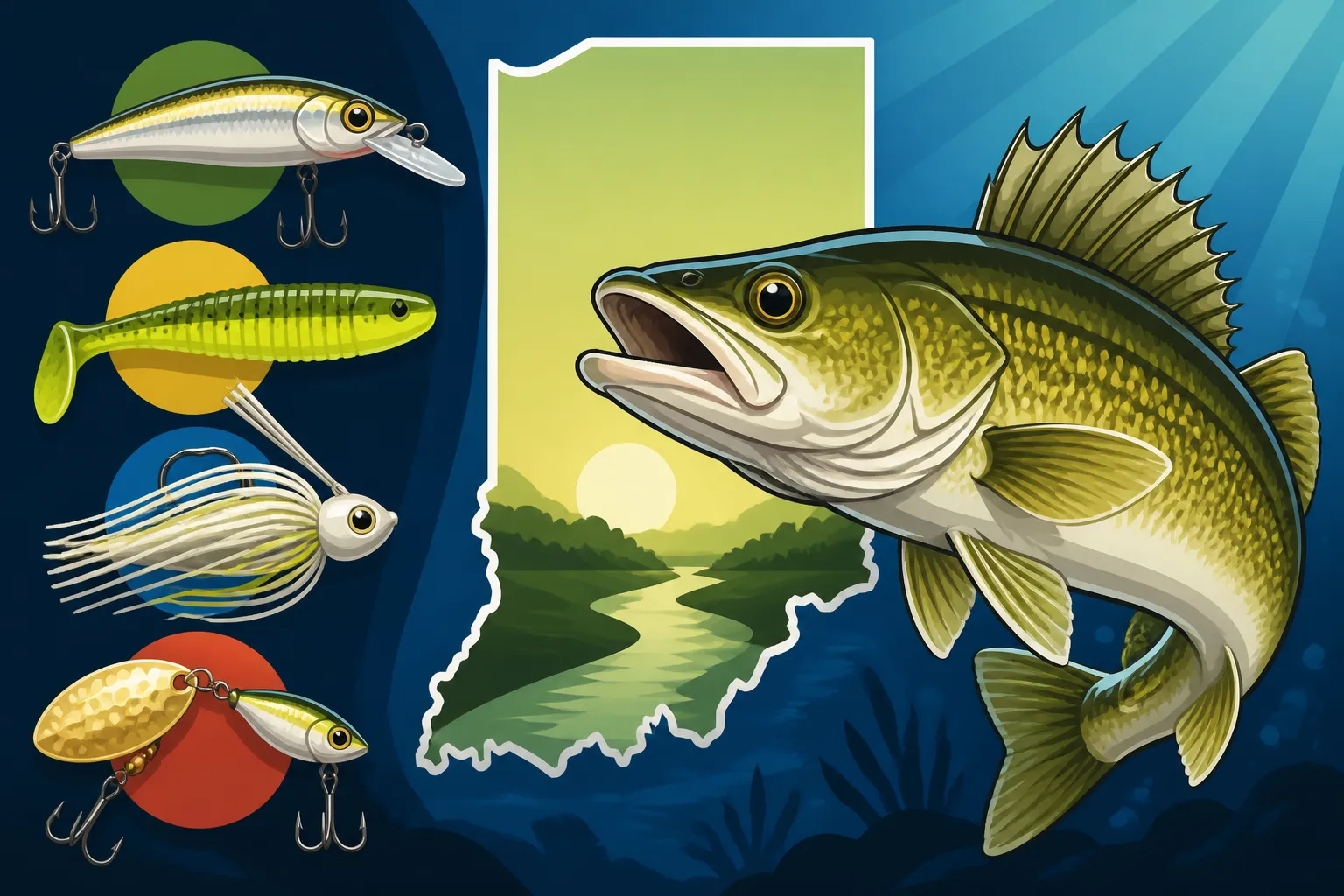
Alright, now to the good stuff: the lures! Saugeye can be caught on a wide variety of presentations, but some stand head and shoulders above the rest in terms of effectiveness. We're going to break down the most productive categories, giving you a solid arsenal to tackle any saugeye situation you encounter in Indiana.
Jigs: The Versatile Workhorse
If there's one lure type I can't live without for saugeye, it's jigs. They're incredibly versatile, allowing you to present bait vertically, horizontally, or even just slowly drag it along the bottom. Jigs mimic a variety of forage, from a dying baitfish to a crawfish, making them irresistible to saugeye.
- Marabou Jigs: These are classic for a reason. The soft, flowing marabou feathers provide an incredible amount of action with even the slightest movement, mimicking a struggling baitfish or insect. Sizes from 1/8 to 1/4 ounce are usually perfect, paired with a subtle jigging motion. Colors like black, brown, olive, and chartreuse are staples. You can find a great selection of marabou jigs on Amazon, perfect for stocking up before your next trip.
- Plastic-Tipped Jigs: This is where you combine the weight and profile of a jig head with the vibrant action of soft plastics. A round-head jig, an aspirin head, or even a stand-up jig head paired with a 2-4 inch grub, shad body, or worm is deadly. The plastic provides scent and a larger profile, while the jig head gets it down quickly. Try to match the hatch with colors that resemble the local baitfish, or go with bright colors like chartreuse or orange in stained water.
- Blade Baits: While not strictly "jigs," blade baits are often fished with similar jigging motions and are incredibly effective for saugeye, especially in deeper water. Their intense vibration and flash call fish in from a distance. A quick lift and fall motion is all it takes to trigger strikes. Sizes around 1/4 to 1/2 ounce work well.
Jigs are fantastic for vertical jigging over structure, casting and retrieving along drop-offs, or even slowly dragging behind a boat. They allow you to maintain contact with the bottom, which is crucial for saugeye that often feed down there. The key is to experiment with retrieve speed and cadence until you find what the fish want on a given day.
Crankbaits: Mimicking Forage Fish
Crankbaits are another powerhouse for saugeye, particularly when you're trying to cover a lot of water or targeting fish that are actively chasing bait. These lures are designed to dive to specific depths and have a built-in wobble and rattle that imitates a fleeing baitfish.
- Deep-Diving Crankbaits: When saugeye are holding in deeper water, say 10-20 feet or more, a deep-diving crankbait is your best friend. Look for models that can reach the depth where the fish are holding or even "bang" off the bottom, creating commotion. Trolling these at various speeds can be incredibly effective, especially in open water reservoirs. Popular colors include shad patterns, silver, bluegill, and firetiger. Brands like Rapala, Berkley, and Strike King all make excellent deep-diving options that saugeye can't resist.
- Medium-Diving Crankbaits: For saugeye relating to shallower structure, like submerged humps or points in the 5-15 foot range, a medium-diving crankbait can be perfect. These are often excellent for casting from shore or from a boat, allowing you to work specific contours and ambush points. Vary your retrieve, adding pauses and twitches to make the lure appear more injured and enticing.
- Lipless Crankbaits: These lures are incredibly versatile and can be fished at almost any depth. They sink quickly, allowing you to reach deep saugeye, but can also be ripped through shallower water. The loud rattles and tight shimmy on the fall are major saugeye attractants. Like blade baits, they are excellent for generating reaction strikes. Look for them in chrome, gold, or baitfish patterns. For a wide selection of different sizes and colors, browsing on Amazon can give you plenty of options to consider for your tackle box.
The beauty of crankbaits is their ability to call fish from a distance with their vibration and flash. They excel in stained water where saugeye might rely more on their lateral line to detect prey. Don't be afraid to experiment with different sizes and diving depths until you find the sweet spot.
Blade Baits and Lipless Crankbaits: Getting to the Strike Zone
I briefly touched on blade baits and lipless crankbaits, but they deserve a bit more attention as dedicated saugeye producers. These lures are fantastic when you need to quickly get down to the fish, whether they're suspended or hugging the bottom, and create a lot of commotion.
- Blade Baits: The thin, metallic profile of a blade bait, often made of lead or zinc, gives it an incredible vibration when jigged. This isn't a subtle lure; it's designed to be aggressive and trigger reaction strikes. When you lift your rod, the bait vibrates furiously, and on the fall, it shimmers like a wounded baitfish. They are excellent for vertical jigging directly over saugeye you've marked on your fish finder or casting out and retrieving with a series of hops and drops. Silver, gold, and firetiger are classic colors.
- Lipless Crankbaits: These are your speed demons. Their compact, heavy design means they cast like a bullet and sink fast. The internal rattles are usually quite loud, making them a great choice in murky water or when you want to attract attention. Fish them with a "rip and fall" retrieve, letting them hit the bottom, ripping them up a few feet, and letting them fall again. This erratic action often triggers saugeye that are hesitant to commit to other presentations. Again, shad or crawfish patterns are usually solid bets.
Both blade baits and lipless crankbaits are particularly effective in conditions where saugeye are grouped up or when they're in an aggressive mood. They're also fantastic for covering water quickly and locating active fish. Don't underestimate their power to elicit a strike, even when other lures aren't working.
Soft Plastics: Finesse and Action
Sometimes, saugeye want something a little softer, a little more natural, and a little less aggressive than a hard bait. That's where soft plastics shine. They offer an incredible array of shapes, sizes, and actions, allowing for highly customizable presentations.
- Grubs and Paddle-tail Swimbaits: These are probably the most common soft plastics for saugeye. A 3-4 inch grub with a curly tail or a small paddle-tail swimbait rigged on a leadhead jig offers a natural swimming action that saugeye find very appealing. The subtle vibration of the tail, even on a slow retrieve, can be enough to draw a strike. Pearl white, chartreuse, smoke, and natural baitfish colors are excellent choices. Pair them with jig heads ranging from 1/8 to 1/4 ounce, depending on depth and current.
- Drop-Shot Worms and Minnows: When saugeye are finicky, or when you're fishing heavily pressured areas, a drop-shot rig can be the ticket. This finesse presentation keeps your bait suspended off the bottom, right in the fish's face, while allowing you to feel every subtle bite. Small, straight-tail worms or minnow-shaped plastics around 3-4 inches work wonders. Colors should generally be natural, like watermelon, green pumpkin, or dark browns. This setup is all about presentation and detecting those light bites.
- Tube Jigs: While often associated with smallmouth bass, tube jigs can be incredibly effective for saugeye too, especially when mimicking crawfish or small baitfish. The hollow body filled with tentacles provides a unique spiraling action on the fall and can be fished by dragging, hopping, or subtle jigging. Pair them with an internal tube jig head for a weedless presentation. Darker colors like brown, green, or black are great for imitating crawfish.
Soft plastics offer a lot of versatility. They can be fished slow, fast, ripped, or dragged. The key is to match the plastic's profile and action to what the saugeye are feeding on and to present it in a way that looks natural and enticing. They're often fantastic for pressured fish or when the bite is tough.
Live Bait Rigs: When All Else Fails (or Excels)
Even though this guide focuses on lures, it would be a disservice not to mention live bait. Sometimes, especially when the bite is slow or the fish are particularly stubborn, nothing beats the real thing. Minnows, nightcrawlers, and leeches are universal fish catchers, and saugeye are no exception.
- Minnow Rigs: A simple live minnow hooked through the lips or dorsal fin on a plain hook (size 4-6 octopus hook) beneath a slip bobber or on a bottom-bouncing rig is often irresistible. The natural movement and scent of a live minnow can tempt even the most hesitant saugeye. This is particularly effective in colder water or when fish are less active.
- Nightcrawler Rigs: A section of nightcrawler, especially on a crawler harness with spinner blades, can be incredibly effective when trolled or drifted. The scent trail and the wiggling action are hard for saugeye to ignore. This is a common and highly productive method for walleye, and saugeye will often respond in kind.
- Leech Rigs: While not as commonly used in Indiana for saugeye as minnows or crawlers, leeches can be absolutely deadly, especially in spring and early summer. Their natural undulating movement is a powerful attractant. Rig them simply on a jig head or under a bobber.
While live bait isn't a "lure" in the traditional sense, it complements a lure-based approach perfectly. If you're struggling to get bites on artificials, switching to live bait can often turn a slow day into a successful one. Remember, the goal is to catch fish, and sometimes nature's bait is the most effective.
Lure Presentation and Techniques for Saugeye
Having the right lure is only half the battle; knowing how to present it effectively is the other, equally important part. Saugeye can be finicky, and a slight adjustment to your technique can make all the difference between a frustrating day and a fantastic one.
Jigging Techniques for Saugeye
Jigging is arguably the most fundamental and effective technique for saugeye, whether you're fishing vertically or casting. The key is to impart action without overdoing it.
- Vertical Jigging: When you're directly over fish you've marked on your fish finder, vertical jigging is paramount. Drop your jig to the bottom, reel up the slack, and then perform a series of short, sharp lifts (6-12 inches) followed by controlled falls. The strike often comes on the fall, so pay close attention to any slack in your line or subtle taps. Don't be afraid to let the jig sit still for a few seconds on the bottom occasionally; saugeye will sometimes pick it up off the silt. This technique is especially good in deeper pockets or around concentrated structure.
- Casting and Retrieving: For covering broader areas or fishing shallower flats, casting a jig and slowly retrieving it with a lift-and-drop motion works wonders. Cast it out, let it sink to the bottom, then lift your rod tip to pull the jig forward a few feet before letting it fall back on a semi-slack line. Think of it as a subtle hop. This allows the lure to mimic a bottom-feeding creature or a dying baitfish. Many strikes will occur as the jig falls or right after it hits the bottom. Using a sensitive rod is crucial here to detect those often light saugeye bites.
Remember, varying your jigging cadence is important. Some days they want an aggressive hop, other days a barely perceptible drag. Experiment until you find what triggers them. The depth at which you're fishing significantly influences the appropriate jig weight; generally, heavier jigs for deeper water or strong currents, lighter for shallow or calm conditions. Walleye Jigging Techniques are very similar and can give you a good foundation for saugeye.
Trolling and Casting Crankbaits
Crankbaits are all about covering water and enticing active fish. Trolling allows you to present your lure at a consistent depth and speed, which can be deadly when saugeye are scattered or holding to specific depth contours.
- Trolling Strategies: When trolling, focus on speed, depth, and lure action. Use your electronics to find the depth where fish are holding, then select a crankbait that dives to that range. Experiment with different speeds; sometimes a slow, methodical pull is best, other times a faster pace that makes the lure really wobble will trigger strikes. Consider using planer boards to spread out your lines and cover a wider area, especially in larger reservoirs. Trolling typically works best along breaks, main lake points, or over submerged humps. Don't be afraid to make slight turns with your boat; these changes in speed and lure action often provoke a bite.
- Casting Crankbaits: For more targeted fishing, casting crankbaits is highly effective. Aim for visible structure, such as downed trees, docks, or rocky points. A "stop and go" retrieve, where you crank the lure down to its maximum depth, then pause, allowing it to slowly float up (or suspend), can be incredibly effective. The erratic change in motion often triggers a reaction strike from an ambushing saugeye. Remember to vary your retrieve until you find what the fish are keying into on that particular day. For more insights on how these lures mimic their prey, think about Best Lures for Saugeye Fishing in relation to what local baitfish look like.
Varying Your Retrieve
This might sound simple, but it's probably the most critical piece of advice for saugeye fishing: don't be a robot. Fish aren't always going to react to the same retrieve every time. Their mood, the water temperature, light conditions, and even pressure from other anglers can all influence how they want a lure presented.
- Speed Changes: One day, they might want a fast, erratic retrieve that screams "fleeing baitfish." The next, a slow, deliberate crawl might be the ticket. Experiment by speeding up, slowing down, and adding sudden bursts of speed.
- Pauses and Twitches: Sometimes, the most enticing action isn't continuous. Adding pauses, even for a few seconds, can make a lure look like an injured or dying baitfish, which is an easy meal for a saugeye. Small twitches of the rod tip can add subtle, lifelike movements during these pauses.
- Bottom Contact: Saugeye often feed near the bottom. If your lure isn't making occasional contact with the lakebed or riverbed, you might be missing fish. Let jigs and lipless crankbaits bounce off the bottom. For diving crankbaits, choose one that can "dig" into the bottom occasionally without getting snagged. This kicks up silt and often triggers a predatory response.
Paying close attention to how the fish are biting—or not biting—and being willing to change things up is what separates good anglers from great ones. What works on Salamonie Lake Fishing Guide might need adjustment on other waters.
Seasonal Considerations for Saugeye Lures
Just like us, saugeye change their behavior with the seasons. Water temperature, available forage, and spawning cycles all dictate where they are and what they're willing to bite. Adapting your lure choices and techniques to the time of year is essential for consistent success.
Spring: Pre-Spawn and Spawn Tactics
Spring is a fantastic time for saugeye fishing in Indiana. As the water begins to warm, saugeye become increasingly active, moving into shallower areas to feed before their spawning period.
- Pre-Spawn: As ice melts and water temperatures climb into the 40s and low 50s, saugeye will start staging in areas adjacent to their spawning grounds, often creek channels or river mouths within reservoirs. This is a prime time for aggressive feeders. Lipless crankbaits, blade baits, and larger jigs with soft plastics (like a 4-inch grub) are highly effective. Focus on trolling or casting these lures along contour breaks and points where fish are moving up to feed. The saugeye are packing on weight for the spawn, so they're often willing to chase.
- Spawn: Saugeye typically spawn when water temperatures reach the mid-40s to low 50s. They prefer rocky or gravelly areas in shallower depths. During the actual spawn, fish can be a bit more finicky. Finesse presentations like small jigs (1/8 oz) tipped with a soft plastic grub or a live minnow can be more effective. Vertical jigging directly over known spawning areas can also produce, but be mindful of stressing the fish during this critical time. Often, the best fishing is before or after the peak of the spawn.
Early spring also means that the Indiana Fishing License Year Runs April to March, so make sure your license is up to date before hitting those pre-spawn hot spots!
Summer: Deep Water and Night Fishing
Summer can be a challenging time for saugeye, as warm water pushes them deeper, and bright sunlight makes them less active during the day. However, it can also offer some incredible fishing opportunities if you know where to look.
- Deep Water Strategies: As surface temperatures soar, saugeye retreat to the coolest, most oxygenated water they can find. This usually means deeper main lake basins, thermoclines, and the deep ends of creek channels. Trolling deep-diving crankbaits that reach these depths (20+ feet) becomes a primary tactic. Experiment with lead core line or downriggers to ensure your lures are precisely at the fish's level. Vertical jigging with heavy jigs or blade baits directly over deep structure you mark on your fish finder can also be very productive.
- Night Fishing: This is where summer truly shines for saugeye. As the sun sets, saugeye often move shallower to feed under the cover of darkness. Casting medium-diving crankbaits, lipless crankbaits, or even using glow-in-the-dark jigs can be incredibly effective. Look for areas where baitfish congregate near shore or under artificial lights. Night fishing requires a bit more preparation and caution, but the rewards can be huge. Do Walleye Bite at Night in Indiana Reservoirs? explains this behavior further, and since saugeye are a hybrid, similar principles often apply.
Fall and Winter: Aggressive and Vertical Presentations
Fall can be an angler's paradise for saugeye, as cooling water temperatures trigger a strong feeding binge. Winter, for those brave enough for ice fishing, also offers unique opportunities.
- Fall Feeding Frenzy: As water temperatures drop into the 60s and 50s, saugeye go on the hunt, trying to fatten up for the cold months ahead. This is a fantastic time for aggressive presentations. Trolling crankbaits at various depths, casting lipless crankbaits, and working blade baits along steep breaks are all excellent tactics. Saugeye will be actively chasing baitfish, so lures that mimic this action are prime. Look for them congregating around points, humps, and submerged islands. The bite can be incredibly strong, often lasting throughout the day.
- Winter and Ice Fishing: For hardwater anglers, saugeye can provide exciting action through the ice. They'll often hold in deeper basins or near prominent structure. Vertical jigging with small spoons, blade baits, or tungsten jigs tipped with a minnow head or a small plastic is the name of the game. Using a flasher or fish finder is almost essential to locate these deeper fish and see how they react to your lure. Don't be afraid to drill a series of holes to find active schools. The winter bite can be subtle, so light lines and sensitive rods are crucial.
Understanding these seasonal shifts and adjusting your lure selection and presentation accordingly will dramatically increase your success rate for saugeye fishing in Indiana.
Essential Lure Components and Accessories for Saugeye
Beyond the main lure types, there are some smaller, often overlooked details that can make a big difference in your saugeye fishing success. Thinking about things like line, leaders, and even the type of hook can optimize your setup.
Line Choices: Sensitivity vs. Strength
The type of fishing line you choose plays a huge role in how your lure performs and how well you detect bites.
- Monofilament: This is a good all-around choice for many anglers, especially beginners. It has stretch, which can be forgiving when a saugeye makes a hard run, and it's generally easy to tie knots with. The stretch can, however, make it harder to feel subtle bites at deeper depths or with smaller lures. For saugeye, 6-10 lb test monofilament is usually sufficient.
- Fluorocarbon: Often used as a leader material, fluorocarbon is also an excellent main line for saugeye. It's nearly invisible underwater, has much less stretch than mono (offering better sensitivity), and sinks, which can help your lures get down faster. It's a bit stiffer and can be more prone to memory, but its benefits for sensitivity and stealth are significant. If using it as a main line, 6-10 lb test is common.
- Braided Line: This is my go-to for most saugeye applications. Braided line has virtually no stretch, providing incredible sensitivity to feel even the lightest tap, and its thin diameter for its breaking strength allows for longer casts and deeper dives with crankbaits. The downside is that it's highly visible. For this reason, I almost always use a fluorocarbon leader (6-10 lb test, 3-6 feet long) tied to my braided main line with a blood knot or a double uni-knot. 10-20 lb test braid is usually a good choice, as the thin diameter is more important than sheer breaking strength for saugeye.
Leaders: The Clear Advantage
As mentioned, a leader is often crucial, especially with braided line. Saugeye, like walleye, can be line-shy, particularly in clear water.
- Fluorocarbon Leaders: These are hands down the best choice for saugeye. Their low visibility underwater makes your presentation much stealthier. A 6-10 lb test fluorocarbon leader is usually a good balance of strength and invisibility. The length can vary from a short 1-2 feet when using a jig, to a longer 5-6 feet when trolling crankbaits. The connection to your main line should be strong and smooth to avoid snags and ensure good casting.
- Steel or Wire Leaders: While saugeye don't have the razor-sharp teeth of a muskie or northern pike, they do have plenty of small, sharp teeth that can abrade lighter lines over time. However, a steel leader is usually overkill and can negatively impact lure action. Stick to fluorocarbon; if you're getting constantly frayed lines, step up your fluorocarbon leader's test weight, but avoid heavy steel unless you're explicitly targeting pike as well. Thinking about Best Wire Leaders for Muskie Fishing in Indiana's Glacial Lakes might be relevant if you're in an area with both species, but for saugeye alone, fluorocarbon is preferred.
Hook Considerations: Sharpness and Size
The final piece of the puzzle: your hooks. No matter how perfect your lure or how precise your presentation, a dull or undersized hook will lead to lost fish.
- Hook Sharpness: This is non-negotiable. Saugeye have hard mouths, and a super-sharp hook is essential for penetration. Many factory hooks on lures are good, but some can be improved. Consider upgrading treble hooks on crankbaits if they seem dull, or simply sharpen them regularly with a hook file. For jigs, ensure the hook point is always needle-sharp.
- Hook Size: Generally, stick to the hook size that comes with your lure or jig head. If you're using live bait, match the hook size to your bait; a size 4 or 6 octopus hook is usually good for minnows. The goal is to have a hook that's large enough to securely hold the fish but small enough not to impede the lure's action or spook the fish.
By paying attention to these smaller details, you're not just throwing a lure; you're creating a finely tuned system designed to maximize your chances of connecting with more saugeye on Indiana waters. It's often the little things that make the biggest difference in fishing.
Disclaimer
This article is for general informational purposes only and does not constitute professional advice. Laws, prices and regulations vary by location and change over time. Consult a qualified professional for guidance on your specific situation.