How Water Temperature Affects Fish Activity
Ever felt like you're fishing the same spot, with the same bait, on a different day, and suddenly the fish are just gone? It’s a common frustration for even the most seasoned anglers in Indiana. Often, the unseen culprit isn't your technique or your lure, but the water temperature. Understanding how water temperature affects fish activity is truly one of the most powerful tools you can add to your fishing arsenal, turning frustrating days into successful ones.
Why Water Temperature is the Ultimate Game Changer
Water temperature is far more than just a number on a thermometer; it's the invisible hand that guides every aspect of a fish's life. From their metabolism to their very survival, temperature dictates where they live, what they eat, and how aggressively they'll bite. Ignore it, and you're essentially fishing blind. Master it, and you'll unlock consistent success on Indiana's diverse lakes and rivers.
Fish Metabolism and Comfort Zones
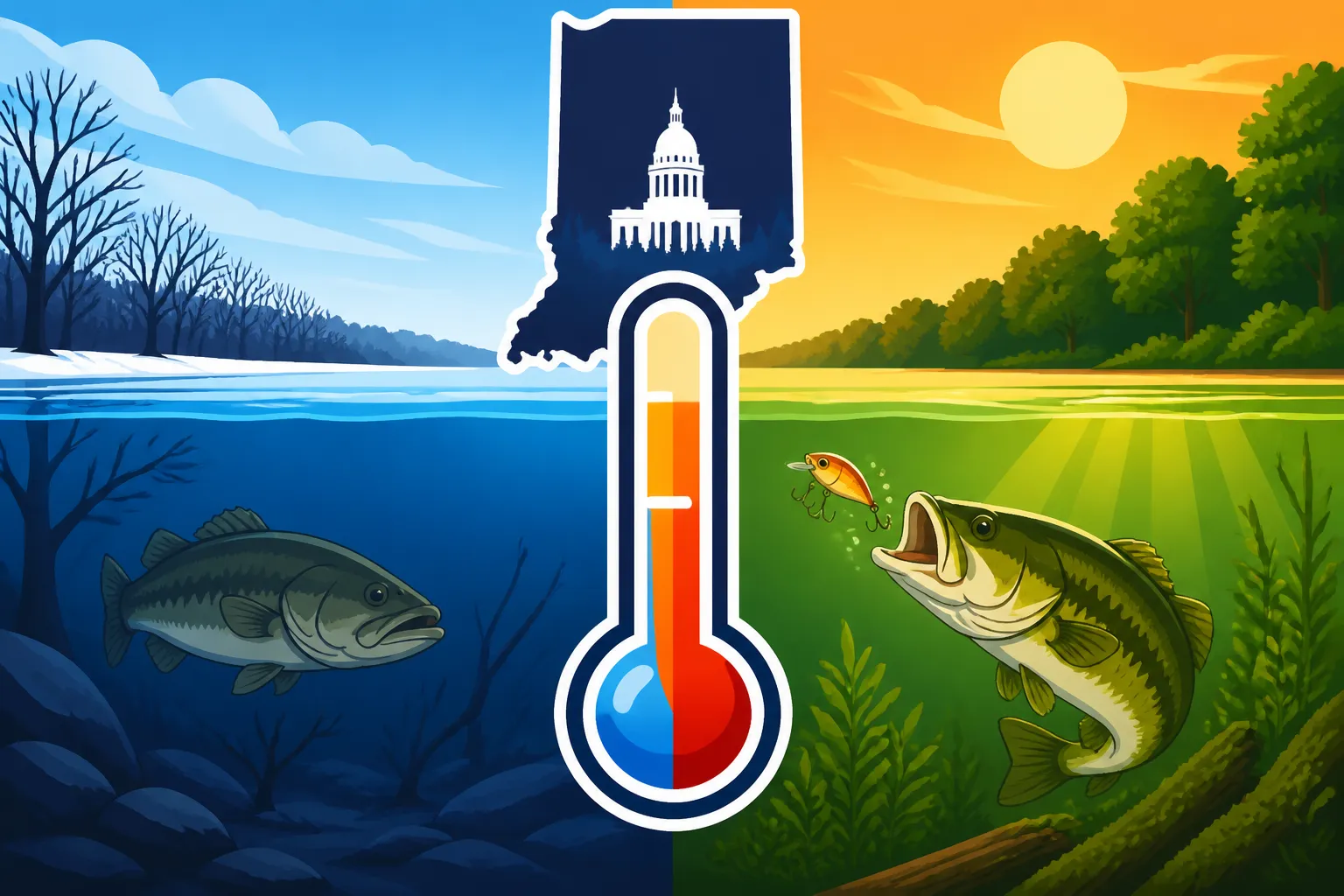
Fish are cold-blooded creatures, which means their body temperature is the same as the water they swim in. This isn't just a biological fact; it’s the cornerstone of understanding fish behavior. Their metabolism—the rate at which their bodies function, digest food, and use energy—is directly tied to water temperature. When the water is too cold, their metabolism slows to a crawl, making them sluggish and uninterested in feeding. They conserve energy, hunkering down in deeper, more stable waters.
Conversely, when the water gets too warm, their metabolism can go into overdrive, making them stressed and less efficient. Imagine trying to run a marathon in a sauna; that’s what overly warm water can feel like to a fish. Each species has an optimal temperature range, a "comfort zone" where they are most active, healthiest, and, crucially for us anglers, most willing to bite. Stray too far from this zone, and you'll find fish either lethargic or trying to escape the area entirely.
Oxygen Levels and Temperature's Interplay
Here’s another critical factor: oxygen. Fish need dissolved oxygen in the water to breathe, just like we need air. The problem is, colder water can hold more dissolved oxygen than warmer water. As water temperatures rise, its capacity to hold oxygen decreases significantly. This means that in the heat of summer, especially in shallow, stagnant areas or during algal blooms, oxygen levels can plummet to dangerous lows for fish.
Anglers often learn this the hard way during a hot spell when fish seem to vanish from their favorite shallow spots. They haven't disappeared; they've simply moved to cooler, deeper water where oxygen is more abundant. Understanding this relationship helps you predict where fish will seek refuge, especially in distress scenarios like prolonged heat waves or after heavy rain that washes in decaying organic matter, further depleting oxygen. This is particularly true in many of Indiana's shallower natural lakes and river backwaters, where these effects can be pronounced.
Baitfish Movement and Predator-Prey Dynamics
It's not just the game fish that are affected by temperature; their food sources are too. Baitfish, like shad or minnows, also have preferred temperature ranges. They'll school up in areas that offer them comfort and safety, often following the subtle temperature breaks or the thermocline in deeper lakes. Where the baitfish go, the predators are sure to follow.
Think of it as a moving buffet. If the baitfish move out of a shallow cove because the water got too warm, the largemouth bass that were feeding on them will likely move out too, following their food source. Conversely, a sudden drop in temperature can shock baitfish, making them less active and therefore less appealing targets for hungry predators. Keeping an eye on what the baitfish are doing is a great indicator of where the bigger fish might be hiding, and temperature is the primary driver of their movements.
How Different Fish Species React to Temperature Swings
Not all fish are created equal when it comes to temperature tolerance. Indiana is home to a fantastic array of species, and each one has its own specific comfort zone. Knowing these preferences is key to targeting your desired catch. What makes a bass happy might send a walleye swimming for cooler climes, and vice-versa.
Warmwater Species: Bass and Panfish
Our beloved largemouth bass, smallmouth bass, bluegill, crappie, and redear sunfish are classic warmwater species. They thrive in water temperatures generally ranging from the mid-60s to the low 80s Fahrenheit. When the water warms up in spring, these fish become incredibly active, kicking off their spawning rituals and feeding aggressively. You can often find them cruising the shallows, soaking up the sun's energy. Indiana Bass Spawn Timing and Pre-Spawn Patterns is a good read if you're looking to time your trips right.
However, even warmwater species have their limits. Once water temperatures consistently climb into the upper 80s or even 90s, especially in shallower Indiana ponds or reservoirs like Monroe Lake, these fish can become stressed. Their metabolism becomes too high, oxygen levels drop, and they'll seek out cooler, deeper water, or shaded areas near structure. During these peak summer conditions, you'll need to adjust your approach, focusing on early mornings, evenings, or targeting deeper submerged cover. For bass, the Best Water Temperature for Bass Fishing in Indiana is often quite specific.
Coolwater Species: Walleye and Pike
Walleye, northern pike, and even muskie fall into the coolwater category. These predatory fish prefer cooler temperatures than bass and panfish, typically thriving in water ranging from the high 50s to the low 70s Fahrenheit. They can tolerate warmer water for periods, but they're generally less active and will seek out deeper, cooler sections of lakes and rivers when temperatures peak.
In Indiana's glacial lakes in the northern part of the state, such as Lake Wawasee or Webster Lake, you'll find these fish often holding to specific depth contours where the temperature is just right. As summer progresses, the thermocline—the layer where warm surface water meets cold deep water—becomes their sanctuary. Targeting this zone can be incredibly productive for walleye, but stray too far above or below it, and you'll likely come up empty. It’s also important to know that Why Walleye Bite Windows Shrink Once the Glacial Lakes Warm is a real phenomenon that affects how and when they feed. For muskie, understanding Best Time of Year for Muskie Fishing in Indiana goes hand-in-hand with temperature.
Coldwater Species: Salmon and Trout
For the ultimate coldwater thrill in Indiana, you'll head to Lake Michigan and its tributaries. Chinook salmon, Coho salmon, steelhead (rainbow trout), and brown trout are true coldwater dwellers. They prefer water temperatures generally below 65 degrees Fahrenheit, and many species become most active in the 40s and 50s. These fish are highly sensitive to temperature changes, especially during their spawning runs.
In the fall, as Lake Michigan’s tributary streams cool down, it triggers the instinctual migration of salmon and steelhead upstream to spawn. How Water Temperature Triggers the Fall Salmon Push Toward Shore is a critical piece of knowledge for any angler chasing these powerful fish. Even a couple of degrees can make or break a salmon or steelhead bite, sending them charging upstream or holding them back in the lake. Understanding the specific temperature preferences of these coldwater fighters is essential for success in Indiana’s far northwest corner.
Understanding Seasonal Temperature Zones
Water temperature isn't static; it's a dynamic force that changes with the seasons, creating distinct zones and patterns in Indiana's waterways. Being aware of these seasonal shifts and their impact on a lake's or river's thermal structure is paramount to locating fish.
Spring: The Warming Trend
As the long, cold grip of winter finally loosens its hold, spring brings a welcome warming trend to Indiana's lakes and rivers. Ice cover melts, and the sun's rays begin to penetrate the water, slowly raising temperatures. This is a period of transition, often characterized by "turnover" in deeper lakes, where the entire water column mixes as temperatures equalize. Once the water uniformly reaches about 39 degrees Fahrenheit, it begins to warm from the surface down.
During early spring, fish, still lethargic from winter, will seek out the warmest water they can find. Shallow, dark-bottomed bays and northern shorelines that receive more direct sunlight are often hotspots. As temperatures climb into the mid-40s and 50s, fish like crappie and walleye become more active, moving to shallower staging areas before their spawn. By late spring, when temperatures hit the 60s, bass and panfish kick into high gear, making for some of the year's most exciting fishing. This is arguably the Best Time of Year to Fish in Indiana for many species.
Summer: Stratification and Thermoclines
Summer presents a completely different thermal landscape, especially in deeper Indiana lakes and reservoirs like Monroe Lake or Patoka Lake. The sun intensely heats the surface water, which is less dense than colder water, causing it to float on top. This leads to a phenomenon called "thermal stratification," where the lake divides into distinct layers:
- Epilimnion: The warm, oxygen-rich surface layer.
- Metalimnion (Thermocline): A transitional zone where temperature drops rapidly with increasing depth. This is often an oxygen-rich zone that also holds baitfish.
- Hypolimnion: The cold, deep layer, which often has very low oxygen in productive lakes, making it unsuitable for most game fish.
The thermocline becomes a critical zone for many fish in summer. Walleye, bass, and crappie will often hold right at or just above this layer, where they can find optimal temperatures and abundant baitfish. Understanding how to locate and fish the thermocline is essential for summer success, as fish will rarely stray far from this comfort zone during the heat of the day.
Fall: Turnover and Cooling Waters
As summer wanes and air temperatures drop, the surface water of lakes begins to cool. Once the surface temperature equals that of the deeper, cooler water (around 39 degrees Fahrenheit again), the entire water column "turns over." This means the cooler, oxygenated surface water sinks, pushing the deeper, sometimes de-oxygenated water to the surface. This can temporarily disperse fish and make fishing challenging due to unsettled conditions and suspended debris.
After turnover, as fall progresses, the entire lake begins a gradual cooling process. Fish, sensing the coming winter, often engage in a strong feeding frenzy to fatten up. This "fall bite" can be fantastic, as fish become incredibly active and aggressive. They’ll remain in shallower areas longer, following baitfish that are also enjoying the last comfortable temperatures before winter. This is a prime time for targeting many species, and understanding the cooling pattern is vital. For Lake Michigan anglers, How Water Temperature Triggers the Fall Salmon Push Toward Shore perfectly illustrates this seasonal shift.
Winter: Ice Cover and Deep Water Sanctuaries
When winter truly sets in and surface temperatures drop to freezing, many Indiana lakes and ponds develop a layer of ice. Under this ice, the water settles into a stable thermal stratification, but in reverse compared to summer. The coldest water (just above freezing) will be directly under the ice, while the densest, warmest water (around 39 degrees Fahrenheit) will be found at the bottom.
Fish, especially bass, crappie, and bluegill, will typically hold in these deeper, warmest zones, often congregating in large schools. Their metabolism slows considerably, and they become lethargic, requiring a much more subtle approach from ice anglers. Finding these deeper "wintering holes" or structural elements where temperatures are most stable is key to successful ice fishing. Even in open water during mild winters, fish will gravitate towards deeper structures where temperature fluctuations are minimal, seeking thermal refuge.
Reading the Water: Practical Tips for Anglers
Knowing that water temperature affects fish is one thing; actually using that knowledge on the water is another. There are practical tools and observations you can employ to make temperature your ally.
Using a Thermometer and Electronics
The most direct way to understand water temperature is, of course, to measure it. A good quality water thermometer is an inexpensive yet invaluable tool. You can find excellent options on Amazon. Simply cast it out and let it sink to various depths, or use one attached to your trolling motor or boat transducer. Getting readings at different depths will help you pinpoint temperature breaks or the thermocline.
Modern fish finders and depth sounders often come with built-in temperature gauges that read the surface temperature, and some advanced units can even show you temperature changes at depth, which is incredibly useful for finding that elusive thermocline. Side-imaging and down-imaging on units from brands like Humminbird or Lowrance can help you visualize underwater structure where fish might be holding in a specific temperature zone. It's an investment, but it provides a huge advantage.
Observing Nature's Cues
Beyond gadgets, nature provides its own set of clues if you know what to look for. Pay attention to how the sun hits the water, especially in spring and fall. Shallow, dark-bottomed areas will warm up faster. Observe insect activity; a sudden hatch can indicate specific water temperatures. Look for bird activity, as diving birds often indicate schools of baitfish, which are themselves driven by temperature.
Even the visible signs of a cold front, like cloudy skies and falling air temperatures, should trigger an awareness that water temperatures will soon follow. Fish often react to these changes before the water temperature fully shifts, seeking deeper water in anticipation. Conversely, a prolonged warm spell might mean fish are pushed to oxygenated areas near inlets or springs, or into deep shade.
Adjusting Your Approach: Lures, Depth, and Speed
Once you have a handle on the water temperature and how it's affecting fish, you can adjust your fishing strategy accordingly.
- Lure Selection: In cold water, opt for slower-moving baits like jigs, soft plastics, or blade baits that can be worked subtly. Fish won't chase a fast-moving lure if their metabolism is slow. In warmer water, aggressive reaction baits like crankbaits, spinnerbaits, or topwaters can be highly effective as fish are more active.
- Depth: This is perhaps the most crucial adjustment. In spring and fall, fish might be shallow. In summer, they’ll likely be deeper, near the thermocline or in shaded areas. Use your electronics and thermometer to find that comfort zone and present your bait at the correct depth. Sometimes, moving just a few feet deeper or shallower can make all the difference.
- Speed of Retrieve: This directly relates to metabolism. Slow down your retrieve in colder water, giving lethargic fish time to react. In warmer water, you can speed up your retrieve, often triggering aggressive strikes from active fish. Even a subtle change in retrieve speed, combined with the right lure and depth, can be the key to unlocking a challenging bite. For example, knowing the Best Water Temperature for Crappie Fishing means you can slow down your jigging in winter, or speed it up in spring.
Table: Optimal Temperature Ranges for Common Indiana Game Fish
| Fish Species | Preferred Temperature Range (Fahrenheit) | Notes on Activity |
|---|---|---|
| Largemouth Bass | 65-75 | Highly active, aggressive feeding and spawning. Below 50, very lethargic. Above 80, stressed, seeking deep cover/shade. |
| Smallmouth Bass | 60-70 | Similar to Largemouth, but often prefers slightly cooler, clearer water, especially in rivers. Becomes very active during the Best Time of Day to Catch Bass in these ranges. |
| Crappie (Black & White) | 60-70 | Very active, especially during spring spawn. Will move deeper or shallower to find preferred range. |
| Bluegill / Sunfish | 68-75 | Extremely active, aggressive biters. Tolerant of warmer water but can get sluggish in extreme heat. |
| Walleye | 55-70 | Highly active in this range, particularly around the thermocline in summer. Can be caught in colder water but generally less aggressive. |
| Northern Pike / Muskie | 55-70 | Highly predatory and active. Will retreat to cooler, deeper water in summer heat. |
| Chinook Salmon (Lake MI) | 45-55 | Prefers cold, oxygenated water. Highly active for feeding. Spawning runs triggered by cooling tributary waters. Essential for Lake Michigan Salmon and Steelhead Run Guide in Indiana. |
| Steelhead / Rainbow Trout | 45-65 | Loves cold water, very strong fighters. Active feeders in this range. |
| Channel Catfish | 70-85 | Very active in warm water, often feeding aggressively in shallower areas during low light. Can tolerate higher temps than many other species. |
| Hybrid Striped Bass (Wiper) | 65-75 | Aggressive, hard-fighting fish that prefers moving water or open basin areas of reservoirs. Actively chases baitfish in these temperatures. |
Remember, these are general guidelines. Local conditions, oxygen levels, and available cover can all influence where fish decide to hang out. But armed with knowledge of water temperature, you'll be well on your way to more consistent catches, no matter the season. If you're looking for new gear like a fish finder or a reliable water thermometer, checking out options on Amazon can be a great starting point for enhancing your fishing setup. Knowing Best Fishing Spots in Indiana is great, but knowing the temperature that attracts fish to them is even better.
Disclaimer
This article is for general informational purposes only and does not constitute professional advice. Laws, prices and regulations vary by location and change over time. Consult a qualified professional for guidance on your specific situation.