Switching From Summer Lures to Fall Patterns as Water Cools
That magical feeling of summer fishing, where bass are busting topwater at dawn and crappie are stacked on brush piles, eventually gives way to cooler breezes and shorter days. As Indiana's waters start to cool, what worked so beautifully in July might leave you scratching your head in October. This guide is all about helping you smoothly transition your lure selection and techniques to keep those fish biting as autumn sets in.
Reading the Water: Understanding Fall's Impact on Fish Behavior
The biggest shift you'll experience when moving from summer to fall fishing in Indiana is undoubtedly the water temperature. It's the primary driver behind everything fish do, from where they hold to what they eat and how aggressively they strike. Ignoring this crucial change is like trying to drive a car with no gas – you won't get anywhere!
The Cooling Water Temperature Shift
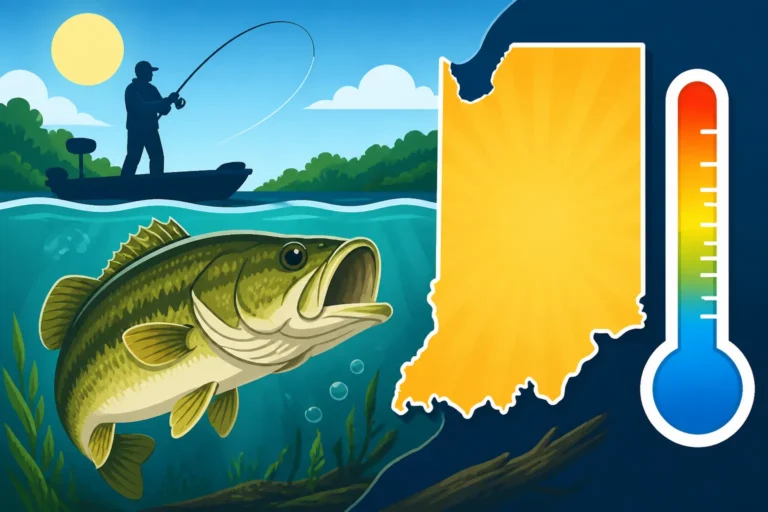
When August heat gives way to crisp September mornings, the first thing to happen is the surface water beginning to cool. This process isn't instant or uniform, but it signals a massive change for the fish. In deep lakes and reservoirs, you might experience the "fall turnover" where the warmer surface water mixes with the colder, oxygen-depleted bottom water. This can temporarily scatter fish and make them harder to locate. However, once the turnover settles, the cooler, more oxygenated water throughout the water column often invigorates fish. They become more active, feeding heavily in preparation for the lean winter months. They're still cold-blooded creatures, though, so as temperatures continue to plummet, their metabolism will eventually slow down, making them less inclined to chase a fast-moving bait. Understanding how these water temperatures dictate behavior is key, and you can dive deeper into this with our guide on How Water Temperature Affects Fish Activity.
Think of it like us trying to decide what to eat. On a hot summer day, you might crave something light and refreshing, maybe a quick snack. But once the chill of fall hits, your body naturally wants something heartier, something that provides more fuel. Fish are much the same, but instead of cravings, it's driven by instinct and metabolic rate. Early fall, when water is still fairly warm (say, 60s Fahrenheit), fish are often very active, much like during late spring. But once those temps dip into the 50s and especially the 40s, their energy levels drop, and they become far more sluggish, conserving energy. This means your approach has to change drastically.
Baitfish Movement and Forage Changes
Another monumental shift in the fall is the behavior of baitfish. Throughout summer, schools of shad, minnows, and other small forage fish are often scattered, grazing on plankton or hiding in weed beds. As the water cools, these baitfish tend to congregate and move towards warmer, often deeper water. This schooling behavior makes them a prime target for predatory fish like bass, crappie, and walleye, who will follow these schools religiously.
If you can find the bait, you'll often find the predators. This might mean watching your fish finder for dense clouds of bait or looking for activity on the surface where fish are busting into schools of shad. For instance, on large reservoirs like Monroe Lake or Patoka Lake, baitfish will move out of shallow coves and into deeper main lake basins or creek channels. Understanding these migration patterns is paramount. It’s not just about what lure you throw, but where you throw it. Sometimes, these baitfish will even move into the backs of major creeks or up into rivers as water levels fluctuate or they seek warmer thermal pockets.
Essential Lure Categories for Fall Success
Once you understand why fish are behaving differently, it's time to adapt what you're throwing. Switching from summer lures to fall patterns isn't just a suggestion; it's a necessity for consistent success. You wouldn't wear a swimsuit in December, and fish won't chase a topwater in November.
Reaction Baits for Active Fish (Early Fall)
In early fall, when the water is still relatively warm (think late September, early October), fish are often aggressive, feeding up for winter. This is prime time for reaction baits, which are designed to provoke a strike through their movement, flash, or vibration rather than a subtle presentation.
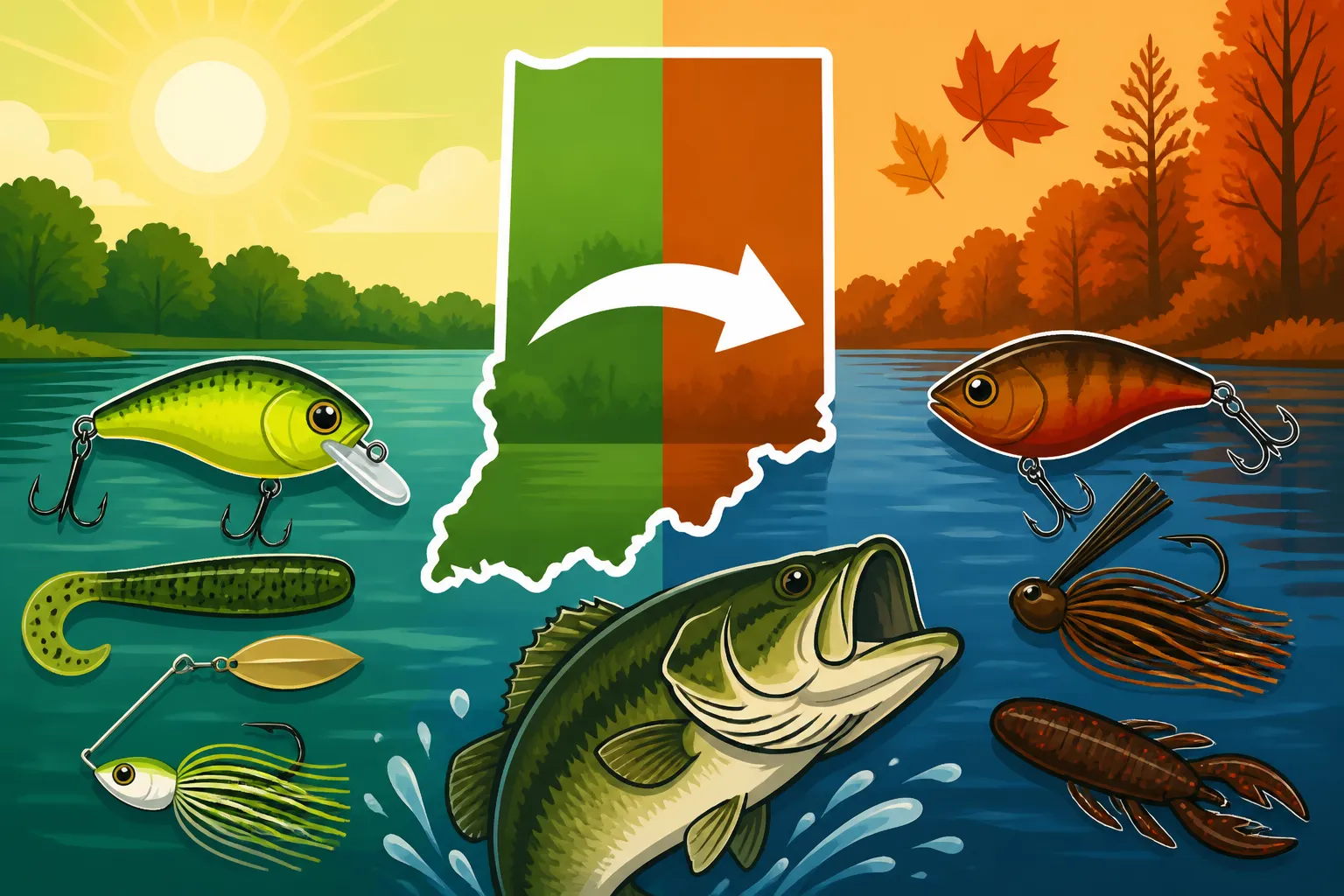
- Crankbaits: Medium to deep-diving crankbaits are fantastic in early fall. They mimic fleeing baitfish and allow you to cover water quickly, locating active schools. Experiment with shad-imitating colors (chrome/blue, silver/black) or crawfish patterns, especially if you're fishing rocky areas. The retrieve can still be fairly fast, with occasional pauses to let the bait float up slightly, tempting a follower.
- Spinnerbaits: These are workhorses in fall, especially on windy, cloudy days or in stained water. The flash and vibration of the blades draw attention, and they're excellent for fishing around remaining weed edges, laydowns, or rocky banks. White, chartreuse, or a combination of both are reliable colors. A steady retrieve, or "slow-rolling" them along the bottom, can be deadly.
- Jerkbaits: As the water begins to dip into the 60s, a suspending jerkbait becomes an absolute killer. These baits can be twitched and paused, hanging tantalizingly in the strike zone for extended periods. This is crucial as fish become a bit more hesitant to chase. The key is to experiment with pause length – sometimes a 5-second pause is all it takes, other times a 20-second pause is what finally triggers a strike. Look for transparent or natural baitfish colors.
Finesse and Slow Presentations (Late Fall)
As autumn progresses and the water temperature plunges into the 50s and then the 40s, fish metabolism slows down significantly. They're still feeding, but they're not going to expend much energy chasing down a meal. This is when finesse and slow presentations become paramount.
- Jigs: A good old-fashioned jig, whether it's a football jig, a swim jig, or a simple weedless jig, is indispensable in late fall. Tipped with a chunk or creature bait, jigs offer a compact, protein-rich meal that fish don't have to chase far. Slowly dragging or hopping a jig along deep structure, rock piles, or channel swings can produce some of the biggest fish of the year. Colors like black and blue, green pumpkin, or brown are excellent choices.
- Soft Plastics: Think about dropshots, Ned rigs, or Texas-rigged worms. These allow for extremely subtle, slow presentations. A Ned rig, for instance, stands upright on the bottom, offering a small, irresistible target that even lethargic fish will mouth. Drop-shotting allows you to present a bait precisely at the depth fish are holding, keeping it in their face without much movement. You can find a huge variety of these on Amazon if you're looking to stock up before the real cold sets in. The trick is patience; bites will often be extremely subtle – just a slight "thump" or the feeling of added weight.
- Bladed Jigs/Chatterbaits: While sometimes considered a reaction bait, a bladed jig retrieved slowly can be surprisingly effective in colder water, particularly around grass lines or areas with scattered cover. The unique vibration can often call fish in when other baits fail.
Unique Fall Opportunities (Walleye, Muskie, Salmon)
Fall isn't just about bass and panfish. Indiana offers some fantastic cooler-water opportunities for other species that thrive as the temperatures drop.
- Walleye: As lakes cool, walleye become more active and predictable, often congregating on deeper humps, points, and along channel edges. Blade baits, jigging spoons, and crankbaits trolled slowly are excellent choices. Consider fishing at night, too; walleye often move shallower to feed under the cover of darkness. Many anglers consider fall the Best Season for Walleye Fishing in Indiana.
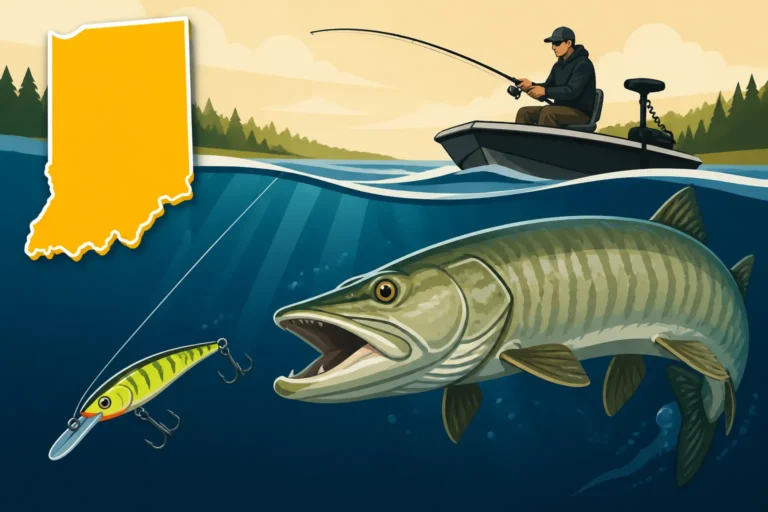
- Muskie and Pike: For anglers targeting Indiana's toothy predators, fall is often the prime time for a trophy. These fish feed heavily, bulking up for winter. Large bucktails, gliders, and deep-diving crankbaits are the go-to baits. Slow, methodical retrieves are often key, with lots of long pauses and figure-eights at the boat. Our article on Fall Muskie Fishing Patterns in Indiana has even more specific tips for these giants.
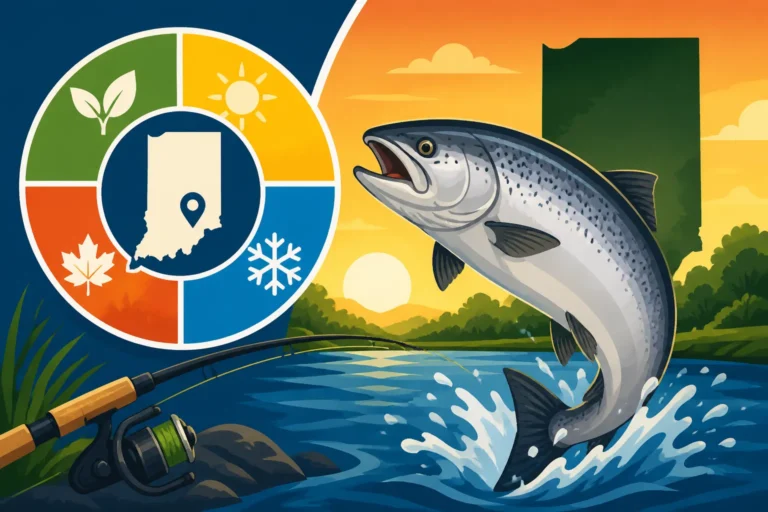
- Salmon and Steelhead: If you're near Lake Michigan, fall is synonymous with the spectacular salmon and steelhead run. Chinook and Coho salmon, followed by steelhead, enter tributary rivers. Spoons, spinners, and various presentations of spawn sacs or beads become incredibly effective. This is a highly anticipated time, and understanding the Fall Salmon Run Timing on Lake Michigan in Indiana is crucial for success.
Adapting Your Approach: Techniques for Cooler Water
It’s not just about the lures; it’s how you use them. Simply throwing your favorite fall crankbait with a summer retrieve won't cut it. You need to recalibrate your entire approach to match the fish's metabolic rate and location.
Slower Retrieves and Longer Pauses
This is perhaps the most critical adjustment for fall fishing as the water cools. Fish, particularly bass and crappie, are less inclined to chase a fast-moving bait. Their strike zones shrink, and they need more time to commit.
Imagine a deer in winter versus summer. In summer, it might dash across a field. In winter, it moves more deliberately, conserving energy. Fish are the same.
- Crankbaits and Spinnerbaits: While you can still rip these in early fall, as the water dips below 55 degrees, slow down. Instead of a burning retrieve, try a steady, slower reel, letting the bait wobble enticingly. For crankbaits, incorporate longer pauses in your retrieve, allowing the bait to suspend or slowly rise.
- Jerkbaits: This is where jerkbaits shine. The "twitch, twitch, pause" cadence is famous, but in cold water, that pause can extend from a couple of seconds to 10, 20, or even 30 seconds. Experiment! The subtle shimmy of a suspending jerkbait during a long pause can often be the only thing that triggers a reluctant fish.
- Jigs and Plastics: These are already slow baits, but in fall, slow them down even further. Instead of aggressively hopping a jig, drag it slowly across the bottom, feeling every rock and stick. For soft plastics, use minimal movement, letting currents or subtle rod twitches do most of the work. The goal is to make it as easy as possible for a fish to eat.
Targeting Deep Water Structures
As surface water cools, fish often seek out stable temperatures and cover in deeper water. This means your focus should shift from the shallow, cover-rich banks of summer to offshore structures.
- Ledges and Drop-offs: These are highways for fish in fall. Baitfish will move along them, and predators will ambush. Look for ledges leading into main lake channels or deep creek arms. Fishing both the top and bottom of the ledge is important.
- Humps and Roadbeds: Submerged humps or old roadbeds can be magnets for bait and predatory fish. These provide isolated structure in deeper water. Using your electronics to locate these features and any fish holding on them is crucial.
- Channel Swings: Where the main river or creek channel swings close to a bank or point, fish often stack up. These areas offer both deeper water access and current breaks.
- Deep Docks and Brush Piles: Even shallow docks can have deep water access nearby. Don't overlook the deep ends of docks or brush piles placed in 15-25 feet of water, especially for crappie or bass. For a deeper dive into adjusting your strategy after a weather change, consider checking out our article on Best Fishing Techniques After a Cold Front.
Concentrating on Baitfish Schools
We touched on this earlier, but it bears repeating: finding the bait is often the fastest way to find the fish in fall. Baitfish are schooling up, and predators are right there with them.
- Electronics are Your Friend: A good fish finder is invaluable. Look for dense clouds of baitfish, often appearing as dark masses on your screen. If you see arches or lines near these bait balls, you're in the right place.
- Visual Cues: Keep an eye out for birds diving (gulls or herons), which can indicate baitfish being pushed to the surface. Also, look for "busts" on the surface, where bass or other predators are crashing into schools of shad.
- Shallow vs. Deep: In early fall, baitfish might still be in shallower pockets, but as the water gets colder, they will retreat to deeper, more stable environments. Adjust your search accordingly, focusing on main lake areas, creek mouths, and the deepest parts of coves.
- Wind Blown Banks: Sometimes, wind will push baitfish into certain areas. Fishing these wind-blown banks, especially those with deeper access, can be very productive.
Beyond Lures: Other Fall Fishing Considerations
While lures and techniques are paramount, a successful fall fishing trip also requires attention to other important details, from your line to your clothing.
Line Choice and Sensitivity
Colder water often means clearer water, as algae blooms die off and sediment settles. This, combined with more lethargic fish that bite subtly, means your line choice becomes more critical.
- Fluorocarbon: This line is a fall favorite for many anglers. It's nearly invisible underwater, which is a huge advantage in clear, cold water where fish might be more wary. It also has very low stretch, offering excellent sensitivity to detect those faint bites. Consider a lighter test than you might use in summer if conditions are tough.
- Braided Line with Fluorocarbon Leader: For maximum sensitivity and casting distance, a braid-to-fluoro leader setup is hard to beat, especially when fishing jigs or soft plastics in deeper water. The braid transmits even the slightest "tick" to your rod tip, while the fluorocarbon leader maintains stealth.
- Monofilament: While less sensitive and visible than fluorocarbon, quality monofilament can still be a good choice for reaction baits like crankbaits or spinnerbaits, offering a bit more stretch for those harder strikes. The slight stretch can actually prevent hooks from tearing out of a fish's mouth when they hit a fast-moving bait.
Dressing for the Indiana Fall Weather
Indiana fall weather can be notoriously unpredictable. A warm, sunny morning can quickly turn into a cold, windy, rainy afternoon. Being unprepared for the elements can cut your trip short or, worse, put you in a dangerous situation.
- Layers are Your Best Friend: Start with a moisture-wicking base layer, add an insulating mid-layer (fleece or down), and top it with a waterproof and windproof outer shell. This allows you to adjust your clothing as temperatures change throughout the day.
- Head, Hands, and Feet: A significant amount of heat is lost through your head, so a warm hat is essential. Neoprene gloves or fingerless fishing gloves can keep your hands warm while still allowing for dexterity. Waterproof boots with warm socks are non-negotiable, especially if you're bank fishing. You can find a great selection of cold-weather fishing apparel on Amazon to ensure you're ready for anything.
- Bring Extra Clothes: Even if the forecast looks good, always pack an extra set of dry clothes in a waterproof bag. Accidents happen, and falling in cold water is no joke. Staying dry is just as important as staying warm.
Fall Fishing Safety
While fall fishing can be incredibly rewarding, the cooling water introduces some serious safety considerations that every angler, especially boaters, needs to take to heart. As you consider Winter Fishing Patterns on Indiana Lakes, remember that conditions can shift rapidly.
- Hypothermia Risk: Cold water drains body heat much faster than cold air. If you fall in, hypothermia can set in quickly. Always wear a PFD (Personal Flotation Device), even if you're a strong swimmer. Modern inflatable PFDs are comfortable and allow for a full range of motion.
- Tell Someone Your Plan: Always let a friend or family member know where you're going, when you expect to be back, and if you have a change of plans. This is vital in case of an emergency.
- Check Your Boat Gear: Ensure your boat's safety equipment is in good working order: fire extinguisher, horn/whistle, navigation lights, and a fully charged battery for your motor and electronics. If using an outboard, ensure your kill switch lanyard is always attached to you.
- Monitor Weather Forecasts: Fall weather can change rapidly, bringing strong winds and sudden drops in temperature. Check the forecast before you go and throughout the day. Don't hesitate to cut your trip short if conditions become unsafe.
Table: Summer vs. Fall Fishing Adaptations
To help you visualize the shift, here's a quick comparison of general adjustments to make when transitioning from summer to fall fishing patterns.
| Aspect | Summer Fishing Strategy | Fall Fishing Strategy (Cooling Water) |
|---|---|---|
| Water Temperature | Warm (70s-80s F), often stratified | Cooling (60s-40s F), possible turnover, more uniform |
| Fish Metabolism | High, active, willing to chase | Moderate to low, conserving energy, less willing to chase |
| Fish Location | Scattered, weed beds, shallow cover, deeper thermocline | Schooling, deeper structures (ledges, humps), following baitfish |
| Baitfish Behavior | Scattered, grazing | Schooling, migrating to deeper, warmer water |
| Primary Lures | Topwaters, fast crankbaits, jigs, worms in cover | Suspending jerkbaits, slow-rolled spinnerbaits, jigs, soft plastics |
| Retrieve Speed | Fast, aggressive, erratic | Slower, deliberate, long pauses |
| Line Focus | Strength, abrasion resistance | Sensitivity, low visibility (fluorocarbon, braid to fluoro) |
| Key Techniques | Power fishing, targeting visible cover | Finesse, covering water with electronics, targeting offshore |
| Best Time of Day | Early morning, late evening, night | Mid-day (when water is warmest), low light for active feeders |
Wrapping Up Your Fall Transition
Switching from summer lures to fall patterns as the water cools isn't about guesswork; it's about understanding the environment and adapting your strategy. By paying attention to water temperature, baitfish movements, and then adjusting your lures and techniques accordingly, you'll be well on your way to enjoying some of the most productive fishing Indiana has to offer. Whether you're chasing bass on Patoka Lake, casting for walleye in the glacial lakes of the north, or reeling in salmon on Lake Michigan, the fall offers unique and exciting opportunities. Don't let the cooling weather scare you away; embrace the change, and you might just land your biggest fish of the year! Don't forget that your Indiana Fishing License Year Explained runs April to March, so make sure your license is up to date for all your fall adventures.
Disclaimer
This article is for general informational purposes only and does not constitute professional advice. Laws, prices and regulations vary by location and change over time. Consult a qualified professional for guidance on your specific situation.