Best Time to Catch Chinook Salmon in Indiana
If you've ever dreamt of battling one of Lake Michigan's hardest-fighting fish, then setting your sights on Chinook salmon in Indiana is a fantastic goal. Many anglers get frustrated trying to pinpoint the best time to target these powerful fish, often missing the prime windows due to fluctuating weather and fish movements. This comprehensive guide will break down the seasonal patterns, key environmental factors, and essential techniques to help you maximize your chances of hooking into a trophy Chinook along Indiana's magnificent Lake Michigan shoreline.
Understanding the Chinook Salmon Life Cycle in Indiana's Lake Michigan
To truly understand when and where to catch Chinook salmon, also known as King Salmon, it's crucial to grasp their life cycle and habits within the vast waters of Lake Michigan. These majestic fish are not native to the Great Lakes but were introduced to control invasive alewife populations, and they've thrived, creating a world-class fishery. Their movements are heavily dictated by their need to feed and, eventually, to spawn.
The Spawning Run: Why Fall is Prime Time
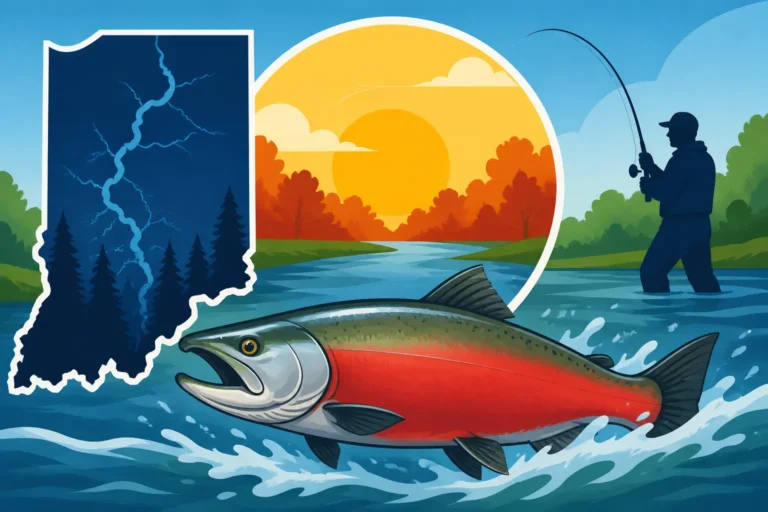
Without a doubt, the most anticipated and often most productive time to catch Chinook salmon in Indiana is during their spawning run. As late summer transitions into early fall, usually from August through October, mature Chinook salmon begin their migration from the deeper, cooler waters of Lake Michigan towards the shallower nearshore areas and tributary river mouths. This instinctual drive to reproduce is what makes them accessible to shore and pier anglers, as well as those with smaller boats who can't venture far offshore.
The precise timing of this run is heavily influenced by water temperature and rainfall. Cooler water temperatures, typically dropping into the 50s Fahrenheit, signal to the salmon that it's time to begin their journey. Heavy rains can also play a significant role, raising river levels and creating strong currents that encourage salmon to enter the rivers from Lake Michigan. These fish, often in the 3- to 4-year-old range, are at their peak size and strength during this period, making for incredibly exciting fights. They are driven by an urge to reproduce, and while they may not be actively feeding in the same way they do in the open lake, they will strike at lures and baits out of aggression or territorial instinct. For a deeper dive into this, check out our guide on Fall Salmon Run Timing on Lake Michigan in Indiana.
Summer Offshore Fishing: The Earlier Window
While the fall run gets a lot of attention, dedicated anglers know that summer offers a fantastic, albeit different, opportunity to catch Chinook salmon. From late spring through mid-summer (roughly May through August), mature and immature Chinook salmon are spread out across Lake Michigan, often in deeper, cooler waters where they actively feed on alewives and other baitfish. This is primarily a boat fishery, requiring specialized gear and techniques like trolling.
During these months, Chinook salmon are in their prime feeding condition, characterized by vibrant silver scales and explosive power. They typically inhabit temperature breaks or thermoclines, which are layers of water with distinct temperature differences, often found at depths ranging from 50 to 150 feet or more. Targeting these fish requires boats equipped with downriggers, planer boards, and a variety of specialized lures designed to imitate their prey. While you won't see the massive concentrations of fish found during the fall run, the fish you catch in summer are often incredibly healthy, aggressive, and offer some of the most thrilling battles. Many anglers find the consistent action offshore during the summer to be just as rewarding as the more concentrated, but sometimes unpredictable, fall run.
Seasonal Breakdown for Chinook Salmon Fishing
Let's dive a bit deeper into what you can expect from Chinook salmon fishing throughout the year along Indiana's Lake Michigan coastline. Each season presents unique opportunities and challenges.
Late Summer to Early Fall: The Peak Run
This is the golden window for many Indiana anglers hoping to land a King. Starting in mid-August and intensifying through September and October, the mature Chinook salmon begin staging near river mouths, such as those of Trail Creek in Michigan City or the St. Joseph River just across the state line in Michigan (though these same patterns occur on the Indiana side). This is when fish are most accessible from shore, piers, and smaller boats near the break walls.
The first push of salmon usually arrives when offshore water temperatures start to dip into the low 60s, then into the 50s. Anglers will see success casting large spoons, body baits, or drifting cured salmon skein (roe) under a bobber. You might find yourself shoulder-to-shoulder with other excited anglers on the Michigan City pier during peak times, all hoping for that tell-tale tug on the line. Fishing at dawn and dusk can be particularly productive, as salmon tend to be more active in lower light conditions. If you're looking to gear up, many experienced anglers stock up on their favorite spoons and line on reputable sites like Amazon, ensuring they have the right tackle when the run truly begins. Our guide on Chinook Salmon Fishing on Indiana's Lake Michigan Shore offers more specific techniques for this exciting period.
Spring and Early Summer: Beyond the Spawners
While not as famous as the fall run, the spring and early summer periods (April through July) offer excellent opportunities for boat anglers to target Chinook salmon, particularly smaller, immature "feeder" Kings that are aggressively putting on weight. These fish haven't yet committed to the spawning run and are focused purely on feeding.
In April and May, as water temperatures slowly rise, Chinook salmon begin to move into shallower, warmer waters in search of baitfish. This is often an excellent time for nearshore trolling, usually in depths of 20-60 feet, using smaller spoons and stick baits. As summer progresses into June and July, the fish typically move deeper to find cooler water and dense baitfish schools. This requires pushing further offshore and utilizing downriggers to present lures at specific depths, sometimes 50 to 100 feet down. Lake Michigan's thermocline becomes crucial here, as salmon will often stack up just above or within this cooler layer. This offshore trolling game demands a well-equipped boat and a good understanding of sonar to locate fish and bait. Many boaters consult resources like our Trolling Gear Setup for Indiana's Lake Michigan Salmon to ensure they have the right equipment.
Winter and Early Spring: A Niche Opportunity
Fishing for Chinook salmon in the dead of winter or very early spring (November through March) is considerably more challenging and less common, but not entirely impossible for the most dedicated anglers. After the main fall run concludes, a few "stray" salmon may linger in the deeper nearshore areas or even drop back out of the rivers into the lake.
Success during these colder months often depends on mild weather windows and finding schools of baitfish that might be attracting a few remaining salmon. Pier and shore fishing are still possible if conditions allow, but the bite is usually much slower and more sporadic. Boat fishing would primarily involve trolling in very deep water, and weather conditions on Lake Michigan can be extremely unpredictable and dangerous. While not the prime time, an adventurous angler might still find a surprise catch on a mild December day. It's a testament to the resilience of these fish that a few can be found year-round, though certainly not in the numbers seen during the peak run.
Key Factors Influencing Chinook Salmon Success
Catching Chinook salmon isn't just about showing up during the right month; it's about understanding the nuances of their environment. Several factors heavily influence their behavior and your chances of success.
Water Temperature and River Conditions
Water temperature is perhaps the most critical factor for triggering the fall Chinook run. As the offshore waters of Lake Michigan begin their seasonal cooling, typically dropping from the 70s down into the 50s Fahrenheit, mature salmon receive their biological cue to move towards spawning grounds. The ideal range for active salmon in the nearshore and river mouths is often cited as 48-58°F. If the water stays too warm, the run can be delayed. If it drops too quickly, fish might move through very fast.
River conditions, particularly for those targeting salmon once they enter the tributaries, are equally important. Heavy rainfall can cause rivers like Trail Creek to rise and become turbid, providing cover for salmon and encouraging them to push upstream. However, excessively muddy water can sometimes deter anglers and make it harder for fish to locate lures. Conversely, low, clear water can make salmon skittish and harder to approach, especially in daylight hours. A good rule of thumb is that stable or slowly dropping temperatures, coupled with a moderate increase in river flow, often provide the best conditions for a strong run. Anglers frequently monitor local weather and stream gauges to predict the optimal bite. Understanding how water temperature triggers the fall salmon push toward shore is key to timing your trip.
Weather Patterns and Lake Michigan Dynamics
Lake Michigan is a massive body of water, and its dynamics are constantly influenced by weather. Wind direction and strength can drastically affect fishing conditions. A strong west or north wind can create large waves, making boating dangerous and stirring up nearshore sediments, leading to murky water. These conditions can push baitfish further offshore and make fishing difficult, though some experienced shore anglers might find certain wind directions concentrate bait and salmon in specific areas.
Conversely, calm days with light winds are generally more comfortable for all types of fishing and allow for easier boat navigation. Barometric pressure changes, often associated with approaching cold fronts, can also impact fish behavior, sometimes making them more aggressive before a front or less active immediately after. Staying informed about marine forecasts is not just about safety, but also about predicting fish movements. Our guide on Check Lake Michigan Fishing Rules Before You Cast emphasizes the importance of understanding these conditions.
Optimal Time of Day
While Chinook salmon can be caught at any time of day, certain periods are generally more productive. Like many predatory fish, Kings are often most active during periods of low light.
- Dawn (First Light): This is often considered the prime time. As the sun begins to rise, salmon tend to be more aggressive and less wary, moving closer to shore or into shallower river sections. This is when you're most likely to get those explosive strikes.
- Dusk (Last Light): Similar to dawn, the fading light of evening provides another excellent window. Salmon will often move back into feeding or staging areas as the sun sets, offering another opportunity for a hot bite.
- Night Fishing: For particularly wary or pressured salmon, night fishing can be incredibly effective, especially from piers or break walls. Chinook salmon rely heavily on their lateral line system to detect vibrations, and in the dark, they might be less inhibited. Glow-in-the-dark lures or those with rattles can be very effective after sunset.
- Overcast Days: On heavily overcast or rainy days, these low-light conditions can extend throughout the day, making for good fishing even in the middle of the afternoon. Clear, sunny days, however, often push salmon into deeper water or make them more lethargic, requiring a more subtle approach. You can learn more in our Best Time of Day to Catch Salmon on Lake Michigan guide.
Gear and Techniques for Indiana Chinook Salmon
Once you understand when to fish, the next step is knowing how to fish and what gear you'll need. Chinook salmon are powerful, so robust tackle is essential.
Essential Trolling Setups
For boat anglers targeting offshore Chinook, trolling is the primary method, and it requires a specialized setup.
- Downriggers: These devices are critical for getting your lures down to the precise depths where salmon are holding, often in the thermocline. A good downrigger system allows you to clip your line to a heavy cannonball weight, lower it to a set depth, and then release the line when a fish strikes.
- Planer Boards: Used for spreading out multiple lines away from the boat, planer boards allow you to cover a wider swath of water and present lures to fish that might be spooked by the boat's presence. There are different types, from large inline boards to mast systems.
- Rods and Reels: Heavy-duty trolling rods (often 8-10 feet, medium-heavy to heavy action) paired with level-wind baitcasting reels spooled with 20-30 lb monofilament or braided line are standard. The drag system on your reel is paramount for fighting these powerful fish.
- Lures: A variety of spoons, dodgers, and flies are used. Popular spoon brands include Michigan Stinger, Dreamweaver, and Warrior. Dodger-and-fly combinations, which imitate baitfish being chased, are also highly effective. Many anglers browse the extensive selection of these specialized lures on Amazon to find the latest patterns and colors. For more on this, our Trolling Gear Setup for Indiana's Lake Michigan Salmon provides detailed advice.
Pier and Shore Fishing Strategies
When the salmon move nearshore during the fall run, pier and shore fishing become incredibly popular and effective.
- Casting Spoons: Heavy casting spoons (like a 3/4 oz to 1 oz Little Cleo or a Kastmaster) in bright, flashy colors (chartreuse, orange, silver, blue/silver) are go-to choices. Cast them out, let them sink, and retrieve them with a steady retrieve, imparting a jigging motion.
- Bobber Fishing with Skein: Cured salmon skein (eggs) is a highly effective bait, especially when drifted under a float or bobber near river mouths or along pier walls. The scent attracts the salmon, and the natural presentation is often irresistible. Ensure your bobber is large enough to support the bait and any added weight.
- Bottom Fishing with Spawn Sacks: In areas where current isn't too strong, you can also bottom-fish with spawn sacks. A small egg sinker or split shot above a swivel, leading to a leader with a single hook baited with a small spawn sack, can be effective.
- Rods and Reels: Medium-heavy to heavy spinning rods (7-10 feet) paired with durable spinning reels capable of handling 15-20 lb test line are ideal. A strong drag and good casting distance are key for reaching fish beyond the immediate shoreline. For an in-depth look, our guide on Best Salmon Fishing Spots on Lake Michigan in Indiana explores top locations.
Bait and Lure Recommendations
The right bait or lure can make all the difference, and Chinook salmon can be particular.
| Season/Location | Primary Lure Types | Recommended Colors | Notes |
|---|---|---|---|
| Summer Offshore | Trolling Spoons, Dodger/Fly | Green/Silver, Blue/Silver, Purple/Silver, Chartreuse/Silver | Mimic alewives, target thermocline |
| Fall Nearshore/Piers | Casting Spoons, Body Baits, Spawn Sacks, Cured Skein | Orange, Chartreuse, Silver, Blue, Gold | Aggressive strikes, natural scent is key |
| River Mouths | Cured Skein, Spawn Bags, Jig/Plastic | Natural Egg Colors (Orange, Pink), White, Chartreuse | Attracts staging and entering salmon |
For offshore trolling, popular spoon colors often include those that mimic alewives, such as various shades of green, blue, and purple, often paired with silver or glow backs. For dodger-and-fly combinations, similar color schemes work well, with a focus on creating flash and action.
During the fall run, when salmon are nearshore or in river mouths, bright, aggressive colors for casting spoons and body baits tend to draw reaction strikes. Think hot orange, chartreuse, or fluorescent red. Natural baits like cured skein or spawn sacks are highly effective due to their scent, especially when the fish are less interested in actively feeding. Many anglers experiment with different cures and scents bought online, including from various fishing supply sellers on Amazon, to find what works best on a given day. Our article on What to Bring for Indiana's Fall Salmon Run provides a complete checklist for your next trip.
Disclaimer
Fishing regulations can change frequently. Always consult the latest Indiana Department of Natural Resources (DNR) fishing guide before heading out to ensure you are compliant with all current laws and limits.