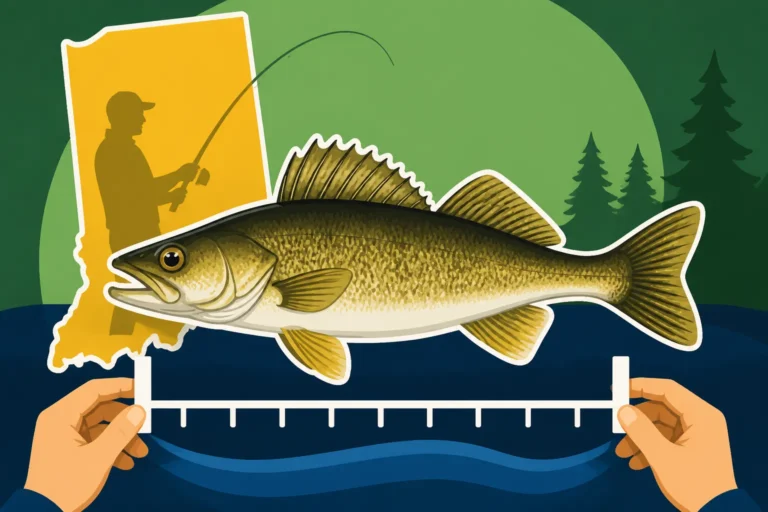
16 Inches: Indiana’s Walleye Length Standard Up North
Figuring out Indiana's fishing regulations can sometimes feel like trying to untangle a backlash on a windy day – confusing, frustrating, and you just want a clear answer. When it comes to walleye, the rules can get even trickier, especially in the northern half of the state. This guide is here to cut through the confusion and explain exactly why a 16-inch minimum length limit for walleye is so important up north, where it applies, and how to make sure you're always on the right side of the law.
Understanding Indiana's Walleye Regulations North of State Road 26
For many Hoosier anglers, the dream of catching a decent walleye is strong. These hard-fighting, great-tasting fish are a prized catch, but knowing the rules for keeping them is paramount. Indiana, like many states, has specific regulations designed to protect its fisheries and ensure healthy populations for future generations. For walleye, these rules often hinge on location, with a significant split occurring right around State Road 26.
The Statewide Minimum Length for Walleye
While this article focuses on the north, it’s helpful to know that generally, if you're fishing for walleye in Indiana, there's a minimum length rule you need to follow. This isn't just some arbitrary number; it's set to allow walleye enough time to mature and spawn at least once, contributing to the population before they become fair game for your cooler. For a comprehensive overview of all the guidelines, you might want to check out the broader Indiana's Walleye Minimum Length Rule.
Why the 16-Inch Rule Applies to Northern Waters
The decision to impose a 16-inch minimum length for walleye in many of Indiana's northern waters isn't random. It's a strategic move by the Indiana Department of Natural Resources (DNR) to specifically manage walleye populations in these particular ecosystems. Northern Indiana is home to numerous natural lakes and reservoirs that are critical walleye habitats, often with different growth rates and population dynamics compared to their southern counterparts. The 16-inch minimum allows these fish to reach a more robust size, typically meaning they've had more opportunities to spawn, contributing vital genetics to the fishery. It also helps to prevent over-harvesting of smaller, younger fish, giving the population a better chance to thrive and produce more trophy-sized catches in the long run.
Imagine if everyone kept every walleye they caught, regardless of size. The younger fish wouldn't stand a chance to grow, and the overall health of the fishery would decline rapidly. This specific length limit helps ensure that those walleye have a chance to fulfill their biological role, leading to more sustainable and enjoyable fishing for everyone down the line. It's all about finding that delicate balance between sport and conservation.
Identifying the Geographic Split at State Road 26
So, where exactly does "north of State Road 26" begin and end? This state highway is the key demarcation line for many of Indiana's fishing regulations, including walleye length limits. State Road 26 runs roughly east to west across the central part of the state, passing through cities like Lafayette, Kokomo, and Hartford City. If you're fishing in any lake or river system north of this imaginary line, you can generally expect the 16-inch minimum length limit to be in effect.
This clear geographical division helps anglers understand which set of rules to follow without needing to memorize specific regulations for every single body of water (though some exceptions do exist, which we'll get to shortly). Knowing this landmark is crucial because the rules can be quite different if you cross that line. If you're planning a trip further south, you'll find that the Walleye Minimum Length South of State Road 26 in Indiana follows a simpler, statewide regulation that doesn't usually carry the 16-inch minimum. Always double-check the latest DNR fishing guide, but for the majority of northern Indiana's popular walleye destinations, the 16-inch rule is your benchmark.
Navigating the 16-Inch Walleye Length Limit on Northern Indiana Lakes
Once you understand where the 16-inch rule applies, the next step is knowing how to apply it practically on the water. It’s not enough to just know the number; you need to be prepared to measure your catch accurately and act responsibly.
Specific Lakes and Rivers Under the 16-Inch Rule
Northern Indiana boasts some fantastic walleye fishing, and many of these prime spots fall under the 16-inch minimum length regulation. Lakes like Tippecanoe Lake, Lake Wawasee, Webster Lake, Crooked Lake, Lake James, and Maxinkuckee Lake are all well-known for their walleye populations and adhere to this standard. Rivers such as portions of the St. Joseph River system in the north might also apply, but always confirm river-specific rules. These waters are often managed intensely for walleye, and the 16-inch rule is a cornerstone of those management plans.
If you’re targeting walleye in the beautiful glacial lakes of Kosciusko and Steuben Counties, for example, which are renowned for their angling opportunities, the 16-inch rule is firmly in place. These areas are truly Kosciusko and Steuben Counties: Indiana's Best Pike and Walleye Water, and following the regulations helps keep them that way. Understanding that this rule applies broadly across the region rather than just a few isolated spots is key for any angler heading north.
How to Measure Your Walleye Accurately
Measuring a fish correctly is crucial for compliance. It might sound simple, but there's a specific method to ensure your measurement is accurate and beyond dispute should a conservation officer check your catch.
Here’s how to do it:
- Lay the fish flat: Gently place your walleye on a flat surface, such as a bump board or a measuring tape, with its mouth closed.
- Close the mouth: Ensure the fish's mouth is completely closed against the starting point of your measuring device (the zero mark).
- Squeeze the tail: The total length is measured from the tip of the snout to the tip of the tail. With the mouth closed against the stop, gently squeeze the tail lobes together to achieve the maximum length.
- Read the measurement: Read the measurement at the furthest point of the tail.
It’s always a good idea to carry a reliable, clearly marked measuring device on your boat or in your tackle box. Many anglers prefer a bump board for its accuracy, as it provides a solid stop for the fish's head. When in doubt, round down. If a fish is exactly 15 ¾ inches, it's not 16 inches. Keeping a fish that's just shy of the limit, even by a quarter-inch, is still a violation. Precision is your best friend here.
The Importance of Immediate Release for Undersized Fish
This part is absolutely critical: if your walleye doesn't meet the 16-inch minimum, it must be released immediately and with as little harm as possible. This isn't just good sportsmanship; it's a legal requirement and a fundamental principle of conservation. Every moment an undersized fish is out of the water decreases its chances of survival.
To give these future trophies the best shot, consider these tips:
- Use appropriate gear: Lighter tackle or inappropriate hooks can deeply hook fish, making release difficult. Using circle hooks can often result in hook-ups in the corner of the mouth, which are easier to remove.
- Handle with care: Wet your hands before touching the fish to protect its protective slime coat. Avoid squeezing it around the belly. If possible, keep the fish in the water while unhooking it.
- Minimize air exposure: Get the hook out quickly. If it's deep-set and you can't remove it without causing significant trauma, it's often better to cut the line as close to the hook as possible. Fish can often expel or rust out a hook over time.
- Revive the fish: If the fish seems sluggish after unhooking, gently hold it in the water, facing into the current, until it regains its strength and swims away on its own.
Remember, the goal is not just to comply with the law, but to ensure these valuable fish live to fight another day and contribute to a thriving fishery.
Exceptions and Special Regulations for Walleye in Indiana
While the 16-inch minimum is a common standard in northern Indiana, fishing regulations are rarely one-size-fits-all. There are always specific nuances and exceptions you need to be aware of.
Walleye Length Exceptions at Bass Lake, Wolf Lake, and Lake George
Here's where it gets a little more specific. Even within northern Indiana, there are a few notable exceptions to the 16-inch walleye length rule. Three specific lakes—Bass Lake in Starke County, Wolf Lake in Lake County, and Lake George in Steuben County—have different walleye length limits. For these particular bodies of water, the minimum length limit is 14 inches, not 16.
This might seem confusing, but these exceptions are typically based on specific biological surveys and management goals for those individual lakes. For instance, Bass Lake Walleye Length Limit Is Different From the Rest of the State because the DNR might have determined that walleye in Bass Lake grow faster, or that a 14-inch minimum is sufficient to protect their spawning stock and provide good fishing. Similarly, you can find specific details on the Wolf Lake Walleye Length Exception in Lake County and the Lake George Walleye Minimum Length in Steuben County. The overarching reason for these variations is often rooted in localized fisheries management strategies aimed at maximizing the health and productivity of each unique ecosystem. If you're heading to any of these three spots, remember to adjust your mental ruler! For a deeper dive into the reasons behind these specific rules, you can also explore Why Bass Lake and Wolf Lake Have a Lower Walleye Limit.
Daily Bag Limits for Walleye in Northern Indiana
Alongside minimum length limits, anglers must also adhere to daily bag limits. This specifies the maximum number of fish of a particular species you can keep in a single day. For walleye in Indiana, including in the northern waters, the daily bag limit is generally six fish. This means that even if you catch ten walleye that are all over 16 inches (or 14 inches in the exception lakes), you can only legally possess six of them.
The bag limit is another critical tool for preventing over-harvesting. It ensures that the collective angling pressure doesn't deplete the walleye population too quickly, especially during peak seasons. Always check the current Indiana Fishing Guide for the most up-to-date bag limits, as these can occasionally change based on DNR assessments of fish stocks. This limit applies whether you're fishing by boat or from shore; it's about individual possession.
Understanding the South of State Road 26 Rule
Just to round out our understanding, it's useful to briefly touch upon the walleye length regulations south of State Road 26. In these waters, the rule is generally simpler: there is no minimum length limit for walleye. This means that if you catch a legal walleye (one that hasn't been stocked with a specific size restriction) in, say, Brookville Lake or Monroe Lake, you can keep it regardless of its size, as long as you adhere to the daily bag limit of six fish. This difference highlights the varied approaches the DNR takes to managing fisheries based on specific regional characteristics and fish behavior. It’s always important to know which side of that invisible line you're on!
Consequences of Not Following Walleye Length Rules
Nobody wants to deal with a run-in with law enforcement, especially when you're just trying to enjoy a peaceful day on the water. However, fishing without understanding or following the regulations can lead to some pretty significant problems, both for you and for the fishery.
Penalties for Violations
Ignoring walleye length limits or bag limits in Indiana isn't just a slap on the wrist. If you're caught with undersized walleye or over your daily limit, you could face legal repercussions. The specific penalties can vary depending on the severity of the offense, the number of fish involved, and whether it's a first-time or repeat violation. Typically, you're looking at fines, which can range from hundreds to thousands of dollars. In some cases, it could also lead to the confiscation of your fishing gear, your catch, and even the suspension of your fishing privileges.
A conservation officer's job is to protect Indiana's natural resources, and they take these regulations seriously. It's not uncommon for officers to patrol popular walleye spots, measuring catches and ensuring compliance. To avoid such a headache, make sure you've got your valid Indiana Fishing License Requirements Explained and that you're well-versed in the current rulebook. It's simply not worth the risk, financially or legally, to bend the rules. For more general information on the subject, you can review Penalties and Fines for Fishing Without a License.
The Impact on Walleye Populations
Beyond the personal legal consequences, violating fishing regulations has a much broader, more detrimental impact on the walleye populations themselves. Length and bag limits are carefully designed scientific tools. When anglers disregard these rules, they undermine years of fisheries management efforts.
Taking undersized walleye, for example, means removing fish before they've had a chance to spawn. This directly reduces the number of eggs laid, which in turn means fewer new walleye entering the system in future years. It's like constantly pruning a fruit tree before it has a chance to bear fruit – eventually, you won't have any fruit at all. Over-harvesting impacts the genetic diversity of the fish, can lead to stunted growth in remaining populations, and ultimately diminishes the quality of fishing for everyone. The 16-inch rule in northern Indiana is especially critical because walleye can be slower-growing in some of these natural lakes. By respecting this limit, we all contribute to a healthier, more sustainable walleye fishery that generations of anglers can enjoy.
Indiana Walleye Length Limits at a Glance
To make things a bit clearer, here’s a quick summary of the key walleye length limits we've discussed for Indiana, especially focusing on the northern region and its exceptions.
| Region/Lake | Minimum Length Limit | Daily Bag Limit | Notes |
|---|---|---|---|
| North of State Road 26 (most waters) | 16 inches | 6 fish | Applies to most natural lakes and reservoirs in Northern Indiana. |
| Bass Lake (Starke County) | 14 inches | 6 fish | Specific exception. |
| Wolf Lake (Lake County) | 14 inches | 6 fish | Specific exception. |
| Lake George (Steuben County) | 14 inches | 6 fish | Specific exception. |
| South of State Road 26 | No minimum | 6 fish | Applies to most waters in Central and Southern Indiana. |
Always refer to the latest Indiana Fishing Guide for the most current and complete regulations.
Disclaimer
Please remember that fishing regulations are subject to change. While this guide provides a comprehensive overview based on current information, it is always your responsibility as an angler to consult the official Indiana Department of Natural Resources (DNR) fishing guide or website for the most up-to-date rules and regulations before you head out on the water. Following these guidelines ensures you are fishing legally and helping to conserve Indiana's valuable fisheries.