Bass Lake Walleye Length Limit Is Different From the Rest of the State
It can be incredibly frustrating to hit the water, thinking you know the rules, only to find out that specific lakes have their own unique regulations. Indiana's walleye limits, in particular, can be a bit of a maze, especially when you learn that a popular spot like Bass Lake has its own special size requirements. This guide is here to clear up any confusion, explain exactly what you need to know about the walleye length limit at Bass Lake, and help you fish confidently and legally.
Unpacking Indiana's General Walleye Regulations
Before we dive specifically into Bass Lake, it’s helpful to understand the broader context of walleye regulations across Indiana. The state's Department of Natural Resources (DNR) works hard to manage fish populations, and sometimes that means tailoring rules to specific bodies of water based on local conditions, spawning success, and growth rates. This is why you can’t always assume a statewide rule applies everywhere.
The Standard Walleye Length Limit North of State Road 26
For much of northern Indiana, where walleye are a prized catch, there’s a pretty standard regulation that many anglers are familiar with. If you're fishing waters located north of State Road 26, the general rule is typically a 16-inch minimum length limit. This means any walleye you catch that measures less than 16 inches from the tip of its snout to the end of its tail must be immediately released back into the water. This regulation is designed to protect juvenile walleye, allowing them to grow to maturity and reproduce, ensuring a healthy population for future angling. It's a common guideline, and if you're exploring the glacial lakes of Kosciusko County or other popular northern spots, you'll generally encounter this rule. Understanding the differences is key, as highlighted in our guide on Walleye Minimum Length North of State Road 26.
Walleye Rules South of State Road 26
Now, if your fishing adventures take you south of State Road 26, the walleye rules can sometimes be a bit simpler, or at least different in their application. Many of the reservoirs and lakes in central and southern Indiana often have a more straightforward approach, or in some cases, specific rules that might not include a minimum length at all, depending on the particular water body's management goals. It's crucial not to generalize, though, because even within the southern region, there can be unique exceptions. For example, some reservoirs might focus more on daily bag limits without a strict length requirement, aiming to manage a different kind of fishery. This regional variation is a perfect example of why checking the regulations for your specific lake, every single time, is so important. You can find more details on these variations in our article on Walleye Minimum Length South of State Road 26 in Indiana.
The Specific Walleye Length Limit at Bass Lake
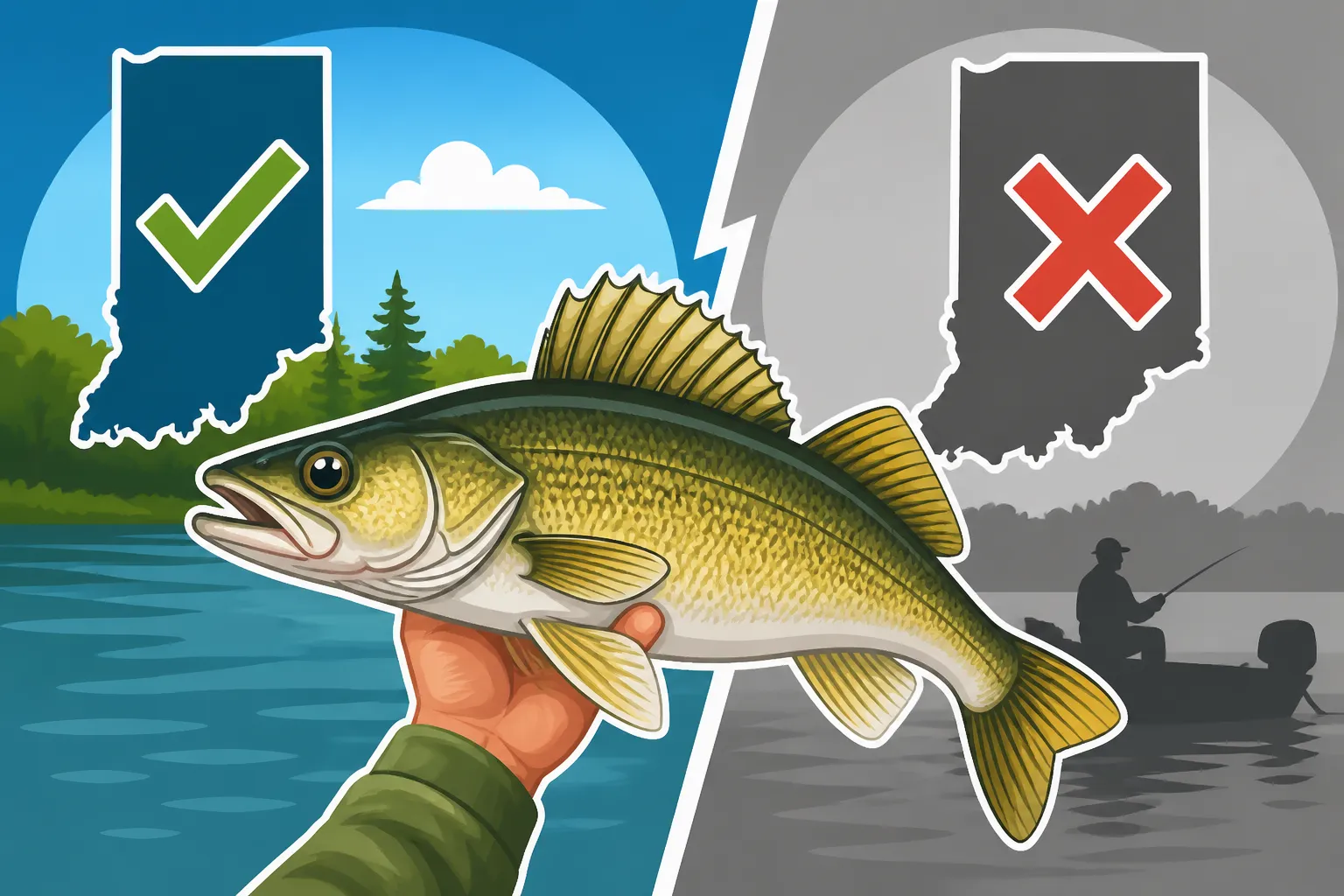
Here's where things get interesting, and why this guide is so important for anglers heading to Bass Lake in Starke County. Unlike the general 16-inch minimum found in many northern Indiana waters, Bass Lake has its own specific rule for walleye, and if you're not aware of it, you could easily find yourself on the wrong side of a regulation.
Why Bass Lake Has a Different Walleye Regulation
So, why the special treatment for Bass Lake? It's not arbitrary, I promise! The Indiana DNR designs these specific regulations with a lot of thought and scientific backing. In the case of Bass Lake, the distinct walleye length limit is often a result of targeted fisheries management strategies. These strategies might include:
- Protecting specific year classes: The DNR might implement a different length limit to protect a particularly strong or weak year class of walleye, giving them a better chance to grow and contribute to future spawning efforts.
- Balancing predator and prey populations: Sometimes, a unique length limit helps balance the overall ecosystem of the lake, ensuring there's enough forage for larger walleye while also allowing a healthy population of younger fish to thrive.
- Response to angler harvest rates: If anglers are heavily targeting walleye of a certain size in Bass Lake, the DNR might adjust the length limit to ensure that enough fish escape harvest to maintain a sustainable population.
This kind of localized management is vital for the long-term health of the fishery. Bass Lake, with its particular characteristics and history, requires a finely tuned approach to ensure that trophy walleye continue to swim in its waters for years to come. It’s the same kind of reasoning behind other exceptions you might find, such as those detailed in Why Bass Lake and Wolf Lake Have a Lower Walleye Limit.
The Exact Length Limit and Daily Bag for Bass Lake Walleye
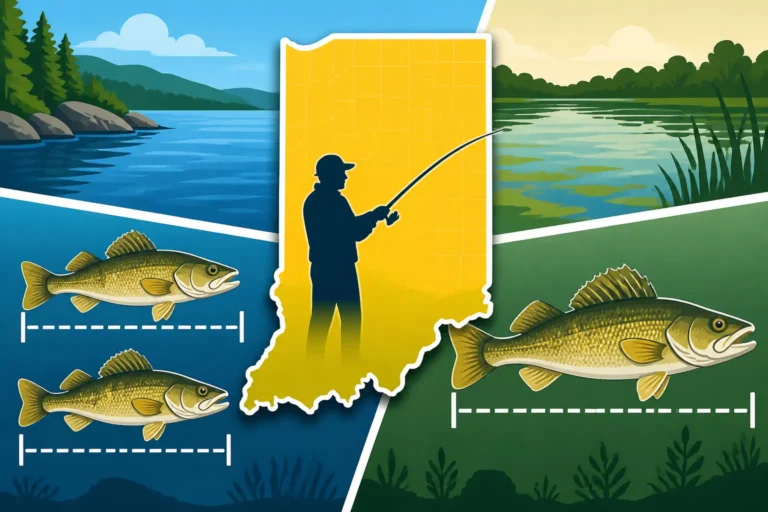
Alright, let's get down to the nitty-gritty. For walleye caught in Bass Lake, anglers face a very specific regulation: a 14-inch minimum length limit. This is a significant difference from the more common 16-inch rule found in many other northern Indiana lakes.
But that's not all. In addition to the minimum length, there's also a daily bag limit to consider. At Bass Lake, you are allowed a daily bag limit of five walleye, but with an important caveat: only two of those five walleye can be 18 inches or longer.
Let's break that down with an example:
- You catch a 15-inch walleye. This is legal to keep because it's over the 14-inch minimum.
- You catch a 19-inch walleye. This is also legal.
- You catch another 17-inch walleye. Legal.
- You catch a 20-inch walleye. Now you have two fish over 18 inches (your 19-inch and 20-inch walleye). You cannot keep any more walleye 18 inches or longer for the day.
- You catch another 15-inch walleye and a 16-inch walleye. Both are legal. You now have five walleye: two over 18 inches, and three between 14 and 17 inches. You've hit your daily bag limit and your slot limit for larger fish.
This "slot limit" (keeping only two fish over 18 inches) is a classic example of managing for quality. It allows anglers to keep some smaller, still delicious walleye for the frying pan, while heavily protecting the larger, more prolific breeders. It ensures those big mama walleye stay in the lake to spawn, contributing to a robust population.
To help you keep track, here's a quick reference table for walleye limits in different Indiana waters:
| Water Body / Region | Minimum Length Limit | Daily Bag Limit | Notes |
|---|---|---|---|
| Bass Lake (Starke County) | 14 inches | 5 fish, with only 2 over 18 inches | Specific slot limit for larger fish |
| North of State Road 26 (General) | 16 inches | 6 fish | Standard rule for many northern lakes |
| South of State Road 26 (General) | No minimum or varies | 6 fish (check local regulations for specific lakes) | Less common for length limits in this region |
| Lake Michigan (Indiana waters) | 15 inches | 5 fish | Unique regulations for Great Lakes |
| Wolf Lake (Lake County) | 14 inches | 5 fish, with only 2 over 18 inches | Same as Bass Lake, shared management goals |
| Lake George (Steuben County) | 14 inches | 5 fish, with only 2 over 18 inches | Same as Bass Lake, shared management goals |
This table clearly shows Bass Lake's distinct rule, which is also shared by a couple of other important walleye fisheries in the state.
Navigating Walleye Length Limits and Enforcement
Adhering to length limits isn't just about following the rules; it's about being a responsible angler and contributing to the conservation of Indiana's valuable fisheries. Getting it wrong can lead to citations, fines, and potentially even confiscation of your catch or gear, as outlined in Penalties and Fines for Fishing Without a License. Nobody wants that hassle after a relaxing day on the water.
Measuring Your Catch Accurately
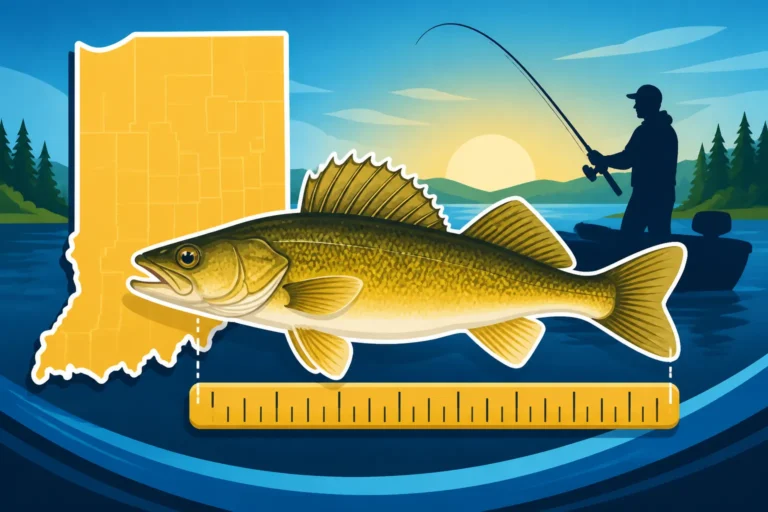
The key to staying legal is knowing how to measure your fish correctly and having the right tools on hand. Indiana regulations require you to measure fish from the tip of the snout to the end of the tail, with the fish lying flat. A flexible tape measure or a dedicated fish measuring board is your best friend here.
Here are some tips for accurate measurement:
- Always use a reliable measuring device. Don't just "eyeball" it. A simple, flexible tape measure is usually enough, but a rigid measuring board can be even better for accuracy, especially when the boat is rocking. You can find many affordable options on Amazon that are designed specifically for anglers.
- Place the fish flat on its side. Avoid bending or contorting the fish, as this can lead to an inaccurate measurement.
- Pinch the tail. Gently squeeze the tail fin lobes together to get the maximum length. The Indiana DNR measures to the longest point of the tail.
- Measure immediately. As soon as you catch a fish, if there's any doubt about its size, measure it. This allows you to quickly release undersized fish, minimizing stress on them.
- Be gentle. Handle the fish as little as possible. Wet your hands before touching it to protect its slime coat, which is crucial for its health.
Having a good, clear measuring device readily accessible on your boat or in your tackle box is non-negotiable for walleye fishing at Bass Lake.
What Happens If You Catch an Undersized Walleye
It's going to happen. You're going to catch walleye that don't meet the 14-inch minimum at Bass Lake. When this occurs, it's absolutely crucial that you release them immediately and carefully. The goal of length limits is to ensure these smaller fish survive to grow larger and reproduce.
Here's how to practice good catch-and-release:
- Minimize "air time." Get the fish back into the water as quickly as possible.
- Use appropriate tackle. For walleye, this often means using hooks that are easier to remove, or even single barbless hooks, to reduce injury.
- Support the fish properly. If you need to hold it for a photo, support its body horizontally to avoid damaging its internal organs or spine. Avoid holding it vertically by the jaw.
- Revive the fish if necessary. If the fish seems stunned or sluggish, hold it gently in the water, facing into the current, until it regains its strength and swims away on its own.
- Never keep an undersized fish, even if you think it's "close." An undersized walleye kept in a livewell or cooler is a violation, plain and simple. It's not worth the risk.
Remember, every released walleye is an investment in the future of Bass Lake's incredible fishery.
Planning Your Walleye Trip to Bass Lake
Bass Lake is a fantastic destination for walleye anglers, offering the chance to catch some truly memorable fish. By understanding and respecting its unique regulations, you can have a successful and enjoyable trip while contributing to the lake's health.
Essential Gear for Walleye Fishing at Bass Lake
Having the right equipment can make all the difference in your walleye success. While walleye fishing varies based on season and technique, here's some general gear to consider for Bass Lake:
- Rods and Reels: Medium-light to medium power spinning or baitcasting rods, typically 6'6" to 7'6" in length, are versatile. Pair them with reels spooled with 6-10 lb test monofilament or fluorocarbon, or 10-20 lb braided line with a fluorocarbon leader. A good quality combo will serve you well, and you can find excellent options for various budgets on Amazon.
- Lures and Bait: Walleye can be finicky. Bring a variety of options.
- Jigs: Often tipped with live bait (minnows, nightcrawlers) or soft plastics. Bring different weights and colors.
- Crankbaits: Trolling or casting crankbaits that mimic baitfish are highly effective, especially around drop-offs and structure.
- Live Bait: Minnows, nightcrawlers, and leeches are classic walleye producers.
- Fish Finder: A quality fish finder, especially one with good side-imaging or down-imaging, can help you locate structure, baitfish schools, and, most importantly, walleye. Given the lake's depth variations, this is a very helpful tool. For more insights on this, check out Best Fish Finders for Indiana Lake Fishing.
- Measuring Device: As discussed, a reliable fish ruler or measuring board is essential. Keep it handy!
- Net: A large, rubberized landing net helps protect the fish's slime coat, especially if you plan to release it.
- Cooler with Ice: For legal-sized keepers, get them on ice quickly to preserve their freshness for the dinner table.
Remember, Bass Lake is part of Indiana's fantastic network of fishing spots. If you're looking for other ideas, our comprehensive guide on Best Fishing Spots in Indiana offers plenty of options.
Best Practices for Sustainable Walleye Fishing
Beyond following the length and bag limits, embracing a mindset of conservation will ensure that Bass Lake remains a prime walleye fishery.
- Know the current regulations: Always double-check the latest Indiana fishing regulations from the DNR, either online or by picking up a physical guide. Rules can change from year to year! Our guide on Indiana Fishing Regulations and Bag Limits Guide is a great resource.
- Practice ethical catch-and-release: For any fish you don't intend to keep, or those that are undersized, handle them with care and release them quickly.
- Manage your harvest: Even if you can keep five walleye, consider if you truly need that many. Sometimes, keeping just one or two for a meal is enough, leaving more for others and for the fishery.
- Respect private property: If fishing from shore, always be mindful of where you're casting and walking.
- Leave no trace: Pack out everything you pack in. This includes fishing line, bait containers, and any other trash.
By understanding and adhering to the specific walleye length limit at Bass Lake, and by practicing responsible angling, you're not just avoiding a ticket – you're actively contributing to the health and longevity of one of Indiana's most cherished fisheries. Tight lines, and happy fishing!
Disclaimer
Please note that fishing regulations are subject to change by the Indiana Department of Natural Resources. While every effort has been made to provide accurate and up-to-date information in this guide, it is the angler's responsibility to consult the most current official Indiana Fishing Regulations guide before heading out on the water.