Where Walleye Length Rules Change From Lake to Lake
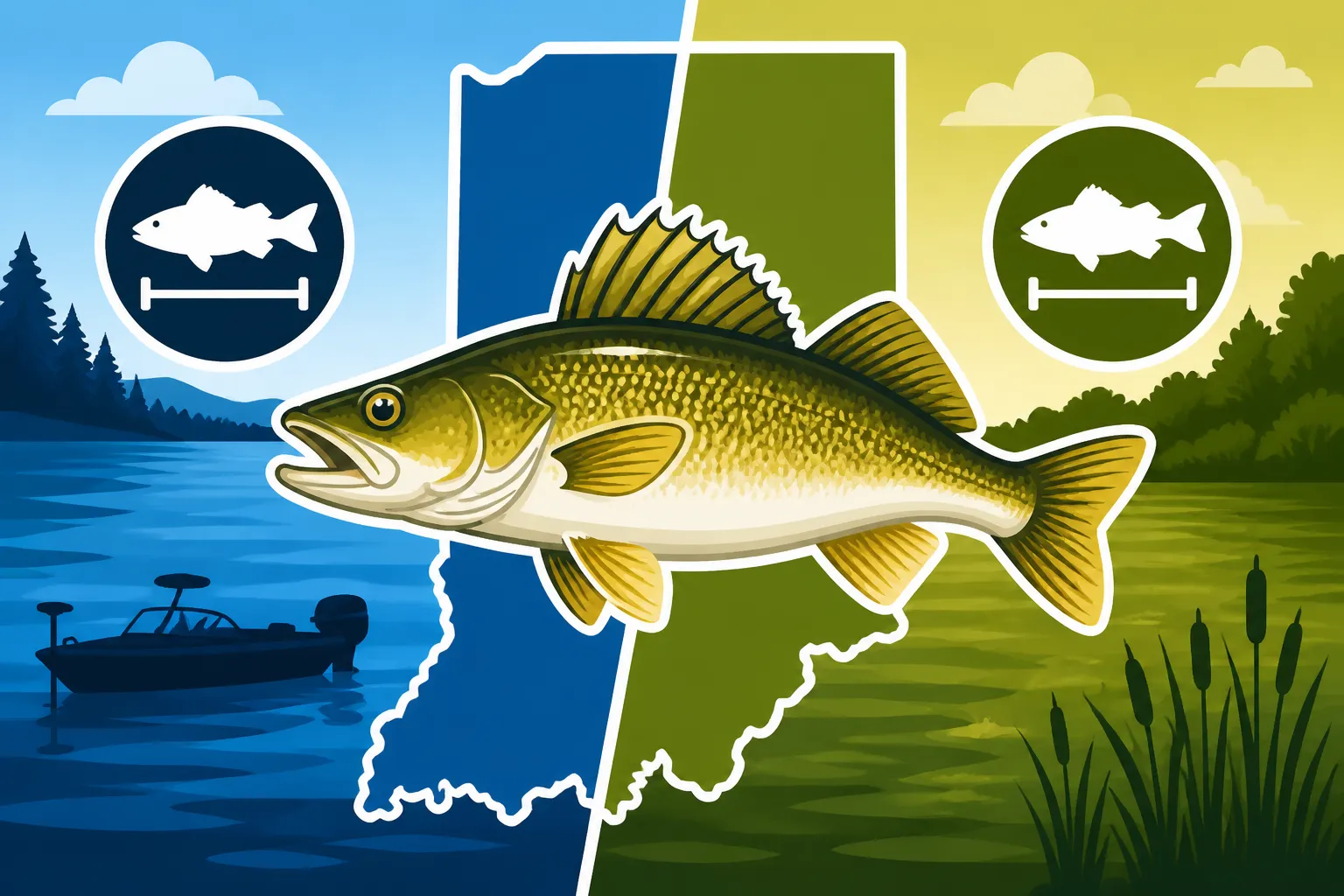
It can be incredibly frustrating to head out for a day of walleye fishing in Indiana, only to realize that the length limits you carefully memorized for one lake don't apply to the next body of water you visit. This guide aims to clear up that confusion, diving deep into Indiana's walleye length regulations and highlighting the specific lakes where the rules diverge from the statewide standard, ensuring you stay compliant and confident on the water.
Understanding Indiana's Statewide Walleye Regulations
Indiana's walleye regulations are designed to protect these popular sport fish, ensuring sustainable populations for future generations of anglers. However, the state recognizes that not all bodies of water are created equal when it comes to fish growth rates, forage availability, and angling pressure. This understanding is key to why you'll find variations, but it’s always good to start with the baseline rules.
The General Rule North of State Road 26
For much of northern Indiana, the prevailing walleye regulation sets a specific minimum length. If you're fishing in most lakes and rivers north of State Road 26, you'll generally encounter a 14-inch minimum length limit for walleye. This means any walleye you catch that measures under 14 inches from the tip of its snout to the end of its tail must be immediately released back into the water. The daily bag limit, in most cases, is six walleye per angler. This rule aims to allow walleye to reach a mature size, giving them a chance to spawn at least once, thereby contributing to the population's health. It’s a standard approach in many fisheries management plans to ensure that enough fish survive to reproductive age. For a broader overview, check out our guide on the Indiana Fishing Regulations and Bag Limits Guide.
Imagine you're out on Lake Wawasee, Indiana's largest natural lake. You've been meticulously trolling with your favorite crankbaits, patiently waiting for that tell-tale thump. When you finally reel in a beautiful walleye, the first thing you do is reach for your measuring board. If that fish is 13.5 inches, you'll be gently unhooking it and sending it back, no matter how tempting it is to keep. This adherence to the Walleye Minimum Length North of State Road 26 is crucial for the health of the fishery. It's a small act that collectively makes a big difference.
Simpler Walleye Rules South of State Road 26
As you move south of State Road 26, the walleye regulations tend to simplify a bit. In this region, which includes many of the state's larger reservoirs like Monroe Lake and Patoka Lake, the walleye length limit is typically non-existent, meaning there's no minimum length requirement. You can keep any legal-sized walleye you catch, as long as it adheres to the daily bag limit, which usually remains six fish. This difference often reflects the different types of fisheries found in the southern part of the state. Walleye populations in these reservoirs might be managed with different goals, sometimes focusing more on harvest opportunities for a wider range of sizes, or they might be supplemented through stocking programs.
For instance, if you're fishing Patoka Lake for walleye, often targeting them during the cooler months, you might catch smaller walleye more frequently. In this scenario, you wouldn't need to worry about a minimum length. This makes it a bit simpler for anglers, though it’s still vital to understand the reasoning behind such policies. This doesn't mean you can keep every fish you catch; the daily bag limit still applies. It's just that if you land a 12-inch walleye, it can be part of your dinner plans, unlike its northern counterpart. You can learn more about this specific regulation in our article on Walleye Minimum Length South of State Road 26 in Indiana.
Why These General Rules Exist
The Indiana Department of Natural Resources (IDNR) doesn't just pull these numbers out of a hat. These regulations are the result of extensive biological surveys, scientific research, and ongoing monitoring of fish populations. For example, a 14-inch minimum length in northern lakes might be implemented because studies show that walleye in those specific waters typically reach sexual maturity and spawn around that size. Protecting these fish until they've had a chance to reproduce helps maintain a healthy, self-sustaining population.
Conversely, in some southern reservoirs, aggressive stocking programs or different environmental factors might lead to a robust population where a minimum length limit isn't deemed necessary to ensure reproductive success. In these cases, allowing anglers to keep smaller fish can actually help manage the population density, preventing overpopulation of smaller fish and allowing the remaining walleye to grow larger more efficiently. It's all about balancing conservation with providing good angling opportunities for the public. This adaptive management approach is critical for the long-term health of Indiana's diverse fisheries.
Specific Lake Exceptions to Walleye Length Limits
While the general rules for north and south of State Road 26 cover a wide array of Indiana's fishing waters, there are a few notable exceptions where specific lakes have their own unique walleye length requirements. These are crucial to know if you're planning a trip to these particular spots, as ignorance of the law is no excuse.
Bass Lake's Unique Walleye Rule
Bass Lake, located in Starke County, is one such water body that marches to the beat of its own drum when it comes to walleye regulations. Unlike the typical 14-inch minimum in much of northern Indiana, Bass Lake has a more restrictive slot limit. Here, walleye between 14 and 18 inches must be immediately released. Anglers are only permitted to keep walleye that are under 14 inches or over 18 inches. The daily bag limit here is also more restrictive, set at four walleye, with only one of those allowed to be over 18 inches.
This unique slot limit is a classic fishery management tool designed to protect the "trophy" or "breeder" sized fish (those over 18 inches) and also to protect the prime reproductive-age fish (14-18 inches), while allowing harvest of smaller, younger walleye. It encourages the growth of larger fish and aims to improve the overall size structure of the walleye population in Bass Lake. If you're planning a trip there, make sure you're well-versed in the Bass Lake Walleye Length Limit Is Different From the Rest of the State rules. Getting caught with a 16-inch walleye in your cooler would lead to an unpleasant conversation with a conservation officer.
The Walleye Exception at Wolf Lake
Another lake with specific walleye regulations is Wolf Lake, which spans the border of Indiana and Illinois in Lake County. Due to its unique bi-state nature and specific fishery management goals, Wolf Lake also deviates from the standard northern Indiana walleye length limits. Anglers on the Indiana side of Wolf Lake face a 16-inch minimum length limit for walleye, with a daily bag limit of three fish.
This 16-inch minimum is slightly higher than the general northern Indiana rule and is likely a collaborative effort between Indiana and Illinois to manage this shared fishery. The goal is often to ensure that a significant portion of the walleye population reaches a larger, more desirable size for anglers, while also protecting the spawning stock. It's a great example of how interstate cooperation can lead to tailored regulations for specific bodies of water. Always double-check these specific rules, especially if you're fishing near the state line, as rules can sometimes vary slightly from one side to the other. You can find more details on the Wolf Lake Walleye Length Exception in Lake County.
Lake George's Specific Walleye Regulations
Lake George in Steuben County, another popular fishing destination, also features its own distinct walleye length regulation. Similar to Wolf Lake, Lake George has a 16-inch minimum length limit for walleye. The daily bag limit here remains at six fish, but with this higher minimum length, anglers must be extra careful to measure their catch accurately before deciding to keep it.
These elevated minimums often indicate that the IDNR is trying to foster a population of larger walleye in these specific lakes. Factors such as excellent forage bases, lower fishing pressure, or a desire to create a "trophy" fishery can contribute to these decisions. Anglers who frequent Lake George will know that this higher minimum means that many of the smaller walleye caught will need to be released, but the reward is the potential for genuinely larger fish. Understanding these nuances is part of being a responsible and successful angler. Our article on Lake George Walleye Minimum Length in Steuben County provides further insights.
Why Certain Lakes Have Different Rules
The specific regulations for lakes like Bass Lake, Wolf Lake, and Lake George aren't arbitrary. They are carefully crafted management strategies. The primary goal is often to optimize the walleye fishery for that particular body of water. For example, a slot limit like the one at Bass Lake can help reduce the number of medium-sized fish, which in turn reduces competition for food and allows the remaining fish to grow faster and larger. It also protects the crucial reproductive segment of the population.
In other cases, a higher minimum length (like 16 inches at Wolf Lake and Lake George) might be implemented to allow walleye to reach a more substantial size before being harvested, potentially increasing the average size of fish caught and improving the quality of the angling experience. These specific regulations account for a range of factors including:
- Fish population dynamics: The current size distribution and abundance of walleye.
- Growth rates: How quickly walleye grow in that particular environment.
- Forage base: The availability of food for walleye.
- Angling pressure: How many people are fishing the lake and how many fish are being harvested.
- Habitat quality: The overall health of the lake ecosystem.
This tailored approach ensures that each valuable walleye fishery in Indiana is managed to its fullest potential, providing diverse opportunities for anglers while safeguarding the species. More details on the reasoning behind these localized rules can be found in Why Bass Lake and Wolf Lake Have a Lower Walleye Limit.
Practical Tips for Anglers Navigating Varying Walleye Limits
Navigating the various walleye length limits across Indiana's diverse waters can feel like a puzzle. But with a little preparation and the right mindset, you can ensure you're always fishing legally and responsibly. It’s all about being informed before you even make your first cast.
Always Check Local Regulations Before Fishing
This is, without a doubt, the most important piece of advice anyone can give you. Before you head out to any lake or river in Indiana, make it a habit to check the current fishing regulations for that specific body of water. The Indiana Department of Natural Resources (IDNR) publishes an annual fishing guide, which is available online on their website and often in print at local bait shops and outdoor retailers. You can even find digital versions that are easy to access on your phone or tablet while you're out on the water. Many serious anglers will even purchase a waterproof copy of the rulebook, perhaps from a retailer like Amazon, to keep in their tackle box or boat.
Regulations can sometimes change from year to year, or even within a season, due to biological assessments or emergency management decisions. Don't rely solely on what you remember from last year or what a buddy told you about a different lake. A quick check can save you from a potential fine or, more importantly, from unknowingly harming a carefully managed fish population. Understanding these rules is a critical part of a safe and responsible day on the water, whether you're chasing crappie or trying to land a trophy walleye.
Measuring and Handling Walleye Properly
Once you've caught a walleye, accurately measuring it is paramount, especially when you're dealing with strict length limits or slot limits. Always use a reliable measuring board or tape that can provide precise measurements. The official measurement for a fish in Indiana is typically from the tip of the snout (mouth closed) to the end of the tail (pinched).
Proper fish handling is just as important, particularly for those fish that need to be released. Walleye have sharp teeth and gill plates, so handle them with care to protect both yourself and the fish. If you're practicing catch-and-release, minimize the time the fish spends out of the water. Use wet hands to avoid removing their protective slime coat, and consider using a rubberized net, which is gentler on their scales and fins than traditional nylon nets. If a fish is deeply hooked, it's often best to cut the line as close to the hook as possible rather than trying to rip the hook out, which can cause internal damage. A good pair of long-nosed pliers or a dehooking tool, readily available on platforms like Amazon, can make a huge difference in successful releases. For a general understanding of these magnificent fish, refer to our Indiana Walleye Fishing: A Complete Guide.
Gear Considerations for Different Walleye Fisheries
Your gear choices can also be influenced by the walleye regulations of the specific lake you're targeting. For example, if you're fishing a lake with a slot limit where you're trying to selectively harvest smaller fish while releasing larger ones, you might choose lighter tackle that allows for a more sporting fight with smaller walleye, while still being robust enough for an unexpected lunker. Using appropriate hook sizes can also help, as smaller hooks might be more prone to deep hooking, making release more difficult.
For lakes with higher minimum length limits, where you're primarily aiming for larger fish, you might opt for heavier rods and reels, stronger lines, and larger lures that naturally select for bigger walleye. This strategy not only increases your chances of catching a legal fish but also minimizes the number of smaller, undersized walleye you might accidentally catch and have to release, reducing stress on those fish. Consider investing in a quality fish finder, which you can often find great deals on through Amazon, to help locate walleye in their preferred habitat, making your efforts more efficient regardless of the specific length limits. Knowledge of specific walleye markings can also assist you; our Walleye Identification: Olive-Gold Color and White-Tipped Tail post can help.
Here's a quick summary table for Indiana walleye length and bag limits:
| Region/Lake | Minimum Length (inches) | Slot Limit (inches) | Daily Bag Limit | Notes |
|---|---|---|---|---|
| North of State Rd 26 (General) | 14 | None | 6 | Most lakes and rivers in northern Indiana. |
| South of State Rd 26 (General) | None | None | 6 | Most reservoirs and rivers in southern Indiana. |
| Bass Lake | N/A | 14-18 (must release) | 4 | Only one fish over 18 inches. |
| Wolf Lake | 16 | None | 3 | Indiana side only. |
| Lake George | 16 | None | 6 | Steuben County. |
Disclaimer
Please remember that fishing regulations are subject to change. While we strive to provide the most up-to-date and accurate information, it is always your responsibility to consult the official Indiana Department of Natural Resources (IDNR) fishing guide or website before heading out. This content is for informational purposes only and should not be considered legal advice.