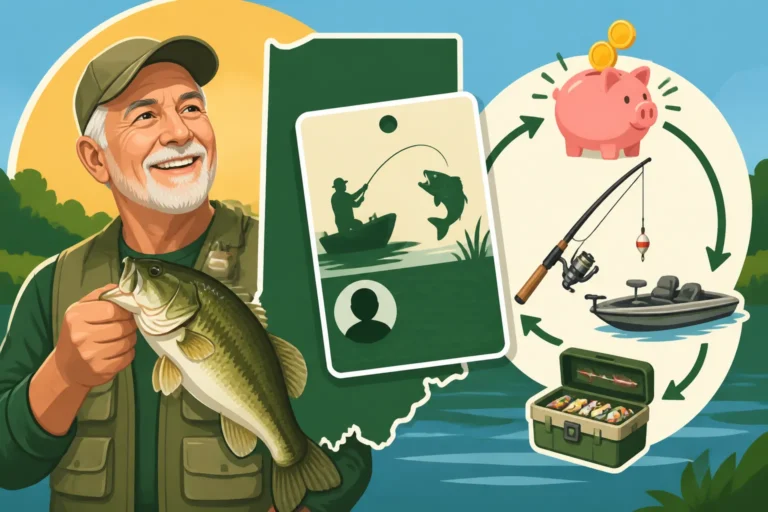
Indiana Resident Fishing License Cost: $23 a Year
Navigating the world of fishing licenses can sometimes feel like trying to untangle a particularly stubborn fishing line, especially when you just want to know how much it's going to cost you to enjoy a peaceful day on an Indiana lake. You're probably wondering, "What's the bare minimum I need to pay to fish legally as an Indiana resident?" This guide is here to clear up that confusion, specifically breaking down the annual cost for resident anglers and what that investment truly means for your time on the water.
Understanding the Standard Indiana Resident Fishing License
For many Hoosier anglers, the annual resident fishing license is the bread and butter of their fishing adventures. It’s the foundational permit that opens up a world of fishing opportunities across the state’s diverse waters. But what exactly does that standard license cost, and why is it structured the way it is?
The Annual Price Tag: $23 a Year
Let's get right to it: the standard Indiana resident fishing license will set you back $23 for an entire year. This isn't just a random number; it's a carefully considered amount that contributes directly to the conservation efforts that keep Indiana's fisheries healthy and thriving. For seasoned anglers, this is a familiar figure, a small price to pay for countless hours of enjoyment. For newcomers or those who haven't fished in a while, it’s often a pleasant surprise that it’s not exorbitant.
You might be thinking, "Just $23? That's not bad at all!" And you'd be right. Compared to the costs of other recreational activities, fishing remains a relatively affordable passion, and your license fee is a direct investment in keeping it that way. This annual fee allows you to fish from April 1st of one year through March 31st of the next, regardless of when you actually purchase it. So, if you buy your license in July, it still expires the following March. It’s important to understand this specific timeframe, as outlined in the Indiana Fishing License Year Explained guide, so you don't accidentally find yourself without a valid license mid-season.
Many anglers even make it a tradition to renew their license around the beginning of April, making sure they're ready for spring fishing. It’s like a yearly ritual, a sign that warmer weather and good fishing are just around the corner.
What Your $23 Covers
So, what exactly does your $23 annual resident fishing license entitle you to? Essentially, it gives you the legal right to take fish from public waters throughout Indiana, adhering to all general state regulations, seasons, and bag limits. This means you can target most freshwater species – think bass, bluegill, crappie, catfish, and walleye – in the vast majority of Indiana's lakes, rivers, and streams.
This license doesn't just cover your right to fish; it also supports the Indiana Department of Natural Resources (DNR) in critical ways. Your fee helps fund fish stocking programs, habitat restoration projects, research into fish populations, and enforcement of fishing regulations. Without these funds, the quality of fishing in Indiana would undoubtedly decline. It's a collective investment by anglers into the future of their sport. For example, if you're fishing for largemouth bass on Monroe Lake or casting for crappie on Patoka Lake, your license fee helps ensure these popular fisheries remain robust.
It’s important to remember that this standard license doesn't automatically cover every type of fishing or every species. For certain specialized fishing, like targeting trout or salmon in specific waters, you might need an additional stamp. We’ll dive into that in the next section. But for general freshwater angling, the $23 annual resident license is all you need to get started.
Who Qualifies for a Resident License
The term "resident" might seem straightforward, but when it comes to fishing licenses, there are specific criteria. To qualify for an Indiana resident fishing license, you must be a bona fide resident of Indiana for at least 60 consecutive days immediately preceding the date of purchasing the license. This generally means you have established a dwelling in Indiana and intend to reside here permanently, or for an indefinite period.
Proof of residency can be established through things like an Indiana driver's license or state ID card, voter registration, or property ownership documents. For college students who might split their time between states, the rules can sometimes be a bit fuzzy, so it's always best to check the Indiana DNR's official guidelines or call them directly if you're unsure. This resident status ensures that the funds collected are primarily from those who benefit most directly from the state's conservation efforts and who contribute to its tax base.
If you don't meet these residency requirements, you'll need to look into a Indiana Nonresident Fishing License Guide. However, for the vast majority of Hoosiers, qualifying for the resident rate is simple. It's designed to be accessible for locals, making fishing a cornerstone of outdoor recreation here in the state.
Beyond the Basics: Additional Stamps and Special Licenses
While the $23 annual resident license covers a lot of ground, Indiana has a few specific situations where you'll need to tack on an extra stamp or consider a different type of license. It can be a little frustrating to think you've got everything covered, only to realize there's another hoop to jump through, but these additional requirements are usually tied to unique fisheries or species that require specialized management.
The Trout and Salmon Stamp: When You Need It
One of the most common additional requirements for Indiana resident anglers is the Trout and Salmon Stamp. This isn't optional if you plan on fishing for, or keeping, trout or salmon in specific Indiana waters. Many anglers find themselves heading to the northern parts of the state, or to the Lake Michigan tributaries, specifically to target these beautiful, hard-fighting fish. Without this stamp, you could face penalties.
So, when exactly do you need it? If you intend to fish for trout or salmon, or if you simply possess these species in waters designated as "put-and-take" trout streams, or in Lake Michigan and its tributaries, you need this stamp. This applies whether you're fly fishing for brown trout in a cold stream or trolling for coho salmon on Lake Michigan. The stamp ensures that specific funds are allocated directly to the stocking and management programs for these valuable cold-water fisheries. Our guide on Do You Need a Trout and Salmon Stamp to Fish for Trout? goes into even more detail about these requirements.
It’s often a point of confusion for anglers. "I'm just bass fishing, but I caught a trout by accident, do I need the stamp?" The rule generally boils down to intent and possession. If you're specifically targeting them, or you keep them, the stamp is required. If you accidentally catch one and immediately release it unharmed, you're usually in the clear. But it’s always better to be safe than sorry, especially if you're fishing in known trout or salmon waters.
Considering the Trout and Salmon Stamp Cost
If you determine that you do need the Trout and Salmon Stamp, you'll find that it's an additional, yet modest, cost. The Indiana Trout and Salmon Stamp Cost: $11 is typically $11 for residents. When added to your annual fishing license, this brings your total annual cost to $34. For many, this is a reasonable price for the opportunity to chase species like rainbow trout in the St. Joseph River or king salmon on Lake Michigan.
The combined cost is still very much in line with other states and represents a solid value for the diverse fishing experiences Indiana offers. Think of it this way: for the price of a couple of fancy coffee drinks, you get a full year of potential trophy catches and unforgettable outdoor moments. It's often cheaper than buying a single new fishing lure from a reputable brand you might find on Amazon!
This additional cost helps the DNR manage the very specific needs of trout and salmon populations, which often require different habitat, stocking, and water quality considerations than warm-water species. It's not just about catching fish; it's about sustaining a healthy ecosystem for them.
The Long-Term Value: Annual vs. Senior Fish-for-Life
When you're an Indiana resident, especially as you approach your golden years, the $23 annual cost for a fishing license isn't your only option. Indiana offers some fantastic alternatives that can save you a significant amount of money in the long run. It's all about looking at your fishing future and deciding what makes the most sense for your angling lifestyle.
Why $23 Annually Adds Up Over Time
While $23 might seem like a drop in the bucket for a year's worth of fishing, consider the cumulative cost over several decades. If you start fishing at age 18 and continue for 50 years, that's $23 x 50 = $1,150 just for the base fishing license! And that's not even including the Trout and Salmon Stamp if you buy it every year. For a serious angler who plans to fish for a lifetime, these annual payments can indeed add up.
Many anglers might not think about the long-term cost, but it's a valid consideration, especially when there are more cost-effective options available for senior residents. It's not just about the money, but also the convenience. Remembering to renew your license every single year can become a chore, or worse, lead to accidental lapses in coverage. Getting a reminder in the mail or an email from the DNR that your Indiana Anglers Need a New License Every April 1 can be helpful, but a one-and-done solution is even better for many.
This is where Indiana's commitment to its senior citizens really shines through, offering options that significantly reduce this long-term financial burden and remove the yearly renewal hassle.
Senior License Options: The $3 Annual and Fish-for-Life
Indiana truly values its senior anglers, offering exceptional discounts. Once you hit age 65 and are an Indiana resident, your options for fishing licenses change dramatically for the better. You have two fantastic choices:
- The $3 Senior Annual Fishing License: Yes, you read that right – just $3 a year! This is an incredible deal, reducing your annual cost by over 85%. For many seniors, this is the perfect option, providing an affordable way to continue their passion without a significant financial outlay. You still need to renew it annually, but the cost is negligible. Our guide on Indiana's $3 Senior Annual Fishing License dives deeper into this option.
- The Senior Fish-for-Life License: This is the ultimate deal for committed senior anglers. For a one-time fee, you receive a fishing license that is valid for the rest of your life! No more annual renewals, no more remembering dates – just pure, uninterrupted fishing enjoyment. The cost for this amazing lifetime permit is $23. That’s the same price as one year of a regular resident license. Imagine paying $23 once and never having to buy another fishing license again. It’s an unbeatable value. You can learn more about this in The Senior Fish-for-Life License, Indiana's One-Time Option.
It's important to note that the Senior Fish-for-Life license does not include the Trout and Salmon Stamp. If you plan to fish for trout or salmon as a Fish-for-Life holder, you would still need to purchase the annual $11 stamp. However, even with the stamp, the long-term savings are monumental. Our article on Does the Senior Fish-for-Life License Include the Trout Stamp? clarifies this specific point.
Making the Smart Choice for Your Fishing Future
Deciding between the annual $3 senior license and the one-time $23 Fish-for-Life license really depends on your individual circumstances. If you're just starting to fish in your senior years and aren't sure how long you'll continue, the $3 annual might be a good way to test the waters. However, if you're a lifelong angler or envision many more years of casting lines, the Fish-for-Life license is unequivocally the best long-term investment.
Let's look at it with a simple comparison:
| License Type | Age Requirement | Cost | Frequency | Includes Trout/Salmon Stamp |
|---|---|---|---|---|
| Resident Annual | 18-64 | $23 | Annual | No |
| Resident Senior Annual | 65+ | $3 | Annual | No |
| Resident Senior Fish-for-Life | 65+ | $23 | One-Time | No |
| Trout/Salmon Stamp | All ages | $11 | Annual | N/A (Add-on) |
As you can see, the Fish-for-Life license essentially pays for itself in just one year compared to a standard adult license. If you're 65, that's immediate savings. Even compared to the $3 senior annual license, it pays for itself in less than eight years ($23 / $3 ≈ 7.67 years). Given that many seniors enjoy fishing well into their 70s, 80s, and even 90s, the Fish-for-Life becomes an incredible value proposition. It’s a thoughtful benefit from the state to thank its most dedicated outdoor enthusiasts.
Convenient Ways to Purchase Your License
Once you know which license you need, the next step is actually acquiring it. Thankfully, Indiana has made the process incredibly easy and accessible, offering multiple ways to get your license quickly and efficiently. No more trekking to a specific store only to find they're out of forms!
Buying Online: The Easiest Route
In today's digital age, the most convenient way to purchase your Indiana fishing license is undoubtedly online. The Indiana Department of Natural Resources (DNR) offers a user-friendly portal where you can buy or renew your license from the comfort of your own home, any time of day or night. This is a huge benefit, especially for those who might have irregular schedules or live far from a physical vendor.
The process for Buying a Fishing License Online in Indiana is straightforward: you'll need some basic personal information, like your name, address, date of birth, and driver's license or state ID number. You can pay with a credit or debit card, and once your purchase is complete, you'll receive a temporary license that you can print out immediately. You can even save it to your phone, which is perfectly legal as proof of license in Indiana.
This online system is a game-changer for spontaneous trips or for those who suddenly realize their license has expired right before a weekend outing. You can even pick up some last-minute fishing gear on Amazon while you're at it, and your license will be ready to go! It's efficient, paperless, and removes a common barrier to getting out on the water.
In-Person and By Phone Options
While online purchasing is increasingly popular, Indiana hasn't forgotten those who prefer a more traditional approach or don't have easy internet access. You still have excellent options to buy your license in person or over the phone.
In-Person: Many bait and tackle shops, sporting goods stores (like your local Cabela's or Bass Pro Shops), and even some county clerk's offices serve as authorized license vendors. This allows you to support a local business, ask any questions you might have, and often pick up some bait or tackle at the same time. It’s also a great way to connect with other anglers and get local fishing reports. Just make sure to bring your identification and payment method.
By Phone: You can also purchase your license over the phone by calling the Indiana DNR's licensing division. This is a convenient option if you have questions or prefer to speak with a person. They can guide you through the process and ensure you get the correct license for your needs.
These various options ensure that regardless of your preference or location, you can always acquire the necessary permit to enjoy Indiana's fantastic fishing opportunities. No excuses not to be legal on the water!
Understanding the Indiana Fishing License Year
One crucial piece of information that can sometimes trip up new anglers (and even some seasoned ones!) is the Indiana fishing license year. Unlike many other permits or subscriptions that run for 12 months from the date of purchase, Indiana's annual fishing licenses operate on a specific cycle.
All annual fishing licenses in Indiana are valid from April 1st through March 31st of the following year. This means if you buy your license in, say, August, it will still expire on March 31st of the next calendar year, not the following August. This fixed cycle simplifies enforcement and management for the DNR, but it's vital for anglers to be aware of it to avoid being caught without a valid license.
This also means that if you want to ensure continuous coverage, you'll want to plan on renewing your license sometime in March or early April each year. You can often purchase the upcoming year's license a bit in advance, making it easy to stay compliant. Understanding when Indiana Anglers Need a New License Every April 1 is key to uninterrupted fishing fun. It's an important detail, and one that, if overlooked, can lead to a less-than-pleasant encounter with a conservation officer. Always double-check your license's expiration date before heading out!
Disclaimer
Please note that fishing regulations, license costs, and requirements can change. While every effort has been made to provide accurate and up-to-date information in this guide, it is always recommended to check the official Indiana Department of Natural Resources (DNR) website or contact them directly for the most current regulations before you go fishing. This content is for informational purposes only and should not be considered legal advice.