Best Tackle for Crappie Fishing in Indiana
Oh, the elusive crappie! You know that feeling, right? You're out on an Indiana lake, the sun is just starting to warm the water, and you know those papermouths are lurking around some submerged structure, but for the life of you, you just can't get them to bite. It's frustrating when you see other boats pulling them in, and you're left wondering if you're missing some secret trick. Well, the truth is, often it comes down to having the right tackle for crappie fishing in Indiana, and knowing how to use it. This guide is going to walk you through exactly what gear you need to turn those frustrating outings into successful crappie catching adventures.
Understanding Crappie and Their Habits in Indiana
Before we even talk about rods and reels, let's get into the mindset of a crappie. These aren't your aggressive bass; crappie are notorious for their light bite and their tendency to school up around specific structures. Knowing where and when to find them, and how they're likely to behave, will directly influence the tackle you choose. Indiana waters are teeming with both black and white crappie, and while their habits are similar, slight differences can play a role. Understanding these nuances will dramatically improve your chances.
Crappie Behavior Through the Seasons
Crappie behavior shifts dramatically with the changing seasons, and if your tackle isn't adapted, you're going to struggle. Think of it like this: you wouldn't wear a winter coat to the beach in July, would you? The same goes for your fishing gear.
In the spring, crappie move into shallow waters for their spawn. This is arguably the most exciting time to target them, as they become more accessible and aggressive. They'll be looking for warmer water, typically around 55-65 degrees Fahrenheit, and will congregate near brush piles, docks, and submerged logs in just a few feet of water. During this time, a delicate presentation is still key, but you might find them hitting more readily. This is often when anglers have the most luck. You can learn more about Crappie Spawn Timing on Indiana Lakes to fine-tune your spring approach.
As summer heats up, crappie retreat to deeper, cooler waters. You'll often find them suspended over brush piles or around deep weed lines, sometimes 10-20 feet down, or even deeper in larger reservoirs like Monroe Lake or Patoka Lake. They're still schooling, but they become much more lethargic and finicky. This is where highly sensitive tackle really shines, as detecting those subtle bites becomes crucial. Finding How to Find Crappie in Summer often involves using electronics and knowing how to interpret what you see.
Fall sees crappie becoming more active again as water temperatures cool and they feed heavily to prepare for winter. They might be found anywhere from shallow to mid-depths, often following baitfish schools. They'll relate to structure but might roam more freely. This can be a fantastic time for both numbers and size.
Finally, in winter, especially during milder spells or through the ice, crappie slow down considerably. They'll hold tight to deep structure, often near the bottom in the deepest parts of a lake or reservoir. Their bites can be incredibly soft, requiring the utmost sensitivity in your rod and line. If you're ice fishing, tiny jigs and light lines are the name of the game. For open water, knowing the Best Depth to Fish for Crappie in Winter is critical, often found with a good fish finder.
Where Crappie Hide in Indiana Waters
Crappie are structure-oriented fish, meaning they love to hang out around anything that offers cover, shade, or ambush points. These locations are their safe havens and their dining rooms.
Brush Piles and Submerged Timber: These are crappie magnets. Whether they're natural fallen trees or man-made fish attractors, brush piles offer protection and a place for baitfish to hide, making them perfect ambush points for crappie. Look for these in various depths depending on the season. Many Indiana lakes have extensive submerged timber, particularly the large reservoirs.
Docks and Piers: Don't overlook artificial structures! Docks, especially those with lights that attract baitfish at night, are prime crappie real estate. They provide shade during the day and can hold large schools. Knowing How to Catch Crappie from a Dock can make for a very relaxing and productive day.
Weed Lines and Edges: The transition zones where aquatic vegetation meets open water are excellent spots. Crappie will cruise these edges, picking off baitfish that hide in the weeds. Different types of weeds, like lily pads, coontail, or milfoil, can all hold fish.
Open Water Schools (Suspended Crappie): Sometimes, especially in large reservoirs, crappie will suspend in open water, often over deeper channels or humps, following schools of shad or other baitfish. These crappie are usually located with sonar and require a different approach, often involving vertical jigging or slow trolling to match their depth.
Essential Rods and Reels for Crappie Fishing
When it comes to crappie, "light" is the operative word. Heavy bass gear will only lead to frustration, missed bites, and potentially tearing the paper-thin mouth of a crappie, earning them their nickname "papermouths." You need tackle that allows for a delicate presentation and lets you feel even the most subtle tap.
Rods: Sensitivity and Length for Indiana Crappie
A good crappie rod is all about sensitivity and a moderate action that prevents you from ripping the hook out.
Ultralight Action: This is non-negotiable for crappie. An ultralight rod bends easily, even with a small jig, allowing for incredibly accurate casting of lightweight lures and maximum feel when a crappie breathes on your bait. A "fast" or "extra fast" tip with a soft backbone is ideal. This combination gives you the sensitivity to detect a bite and the flexibility to fight a fish without pulling the hook.
Rod Materials: Graphite rods are your best friend here. They are incredibly lightweight and transmit vibrations much better than fiberglass, letting you feel everything that happens at the end of your line. Don't skimp on rod quality; a sensitive graphite rod from brands often seen at Bass Pro Shops or even good quality options on Amazon can make a world of difference.
Length Matters: For most crappie fishing scenarios in Indiana, a rod between 5 and 7 feet is perfect.
- 5 to 5.5 feet: Great for tight spaces, small creeks, or when fishing from a kayak where casting distance isn't paramount. This length offers maximum control.
- 6 to 6.5 feet: The sweet spot for versatility. It provides good casting distance for jigs and enough leverage for fighting fish, whether you're casting from shore, a dock, or a boat.
- 7 feet (or longer): Excellent for long casts, especially when fishing open water or for "spider rigging" (multiple rods out at once) from a boat. A longer rod can also help you reach those tucked-away spots under overhanging trees. If you're specifically tightlining, a longer rod helps keep your bait directly below you, which is key for How to Tightline for Crappie.
Reels: Smoothness and Line Capacity
Your reel for crappie fishing doesn't need to be a powerhouse, but it does need to be smooth and reliable.
Small Spinning Reels (500-1000 Size): A small spinning reel, typically a 500 or 1000 series, is perfectly matched to an ultralight crappie rod. These reels are lightweight, balance well with lighter rods, and are designed for the thin lines you'll be using.
- Smooth Drag: This is paramount. Crappie have delicate mouths, and a sticky or jerky drag will easily tear the hook free. Test the drag before you buy; it should release line smoothly and consistently with minimal resistance.
- Line Capacity: You won't need a ton of line capacity for crappie. A small spool that holds 100-120 yards of 4-pound test monofilament is more than sufficient.
Matching your rod and reel correctly creates a balanced system that makes casting effortless and feeling bites intuitive. This harmony is what transforms crappie fishing from a chore into a pure joy.
Lines and Lures: Tempting Indiana Crappie
Now we're getting into the nitty-gritty of what actually goes in the water. Crappie are visual feeders, but they can also be incredibly finicky, so your line choice and lure presentation are critical. This is where subtle differences can truly make or break your day.
Choosing the Right Fishing Line
The right line is like a direct connection to the fish, and for crappie, that connection needs to be almost invisible and super sensitive.
Light Pound Test is Key: You absolutely need a light line for crappie. Anything too heavy will be easily seen by the fish and will dampen the sensitivity you need to feel those soft bites.
- 2 to 4-pound test: This is the sweet spot for nearly all crappie fishing in Indiana. It offers the best sensitivity and minimal visibility. Some experienced anglers even go down to 1-pound test in ultra-clear water or for extremely finicky fish, but it significantly increases the risk of breaking off.
- 6-pound test: You could get away with this if you're fishing in really heavy cover and want a bit more abrasion resistance, but it's generally on the heavier side for crappie and you'll likely sacrifice some bites due to visibility and reduced feel.
Line Types for Crappie:
- Monofilament (Mono): This is a fantastic all-around choice for crappie. It's affordable, has good knot strength, and its stretch provides a forgiving cushion that helps prevent hooks from tearing out of those delicate crappie mouths. Its slight buoyancy can also be helpful for certain presentations.
- Fluorocarbon (Fluoro): This line is virtually invisible underwater, making it excellent for clear water conditions or for leader material when using braid. It has less stretch than mono, offering increased sensitivity, but it can be a bit stiffer and more expensive. Many anglers will use a 2-4lb fluorocarbon leader tied to a braid mainline.
- Braided Line (Braid): Braid offers incredible sensitivity and no stretch, which is fantastic for feeling those light bites, especially when fishing deep or in windy conditions. However, it is highly visible underwater, so it's almost always paired with a fluorocarbon leader (2-4 feet long) to keep your bait stealthy. Braid is also very strong for its diameter, which can be a double-edged sword: you'll feel more, but you also risk tearing a hook out if you set it too hard without the stretch of mono. For example, a 6-10lb braid would be similar in diameter to 2-4lb mono.
Go-To Lures and Baits for Crappie Success
Crappie are suckers for small, subtle presentations. You don't need a huge tackle box full of exotic lures; often, simplicity is best.
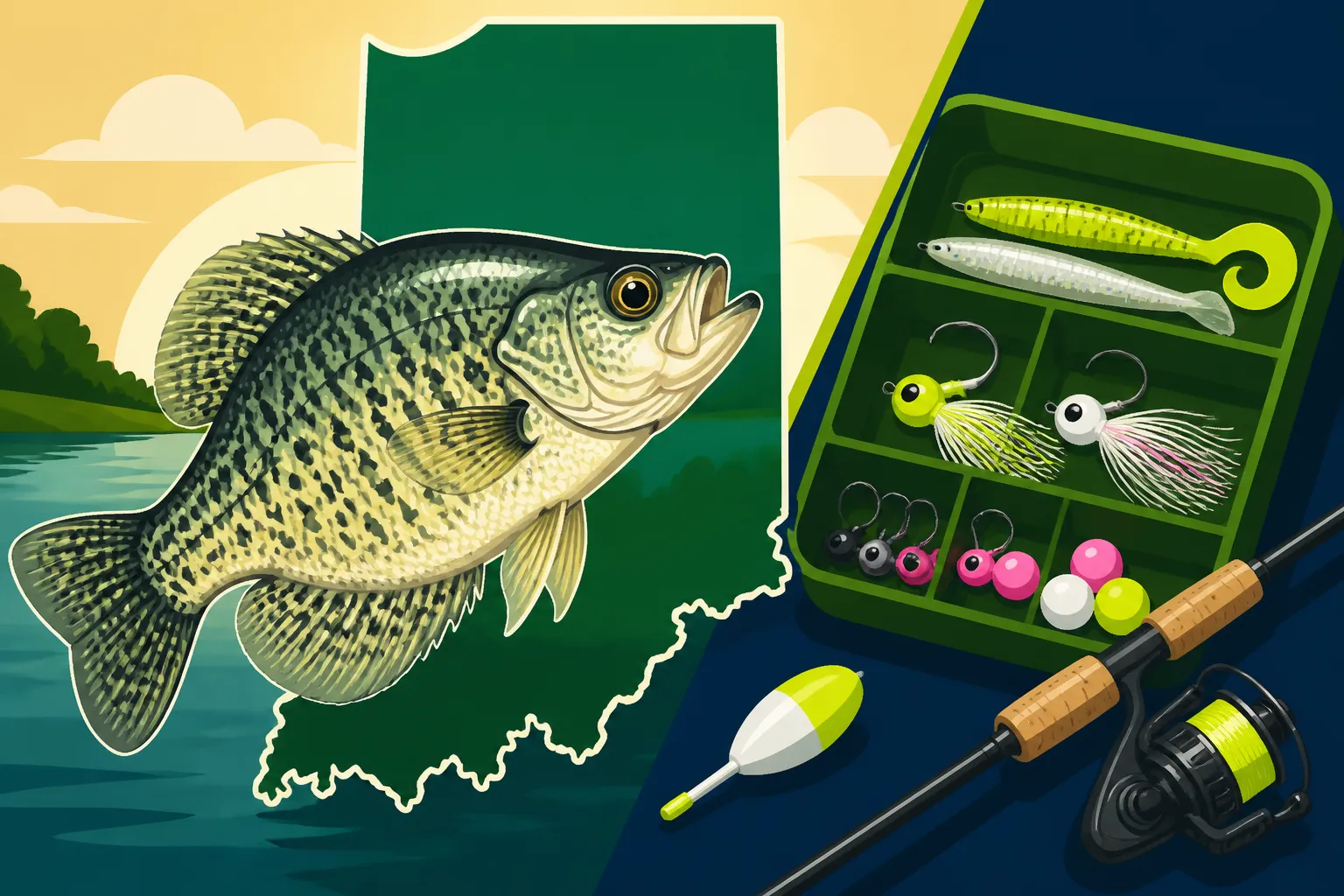
Jigs (Plastic and Hair): These are arguably the most effective crappie lures. The key is to keep them small – typically 1/32 to 1/16 ounce, and sometimes even 1/64 ounce for super finicky fish.
- Tube Jigs: These soft plastic tubes with tiny tentacles flutter and pulsate in the water, mimicking small baitfish or invertebrates. They come in a rainbow of colors, but classic choices like chartreuse, white, black, and pink are perennial favorites.
- Curly Tail Grubs: Another soft plastic staple, these have a thin tail that wiggles enticingly with the slightest movement. Again, small sizes and a variety of colors are essential. Best Crappie Jig Colors for Cloudy Water can guide you on specific choices when visibility is low.
- Hair Jigs: Made with deer hair, marabou, or other natural fibers, these jigs have a very natural, lifelike action in the water. They are excellent for slow presentations and can be incredibly effective when fish are pressured.
- Jig Heads: Pair your soft plastics with a light jig head. Painted heads can add extra attraction. For instance, a 1/16 oz jig head with a chartreuse grub is a classic combination for How to Jig for Crappie in Spring.
Live Minnows: You can't beat the real thing sometimes! A small live minnow (typically 1-2 inches) suspended under a bobber or fished on a light jig head is a surefire crappie catcher. Hook them lightly through the lip or just behind the dorsal fin to keep them lively. How to Rig a Minnow for Crappie is a fundamental skill every crappie angler should master.
Small Crankbaits: While not as common as jigs or minnows, very small, shallow-diving crankbaits can be effective, especially when trolling or casting for active crappie. Look for those in the 1 to 2-inch range that mimic shad or small minnows.
Bobbers (Floats): Don't underestimate the power of a good bobber! They help suspend your bait at a specific depth and signal even the slightest bite.
- Fixed Bobbers: Best for shallow water (usually 6 feet or less), where you can easily cast and manage the fixed depth.
- Slip Bobbers: Essential for deeper water, as they allow your bait to fall to a predetermined depth without having to cast the bobber itself at that depth. The line slips through the bobber until it hits a small stopper knot, making it much easier to cast.
Remember, the presentation is key. Whether you're jigging, slow trolling, or fishing under a bobber, subtle movements and patience will pay off.
Terminal Tackle and Accessories You Can't Forget
Having the right rod, reel, and lures is a great start, but the little things can make a huge difference, especially when you're out on the water. Don't overlook these crucial components and helpful accessories that will complete your crappie fishing setup.
Hooks, Sinkers, and Bobbers
These are the unsung heroes of your crappie fishing arsenal. They might be small, but they play a monumental role in presenting your bait effectively and securing your catch.
Hooks: Forget those big, beefy hooks you'd use for catfish or bass. Crappie need small, sharp hooks.
- Sizes 4, 6, or 8: These are typically perfect. A size 4 is on the larger side, good for bigger minnows or crappie, while a size 8 is excellent for smaller baits or finicky fish. The specific hook type (Aberdeen, Kahle, or small jig hooks) will depend on your bait and preference. Aberdeen hooks are often favored because their thin wire tends to bend out of snags rather than breaking the line.
- Sharpness: Always check your hook points! A dull hook will lead to missed bites, especially with crappie's light touch. Keep a small hook sharpener in your tackle box.
Sinkers (Weights): The goal here is to get your bait down without inhibiting its natural movement or making the setup too heavy for your ultralight gear.
- Split Shot: These small, crimp-on weights are perfect for crappie fishing. You can add one or two small ones a foot or so above your hook to get your minnow or jig down to the desired depth. Start with the smallest size that does the job.
- Bullet Weights or Pencil Weights: For certain rigging styles, like a Carolina rig or when fishing vertically in deeper water, small bullet weights (1/8 oz or less) or pencil weights can be useful, especially when paired with a swivel to prevent line twist.
Bobbers (Floats): We touched on these earlier, but it's worth reiterating their importance.
- Slip Bobbers: Essential for fishing anything deeper than a few feet. They let your line slide through until a bobber stop hits, allowing you to easily cast to specific depths. They're a game-changer for presenting a minnow or jig at the exact depth where crappie are holding.
- Fixed Bobbers: Simple clip-on bobbers work fine for shallow water applications, like fishing around docks or in lily pads where the depth is consistent and not too deep.
Essential Crappie Fishing Accessories
Beyond the basics, a few accessories will make your crappie fishing trips much more enjoyable and efficient.
Pliers/Forceps and Clippers:
- Small Needle-Nose Pliers or Hemostats: Crappie have bony mouths, and those tiny hooks can be tricky to remove without a good pair of pliers or forceps. These are also invaluable for crimping split shot.
- Line Clippers: Essential for quickly and cleanly cutting line when tying knots or re-rigging. A clean cut prevents fraying and ensures strong knots.
Stringers or Livewells: If you plan on keeping your catch, you'll need a way to keep them fresh.
- Stringer: A simple metal or rope stringer is great for keeping a few crappie alive in the water.
- Livewell/Cooler: For larger catches or if you're out for an extended period, a small livewell or a cooler with ice will keep your fish in prime condition for the dinner table. Ensure you know the Crappie Size Limits and Regulations in Indiana before you start keeping fish.
Small Landing Net: Crappie mouths are delicate. A small, fine-mesh landing net can prevent losing a fish right at the boat or shore, especially if it's a larger slab crappie that could tear off a tiny hook. It's much gentler on the fish if you plan on releasing it, too.
Tackle Box or Bag: You need a way to keep all your small jigs, hooks, bobbers, and accessories organized. A compact tackle box with multiple compartments or a soft-sided tackle bag with utility boxes is perfect. Brands like Plano offer excellent options that can be found at Bass Pro Shops or easily ordered through Amazon. Keeping everything neat means less fumbling and more fishing.
Sun Protection and Hydration: This might seem obvious, but don't forget it! Sunglasses reduce glare on the water, making it easier to spot subtle bobber movements. A hat provides sun protection, and plenty of water will keep you comfortable and focused.
Here’s a quick overview of recommended crappie tackle:
| Tackle Category | Recommended Choice | Key Considerations |
|---|---|---|
| Rod | Ultralight Spinning Rod | 5-7 feet, Graphite, Fast Tip, Moderate Action |
| Reel | Small Spinning Reel (500-1000 size) | Smooth Drag, Lightweight, Balances Rod |
| Line | 2-4 lb Monofilament or Fluorocarbon leader | Low visibility, High sensitivity, Good knot strength |
| Jigs | 1/32 – 1/16 oz Tube Jigs, Curly Tail Grubs | Chartreuse, White, Black, Pink; Hair Jigs |
| Live Bait | 1-2 inch Live Minnows | Hook lightly through lip or dorsal fin |
| Hooks | Sizes #4, #6, #8 | Small, sharp, Aberdeen style for snags |
| Sinkers | Small Split Shot | Non-abrasive, easily adjustable |
| Bobbers | Slip Bobbers (deep water), Fixed Bobbers (shallow) | Sensitive, easy to cast/set depth |
| Accessories | Pliers, Clippers, Landing Net, Stringer/Cooler | Organization, Fish care, Safety |
Crappie fishing in Indiana can be incredibly rewarding, offering a lot of action and some truly delicious table fare. By equipping yourself with the right tackle – focusing on lightweight, sensitive gear and knowing how to adapt your presentation to the season and location – you'll be well on your way to filling your stringer. So, grab your ultralight setup, tie on your favorite jig, and get out there! You're ready to tackle those Indiana crappie.
Disclaimer
This article is for general informational purposes only and does not constitute professional advice. Laws, prices and regulations vary by location and change over time. Consult a qualified professional for guidance on your specific situation.