Best Trolling Motors for Indiana Farm Ponds
Fishing Indiana's countless farm ponds and smaller lakes can be incredibly rewarding, but it often comes with a unique set of challenges. You're trying to sneak up on those wary bass hiding in the lily pads or slowly pick apart a brush pile for crappie, and paddling or constantly firing up a gas motor just spooks everything. The struggle is real, and it can be frustrating when you know the fish are there but you can't get to them quietly or precisely. This guide will walk you through everything you need to know about choosing the best trolling motor to transform your pond fishing experience, making those hidden gems truly accessible and enjoyable.
Why a Trolling Motor is a Game Changer for Indiana Farm Ponds
For years, I dragged my little jon boat or canoe around local farm ponds, relying on paddles and sheer elbow grease to get where I wanted to go. And let me tell you, while it built character (and biceps!), it wasn't always the most effective way to catch fish, especially the smarter, bigger ones. That changed the day I strapped on a simple electric trolling motor. Suddenly, ponds that felt challenging became playgrounds, and my catch rates improved dramatically.
Stealth and Precision for Wary Fish
Imagine this: you've spotted a gorgeous patch of cattails on the far bank, absolutely screaming "bass." With paddles, you'd likely make a splash, bump the boat, and by the time you're in position, those fish have scattered. A trolling motor, on the other hand, allows you to approach with incredible stealth. The hum of an electric motor is minimal, barely a whisper on the water, which means you can ease right up to prime cover without alarming your target. This is crucial for shallow water presentations, where any sudden movement or noise sends fish packing. You can hold your boat perfectly still, even in a breeze, or make tiny adjustments to cast to every nook and cranny. This precision is invaluable for picking apart structure like submerged timber or rocky points, allowing you to present your lure exactly where you want it, for longer.
Maneuverability in Shallow and Weedy Water
Indiana farm ponds are often quite shallow, especially around the edges, and can be choked with weeds, stumps, and fallen trees. Trying to navigate these areas with an oar or a loud gas motor is an exercise in futility. Paddles get tangled in weeds, and a gas propeller can quickly become fouled or, worse, damaged by hitting submerged objects. Trolling motors are designed with shallower water in mind. Their propellers often have anti-weed features, and the entire lower unit can usually be easily tilted up to clear obstacles or navigate extremely shallow flats. This freedom to move through tight spots and heavy cover is absolutely essential for unlocking the full potential of a pond, giving you access to those untouched honey holes that other anglers simply can't reach. It's like having an underwater GPS that lets you ghost through the most promising areas.
Covering Water Efficiently to Find Active Fish
While farm ponds might seem small, they can still be big enough that paddling around the entire perimeter looking for fish can be tiring and time-consuming. A trolling motor allows you to cover water much more efficiently, especially when you're trying to locate active fish or find new productive spots. Instead of exhausting yourself, you can conserve your energy for actually fishing. You can quickly motor from one bank to another, check out multiple points, or follow a contour line without breaking a sweat. This speed and ease of movement mean you spend more time with your line in the water and less time struggling with boat positioning, which inevitably leads to more bites. Even on a smaller pond, being able to quickly shift locations to chase a school of feeding crappie or reposition after a missed strike makes a huge difference in your success.
Key Considerations When Choosing a Trolling Motor for Ponds
When you're looking for a trolling motor for your Indiana farm pond adventures, it's easy to get overwhelmed by all the options out there. But for smaller, calmer waters, you really don't need all the bells and whistles of a motor designed for a massive reservoir or Lake Michigan Fishing Rules for Indiana Anglers. Focusing on a few core aspects will ensure you get the right motor for your specific needs without overspending.
Thrust Rating: Power Without Overkill
Thrust is basically the pushing power of your trolling motor, measured in pounds. While bigger lakes with strong currents might demand high thrust, a typical Indiana farm pond rarely requires anything extreme. For most canoes, kayaks, or smaller jon boats up to 14-16 feet, a 30-55 lb thrust motor is usually more than enough. Going too high on thrust for a small boat can actually be detrimental; you'll drain your battery faster, and the motor might even be too powerful, making subtle boat control difficult.
Think about the size and weight of your boat, plus your gear and yourself. A small, lightweight canoe might be perfectly happy with 30 lbs of thrust, while a heavily loaded 14-foot aluminum jon boat might prefer something closer to 55 lbs. The goal isn't raw speed, but rather gentle, sustained propulsion and the ability to hold against a light breeze. Many anglers find that a 40-pound thrust motor offers a perfect balance of power and efficiency for most pond scenarios. Remember, you're not trying to water ski across the pond; you're trying to glide silently.
Shaft Length: The Goldilocks Zone
This is a critical, often overlooked, factor, especially when you're dealing with varying pond depths and different boat types. The shaft length determines how deep your propeller sits in the water. If the shaft is too short, your prop will come out of the water too easily when you hit waves (even small ones from your own movement) or if you're standing up to cast. This causes cavitation and loss of control, not to mention a lot of splashing noise. If the shaft is too long, the prop could drag on the bottom in shallower areas, or the motor head might sit awkwardly high.
For most small boats used on Indiana ponds—canoes, kayaks, and small jon boats—a shaft length between 36 and 42 inches is usually ideal. To figure out what's best for your boat, measure the distance from where the motor will be mounted (either the transom or the bow) down to the waterline. Then, add about 10-12 inches to that measurement to ensure the propeller is consistently submerged, even in a chop. This "Goldilocks" approach ensures your prop stays in the water without hitting bottom too often, giving you consistent power and control.
Power Source: 12V Simplicity is King
Trolling motors typically run on either 12-volt, 24-volt, or even 36-volt systems. For the vast majority of Indiana farm ponds and the smaller boats used on them, a simple 12-volt system is all you need. This means you'll power your motor with a single 12-volt deep-cycle marine battery. Keeping it simple is often the best approach for pond fishing.
A 12-volt system is lighter, less complex to wire, and requires only one battery, which is easier to transport and charge. While a 24-volt system (requiring two batteries) might offer more power and longer run times, it's usually overkill for the limited demands of pond fishing and adds significant weight and cost. Unless you're planning to tackle much larger bodies of water or regularly fish for eight hours straight on a windy day, stick with a 12-volt motor. It'll keep things manageable, portable, and perfectly capable for a full day of pond exploration. Best Boat Batteries for Trolling Motors can give you more insights here.
Mount Type: Transom or Bow?
The two primary types of trolling motor mounts are transom-mount and bow-mount. Your choice here largely depends on the type of boat you're using and your fishing style.
-
Transom-Mount Motors: These are mounted on the stern (back) of your boat, just like a small outboard motor. They are generally more affordable, simpler to install, and excellent for canoes, kayaks, inflatable boats, and small jon boats where a bow-mount might not be practical or where the bow area is too narrow. The downside is that steering from the transom means you're pushing the boat rather than pulling it, which can sometimes feel less intuitive, especially when trying to hold a precise line in windy conditions. However, for sheer portability and ease of setup on a small boat that might not have a dedicated bow platform, a transom mount is often the best choice for pond anglers.
-
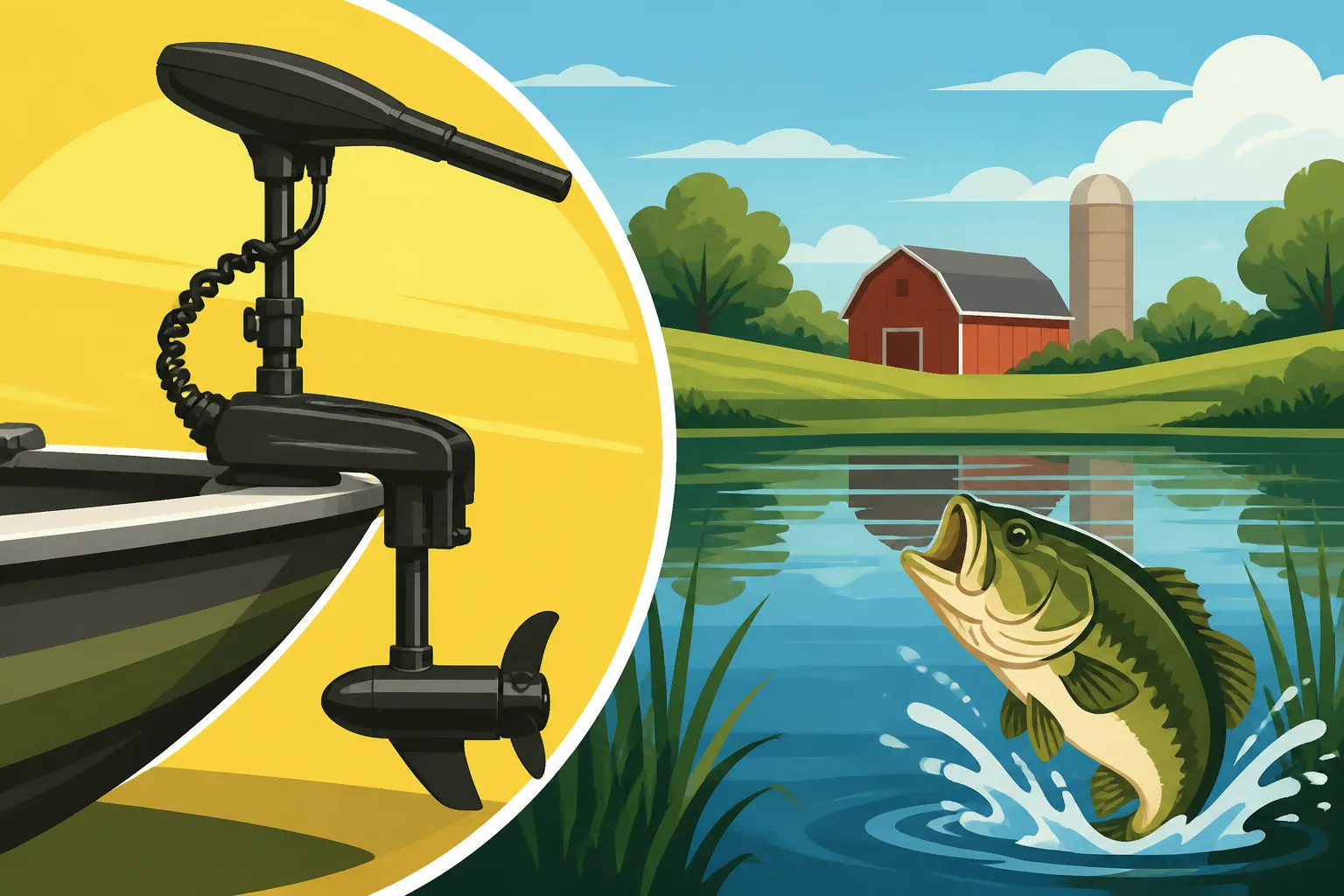
Bow-Mount Motors: These motors are mounted on the front (bow) of your boat. They offer superior control, as you're pulling the boat through the water, allowing for more precise steering, especially when navigating cover or maintaining a specific course. Bow-mount motors are often foot-controlled or come with wireless remote controls, freeing up your hands for casting. However, they are typically more expensive, require a dedicated flat mounting area on the bow, and are more complex to install. They are fantastic for larger jon boats or small bass boats where hands-free operation and ultimate boat control are priorities. If your pond boat is a wider, stable jon boat, a bow-mount might be worth the investment for the added control it provides. For more basic pond setups, however, a transom mount often wins on practicality.
Features to Look For in a Pond Trolling Motor
Beyond the basic considerations, there are a few features that can significantly enhance your farm pond fishing experience. While you don't need every high-tech gadget, some of these can make your day on the water much more enjoyable and productive.
Variable Speed Control: Smooth Operator
Many older or cheaper trolling motors offer only a few fixed speeds (e.g., 5 forward speeds, 3 reverse speeds). While functional, this can be clunky. Imagine trying to make a tiny adjustment to stay on a brush pile, and your options are "slow" or "stop." It's frustrating. Variable speed control, often found on pulse-width modulation (PWM) motors, allows for infinite speed adjustments between zero and full power.
This smooth, continuous control is a game-changer for pond fishing. You can dial in the exact speed needed to slowly creep along a weed line, hold steady against a light breeze, or make subtle movements to stay in a productive area. Not only does this offer superior boat control, but it's also much more energy-efficient, as the motor only draws the power it needs, potentially extending your battery life. When every subtle movement matters, variable speed control helps you become a truly stealthy angler.
Durability and Reliability: Built for the Bumps
Pond fishing often means bumping into stumps, navigating through weeds, and occasionally hauling your boat over obstacles. You need a trolling motor that can take a little abuse and keep on ticking. Look for motors with sturdy composite shafts that can flex without breaking if you hit something. Corrosion resistance is also important, even in freshwater, as exposure to moisture and occasional damp storage can take a toll.
Motors from reputable brands like Minn Kota or MotorGuide (which you can often find at a Bass Pro Shops or order online through Amazon) are known for their robust construction and reliable performance. Check reviews for common complaints about durability. A motor that lasts season after season, requiring minimal maintenance, is a far better investment than a cheaper model that constantly breaks down. Consider the quality of the propeller as well; a well-designed prop will handle weeds better and provide more efficient thrust.
Ease of Use and Portability: Less Hassle, More Fishing
For farm pond fishing, convenience is key. You're likely not launching from a fancy marina, but rather dragging your boat off a trailer or even carrying it to the water's edge. A trolling motor that's lightweight and easy to mount and dismount will save you a lot of hassle. Look for features like quick-release brackets or simple clamp-on designs for transom mounts.
If you're using a canoe or kayak, a motor that's easy to store in your vehicle or on the boat itself is a big plus. Manual lift assists for raising and lowering the motor can also make deployment smoother, especially if you're constantly raising the prop to clear shallow spots. The less time you spend fiddling with your gear, the more time you have with your line in the water, which is what it's all about! Think about your typical fishing trip: how easily can you get this motor from your garage to the water and back?
Battery Life: Power Through the Day
There's nothing worse than having your trolling motor die on you halfway through a fantastic fishing day. While the motor's efficiency (variable speed helps here) plays a role, the battery itself is paramount. You'll need a deep-cycle marine battery, specifically designed to provide a steady, low current over a long period. Car batteries, which are starting batteries, are not suitable for this application.
Consider the amp-hour (Ah) rating of your battery; a higher Ah rating generally means a longer run time. For a typical day of pond fishing with a 12-volt, 40-55 lb thrust motor, a battery with around 75-100 Ah should provide plenty of power for 4-6 hours of intermittent use. If you plan on longer days or consistent motor use, consider a higher Ah battery. Also, invest in a good marine battery charger that can safely and effectively recharge your deep-cycle battery overnight, ensuring you're ready for your next adventure. Taking care of your battery is crucial for its longevity and performance, and it directly impacts how much fishing you can actually do.
Recommended Trolling Motor Options for Indiana Ponds
Alright, let's talk about some practical options that align with what we've discussed for Indiana farm ponds. Remember, I won't be listing specific models or prices because those change, but I can guide you on the types of motors and where you might find them.
Entry-Level, Budget-Friendly Picks
For those just getting into trolling motors, or who only fish smaller ponds occasionally, there are excellent entry-level options that won't break the bank. These motors usually feature a simple transom mount, a fixed or multi-speed control (rather than variable), and a thrust rating in the 30-45 lb range. They are perfect for canoes, kayaks, and small jon boats where simplicity and portability are paramount.
Think about a basic, reliable 12V motor with a composite shaft and a simple tiller handle. These are designed to be workhorses, not show ponies. They'll get you where you need to go quietly and efficiently, allowing you to focus on the fishing. You can often find great deals on these types of motors, making them very accessible. Many sporting goods stores and online retailers like Amazon consistently carry a range of these more basic, yet highly effective, trolling motors. They might not have all the bells and whistles, but they absolutely deliver on the core promise of silent propulsion for pond fishing.
Mid-Range, Feature-Rich Options
If you're looking to upgrade or want a bit more performance and comfort, the mid-range motors offer a fantastic balance of features and value. These often include variable speed control, which we discussed as a huge benefit for precision, and might come with slightly more robust construction. You'll typically find them in the 40-55 lb thrust range, still operating on a 12V system.
Some mid-range options might also include features like battery indicators, which are incredibly helpful for keeping an eye on your power levels throughout the day. While most pond anglers will stick with a transom mount for ease, some of the nicer mid-range units could even offer a basic bow-mount option for small jon boats, providing that hands-free advantage. These motors represent a step up in terms of control, efficiency, and durability without pushing into the high-end, high-tech territory that's often overkill for a farm pond. Stores like Bass Pro Shops usually have a knowledgeable staff who can walk you through the differences and help you compare options in this sweet spot.
Battery and Charger Pairings
No matter which trolling motor you choose, it's only as good as the battery powering it. Investing in a quality deep-cycle marine battery is non-negotiable. Look for batteries specifically labeled as "deep cycle" with a good amp-hour (Ah) rating – typically 75Ah or higher for a full day of pond fishing. Lead-acid batteries are the most common and cost-effective, but if your budget allows, lithium-ion deep-cycle batteries offer significant weight savings and longer run times, though they come at a higher price point.
A good marine battery charger is equally important. Opt for a smart charger that can detect battery type and condition, and features multiple stages of charging to properly maintain your battery. This will prolong its life and ensure it's always ready for your next outing. Chargers that offer a "maintain" or "float" mode are excellent for keeping your battery topped off during the off-season without overcharging it. Don't skimp on these essential accessories; they are the heart of your electric motor system. Best Trolling Motors for Indiana Bass Boats often have similar battery requirements, so the advice is interchangeable.
Trolling Motor Comparison for Pond Fishing
Here’s a quick overview to help you compare general types of trolling motors suitable for Indiana farm ponds:
| Feature | Entry-Level Transom Mount | Mid-Range Transom Mount | Mid-Range Bow Mount (for larger jon boats) |
|---|---|---|---|
| Typical Thrust | 30-45 lbs | 40-55 lbs | 45-55 lbs |
| Shaft Length | 30-36 inches | 36-42 inches | 36-42 inches |
| Power Source | 12V | 12V | 12V |
| Speed Control | Fixed (5 forward, 3 reverse) | Variable/Digital Maximizer | Variable/Digital Maximizer |
| Steering | Tiller handle | Tiller handle | Foot pedal or wireless remote |
| Ideal For | Canoes, kayaks, small jon boats, inflatables | Small to medium jon boats, larger canoes | Wider jon boats with a flat bow platform |
| Key Advantage | Affordable, portable, simple | Efficient, precise control | Hands-free, superior boat positioning |
Choosing the right trolling motor for your Indiana farm pond is about finding the sweet spot between power, control, and practicality for your specific boat and fishing style. Don't let the variety overwhelm you; focus on what truly matters for those smaller, intimate waters. With the right motor, those hidden pond gems will truly open up to you, offering countless hours of quiet, productive fishing. And remember, sometimes the smallest waters hold the biggest surprises.
Disclaimer
This article is for general informational purposes only and does not constitute professional advice. Laws, prices and regulations vary by location and change over time. Consult a qualified professional for guidance on your specific situation.