Where to Catch Coho Salmon on Indiana’s Lake Michigan Shore
There’s nothing quite like the thrill of feeling that distinct tug on your line, knowing it could be a powerful Coho Salmon fighting back. But if you're an angler in Indiana, dreaming of landing one of these magnificent fish from the shore of Lake Michigan, you might feel a bit overwhelmed trying to figure out the best spots and strategies. This guide is here to unravel the mystery, providing you with all the essential information to find and catch Coho Salmon right from Indiana’s beautiful Lake Michigan coastline.
Understanding Coho Salmon in Lake Michigan's Indiana Waters
Coho salmon, often called "silver salmon" for their striking, silvery sides, are a prized catch in Lake Michigan. They're known for their aggressive strikes and powerful fights, making them a favorite among both seasoned and novice anglers. But to catch them, you first need to understand a bit about their behavior and how they interact with our local Indiana waters.
These fish aren't native to Lake Michigan, but they've thrived here since their introduction decades ago. They spend most of their lives in the deeper, cooler waters of the lake, feeding on baitfish like alewives and smelt. However, their instincts drive them towards the shallower nearshore waters and river mouths during specific times of the year, which is when shore anglers get their best opportunities. Understanding these movements is key to putting yourself in the right place at the right time.
Coho Salmon's Life Cycle and Habits
Coho salmon typically have a two-year life cycle in Lake Michigan. They're stocked as tiny fingerlings, spend about 18 months growing rapidly in the open lake, and then begin their journey back to the shallower waters where they were released, preparing to spawn. It's during these pre-spawn and spawning migrations that they become accessible to shore anglers.
In the spring, usually from late March through May, you'll find Coho congregating near the shoreline as the water temperatures begin to rise. They're often chasing schools of baitfish that are also moving into warmer, shallower areas. This is a prime feeding period, and they can be very aggressive. As summer progresses, they move back out into deeper, cooler lake waters, becoming less accessible from shore.
Then, as autumn approaches, generally from late August through November, the Coho begin their final spawning run. They'll move closer to shore and into river mouths and harbors, seeking the tributary streams where they instinctually try to reproduce. During this time, their coloration changes, becoming darker with more pronounced red and green hues, and their fighting spirit intensifies. Catching them during this Fall Salmon Run Timing on Lake Michigan in Indiana can be an unforgettable experience.
Key Indicators for Coho Salmon Activity
Knowing when the Coho are around is half the battle; knowing why they're there helps you predict their behavior. Water temperature is arguably the most critical factor. Coho prefer cooler water, typically in the 45-55 degree Fahrenheit range. In spring, they follow these temperature bands closer to shore. In fall, a drop in lake temperature often triggers their movement towards the tributaries.
Look for schools of baitfish, too. If you see signs of small fish like alewives or smelt near the surface, there's a good chance larger predatory fish like Coho are nearby. Birds diving into the water can be a strong indicator of baitfish activity. Cloud cover and wave action can also play a role. Overcast days or days with a slight chop on the water often make Coho more active and less wary, bringing them closer to the surface and shore.
Another major indicator is current. River mouths and harbor channels create natural currents that attract baitfish and, consequently, salmon. These areas also serve as migratory pathways for salmon heading upstream to spawn. Pay attention to water clarity; while Coho can tolerate a bit of murkiness, extremely turbid water can make fishing challenging. They're often found where the clear lake water meets the slightly murkier river water.
Prime Shoreline Spots for Coho Salmon
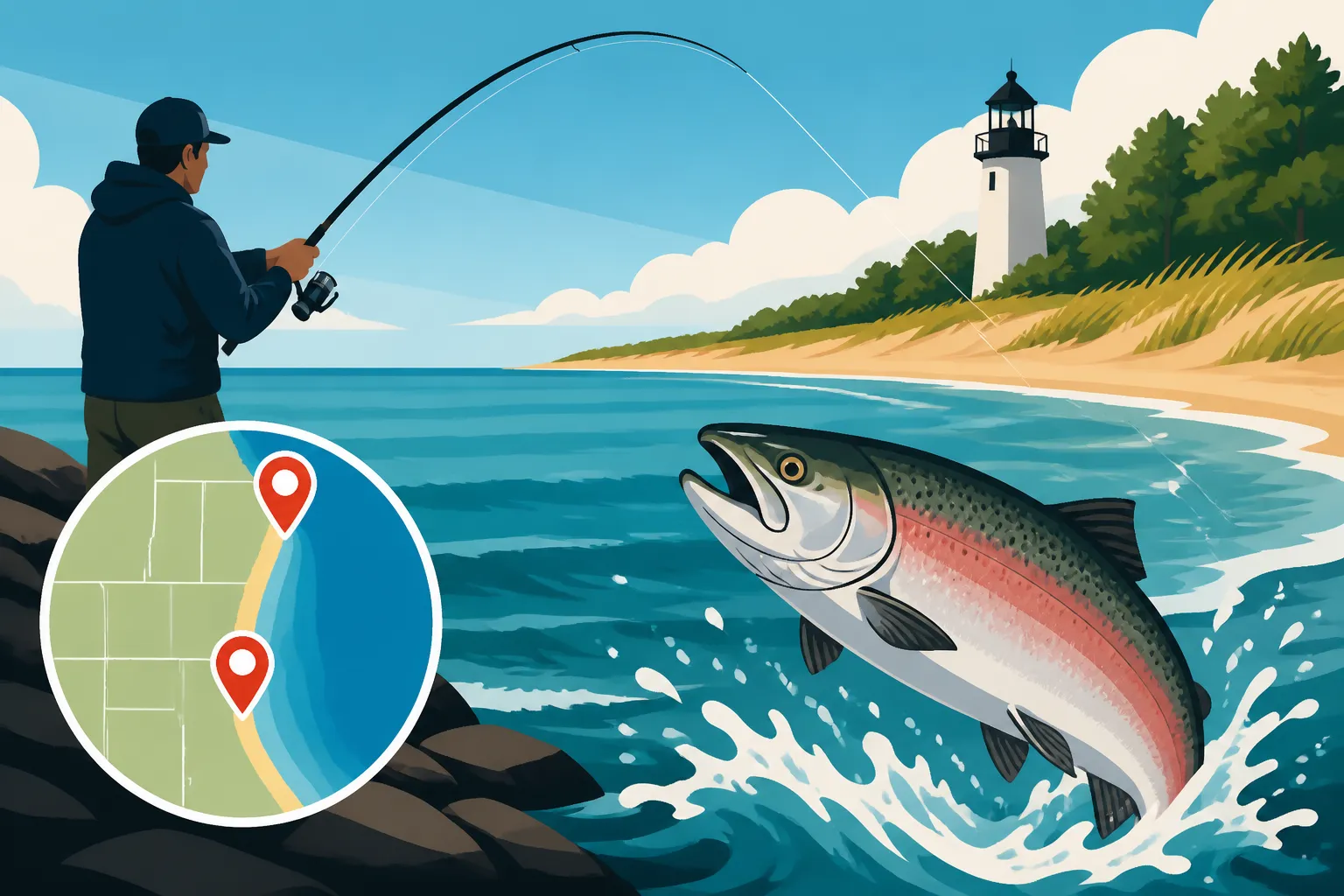
Indiana might not have the expansive Lake Michigan shoreline of some neighboring states, but what we lack in length, we make up for in quality. Our piers, breakwalls, and river mouths offer fantastic opportunities for shore-bound Coho anglers, particularly during the spring and fall runs. It's about knowing where the fish funnel in and where the deep water is accessible from land.
Before you head out, always make sure you're up to date on Lake Michigan Fishing Rules for Indiana Anglers. Regulations can sometimes differ from the rest of the state, especially concerning bag limits and certain species.
Public Piers and Breakwalls
The long, deep-reaching piers and sturdy breakwalls along Indiana's Lake Michigan coast are absolute magnets for Coho salmon. These structures provide easy access to deeper water, often extending hundreds or even thousands of feet into the lake where Coho naturally cruise. They also create current breaks and attract baitfish, making them prime ambush points for salmon.
- Michigan City Piers: The Michigan City lighthouse pier and the nearby east pier are legendary spots. They extend far out into the lake, giving anglers access to deep water and the currents of Trail Creek's mouth. During the spring Coho run, these piers can be bustling. Anglers often line up shoulder-to-shoulder, casting spoons and crankbaits. The deeper water here means you don't always need to cast a mile; sometimes the fish are right beneath you, especially near the end of the pier or where the current is strongest. In the fall, Coho stage near the mouth of Trail Creek before making their run upstream. You can find many anglers here with their Best Piers for Salmon Fishing in Northwest Indiana.
- Portage Lakefront and Riverwalk: This area offers excellent public access, including a fishing pier that extends into Lake Michigan. While perhaps not as famous as Michigan City, it's a solid option, especially during the peak of the runs. The pier offers a good vantage point to cast into deeper water. The surrounding area also provides some Shore Fishing Spots Along Indiana's Lake Michigan Coast which can be productive on days with lighter crowds.
- East Chicago Marina/Jeorse Park: The breakwalls around the East Chicago marina and Jeorse Park offer consistent access to Coho. These breakwalls provide excellent protection from strong winds and waves, making them fishable even on choppier days when other spots might be too dangerous. The proximity to deep water and the sheltered nature of the marina basin can hold fish, particularly when they're seeking refuge or concentrating on bait.
When fishing these structures, remember to be courteous to your fellow anglers. These are popular spots, and sharing the space is part of the experience.
River Mouths and Harbors
While piers give you access to deeper lake water, river mouths and harbors are critical during the Coho's migratory phases. These are the highways and staging areas where salmon congregate before moving into the rivers to spawn.
- Trail Creek (Michigan City): The mouth of Trail Creek, right next to the Michigan City piers, is a major entry point for Coho. In the fall, as water temperatures drop, salmon push into the creek. Anglers line the banks and small boat launches within the harbor. Fishing here requires different tactics than pier fishing, often focusing on drifting baits or smaller spoons and spinners designed for river environments. The current provides a natural presentation, and fish will often hold in deeper holes or behind structure.
- Burns Waterway (Portage): Burns Waterway, a deep-draft channel, also offers opportunities for Coho, especially near its mouth where it meets Lake Michigan. This industrial area might not be as scenic, but the deep water and consistent current can be very productive. Access points might be more limited, but keen anglers know the spots.
- Hammond Marina: The Hammond Marina offers sheltered waters that can hold Coho, particularly in the fall. The breakwalls and jetties here provide good access, and fish often mill about in these calmer waters before making their final push towards any accessible tributaries or simply staging outside the breakwater.
Fishing these river mouths and harbors means paying close attention to water flow and depth changes. Coho will often hold in eddies or behind obstacles, waiting for an opportunity to ambush bait. A good pair of polarized sunglasses can help you spot subtle changes in water color or even cruising fish.
| Shore Fishing Spot | Primary Season(s) | Key Feature | Best For | Considerations |
|---|---|---|---|---|
| Michigan City Lighthouse Pier | Spring, Fall | Deep water, Trail Creek mouth | Casting spoons, spawn bags | Very popular, can be crowded. Weather exposed. |
| Michigan City East Pier | Spring, Fall | Deep water access | Casting spoons, jigging | Active currents, good for experienced anglers. |
| Portage Lakefront Pier | Spring, Fall | Deep water access | Spoon casting, bottom fishing | Good alternative to Michigan City, less crowded. |
| East Chicago Marina/Jeorse Park Breakwalls | Spring, Fall | Sheltered water, deep access | Casting spoons, stickbaits, spawn | Good on windy days, urban setting. |
| Trail Creek Mouth | Fall | River entrance, staging area | Drifting spawn, small spinners | Often crowded, challenging current. |
| Burns Waterway Mouth | Spring, Fall | Deep channel, strong current | Trolling (from kayak), heavy casting | Limited shore access, industrial. |
| Hammond Marina Breakwalls | Fall | Sheltered staging area | Casting spoons, stickbaits | Can be slower, good for calmer days. |
Essential Gear and Techniques for Shore-Bound Coho Anglers
Alright, you know where the Coho like to hang out. Now, let's talk about how to catch them from the bank. Just like any type of fishing, having the right tools and knowing how to use them makes all the difference. Coho salmon are powerful fish, and your gear needs to be up to the task.
Rods, Reels, and Line for Coho
When targeting Coho from the shore, you're often making long casts and battling strong fish in potentially windy conditions. This means your setup needs to be robust yet sensitive enough to detect subtle strikes.
- Rods: A medium-heavy to heavy action spinning rod, typically 9 to 11 feet long, is ideal. The extra length helps with casting distance, which is crucial from piers and shorelines, and provides better leverage when fighting a fish in strong currents or waves. Look for rods designed for salmon or steelhead fishing, as they have the backbone required. Brands like Okuma, Daiwa, or Shimano offer excellent options for this type of fishing, and you can often find great deals on platforms like Amazon.
- Reels: A durable spinning reel in the 4000 to 6000 size range is a good choice. It needs a smooth drag system that can handle the powerful runs of a Coho and enough line capacity for those long casts and fights. Again, many reputable brands have models that fit the bill, and checking reviews on Amazon can help you pick one that suits your budget and needs.
- Line: Braided line, with a test strength of 20-30 pounds, is highly recommended as your main line. It offers superior casting distance, minimal stretch for better sensitivity, and incredible strength for fighting fish. Because braid is visible, you'll want to add a fluorocarbon leader (10-15 pound test, 3-6 feet long) to the end of your main line. Fluorocarbon is nearly invisible underwater, providing a stealthy presentation, and its abrasion resistance is a huge advantage when fishing around rocks and pilings.
Best Baits and Lures for Shore Fishing Coho
Coho salmon are opportunistic feeders, but they do have preferences, especially during different stages of their migration.
- Spoons: Metal casting spoons are arguably the most popular and effective lures for pier and shore fishing Coho. Their wobbling action mimics injured baitfish, and they can be cast a country mile. Popular colors include bright chrome, silver/blue, silver/green, and sometimes orange or chartreuse, especially in murkier water or on overcast days. Sizes typically range from 2/5 oz to 1 oz. Cast them out, let them sink to your desired depth, and retrieve steadily, occasionally twitching the rod tip to impart erratic action. You can explore a wide variety of spoons on Amazon.
- Stickbaits/Crankbaits: Long, slender stickbaits, both floating and suspending models, can be incredibly effective, particularly in areas with less current or when fish are cruising near the surface. These mimic smelt and alewives perfectly. Retrieve them with a twitch-pause-retrieve action to make them look like struggling baitfish. Popular colors are similar to spoons, with natural baitfish patterns often performing well.
- Spawn Bags: In the fall, when Coho are closer to spawning, natural baits like salmon or steelhead spawn (eggs) can be deadly. These are typically tied into small mesh bags and fished under a bobber or on a bottom rig. The scent attracts fish that are preparing to spawn. You can often buy pre-tied spawn bags at local bait shops near Lake Michigan, or purchase the netting and eggs to tie your own.
- Jigs: Heavy jigs tipped with soft plastics (like Berkley Gulp! minnows or similar imitations) can be very effective when fish are holding deeper, especially near pier pilings or drop-offs. A slow retrieve with a lift-and-drop motion can entice strikes.
- Live Bait (Minnows): While less common for casting from piers, live minnows fished under a bobber can be excellent if Coho are in very close to shore, particularly in harbor areas or river mouths.
Effective Techniques for Pier and Shore Fishing
Mastering a few techniques will significantly boost your success rate.
- Casting and Retrieving: The most common method. Make a long cast, let your lure sink for a few seconds (counting down can help you reach different depths), and begin a steady retrieve. Vary your retrieve speed and add pauses or twitches. Coho often strike when the lure's action changes. Always be ready for a hit as the lure enters the shallower water near the shore or pier, or as it swings in the current.
- Fan Casting: Don't just cast straight out. Fan cast, meaning you make casts to your left, then gradually move your casts towards your right, covering a wide swath of water. This helps you locate where the fish are holding.
- Adjusting Depth: Coho can be found at various depths. If you're not getting bites, try letting your spoon or crankbait sink longer before retrieving, or experiment with different lure weights to fish deeper. In spring, they might be higher in the water column; in fall, they might hug the bottom.
- Watching for Jumps/Rolls: Keep an eye on the water for any signs of fish activity – splashes, jumps, or rolls. This tells you fish are in the area and often indicates their general depth.
- Patience and Persistence: Salmon fishing from shore can be a waiting game. Conditions change, and fish move. Don't get discouraged if you don't get a bite right away. Keep trying different lures, colors, depths, and retrieve speeds. Sometimes, all it takes is one small adjustment to turn a slow day into a memorable one.
Remember that a reliable landing net is crucial for bringing in these powerful fish, especially from a high pier. Look for a long-handled, large-hooped net with rubberized mesh to protect the fish and prevent hook tangles.
Timing Your Coho Salmon Trip for Success
Catching Coho salmon from Indiana's Lake Michigan shore isn't just about where you go and what gear you use; it's also heavily dependent on when you go. Coho movements are highly seasonal and even daily, influenced by a variety of environmental factors. Understanding these patterns will give you the best shot at success.
Seasonal Patterns: Spring vs. Fall Runs
Indiana's Lake Michigan shore experiences two primary Coho salmon runs that are accessible to shore anglers: the spring run and the fall run. Each offers unique opportunities and challenges.
- The Spring Run (Late March – May): This is often when Coho are at their fattest and feistiest, having spent the winter growing in the open lake. As the ice recedes and nearshore water temperatures climb into the 40s and 50s, Coho move in close to feed on baitfish. They are actively chasing schools of alewives and smelt, making them very aggressive.
- What to Expect: Expect to find Coho cruising along the shorelines, near pier heads, and around river mouths. They're often in the top 10-20 feet of the water column. This is a great time for casting spoons and stickbaits that mimic baitfish. The bite can be fantastic, with multiple fish days not uncommon. However, spring weather on Lake Michigan can be unpredictable, with strong winds and cold temperatures. You'll definitely want to know What to Bring for Indiana's Fall Salmon Run – and apply similar cold-weather readiness to your spring trips, just in case!
- The Fall Run (Late August – November): As summer fades and lake temperatures begin to drop, Coho salmon turn their attention to spawning. This triggers their migration towards the river mouths and into tributary streams. While they might not be actively feeding as aggressively as in the spring, their instinct to return to their "home" waters makes them predictable in their movements.
- What to Expect: In the early fall (late August, September), Coho will be staging outside river mouths and harbors, still accessible from piers. As the water cools further and rivers swell from autumn rains, they push into the rivers. Fishing near the mouth of Trail Creek in Michigan City, for example, becomes incredibly productive. During this time, spawn bags become highly effective, alongside spoons and crankbaits. The fish often become darker in color and might develop kypes (hooked jaws) as they near spawning. The Coho Salmon Run Timing in Indiana is a critical factor here, as the peak can shift slightly from year to year based on weather.
Daily Timing and Weather Considerations
Beyond the seasons, the time of day and prevailing weather conditions also play a huge role in Coho activity.
- Dawn and Dusk: These low-light periods are almost always prime time for Coho salmon, especially for shore anglers. Fish are often more active and less wary during twilight hours. They'll move into shallower waters to feed or to stage before entering rivers. Early morning (first light) and late evening (last light) can produce incredible bites. This holds true for many species, and understanding Why Dawn and Dusk Are the Best Times to Fish can improve your success for more than just Coho.
- Overcast Days and Light Rain: Coho often prefer overcast skies and even light rain over bright, sunny conditions. The reduced light penetration makes them feel more secure and encourages them to feed closer to the surface or in shallower areas. Heavy rain can muddy the water, especially near river mouths, which can slow the bite, but a gentle drizzle can be fantastic.
- Wind and Waves: A light chop on the water, often referred to as a "salmon chop," can be beneficial. It breaks up the surface, making lures look more natural and making fish less visible to predators (and anglers). However, strong winds and heavy waves can make pier fishing dangerous and casting impossible. Always prioritize safety. How Weather Affects Fish Feeding Patterns is a complex topic, but generally, stable, favorable conditions are best.
- Frontal Systems: Fishing before a cold front moves in can often be very productive as fish feed aggressively ahead of the changing weather. After a strong cold front passes, fishing can slow down considerably as fish become lethargic. This is a common phenomenon you should be aware of, as explained in articles like How to Fish After a Cold Front.
By combining your knowledge of these seasonal and daily patterns with understanding the best fishing locations and proper gear, you'll be well on your way to a successful Coho salmon fishing adventure on Indiana's Lake Michigan shore!
Disclaimer
This article is for general informational purposes only and does not constitute professional advice. Laws, prices and regulations vary by location and change over time. Consult a qualified professional for guidance on your specific situation.