Shore Fishing Spots Along Indiana’s Lake Michigan Coast
Trying to find those perfect spots to cast your line into Lake Michigan without needing a fancy boat can feel like searching for a needle in a haystack. Many anglers assume you need a fully equipped vessel to tackle the big lake, leaving shore-bound enthusiasts feeling a bit left out. But trust me, some of the most exciting and productive fishing opportunities are available right from the shoreline, piers, and river mouths along Indiana's stunning coast. This guide will walk you through the best spots and strategies to make your shore fishing dreams a reality.
Why Shore Fishing on Lake Michigan is a Unique Challenge and Reward
Fishing the vast waters of Lake Michigan from shore isn't like casting into your local pond or even a smaller inland lake. This is a Great Lake, and it demands a different approach. But with that challenge comes the incredible reward of landing some truly magnificent sport fish – species you simply won't find anywhere else in Indiana.
Understanding Lake Michigan's Depths from Shore
One of the biggest differences when fishing Lake Michigan is its sheer size and depth. Near shore, the water can drop off quickly, or it can remain relatively shallow for a long stretch. This impacts where fish hold and how you need to present your bait or lure. You're often trying to reach fish that are cruising deeper channels, following temperature breaks, or staging near structures that extend well into the lake. This means casting distance is often crucial, and understanding the bottom contours of a particular spot can make all the difference. Unlike smaller lakes where fish might be hugging lily pads or fallen timber, here you're often targeting open water or the subtle transitions where depths change.
The Thrill of the Fall Salmon Run
While you can catch a variety of species from Indiana's Lake Michigan shore throughout the year, nothing quite compares to the excitement of the fall salmon and steelhead run. As the water temperatures begin to drop, mature Chinook and Coho salmon, along with robust steelhead (lake-run rainbow trout), start migrating towards the shallower waters and tributary mouths to spawn. This is when they become most accessible to shore anglers, offering incredible opportunities to hook into powerful, acrobatic fish. The sheer power of a Coho or Chinook salmon on the end of your line from a pier or riverbank is an experience every angler should have. It's a prime example of why Lake Michigan shore fishing is so rewarding, despite its unique challenges. For more detail on this spectacular event, check out our guide on the Fall Salmon Run Fishing on Lake Michigan in Indiana.
Prime Shore Fishing Locations Along Indiana's Coast
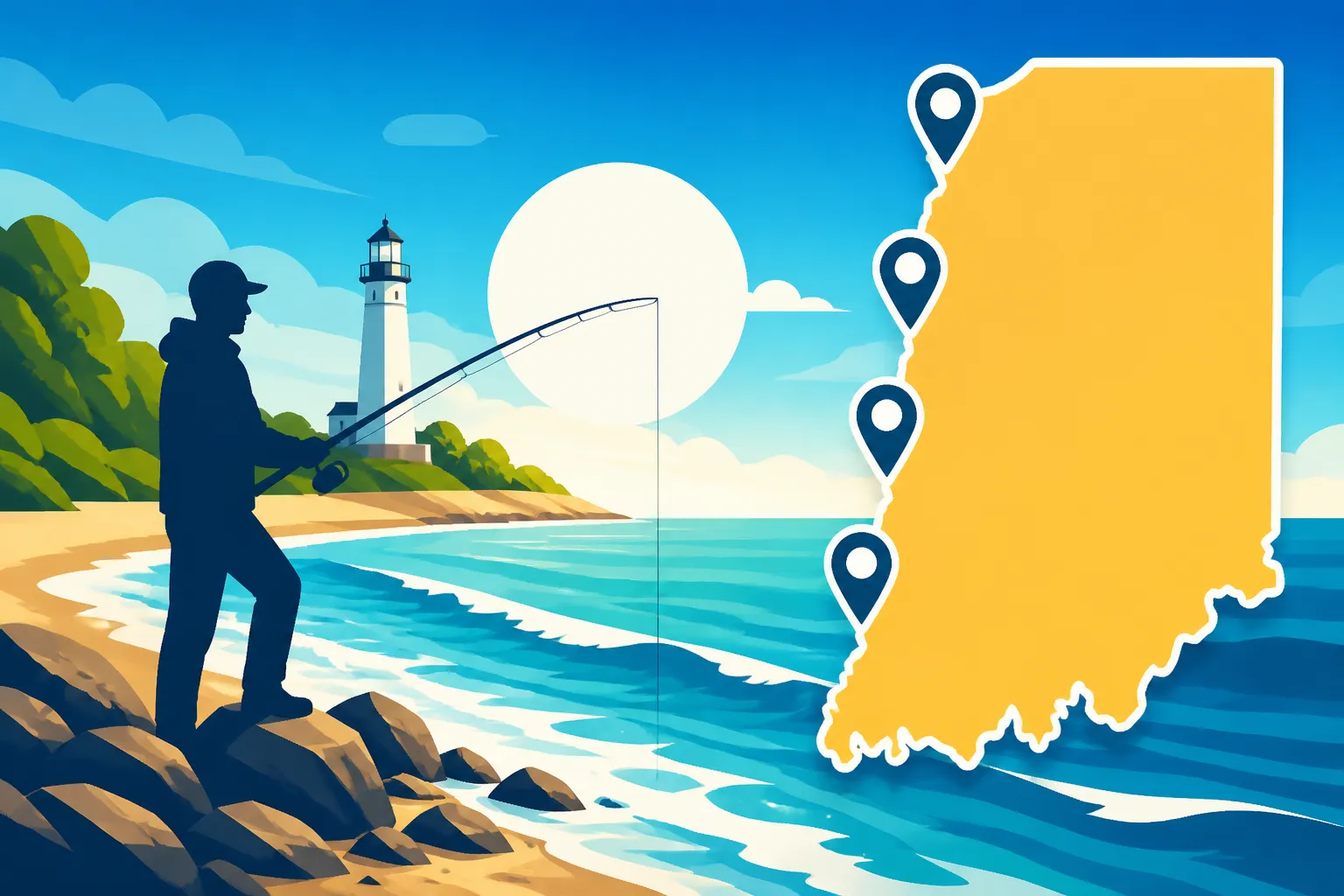
Indiana's Lake Michigan shoreline, though relatively short, is packed with fantastic spots for shore anglers. From bustling city piers to tranquil beach access points, there's a place for every preference. Let's explore some of the best places to cast your line without needing a boat.
Michigan City's Piers and Trail Creek
If there’s one place in Indiana that defines Lake Michigan shore fishing, it’s Michigan City. The iconic Michigan City East and West Piers are absolute magnets for anglers, especially during the spring and fall runs. These long structures push out into the lake, giving shore anglers access to deeper water where salmon, steelhead, and brown trout cruise. Imagine standing on the pier as the sun rises, casting out into the vastness of the lake, hoping for that tell-tale tug.
The East Pier, in particular, is a legendary spot for the Fall Salmon Run Access Points Along Indiana's Shoreline. Anglers often line up before dawn, eager to catch Chinook and Coho salmon as they make their way towards Trail Creek. The area around the mouth of Trail Creek itself is also excellent. You can fish from the riverwalk or various bank access points, targeting fish that are staging before heading upstream. During the run, you'll see folks using everything from casting spoons and spinners to drifting spawn sacs under bobbers. It's a social environment, with anglers often sharing tips and celebrating catches. For those specifically targeting these species, you'll want to read about the Best Salmon Fishing Spots on Lake Michigan in Indiana and Where to Catch Steelhead on Indiana's Lake Michigan Shoreline.
Portage Lakefront and Riverwalk Park
Moving west, Portage offers another fantastic shore fishing destination: Portage Lakefront and Riverwalk Park. This modern park is incredibly angler-friendly, boasting a long fishing pier and extensive riverwalk access along Burns Waterway. The pier here provides excellent opportunities to target coho salmon, brown trout, and even yellow perch during different seasons. What's particularly nice about this spot is the accessibility; it’s paved and offers comfortable fishing platforms, making it great for families or anglers who prefer a less rugged experience.
The Burns Waterway is another crucial entry point for migratory fish, similar to Trail Creek. As fish move from the main lake into the warmer, shallower confines of the waterway, they become more concentrated and accessible to shore anglers. It's not uncommon to see a mix of casting and float fishing techniques being used here, especially during peak migration periods. Whether you're targeting perch from the pier or actively pursuing a migrating salmon, this park offers a clean and well-maintained environment for a great day of fishing.
Indiana Dunes State Park and National Park
The vast stretches of Indiana Dunes State Park and the broader Indiana Dunes National Park offer a more natural, wilderness-like shore fishing experience. While you might not have long piers stretching into the lake, you gain access to miles of pristine beach, as well as the mouths of several smaller creeks and drainages that feed into Lake Michigan.
Fishing these areas often involves wading out a bit or long-distance casting from the beach. Species like brown trout, steelhead, and even the occasional salmon can be caught here, especially after strong west winds push baitfish closer to shore. The mouth of Burns Waterway is accessible from within the National Park as well, offering good opportunities where the current meets the lake. This kind of fishing often requires more mobility and a willingness to explore, but the reward can be solitude and the chance to land a trophy fish away from the crowds. Always be mindful of park regulations and posted fishing areas within both the State and National Parks. FishingBooker is a great resource if you're looking for local guides who might know the lesser-fished spots within the Dunes.
Hammond's Robertsdale Park and Jeorse Park Beach
Heading further west, near the Illinois border, Hammond provides excellent shore fishing options at Robertsdale Park and Jeorse Park Beach. These locations feature breakwaters, piers, and shoreline access that allow anglers to cast into productive waters. Robertsdale Park, in particular, offers a long fishing pier that extends into Lake Michigan, giving you a vantage point to reach deeper water and target a variety of species, including perch, smallmouth bass, and even the occasional salmon or trout that ventures this far west.
Jeorse Park Beach offers a more traditional beach fishing experience, but with the added benefit of nearby industrial structures and outfalls that can attract baitfish and, consequently, predatory species. The combination of varied bottom structure and proximity to deeper water makes these areas consistent producers. These spots are particularly convenient for anglers coming from the Chicago metropolitan area, making them popular choices for a quick fishing getaway. Remember that Lake Michigan Fishing Rules for Indiana Anglers can be a bit different than other state waters, so always double-check the latest regulations before you cast.
Essential Gear and Techniques for Indiana Shore Anglers
Success in Lake Michigan shore fishing often boils down to having the right gear and knowing how to use it effectively. Forget the ultralight panfish setup; you're dealing with powerful fish in big water.
Rods, Reels, and Line for Long Casting
When targeting salmon and steelhead from the shore, distance is your friend. You'll want a longer rod, typically between 8 to 10 feet, with a medium-heavy action. This length helps you cast further and also provides better leverage when fighting a strong fish from a fixed position on a pier or bank. Couple that with a sturdy spinning reel in the 3000-4000 series range, spooled with 10-15 lb test monofilament or fluorocarbon line, or even a braided line for its superior casting distance and sensitivity. Braided line in the 20-30 lb range, with a fluorocarbon leader of 10-15 lb, is a popular choice. The braided line gives you the power and sensitivity, while the fluorocarbon leader provides invisibility to wary fish and abrasion resistance. A good quality reel with a smooth drag system is non-negotiable; you'll need it to handle the powerful runs of a fresh salmon or steelhead.
Baits and Lures That Get Results
What you throw depends largely on the season and target species, but some tried-and-true options consistently produce along Indiana's Lake Michigan shore.
- Spoons: Casting spoons like Dardevles, Little Cleos, or K.O. Wobblers in silver, gold, or bright colors (chartreuse, orange) are excellent for covering water and mimicking baitfish. They're especially effective for salmon and steelhead.
- Spinners: In-line spinners, particularly those with brightly colored blades and dressed treble hooks, can be deadly for steelhead and brown trout, especially in river mouths.
- Spawn Sacs: During the salmon and steelhead runs, small mesh bags filled with cured salmon or trout eggs (spawn sacs) drifted under a bobber or fished on the bottom are incredibly effective. The natural scent and appearance are hard for fish to resist.
- Live Bait: Minnows can work for brown trout and yellow perch. Worms can also attract perch and other bottom dwellers.
- Jigs: Tipped with a minnow or soft plastic, heavier jigs can be effective for targeting walleye or even lake trout in deeper pier areas.
Experimentation is key, and observing what successful anglers around you are using can provide valuable clues. Don't be afraid to try different colors and retrieve speeds until you find what the fish are biting on that day. If you're planning for the specific challenge of Lake Michigan, our What to Bring for Indiana's Fall Salmon Run guide will provide a comprehensive checklist.
The Importance of a Good Landing Net
This might seem obvious, but it's worth emphasizing: if you're targeting big salmon and steelhead from a pier or elevated bank, a long-handled, sturdy landing net is absolutely essential. These fish are powerful, and trying to hoist a 10-20 pound fish out of the water by the line alone is a recipe for a lost fish and broken tackle. Look for a net with a rubberized or knotless mesh to protect the fish if you plan on releasing it. A net with an extendable handle will give you the reach you need to safely scoop up your catch, especially from taller piers like those in Michigan City. Many experienced anglers often have their net ready and extended before even making their first cast, knowing that when a big one hits, every second counts.
Timing Your Trip for Success
Knowing where to fish is only half the battle; knowing when to fish can dramatically increase your chances of success along the Lake Michigan coast. The dynamic nature of the lake means timing, weather, and water conditions play a huge role.
Best Seasons for Shore Fishing
While you can technically fish Lake Michigan year-round, certain seasons offer prime opportunities for shore anglers:
- Spring (March-May): This is fantastic for brown trout, coho salmon, and early steelhead runs. As the ice melts and water temperatures begin to rise, these fish move closer to shore, feeding aggressively on baitfish. The piers and river mouths are particularly productive during this period. The warmer runoff from rivers also draws fish in.
- Summer (June-August): Shore fishing can be tougher in summer as many salmon and trout move to deeper, cooler offshore waters. However, yellow perch fishing from piers and harbors can be excellent. Smallmouth bass can also be found near rocky areas and breakwalls. Evening and early morning are often the most productive times during the warmer months.
- Fall (September-November): This is arguably the best time for shore fishing on Lake Michigan, thanks to the legendary salmon and steelhead runs. Chinook and Coho salmon enter the rivers to spawn, and steelhead follow. The piers, river mouths (like Trail Creek and Burns Waterway), and even the open beaches become hot spots. Understanding How Water Temperature Triggers the Fall Salmon Push Toward Shore is key to maximizing your success.
- Winter (December-February): For the truly dedicated, winter can offer surprisingly good fishing for brown trout and steelhead, especially in the harbors and protected areas where the water remains open. Ice fishing is also popular in some protected embayments or smaller, calmer sections of the lake if conditions allow.
Checking Conditions: Weather and Water Levels
Unlike inland lakes, Lake Michigan's conditions can change rapidly and dramatically. Always check the weather forecast before heading out. Strong winds, especially from the north or west, can make fishing from piers dangerous due to crashing waves. However, sometimes these "blows" can also stir up baitfish and push predatory fish closer to shore, so it's a fine line.
Water clarity is another crucial factor. After heavy rains or strong winds, the water near shore can become muddy, which generally slows down the bite for sight-feeding fish like salmon and trout. Clearer water is usually preferred, but sometimes a slight stain can actually improve fishing by offering fish more cover. Pay attention to water temperatures too; subtle changes can trigger fish movements, especially during the spring and fall migrations. Many local bait shops or online forums can provide up-to-date reports on current conditions. You might even find a local guide through FishingBooker who can give you hyper-local insights into current conditions.
To summarize these fantastic opportunities, here's a quick reference table:
| Location | Primary Species | Best Season(s) | Key Features & Tips |
|---|---|---|---|
| Michigan City Piers & Trail Creek | Chinook, Coho, Steelhead, Brown Trout, Perch | Spring, Fall | Long piers for deep water access; Trail Creek mouth is a salmon/steelhead highway. Expect crowds during runs. |
| Portage Lakefront & Riverwalk Park | Coho, Brown Trout, Perch, Smallmouth Bass | Spring, Fall, Summer (perch) | Accessible pier and riverwalk on Burns Waterway. Good for families. |
| Indiana Dunes State/National Park | Brown Trout, Steelhead, occasional Salmon | Spring, Fall | Beach access, creek mouths. Best for mobile anglers willing to walk. Check park regulations. |
| Hammond's Robertsdale Park & Jeorse Park Beach | Perch, Smallmouth Bass, Salmon, Steelhead, Brown Trout | Spring, Fall, Summer (perch) | Long pier at Robertsdale; breakwalls and shoreline at Jeorse. Convenient to Chicago. |
Disclaimer
Fishing regulations in Indiana, especially for Lake Michigan, can change. Always consult the latest Indiana Department of Natural Resources (DNR) fishing guide before heading out to ensure you are compliant with all licensing, bag, and size limits.