Coho Salmon Run Timing in Indiana
One of the most thrilling times to be an angler in Indiana is when the Coho salmon decide it's time to make their move. For many, figuring out exactly when these silvery powerhouses will start their annual run up Lake Michigan and its tributaries can feel like trying to solve a cryptic puzzle, leaving you wondering if you've missed the boat entirely. This guide will take all the guesswork out of Coho salmon run timing in Indiana, helping you predict, prepare for, and ultimately participate in this exciting seasonal fishery.
Understanding the Annual Coho Salmon Run in Indiana
The Coho salmon run is a truly spectacular event that draws anglers from all over the state to Indiana's Lake Michigan shoreline. These fish, originally stocked in the Great Lakes, embark on an incredible journey from the vastness of Lake Michigan into shallower waters and eventually up tributary streams to spawn. This isn't a precise, calendar-driven event, but rather a dynamic process influenced by a range of environmental cues.
The Prime Window: When to Expect Coho Salmon
While Mother Nature always has the final say, anglers in Indiana can generally expect the Coho salmon run to kick off in late summer and continue well into the fall. The earliest signs of staging Coho can sometimes appear around late August or early September in the deeper waters just off the Indiana shore. However, the most consistent and exciting action for shore anglers and those targeting stream mouths typically begins in mid-September and can extend through October, often peaking around the second or third week of October.
It’s not uncommon to hear whispers of a few early fish showing up near pier heads or river mouths even in late August if water temperatures drop sufficiently. These are usually the pioneering scouts, testing the waters before the main migration. The bulk of the run, when the real numbers of Coho start moving in, really gets going once consistent cooler weather sets in. Think crisp autumn mornings, falling leaves, and that unmistakable chill in the air – that's when you should be thinking Coho.
Why Fall is the Key Season for Coho in Indiana
Fall isn't just a pretty season for leaf-peeping; it's absolutely critical for the Coho salmon's life cycle. As daylight hours shorten and air temperatures cool, the surface waters of Lake Michigan begin to drop. This cooling trend triggers a biological imperative in the Coho: it's time to spawn. They transition from their open-water feeding grounds to staging areas closer to shore, particularly near the mouths of rivers and streams like Trail Creek in Michigan City, Burns Ditch, or the Little Calumet River.
During this period, Coho salmon are often at their most vibrant, displaying stunning silver flanks with darker backs, and the males developing a distinct hooked jaw (kype). They're driven by instinct, focusing on their reproductive journey. This makes them more aggressive towards baits and lures as they move into these shallower, more confined spaces, often trying to clear out any perceived competition. Understanding this natural cycle is key to predicting their movements and being in the right place at the right time. For a deeper dive into the seasonal movements of these fish, check out our guide on the Lake Michigan Salmon and Steelhead Run Guide in Indiana.
Key Environmental Factors Influencing the Coho Run
The timing and intensity of the Coho salmon run are highly sensitive to environmental conditions. A sudden cold front, a heavy rain, or even subtle shifts in lake currents can drastically change the fishing outlook from one day to the next. Successful Coho anglers aren't just good at casting; they're also keen observers of weather patterns and water conditions.
The Critical Role of Water Temperature
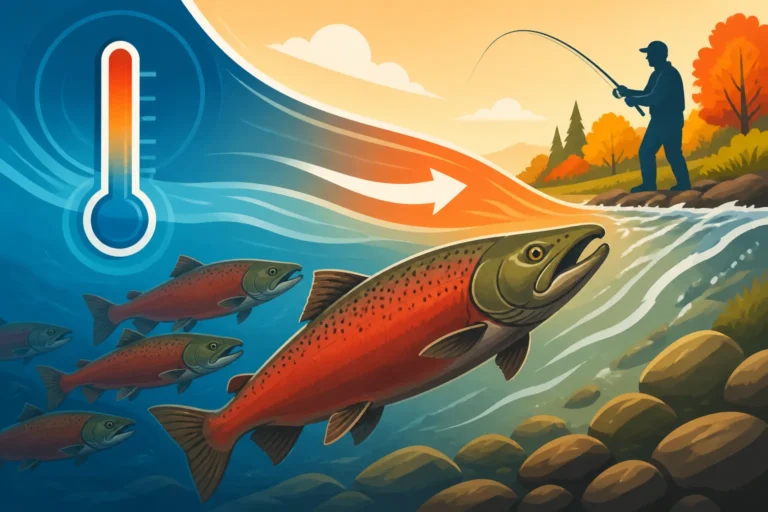
Water temperature is arguably the single most important factor dictating when Coho salmon will move from the main lake into nearshore areas and up tributaries. Coho prefer cooler water, typically in the mid-50s Fahrenheit range (around 50-58°F or 10-14°C) for their migration and spawning activities.
As Lake Michigan's vast waters gradually cool down through September, the Coho feel the urge to move. A prolonged period of warm weather can delay the run, keeping the fish scattered in deeper, cooler water. Conversely, an early cold snap in late August or early September can accelerate things, pushing fish towards shore earlier than anticipated. This is especially true for the tributary streams; if river temperatures remain too warm, Coho will hold in the cooler lake waters at the river mouth, waiting for the optimal temperature to venture upstream. Anglers often keep a close eye on charts and weather apps that provide surface water temperatures for Lake Michigan to get an edge. Our article on How Water Temperature Triggers the Fall Salmon Push Toward Shore offers more specific insights.
Impact of Rainfall and Stream Flow
Rainfall plays a significant, albeit sometimes secondary, role in the Coho run, particularly for those looking to fish tributary streams. A good, heavy rainstorm after a dry spell can cause rivers like Trail Creek or the Little Calumet to rise and become slightly stained. This increase in flow and turbidity acts like a green light for salmon waiting at the mouth.
The fresh influx of cooler water, combined with the higher water levels, makes it easier for Coho to navigate upstream over obstacles and provides them with a sense of security from predators. Without sufficient rainfall, stream levels can remain low and clear, making fish hesitant to enter or move far upstream. They'll often "stack up" at the river mouth, providing excellent fishing opportunities for shore anglers. However, too much rain can blow out a stream, making the water muddy and unfishable for a few days until it clears. It’s a delicate balance, and knowing how to read the water after a storm is an invaluable skill for any fall angler.
Lake Michigan Currents and Coho Movement
While often overlooked, large-scale current patterns within Lake Michigan can also influence where and when Coho concentrate along the Indiana shoreline. Strong winds, especially out of the west or north, can create seiches and strong currents that push warmer surface water away from shore (upwelling) or bring it closer (downwelling). These shifts in thermal layers can directly impact where Coho are holding.
A sustained westerly wind, for example, might create an upwelling near the Indiana shore, bringing colder, deeper water closer to the surface. This can concentrate baitfish and, subsequently, the salmon, making them more accessible to shore and pier anglers. Conversely, winds pushing warmer water into nearshore areas might disperse fish as they seek cooler depths. These currents also affect water clarity, which can dictate lure choice and presentation. Understanding the localized effects of currents, especially near major structures like the Port of Indiana or public piers, can be a game-changer. For a detailed guide on what to bring, consider our article What to Bring for Indiana's Fall Salmon Run.
Best Strategies for Timing Your Coho Salmon Trip
Given the variable nature of the Coho run, a flexible and informed approach is essential. Don't just pick a date on the calendar; be prepared to adapt.
Monitoring Local Conditions and Reports
Staying connected to the local fishing community and reliable sources of information is paramount for timing your Coho trip perfectly.
- Online Forums and Social Media: Many regional fishing forums and Facebook groups dedicated to Lake Michigan angling provide real-time updates. Anglers are often eager to share their successes (and frustrations), offering invaluable insights into current conditions, what's biting, and where. Just be prepared to sort through some of the chatter!
- Local Bait and Tackle Shops: These are goldmines of information. Shop owners and employees are often on the water themselves or in constant communication with anglers. They know the current water temperatures, clarity, and where fish are being caught. A quick call or a visit to a place like Salmon Stop in Michigan City or other shops along the lakeshore can provide the most accurate, up-to-the-minute reports. Many of these shops also carry the specific baits and lures that are working at that moment, often at competitive prices, similar to what you might find on Amazon.
- Indiana DNR Website: While not real-time, the Indiana Department of Natural Resources (DNR) website can offer historical data, stocking reports, and general seasonal forecasts that can help you plan. They might also post alerts regarding water levels or special regulations.
- Weather and Water Temperature Apps: As mentioned, water temperature is key. Apps that provide real-time Lake Michigan surface temps, wind forecasts, and rainfall predictions are essential tools. Understanding upcoming weather fronts can help you anticipate how fish might react.
By compiling information from these various sources, you can build a comprehensive picture of the current run conditions and make informed decisions about when and where to fish. This proactive approach significantly increases your chances of hitting the peak of the Coho action.
Where to Intercept Early, Mid, and Late Run Coho
The best place to find Coho salmon changes throughout the run. Knowing these patterns will help you position yourself for success.
- Early Run (Late August – Mid-September): During the earliest phases, Coho are often still scattered in the main lake, but they'll start to congregate in deeper water near the mouths of tributaries or along prominent points and reefs. This is often a boat fishery, with anglers trolling spoons or flies at specific depths. Shore anglers might pick up a few fish near major pier heads or breakwalls if the water cools enough, especially during low-light hours. Look for depths around 20-60 feet, often focusing on temperature breaks. Our guide on Best Salmon Fishing Spots on Lake Michigan in Indiana can give you ideas.
- Mid-Run (Mid-September – Late October): This is typically the sweet spot for many anglers. The main body of Coho will be staging closer to shore, particularly near the mouths of their spawning tributaries. This is when pier fishing and shore casting near river mouths can be incredibly productive. The fish are actively moving in, providing opportunities for anglers using casting spoons, crankbaits, or even drifting spawn under a bobber. On Lake Michigan, specifically near areas like Michigan City or Portage, you’ll find boats trolling closer to shore, sometimes in as little as 10-20 feet of water.
- Late Run (Late October – November): As the season progresses and water temperatures drop further, the Coho will push further up the tributary streams to complete their spawning. While their meat quality might decline after prolonged time in freshwater, they still offer a powerful fight. Fishing these smaller waters requires a different approach, often involving drift fishing with spawn sacks, flies, or small jigs. Shore access points along rivers become key. However, by this time, many anglers start to shift their focus to the incoming Steelhead, which often follow the salmon runs into the rivers. You can learn more about identifying these fish in Coho Salmon Identification: Spotting the Fall Run.
| Coho Run Stage | Typical Timing in Indiana | Key Locations | Water Temperature (Approx.) | Prime Fishing Methods | Notes |
|---|---|---|---|---|---|
| Early Staging | Late August – Mid-September | Deeper lake waters, offshore structure, pier heads | 60-65°F | Trolling (spoons, flies) | Boat-centric; first signs of fish near shore. |
| Peak Migration | Mid-September – Late October | River mouths, nearshore structure, pier heads | 50-58°F | Casting (spoons, crankbaits), Drifting | High activity, good for shore/pier anglers. |
| Late Run/Spawning | Late October – November | Tributary rivers and streams (e.g., Trail Creek) | 40-50°F | Drift fishing (spawn, flies, jigs) | Fish focus on spawning; quality may decline. |
Gear and Tactics for Peak Coho Season
Once you've nailed down the timing and location, having the right gear and knowing how to use it is the next step to success. Coho salmon are strong, acrobatic fighters, and your tackle needs to be up to the task.
Essential Tackle for Coho Salmon
Fishing for Coho salmon can range from casting from a pier to trolling offshore or drifting bait in a river. Each scenario might call for slightly different gear, but some essentials remain constant.
- Rods and Reels: For casting from shore or piers, a medium-heavy spinning rod, 8-10 feet in length, paired with a reliable spinning reel spooled with 10-15 lb monofilament or braided line is a great all-around choice. The longer rod helps with casting distance and fighting larger fish from an elevated position. For boat anglers, trolling rods are shorter and stiffer, often used with line-counter reels. When buying a new setup, you can find a wide range of options on platforms like Amazon that suit different budgets and fishing styles.
- Line: Whether you choose monofilament or braid, make sure it’s fresh and strong. Braided line offers excellent sensitivity and casting distance, but you’ll want a fluorocarbon leader (15-20 lb test) for abrasion resistance and invisibility. Monofilament has more stretch, which can be forgiving when a Coho makes a sudden run or jump.
- Lures: Coho love flashy, erratic presentations.
- Spoons: Classic spoons like Little Cleos, Dardevles, or Michigan Stingers are incredibly effective. Popular colors include silver, blue/silver, orange, and chartreuse. Sizes vary, but 2/5 oz to 3/4 oz are common for casting.
- Crankbaits: Jointed or lipped crankbaits that imitate baitfish can also draw strikes, especially in stained water. Rapala and Storm brands offer excellent options.
- Spinners: In rivers, larger inline spinners (Mepps, Blue Fox) can be very effective.
- Bait: While lures are often productive, natural bait can be irresistible.
- Spawn Sacks: Cured salmon or steelhead eggs tied into small mesh bags are highly effective, especially in tributary streams.
- Sucker Spawn: Artificial egg imitations are also popular.
- Shrimp: Raw shrimp, often tipped on a jig, can entice strikes.
- Other Essentials: Don't forget a large, long-handled landing net (Coho are too big to hand-land safely), needle-nose pliers for hook removal, and a cooler with ice to preserve your catch. A good pair of polarized sunglasses will help you spot fish in the water, a great addition to your gear that can be easily found on Amazon.
Effective Fishing Techniques During the Run
Knowing what to use is only half the battle; knowing how to use it is the other.
- Casting and Retrieving: When fishing from piers or shorelines, casting spoons or crankbaits and retrieving them with a varied speed and occasional jerks can mimic a wounded baitfish, triggering aggressive strikes. Experiment with depth by letting your lure sink for a few seconds before starting your retrieve. During low light conditions, such as dawn and dusk, these techniques are often most effective, as detailed in Best Time of Day to Catch Salmon on Lake Michigan in Indiana.
- Drift Fishing with Bait: In tributary streams, drift fishing spawn sacks or small jigs under a float (bobber) is a highly effective method. The key is to get your bait to drift naturally with the current, presenting it directly to the fish that are holding in runs and pools. Use just enough weight to get your bait down to the fish without snagging constantly.
- Trolling: For boat anglers, trolling spoons, flies, or crankbaits behind planer boards or downriggers is the primary method on Lake Michigan. This allows you to cover a lot of water and present multiple baits at precise depths. Varying your boat speed and making S-turns can impart an enticing action to your lures. If you're new to this, there are many beginner-friendly trolling setups and accessories available on Amazon that can get you started without breaking the bank. For more advanced trolling methods, consider learning about Trolling Techniques for Salmon and Steelhead.
- Jigging: While less common than casting or drifting for Coho, vertical jigging with heavier spoons or blade baits can be effective when fish are concentrated in deeper holes, particularly in larger river sections or deep harbor areas. This technique is often more associated with other species but can sometimes surprise you with a Coho strike.
Remember, Coho salmon can be finicky. What works one day might not work the next. Don't be afraid to experiment with different lures, colors, depths, and retrieve speeds until you find what the fish are keying in on. Adaptability is the hallmark of a successful salmon angler.
Disclaimer
Fishing regulations, license requirements, and fish stocking programs can change. Always consult the latest Indiana Department of Natural Resources (DNR) rules and regulations before heading out on the water. This guide is for informational purposes only and should not be considered a substitute for official DNR publications.