What Does a Coho Salmon Look Like During Spawning Season?
Ever been out on the St. Joseph River during the crisp fall run, seeing those powerful, torpedo-shaped fish battling their way upstream, and wondered exactly what you're looking at? Identifying Coho salmon, especially when they're transitioning for spawning, can be a real head-scratcher. The physical changes they undergo are pretty dramatic, and it's easy to confuse them with other salmonid species that share our waters. This guide will help you understand the distinct transformations Coho salmon exhibit as they prepare for and engage in their final, monumental act of reproduction in Indiana's tributary streams.
The Dramatic Transformation: Overall Appearance Changes
When Coho salmon first enter freshwater from Lake Michigan to begin their spawning migration, they are still largely silver, sleek, and vibrant, much like they appear in their open lake phase. This initial silvery sheen is designed to help them blend in with the open water, protecting them from predators. However, as they move further upstream, deeper into the freshwater rivers and streams, their bodies begin an astonishing metamorphosis. This isn't just a subtle shift; it's a complete change in coloration and physical structure, signaling their readiness to spawn.
Color Changes from Silver to Reddish Hues
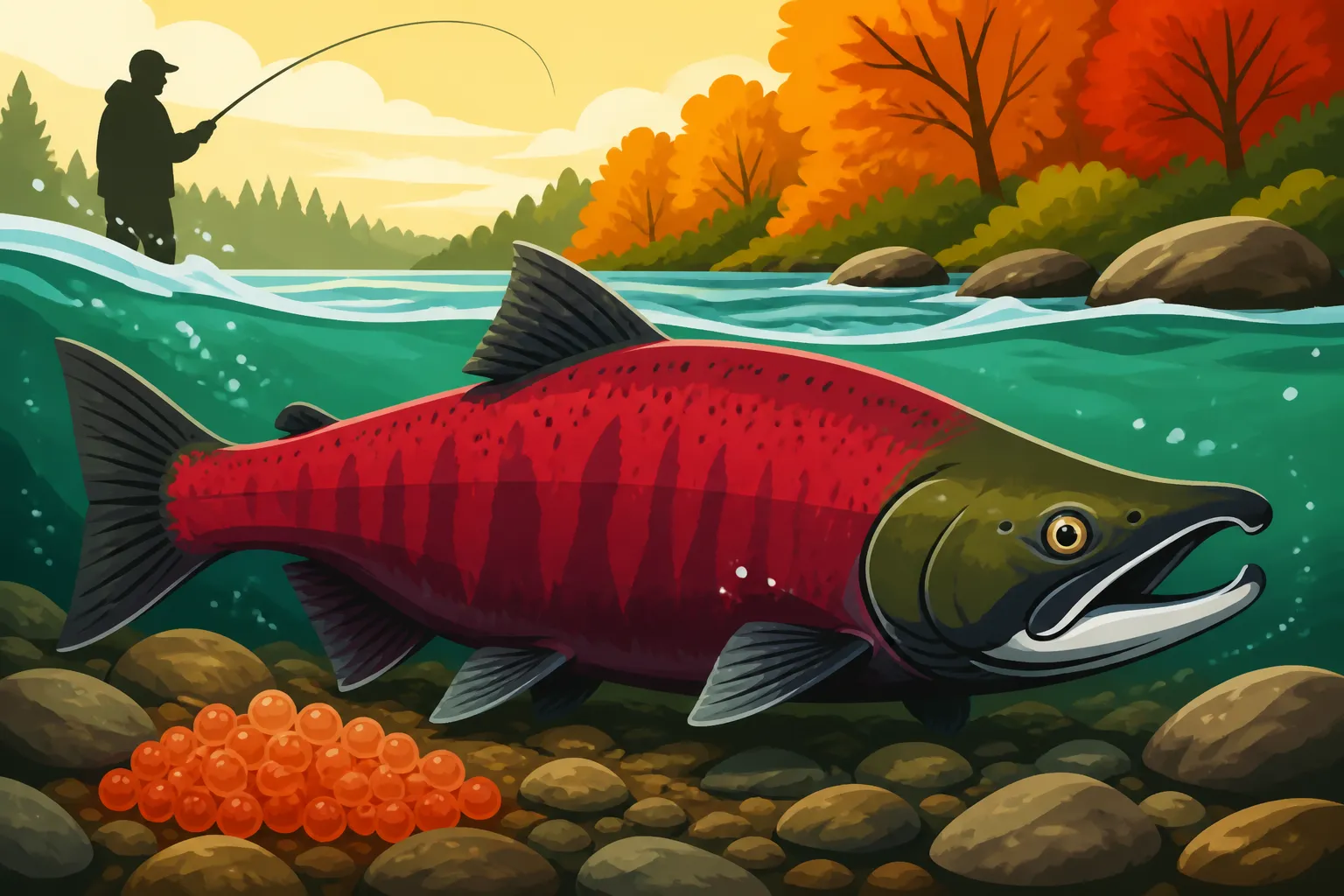
The most striking change you'll notice in spawning Coho salmon is their shift in color. That brilliant, iridescent silver from their lake life fades rapidly. In its place, their sides develop a deep, rusty red or maroon hue. This vibrant coloration isn't just for show; it's a key part of their spawning display, particularly for the males. Their backs darken considerably, often turning a mottled olive-green, brownish, or even black, while their bellies might retain some of their lighter, whitish, or grayish tones, though often dulled. This transformation is driven by hormones and environmental cues, like changes in light and water temperature, and it happens quite quickly once they commit to the freshwater journey. It's truly a sight to behold, these fish that were once purely silver, now glowing with fiery autumnal colors.
You might even see a range of these colors depending on how far into the spawning process the fish is. Some might be just starting to turn, showing a blush of red, while others will be fully decked out in their deep, spawning finery. The exact shade can also be influenced by the water clarity and the streambed they're on, with fish in clear, gravel-bottomed streams often appearing more intensely colored than those in murkier waters. Observing them can be tough from a distance, so a good pair of polarized sunglasses, perhaps one you picked up on Amazon, can really help cut through the glare and see those vibrant colors more clearly.
Skin Thickening and Mucus Production
Beyond the dramatic color shift, spawning Coho salmon undergo changes to their skin itself. Their skin thickens noticeably, becoming tougher and more leathery. This isn't just an aesthetic change; it's a protective measure. As they navigate rocky riverbeds, battle strong currents, and engage in the physically demanding process of digging redds (nests) and defending territory, their bodies take a beating. The thickened skin provides a natural armor against abrasions and injuries.
In conjunction with this, their bodies produce a heavier layer of protective mucus. While this might make them feel a bit slimy if you handle one (always gently, please!), it serves a vital function. This extra mucus layer helps to protect them from fungal infections and parasites, which can be more prevalent in the freshwater environment, especially as their immune systems become somewhat compromised during the rigorous spawning period. This also contributes to a slightly duller, less reflective appearance compared to the sleek, almost polished look of a fresh-run fish.
Telling Males and Females Apart During the Spawn
While both male and female Coho salmon undergo significant changes during spawning, the males, in particular, exhibit some truly remarkable and exaggerated transformations. It's often easier to tell the sexes apart once they've fully transitioned into their spawning forms, though individual variations still occur. Understanding these differences can help you appreciate the distinct roles each plays in the continuation of the species.
Male Coho: The Development of the Kype and Aggressive Appearance
Male Coho salmon transform into strikingly aggressive-looking fish during spawning. The most iconic change is the development of a pronounced "kype." This is a dramatic, hook-like upward curve of their upper jaw, and a corresponding downward curve of their lower jaw, which becomes cartilaginous and strong. This formidable structure isn't just for show; it's used in territorial disputes with other males, helping them to assert dominance and compete for access to females. The kype can become quite large and noticeable, making male Coho unmistakable during this season.
Their bodies also become deeper and more laterally compressed, giving them a more robust, almost stocky appearance compared to their sleeker, torpedo-like form in the lake. Their teeth become more prominent and sharply pointed, another adaptation for territorial battles. Combine this with their deep red sides, dark backs, and sometimes mottled, scarred appearance from combat, and you have a truly impressive, almost primeval-looking fish. They're driven by an intense biological imperative, and their entire physical being reflects that relentless focus. If you're fishing the Fall Salmon Run Timing on Lake Michigan in Indiana or Fishing the St. Joseph River in Indiana, you'll definitely notice these distinct characteristics.
Female Coho: Broader Body and More Subtle Changes
Female Coho salmon also change color, developing the same reddish-maroon sides and darker backs as the males, though often their colors might be slightly less intense. However, their physical structural changes are more subtle. They do not develop the dramatic kype that males do. Their jaws remain relatively straight, though they might become a bit more pronounced than their non-spawning form.
The most notable physical change in females is a broadening and deepening of their abdominal region as they become gravid, meaning their bodies are swollen with eggs. This can make them appear considerably fatter or "round" through the midsection. Their primary focus is on carrying and then depositing their precious cargo of eggs, and their bodies are optimized for this task. While they might show some battle scars from their journey upstream or from males attempting to spawn with them, their overall appearance remains less overtly aggressive than the males. If you're trying to differentiate, look for the broader, egg-filled belly on a female versus the pronounced kype and more streamlined, battle-ready body of a male.
Environmental Influences on Spawning Coho Coloration
The stunning colors and dramatic physical changes of spawning Coho salmon aren't just an internal clock ticking; they're also heavily influenced by the environment around them. Water conditions, light, and the duration of their freshwater journey all play a significant role in how these fish present themselves during their final life stage. It's a testament to nature's adaptability and the intricate connection between species and their habitat.
Water Clarity and Substrate Color
The clarity of the water and the color of the streambed (the substrate) can profoundly affect the vibrancy and specific shade of a spawning Coho salmon's coloration. In very clear, gravel-bottomed streams, where light penetrates deeply and the fish are more visible, their colors tend to be more intense and striking. The reds might appear brighter, and the darker olive-greens on their backs might be more distinct. This is partly because their coloration serves as a visual signal during spawning, and in clear water, those signals need to be strong.
Conversely, in murkier water, or streams with dark, silty bottoms, the fish might appear duller, almost muted. Their colors might not "pop" as much, blending in more with their surroundings. This is a form of camouflage, even during spawning, helping them avoid predation from eagles, ospreys, or even bears that might be lurking along the banks. Think of it as nature's subtle adjustment for survival; while the primary drive is to spawn, staying alive long enough to complete the act is still crucial.
Duration of Freshwater Residency
The longer a Coho salmon remains in freshwater, the more pronounced its spawning coloration and physical changes tend to become. When they first enter the rivers from Lake Michigan, as discussed, they're still quite silver. But with each day spent battling upstream against the current, expending energy, and absorbing the freshwater environment, their transformation accelerates. This isn't just about time; it's about the physiological stress and hormonal shifts that occur during this arduous journey.
Fish that are observed closer to the mouth of a river might be in an earlier stage of transformation, perhaps still showing some silvery flanks with a blush of red. Those found further upstream, closer to actual spawning beds, will typically be in their full spawning regalia, with deep reds, dark backs, and the male's prominent kype fully developed. This progression in appearance also means that anglers should be mindful of the fragility of these fish. They are at the end of their life cycle, focused solely on reproduction, and handling them with extreme care, if at all, is paramount. Knowing when to expect them can be key; understanding Coho Salmon Run Timing in Indiana is essential.
Distinguishing Spawning Coho from Other Salmonids
In Indiana's fall waters, Coho salmon aren't the only anadromous fish making their way upstream. Chinook salmon, steelhead (rainbow trout), and even brown trout can be present, and during their spawning phases, they too undergo color and shape changes that can make identification tricky. Knowing the subtle (and sometimes not-so-subtle) differences is key to proper identification, especially since regulations can vary by species.
Coho vs. Chinook Salmon
One of the most common identification challenges is telling a spawning Coho salmon from a spawning Chinook salmon. Both are powerful, large fish, and both turn dark with reddish or brownish hues. However, there are some reliable distinctions.
| Feature | Spawning Coho Salmon | Spawning Chinook Salmon |
|---|---|---|
| Coloration | Sides become distinctly rusty red/maroon; back dark. | Often bronze, copper, or dark olive; less vibrant red. |
| Mouth/Gums | Mouth/gums are typically dark (black) with a white gum line. | Mouth/gums are entirely black. |
| Spots on Tail | Spots primarily on the upper lobe of the caudal fin (tail). | Spots cover both lobes of the caudal fin (tail). |
| Jaw (Males) | Pronounced kype, but often less massive than Chinook. | Extremely large, hooked kype; powerful jaw structure. |
| Body Shape | More laterally compressed, "torpedo" shape. | More robust, "football" shaped body. |
You can often observe the mouth and gum color by carefully looking at the underside of their jaw as they swim or if you get a glimpse of them jumping. The spotting pattern on the tail fin is a really reliable indicator if you can get a clear view. For more details on this, you might find Chinook Salmon vs Coho Salmon: Key Differences for Anglers particularly helpful.
Coho vs. Steelhead (Rainbow Trout) and Brown Trout
Distinguishing Coho from steelhead (which are migratory rainbow trout) or brown trout during spawning season can also be challenging, as all three can exhibit reddish colors. However, several key features set them apart.
Steelhead, even during spawning, tend to retain more of their trout-like qualities. While they can develop a deep pink or reddish stripe along their sides and a darker back, they rarely achieve the intense, uniform rusty red of a spawning Coho. Their bodies are typically sleeker, and most importantly, male steelhead do not develop the pronounced kype that Coho males do. Their mouths remain relatively straight, though they may become somewhat elongated. Additionally, steelhead usually have more numerous and smaller spots, often extending all the way down to their tail. If you want to dive deeper into how to tell them apart, checking out Steelhead vs Rainbow Trout: What Sets Them Apart is a great resource.
Brown trout, on the other hand, often have a more mottled, brownish, or golden hue even when spawning. While they can develop some reddish spots surrounded by light halos, their overall body color typically doesn't shift to the deep, uniform maroon of a Coho. Their adipose fin (the small, fleshy fin near the tail) often has an orange border, a feature not typically seen on Coho salmon. Their jaws, while powerful, also lack the dramatic kype of a male Coho. It really comes down to observing those fine details in color, jaw structure, and spot patterns.
Disclaimer
This article is for general informational purposes only and does not constitute professional advice. Laws, prices and regulations vary by location and change over time. Consult a qualified professional for guidance on your specific situation.