How Big Do Muskellunge Get in Indiana Waters?
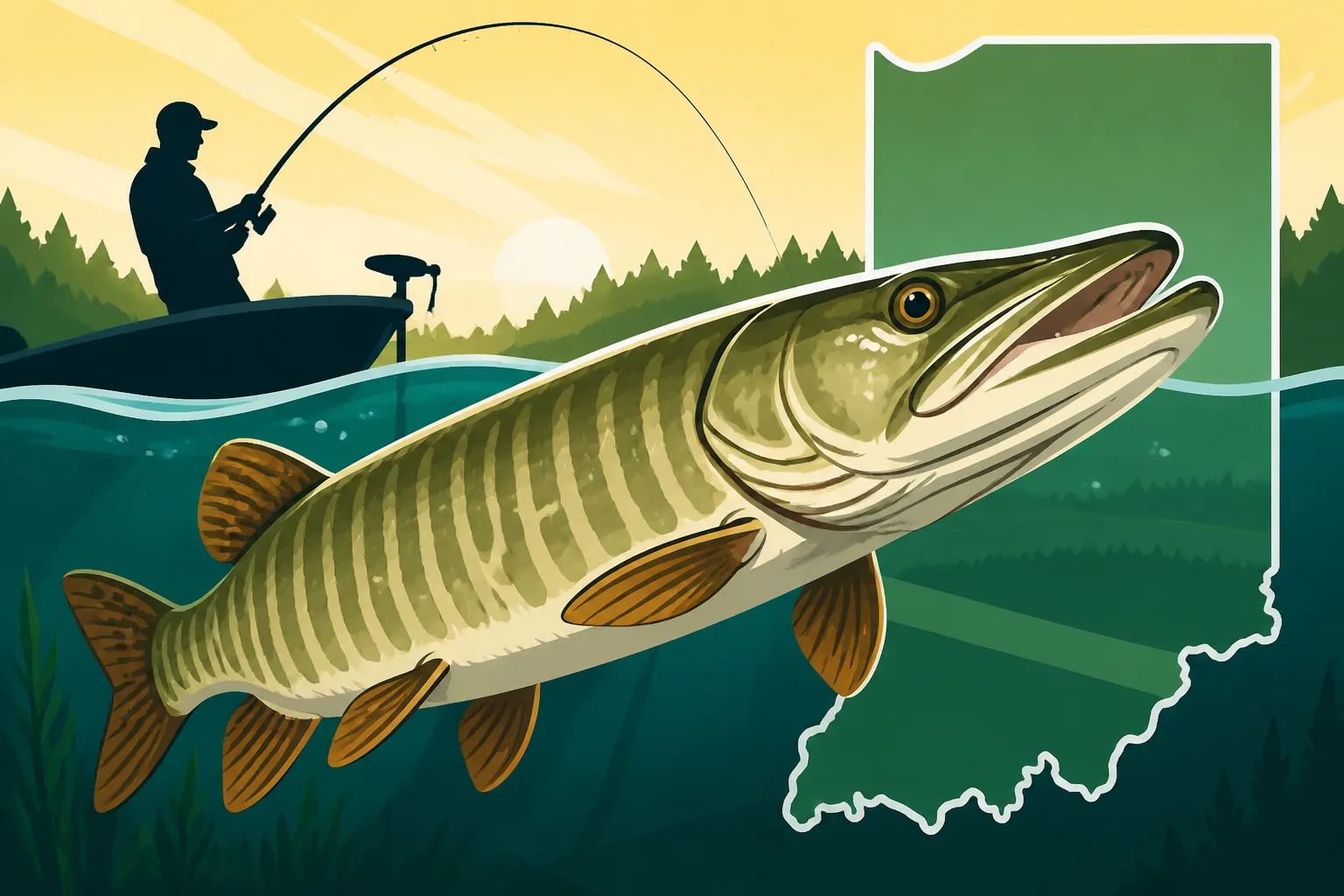
The allure of the muskellunge, often called "the fish of 10,000 casts," is undeniable. For anglers in Indiana, the dream of landing one of these formidable freshwater predators is a powerful motivator. But a common question that often arises, especially for those new to muskie fishing or visiting our beautiful state, is "just how big do these muskie actually get in Indiana waters?" It's a valid curiosity, driven by the species' legendary status and the sheer challenge they present. This guide will take a deep dive into the typical sizes, trophy potential, and state records for muskellunge in Indiana, helping you set realistic expectations and understand what it takes to pursue these magnificent fish.
Understanding Muskellunge Growth in Hoosier Waters
Muskellunge, or muskie as they are affectionately known, are the apex predators of many of Indiana's lakes and rivers. Their impressive size and fighting spirit make them a highly sought-after sportfish. However, like any species, their growth is influenced by a myriad of factors, and while the dream of a true giant is always present, it's helpful to understand the realistic size ranges you might encounter.
Average vs. Trophy Size Expectations in Indiana
When you're out on the water in Indiana, a muskie of any size is a triumph, given how elusive they can be. Most anglers consider a muskie between 30 and 40 inches a respectable catch, representing a significant challenge and a memorable experience. These are the fish you'll encounter with more regularity if you put in the time and effort. Many seasoned muskie hunters will tell you that landing a fish in this range is a fantastic day.
However, the term "trophy" muskie pushes into a different league altogether. In Indiana, a muskie generally enters "trophy" status once it hits the 45-inch mark. Fish that break the 50-inch barrier are truly exceptional, often representing years, if not decades, of growth. These are the monsters that haunt anglers' dreams and inspire endless hours on the water. While not an everyday occurrence, Indiana's waters certainly hold the potential for these giants. The ultimate benchmark, of course, is the state record, which represents the pinnacle of muskie size achieved in our state's fisheries. Setting your expectations between a solid 30-inch fish and the occasional 45-inch-plus lunker is a good mental framework for muskie fishing here.
Factors Influencing Muskie Size and Lifespan
The size a muskie can attain is not simply a matter of time; it's a complex interplay of several environmental and biological factors. Understanding these elements can give you insight into why some lakes produce bigger fish than others.
Firstly, forage availability is paramount. Muskie are voracious eaters, and a robust population of their preferred prey – typically suckers, ciscoes (in certain glacial lakes), larger panfish, and even smaller game fish – means they can grow faster and reach larger sizes. Lakes with a healthy, diverse baitfish population often yield bigger, healthier muskie. Think of it like a growth spurt for a teenager who eats well; the more quality food available, the faster and bigger they grow.
Secondly, water quality and habitat play a critical role. Muskie thrive in clear, cool, well-oxygenated water with ample submerged structure like weed beds, fallen timber, or rock piles. This habitat provides ambush points for hunting and refuge from environmental stressors. Lakes that maintain consistent water quality, especially through warmer months, allow muskie to sustain their metabolism and continue growing. Poor water quality or habitat degradation can stunt growth or even lead to fish mortality.
Then there's the element of genetics. While harder for an angler to observe directly, certain strains of muskie might simply be predisposed to grow larger and live longer than others. Stocking programs often consider the genetic background of the muskie introduced into our waters to ensure a healthy and robust fishery.
Finally, fishing pressure and harvest rates significantly impact the presence of trophy-sized fish. Muskie are slow-growing and long-lived, which makes them particularly vulnerable. Catch-and-release practices are absolutely vital for maintaining and improving trophy muskie fisheries. When anglers release these large fish unharmed, they ensure these giants can continue to grow, reproduce, and provide future angling opportunities. A muskie can live for 15 to 30 years, giving them plenty of time to pack on the pounds and inches, provided they survive the angling encounter and natural pressures. These are not fish that rebound quickly from heavy harvest, so responsible angling is key.
Indiana's Premier Lakes for Giant Muskellunge
Indiana may not be as widely known for muskie as some other states, but we absolutely have phenomenal fisheries capable of producing true giants. Many of these waters are nestled in the northern part of the state, benefiting from unique geological formations.
The Glacial Lakes: A Northern Indiana Hotbed
The crown jewel of Indiana's muskie fishing lies within its "glacial lakes" district, primarily concentrated in the northeastern counties. These lakes, formed by receding glaciers thousands of years ago, offer the ideal conditions for muskie to thrive and grow to impressive sizes. Lakes like Webster, Tippecanoe, the Barbee chain, James, and Wawasee are prime examples of this unique ecosystem.
What makes these deep, clear, and often cold-water lakes so special for muskie? They typically boast excellent water quality, which supports a rich food chain. Crucially, many of these lakes contain populations of ciscoes (also known as lake herring), a highly caloric and preferred prey species for muskie. This abundant, high-energy forage allows muskie to grow faster and achieve larger sizes than they might in other environments. The natural depths and intricate structures of these lakes provide ample habitat for muskie to patrol and ambush their prey. For a deeper dive into these unique waters, check out Indiana's Glacial Lake District: Home to Muskie, Pike, and Walleye.
Indiana's Department of Natural Resources (DNR) has a long-standing history of managing and stocking these lakes specifically for muskie, enhancing their potential for trophy fish. These efforts, combined with responsible angling, have cemented these glacial lakes as the state's top destinations for muskie enthusiasts.
Notable Muskie Fisheries and Their Potential
While many glacial lakes offer muskie opportunities, a few consistently stand out for their ability to produce truly notable fish. These are the lakes where muskie anglers often focus their efforts, knowing the potential for a personal best is always on the line.
Lake Webster, located in Kosciusko County, is arguably Indiana's most renowned muskie fishery. It's known for its consistent action and the very real chance of hooking into a fish over 40 inches. Webster is a relatively deep lake with good forage, and it has a dedicated following of muskie anglers. The sustained stocking efforts here have made it a reliable producer of large fish year after year.
Lake Wawasee, Indiana's largest natural lake, also in Kosciusko County, offers a vast and diverse habitat for muskie. Its expansive waters and varied structure provide plenty of room for muskie to roam and grow. While Wawasee can be a bit more challenging to navigate due to its size and recreational boat traffic, the rewards can be immense. Anglers who learn its patterns often find truly exceptional fish. If you want to know more about this impressive body of water, read Lake Wawasee: Indiana's Largest Natural Lake and Its Fish.
And then there's James Lake, part of the interconnected James Chain in Steuben County. James Lake holds a special place in Indiana muskie lore, as it was the lake that produced the current state record muskellunge. This historical catch underscores the trophy potential of Indiana's glacial lakes. While the state record isn't broken every day, its existence proves that these waters are capable of holding true giants. For a closer look at what makes this specific fishery unique, consider What Makes James Lake's Muskie Different From Wawasee's.
These lakes, while presenting a challenge, continually demonstrate that Indiana is a legitimate destination for muskie anglers hoping to land a fish of a lifetime. The potential for a colossal muskie is definitely there, but it requires patience, persistence, and the right approach.
Distinguishing Muskellunge from Northern Pike: Why Identification Matters for Size
It's surprisingly common for anglers, especially those new to muskie fishing, to confuse a muskellunge with its close cousin, the northern pike. While both are impressive predatory fish, accurate identification is crucial not only for understanding size potential but also for adhering to specific fishing regulations.
Key Visual Differences to Avoid Misidentification
To an untrained eye, a muskie and a pike can look quite similar, both being long, torpedo-shaped fish with formidable teeth. However, there are a few key visual distinctions that, once you know them, make identification straightforward:
The most reliable visual cue lies in their markings. A muskellunge typically has dark markings (which can be spots, bars, or vertical stripes) on a lighter, often olive-green or silver-gold, background. Think of it as a camouflage pattern where the darker elements stand out. Northern pike, on the other hand, usually have light markings (often bean-shaped spots) on a darker background. Their body color is typically a darker green or olive, with the lighter spots appearing as if painted on.
Another critical identifier is the sensory pores on the underside of their lower jaw. These small, black pores are usually visible if you gently lift the fish's jaw. Muskellunge generally have 6 to 9 pores on each side of their lower jaw. Northern pike, conversely, almost always have 5 or fewer pores on each side. This is perhaps the most definitive way to tell them apart, even when markings might be subtle or variable.
You can also look at their tail fin shape and overall body elongation, though these are more subtle. Muskie tend to have a more deeply forked tail, and their bodies can appear even more elongated. For a comprehensive comparison, take a look at Muskie vs Northern Pike: How to Tell the Difference.
The Importance of Accurate Species Identification for Anglers
Beyond simply knowing what you've caught, accurate species identification holds significant importance for several reasons. Primarily, it directly impacts your understanding of a fish's potential size. While a large northern pike is an impressive catch, they typically do not reach the same extreme lengths and weights as a trophy muskellunge. If you mistake a 35-inch pike for a small muskie, you might underestimate the true trophy potential of the muskie species in that particular water body, or vice versa.
More critically, different regulations often apply to muskellunge and northern pike. Length limits, bag limits, and even seasons can vary between the two species in Indiana. Unintentionally misidentifying your catch could lead to unknowingly violating fishing laws, which can result in fines and other penalties. For example, releasing a large pike thinking it's an undersized muskie, or keeping an undersized muskie believing it to be a legal pike, could both have legal repercussions.
Proper identification also contributes to the overall conservation of each species. By correctly identifying and reporting catches, anglers provide valuable data to fisheries biologists, helping them monitor populations and implement effective management strategies. This ensures that both muskie and pike populations remain healthy and continue to provide exciting angling opportunities for years to come. If you're ever in doubt while on the water, having a good field guide or an identification app on your phone can be incredibly helpful. Resources for species identification are readily available through online retailers like Amazon and can be a valuable addition to any angler's tackle box.
Here's a quick comparison table to help you distinguish between the two:
| Feature | Muskellunge | Northern Pike |
|---|---|---|
| Body Markings | Dark spots/bars/stripes on a light background | Light bean-shaped spots on a dark background |
| Lower Jaw Pores | 6-9 pores on each side | 5 or fewer pores on each side |
| Cheek & Gill Cover | Upper half of cheek and operculum scaled | Full cheek scaled, upper half of operculum scaled |
| Tail Fin | More deeply forked, pointed lobes | Less deeply forked, more rounded lobes |
| Overall Size Potential | Larger (often 30-50+ inches) | Smaller (typically 20-40 inches) |
Equipment and Conservation for Targeting Indiana's Big Muskie
Chasing muskie isn't just about knowing where they are or how big they get; it's also about being properly equipped and committing to responsible angling practices, especially when dealing with these magnificent, fragile giants.
Gear Up for Trophy Muskellunge
Muskie fishing is a specialized pursuit, and your standard bass or walleye gear likely won't cut it. To effectively target and, more importantly, land and safely release a large muskellunge, you need robust equipment.
Your rod and reel setup should be heavy-duty. Muskie rods are typically 8 to 9.5 feet long, with a heavy power rating and a fast to extra-fast action. This length allows for long casts with large lures and provides leverage when fighting a powerful fish. Paired with this, you'll want a sturdy baitcasting reel capable of holding a large amount of heavy braided line, usually 65-100 pound test. These heavy lines are necessary to withstand the powerful runs and the shock of setting a hook into a muskie's bony mouth. Many excellent options for specialized muskie rods and reels can be found on Amazon or at dedicated tackle shops.
The lures you'll use are also significant. Muskie lures are notoriously large, ranging from massive bucktails and spinnerbaits to oversized crankbaits, jerkbaits, and glide baits. These lures are designed to attract the attention of a trophy predator. Finding the right selection of these hefty baits can be done through a quick search on Amazon, where you'll find brands catering specifically to muskie anglers.
Crucially, leaders are non-negotiable. Muskie have incredibly sharp teeth that can easily slice through monofilament or fluorocarbon mainlines. A heavy-duty fluorocarbon leader (100-150 lb test) or a wire leader is essential to prevent bite-offs. Without one, you're almost guaranteed to lose fish and expensive lures.
Finally, landing gear is paramount for both angler and fish safety. A large, long-handled muskie net with a rubberized, knotless mesh is a must. This allows you to safely scoop the fish, keeping it in the water as much as possible, and the rubberized mesh is less damaging to the fish's slime coat and fins. You'll also need a pair of long-nosed pliers or jaw spreaders and heavy-duty bolt cutters or hook cutters to quickly remove hooks or snip them if they're deeply embedded, minimizing the fish's time out of the water. Essential tools like these, along with specialized measuring tapes or bump boards designed for large fish, are widely available on Amazon.
Catch and Release: Protecting Indiana's Muskie Giants
For muskie anglers in Indiana, catch and release isn't just a suggestion; it's a fundamental tenet of the sport. As discussed, muskellunge are slow-growing and long-lived, meaning it takes many years for them to reach trophy size. The loss of even a few large fish can significantly impact the overall health and future trophy potential of a fishery.
Therefore, practicing quick, careful handling is absolutely critical. When you land a muskie, try to keep it in the water as much as possible. Use your large, knotless net to secure the fish, and unhook it while it's still submerged. If you must remove the fish from the water for a quick photograph, do so swiftly, supporting its body horizontally with both hands (one under the head, one under the tail) to avoid damaging its internal organs. Never hold a large muskie vertically by the jaw or gills, as this can cause severe spinal damage. Have your measuring board and camera ready before the fish is out of the water.
If a hook is deeply embedded, don't hesitate to use those heavy-duty hook cutters to snip the hook. The hook will eventually rust out, and it causes far less stress and damage than trying to forcefully extract it. Always prioritize the fish's well-being. Once unhooked, hold the muskie gently in the water, facing into a current if possible, until it kicks strongly and swims away on its own power. This ensures it's fully revived and ready to continue its life in the lake.
Remember to always adhere to Indiana's specific regulations for muskellunge, which often include strict length limits to protect these valuable fish. Familiarize yourself with Muskellunge Fishing in Indiana: What Anglers Need to Know before your trip. By embracing these conservation practices, anglers play a vital role in ensuring that the next generation of Hoosier anglers can also experience the thrill of chasing Indiana's muskie giants.
Disclaimer
This article is for general informational purposes only and does not constitute professional advice. Laws, prices and regulations vary by location and change over time. Consult a qualified professional for guidance on your specific situation.